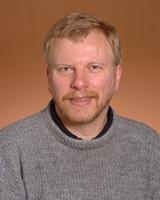
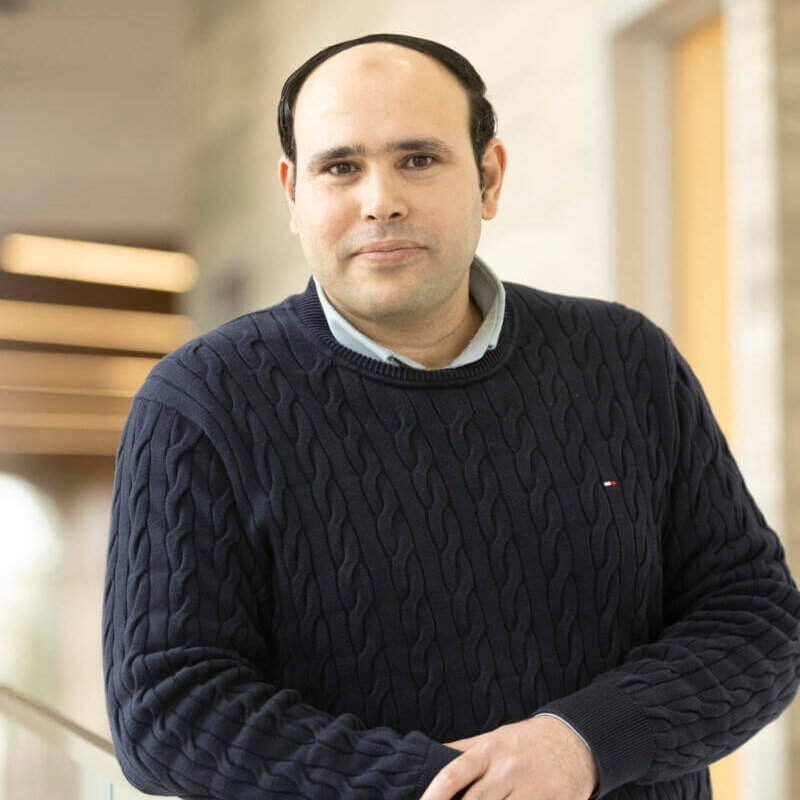
Richard Taylor is Associate Professor in QUT's Faculty of Engineering, specializing in applied superconductivity and power engineering. His research focuses on high-temperature superconducting (HTS) materials characterization, MgB2 wire technology, and energy-efficient cryogenic systems. Experimental work includes developing testing facilities for HTS machine performance under dynamic electromagnetic conditions. Publications demonstrate consistent focus on superconducting materials optimization for industrial applications.
Teng-Fong Wong is a Research Professor in the Department of Geosciences at Stony Brook University, where he has been a faculty member since 1982. His research focuses on the intersection of rock mechanics, earthquake processes, and environmental applications, making significant contributions to understanding deformation mechanisms in geological materials. Education: Sc.B., Brown University, 1973 M.S., Harvard University, 1976 Ph.D., Massachusetts Institute of Technology, 1981 Research Interests: Professor Wong's research centers on rock mechanics with emphasis on earthquake mechanics, energy resources, and environmental applications. He investigates both phenomenological and micromechanical aspects of rock deformation and fluid flow using an integrated approach combining high-pressure deformation experiments, quantitative microstructure characterization, and theoretical analysis. His work spans brittle-ductile transitions in porous rocks, permeability evolution, strength properties of fault zone materials from SAFOD and TCDP drilling projects, and submarine groundwater discharge systems. Publication Trends: Wong's recent publications (2006-2008) demonstrate a consistent focus on strain localization mechanisms in porous rocks, particularly examining compaction bands and deformation bands in sandstones. His work integrates advanced imaging techniques (X-ray radiography, CT scanning) with mechanical testing to understand the micromechanics of rock failure. A significant thread connects his research on fault zone properties from major drilling projects (SAFOD, TCDP) with fundamental rock deformation processes. Scientific Recognition: U.S. Patent 6,874,371 for Ultrasonic Seepage Meter (2005) U.S. Patent 7,107,859 for Ultrasonic Seepage Meter (2006) Co-author of "Experimental Rock Deformation - The Brittle Field" (2nd Edition, Springer-Verlag, 2005) Professional Activities: Professor Wong maintains an active international research profile with numerous visiting appointments including at Australian National University, MIT, ETH Zurich, and institutions in China and France. His work involves extensive collaboration with USGS and international research teams on major fault zone drilling projects. He has developed specialized equipment like the ultrasonic seepage meter for measuring submarine groundwater discharge. Research Infrastructure: Wong's laboratory utilizes advanced capabilities including high-pressure deformation equipment, 3D visualization through laser scanning confocal microscopy and synchrotron microCT, and integrates these with analytic modeling and numerical simulation techniques (finite element and discrete element methods) to investigate micromechanics of dilatant and compactant failure in geological materials.
Professor Iwona M. Jasiuk is a multi-disciplinary academic affiliated with the University of Illinois, holding professorships in Mechanical Science and Engineering, Biomedical and Translational Sciences, Bioengineering, Aerospace Engineering, and other departments. She is also affiliated with the National Center for Supercomputing Applications (NCSA), Beckman Institute for Advanced Science and Technology, and the Carl R. Woese Institute for Genomic Biology. Her research focuses on composite materials, bio-inspired structures, additive manufacturing, and computational mechanics, with a strong emphasis on integrating artificial intelligence into materials science. Her work spans topics such as material characterization, metamaterials design, and radiation effects on materials. Notable research areas include thin-ply composites, lattice structures derived from geometric principles, and the mechanical properties of bio-inspired systems like equine hoof walls. She has pioneered the use of deep learning networks for predicting material behavior in complex systems. Professor Jasiuk has received prestigious awards, including the ASME Fellow, SES Fellow, and Vebleo Scientist Award. Her research is supported by collaborations across engineering, biology, and computational fields, leveraging advanced facilities like NCSA for high-performance computing.
A. Alperen Günay is an Assistant Professor in the Department of Mechanical Engineering at Bilkent University . He previously served as an Assistant Professor at METU (2021-2023) and as a researcher at The University of Tokyo (2019-2021). Günay earned his PhD and MS in Mechanical Engineering from the University of Illinois at Urbana-Champaign under Dr. Nenad Miljkovic. Current Affiliation: Bilkent University Prior Affiliations: METU, University of Tokyo Education: PhD (UIUC), MS (UIUC), BS (METU) Research Focus : Developing green passive thermal devices through nanomaterials and phase change technologies. Key areas include radiative cooling , thermophotovoltaic systems , and nanomaterial-based heat sinks . His work spans energy conversion, thermal management, and optical property characterization. Scientific Awards : TÜBİTAK 2232-B Award Laboratory Leadership : Dr. Günay directs the Thermal Research & Optics Laboratory (TROL), focusing on projects like metal-organic framework systems , passive evaporative cooling , and greenhouse films for year-round thermal regulation .
Jeffrey Dick is the Richard B. Wetherill Professor of Chemistry at Purdue University, affiliated with the Department of Chemistry. His research focuses on developing novel electrochemical techniques to explore confined chemical systems, with applications in analytical chemistry, environmental monitoring, and energy storage. He leads the Dick Research Group, which investigates nanodroplet chemistry, aqueous metal batteries, and tumor analysis through advanced electrochemical methodologies. Research Interests: Electrochemistry in nanoscale and confined environments Development of cutting-edge analytical tools for real-time chemical analysis Electrochemical strategies for detecting environmental pollutants like PFAS Design of high-performance aqueous zinc batteries Nanoparticle synthesis via electrodeposition in nanodroplets Key Achievements: Recipient of the Richard B. Wetherill Professorship Recognition of student Patrick as an NSF Fellow (2025) Leadership in multiphase electrochemistry and biosensing innovations Advising & Grants: Mentorship of students in interdisciplinary research projects Development of educational modules for electrochemistry outreach Labs/Teams: The Dick Research Group operates in West Lafayette, focusing on multiphase electrochemistry and nanotechnology. Regular group meetings (every other week) discuss battery systems and tumor analysis, with a strong emphasis on collaborative innovation.
Dr Peter Horak is an Associate Professor at the Optoelectronics Research Centre (ORC) of the University of Southampton. With expertise in theoretical and computational photonics, his research spans nonlinear optics, quantum technology, and fiber optics. He obtained his MSc in Theoretical Physics (1993) and PhD in Theoretical Quantum Optics (1997) from the University of Innsbruck, followed by postdoctoral positions in Paris and Glasgow before joining the ORC in 2001. Current roles: ORC Exam Officer Admissions Tutor, EPSRC CDT in Quantum Technology Engineering Dr Horak leads the Computational Nonlinear Optics group, focusing on theoretical and numerical modeling of photonics systems across scales—from single photons to gigawatt laser pulses. His work addresses fundamental physics and device optimization in hollow-core fibers, quantum devices, and high-harmonic generation. Recent publications highlight hollow-core fiber gas dynamics, nonlinear optical sensing, and microresonator alignment challenges. Collaborations include the UK National Quantum Technology Programme and EPSRC-funded projects like QCI3 and HiPPo. External roles: Editorial Board, Physical Review A (2017–2022) Peer reviewer for EPSRC (since 2012) and ESF (since 2017) He supervises PhD students in nonlinear and quantum optics, and teaches optical fiber and computational modeling topics.
Dr. Bin Zhu is a Research Fellow in the School of Mechanical Engineering Sciences at the University of Surrey, affiliated with the Centre for Engineering Materials. He obtained his PhD from the same institution, focusing on multiscale residual stress evaluation and mechanical property characterization using microscopy and large-scale facilities. His research develops techniques for harsh environments to enhance material longevity by managing manufacturing-induced residual stress, with applications in nuclear fusion components. Education PhD, University of Surrey (Research focus: Multiscale residual stress evaluation and mechanical property characterization) Research Focus Dr. Zhu's research centers on three interconnected areas: 1) Multiscale residual stress evaluation using advanced techniques like plasma-focused ion beam and neutron diffraction; 2) In situ mechanical testing under extreme conditions; and 3) Computational modeling for predicting stress distributions and material behavior. His work primarily addresses nuclear fusion reactor challenges, particularly laser-welded Eurofer97 steel components, where residual stress critically impacts structural integrity. Publication Trends Dr. Zhu's recent publications (2021-2025) demonstrate three key themes: 1) Advanced residual stress analysis in nuclear materials using machine learning, neutron imaging, and synchrotron techniques; 2) High-temperature mechanical performance of welded joints for fusion reactors; and 3) Biomimetic material characterization, including bioinspired composites and biological light-diffraction mechanisms. His methodologies consistently integrate multiscale experimental approaches with computational modeling.
Professor Robert Eason is a leading academic at the University of Southampton, specializing in photonics and laser technology. His research spans interdisciplinary areas combining Machine Learning , Medical Diagnostics , and Microfluidics . Research Interests : Eason focuses on AI-driven laser applications, including deep learning for phototherapy , autonomous laser machining , and low-cost paper-based diagnostic devices . His work bridges photonics with biomedicine and advanced manufacturing. Recent Publications : His 2025 article in Scientific Reports explores AI simulations for psoriasis treatment, while 2024-2022 works address laser-controlled microfluidics, deep learning in microscopy, and reinforcement learning for laser machining. Supervision : He supervises PhD student Georgia Mourkioti in laser-based research projects. External Roles : Eason has served as a speaker at international conferences including the International Symposium on Laser Precision Microfabrication (2018), LAISER (2019), and Deep Learning for Control of Light-Matter Interactions (2022).
Dr. Anke Kirchner is a Researcher at the Leibniz Institute for Solid State and Materials Research Dresden (IFW Dresden) in the Department of Functional Oxide Layers and Superconductors. Her work focuses on superconducting materials, magnetic systems, and advanced thin-film deposition techniques for applications in levitation and energy-efficient transportation. Her research spans high-temperature superconductivity, nanocrystalline magnetic materials, and REBCO coated conductor development. Key contributions include optimizing artificial pinning centers in superconducting films, analyzing grain boundary structures in permanent magnets, and pioneering microacoustic sol atomization (MASA) for thin-film deposition. Her interdisciplinary approach bridges fundamental materials science with practical engineering applications in transportation and energy. Analysis of her 15 most recent publications (2000-2024) reveals consistent focus on superconducting levitation technologies and REBCO conductor performance enhancement. Her work demonstrates evolution from foundational studies of NdFeB magnet microstructures to cutting-edge innovations in coated conductor joints and tape-stack levitation systems, with strong emphasis on nanoscale characterization and process optimization. No scientific awards are mentioned in the provided text. Information regarding student advising, doctoral supervision, or research grants is not specified in the source material. The department specializes in oxide layer engineering and superconductor development, with Dr. Kirchner contributing to IFW Dresden's internationally recognized research on quantum levitation and magnet-superconductor interactions, frequently collaborating with Prof. L. Schultz on applied superconductivity projects.
Dr. Morten Ibsen serves as an Associate Professor at the University of Southampton's Optoelectronics Research Centre (ORC), a world-leading institution in photonics research. His academic profile demonstrates extensive involvement in cutting-edge optical technologies with significant contributions to fiber optics and laser systems. Dr. Ibsen's research focuses on advanced optical sensing technologies, particularly in fiber Bragg gratings, bi-doped fiber lasers, and optical refractometers. His work spans applications from environmental monitoring (heavy metal detection) to high-speed explosives diagnostics and navigation systems. The research demonstrates exceptional versatility across fundamental photonics and practical engineering applications. His publication record from 2018-2020 reveals consistent high-impact output in top photonics journals, with recurring themes in fiber laser development, optical sensor optimization, and novel measurement techniques. The research shows strong international collaboration patterns with institutions across Europe and Asia. Dr. Ibsen actively supervises PhD candidates including Robin Elliott and Sergei Shevtsov within the ORC's doctoral program. His research projects have attracted substantial funding from major organizations including the Royal Society, EPSRC, and the European Union's FP7 program. As a core member of the Fibre Bragg Gratings and Smart Lasers research groups, he contributes to the ORC's reputation as a global leader in photonics innovation. His experimental work bridges theoretical optics with practical engineering solutions for real-world sensing challenges.
Marc De Graef is the John and Claire Bertucci Distinguished Professor of Materials Science and Engineering at Carnegie Mellon University (CMU). He leads the J. Earle and Mary Roberts Materials Characterization Laboratory and is affiliated with the Materials Science and Engineering Department within the College of Engineering. De Graef holds dual roles as a faculty director and researcher, specializing in advanced materials characterization techniques, particularly electron microscopy and microstructural analysis. Education: Ph.D. in Physics, Catholic University of Leuven (1989) M.S. and B.S. in Physics, University of Antwerp (1983) Research Interests: De Graef's work focuses on 3D microstructure analysis, materials informatics, magnetic materials, and advanced characterization methods like Lorentz microscopy. His research emphasizes quantitative electron microscopy techniques, including electron backscatter diffraction (EBSD), and their application to study complex materials systems. He has pioneered software tools for materials characterization, such as orientation mapping algorithms and dictionary-based indexing methods. Key Achievements: Recipient of the 2025 Microscopy Society of America Distinguished Scientist Award Author/co-author of over 350 publications and two textbooks: Introduction to Conventional Transmission Electron Microscopy and Structure of Materials Principal investigator on grants including a $7.5M Air Force-funded Center of Excellence in data-driven materials research Lab & Collaborations: Directs the Materials Characterization Facility at CMU, advancing capabilities in X-ray and electron microscopy. His team collaborates on projects involving additive manufacturing, magnetic domain analysis, and topological magnetic structures. Recent work includes studies on skyrmions in thin films and phase stability in novel alloys.
Ulrich Tallarek serves as Professor of Analytical Chemistry in the Faculty of Chemistry at Philipps University of Marburg, where he has held a W3 professorship since 2011. He also serves on the Board of Directors for the Materials Science Center at the university, a position he has held since 2007. His research group focuses on the fundamental understanding of transport phenomena in porous media with applications spanning chromatography, battery technology, and microfluidic systems. The group maintains strong collaborations with institutions worldwide and secures substantial research funding for advanced computational and experimental work. Professor Tallarek's research interests center on functional porous solids, with specific focus on morphology-transport-performance relationships. His work bridges multiple scales from molecular dynamics simulations of solute behavior in nanopores to macroscopic transport in chromatographic columns and battery electrodes. Key research areas include diffusion in hierarchical porous media, electrokinetic phenomena in microfluidic systems, molecular simulation of chromatographic processes, and advanced characterization of porous materials using tomography and other techniques. His group has pioneered multiscale simulation approaches that connect molecular-level surface chemistry to macroscopic transport properties. The research output demonstrates consistent focus on understanding fundamental transport mechanisms in porous systems, with recent publications emphasizing multiscale simulation techniques, molecular dynamics studies of solvent effects in chromatography, advanced characterization of mesoporous structures, and applications to separation science and energy storage. The work shows strong integration of computational modeling with experimental validation across multiple length scales. 2003: Desty Memorial Prize for Innovation in Separation Science, The Royal Institution of Great Britain, London 2006: Young Scientist Award from DECHEMA e.V. 2011: Named Discussion Leader at the 2011 Gordon Research Conference on Physics & Chemistry of Microfluidics 2011–2012: Chairman of the German Chemical Society (GDCh), Marburg 2013: Finalist, World Technology Awards, for category Environment 2013: Named as one of the 100 most influential analytical scientists in the world (The Analytical Scientist Power List) 2017: Recipient of the Silver Jubilee Medal 2017, The Chromatographic Society, UK Professor Tallarek's research has been supported by numerous grants enabling high-performance computing resources, advanced instrumentation, and international collaborations. His group maintains strong ties with industry partners in separation science and analytical instrumentation. The Tallarek Research Group includes postdoctoral researchers, PhD students, and technical staff working across experimental and computational domains. Current projects focus on molecular simulation of chromatographic processes, advanced characterization of porous battery electrodes, and development of novel separation methodologies. The Tallarek Research Group operates state-of-the-art facilities for computational modeling, including access to high-performance computing resources at Forschungszentrum Jülich. The group also maintains experimental capabilities for chromatographic analysis, materials characterization, and microfluidic device development. Their work on physically reconstructed porous media has established new standards for connecting microstructure to transport properties in complex materials systems.
Mohamed Shaat is an Assistant Professor of Mechanical Engineering in the Engineering Department at St. Mary's University, San Antonio, Texas. Holding a Ph.D. from New Mexico State University (2017), he previously served as Assistant Professor at Abu Dhabi University (2019-2021) and held postdoctoral positions at Southern Methodist University (2022-2024) and Boston University (2021-2022). His research bridges energy storage systems, active matter physics, and advanced materials engineering. His educational foundation includes: Ph.D. in Mechanical Engineering, New Mexico State University, 2017 M.Sc. in Mechanical Engineering, New Mexico State University, 2016 M.Sc., Zagazig University (Egypt), 2012 B.Sc., Zagazig University (Egypt), 2007 Dr. Shaat's research program focuses on interdisciplinary innovation in energy storage (SOFCs & ASSBs), mechanics of active matter, nano-confined fluids, chiral metamaterials, and topological/non-Hermitian mechanics. He integrates machine learning with continuum mechanics to optimize electrochemical systems and additive manufacturing, exploring nontraditional phenomena in complex materials for next-generation engineering applications. Analysis of his 60+ journal articles reveals a dominant trajectory in nonlocal elasticity theory and topological mechanics, with increasing integration of machine learning (2020-2024). His work spans nanostructure mechanics, metamaterial design, and energy storage optimization, demonstrating consistent innovation in theoretical frameworks for complex material systems. His scholarly recognition includes: World's Top 2% Scientist (Stanford University, Mechanical Engineering & Transports, since 2019) Outstanding Graduate Award, New Mexico State University (2017) Merit-Based Enhancement Fellowship, New Mexico State University (2017) Best Master's Thesis Award, Zagazig University (2013) Committed to academic service, Dr. Shaat serves on the editorial board of Scientific Reports and as Specialty Associate Editor for Frontiers in Mechanical Engineering. His extensive peer review for Nature, Nature Communications, and Applied Physics Letters reflects his field authority. While specific grant details aren't disclosed, his postdoctoral appointments and publication volume indicate successful research funding. His teaching includes Materials Engineering and Materials Laboratory courses, emphasizing hands-on student mentorship. Though laboratory infrastructure isn't explicitly detailed, his research scope suggests computational modeling expertise and likely collaboration with experimental teams for materials characterization in energy storage and metamaterials development.
Dr. Keyron Hickman-Lewis is a Lecturer in Planetary Exploration at Birkbeck, University of London, with academic positions spanning institutions like the Natural History Museum and Imperial College London. He holds a M.EarthSci from the University of Oxford (2015) and a Ph.D. in Earth Sciences from CNRS Orléans and Università di Bologna (2019). His research focuses on the co-evolution of Earth and early life, planetary exploration (including Mars 2020 Perseverance rover missions), and technique development for analyzing ancient microbial biosignatures. Key interests include microbial mats, Archaean geology, and astrobiological field analogs like Lake Abhe (Djibouti) and Martian environments. Notable achievements include identifying Earth's oldest microbial traces (3.5 Ga) and studying Mars sample return strategies. He is a Fellow of the Geological Society (FGS) and serves on the European Astrobiology Network Association Council. Teaching includes modules on planetary science, geology, and remote sensing. Supervision focuses on astrobiology and planetary exploration topics. Key publications highlight breakthroughs in microbial mat preservation, Mars sample analysis, and Early Archaean stromatolite interpretation. Collaborations span international institutions including NASA, CNRS, and the University of Bologna.
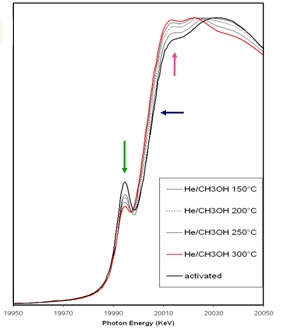
Sylvain Cristol is a Professor at the University of Lille within the Heterogeneous Catalysis department and the Modeling and Spectroscopy (MODSPEC) group. He teaches quantum chemistry, chemical bonding, statistical physics , and X-ray absorption spectroscopy at the university’s European Master’s program. PhD in Molecular and Organic Chemistry (1997-2000, Université de Provence) Postdoctoral work at Davy-Faraday Research Lab, Royal Institution of Great Britain (2000-2002) His research focuses on modeling hydrodesulfurization and hydrodeoxygenation catalysts for biomass valorization, supported by ANR-PNRB project ECOHDOC (with Caen, Poitiers, and TOTAL). He pioneered operando X-ray absorption spectroscopy for characterizing supported oxides (Mo/Re on alumina/anatase) via the ANR SAXO project (Paris VI, Grenoble, SOLEIL). Collaborative work with Francesco Mauri (Paris VI) advanced NMR parameter modeling in solids. Publications span DFT studies , XANES spectroscopy , and solid-state NMR applied to catalysis. Scientific awards include the UCCS Thesis Prize (highest honors) for his work on dibenzothiophene reactivity on molybdenum sulfide.