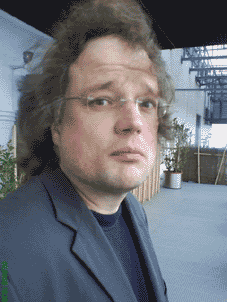
Professor David C. Dunand is a faculty member in the Department of Materials Science and Engineering at Northwestern University , where he leads the Dunand Research Group . His work focuses on mechanical metallurgy of advanced metallic materials, including alloys, composites, and foams, with applications in energy-efficient transportation and biomaterials. He also investigates additive manufacturing techniques like laser powder-bed fusion and 3D ink extrusion. Research Interests: Physical and mechanical metallurgy of multiphase metals Additive manufacturing (ink extrusion, selective laser melting) Green/sustainable metal production In situ X-ray tomography for microstructure analysis Metallic foams and scaffolds Thermoelectric materials Recent Publications show expertise in redox cycling stability, precipitation strengthening, and hierarchical microstructures, with applications in batteries, shape-memory alloys, and high-entropy systems. Awards: TMS Fellow (2012) Structural Materials Division Distinguished Scientist/Engineering Award (2008) Fellow, ASM International (2007) Department Teacher of the Year (1998) He has held leadership roles including Co-Director of the Initiative for Sustainability and Energy at Northwestern (2008-2015) and Visiting Professor at École Polytechnique Fédérale de Lausanne (2000). The group operates a SISMA MYSINT 100 laser powder bed fusion machine and collaborates extensively.
Dr. KN Sasidhar is a Researcher in the Department of Microstructure Physics and Alloy Design at Heinrich Heine University Düsseldorf. His work focuses on advanced materials science, particularly corrosion mechanisms, alloy design, and nanoscale structural analysis. He employs cutting-edge techniques like in situ synchrotron investigations and deep learning frameworks to study material behavior under extreme conditions. Current research emphasizes corrosion resistance in stainless steels, phase transformations during nitriding, and radiation effects on coatings. Key achievements include pioneering studies on nanoscale amorphization in metallic systems, data-centric approaches for materials discovery, and the development of predictive models for alloy performance. His work bridges experimental materials characterization with computational methods, addressing challenges in energy and aerospace applications. Publications span corrosion analysis, microstructural evolution under irradiation, and phase separation phenomena. Collaborative projects involve synchrotron facilities and interdisciplinary teams focusing on materials informatics. No formal awards or grants are explicitly listed in the provided texts, though his prolific publication record indicates active academic engagement.
Dorina Siebert is a Researcher at the Chair of Metal Construction within the School of Engineering at the Technical University of Munich. She has been working as a research assistant at the Chair since 2019, contributing to various research projects related to steel and aluminum construction, fracture mechanics, and additive manufacturing in construction. Education: M.Sc. in Civil Engineering from Technical University of Munich (2012-2019) Affiliation: Chair of Metal Construction, School of Engineering, Technical University of Munich Contact: dorina.siebert@tum.de, Room 0101.Z1.038, +49 (89) 289-22527 Dorina's research primarily focuses on the fatigue strength of aluminum structures, fracture mechanics in railway bridges, and the application of additive manufacturing techniques in construction. Her work on powder bed-based laser beam melting of metal has significant implications for modern construction methods. She also investigates safe operating time intervals for historic steel bridges and has contributed to the development of a mobile vehicle barrier, demonstrating the practical applications of her theoretical work. Her publication record shows a strong trend toward computational and experimental analysis of material behavior under stress, particularly in aluminum alloys and steel structures. She has published extensively on fatigue properties, fracture mechanics calculations, and additive manufacturing applications, with a clear progression toward more complex modeling techniques and practical engineering solutions. Her work bridges theoretical computational models with real-world infrastructure challenges. Dorina teaches courses including 'Constructing with aluminum' for the Summer semester 2025 and 'Fracture mechanics and fatigue' for the Winter semester 2024/25. She also leads a seminar on plate buckling and steel bridge construction, sharing her specialized knowledge with engineering students. Her teaching directly reflects her research expertise, creating a strong connection between theoretical knowledge and practical application for her students.
Dr. Friederike Adams is an Independent Research Group Leader at the University of Stuttgart and University of Tübingen, focusing on Precision Polymers for Pharmaceutics . Her work bridges polymer chemistry and nanomedicine, emphasizing sustainable materials for drug delivery systems. Education: PhD in Chemistry (2019, TU Munich), M.Sc. in Chemistry (2015, TU Munich), B.Sc. in Chemistry (2013, TU Munich) Awards: No explicit awards listed Research: Specializes in living-type polymerizations, catalyst design, and post-polymerization functionalization for drug and RNA delivery . Publications: 15+ works on sustainable polyesters, metal-catalyzed polymerization, and nanocarrier systems. Students: Mentors 10+ PhD, master’s, and bachelor’s students, including Lea-Sophie Hornberger and Philipp Weingarten . Collaboration: Joint research group with the Schnichels Lab at the Eye Hospital Tübingen. Funded by BMBF and Baden-Württemberg Ministry of Science under Germany’s Excellence Strategy.
Ulrich Tallarek serves as Professor of Analytical Chemistry in the Faculty of Chemistry at Philipps University of Marburg, where he has held a W3 professorship since 2011. He also serves on the Board of Directors for the Materials Science Center at the university, a position he has held since 2007. His research group focuses on the fundamental understanding of transport phenomena in porous media with applications spanning chromatography, battery technology, and microfluidic systems. The group maintains strong collaborations with institutions worldwide and secures substantial research funding for advanced computational and experimental work. Professor Tallarek's research interests center on functional porous solids, with specific focus on morphology-transport-performance relationships. His work bridges multiple scales from molecular dynamics simulations of solute behavior in nanopores to macroscopic transport in chromatographic columns and battery electrodes. Key research areas include diffusion in hierarchical porous media, electrokinetic phenomena in microfluidic systems, molecular simulation of chromatographic processes, and advanced characterization of porous materials using tomography and other techniques. His group has pioneered multiscale simulation approaches that connect molecular-level surface chemistry to macroscopic transport properties. The research output demonstrates consistent focus on understanding fundamental transport mechanisms in porous systems, with recent publications emphasizing multiscale simulation techniques, molecular dynamics studies of solvent effects in chromatography, advanced characterization of mesoporous structures, and applications to separation science and energy storage. The work shows strong integration of computational modeling with experimental validation across multiple length scales. 2003: Desty Memorial Prize for Innovation in Separation Science, The Royal Institution of Great Britain, London 2006: Young Scientist Award from DECHEMA e.V. 2011: Named Discussion Leader at the 2011 Gordon Research Conference on Physics & Chemistry of Microfluidics 2011–2012: Chairman of the German Chemical Society (GDCh), Marburg 2013: Finalist, World Technology Awards, for category Environment 2013: Named as one of the 100 most influential analytical scientists in the world (The Analytical Scientist Power List) 2017: Recipient of the Silver Jubilee Medal 2017, The Chromatographic Society, UK Professor Tallarek's research has been supported by numerous grants enabling high-performance computing resources, advanced instrumentation, and international collaborations. His group maintains strong ties with industry partners in separation science and analytical instrumentation. The Tallarek Research Group includes postdoctoral researchers, PhD students, and technical staff working across experimental and computational domains. Current projects focus on molecular simulation of chromatographic processes, advanced characterization of porous battery electrodes, and development of novel separation methodologies. The Tallarek Research Group operates state-of-the-art facilities for computational modeling, including access to high-performance computing resources at Forschungszentrum Jülich. The group also maintains experimental capabilities for chromatographic analysis, materials characterization, and microfluidic device development. Their work on physically reconstructed porous media has established new standards for connecting microstructure to transport properties in complex materials systems.
Prof. Dr.-Ing. Johannes Henrich Schleifenbaum is a Professor and Chair of Digital Additive Production at RWTH Aachen University, where he leads research in the Profile area Production Engineering (ProdE). His work advances additive manufacturing (AM) through interdisciplinary approaches combining materials science, process engineering, and digital technologies. His research encompasses: Laser powder bed fusion (LPBF) process optimization and defect mitigation Development of novel alloys/composites for AM applications Sustainable manufacturing practices including material recycling Integration of AI/ML for accelerated material and process design Digital tools for automated design and distributed manufacturing Recent publications (2023-2025) demonstrate a strong focus on: Multi-material processing and microstructure control Machine learning-driven alloy development Standardization and scalability of AM processes Advanced simulations for meltpool dynamics and thermal behavior Applications in aerospace, construction, and biochemical engineering He leads the Chair of Digital Additive Production, collaborating with industry partners to translate research into industrial solutions for next-generation manufacturing.
Associate Professor Hu Yunfei is affiliated with the School of New Materials and New Energy at Shenzhen University of Technology , where she leads the New Energy Systems and Smart Microgrids Laboratory . She is a member of the China Renewable Energy Society and Guangdong Solar Energy Association . PhD in Materials Processing Engineering (2005), South China University of Technology Bachelor of Engineering (2000), South China University of Technology Her research focuses on new energy systems , solar-storage direct-flexible systems , and high-efficiency photovoltaic devices , including perovskite solar cells , tandem solar cells , and transparent conductive oxides . Her work spans fundamental materials science and applied energy systems. The 15 most recent publications highlight her expertise in polycrystalline silicon thin films , transparent conductive oxides , perovskite solar cells , and optoelectronic materials . These works reflect trends in improving solar cell efficiency, stability, and manufacturing scalability. She has led projects such as the development of consumer solar power optimizers , optical performance testing for bifacial solar panels , and industrial collaborations on silicon ribbon substrates . Her projects are funded by institutions like the Norwegian Science Foundation and National Natural Science Foundation of China . At Shenzhen University of Technology, she oversees the New Energy Systems and Smart Microgrids Laboratory , integrating advanced materials and system design for renewable energy applications.
Dr. Anke Kirchner is a Researcher at the Leibniz Institute for Solid State and Materials Research Dresden (IFW Dresden) in the Department of Functional Oxide Layers and Superconductors. Her work focuses on superconducting materials, magnetic systems, and advanced thin-film deposition techniques for applications in levitation and energy-efficient transportation. Her research spans high-temperature superconductivity, nanocrystalline magnetic materials, and REBCO coated conductor development. Key contributions include optimizing artificial pinning centers in superconducting films, analyzing grain boundary structures in permanent magnets, and pioneering microacoustic sol atomization (MASA) for thin-film deposition. Her interdisciplinary approach bridges fundamental materials science with practical engineering applications in transportation and energy. Analysis of her 15 most recent publications (2000-2024) reveals consistent focus on superconducting levitation technologies and REBCO conductor performance enhancement. Her work demonstrates evolution from foundational studies of NdFeB magnet microstructures to cutting-edge innovations in coated conductor joints and tape-stack levitation systems, with strong emphasis on nanoscale characterization and process optimization. No scientific awards are mentioned in the provided text. Information regarding student advising, doctoral supervision, or research grants is not specified in the source material. The department specializes in oxide layer engineering and superconductor development, with Dr. Kirchner contributing to IFW Dresden's internationally recognized research on quantum levitation and magnet-superconductor interactions, frequently collaborating with Prof. L. Schultz on applied superconductivity projects.
Angkana Rüland is a Professor at the University of Bonn's Mathematical Institute and holder of the Hausdorff Chair at the Hausdorff Center for Mathematics (HCM), a Cluster of Excellence. She is a member of the Transdisciplinary Research Area ‘Modelling’ and a recipient of the prestigious Leibniz Prize (2025). Her research focuses on inverse problems, fractional PDEs, and phase transformations in materials science, with contributions to the Calderón problem and microstructure analysis. She has held positions at Oxford, the Max Planck Institute in Leipzig, and Heidelberg University before returning to Bonn in 2023. Education: She completed her Abitur, bachelor's/masters, and PhD (2014, Hausdorff Memorial Prize) at the University of Bonn, where she also co-founded the Bonn Math Club. Her academic journey includes postdoctoral research at Oxford and leadership roles in Leipzig and Heidelberg. Research interests span inverse problems (e.g., fractional Calderón problem), material microstructures (shape-memory alloys), and mathematical physics. Her work bridges pure and applied mathematics, addressing questions in elasticity, nonlocal operators, and energy scaling laws. Scientific awards include the Leibniz Prize (2025) for her groundbreaking research and the Hausdorff Memorial Prize for her doctoral thesis. She aims to use Leibniz Prize funds to strengthen her research group at HCM, furthering interdisciplinary collaborations. Her contributions have positioned Bonn as a global leader in mathematical research, with 20 Leibniz laureates since 1986.
Prof. Dr. Hans-Jörg Vogel is the Head of the Department of Soil System Science at the Helmholtz Centre for Environmental Research (UFZ) in Halle, Germany. His research focuses on understanding soils as complex systems, emphasizing their porous structure and its role in facilitating water, gas, and matter fluxes, as well as biological processes. He leads interdisciplinary projects integrating experimental and computational approaches to model soil functions under climate and land-use changes. He holds the Emil-Ramann-Medaille 2022 and the Don and Betty Kirkham Soil Physics Award 2022 for contributions to soil science. His work spans soil structure dynamics, denitrification processes, nanoparticle transport, and systemic modeling of soil functions via frameworks like BODIUM. Collaborations include TERENO observatories and the Soil Structure Library (open-access CT data repository). Key affiliations include the UFZ’s Ecosystems of the Future research community and the Soil System Science Team. His research addresses sustainable agriculture, environmental monitoring, and climate change impacts, with over 150 peer-reviewed publications since 2000.
Christoph Gehlen is Professor and Chair of Materials and Materials Testing in Civil Engineering at the Technical University of Munich (TUM), based at Franz-Langinger-Str. 10 in Munich. His research group focuses on advanced concrete technologies, materials science, and digital construction methods, with significant contributions to additive manufacturing in civil engineering through the Collaborative Research Center TRR 277. His research spans concrete technology, durability assessment, and sustainable construction practices. Key interests include corrosion mechanisms in reinforced concrete, non-destructive testing methodologies, and additive manufacturing techniques like Selective Paste Intrusion (SPI). Recent work emphasizes 3D concrete printing for structural applications, life cycle assessment of printed elements, and fundamental studies on material behavior under environmental stressors including carbonation, chloride exposure, and freeze-thaw cycles. Analysis of his 15 most recent publications (2024-2025) reveals dominant research trajectories in digital fabrication of concrete structures, particularly SPI-based additive manufacturing. His work integrates materials science with structural engineering to develop functionally graded components, assess sustainability metrics, and solve reinforcement integration challenges. Significant interdisciplinary efforts address durability issues through electrochemical monitoring, coda wave interferometry, and advanced imaging techniques for concrete microstructure characterization. Gehlen leads the Chair of Materials and Materials Testing in Civil Engineering at TUM, which operates advanced laboratories for concrete characterization including confocal laser scanning microscopy and virtual testing environments. His team actively participates in TRR 277 (Additive Manufacturing in Construction), developing fabrication-aware design methods and experimental validation protocols for novel construction technologies.
Prof. Christian Liebscher is a Professor of Advanced Transmission Electron Microscopy at the Ruhr University Bochum , affiliated with the Faculty of Physics and Astronomy and the Research Center Future Energy Materials and Systems (RC FEMS). His work focuses on developing cutting-edge TEM techniques to understand energy-related materials' atomic-scale structure-functionality relationships. He combines aberration-corrected scanning TEM (STEM), 4D-STEM, and in-situ microscopy with machine learning to analyze complex material datasets. Education and Career: 2000–2006: Study of Materials Science at the University of Bayreuth. 2006–2010: PhD at the University of Bayreuth (summa cum laude) with a thesis on phase and dislocation analysis in superalloys. 2011–2014: Postdoc at the University of California, Berkeley, and the National Center for Electron Microscopy (Lawrence Berkeley National Laboratory). 2014–2015: Staff scientist at the University of Duisburg-Essen. 2015–2024: Group leader at the Max Planck Institute for Sustainable Materials in Düsseldorf. Research Interests: Prof. Liebscher’s research bridges microscopy innovation and materials understanding. He emphasizes atomic-scale characterization of interfaces, defects, and grain boundaries in metals and alloys using advanced STEM and 4D-STEM. His work addresses how structural features—like segregation, strain, and phase transitions—impact material properties. He also pioneers machine learning tools to automate data analysis from microscopy and tomography, advancing materials dataspaces. Key topics include energy materials (e.g., PEM fuel cells), high-entropy alloys, and nanomaterials for applications like semiconductors and electromagnetic absorption. Scientific Contributions: His publications highlight trends in grain boundary phase transitions, microstructure-property correlations, and integration of AI into microscopy. For example, recent work explores how grain boundary complexions affect mechanical strength in alloys and how in-situ TEM reveals deformation mechanisms under realistic conditions. He has contributed significantly to methodologies like scanning precession electron diffraction tomography and unsupervised machine learning for atomic-resolution datasets. Labs and Collaborations: Prof. Liebscher leads the Advanced Transmission Electron Microscopy group at RUB, building on his previous leadership at the Max Planck Institute. His lab collaborates with institutions like the Lawrence Berkeley National Laboratory and integrates interdisciplinary approaches combining experimental microscopy with computational modeling.
Dr. Rico Friedrich is a computational materials scientist leading the "Autonomous Materials Thermodynamics - AutoMaT" research group, jointly operated by the Chair of Theoretical Chemistry at Technische Universität Dresden and the Helmholtz-Zentrum Dresden-Rossendorf (HZDR). His work focuses on data-driven computational design of advanced materials for information technology and energy applications through the DRESDEN-concept research alliance. His research spans several cutting-edge areas: Discovery and design of 2D non-van der Waals materials with novel electronic and magnetic properties Data-driven modeling of high-entropy ceramics based on entropy maximization principles Development of computational methods for accurate thermodynamic stability prediction, particularly the coordination corrected enthalpies (CCE) method Applications of artificial intelligence in materials design Dr. Friedrich's publication record shows a strong trend toward computational materials discovery, with significant contributions to understanding non-van der Waals 2D materials and high-entropy ceramics. His work bridges theoretical developments with practical applications, resulting in publications in high-impact journals including Nature, Nano Letters, and Advanced Electronic Materials. His key scientific contributions include: Development of the coordination corrected enthalpies (CCE) method for accurate formation enthalpy calculations Creation of the AFLOW-CCE module implemented in the AFLOW software ecosystem Discovery of novel 2D non-van der Waals materials with ultra-low exfoliation energies Formulation of the disordered enthalpy-entropy descriptor (DEED) for high-entropy ceramics Dr. Friedrich actively mentors the next generation of materials scientists, currently supervising PhD students and postdoctoral researchers in his AutoMaT lab. His research group collaborates extensively within the DRESDEN-concept research alliance, leveraging computational resources and expertise across multiple institutions to advance materials science and engineering.
Florian Hausen is a Professor for Applied Interface Electrochemistry at RWTH Aachen University and leads the scanning probe microscopy focused group at the Fundamentals of Electrochemistry (IET-1) department within Forschungszentrum Jülich . His work bridges electrochemistry, nanotechnology, and materials science, with a focus on energy storage systems. Education : Studied Chemistry at the University of Bonn PhD in Physics from Saarland University Hausen's research interests center on in-situ/operando scanning probe techniques to study interfaces in energy materials, including solid-state batteries , proton exchange membrane water electrolyzers , and ionic liquids . His group explores: Correlative microscopy (AFM, SEM, EPR) for multi-scale analysis Mechanical properties under electrochemical load Tribology of materials in battery systems Interphases in lithium, zinc, and silicon-based energy technologies The article trends reflect his expertise in: Nanoscale electrochemical characterization of battery and electrolyzer components Material degradation under dynamic cycling and electrochemical stress Correlation of electrical, mechanical, and chemical properties in energy systems Technique development for operando studies and data reproducibility His work contributes to understanding and improving: Lithium plating and SEI formation Nanomechanical stability of electrolyzer anodes and cathodes Carbon nanofiber properties for battery electrodes Doping effects in ceramic solid electrolytes
Prof. Dr. Martin Steinhart serves as Professor of Physical Chemistry at the Institute for Chemistry of New Materials, University of Osnabrück, Germany. His office is located at Barbarastr. 7, D-49067 Osnabrück, with contact details including phone (+49-541-969-2817), fax (+49-541-969-3324), and email (martin.steinhart@uni-osnabrueck.de). Dr. Steinhart's academic journey includes: Diploma in Chemistry from University of Marburg (2000) Doctorate in Physical Chemistry from University of Marburg (2003) under Prof. J. H. Wendorff Group leader at Max Planck Institute of Microstructure Physics (2003-2009) Research stay at Oak Ridge National Laboratory (2006) Professor of Physical Chemistry at University of Osnabrück (since 2009) His research specializes in nanoscale material design, with particular expertise in ordered porous structures, nanofiber morphology, and biomimetic fabrication techniques. Dr. Steinhart's work bridges fundamental physical chemistry principles with practical applications in advanced materials development. His most significant recognition is the 2015 ERC Consolidator Grant for 'Insect-inspired capillary nanostamping,' demonstrating international acknowledgment of his innovative research approach. Dr. Steinhart maintains active research programs exploring novel nanofabrication methods and material properties at the nanoscale, contributing significantly to the University of Osnabrück's research profile in materials science.