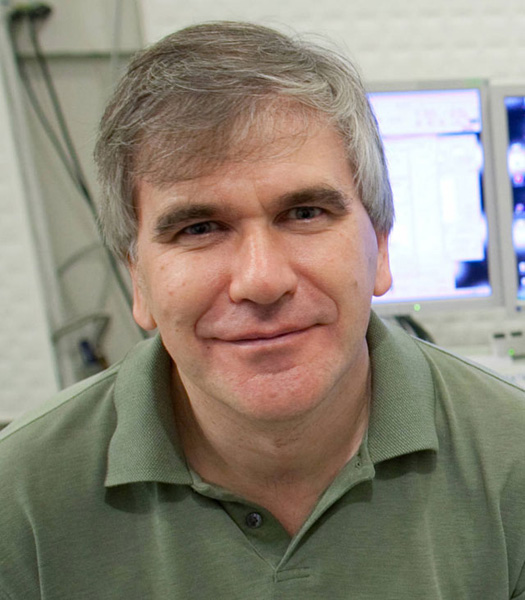
Gunnar Kusch is a Senior Research Associate at the Department of Materials Science & Metallurgy, University of Cambridge. His research focuses on defects in semiconductors, porous AlGaN materials, and advanced characterization techniques like cathodoluminescence (CL) and atom probe tomography (APT). He holds a PhD from the University of Strathclyde and leads projects on UV-B LED optimization, nanoscale defect behavior analysis, and semiconductor device design. His work bridges materials synthesis, characterization, and device performance, with applications in energy-efficient lighting and solar cell technology. Key research areas include: Defect engineering in III-nitride semiconductors Porous AlGaN templates for high-efficiency UV emitters Correlative microscopy techniques (CL, EBSD, APT) Composition-structure-property relationships in photovoltaic materials Notable contributions include developing CL-based methods for nanoscale defect analysis and demonstrating improved Cu(In,Ga)S₂ solar cell efficiencies through compositional engineering. His laboratory focuses on translating microscopic insights into macroscopic device improvements.
Dr. Sumsun Naher is a Senior Lecturer in the Department of Engineering at City, University of London , where she has worked since 2013. Previously, she served as Lecturer and Research Development Officer at Dublin City University (2006–2013) and as Scientific Officer at Bangladesh Council of Scientific & Industrial Research (1998–2000). Her academic career includes a Post Graduate Diploma in Academic Practice from City, University of London. PhD , School of Mechanical & Manufacturing Engineering, Dublin City University MSc , Materials & Metallurgical Engineering, Bangladesh University of Engineering and Technology BSc , Materials & Metallurgical Engineering, Bangladesh University of Engineering and Technology Her research focuses on semi-solid processing , laser processing , simulation & modelling of materials technologies , and materials characterisation . Recent work explores cellulose nanofiber-based water filters for antibiotic removal and phase change materials in geothermal energy systems. Key article trends reveal expertise in: Laser Surface Modification of metals and composites Advanced Casting Methodologies and semi-solid metal forming Nanoparticle Reinforcement in metal matrix composites Thermal Modelling for energy systems Sustainable Material Solutions in water treatment and energy Computational Materials Science via finite element analysis Naher has received the DCU Invent Commercialisation Award (2011) and holds fellowships from IMechE , Institute of Materials, Minerals & Mining , and Advance Higher Education Authority . She actively reviews for funding bodies and examines PhD theses internationally. As an organiser of the ESAFORM Conference and co-organiser of its Additive Manufacturing symposium since 2017, she contributes to academic leadership. Her professional roles include Board of Directors for the European Association of Materials Forming and participation in EU COST Action projects (Thixoforming, Thixosteel, Nanostructured Materials).
Martin Saunders is an Associate Professor and leader of the Physical Science Electron Microscopy Platform at the University of Western Australia's Centre for Microscopy, Characterisation & Analysis (CMCA). He holds leadership roles in national microscopy consortia, including Microscopy Australia and the National Imaging Facility. His academic career spans over 20 years, with roles as Deputy Director and Acting Director of CMCA, and President of the Australian Microscopy and Microanalysis Society (AMMS). Saunders earned a PhD in Physics from the University of Bath (UK) and postdoctoral experience at institutions including the University of Bristol and the US Naval Postgraduate School. His research focuses on advanced electron microscopy techniques, including TEM, STEM, EELS, and tomography, applied across physical, biological, and geo sciences. Education: PhD in Physics (University of Bath, 1994), BSc in Applied Physics (University of Bath, 1990). Research interests include structural and chemical analysis of nanomaterials, biominerals, and geological samples. He collaborates globally, contributing to high-impact journals like Nature and Advanced Materials . Saunders has secured over $25M in grants from ARC, NHMRC, and NCRIS, funding cutting-edge microscopy infrastructure. Awards: Inaugural AMMS Fellow (2025), Life Membership (AMMS), Fellow of the UK Institute of Physics (2012). Teaching: Coordinates materials characterization courses for biomedical engineering and nanotechnology programs. Provides training in electron microscopy for researchers and postgraduates. Labs/Infrastructure: Manages state-of-the-art facilities including FEI Titan G2 80-200 TEM/STEM and DualBeam FIB-SEM systems at CMCA.
Dr Yulai Zhang is a researcher in the Department of Materials Physics at the Australian National University . His work focuses on advanced imaging techniques for material and geological analysis. Expertise: X-ray micro-computed tomography (μCT), pore-scale and multiscale modeling, coal seam and ore characterization Collaborations: International partnerships in coal bed methane, mineral liberation, and rock failure analysis His research applies 4D/X-ray tomography to study dynamic processes in copper ores, shale, and coal, including fragmentation, diffusion, and fracture networks. Recent publications highlight innovations in super-resolution imaging , feature extraction methods , and in-situ studies of mineral behavior under stress. Dr Zhang actively supervises students and contributes to ore beneficiation, CO2 geo-sequestration, and unconventional reservoir characterization. Collaborative projects involve institutions in Australia and Indonesia, with a focus on digital rock physics and microstructural evolution .
Ed Pickering is a Senior Lecturer in Metallurgy and Materials Engineering at the University of Manchester. He has held roles since 2015, advancing to Reader in 2023. His affiliations include the Henry Royce Institute (Research Area Lead for Advanced Metals Processing), the Advanced Metallics System CDT and Fusion CDT Management Boards, and industrial technical advisory panels. Ed’s work bridges academic and industrial collaboration with Rolls-Royce, UKAEA, Airbus, EDF, and Sheffield Forgemasters. Ed completed his undergraduate studies (2011) and PhD (2014) in Materials Science at the University of Cambridge, followed by a Research Associate role in Cambridge’s Rolls-Royce UTC. His academic trajectory includes: Senior Lecturer (2019–present) Reader (2023–present) Ed’s research focuses on phase transformations, microstructural characterization, and alloy development for nuclear (fission/fusion) and aerospace applications. Key themes include optimizing processing routes to enhance material properties while minimizing waste and environmental impact. His studies frequently address steel, high-entropy alloys, and novel refractory alloys, emphasizing their service performance under extreme conditions. His scientific contributions span structural integrity assessment of welded joints, machine learning applications in metallurgy, and material flow uncertainties in forging. He has also advanced heat treatment optimization for reactor steels and explored cobalt-free hardfacing alloys. Frank Fitzgerald Medal (2017) Grunfeld Memorial Medal (2021) In advising and grants, Ed leads the Materials Performance Centre (MPC) and co-leads the NEWAM project on wire-additive manufacturing. He supervises research across these initiatives and collaborates with over 30 PGR students in interdisciplinary teams. His work also involves managing technical facilities like the Advanced Metal Processing platform. Ed’s laboratory affiliations include the MPC and WAAM-based Engineering and Process Metallurgy groups, where he explores sustainable materials solutions for energy and aerospace industries.
Professor Michael Preuss is a leading academic in the Department of Materials Science & Engineering at Monash University, Faculty of Engineering, where he joined in August 2020. He also holds a 20% continuing position at the University of Manchester, UK, where he previously served in multiple leadership roles. His research focuses on the relationship between manufacturing, processing, and performance of structural materials, particularly titanium and zirconium alloys, nickel-base superalloys, and steels for high-temperature and nuclear applications. First Degree: Technical University Berlin, Germany PhD: Technical University Hamburg-Harburg, Germany Michael Preuss’s research interests lie at the intersection of materials processing and performance prediction. He investigates how microstructural evolution during manufacturing affects mechanical behavior, with a focus on reducing safety margins in safety-critical components such as aeroengine parts and nuclear fuel claddings. His work emphasizes in-situ characterisation using advanced tools like synchrotron X-ray , neutron diffraction , digital image correlation , and 3D X-ray tomography . The research is highly interdisciplinary, combining experimental data with modelling to understand degradation mechanisms under stress, temperature, and irradiation. The recent publications highlight a strong focus on irradiation damage in zirconium alloys , plasticity in Ni-base superalloys , and advanced alloy development . These works employ cutting-edge diffraction and imaging techniques to probe dislocation structures, phase evolution, and mechanical onset at micro scales, reflecting a trend toward physically based lifetime prediction models. His work is closely tied to large-scale facilities and national initiatives like the European Spallation Source and the Sir Henry Royce Institute. Scientific awards include: Grunfeld Memorial Medal (IOM3, 2013) ASTM Kroll Medal (lifetime achievement in zirconium research) EPSRC Leadership Fellowship (2011) Fellow of Materials, Minerals and Mining (2016) MWA Research Activation Fund (2024) Michael Preuss actively supervises PhD students and leads major research projects, including those funded by EPSRC and focused on fuel cladding (MIDAS) and advanced manufacturing. He collaborates extensively with researchers across institutions and industries. He chairs the Scientific Advisory Committee of the European Spallation Source and serves on panels for neutron facilities like ILL and ISIS. His labs and research teams are equipped for solid-state additive manufacturing, in-operando micromechanical testing, and advanced microstructural analysis, forming a robust ecosystem for materials innovation.
Tatyana Konkova is a Senior Lecturer in the Department of Design, Manufacturing and Engineering Management at the University of Strathclyde, Faculty of Engineering, Glasgow, UK. She is actively engaged in research, teaching, and professional leadership in the field of Materials Science and Engineering, with a focus on metallurgy and advanced manufacturing techniques. Education: Doctor of Science, Mechanisms of cryogenic plastic deformation and features of microstructure formation in technically pure copper, Institute for Metals Superplasticity Problems, Russian Academy of Sciences (awarded 2011) Master of Business Administration (MBA), Strathclyde Business School (awarded 2023) PG Certificate in Learning and Teaching in Higher Education, University of Strathclyde (awarded 2021) MSc (Hons) in Materials Science and Engineering, Ufa State Aviation Technical University (awarded 2005) BSc in Engineering, Ufa State Aviation Technical University (awarded 2004) Research Interests: Her research spans Severe Plastic Deformation (SPD), cryogenic deformation, additive manufacturing, microstructure evolution, and advanced characterization using EBSD, TEM, and SEM. She focuses on materials such as titanium alloys, copper, and nickel-based superalloys, aiming to bridge fundamental science with industrial applications. Her work emphasizes grain boundary engineering, abnormal grain growth, and deformation-induced boundaries. Publication Trends: Recent publications highlight her growing interdisciplinary work combining additive manufacturing with electric machine design, as well as continued deep microstructural investigations in aerospace and microelectronic materials. Her research integrates data-driven optimization and advanced characterization to improve material performance and manufacturing efficiency. Scientific Awards and Honors: Fellow of the Institute of Materials, Minerals and Mining (FIMMM) Chartered Engineer (CEng) by the Engineering Council Member of the Institution of Mechanical Engineers (MIMechE) Fellow of the Higher Education Academy (FHEA) PG Certificate in Learning and Teaching in Higher Education Advising and Grants: She has supervised undergraduate, postgraduate, and PhD students and serves as Principal Investigator on multiple research projects, including EPSRC-funded CDT in AI-enabled Digital High-Value Manufacturing and AFRC projects on titanium alloy forgeability. She has secured funding from national and international sources, including the Russian Foundation for Fundamental Research. Her leadership in industrial collaboration and knowledge exchange is evident through her roles in Catapult projects and industrial group supervision. Labs and Teams: She has led the Materials Characterisation Theme at AFRC and represented the center in Cross-Catapult forums on additive manufacturing. She is part of the Horizon Europe Working Group with the University of Waterloo and actively collaborates with national and international research teams.
Rachel Oliver is a Professor of Materials Science at the University of Cambridge and Director of the Cambridge Centre for Gallium Nitride. Her research focuses on characterisation techniques for gallium nitride materials used in LEDs and laser diodes, with an emphasis on nanostructure engineering and quantum technology. Awarded OBE (2025), Fellow of the Royal Academy of Engineering (FREng) (2021), and Fellow of the Institute of Materials, Minerals and Mining (FIMMM) (2019) Developed atom-probe tomography and scanning capacitance microscopy to study nitride devices Her work on quantum dots and single-photon emitters has advanced quantum crystallography and optoelectronics. Recent publications highlight trends in nitride semiconductors , solar cell efficiency , and quantum device fabrication . Scientific Awards Royal Society University Research Fellowship (2006-2011) Chair in Emerging Technologies (2023) Grants EPSRC grant for semi-polar nitride structures Oliver's lab at the Department of Materials Science and Metallurgy explores nanoscale nitride structures for future devices, while advocating for gender equality in STEM.
Professor Bo Chen holds a position in the Department of Materials at the University of Southampton, where he focuses on high-temperature structural materials and additive manufacturing. Previously, he served as a Professor of Engineering Materials at the University of Leicester (2019–2024), Senior Lecturer at Coventry University (2017–2019), and held postdoctoral roles at the University of Bristol and Manchester. He earned his BSc in Materials Engineering from Beihang University (2003–2007) and a PhD in Engineering from the University of Bristol (2007–2011). His research interests include creep/fatigue behavior, oxidation resistance, residual stress analysis, and advanced manufacturing techniques like electron beam melting. He is actively exploring digital twins and sustainable metallurgy to enhance engineering component durability. He currently supervises PhD student Qianyu Yao and has received an EPSRC Early-Career Fellowship (2018) and HEA Fellowship (2017). Recent publications emphasize additive manufacturing of superalloys, microstructural characterization, and fatigue mechanisms in materials. He has organized major conferences (e.g., ICF15, ESIA17–ISSI2023) and served as an external PhD examiner at several universities. His work bridges fundamental material science with industrial applications in aerospace and energy sectors.
Johan Pieter Maria Hoefnagels is Associate Professor of Micromechanics of Materials at Eindhoven University of Technology (TU/e), Department of Mechanical Engineering, where he leads the independent Hoefnagels group and the strategic Multi-Scale Laboratory dedicated to integrated micro-mechanical testing. Education: MSc (2000) and PhD (2005) in Applied Physics, Eindhoven University of Technology – thesis on “A novel diagnostic approach for studying silicon thin film growth” . International research visits to IMEC (Belgium), SUNY Albany (USA), NIST (USA), Harvard University (USA), Colorado School of Mines (USA), and KAUST. Research Focus: His group integrates advanced micro-mechanical testing, high-resolution microscopy (SEM, EBSD, AFM, µCT, DIC) and numerical modelling to understand and control micro-scale damage and failure mechanisms in pursuit of durable, sustainable materials. Ductile damage and fracture in metals Interface delamination and adhesion in stretchable electronics Size effects in miniaturised components and thin films Crystal plasticity and martensite/ferrite interface mechanics Hybrid and multi-phase material systems Research Output & Trends: Since 2019 his work has concentrated on multi-scale experimental–numerical studies of advanced steels (martensite/ferrite interfaces, dual-phase steels), additive manufacturing (wire-arc 316L), stretchable electronics (Cu/rubber delamination), and cellulose fibre networks. Recent articles reveal a strong emphasis on high-resolution digital image correlation, automated slip-system identification, and coupled hygro-thermo-mechanical testing. Scientific Awards & Recognition: NWO VIDI (2012), VENI (2008), RUBICON (2005) personal grants – totalling ~€10 M Editor-in-Chief, Strain – An International Journal for Experimental Mechanics (IF 2.2) Dutch representative, European Structural Integrity Society (ESIS) >150 invited/keynote conference presentations; organiser of 20+ international symposia Acta Materialia & Scripta Materialia 2019 Excellence in Reviewing award; Top Reviewer 2011, Engineering Fracture Mechanics PhD Advising & Grants: Principal supervisor of 27 PhD students and 18 post-docs/EngDs; co-author of 24 granted research proposals and 8 equipment investment proposals. The Multi-Scale Laboratory hosts state-of-the-art micro-mechanical testers and microscopes, serving departments across TU/e.
Marcel A. J. Somers is a Professor in the Department of Civil and Mechanical Engineering at the Technical University of Denmark (DTU), specializing in Materials and Surface Engineering. He holds a Dr. degree from Delft University of Technology and has been a full professor at DTU since 1997. He established and led an internationally recognized research section in Materials Science and Engineering from 2000 to 2020. His research focuses on physical metallurgy , surface engineering , heat treatment , and materials characterization , with a strong emphasis on gas-metal interactions and microstructure analysis. His work bridges fundamental science and industrial application, particularly in stainless steels, titanium alloys, and advanced thermochemical processing. The most recent publications highlight trends in expanded austenite modeling , stacking fault energy in high-entropy alloys , and ultrafine-grained martensitic steels , reflecting his sustained leadership in computational and experimental metallurgy. Scientific Awards: Brandsma Prize (1989) ASM European Lecturer (1999/2000) Reinholdt W. Jorck Prize (2001) DTU Innovation Prize (2007) Alexander Foss Gold Medal (2014) Fellow of ASM International (2016) IFHTSE Medal (2019) Knight of the Order of the Dannebrog (2022) Advising and Grants: He has supervised multiple PhD students, including Felix Grüner and B. Ali. He is Principal Investigator (PI) or co-PI on several major projects, such as Green Steel UG (2024–2029) and Surface engineering of titanium alloys for biomedical applications . He previously chaired the Danish Research Council for Technology and Production Sciences (2007–2009). Labs and Teams: He was instrumental in establishing DTU’s Centre for Electron Nanoscopy and led the scientific framework for the Danish Hydrocarbon Research and Technology Centre. His research group at DTU is a leading center in thermochemical surface engineering and microstructure analysis.
Dr José Rodolpho de Oliveira Leo is an Assistant Professor at the University of Warwick , School of Engineering (joined May 2023). Previously, he spent nearly eight years as a lecturer at Coventry University and has extensive industrial consulting experience in mining, steel, oil & gas, and energy sectors. He is a Fellow of the Higher Education Academy (FHEA) and a Chartered Engineer (CEng) . Education BSc in Mechanical Engineering, Universidade Federal de Minas Gerais (UFMG), Brazil, 2011 – final-year project on die-sinking electrical discharge machining. PhD in Materials Engineering, The Open University, UK, 2016 – thesis on creep and anelastic recovery of steels for advanced nuclear reactors. Research Interests Rodolpho’s research spans materials characterisation of metals and alloys, focusing on oxide-dispersion-strengthened (ODS) steels , titanium alloys and nickel superalloys . He investigates creep, fatigue and mechanical testing under extreme conditions and develops manufacturing processes such as machining, welding and additive manufacturing. He also explores control and automation applied to manufacturing systems and conducts pedagogical research on modern engineering curricula and teaching practices. Across his publications, a clear trend emerges: cutting-edge metallurgical studies (ODS steels, Ti-alloys) combined with advanced manufacturing techniques (additive manufacturing, EDM, laser shock peening) and a parallel stream of scholarship on engineering education, assessment and technology-enhanced learning environments. Scientific Awards & Professional Recognition Fellow of the Higher Education Academy (FHEA) Chartered Engineer (CEng) – Institution of Engineering & Technology (MIET) Teaching & Supervision In 2024/2025 Rodolpho leads or co-leads four key modules: ES3E8 – Precision, Measurement & Control ES2F9 – Dynamics & Vibrations (EMDA) ES2J7 – Fundamentals of Manufacturing ES3H7 – Group Project (EMDA) He is presently open to supervising fully funded PhD students and welcomes informal discussions for MSc or PhD project ideas. Office & Contact Office A420, School of Engineering, University of Warwick, Coventry CV4 7AL, UK Advice & feedback hours: Wednesdays & Fridays 10:00–12:00 during term time or by appointment.
Christopher J. Kiely is the Harold B. Chambers Senior Professor of Materials Science and Chemical Engineering at Lehigh University (USA) and, since 2017, Professor of Electron Microscopy and Catalysis in the School of Chemistry at Cardiff University (UK). He also serves as Co-Director of the Cardiff Catalysis Institute and Director of the Materials Characterisation Facility at Lehigh. Education Ph.D., Microstructural Physics, Bristol University, 1986 B.Sc. (1st Class Honours), Chemical Physics, Bristol University, 1983 Research Focus Professor Kiely is internationally recognised for applying aberration-corrected analytical electron microscopy (AC-AEM), scanning transmission electron microscopy (STEM) XEDS/EELS spectrum imaging, and electron diffraction to the study of nanoscale features in particulate materials and interfaces. His work spans catalyst design, nanoparticle self-assembly, quantum dots, carbonaceous materials, and heteroepitaxial interfaces, with a strong emphasis on elucidating structure–activity relationships in supported gold, gold-palladium, and other bimetallic nanocatalysts. Scientific Awards & Distinctions Member of Academia Europaea (2019) Fellow of the Microscopy Society of America (2017) Fellow of the Learned Society of Wales (2015) Harold B. Chambers Senior Professorship (2010) Honorary Visiting Professor, Cardiff University (2009–2016) Innovator Award, NanoTECH Briefs (2005) Personal Chair in Materials Chemistry, University of Liverpool (1999) Leadership & Outreach Dr Kiely has directed the Lehigh Microscopy Summer Schools for two decades (2004–2024), sits on the Council of the Microscopy Society of America, and is a founding member and grant-holder of the UK’s SuperSTEM facility at Daresbury. He has published >350 journal papers and delivered numerous invited lectures across Europe and the United States.
Dr. Ali Gholinia is a Research Fellow in the Department of Materials at The University of Manchester. He holds a PhD in Materials Science from the University of Manchester (1994), an MSc from the same institution (1992), and a BSc from Middle East Technical University (1988). His expertise spans over 20 years in electron microscopy, Focused Ion Beam (FIB), and Electron Backscatter Diffraction (EBSD), with a focus on 3D microstructure characterization, in-situ mechanical testing, and correlative imaging techniques. His work bridges X-ray tomography and serial sectioning in SEM, emphasizing material microstructure-property linkages. Education: PhD, Materials Science, The University of Manchester (1994) MSc, Materials Science, The University of Manchester (1992) BSc, Middle East Technical University (1988) Research Interests: EBSD and FIB-based 3D microstructure analysis In-situ tensile deformation in SEM Correlative tomography (XCT and FIB-SEM) Advanced materials characterization for energy and aerospace applications Articles Trends: Recent work emphasizes 3D microstructure reconstruction in polycrystalline solar cells, additive manufacturing microstructure analysis, and hydride characterization in Zr alloys. His publications frequently integrate advanced imaging techniques like fs-laser ablation and tri-beam microscopy. Awards: None explicitly stated. Advising & Grants: Currently accepting PhD students. His lab, 'Imaging and Characterisation Group,' focuses on cutting-edge materials analysis tools and methodologies. Labs/Teams: Lead the Imaging and Characterisation Group within the Department of Materials, specializing in correlative microscopy and 3D microstructure analysis.
Professor Andreas Chrysanthou is a Professor of Materials Engineering at the School of Engineering and Technology, University of Hertfordshire. He holds a Bachelor's and PhD from Imperial College London, specializing in novel synthesis routes for carbides. His career includes academic roles at Nottingham and Surrey Universities before joining Hertfordshire in 1996, where he established the Materials and Structures (MAST) research group in 1998. Education: Bachelor's Degree in Materials Science (Imperial College London) PhD in Materials Engineering (Imperial College London) Research Interests: Electromagnetic processing of metals and ceramics Self-propagating high-temperature synthesis (SHS) Corrosion-resistant materials development Advanced manufacturing techniques like additive manufacturing and brazing High-temperature materials for energy applications Automotive materials and joining technologies Collaborations & Funding: EU-funded KMM-Virtual Institute (KMM-VIN) EPSRC collaboration with Meggitt on aircraft brake materials FP7 Marie Curie In-coming Fellowship (electromagnetic processing) Industry partnerships with C4 Carbides (brazing of diamond tools) Awards: FP7 Marie Curie In-coming Fellowship (2007-2012) Co-author of four top-cited publications on self-piercing riveting (SPR) Labs & Infrastructure: Director of the Duncan Calder Materials Characterisation Lab Transmission Electron Microscopy (TEM) facilities Advanced materials testing equipment