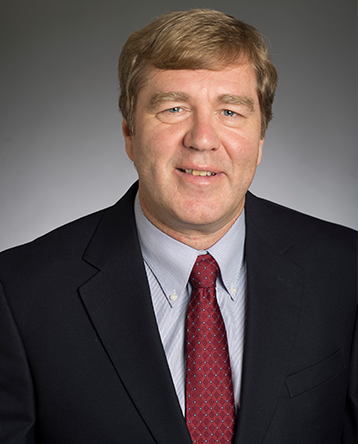
Peter Van Puyvelde is a Full Professor at KU Leuven's Faculty of Engineering Sciences, where he leads research at the Soft Matter, Rheology and Technology (SMaRT) unit within the Department of Chemical Engineering. He is an active member of the Applied Rheology and Plastics Processing Division and the Leuven.AM Institute for Additive Manufacturing. His academic responsibilities include membership in the Faculty Council of Engineering Sciences and departmental committees. His core research focuses on: Polymer processing and complex fluid dynamics In-situ characterization of flow-microstructure relationships Flow-induced crystallization phenomena Development of sustainable polymer materials Additive manufacturing technologies Professor Van Puyvelde's recent publications (2023-2025) demonstrate strong emphasis on sustainable polymer systems including lignin-based materials, humins valorization, bioplastics, and green additives. His work frequently employs advanced characterization techniques like fast-scanning calorimetry and synchrotron X-ray scattering to study crystallization kinetics and microstructure development in complex polymer systems. He currently supervises PhD students working on nanofiltration membranes and reinforced polymer parts. His extensive research portfolio includes leadership roles in multiple ongoing projects: Polylactic acid bioplastics development (Co-promoter) Lignin-based flame retardants (Co-promoter) Humins valorization for functional polymers (Co-promoter) Ionic liquids for enhanced oil recovery (Promoter) Competition between crystallization and crosslinking (Promoter) Additive manufacturing of polymer composites (Co-promoter)
Vladimir Spokoiny is a Professor at the Departments of Mathematics and Economics of the Humboldt University of Berlin and Head of the Research Group "Stochastic Algorithms and Nonparametric Statistics" at the Weierstrass Institute for Applied Analysis and Stochastics (WIAS) in Berlin, Germany. His research spans multiple areas of statistics, machine learning, and financial mathematics, with significant contributions to nonparametric statistics, high-dimensional data analysis, and statistical methods in finance. Spokoiny received his M.Sc. in applied mathematics from the Moscow Institute of Railway Engineering in 1981 and his Ph.D. in mathematics from Lomonosov Moscow State University in 1988. He completed his Habilitation at Humboldt University in 1996. His academic career includes positions at the All-Union Institute of Railway Transport in Moscow, the Institute for Information Transmission Problems in Moscow, and the Institute for Applied Analysis and Statistics in Berlin before joining the Weierstrass Institute and Humboldt University where he has been a professor since 2002. Spokoiny's research focuses on adaptive nonparametric smoothing and hypothesis testing, high dimensional data analysis, statistical methods in finance, image analysis with applications to medicine, classification, and nonlinear time series. His work often addresses the challenges of nonstationarity in time series data and develops innovative methods for volatility estimation and risk management. He has made significant contributions to the development of adaptive weights smoothing procedures, which have applications in image processing, community detection, and manifold learning. His recent work has expanded into high-dimensional statistics, Bayesian inference, and optimization methods for machine learning, with publications demonstrating novel approaches to Gaussian approximation, Laplace methods, and statistical inference in non-Euclidean spaces. Spokoiny has supervised numerous PhD students including Oliver Reiss, Danilo Mercurio, Ying Chen, Elmar Diederichs, and Mstislav Elagin, whose research has focused on mathematical finance, time series analysis, and statistical methods. He serves as an Associate Editor for The Annals of Statistics (since 2004) and Statistics and Decisions (since 2002), and has previously served on the editorial board of the Journal of Statistical Planning and Inference. His professional activities include reviewing for major statistical journals including Annals of Statistics, Bernoulli, Econometrica, and Journal of American Statistical Association, as well as reviewing grant proposals for the National Science Foundation (USA), German Research Foundation, and Netherlands Organisation for Scientific Research. Spokoiny is a member of several professional societies including the International Statistical Institute, American Statistical Association, Institute of Mathematical Statistics, and Bernoulli Society. He is fluent in Russian (mother tongue), English, and German, and has good knowledge of French. His research group at WIAS focuses on developing novel statistical methodologies with applications across various scientific domains, particularly emphasizing adaptivity and robustness in complex data environments. The group's work has significant implications for financial risk management, medical imaging, and machine learning applications, with recent publications addressing fundamental questions in high-dimensional statistics and nonparametric inference.
Professor Chunsheng Lu is a faculty member at Curtin University's School of Civil and Mechanical Engineering within the Faculty of Science and Engineering. He currently holds the position of Professor and serves as Editor-in-Chief of Mechanical Engineering Advances . His research focuses on fracture mechanics, multi-scale modeling, energy materials, nonlinear dynamics, and natural disaster risk analysis. Lu is actively involved in HDR (Masters/PhD) supervision, offering projects on advanced materials modeling and simulations. His research interests include mechanics of energy materials, multi-scale modeling, and fracture statistics. He has contributed to over 200 publications, with recent work emphasizing piezoelectric semiconductors, nanomaterials, and energy storage systems. Lu's teaching spans materials engineering, solid mechanics, and numerical methods.
Jiang Wang is the Mizuho Financial Group Professor at the MIT Sloan School of Management, where he has been a faculty member since 1990, progressing from Assistant Professor to his current named professorship. He holds appointments in the Finance department and maintains an active research program in financial economics. Massachusetts Institute of Technology, Sloan School of Management (2005-present) MIT Sloan School of Management: Assistant Professor (1990-1994), Associate Professor (1994-1998), Professor (1998-1999), NTU Professor (1999-2005) Wang's research focuses on financial economics, asset pricing, market liquidity, trading volume, and financial market microstructure , with significant contributions to understanding information dynamics in markets. His work bridges theoretical models with empirical analysis, particularly in Chinese capital markets. Wang has developed influential theories on liquidity, trading volume, and market efficiency that have shaped modern financial economics. His recent publications demonstrate continued scholarly productivity, with research spanning market uncertainty, circuit breakers, repo markets, and Chinese financial markets. Wang's work integrates theoretical modeling with empirical validation, maintaining relevance to both academic discourse and practical market concerns. China Economics Prizes (2018) Smith Breeden Prize (2007, 2006) New York Stock Exchange Award FAME Research Prize (2004) Trefftz Award, Western Finance Association (1990) Wang has advised numerous doctoral students and supervised significant research projects, though specific student names aren't listed in the available materials. His extensive grant history includes multiple NSF awards and industry-sponsored research. Wang has held leadership positions including President of the Western Finance Association (2017-2018) and Director of the China Center for Financial Research at Tsinghua University (2002-2014). His academic service includes editorial roles for major finance journals and advisory positions with institutions including the Federal Reserve Bank of New York, Nasdaq Stock Market, and China Securities Regulatory Commission.
Professor Guy Williams is a leading academic at the University of Cambridge with a focus on imaging science and clinical neurosciences, affiliated with Downing College and the Wolfson Brain Imaging Centre . Holding a PhD in Physics from his initial Natural Sciences degree, he specializes in nuclear magnetic resonance (NMR) and MRI techniques for brain imaging. Education: BA, PhD in Physics His research centers on non-invasive imaging of brain structure and function, particularly in traumatic brain injury (TBI) and dementia. His work involves developing novel MRI pulse sequences and advanced data analysis algorithms, including AI-based diagnostic tools. He leads studies on white matter integrity post-trauma, longitudinal dementia assessment, and applications of MRI in disorders of consciousness and addiction. Recent publications highlight collaborations in traumatic brain injury outcomes, AI-guided dementia prediction, and neuroimaging of post-COVID cognitive deficits. His team's work on ultra-high field laminar fMRI and distortion correction methods has advanced clinical neuroscience applications. Key techniques include diffusion tensor imaging (DTI), 7 Tesla MRI, and positron emission tomography (PET/MR). His research spans from basic NMR physics to clinical translation, with a strong emphasis on multi-site studies and real-world diagnostic implementation.
Professor Hala Zreiqat AM is a leading biomedical engineer at The University of Sydney , serving as the Director of the ARC Training Centre for Innovative BioEngineering . A Fellow of all major Australian academies (AAS, ATSE, FAHMS, FRSN), she develops 3D printed bioceramics for bone regeneration while championing diversity through initiatives like the IDEAL Society and BIOTech Futures mentorship program. Her work bridges academia, clinical practice, and industry in musculoskeletal research . Research Focus: Her lab creates synthetic bone scaffolds that mimic natural bone architecture, strength, and porosity, enabling non-rejected bone regeneration via patient-matched implants. Key applications include orthopaedic, dental, and maxillofacial repair , with over $18M in competitive funding and multiple patents. Current projects explore AI-driven scaffold performance prediction and anti-senescence strategies for aging-related bone loss. Scientific Trends: Recent publications highlight 3D printed nanovoxelated ceramics , antisenescence biomaterials , and multifunctional theranostic platforms . Her team integrates machine learning for scaffold design, atom probe tomography for interface analysis, and two-photon imaging for cellular monitoring in 3D environments. 2021-2022 Fulbright Senior Scholar 2018 NSW Premier's Woman of the Year 2019 Eureka Prize for Innovative Use of Technology Fellow of Australian Academy of Science (2021) Over $18M in research funding Teaching & Leadership: She designed core courses like Tissue Engineering and Nanomaterials in Medicine , mentoring 158 students in 2020 alone. As Chair of CAAR (2020-2023), she strengthens Australia-Arab collaborations. Her lab trains early-career researchers , with alumni now in academia and industry.
Jack Beuth is a Professor of Mechanical Engineering at Carnegie Mellon University (CMU), affiliated with the College of Engineering. He has been on the faculty since 1992 and leads the NextManufacturing Center, focusing on additive manufacturing (AM) research. His work emphasizes process mapping for AM, material science, and machine learning integration in manufacturing processes. Key affiliations include the Engineering Research Accelerator and the Manufacturing Futures Institute. Education: Ph.D. in Engineering Sciences, Harvard University (1992) M.S. in Engineering Sciences, Harvard University (1989) M.S. in Engineering Science and Mechanics, Virginia Tech (1987) B.S. in Engineering Science and Mechanics, Virginia Tech (1984) Research Interests: Additive Manufacturing (process modeling, material characterization, and defect analysis) Melt pool dynamics and thermal modeling Machine learning for process optimization and quality control Advanced materials for AM (e.g., Ti-6Al-4V, Inconel 718) His research has led to innovations like 'process map' approaches for AM, enabling better control over variables such as melt pool geometry and microstructure. Awards and Recognition: Ralph R. Teetor Educational Award (1998) George Tallman and Florence Barrett Ladd Development Professorship (2000) ASME Curriculum Innovation Award (2005) Benjamin Richard Teare Teaching Award (2009) Grants and Collaborations: $3.5M cooperative agreement with the U.S. Army Combat Capabilities Development Command’s Army Research Laboratory (ARL) for AI-driven AM process optimization. Collaborations with Westinghouse Electric Company on 3D-printed nuclear components, such as spacer grids for pressurized water reactors. Labs and Teams: NextManufacturing Center: A research hub for AM innovation, emphasizing industrial partnerships and applied research. Beuth’s Additive Lab: Specializes in melt pool analysis, process mapping, and material behavior under AM conditions.
Ghazal Aarabi is an Associate Professor at the Department of Periodontology, Preventive Dentistry and Dental Conservation within the University Medical Center Hamburg-Eppendorf (UKE). She actively participates in clinical research projects and publications focusing on oral-systemic health connections. Researcher in periodontal epidemiology Key contributor to the Hamburg City Health Study (HCHS) Principal investigator in migration health research (MuMi Study) Research Focus spans three main areas: Periodontal-Brain Interactions through inflammatory pathways Oral Health Literacy among migrant populations Oral-Cardiovascular Links in aging populations Selected Publications (2018-2022) demonstrate her work in: Periodontal disease and cerebral microangiopathy Dental care utilization during pandemics Oral health disparities in migration contexts Current Projects include: PAROCARD : Oral health and cardiovascular surrogate markers MuMi : Migrant oral health promotion Cerebral Microangiopathy study in periodontitis patients
Zoran Cenev holds a Tenure Track Assistant Professor position within the Mechatronics and Dynamics section of the Department of Mechanical and Production Engineering at the School of Engineering, Aarhus University. His primary institutional affiliation is with AU Engineering, and contact details include email zoran.cenev@mpe.au.dk and telephone +45 20 64 75 44, with office location Aarhus N, 5128-140. Research interests focus on interdisciplinary applications of magnetic and robotic systems: Robotic micromanipulation via electromagnetic needles Ferrofluid-based biofabrication for skeletal muscle engineering Laser-induced photothermal droplet control Theoretical modeling of particle dynamics at fluid interfaces Surface engineering for underwater metallic stability Nanostructure formation through ion bombardment His recent publications (2023-2025) reveal a dominant trend in adapting ferrofluids for biomedical automation, particularly 3D bioprinting of magnetically responsive tissues and droplet manipulation on engineered surfaces. This work bridges mechanical engineering with regenerative medicine, emphasizing practical implementations of theoretical models for microscale precision. Scientific awards are not documented in the provided information. As a faculty member, Dr. Cenev likely mentors graduate students and pursues research grants, though specific advisees or funding details are absent. Departmental laboratories and workshops support his experimental work in mechatronics, with emphasis on magnetic manipulation systems and surface characterization.
Daan Christiaens is a tenure track lecturer at KU Leuven's Faculty of Medicine and Faculty of Engineering Sciences. He is affiliated with the Department of Electrical Engineering (ESAT) and Department of Imaging & Pathology, serving as a member of the Medical Imaging Division and the KU Leuven Brain Institute (LBI). His academic responsibilities include membership in the Faculty Councils of Engineering Sciences and Medicine. His research focuses on: Inverse problems in medical imaging reconstruction Neuroimaging techniques for brain analysis Advanced quantitative MRI methodologies Diffusion-weighted imaging for microstructural assessment Dr. Christiaens' recent publications (2023-2025) demonstrate a consistent focus on diffusion MRI innovations, including novel reconstruction algorithms, neonatal brain development mapping, and clinical applications for neurodegenerative disorders. Key technical themes include motion correction, multi-shell modeling, and AI-enhanced image processing, while clinical applications span Alzheimer's disease, cerebral palsy, and autism research. He leads significant research projects including: MRI reconstruction with dynamic field monitoring (2024-2028) Compressed sensing for microstructure imaging (2022-2026) Neonatal diffusion MRI network connectivity analysis (2024-2028) As a core developer of the MRtrix3 software framework for medical image processing, he contributes to essential tools in neuroimaging research.
Dr. KN Sasidhar is a Researcher in the Department of Microstructure Physics and Alloy Design at Heinrich Heine University Düsseldorf. His work focuses on advanced materials science, particularly corrosion mechanisms, alloy design, and nanoscale structural analysis. He employs cutting-edge techniques like in situ synchrotron investigations and deep learning frameworks to study material behavior under extreme conditions. Current research emphasizes corrosion resistance in stainless steels, phase transformations during nitriding, and radiation effects on coatings. Key achievements include pioneering studies on nanoscale amorphization in metallic systems, data-centric approaches for materials discovery, and the development of predictive models for alloy performance. His work bridges experimental materials characterization with computational methods, addressing challenges in energy and aerospace applications. Publications span corrosion analysis, microstructural evolution under irradiation, and phase separation phenomena. Collaborative projects involve synchrotron facilities and interdisciplinary teams focusing on materials informatics. No formal awards or grants are explicitly listed in the provided texts, though his prolific publication record indicates active academic engagement.
Aviad Levis is an Assistant Professor at the University of Toronto's Department of Computer Science, starting July 2024. He is affiliated with the Dunlap Astronomical Data Science and Technology Group (DADDAA) and collaborates with the Toronto Computational Imaging Group alongside Kyros Kutulakos and David Lindell. Previously, he was a postdoctoral researcher at Caltech's Computing + Mathematical Sciences department under Katherine Bouman, working with the Event Horizon Telescope (EHT) collaboration. PhD in Electrical Engineering from the Technion (supervised by Yoav Schechner) Research focuses on computational imaging tools at the intersection of AI and physics Develops algorithms for 3D tomography in both cloud physics and black hole imaging Recipient of ERC Synergy grant for CloudCT space mission His research spans two major domains: Computational Climate Imaging through cloud tomography to improve climate models, and Black Hole Imaging with the EHT collaboration. He pioneered methodologies for 3D cloud structure recovery using scattered sunlight and contributes to dynamic 3D reconstructions of black hole environments. Current interests include non-linear inverse problems, equation discovery from data, and ML-accelerated scientific simulations. Recent publications highlight advancements in atmospheric tomography and black hole emission modeling. His work on CloudCT involves coordinated nano-satellites for 3D cloud imaging, while EHT contributions include first images of Sagittarius A* (2022) and ongoing development of algorithms for 3D structure recovery. The ERC Synergy grant underscores his impact on climate imaging technology. Personal Website Work Email
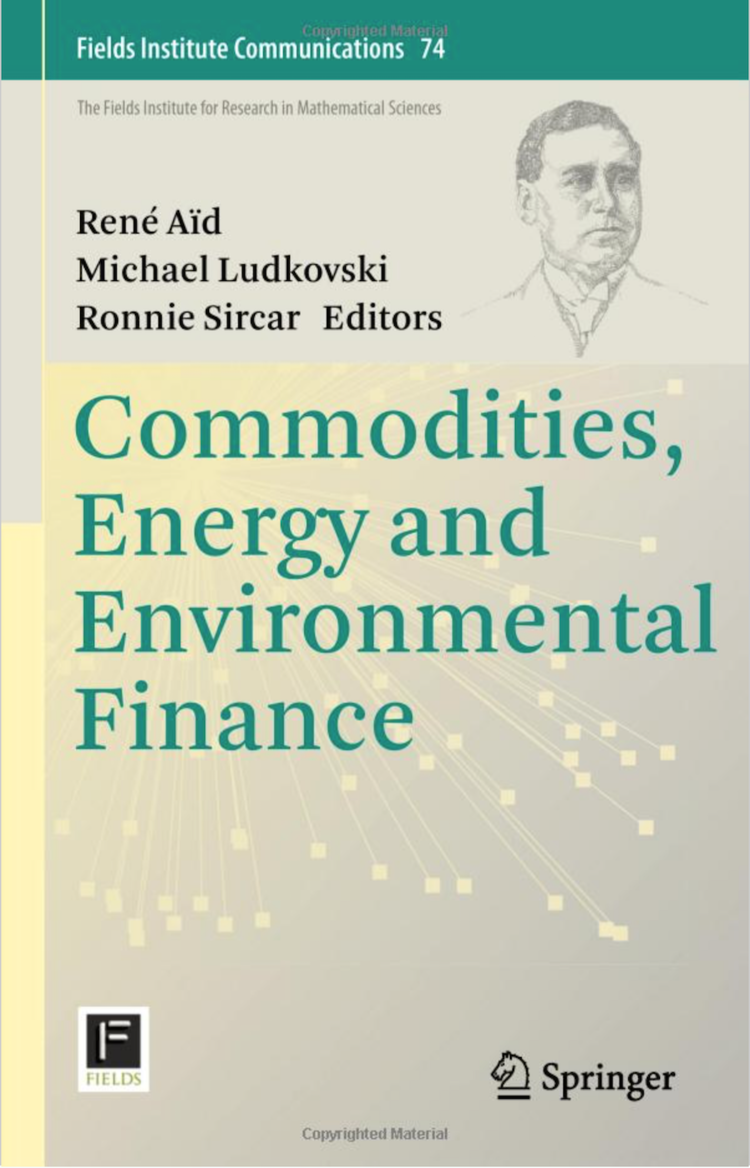
Ronnie Sircar is the Eugene Higgins Professor of Operations Research and Financial Engineering at Princeton University , where he contributes to the Department of Operations Research and Financial Engineering (ORFE). His work spans financial mathematics, stochastic modeling, and applied probability, with a focus on market volatility, optimal investment strategies, and dynamic game theory. Email: sircar@princeton.edu Office: Sherrerd Hall, Room 208, Princeton, NJ 08544 His research interests include: Stochastic Volatility: Asymptotic analysis, calibration, and impact on option pricing and portfolio optimization. Mean Field Games: Applications to cryptocurrency mining, energy markets, and interbank network formation. Portfolio Theory: Forward performance processes, drawdown constraints, and risk-averse strategies. Credit Risk: Multi-name credit derivatives, CDO valuation, and risk measures. Energy Systems: Renewable reliability, unit commitment, and electricity market design. Recent publications emphasize mean field games in energy and blockchain, stochastic volatility in portfolio optimization, and machine learning applications for financial engineering. He has advised graduate students such as Giulia Crippa, Nicolas Garcia, and Burak Aydin, often collaborating with researchers including M. Soner, P. Chan, and A.M. Reppen.
Dr. Yi Shen is a Senior Lecturer at the School of Chemical and Biomolecular Engineering, The University of Sydney, and Chair of RACI Women in Chemistry. She is also affiliated with multiple research institutes including Sydney Institute of Agriculture, Sydney Southeast Asia Centre, The Centre for Drug Discovery Innovation, and The University of Sydney Nano Institute. PhD in Soft Materials from ETH Zurich Postdoctoral research at University of Cambridge and Harvard University Her research focuses on protein phase behavior and functional biomaterials development, utilizing soft matter approaches and microfluidic techniques to address challenges in neurodegenerative diseases, sustainable materials, and biomedical engineering. She has published extensively in top journals like Nature Nanotechnology and PNAS, with a particular emphasis on: Protein liquid-liquid phase separation mechanisms Biomaterials from protein nanofibrils Microfluidic manipulation of biological systems Biodegradable bioplastics development Shear force effects on biomolecular systems Pathological protein aggregation dynamics Key scientific achievements include: 2022 ARC DECRA Fellowship 2022 Sydney Nano Frontier award 2018 ETH Zurich Spark Award (for Fe delivery system invention) 2012 Princeton Grand Challenges Program 2 patents pending 2 Nature Nanotechnology cover articles As an educator, she coordinates CHNG2802 Chemical Engineering Modelling and Analysis, co-teaches CHNG3804 Biochemical Engineering and CHNG5605 Bio-products: Laboratory to Marketplace, and guest lectures across biomedical and nanotechnology programs. Her lab actively collaborates with institutions in Switzerland (ETH Zurich), UK (Cambridge), and US (Harvard, Princeton), focusing on transforming biomolecular understanding into real-world applications in health, industry, and environmental sustainability.
Rama Cont is Statutory Professor of Mathematics at the University of Oxford and Head of the Oxford Mathematical and Computational Finance Group. He holds additional positions as Senior Research Fellow at the Institute for New Economic Thinking and Director of the Oxford Martin Programme on Systemic Resilience. Cont's research focuses on stochastic analysis and mathematical finance, particularly modeling extreme market risks, systemic risk, and developing pathwise approaches in stochastic analysis. His recent work explores causal functional calculus, fractional Ito calculus, and analysis of deep neural networks. His publications demonstrate consistent development of mathematical frameworks for financial risk analysis, including recent advances in causal transport theory and market microstructure modeling. Cont received the Louis Bachelier Prize in 2010 and was elected SIAM Fellow in 2017 for contributions to stochastic analysis and financial modeling.