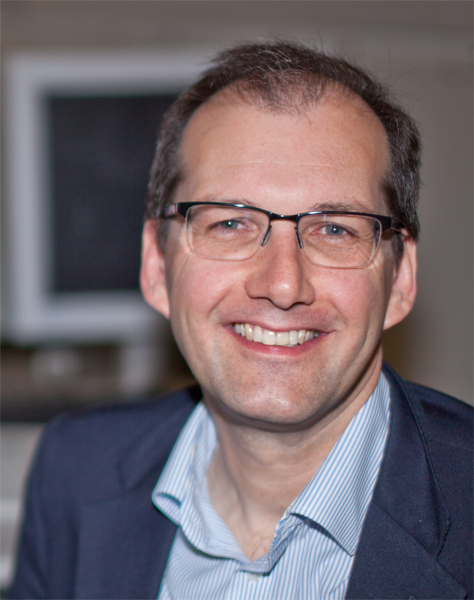
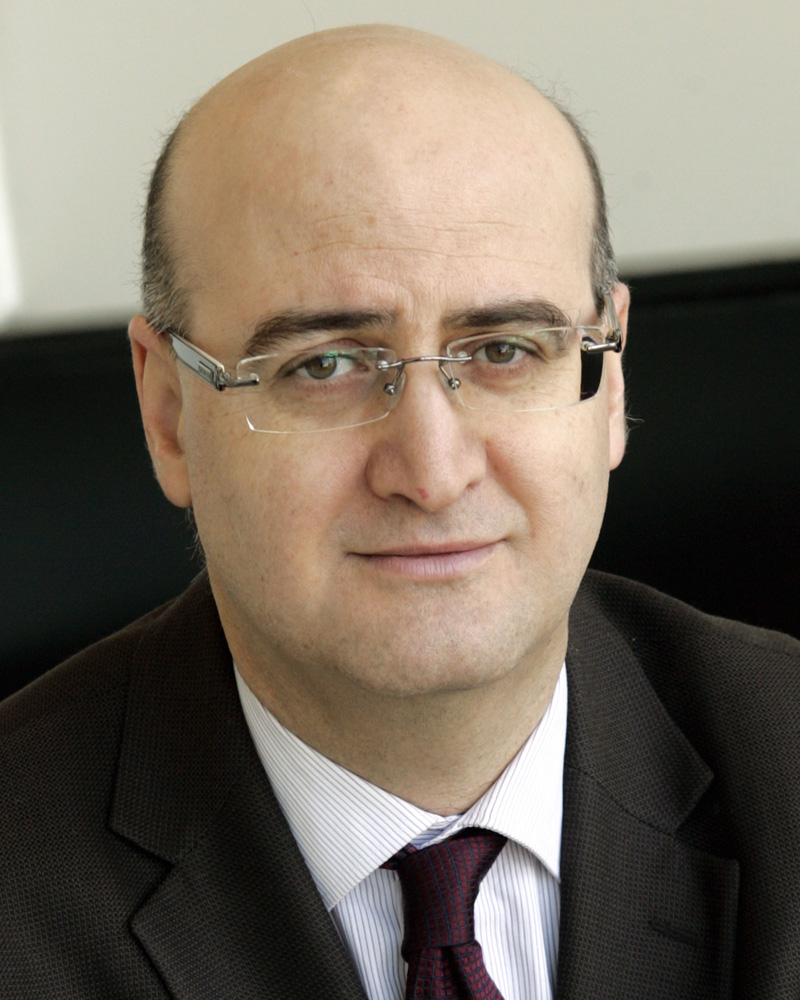
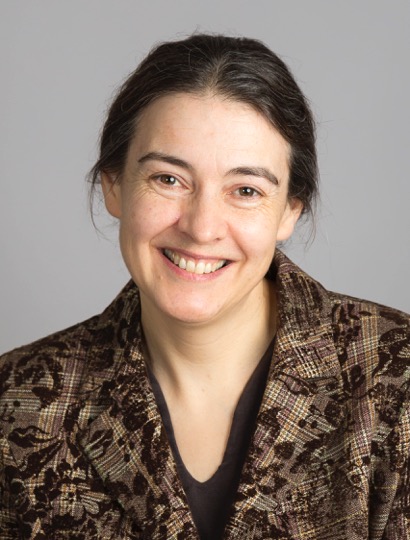
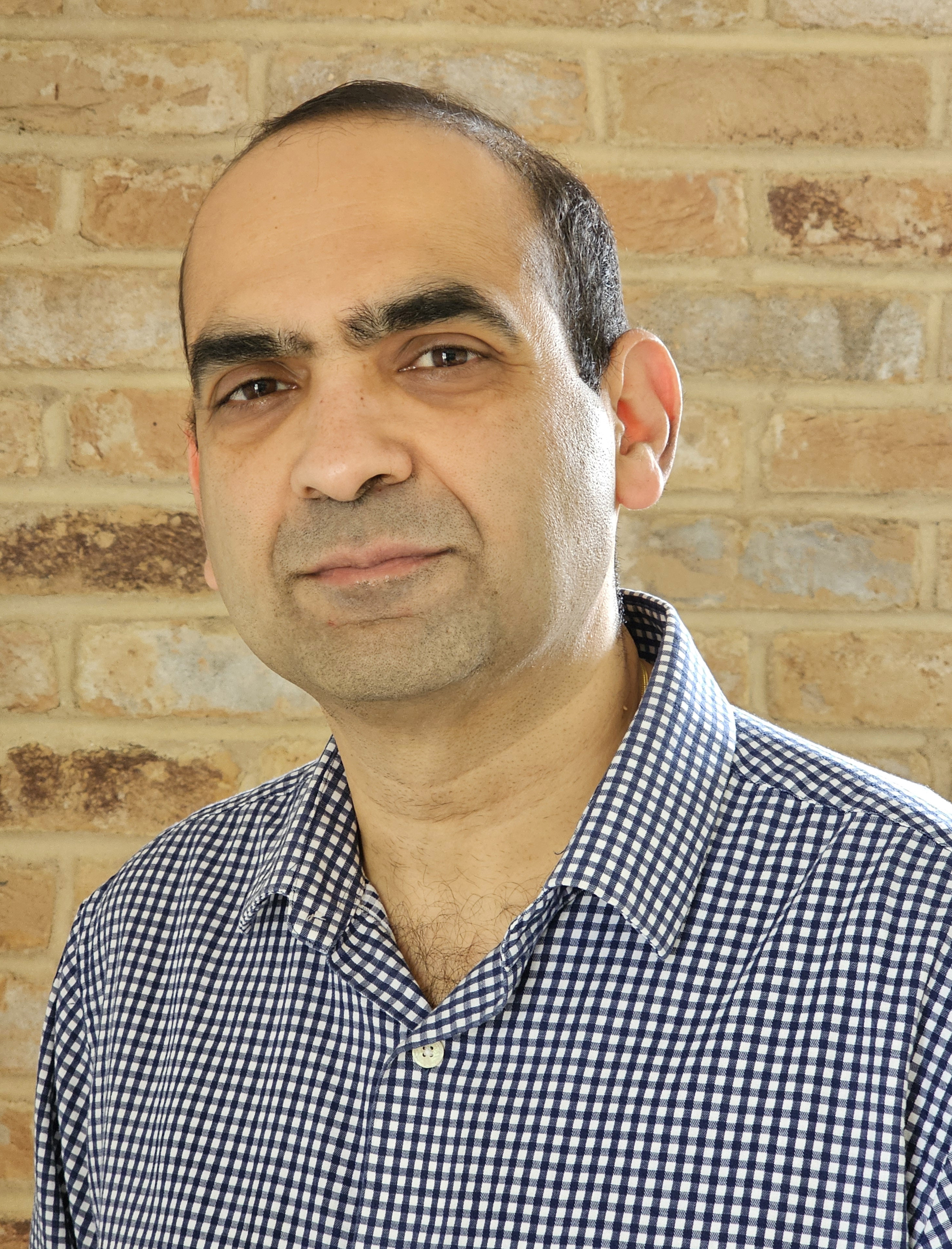
Professor Paul Midgley is a leading academic in Materials Science at the University of Cambridge's Department of Materials Science and Metallurgy, serving as Professor since 2007 and Head of Department from 2018–2020. He is a Fellow of Peterhouse College and holds multiple prestigious awards, including the Royal Society Fellowship and the Ernst Ruska Prize. Education: PhD in Physics (University of Bristol, 1991), MSc (Distinction) in Semiconductor Materials (1988), BSc (Hons) Physics (1987). Administration: Director of the Wolfson Electron Microscopy Suite, and active on various University committees including Research, Teaching, and REF. His research focuses on advanced electron microscopy techniques such as convergent beam diffraction, electron tomography, and nanostructure analysis, with applications in nanoscale materials science and 3D reconstruction using compressed sensing. He has pioneered methods like precession electron diffraction and multi-dimensional electron microscopy, contributing to fields like plasmonic nanoparticles and catalytic materials. Key Research Themes: Electron crystallography, nanomaterial characterization, energy materials, and defect analysis in perovskites. Midgley has delivered over 20 invited/plenary lectures globally, including at EUROMAT, the Welch Symposium, and the John Cowley Memorial Lecture. His grant income exceeds £16M as Principal Investigator. Labs/Teams: Leads the Wolfson Electron Microscopy Suite and collaborates internationally on microscopy advancements and materials innovation.
Henry Jäger is a Professor in Food Technology at the University of Natural Resources and Life Sciences, Vienna (BOKU) since 2014. Previously, he worked as a Project Manager at Nestlé (2012-2014) and Lecturer at TU Berlin (2012-2017), following his PhD/Postdoc at TU Berlin (2006-2012) and Diploma in Food Technology (2000-2006). His research focuses on electrotechnologies in food processing , particularly pulsed electric fields (PEF) and ohmic heating , for microbial inactivation, food preservation, and quality optimization. He explores applications in plant material processing , gluten-free baking , and novel food preservation methods . His work also addresses edible insect processing for allergenicity reduction and protein recovery. Recent publications (2025-2024) analyze synergies between PEF and ohmic heating, biofilm imitation systems for hygiene validation, and computational models for sterilization processes. These studies span food safety , sustainable processing , and functional food design . Henry Jäger actively contributes to scientific communities, serving on the EFFoST managing board , as scientific advisor for food conferences, and as reviewer for journals like Food Chemistry and Trends in Food Science & Technology . He has organized workshops on PEF applications and contributed to EU food technology initiatives.
Professor Moncef Gabbouj is a distinguished academic and researcher currently serving as Professor of Signal Processing at the Department of Computing Sciences, Faculty of Information Technology and Communication Sciences, Tampere University, Finland. Previously, he held the same position at Tampere University of Technology before the merger in 2019. He has also held visiting professorships at prestigious institutions including Hong Kong University of Technology and Science, University of Southern California, and Purdue University. Ph.D. and MSc. in Electrical Engineering from Purdue University, USA (1989 and 1986) B.Sc. in Electrical Engineering from Oklahoma State University, USA (1985) Prof. Gabbouj's research spans multiple domains within signal and image processing, with a strong focus on machine learning applications. His primary research interests include artificial intelligence, machine learning, Big Data analytics, multimedia content-based analysis, indexing and retrieval, nonlinear signal and image processing, voice conversion, and video processing and coding. His work bridges theoretical advancements with practical applications across various industries, particularly in multimedia communications and biomedical applications. His extensive publication record demonstrates a clear evolution from traditional signal processing techniques toward more sophisticated machine learning and deep learning approaches. Recent work shows increasing focus on convolutional neural networks for various applications including ECG classification, video processing, financial time-series analysis, and image recognition tasks, reflecting the broader trend in the field toward deep learning methodologies while maintaining strong foundations in signal processing theory. IEEE Fellow (2011) Member, Finnish Academy of Science and Letters (2014) Knight, First Class, of the Order of the White Rose of Finland (2006) Nokia Foundation Recognition Award (2005) Nokia Foundation Visiting Professor Award (2012) Finnish Cultural Foundation for Art and Science Award (2017) TUT Foundation Grand Award (2015) Prof. Gabbouj has supervised 64 doctoral and 72 Master's theses, demonstrating his significant contribution to academic mentoring. His research has been supported by substantial funding, including research grants totaling 8.5 million Euro (2001-2015). He has served as Academy of Finland Professor during 2011-2015 and has been involved in numerous EU research projects including Horizon, ESPRIT, HCM, IST, COST, Tempus and Erasmus programs. As Editor, Guest Editor or member of the Editorial Board of 6 international scientific journals, he has significantly influenced the academic discourse in his field. He leads the Signal Analysis and Machine Intelligence (SAMI) research group at Tampere University and serves as the Finland Site Director of the NSF IUCRC funded Center for Visual and Decision Informatics. His research unit focuses on applying advanced machine learning techniques to solve complex problems in signal processing, computer vision, and multimedia analytics, with applications ranging from healthcare to multimedia communications and financial analysis.
Assoc. Prof. Zehra Eksi-Altay holds a position at the Institute for Statistics and Mathematics at Vienna University of Economics and Business (WU). Her research focuses on financial mathematics, stochastic modeling, and partial information control problems in finance. She has expertise in credit risk modeling, derivatives pricing, and commodity markets. Eksi-Altay has a PhD in Financial Mathematics (2011) and completed her Habilitation in 2017. She has advised one doctoral thesis and has published extensively in top-tier journals like Quantitative Finance and Journal of Computational and Applied Mathematics . Her work bridges theoretical advancements with practical applications in areas such as regime-switching models, optimal portfolio strategies, and liquidity analysis. Education: BSc, MSc (2005), PhD (2011) Habilitation: 2017 Key Research Themes: Partial Information Models, Stochastic Control, Credit Risk, Algorithmic Trading Her recent work explores regime-switching affine term structures, optimal trading strategies under uncertainty, and dark pool liquidity analysis. Eksi-Altay has received one academic prize, though its specific name is not detailed in the provided text. Her contributions span both theoretical developments and applied finance, often collaborating with institutions like WU’s Institute for Statistics and Mathematics.
Grey Clare is a Professor of Materials Chemistry at the University of Cambridge and holds an adjunct professorship at the State University of New York (SUNY) at Stony Brook. She is a Fellow of Pembroke College, Cambridge, and has led major research initiatives, including the Materials Research Interest Group at Cambridge (2010–2015) and the Northeastern Chemical Energy Storage Center (2009–2015). Her research focuses on NMR spectroscopy, energy storage materials, batteries, supercapacitors, and carbon capture technologies. Key contributions include pioneering work on lithium-ion battery electrodes, structural analysis of energy materials via NMR, and advancements in fuel cell and supercapacitor technologies. Clare has held leadership roles in academic and industrial collaborations, including directorships of DOE-funded energy storage centers. Her honors include the Davy Medal (2014), Fellowship of the Royal Society (2011), and multiple international awards for battery research and mentoring. Research Highlights: Development of advanced battery materials, in situ NMR techniques for energy systems, and structural insights into electrochemical interfaces. Awards: Over 20 prestigious awards, including the Royal Society Kavli Medal, Laukien Award, and multiple honorary PhDs. Leadership: Directed interdisciplinary energy storage initiatives, mentored numerous researchers, and contributed to global energy technology advancements.
Vikram Deshpande is a Professor in the Department of Engineering at the University of Cambridge, UK, where he has been employed since 2010. He also maintains significant international connections, having served as a Visiting Professor at the Technical University of Eindhoven (2009-2017) and previously holding positions at the University of California, Santa Barbara and Brown University. His research spans multiple disciplines within solid mechanics and materials science, focusing on fundamental mechanisms that govern material behavior across different scales. His research interests encompass Mechanobiology , where he explores cellular organization mechanisms; Solid mechanics with applications to impact and failure; Data-driven mechanics approaches; Microarchitectured solids including mechanical metamaterials; Fluid-structure interaction in impact scenarios; Chemo-mechanics of battery materials; and Dislocation mechanics for understanding material deformation. His work uniquely bridges fundamental physics with practical engineering applications, particularly in developing materials with tailored mechanical properties. The analysis of his recent publications reveals a strong focus on mechanical metamaterials, cellular mechanics, and electro-chemo-mechanical phenomena in energy storage systems. His research demonstrates a consistent pattern of addressing fundamental scientific questions while maintaining strong connections to practical engineering applications, particularly in materials design, protective systems, and energy technologies. His publications frequently combine experimental approaches with sophisticated modeling techniques across multiple scales. 2024 Zdeněk P. Bažant Medal for Failure and Damage Prevention 2023 Fellow, Royal Academy of Engineering and International Member US National Academy of Engineering 2022 Warner T. Koiter Medal and William Prager Medal 2022 European Research Council (ERC) Advanced Grant 2021 Gili Agostinelli Prize and IIT Bombay Distinguished Alumnus Award 2020 Fellow, Royal Society of London and Rodney Hill Prize Professor Deshpande has served on numerous editorial boards including the Journal of the Mechanics and Physics of Solids (current Associate Editor), Modelling and Simulation in Materials Science and Engineering, and Proceedings of the Royal Society A. He chairs the Royal Society Sectional Committee 4 and serves on the Advisory Board of the European Mechanics Society EUROMECH. His leadership extends to directing the International Conference on Fracture and chairing the EUROMECH Mechanics of Materials Conference committee. His research group at Cambridge, accessible through cambridgesolidmechanics.co.uk, focuses on developing fundamental understanding of material behavior to enable the design of next-generation engineering materials.
Nikolaus Hautsch is a full Professor at the Faculty of Economics, Institute of Statistics and Operations Research. His work focuses on econometrics, finance, and high-frequency data analysis. Research Interests : Market microstructure, volatility modeling, transaction costs, systemic risk, and machine learning applications in finance. Publication Trends (2025–2018): 2025: High-dimensional portfolio optimization, dynamic systemic risk 2024: Blockchain asset arbitrage, DeFi, polarization metrics, jump detection 2023–2022: Microstructural noise, volatility forecasting, neural networks Scientific Awards : Fellow of the Society for Financial Econometrics (2014) Projects : Artificial Intelligence in Rowing (2022–2025) Vienna Graduate School of Finance (2018–2022) Risk management of CCPs
Sylvain Lefebvre is a permanent researcher at INRIA (Institut National de Recherche en Informatique et en Automatique) in France, where he leads the MFX research team since 2018. Previously, he was part of the ALICE group at INRIA Nancy (2009-2018) and the REVES team in Sophia Antipolis (2006-2009). His career includes a postdoctoral position at Microsoft Research Seattle (2005) following his PhD at INRIA Rhones-Alpes under Fabrice Neyret. His educational background includes a PhD in Computer Graphics from Université Joseph Fourier (Grenoble) in 2005, preceded by a Master in Computer Graphics from INP Grenoble in 2001. His habilitation thesis focused on Runtime Texture Synthesis. Lefebvre's research centers on simplifying content creation for highly detailed patterns, structures, and shapes with applications spanning Computer Graphics to additive manufacturing. He develops fast, controllable by-example synthesis approaches that generate content while enforcing user-specified constraints. His work addresses computational challenges through novel data structures and algorithms optimized for GPUs and FPGAs, including his Silice programming language. The ERC-funded ShapeForge project (2012-2017) advanced shape generation for 3D printing, leading to the IceSL software for digital modeling and fabrication. Analysis of his 15 most recent publications reveals a strong focus on additive manufacturing optimization, with recurring themes in structural integrity, material efficiency, and geometric algorithms. His work bridges computer graphics theory with practical fabrication constraints, particularly in microstructure design, slicing techniques, and mechanical metamaterials. The interdisciplinary nature spans computer science, materials engineering, and robotics. EUROGRAPHICS Young Researcher Award (2010) ERC Starting Grant for ShapeForge project (2012) Lefebvre has advised over 25 PhD students and interns including Marco Freire, Thibault Tricard, and Jimmy Etienne. His ShapeForge project received significant ERC funding, supporting research in computational fabrication. He serves on numerous program committees including SIGGRAPH, Eurographics, and SIGGRAPH Asia, reflecting his leadership in the computer graphics community. As leader of the MFX team since 2018, Lefebvre directs research in computational fabrication, focusing on IceSL software development for 3D printing workflows. The team integrates computer graphics techniques with manufacturing constraints, developing tools that simplify complex object design and fabrication while addressing real-world challenges in material usage and structural integrity.
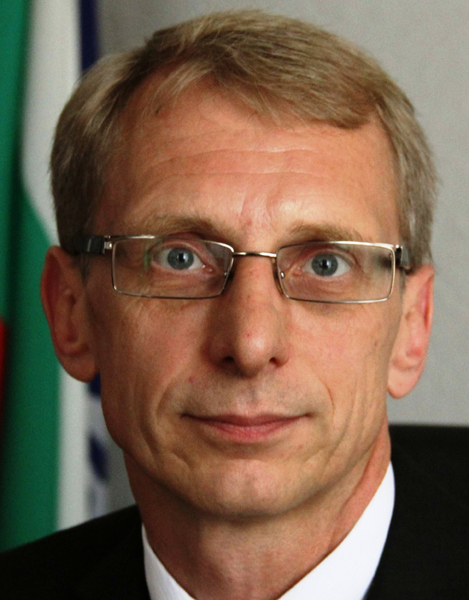
Nikolai Denkov is a Professor of Physical Chemistry at Sofia University's Faculty of Chemistry and Pharmacy, leading the Laboratory of Active Formulations and Materials since 2017. His administrative roles include Head of the Department of Chemical Engineering (2008–2015), Deputy Minister (2014–2016), and Minister of Education and Science of Bulgaria (2017). He holds a DSc from Sofia University (2007) and has authored over 160 peer-reviewed articles with an h-index of 45. Research focuses on colloid science, surfactant systems, and interfacial phenomena, including foam rheology, emulsion stability, and self-shaping of oil droplets. His studies bridge fundamental physics and industrial applications in cleaning agents, food technology, and pharmaceuticals. Key contributions include discovering antifoam mechanisms and self-emulsification processes. Recipient of the Solvay Prize (2019) and Bulgaria's highest scientific honor, 'Pythagoras' (2010) Supervised 12 PhD students and led 40+ industry-funded projects with companies like Unilever and BASF Active in international organizations: IACIS Council member, ERC panel chair, and ESA advisor His work emphasizes translational research, with patents in formulation technologies and over 7,300 citations. Current research explores smart materials and micro/nanostructured systems.
Ares Rosakis is the Theodore von Kármán Professor of Aeronautics and Mechanical Engineering at the California Institute of Technology (Caltech). He has served as Chair of the Division of Engineering and Applied Science (2009–2015) and Director of the Graduate Aeronautical Laboratories (GALCIT) (2004–2009). Rosakis holds visiting professorships at Nanyang Technological University (2018–2023) and Northwestern University (2018). Education : B.A. and M.A. in Engineering Science (Oxford, 1978); Sc.M. and Ph.D. in Engineering (Solid Mechanics, Brown University, 1980–1982) Academic Career : Caltech faculty since 1982 (Assistant, 1982; Associate, 1988; Full Professor, 1993) As a world-leading expert in dynamic failure mechanics of solid materials, Rosakis has pioneered research in dynamic ductile failure of metals, intersonic/supershear ruptures in composites and earthquakes, and Coherent Gradient Sensing (CGS) interferometry . His work spans experimental mechanics, solid mechanics, geophysics, and thin film stress measurement. His 15 most recent articles (2010–2014) focus on dynamic shear ruptures , fault mechanics , brittle failure , high-strain-rate deformation , and laboratory earthquake simulations , reflecting his cross-disciplinary expertise in materials science, geophysics, and mechanics. Scientific Awards & Recognitions Foreign Member of the Royal Society (2024) Two Honorary Doctorates (2023) U.S. National Academy of Engineering (2011) NASA Group Achievement Award (2009) Timoshenko Medal (2018) Multiple SEM and ASME awards (1989–2013) Research Leadership includes directing GALCIT and developing advanced optical and infrared diagnostic methods for real-time crack propagation and temperature measurement. His work bridges fundamental mechanics with applied material failure analysis , influencing aerospace, seismology, and nanotechnology.
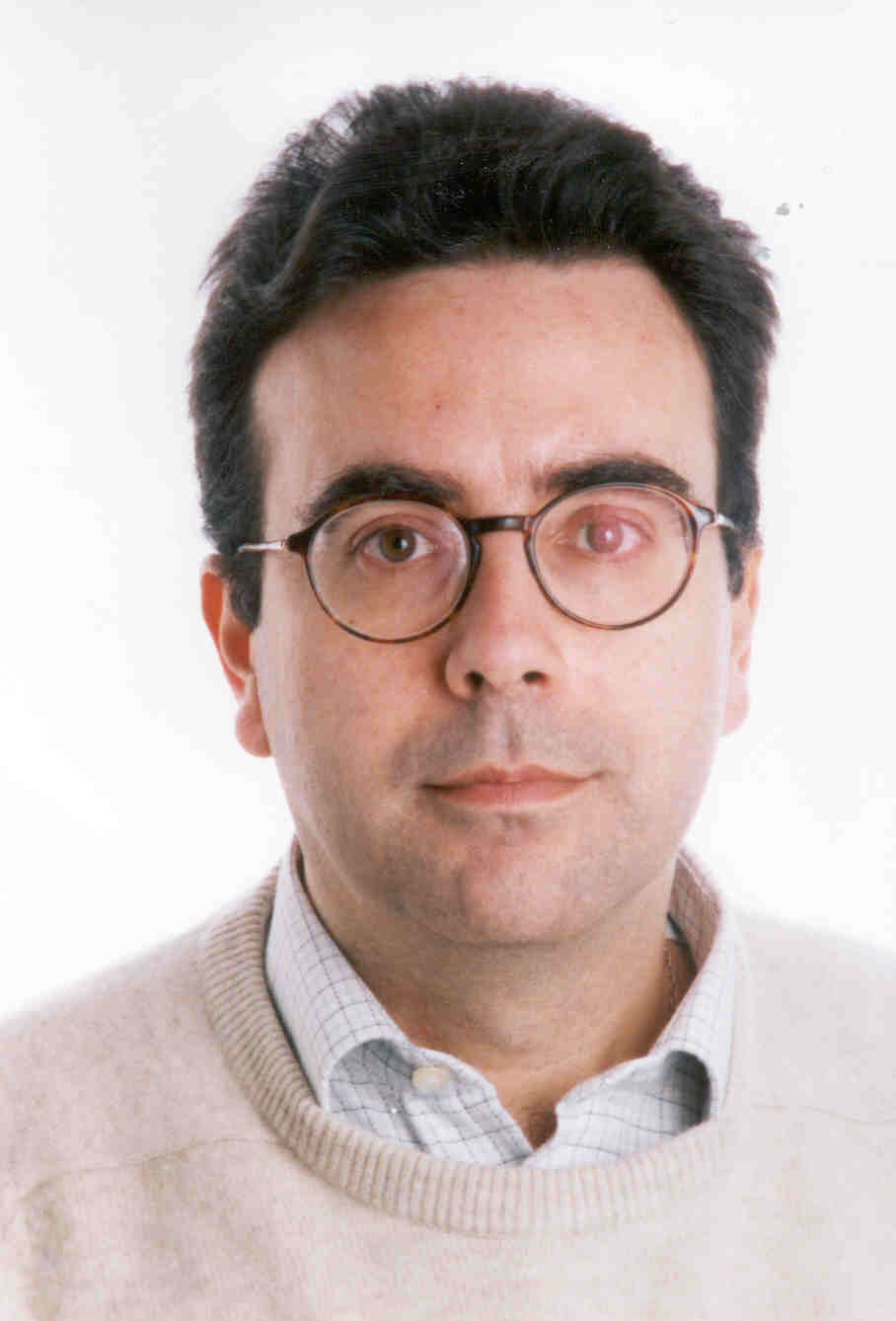
Enrique Sentana is a Professor of Economics at CEMFI (Centro de Estudios Monetarios y Financieros) in Madrid, Spain. He is also a Research Fellow at the CEPR Financial Economics Programme and a Senior Research Associate at the LSE Financial Markets Group. His academic career spans prestigious institutions including the London School of Economics and the University of Alicante. Degrees: PhD in Economics (LSE, 1991), MSc in Econometrics and Mathematical Economics (LSE, 1987), Licenciado en Ciencias Económicas y Empresariales (University of Alicante, 1985) Dr. Sentana specializes in Econometrics , with a focus on Asset Pricing , Financial Economics , and VIX Derivatives . His methodological contributions include work on ARCH models, indirect estimation, and identification issues in econometrics, advancing volatility modeling and financial risk assessment. His research trends highlight innovations in empirical asset pricing , nonlinear time series , and financial market linkages . Notable achievements include the Rey Jaime I Prize in Economics (2014) , Fellowships at the Econometric Society and Journal of Econometrics , and prestigious prizes from the University of London and LSE. Scientific Awards: Rey Jaime I Prize in Economics (2014) Fellow of the Econometric Society (2012) Fellow of the Journal of Econometrics (2010) Sayers Prize, University of London (1992) Ely Devons Prize, London School of Economics (1987) Dr. Sentana has advised 10 PhD students at CEMFI and held editorial roles including Managing Editor of the Review of Economic Studies and Co-Editor of the Journal of Financial Econometrics . He has also served as Executive Vice-President of the Econometric Society and Treasurer of its European Standing Committee.
Martin Ostoja-Starzewski , Ph.D. (McGill), is a Professor of Mechanical Science & Engineering at the University of Illinois at Urbana-Champaign , with affiliate appointments at the Beckman Institute and National Center for Supercomputing Applications . His research spans continuum mechanics , stochastic wave propagation , and fractal media , focusing on scaling laws and the statistical-to-representative volume element transition. 2006–Present: Professor, UIUC 2001–2005: Canada Research Chair, McGill University 2023: Rothschild Distinguished Visiting Fellow, University of Cambridge 2022: Member, European Academy of Sciences and Arts 2024: Academia Europaea Foreign Member His work pioneered continuum mechanics with spontaneous second law violations and tensor random fields for stochastic PDEs. He authored four foundational books, including Tensor-Valued Random Fields for Continuum Physics (2019), and edited 16 special issues. Recent 2025–2023 articles explore odd elasticity , fractal thermodynamics , and stochastic wavefronts , bridging non-equilibrium thermodynamics to granular Couette systems . Scientific accolades include the Worcester Reed Warner Medal (2018) and ASME , AAM , SES fellowships. As part-time faculty at Beckman Institute (2008–Present), he integrates bioimaging with mechanics across electrosurgery and traumatic brain injury modeling.
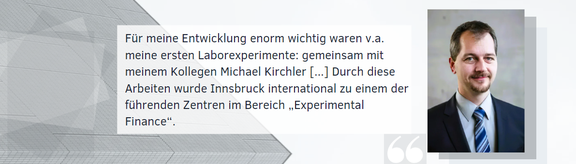
Jürgen Huber is a Full Professor in Finance and Head of the Department of Banking and Finance at the University of Innsbruck. He has been a central figure in experimental finance since 1998, founding the Society for Experimental Finance and leading international collaborations with institutions like Stockholm School of Economics and VU Amsterdam. Education: PhD in Political Sciences (2001) and Business Administration (Habilitation, 2007), both from University of Innsbruck. Research Interests: His work spans Experimental Economics , Behavioral Finance , and Meta Science , focusing on market microstructure, replicability of scientific research, and communication behavior. Recent projects explore: Climate change policy through CO2 taxation and climate dividends . Digital finance implications of cryptocurrencies and NFTs . Communication differences (face-to-face vs. online) and their impact on decision-making. Scientific objectivity in peer review via the Nobel and Novice project. Article Trends: His 2024 publications in Nature Human Behaviour and PNAS emphasize replicability crises, climate economics, and communication behavior. Earlier work in Management Science and Journal of Economic Behavior and Organization analyzes market microstructure, financial transaction taxes, and crowd-sourced research validation. Scientific Awards: Voted Professor of the Year by students (2019-2023), with multiple FWF and OeNB grants totaling over €1 million. Received the Pater Johannes Schasching SJ-Preis (2016) and Forschungspreis der Stiftung Südtiroler Sparkasse (2015). Teaching: Integrates research into interactive lectures, including lab-based simulations for stock market experiments. Taught at universities in Austria, Germany, USA, Thailand, Vietnam, and Indonesia.
Thomas Gehrig is a Professor of Finance at the University of Vienna, affiliated with the Department of Finance within the Faculty of Business, Economics, and Statistics. He holds honorary doctorates and is a Research Fellow at prominent institutions like the Centre for Economic Policy Research (CEPR) and the Systemic Risk Centre (LSE). His research focuses on financial intermediation, banking regulation, market microstructure, and systemic risk, with notable contributions to understanding liquidity provision and ESG impacts on bank resilience. Education: Ph.D. in Economics, London School of Economics (1990) Habilitation, University of Basel (1995) Diplomvolkswirt, University of Bonn (1986) Exchange Programs: UC Berkeley (1984–85), UC Berkeley (1984–85) Research Interests: His work bridges theoretical finance and policy, emphasizing systemic risk, capital regulation, and ethical finance. Recent studies explore the interplay between ESG practices and bank stability, transatlantic banking differences, and historical financial crises like the Panic of 1907. Grants & Awards: FWF and OeNB grants for systemic risk research 2024 Doctor of Science honoris causa (Hanken School) Best Paper Awards in Atlantic Economic Journal and Journal of Financial Stability Professional Contributions: Editor-in-Chief of Schmalenbach Journal of Business Research , former Director of the Vienna Graduate School of Finance (VGSF), and advisor to central banks. He has supervised over 50 doctoral students, many placed in top academic and financial institutions globally. Labs/Initiatives: Leads the Resilience Research Network at the University of Vienna, focusing on geopolitical risks and financial stability. Co-organizes annual conferences on ethical finance and systemic risk.
Monica Morales-Masis is Associate Professor at the University of Twente, Netherlands, leading the M3 Lab within the MESA+ Institute for Nanotechnology. She joined the university in 2018 after serving as team leader of the transparent conductive oxide group at EPFL's Photovoltaics Laboratory from 2013-2018, following her 2012 Physics PhD from Leiden University. Her research pioneers novel thin-film materials with tailored optoelectronic properties, focusing on three interconnected domains: vapor-deposited halide perovskites for solar cells using solvent-free pulsed laser techniques, transparent conducting oxides that overcome the transparency-conductivity trade-off, and p-type transparent conductor discovery to address the critical scarcity of hole-conducting transparent materials. This work directly enables next-generation solar cells, LEDs, and transparent electronics. Recent publications (2020-2023) reveal strong thematic continuity in perovskite deposition science, TCO microstructure-property relationships, and sulfur-doped copper iodide systems. Key trends include solvent-free processing advancements, damage mitigation during electrode deposition, and valence band engineering for p-type materials—collectively advancing efficiency and stability in optoelectronic devices. Her scientific recognition includes: ERC Starting Grant (2019) for CREATE project NWO Start-Up Grant (2019) for BRIDGE project She actively mentors five PhD candidates and two master students while securing diverse funding including ERC, NWO, SOLAR ERA NET, and CETPartnership grants. Her leadership extends to the Young Academy of Europe and extensive outreach promoting STEM diversity in Latin America, including TEDx presentations and student mentorship initiatives. The M3 Lab operates at the materials-device interface within UT's Inorganic Materials Science group, maintaining strong industry ties (e.g., Coherent Inc. collaborations) and international partnerships. Current projects emphasize scalable manufacturing techniques and novel material compositions to bridge fundamental science with commercial photovoltaic applications.