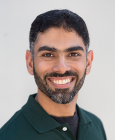
Qingyue (Marco) Li is a Postdoctoral Fellow at the Australian National University , affiliated with the National Centre for Epidemiology and Population Health. He holds a BSc and a Master of Actuarial Practice (MActPrac) from ANU and is currently pursuing his PhD in Actuarial Studies. Research Focus: Forecasting Private Health Insurance Participation in Australia Using a Microsimulation Model Expertise: Private Health Insurance, Health Policy, and Mental Health Contact: qingyue.li@anu.edu.au
Dr. Meead Saberi Kalaee is an Associate Professor at the School of Civil and Environmental Engineering at the University of New South Wales (UNSW), Sydney. His academic journey includes a PhD in Transportation Systems Analysis and Planning from Northwestern University (2013), MSc in Transportation Engineering from Portland State University (2010), and BSc in Civil Engineering from Ferdowsi University of Mashhad (2007). He leads the CityX research lab under rCITI, focusing on urban mobility through data analytics, simulation, and network modeling. Current Research : Traffic flow theory, mixed autonomy networks, pedestrian dynamics, active transport modeling, and AI-assisted infrastructure mapping (via footpath.ai spinout) Selected Grants : ARC Linkage Grant LE240100118 (National Cycling Data Platform), ARC Discovery DP220102382 (AI footpath modeling), DP210102089 (Sustainable bicycling exposure), LP190100650 (Logistics optimization) Recent Publications (2023–2025) span advanced topics like pedestrian traffic assignment , mixed autonomy emissions , reinforcement learning for vaccine allocation , and AI-driven transport equity , with methodological innovations in simulation-based optimization and network fundamental diagrams. Industry Collaborations include Adiona, Mitsubishi Heavy Industries, Cisco, KPMG, and government bodies like Transport for NSW and VicRoads. Supervision : Current PhD projects on traffic signal optimization, pedestrian activity estimation, and AI mapping. Former students' work addresses autonomous driving, dynamic demand modeling, and urban safety.
Professor Robert Tanton holds a PhD in Economics from the University of Canberra and has been affiliated with the National Centre for Social and Economic Modelling (NATSEM) since June 2005. His primary research focuses on spatial disadvantage, wellbeing analysis, and spatial microsimulation techniques. He is internationally recognized for expertise in poverty measurement, housing stress analysis, and small-area estimation methodologies. Tanton leads projects applying microsimulation models to assess socioeconomic indicators, including work presented to the Senate Select Committee on Housing Affordability and collaborations with organizations like AURIN. Education: PhD in Economics, University of Canberra (specializing in small-area estimation) Research Interests: Spatial analysis of economic disadvantage Wellbeing metrics and policy evaluation Microsimulation models for public policy Health economics and informal care costs Environmental policy and urban development Grants & Collaborations: Chief Investigator on multiple Australian Research Council (ARC) grants Commissioned work for government agencies including the Tasmanian Social Inclusion Unit and Commonwealth Bank Member of the Australian Urban Research Infrastructure Network (AURIN) Key Contributions: Developed spatial microsimulation frameworks for poverty and wellbeing analysis Authored over 140 publications on socioeconomic disadvantage, health economics, and policy impact assessments Advised on tax reform, EV policy, and mental health costing through microsimulation models
Professor Taha Hossein Rashidi is a leading expert in Transport Engineering at the School of Civil and Environmental Engineering, University of New South Wales (UNSW), and a member of the Research Centre for Integrated Transport Innovation (rCITI). His work bridges disciplines like economics, statistics, urban design, and sustainability to advance smart-city solutions. Education : PhD, University of Illinois, Chicago (2011); MS Civil Engineering, Sharif University of Technology (2005); BS Civil Engineering, Sharif University of Technology (2003). His research focuses on travel behaviour analysis, activity-based travel demand modelling, integrated land use and transportation models, and autonomous driving technologies. He leads the rCITI Travel Behaviour Modelling Team, which includes 3 Post-docs, 7 PhD, and 3 MSc students. Recent work explores shared autonomous vehicles, social media data integration for transport models, and dynamic ride-sharing systems. His publications span topics like pedestrian demand modeling, residential relocation dynamics, and pandemic-related travel restrictions. Scientific Awards Fred Burggraf Award (TRB, 2008) Dwight Eisenhower Fellow (2008) ASCE Freeman Fellowship (2009) NSERC PDF Award (2012) Industrial RAND Fellowship (2012) Vice Chancellor’s Award for Teaching Excellence (2015, Team) Award for Engineering Education Engagement (2015, Team) Outstanding Paper (TRB Analytics Contest, 2017) He has secured over $1.2 million in research funding since 2007, including ARC DECRA and Linkage Grants. His teaching includes courses on geometric design, urban transport modeling, and transport econometrics.
Dr. Kasun De Silva Wijayaratna is a Senior Lecturer in the School of Civil and Environmental Engineering at the University of Technology Sydney (UTS), with over 14 years of combined industry and academic experience in transport engineering and research. His work focuses on practical applications across network modeling, traffic management, parking systems, and car-sharing solutions, making significant contributions to understanding transport network reliability and vulnerability. His educational background includes: PhD in Civil Engineering (Transport Modelling) from the University of New South Wales (2016) Bachelor of Engineering (Civil Engineering, Honours 1) from the University of New South Wales (2011) Bachelor of Commerce (Finance with Distinction) from the University of New South Wales (2011) Dr. Wijayaratna's research primarily investigates travel behavior under different information scenarios, with particular emphasis on shared spaces, personalized mobility solutions, and transport network reliability. His recent work demonstrates a strong focus on integrating AI and big data analytics into transport modeling, examining pandemic impacts on mobility patterns, and developing innovative approaches to shared road infrastructure. His publications reveal a consistent trajectory toward more sophisticated modeling techniques and increasingly complex real-world applications. His scientific achievements include the prestigious 2016 SIDRA Solutions Postgraduate Award as the most outstanding transport engineering researcher in Australia and New Zealand, along with multiple research funding successes totaling over $1.5 million from state and local government sources. He has secured significant grants through iMOVE CRC and Transport for NSW for projects examining shared spaces, transport system optimization, and road safety innovations. As an educator, Dr. Wijayaratna serves as subject coordinator for Roads and Transport Engineering and Traffic and Transportation courses at UTS. He has been recognized as an innovator in tertiary education for developing blended learning approaches that effectively engage contemporary student cohorts. His teaching philosophy integrates practical industry experience gained during his time at Cardno with academic rigor, creating a dynamic learning environment that prepares students for real-world transport engineering challenges.
Professor Robyn Jamieson serves as Professor of Genomic Medicine and Head of the Specialty of Genomic Medicine at The University of Sydney's Children's Hospital at Westmead Clinical School. She is a member of The University of Sydney Nano Institute and maintains strong affiliations with the Save Sight Institute and Children's Medical Research Institute. Her clinical specialty is Genetic Medicine with a focus on pediatric ophthalmology and inherited eye disorders. Professor Jamieson's research program centers on genomic and functional studies aimed at understanding disease causation in genetic eye diseases, particularly those affecting the retina. Her work has resulted in several novel disease gene and variant identifications, new insights into disease mechanisms, and translation to diagnostic genomic testing for genetic eye diseases. She actively pursues applications in genome engineering and new vector technologies for developing therapies for blinding eye conditions. Her research spans themes of Reproductive, Maternal and Child Health; Neurosciences and Mental Health; and Healthy Ageing, employing approaches in Cellular/Molecular biology, Genetics, and Translational Research. Analysis of Professor Jamieson's recent publications reveals a strong focus on inherited retinal diseases, with significant work on gene identification (GUCY2D, PROM1, KCNV2, WNT7B), natural history studies, biomarker development, and therapeutic approaches. Her research increasingly incorporates advanced technologies including AAV capsid bioengineering, retinal organoids, and genome sequencing for improved diagnosis and treatment pathways. The work spans basic science through to clinical implementation and health economics. Professor Jamieson actively supervises research students including Nadya ANDHIKA (exploring genetic therapy approaches in inherited retinal dystrophy) and William YATES (working on inherited retinal disease natural history and gene therapies). She has secured substantial grant funding from NHMRC, Department of Health, and other sources for projects including 'Resolving genetic variant uncertainty in syndromic and non-syndromic retinitis pigmentosa,' 'DEVELOPMENT OF PHOTORECEPTOR CELL THERAPY TO TREAT BLINDNESS,' and 'ALPK1 dysfunction: revealing a novel pathogenic pathway in retinal diseases.'