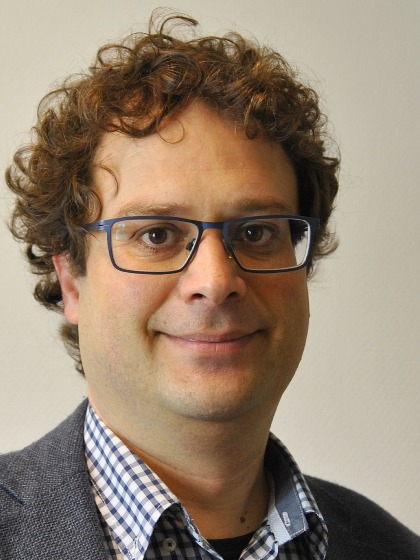
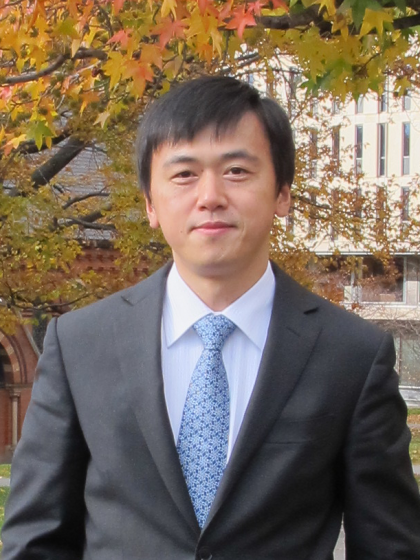
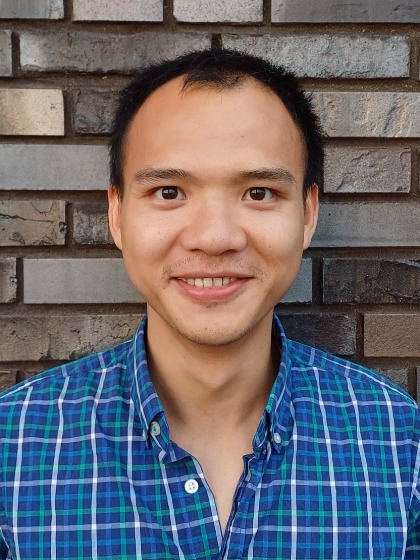
Dr. Ir. Wouter Schakel is a full-time O&O researcher at Delft University of Technology's Faculty of Civil Engineering and Geosciences, specializing in Transport & Planning. His research focuses on microscopic simulation of driver behavior, particularly lane change modeling and traffic flow optimization. He has developed the LMRS lane change model and contributes to OpenTrafficSim. His academic roles include teaching programming courses for transport engineering students and supervising BSc/MSc projects. Education: Civil Engineering (BSc & MSc) from TU Delft, followed by a PhD on freeway driving advice systems. Research highlights include the Greenshields prize-winning LMRS model and work on in-car advisory systems. He teaches courses like 'Programming and MATLAB' and 'Intelligent Vehicles Design and Assessment'. Current projects involve urban traffic simulation validity improvements and lane change strategy extensions.
Prof Dimitris Ballas is a Professor of Economic Geography at the University of Groningen's Faculty of Spatial Sciences since 2017. He leads the Islands and Sustainability Lab and directs the Erasmus Mundus Islands and Sustainability master's program. His expertise spans social and spatial inequalities, happiness research, spatial microsimulation, and geoinformatics. Ballas holds a PhD from the University of Leeds (2001) and has held academic positions at the University of the Aegean, University of Sheffield, and visiting roles at Harvard and Ritsumeikan University. His work emphasizes policy evaluation using GIS and spatial methods. He has authored/co-authored influential books like The Human Atlas of Europe and GIS and the Social Sciences . He serves on advisory boards for journals, research councils, and international organizations. His research bridges quantitative methods with societal issues, focusing on well-being, migration, and regional development. Education: Bachelor's in Economics (University of Macedonia, 1996) MA in GIS (University of Leeds, 1997) PhD in Geography (University of Leeds, 2001) Research Interests: Ballas investigates socio-spatial inequalities through spatial microsimulation, happiness geography, and urban green spaces' impact on well-being. He explores voting behavior, climate change mitigation, and island sustainability. Recent work includes analyzing discontent geographies and energy behavior diffusion. Awards: Nominated for Best Teaching Practice in Spatial Sciences (2023). Labs/Initiatives: Leads the Islands and Sustainability Lab and collaborates on projects like the PHOENIX and Mobi-Twin initiatives. Engages in global networks such as the European Regional Science Association and the Greek National Research Council.
Tabea Sonnenschein is a Researcher at Utrecht University , affiliated with the Faculty of Geosciences and Human Geography and Spatial Planning . She is also a PhD Candidate in the Department of Population Health Sciences under the Faculty of Veterinary Medicine . Her work bridges environmental science, urban planning, and public health through advanced computational modeling. Coordinated EU-funded EXPANSE (Horizon 2020) and EXPOSOME-NL (NWO) projects. Research Associate at the MRC Epidemiology Unit at University of Cambridge, contributing to DARe Hub and UBD Policy initiatives. Research Interests Air Pollution and Health: Modeling health impacts of urban pollutants. Agent-Based Simulation: Developing tools like GenSynthPop and CellAutDisp . Urban Sustainability: Assessing interventions for resilient, low-emission cities. Recent Publications highlight her work on urban exposome, synthetic population modeling, and subway expansion impacts. She contributes to journals like Environmental Modeling and Software , Autonomous Agents and Multi-Agent Systems , and Semantic Web .
Prof. Aart Liefbroer holds the endowed chair in Demography of Young Adulthood and Intergenerational Transmission at the Department of Sociology, Vrije Universiteit Amsterdam. He concurrently serves as Theme Leader for Families & Generations at NIDI-KNAW and Professor of Life Course Demography at the University Medical Centre Groningen. As National Coordinator, he oversees the European Social Survey (ESS) waves 10-11 and the Gender and Generations Programme (GGP). His research focuses on demographic transitions in young adulthood, including cohabitation, marriage, parenthood, and union dissolution, with emphasis on socioeconomic determinants and health outcomes. Key grants include an ERC Advanced Grant (2013-2017) examining childhood disadvantage impacts, and NWO funding (2019-2023) studying union dissolution dynamics. Research highlights: Cross-national demographic behavior analysis, life course health trajectories, and intergenerational transmission mechanisms Recent work explores mental health disparities linked to physical activity, pandemic BMI changes, and socioeconomic loneliness correlates Recipient of prestigious fellowships: KNAW membership (2011) and KHMW membership (2008). Leads interdisciplinary teams at NIDI-KNAW's Social Demography Department and the A-LAB research group. Supervised 10 PhD theses, contributing to demographic methodology innovations.
Maximiliaan Notenboom is a Researcher at Erasmus MC , active in cardiovascular surgery and clinical epidemiology. His work focuses on aortic root and ascending aortic aneurysms, supravalvular aortic stenosis in pediatric populations, and the application of microsimulation models to predict long-term outcomes in heart valve disease. Research Interests : Sex-related differences in cardiovascular disease progression (DisSEXion Study). Development of guidelines for survival analysis post-cardiothoracic interventions. Microsimulation modeling for clinical decision-making in valvular heart disease. Pediatric surgical approaches for congenital heart defects like Williams syndrome. Recent Publications highlight interdisciplinary trends in cardiovascular outcomes, statistical modeling, and pediatric cardiac surgery. Collaborations span institutions studying aortic dissection, aneurysms, and surgical innovations.
Chiara Brück is a PhD Researcher at the Public Health department of Erasmus MC. Her research focuses on Alzheimer's disease, dementia epidemiology, and healthcare economics. She has developed microsimulation models to project the future burden of dementia, including prevalence, costs, and quality-adjusted life years (QALY) lost. Her work emphasizes cost-effectiveness analysis and population health forecasting. Recent contributions include participation in the IPECAD Modeling Workshop 2023 and co-authorship of studies on Alzheimer's treatment models and dementia prevalence trends. Key research interests include: Pharmacoeconomics and healthcare cost analysis Microsimulation modeling for public health policy Age-related disease burden projections Comparative effectiveness research in neurodegenerative diseases Her publications (2022–2025) highlight collaborations with experts in epidemiology and health economics, addressing critical gaps in understanding dementia's socioeconomic impact. Her doctoral thesis ('Unraveling the Future Burden of Dementia') introduced novel methodologies for forecasting disease trajectories, which have been widely cited and shared in academic networks.
Jan Boone is a Full Professor of Economics at Tilburg University, affiliated with the Tilburg School of Economics and Management (TiSEM) and the Department of Economics. He specializes in competition and regulation in health care markets, with a focus on health insurance design, cost-sharing mechanisms, and procurement policies. Boone holds a PhD from Nuffield College, Oxford University, and has held academic positions at Tilburg since 1997. His research has been recognized with prestigious grants, including the Vici and Vidi awards, and he has served as Head of the Department of Economics. Education: Bachelor's (Erasmus University Rotterdam, 1987-1993) PhD (Oxford University, Nuffield College, 1993-1997) Research Interests: Boone's work addresses critical issues in health economics, including the design of health insurance systems to balance cost, access, and equity. He analyzes how cost-sharing mechanisms like rebates and deductibles affect healthcare utilization, particularly among income groups. His recent projects include modeling the impact of deductibles on health expenditures and exploring procurement mechanisms for specialized firms. His findings often highlight practical implications for policy, such as the welfare effects of liquidity constraints in cost-sharing designs. Key Contributions: Boone has contributed to understanding the complementarity between risk adjustment and community rating in health insurance markets, demonstrating how market distortions can facilitate redistributive policies. His work on health provider networks challenges assumptions about narrow network under-treatment and emphasizes contractual dynamics between insurers and providers. He also investigates optimal policies for regulating healthcare markets to improve efficiency and equity. Awards: Boone has been honored with the Ruigrok Prijs (2001), a Royal Economic Society Junior Fellowship (1996-1997), and a Rhodes European Scholarship (1993-1996). His research has been cited in policy analyses and media outlets like the New Scientist and Volkskrant. Teaching and Outreach: Boone teaches courses on Python programming for economics, data science, and competition policy. He actively contributes to open-source tools, advocating for Emacs and Org-mode in academic workflows. His blog discusses topics ranging from econometric methods to software configuration for economists. Professional Roles: He serves as an Associate Editor of the Journal of Health Economics , advises the Dutch National Health Authority (NMa), and contributes to policy evaluations through roles like the NVAO accreditation committee. Boone's research extends to industrial organization, with studies on collusion, procurement auctions, and innovation dynamics.
Dr. Xiaolong Liu is an Assistant Professor in Real Estate at the University of Groningen's Faculty of Spatial Sciences. Research focuses on real estate markets, property valuation methodologies, and spatial economic analysis. Current projects investigate housing market dynamics, land use economics, and behavioral aspects of property transactions. Geographic expertise includes both European and Chinese real estate markets. Recent publications analyze flipping behavior in housing markets and spatial diffusion of energy consumption patterns. Teaching responsibilities include courses on international real estate markets and investment strategies.
Dr. Jianhua Zhang is a Researcher at the Innovation Studies Group , Copernicus Institute of Sustainable Development , Utrecht University . His work focuses on the spatial dynamics of sustainability transitions and diffusion of green innovation in Europe. Education: PhD in Economic Geography (University of Groningen, 2024), MSc in Urban Economics (Erasmus University Rotterdam) Prior Positions: Postdoctoral Researcher at Leiden University; Researcher and Urban Planner in Amsterdam and Macau Research Expertise: Combines quantitative methods like (spatial) econometrics, network analysis, and input-output modeling with machine learning. Currently contributing to the SEAL project to analyze policy impacts on agri-food and land use innovation. Methodological Focus: Spatial microsimulation, policy evaluation, and interdisciplinary approaches to sustainability transitions.
Jianhua Zhang is a postdoctoral researcher affiliated with the Faculty of Spatial Sciences at the University of Groningen and Leiden University. His work bridges economic geography, environmental behavior modeling, and spatial econometrics. Research Focus: Environmental behavior analysis, sustainability transitions, and spatial diffusion modeling. Key Methods: Spatial microsimulation, econometric models, and network analysis. Recent publications highlight his contributions to understanding residential solar PV adoption patterns, peer effects on environmental imitation, and global technology diffusion for climate mitigation. His work aligns with UN Sustainable Development Goals (SDGs) related to climate action and sustainable cities. Academic Activities: Presented at international conferences (CUPUM 2023, Applied Theory Finance 2022-2023), peer-review work for Environmental Economics and Policy Studies .
Aart Liefbroer is a Professor at the University of Groningen, affiliated with the Faculty of Medical Sciences and the Life Course Epidemiology department. He serves as Dutch National Coordinator for the Generations and Gender Survey (2020–2021) and the European Social Survey (2019–2023). His research focuses on family dynamics, mental health, and socioeconomic factors influencing health outcomes across the life course. Key research interests include parenthood, family formation, educational attainment, and loneliness. His work contributes to UN Sustainable Development Goals addressing health and well-being, quality education, and reduced inequalities. Recent studies explore cognitive decline linked to sleep quality, mental health disparities, and loneliness in aging populations. He has authored over 108 publications, including articles on Alzheimer’s risk factors, depressive disorders, and European demographic trends. Notable datasets include the Netherlands Kinship Panel Study (Wave 3). Media engagements include commentary on pandemic-related fertility declines, featured in 38 news outlets. He has supervised 9 academic works and contributed to international collaborations through activities like visiting Bocconi University (2019).
Luuk van Duuren is a Researcher in Public Health at Erasmus MC, Erasmus University Rotterdam, specializing in cancer screening modeling with emphasis on colorectal and pancreatic malignancies. His work integrates advanced microsimulation techniques to evaluate screening strategies and health policy impacts. Education: Master in Econometrics and Management Science (awarded February 12, 2021) Van Duuren's research focuses on developing risk-prediction models for colorectal cancer screening, validating surrogate endpoints in clinical trials, and simulating disease progression pathways. He employs Bayesian calibration and emulator-based methods to refine cancer intervention models, collaborating with international consortia including CISNET and the Dutch Pancreatic Cancer Group. His methodology bridges computational statistics with clinical decision-making to optimize population-level screening programs. Analysis of his 2023-2025 publications reveals dominant trends in microsimulation modeling applied to gastrointestinal cancers, particularly colorectal carcinoma risk stratification and pancreatic neoplasia progression. His work consistently intersects public health policy, cost-effectiveness analysis, and translational oncology, with growing emphasis on AI-enhanced model calibration. No scientific awards are documented in available sources. Information regarding student supervision and research grants remains unspecified in current profiles, though his collaborative publications indicate active participation in multi-institutional research networks. Van Duuren contributes to the Dutch Pancreatic Cancer Group and CISNET colorectal modeling consortium, leveraging team-based approaches to address complex questions in cancer prevention and early detection through computational simulation.
Jonathan Etnel is a researcher at Erasmus MC specializing in Cardiothoracic Surgery. His work focuses on improving outcomes for pediatric and neonatal patients through advanced analytical methods. Current affiliation: Erasmus MC, Cardiothoracic Surgery Research interests include: Meta-analysis and systematic review methodologies Long-term survival modeling in cardiothoracic interventions Clinical decision-making for pediatric valve disease Microsimulation applications in cardiac surgery Neonatal and infant surgical outcomes Scientific contributions: Developed practical guidelines for survival analysis Advanced understanding of valve replacement longevity Improved risk stratification for congenital heart defects
Hana Marie Broulikova is an Assistant Professor at the Vrije Universiteit Amsterdam (Faculty of Science), specializing in Health Economics and Health Technology Assessment. She also holds academic positions in the departments of Mental Health and Methodology. Her roles include advising for the Ministry of Health of the Czech Republic since 2020 and working at the National Institute of Mental Health (Klecany) from 2024 to 2027. Her research focuses on cost-effectiveness analysis, health technology assessment, and the economic implications of diagnostic and therapeutic interventions in neurology, mental health, and critical care. Her work contributes to UN Sustainable Development Goals related to affordable healthcare and well-being. Key research areas include Alzheimer's disease diagnostics, sepsis treatment optimization, and preterm birth prevention strategies. Recent studies explore the economic impact of amyloid-PET imaging in dementia diagnosis, personalized antibiotic dosing in sepsis, and low-dose aspirin efficacy in obstetrics. Research Interests: Health Economics, Neurological Disorders, Mental Health Policy, Cost-Benefit Analysis, Healthcare Technology Evaluation Recent Publications Trends: Cross-disciplinary focus on merging clinical outcomes with economic evaluation across neurology, obstetrics, and critical care Teaching includes courses on Economic Evaluation. Her work bridges academic research with policy implementation, particularly in Central European healthcare contexts.
Kristina Thompson is an Assistant Professor at the Wageningen School of Social Sciences (WASS) within Wageningen University, specializing in Health and Society. Her research focuses on understanding how social networks influence health behaviors, aging populations, and public health interventions. Key areas of study include the social determinants of health, historical demography, and computational modeling of health systems. Her work combines epidemiological analysis with agent-based simulations, as seen in projects like the Health in All Networks Simulator (HANS) and COMMA model. She explores topics ranging from long-term care policies for disabled elderly to historical health patterns in Suriname and the Netherlands. Thompson has collaborated on interdisciplinary studies involving urban digital twins, food environment interventions, and the mental health impacts of pandemics. Notable contributions include systematic reviews on agent-based health interventions and groundbreaking studies on Dutch height trends. She actively participates in academic conferences, presenting research on historical disease databases and maternal-child survival in colonial contexts. Thompson co-supervises two active PhD projects: The Amsterdam Social Network Interventions for health Simulator and Samen Kansrijk en Gezond. Her research has been featured in media discussions about Dutch health and historical health patterns.