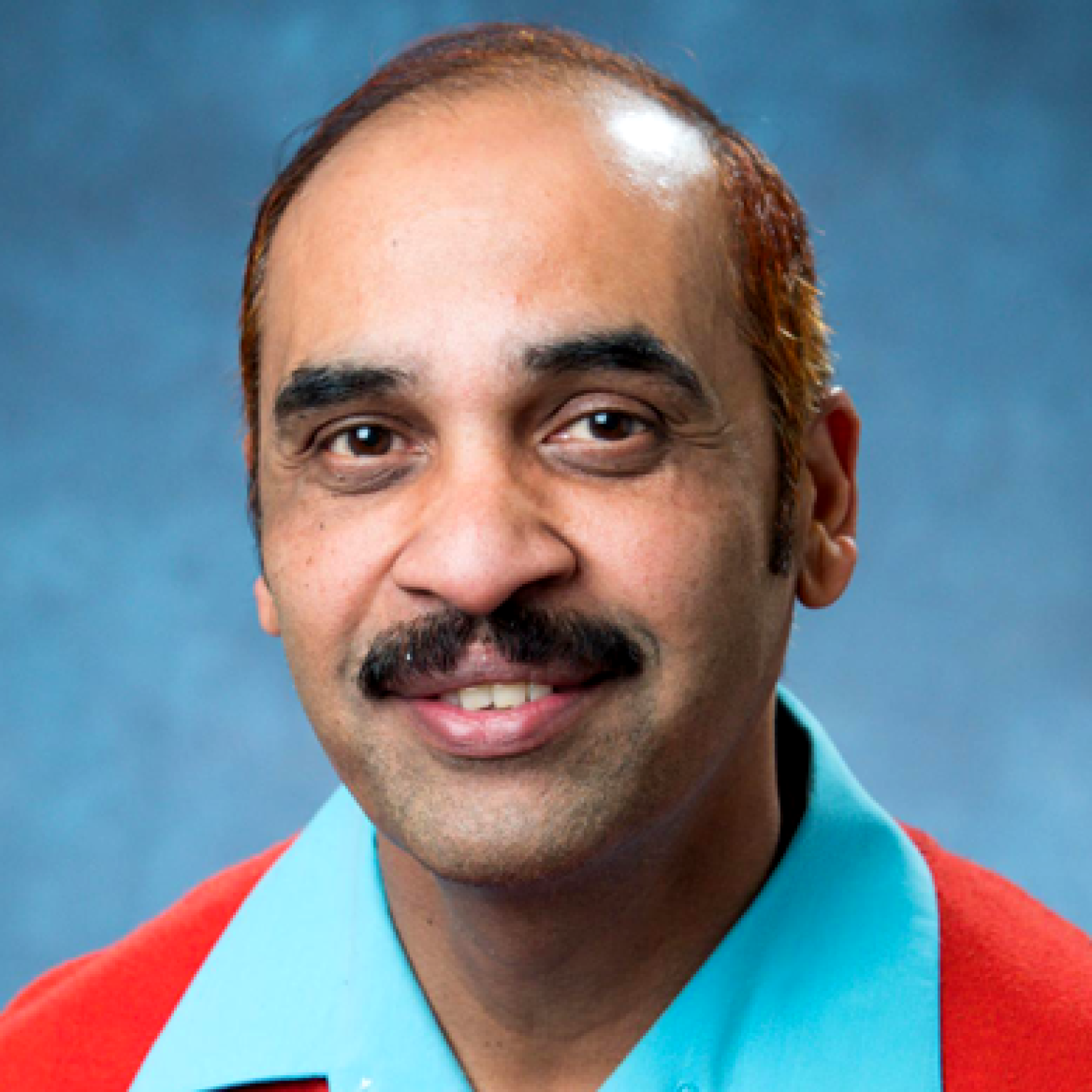
Dr. Hung Cao is an Assistant Professor of Computer Science at the University of New Brunswick, where he directs the Analytics Everywhere Lab. His work focuses on interdisciplinary research in Cyber-Physical Systems (CPS), IoT, Edge/Fog/Cloud Computing, and Explainable AI, addressing societal challenges through data-driven solutions. Prior roles include PostDoc Fellow and Data Scientist at the People in Motion Lab, UNB, and Lecturer/Researcher at Vietnam National University. He holds a Ph.D. in Geomatics Engineering (specializing in Data Science) from UNB (2020), an M.Sc. in Computer Science from University College Dublin (2015), and a B.Eng. from Vietnam National University (2011). Research interests span Smart Cities, Embedded AI, TinyML, Federated Learning, and Real-time Systems. He has led projects with Cisco, NB Power, and other industry partners to develop scalable analytics frameworks for IoT applications. Dr. Cao actively contributes to technical communities (IEEE Smart City, Edge Computing, etc.), serving as a reviewer for journals and conferences, and a Topic Editor for Electronics Journal . His innovations include the Analytics Everywhere framework for spatio-temporal data analysis, MACeIP platform for smart cities, and energy-efficient IoT systems for environmental monitoring. Current work emphasizes human-centered AI for healthcare diagnostics and industrial inspection systems.
Arpan Gujarati is a Sessional Lecturer in the Department of Computer Science at the University of British Columbia (UBC), affiliated with the Systopia Lab. He teaches graduate and undergraduate courses such as CPSC 538G (Distributed Systems), CPSC 416 (Operating Systems), and CPEN 432 (Real-Time System Design). He holds a PhD from the Max Planck Institute for Software Systems and TU Kaiserslautern, where he was supervised by Björn B. Brandenburg. PhD: Max Planck Institute for Software Systems & TU Kaiserslautern (2020) Undergraduate: Birla Institute of Technology and Science (BITS Pilani) Postdoctoral Researcher: MPI-SWS Research Associate: UBC Software Development Engineer: Citrix R&D, India His research focuses on real-time and distributed systems, with applications in cyber-physical systems, fault tolerance, and machine learning reliability. He investigates scheduling algorithms, reliability analysis, and the integration of learning-enabled components into safety-critical systems. His work combines theoretical analysis with practical system implementations, often involving real-world testbeds and open-source tools. His recent publications span top-tier venues including RTSS, OSDI, ECRTS, DSN, and Middleware, with a strong emphasis on performance predictability, resilience of ML systems, and real-time communication. His work frequently addresses challenges in timing guarantees, fault tolerance, and system reliability in both cloud and embedded environments. SIGBED Paul Caspi Memorial Dissertation Award Best Paper Award at RTSS 2022 Distinguished Artifact Award at OSDI 2020 Best Student Paper Award at Middleware 2017 Outstanding Paper Award at RTCSA 2025 He advises several PhD students and undergraduate researchers at UBC, including Heng Zhao, Aida Aminian, Zainab Saeed Wattoo, and Philip Schowitz. He has led multiple research projects involving robotic arms, NVIDIA Holoscan, FreeRTOS, and distributed key-value stores. His lab work emphasizes reproducibility, open datasets, and practical system building. He has served on program committees for RTSS, RTAS, ECRTS, and Middleware, and contributes to journals such as Real-Time Systems and JSys.
Tuomas Aura is a Professor at the Department of Computer Science , Aalto University , and a member of the Helsinki Institute for Information Technology (HIIT) and the Helsinki-Aalto Institute for Cybersecurity (HAIC) . His expertise spans information security , privacy , pervasive computing , and communications . Research Trends: His recent work focuses on securing Kubernetes clusters , TLS identity binding , SIM provisioning protocols , and IoT authentication , with a strong emphasis on network security and cryptographic protocols . Key sub-fields include microservice connectivity , threat modeling , and EAP-based authentication . Publications: His 2025 work on Kubernetes misconfigurations and TLS identity binding addresses critical cloud and protocol vulnerabilities. Earlier studies (2024-2020) explore SIM transparency, HTTP/2 security, and formal verification of device-pairing flaws, reflecting a consistent focus on IoT security and network protocols .
Robert Soulé is an Associate Professor in the Departments of Computer Science and Electrical Engineering at Yale University, and holds an Adjunct Professor position at the Università della Svizzera italiana (USI) in Lugano, Switzerland. His research focuses on distributed systems, networking, and applied programming languages, with notable contributions to in-network computing, consensus protocols, and energy-efficient systems. He received his B.A. from Brown University and his Ph.D. from New York University, followed by postdoctoral work at Cornell University. Education: B.A. in Computer Science, Brown University, 1999 Ph.D. in Computer Science, New York University, 2012 Research Interests: Dr. Soulé’s work spans distributed systems, networking, and programming languages, emphasizing practical systems such as in-network computing, consensus algorithms (e.g., NetPaxos), and carbon-aware networking. His research bridges theory and practice, addressing challenges in scalability, performance, and sustainability. Articles Trends: Recent work includes innovations in quantum networks (algebraic specifications), carbon-aware networking (energy efficiency), and system optimization (e.g., P4-based data plane verification). He explores network programmability, microservices acceleration, and zero-copy serialization techniques. Awards: Best Paper Awards at ACM DEBS 2012, NSDI 2018, and CoNEXT 2020 Google Faculty Research Award IBM Invention Plateau Award Advising and Grants: He has advised numerous PhD students and postdocs, including Pietro Bressana (Intel Corporation) and Theo Jepsen (Stanford Postdoc). His grants support projects in networked systems, distributed computing, and sustainable infrastructure. Labs/Teams: Active in Yale’s Systems Research group, collaborating on projects like NetChain (sub-RTT coordination) and P4-based systems (e.g., P4xos for consensus). Engages with industry through partnerships on microservices optimization and energy-efficient networking.
Jianfeng Gu is a Ph.D. Candidate and researcher at the Technical University of Munich (TUM), affiliated with the Department of Computer Science and specifically the Chair of Computer Architecture and Parallel Systems led by Prof. Martin Schulz. He maintains an active research profile with numerous publications and contributes to the academic community through teaching seminars on Cloud Computing. His academic path began with a Bachelor of Software Engineering from Sun Yat-sen University in China (2014-2018), followed by a Master of Engineering from the same institution (2018-2020). Since April 2021, he has been pursuing his Ph.D. at TUM, advancing research in computing systems and architectures. Gu's research focuses on Heterogeneous Serverless Computing for Deep Learning applications, specializing in GPU, FPGA, and NPU technologies within serverless environments. His work addresses critical challenges in resource allocation, auto-scaling, and performance optimization for serverless inference systems. Additionally, he investigates Real-time Autonomous Driving Systems , developing advanced perception techniques through sensor fusion (particularly stereo-LiDAR fusion) for high-precision depth sensing and object detection in autonomous vehicles. His interdisciplinary approach bridges hardware acceleration, cloud infrastructure, and AI applications. His publication trajectory shows a progression from foundational computer vision and autonomous driving research (2018-2020) toward increasingly sophisticated work on serverless computing and federated learning (2021-2025). Recent publications focus on efficient resource sharing in heterogeneous serverless environments, with particular attention to GPU and FPGA allocation strategies that maintain service level objectives while optimizing costs. His work demonstrates strong technical depth across multiple computing domains. Best Paper Award at IEEE/ACM DATE 2021 15+ publications with 185+ citations Research featured in top venues for computer architecture and cloud computing As a Ph.D. researcher, Gu teaches seminars on Cloud Computing (IN2107) and contributes to multiple research projects at TUM's Chair of Computer Architecture and Parallel Systems. His work is supported by the department's research infrastructure and collaborations with faculty including Prof. Martin Schulz and Prof. Michael Gerndt. Gu works within TUM's advanced computing research environment, contributing to projects related to high-performance computing, serverless architectures, and autonomous systems. His research group maintains specialized hardware and software infrastructure for evaluating modern HPC architectures and accelerators, including FPGA clusters and GPU resources for deep learning research.
Ali Dorri is an Associate Professor in the School of Computer Science at Queensland University of Technology's Faculty of Engineering. His research focuses on the intersection of blockchain technology, Internet of Things (IoT), and cybersecurity, with significant contributions to privacy-preserving systems and energy trading applications. He maintains an active research profile with consistent publications in top-tier venues including IEEE Transactions, ACM Computing Surveys, and various IEEE conferences. Dr. Dorri's research interests center on blockchain technology and its applications to real-world problems. His work addresses critical challenges in IoT security, privacy-preserving systems, energy trading mechanisms, and supply chain management. He has developed innovative solutions including Tree-Chain (a lightweight consensus algorithm for IoT-based blockchains), LSB (a lightweight scalable blockchain for IoT security), and various blockchain storage optimization techniques. His research bridges theoretical concepts with practical implementations, often targeting specific industry challenges in manufacturing, energy, and supply chain sectors. Analysis of his recent publications reveals a strong focus on optimizing blockchain for resource-constrained environments like IoT networks, developing privacy-preserving mechanisms for sensitive applications, and creating practical implementations for energy trading systems. His work shows increasing sophistication in addressing scalability challenges while maintaining security and privacy guarantees. The interdisciplinary nature of his research connects computer science fundamentals with applications in energy systems, manufacturing, and supply chain management. Dr. Dorri has established productive research collaborations with colleagues at QUT including Raja Jurdak, Salil Kanhere, and Gowri Ramachandran, as well as international collaborators. His publications demonstrate consistent productivity with multiple high-impact papers each year, including several that have received significant citations within the blockchain and IoT research communities.
Alex X. Liu is a Professor in the Department of Computer Science & Engineering at Michigan State University (2016-2022), currently serving as Chief Information Security Officer and President of Midea Software Engineering Institute. His academic career includes roles as Associate Professor (2012-2016) and Assistant Professor (2006-2012) at the same institution. He holds a Ph.D. and M.S. in Computer Science from The University of Texas at Austin, and a B.S. in Computer Science from Jilin University, China. Education Ph.D. in Computer Science (UT Austin, 2006) M.S. in Computer Science (UT Austin, 2002) B.S. in Computer Science (Jilin University, 1996) Liu's research focuses on Dependable computing , Networking algorithms , Cloud computing , Mobile computing , Privacy computing , and Computer/network security . His work spans secure systems, network protocols, and resource optimization in distributed environments. Recent publications address quantum neural networks , microservices autoscaling , RFID tag recognition , network traffic classification , and hybrid physical-layer authentication , demonstrating expertise at the intersection of AI and network security. Key trends include deep learning applications for cloud systems and robust security protocols. Scientific Awards IET Fellow (2021) IEEE Fellow (2019) ACM Distinguished Scientist (2019) Withrow Distinguished Scholar Awards (Senior 2019, Junior 2011) NSF CAREER Award (2009) IEEE & IFIP William C. Carter Award (2004)
Steffen Becker is a Professor at the University of Stuttgart's Faculty of Computer Science, Electrical Engineering and Information Technology, affiliated with the Institute for Software Engineering's Software Quality and Architecture group. His work focuses on software engineering, cloud systems, model-driven engineering, and cybersecurity. He leads research in architectural modeling tools like Slingshot, GUI testing frameworks (ViMoTest), and hardware security analysis. Recent studies explore AI integration in testing, education, and automotive systems (CARISMA). Research interests include elasticity modeling, self-adaptive systems, and educational technology. His 2025 publications address issues like end-user hardware comprehension, FPGA security, and LLM-driven test generation. Notable tools developed include the Slingshot Simulator for cloud-native systems and Gropius for cross-component issue management. Becker contributes to both theoretical advancements and practical implementations in software quality, security, and cloud infrastructure. Key Areas: Software Architecture, Cyber-Physical Systems, Testing, Reverse Engineering Tool Developments: ViMoTest, Slingshot, Gropius Education Focus: Online programming pedagogy and curriculum innovation His work bridges foundational research with industry applications, addressing challenges in automotive computing, cloud elasticity, and human-centric security awareness. Recent efforts emphasize explainable hardware (XHW) and AI's role in qualitative analysis automation.
Simone Ferlin is an Adjunct Senior Lecturer at Karlstad University working with 5G and Internet evolution. She completed her PhD in computer science in 2017 at the Simula Research Lab and Universitetet i Oslo under the supervision of Dr. Ozgu Alay and Prof. Michael Welzl. Her PhD dissertation focused on increasing robustness in multipath transport with MPTCP. Dr. Ferlin's educational background includes a PhD in Computer Science from the Simula Research Lab and Universitetet i Oslo (2017). Her doctoral research centered on enhancing robustness in multipath transport protocols, specifically focusing on MPTCP (Multipath TCP). She also completed undergraduate work that contributed to a book project with Prof. Friedrich Oehme on electronics and circuit technology. Dr. Ferlin's research spans multiple domains at the intersection of networking, systems, and performance engineering. Her primary interests include network and system measurements, performance analysis, security, and congestion control. She investigates how networks like the Internet evolve, examining technology development, adoption patterns, and their impacts on various entities. Additionally, she explores ways to harmonize security and privacy while making them more usable and assessable. Her work particularly focuses on transport layer and multipath transport protocols, examining their performance and security aspects. She also investigates application and transport layer performance, automation, and monitoring. Her research extends to network programming in both Linux kernel and user space, mobile broadband networks from 2G to 5G, and their intersection with the Internet. She is deeply engaged in observability, distributed and system performance monitoring, and automation. Analysis of Dr. Ferlin's recent publications reveals a strong focus on next-generation networking technologies. Her work spans multiple domains including 5G/6G networks, transport protocols (particularly QUIC and MPTCP), network virtualization, container orchestration, and the application of machine learning to networking problems. She has increasingly incorporated large language models into network configuration and automation research. Her publications demonstrate a consistent emphasis on performance measurement, optimization, and security across diverse networking environments from the edge to the cloud. Dr. Ferlin has received notable recognition for her research contributions: Best paper award at IEEE ICIN'21 for 'Learning-based Incast Performance Inference in Software-Defined Data Centers' Applied Networking Research Prize (ANRP)'25 winner for 'NetConfEval: Can LLMs Facilitate Network Configuration?' Dr. Ferlin is actively involved in mentoring the next generation of networking researchers. She has co-supervised numerous Master's and PhD students across multiple institutions including Karlstad University, KTH, TU Berlin, University of Oslo, and universities in Brazil. Her students have worked on diverse topics including NAT64 performance comparison, system tracing visualization, network observability, ML applications to multipath transport, FEC integration with QUIC, high-performance networking for 5G, congestion control, shared bottleneck detection, multipath IoT applications, and container runtime performance. She is also involved in several significant research projects including Vinnova's SEMLA (Securing Enterprises via Machine-Learning-based Automation), Horizon Europe's CODECO (Cognitive Decentralised Edge Cloud Orchestration), and the Knowledge Foundation of Sweden's DRIVE (Data-driven Latency-Sensitive Mobile Services for a Digitized Society). Dr. Ferlin serves as Workshop Chair for ACM SIGCOMM '25, is a member of the ACM/IRTF Applied Networking Research Workshop (ANRW) steering committee, and co-chairs the Internet Congestion Control Research Group (ICCRG) at the IRTF. She previously served as Associate Technical Editor for IEEE Communications Magazine and has been active on numerous program committees for major networking conferences including SIGCOMM, CoNEXT, IMC, and PAM.
Jaakko Timo Henrik Järvi is a Professor in the Department of Informatics at the University of Bergen, Norway, with additional affiliations at the University of Turku, Finland. His research focuses on programming language design, generic programming, and human-computer interaction, particularly in GUI frameworks and software reuse. His research interests include generic programming, programming language design (especially the Magnolia language), high-performance computing, array programming, and GUI engineering. He emphasizes formal methods and algebraic specifications to build reusable and efficient software systems. His work bridges theoretical foundations with practical applications in software development and education. The recent publications highlight a strong trend in declarative GUI frameworks, multi-selection models, and generic programming. His work explores domain-specific languages for GUI structure manipulation, reusable selection semantics across platforms, and optimizing array computations using the Mathematics of Arrays. These efforts reflect a consistent focus on software abstraction, correctness, and reusability. Jaakko Järvi has supervised doctoral students, including Tetiana Yarygina, whose dissertation explored microservice security. While no specific grants are detailed, his work on VisAST was supported by the Research Council of Norway (Project 250683), indicating active external funding. He frequently collaborates with researchers like Magne Haveraaen, Knut Anders Stokke, and Sean Parent. He contributes to tools and frameworks such as the MultiselectJS library and the VisAST educational tool. These are outcomes of collaborative research teams focused on improving software development practices and computer science education.
Yue Li is an Associate Professor at the School of Computer Science, Nanjing University, where they co-run the PASCAL Research Group with Tian Tan. Their work focuses on static program analysis techniques and tools for programming languages, software engineering, security, and hardware verification. PhD in Computer Science from UNSW Sydney (2016) Postdoctoral research at Aarhus University (Denmark) and UNSW Sydney B.Eng and M.Eng from Northwestern Polytechnical University (2010, 2012) Research interests center on Program Analysis and Programming Languages , with a focus on: Pointer analysis for database-backed applications Context sensitivity optimization Reflection analysis in Java/Android Operational semantics for hardware languages Distributed dataflow analysis frameworks Developer-friendly static analysis tools Key publication trends (2016-2025) span static analysis , pointer precision , reflection handling , and tool frameworks across conferences like OOPSLA, PLDI, ICSE, ISSTA, and journals including TOPLAS and IEEE TSE. Notable artifacts include Tai-e and Chianina systems. 2025: ICSE Best Artifact & Distinguished Paper Awards 2024: IEEE TSE Publication on Generic Sensitivity 2023: OOPSLA Distinguished Artifact, SPLASH/ECOOP committees 2021: National Youth Talent Support Program, ZiJin Scholar 2016: ECOOP Distinguished Paper, CGO Best Paper As co-PI of PASCAL Research Group, they lead projects on precision-guided analysis, microservice systems, and cloud-based dataflow frameworks, with teaching awards for SICP and Software Analysis courses.
Luca Caviglione is a prominent cybersecurity researcher at the National Research Council of Italy (CNR), specializing in steganography, covert channels, and network security. With over 140 publications spanning from 2015 to 2025, he has established himself as a leading expert in information hiding techniques and their security implications. His research bridges theoretical foundations with practical applications in IoT, cloud computing, and mobile security environments. Dr. Caviglione's primary research interests focus on steganography and covert communication channels , particularly their application in modern computing environments. He investigates how data can be hidden within network protocols, mobile applications, and cloud infrastructures, while simultaneously developing detection methodologies. His work extends to IoT security , where he examines vulnerabilities in constrained devices and develops AI-based approaches for threat detection. Additional research areas include container security, malware analysis (particularly stegomalware), and security protocol analysis. Caviglione's publication record reveals a clear evolution toward applying machine learning and artificial intelligence to detect sophisticated threats like stegomalware. His recent work increasingly addresses container security, DDoS protection in microservices, and post-quantum security challenges, reflecting the evolving threat landscape. He frequently collaborates with international researchers, notably Wojciech Mazurczyk (46 co-authored papers) and Steffen Wendzel (31 co-authored papers), forming a productive research network in information hiding. As an active contributor to the cybersecurity research ecosystem, Caviglione serves on editorial boards and has organized special issues focused on information security methodology and replication studies. His leadership in developing taxonomies for steganography methods demonstrates his influence in shaping research directions in this specialized field. His work has practical implications for securing modern computing environments against increasingly sophisticated hidden communication channels.
Shivakant Mishra is a Professor in the Department of Computer Science at the University of Colorado, Boulder, and currently on leave as a Program Director at the NSF's CSR (Computer Systems Research) program. He holds roles as Site Co-Director of the NSF IUCRC Pervasive Personalized Intelligence Center and co-founded the Colorado Research Center for Democracy and Technology. Affiliations: Department of Computer Science, College of Engineering and Applied Sciences Professional Roles: NSF Program Director, Center Leadership Education: Ph.D. in Computer Science (University of Arizona), M.S. (Southern Illinois University), B.Tech. (IIT Bombay). Research focuses on distributed systems, edge computing, socio-technical systems for environmental justice, CyberSafety, and technology's role in democracy. Key projects include the C70 community impact study and smart agriculture systems. His work integrates technology with societal challenges, such as mitigating highway construction impacts and combating cyberbullying. Teaching includes courses on operating systems, distributed systems, and special topics like democracy through technology. Advised Ph.D. students Fei Hu and Jinpeng Miao. Professional activities include organizing conferences (e.g., DSN 2017, CyberSafety workshops) and serving on NSF panels.
Jayson Boubin is an Assistant Professor of Computer Science at Binghamton University's School of Computing. He joined in 2022 and focuses on autonomous systems, particularly UAVs, edge computing, and machine learning applications in agriculture and infrastructure. His work emphasizes solving real-world challenges through innovative engineering and software solutions. Education: PhD in Computer Science (Ohio State University), BA (Miami University) Research Interests: Autonomous systems, UAVs, edge computing, robotics, and machine learning. Projects include SoftwarePilot (an open-source UAV testing platform), Fleet Computer (Kubernetes-based edge architecture), and PROWESS (a testbed for constrained edge workloads). Key Achievements: NSF Graduate Research Fellowship Developed open-source tools like SoftwarePilot and PROWESS Focus on UAV applications in precision agriculture, search-and-rescue, and infrastructure inspection Labs/Teams: Active in edge computing and UAV research groups, contributing to both academic and open-source communities.
Tiziano De Matteis is an Assistant Professor in the @Large Research group at Vrije Universiteit Amsterdam's Faculty of Science, Department of Computer Systems. He also holds an affiliation with the Network Institute. His research focuses on overcoming post-Moore architecture challenges through parallel and distributed computing, high-performance systems, energy efficiency, and FPGA applications. Previously, he was a PostDoc at ETH Zurich's SPCL Group and earned his MSc/PhD from the University of Pisa. Education PhD in Computer Science, University of Pisa MSc in Computer Science, University of Pisa Research Interests Post-Moore architectures for distributed ecosystems Energy-aware parallel computing High-level abstractions for parallel software development FPGA-based hardware acceleration Data stream processing and distributed systems Recent Research Trends Recent work emphasizes: Data center risk analysis and sustainability Optimizing microservices and distributed scheduling LLM model offloading to NVMe storage Python-based data-centric programming productivity GPU interconnect performance in supercomputing Grants & Projects Participates in the EU-funded 'Extreme and Sustainable Graph Processing' project (2023-2025), exploring scalable graph algorithms and energy-efficient computing systems. Teaching Accelerator-Centric Computing Ecosystems Computer Organization Distributed Systems Systems Seminar