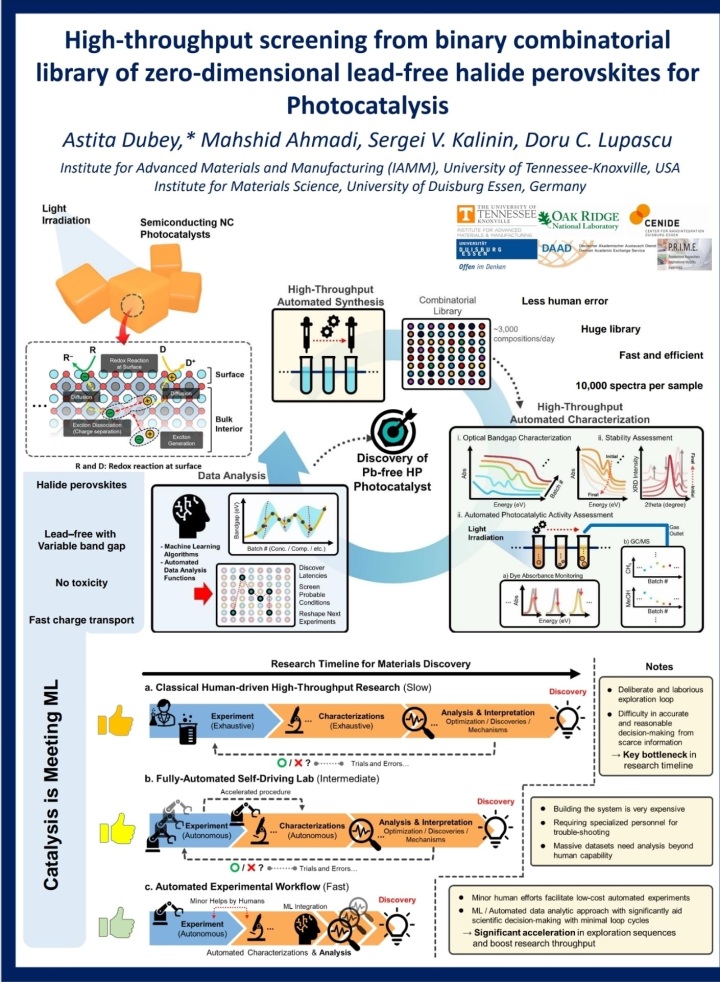
Prof. Doru C. Lupascu is a leading academic in Materials Science at the University of Duisburg-Essen . His research spans ferroic materials , perovskite solar cells , cement recycling , and electrocaloric effects . He supervises PhD students like Astita Dubey and Andrei Karabanov , whose work on photocatalysis and mechanical ice properties has earned recognition. Key Research Themes: Ferroic and multiferroic materials Lead-free perovskites for solar and photocatalytic applications Recycling of cement and concrete via thermal reactivation Electrocaloric and dielectric properties for cooling technologies Recent Article Trends highlight his group’s focus on machine learning in materials discovery , high-throughput screening of perovskites, and novel composite structures for energy storage. These works often intersect with environmental sustainability (e.g., UpCement project) and fundamental physics of ferroic systems. Notable Collaborations: The institute works with institutions like University of Cape Town (Antarctic sea ice expeditions), CentraleSupélec (relaxor ferroelectrics), and Oak Ridge National Lab (postdoctoral research). Projects such as UpCement and RelaxSolaire are funded by German and European agencies , including the Ministry for Economic Affairs and Climate Action (NRW) and DFG .
G. Allan Johnson is the Charles E. Putman University Distinguished Professor of Radiology at Duke University, with concurrent appointments in Physics (Trinity College of Arts & Sciences) and Biomedical Engineering (Pratt School of Engineering). He serves as Director of the Duke Center for In Vivo Microscopy , an NIH/NIBIB national Biomedical Technology Resource Center focused on developing preclinical imaging technologies and applying them to critical biomedical questions. Ph.D. in Radiology from Duke University (1974) Current leadership in preclinical MRI and connectomics His research spans high-resolution magnetic resonance imaging , diffusion MRI , and structural connectomics , with applications to neurodegenerative diseases , brain development , and biomedical engineering . Recent work includes creating multicontrast MR atlases for rodent brains and pioneering ex vivo MRI-histology fusion techniques . Selected publications reveal expertise in diffusion tensor imaging , tractography , and multimodal imaging workflows for both preclinical and clinical applications . Grants include leadership in projects funded by the CHDI Foundation (Huntington's disease), University of Pittsburgh (connectome atlases), and University of Tennessee Health Science Center (Alzheimer's imaging genetics). Scientific recognition includes NIH/NIBIB Resource Center Leadership Charles E. Putman University Distinguished Professorship His team at the Duke Center for In Vivo Microscopy develops multiparametric imaging platforms , 4D cardiac micro-CT atlases , and quantitative susceptibility mapping methods for applications ranging from neurotoxicology to plant root imaging .
Adrienne Roeder is a Professor at the Weill Institute for Cell and Molecular Biology and the Section of Plant Biology , School of Integrative Plant Science , Cornell University . Her research focuses on understanding plant development through computational morphodynamics , integrating live imaging, image analysis, and computational modeling to study how cell growth , division , and gene expression contribute to organ size and shape in Arabidopsis thaliana . Her groundbreaking work on the Arabidopsis sepal has revealed that cell size variability arises from endoreduplication patterns regulated by transcription factors like ATML1 . She demonstrates how stochastic gene expression and mechanical feedback create robust organ morphology despite cellular variability. Key research themes: Plant developmental biology, computational modeling, live cell imaging Major findings: Cell cycle regulation of cell identity, spatiotemporal averaging of growth variability, molecular mechanisms of giant cell formation Current projects: Polyploidy Integration and Innovation Institute (PI3), Engineered Living Materials (ELM) Institute Her recent publications highlight 2024-2025 advances in understanding: Mechanisms of sepal flatness maintenance Role of DRMY1 in cytokinin signaling Translational control during morphogenesis Biomechanical adaptations in cell wall networks Stochastic transcription factor fluctuations in patterning Scientific Awards : NSF CAREER Award Schwartz Research Fund for Women in Life Sciences (2019) Plant Biology Graduate Student Association Excellence in Mentoring (2020-2021) Elected to North American Arabidopsis Steering Committee (2020) Adrienne actively mentors students and participates in outreach programs like Expanding Your Horizons to engage middle school girls in science through hands-on DNA workshops and plant biology demonstrations.
Dr. Liam O'Brien is a Reader in the Department of Physics at the University of Liverpool and a member of the Condensed Matter Physics group and Materials Innovation Factory. His research spans spin transport in nanoscopic devices, magnetic heterostructure growth, and nano-fabrication techniques. Previously, he held a Marie Skłodowska-Curie individual fellowship (2012-2015) and an early career lectureship at the Cavendish Laboratory, University of Cambridge (2014-2017). Education: MSc, University of Oxford (2006) PhD, Imperial College London (2011) His research focuses on spintronic devices , magnetic thin films , and quantum transport , with recent work on Dirac nodal arc semimetals and THz rectenna applications. Articles highlight trends in quantum computing , magnetic imaging , and nanofabrication . Notable grants include funding from the Medical Research Council , BBSRC , and EPSRC . Key scientific awards include the Marie Skłodowska-Curie individual fellowship . He advises on spin valve architectures and artificial spin ice , with teaching roles in Correlated Electron Materials and Magnetic Properties of Solids . His lab at the Materials Innovation Factory explores glancing multi-angle deposition and non-local spin transport .
Dr. Ciro Cecconi is an Associate Professor at the University of Modena and Reggio Emilia , affiliated with the Department of Physical, Computer and Mathematical Sciences (formerly the Physics Campus). His academic work spans biophysics, medical physics, and interdisciplinary education, with courses in biological physics, biochemistry, and physiology for biomedical degrees. His research focuses on biological physics (e.g., lipid bilayer mechanics, protein folding, cellular thermodynamics) and medical physics (e.g., X-ray applications, hemodynamics). Teaching modules emphasize applied physics in pharmacy, medicine, nursing, and physiotherapy, with laboratory components in advanced biophysics courses. Key themes include intermolecular forces , mechanobiology , and statistical fluctuations in biological systems. He employs English texts in teaching to foster international learning.
Rina Ibragimova is a Postdoctoral Researcher at Aalto University, affiliated with the DAS Group in the Chemistry and Materials domain. Her research focuses on computational materials science, particularly the development and application of machine learning interatomic potentials for modeling hydrocarbons and MXenes. Her work spans surface functionalization, defect analysis, and electronic properties of 2D materials. Recent publications highlight collaborations with leading researchers in the field, emphasizing experiment-driven atomistic modeling and theoretical studies of MXene stability and structure. Key trends in her research include combining spectroscopic data (XPS) with machine learning for precise structure inference, investigating pH-dependent functionalization in MXenes, and exploring electron beam effects on 2D materials. Her publications appear in high-impact journals like ACS Nano , Nature Communications , and Physical Review B .
Prof. Ing. Adam Herout, Ph.D., is a faculty member at the Faculty of Information Technology (FIT) of Brno University of Technology (BUT). He serves as Deputy Head of the Department of Computer Graphics and Multimedia (DCGM), focusing on computer vision, image processing, and 3D reconstruction. His research spans traffic surveillance, augmented reality, and real-time processing, with applications in medical imaging and autonomous systems. Academic Rank: Professor Department: Computer Graphics and Multimedia Email: herout@fit.vut.cz Herout's research interests lie in computer vision, machine learning, and their interdisciplinary applications. He has pioneered techniques for camera calibration using vehicle landmarks, density-based traffic analysis, and medical imaging solutions like cranial implant design. His work combines theoretical advancements with practical implementations in real-time systems. Key trends in his 15 most recent articles (2019–2023) include deep learning for traffic analysis, medical image segmentation, and optimization of computer vision algorithms. Sub-fields span from automated checkout systems to CNN-based AFM data correction, reflecting his interdisciplinary expertise. Scientific recognitions include the Commemorative Medal of FIT BUT (Bronze 2012, Silver 2019) and the Imagine Cup 2013. He leads the Computer Graphics Research Group at FIT and chairs disciplinary committees.
Eros Gian Alessandro Pasero is a Tenured Associate Professor at the Department of Electronics and Telecommunications (DET) , Politecnico di Torino , and a member of the PolitoBIOMed Lab (Biomedical Engineering). He has held visiting Associate Professor roles at institutions including Tongji University and Turin Polytechnic University in Tashkent. His research spans artificial neural networks , medical image processing , and wearable devices , with applications in cardiology, industrial optimization, and environmental monitoring. His work focuses on ECG signal analysis for Brugada syndrome risk stratification, deep learning for biological imaging, LSTM models for photovoltaic forecasting, and transformer architectures in clinical diagnostics. He has pioneered the G-EXIN neural network for nonstationary data and Mini Green Radio Sonde for atmospheric sensing. Scientific Awards : Four Design-In Awards , Premio Innova S@alute2017 (TEVA), and President of SIREN (Italian Society of Neuronic Networks) since 2014. Research Projects : MUSMET (2024-2028): Musical Metaverse innovation lab via EU-EIC. ENTWINED (2023-2025): Neural digital twins for electrical drives. BrS-AI-ECG (2021-2024): AI in Brugada diagnostics (ERC). Patents : Inclusive sound card, wearable ECG device, and radio sonde technologies.
Steven K. Lower is a Professor at The Ohio State University with appointments spanning the School of Environment and Natural Resources, School of Earth Sciences, and Department of Microbial Infection and Immunity. His interdisciplinary research bridges environmental science, earth sciences, and medical microbiology, focusing on the molecular interactions between microorganisms and mineral surfaces. Dr. Lower's educational background includes a B.S. in Biology & Geology, an M.S. in Environmental Chemistry from Kent State University, and a Ph.D. in Microbiology & Mineralogy from Virginia Tech. His career path took him from an Assistant Professor position at the University of Maryland (2001-2003) to his current professorship at Ohio State University (2003-present). His research interests center on environmental mineralogy and chemistry, geological and environmental microbiology, and medical microbiology. Dr. Lower specializes in studying how bacteria interact with mineral surfaces at the nanoscale, with particular focus on magnetotactic bacteria that orient along Earth's magnetic field and pathogenic bacteria like Staphylococcus aureus that form biofilms on medical implants. His laboratory employs atomic force microscopy and other nanoscale techniques to measure the fundamental forces governing these interactions. Analysis of Dr. Lower's recent publications reveals a strong interdisciplinary trend spanning environmental science, medical microbiology, and biophysics. His work connects fundamental physical principles with practical applications in environmental remediation and medical device safety. The research consistently applies nanoscale measurement techniques to understand bacterial behavior in both natural and clinical settings, with particular attention to how bacteria form aggregates and adhere to surfaces. Dr. Lower's scientific achievements have been recognized with several prestigious awards: National Science Foundation CAREER Award PECASE Award (presented by President Obama at the White House) Kavli Fellow, National Academy of Sciences Department of Energy (DOE) Best Research Award Clinical Research Forum Outstanding Research Award As a principal investigator, Dr. Lower has secured research funding from the National Science Foundation (NSF), National Institutes of Health (NIH), and Department of Energy (DOE). His laboratory maintains active collaborations across disciplines, particularly with his brother Brian H. Lower, and focuses on understanding the molecular mechanisms of bacterial adhesion to both natural mineral surfaces and medical implants. The research has significant implications for developing strategies to prevent bacterial infections on medical devices and understanding microbial processes in environmental systems.
Dr. ir. Taco Broerse is a Researcher at Utrecht University since 2019, affiliated with the Faculty of Geosciences and the Structural Geology & Electron Microscopy group . Prior, he held postdoctoral and PhD positions at Delft University of Technology (2007–2015), earning an MSc in Aerospace Engineering (2007) and a PhD in Megathrust Earthquakes: Study of Fault Slip and Stress Relaxation Using Satellite Gravity Observations (2014). Geophysics Geodynamics Analogue Modelling Subduction Zones Lithosphere Rheology Earthquake Cycle Broerse's research integrates geodetic observations (GNSS, InSAR, satellite gravity) with geophysical models and analogue experiments to study Earth's surface deformation, particularly around subduction zones and deglaciated regions. His work addresses how time-dependent upper mantle strength influences slip deficit estimation and surface deformation rates , with applications to megathrust earthquake cycles and Antarctic ice mass balance. His 15 most recent articles span topics like slow slip events in Sulawesi, strain partitioning in fault systems, and geodetic signatures of subduction zones. These works emphasize subduction dynamics , lithosphere tearing , and satellite geodesy , reflecting his focus on nonlinear rheology and tectonic processes. Broerse's current affiliations include Utrecht University and a visiting researcher role at Delft University of Technology . His methodologies combine digital imagery analysis for strain mapping and state space filtering to reconcile satellite data with models. Collaborative projects involve STEPs (Subduction-Transform Edge Propagators) , megathrust cycles , and Antarctic ice dynamics .
Dr. Martijn van Herwijnen is a Junior Assistant Professor in the Department of Biomolecular Health Sciences at the Faculty of Veterinary Medicine, Utrecht University. With expertise spanning cell biology, immunology, and extracellular vesicle research, his work focuses on the role of milk-derived extracellular vesicles in early life immunity and health. His primary research interests include: Extracellular vesicles and their role in intercellular communication Milk-derived extracellular vesicles and their immunomodulatory properties The first 1001 days of a child's life and early childhood development One Health approaches to understanding disease prevention Dr. van Herwijnen has published extensively on extracellular vesicles, with recent work focusing on the characterization of milk EVs, their impact on epithelial barrier function, and their role in modulating immune responses. His research bridges basic science with potential clinical applications in early life immunity and nutrition. His notable contributions include work on: Standardization of extracellular vesicle research (MISEV guidelines) Surface protein profiling of milk and serum extracellular vesicles The protective effects of human milk EVs against respiratory infections The impact of industrial milk processing on extracellular vesicle integrity Dr. van Herwijnen has received recognition for his contributions to the field of extracellular vesicle research and continues to be an active member of the international EV research community. While maintaining his research activities, Dr. van Herwijnen has increasingly focused on education, teaching courses such as OW, CW, LVP, and Di at Utrecht University.
Bernhard Egger is a junior professor (adidas Stiftungsprofessur) at the Chair of Visual Computing, Cognitive Computer Vision Lab at Friedrich-Alexander-Universität Erlangen-Nürnberg (FAU) . His research bridges human/machine perception of faces and shapes with synthetic data generation. Formerly, he was a postdoc at MIT's Computational Cognitive Science Lab and Computer Science & AI Lab, following a PhD in facial image annotation at the University of Basel. Research Focus: 3D Morphable Models, Statistical Shape Modeling, Inverse Rendering, AI in Mental Health, Medical Imaging. Education: PhD (University of Basel, 2017), MSc/BSc in Computer Science (University of Basel), Teaching Diploma (University of Applied Sciences Northwestern Switzerland). Notable Awards: Best Poster Award (2024, Cognitive Computational Neuroscience) Best Paper Award (CVPR Workshop 2019) Honk Award (SIGBOVIK 2020) Publications Trends: Recent work spans implicit surface modeling (ICLR 2025), 3D scene decomposition (3DV 2025), medical shape models (BVM 2025), and multimodal AI (npj Mental Health 2024). Labs: FAU's Cognitive Computer Vision Lab (advisor to 8+ students/researchers).
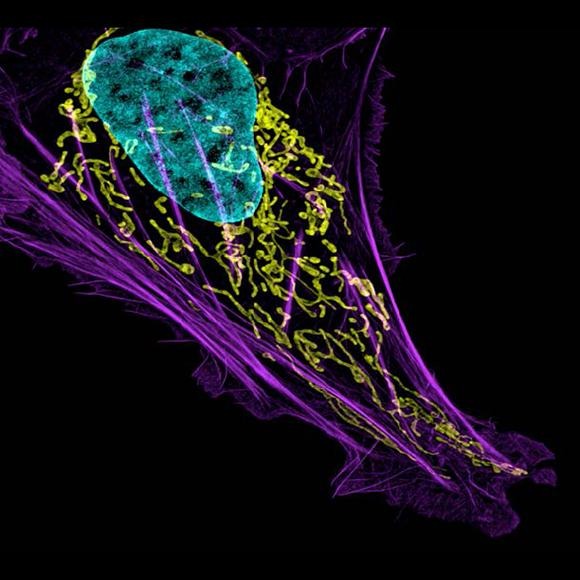
Jennifer Lippincott-Schwartz is a Research Professor leading the Lippincott-Schwartz Lab at the Janelia Research Campus of the Howard Hughes Medical Institute. Her laboratory focuses on understanding how diverse cell types comprising organs operate individually and interdependently to enable organ development, remodeling, healing, and computation. The lab employs cutting-edge fluorescence-based microscopy technologies to study subcellular organelle organization and trafficking pathways across different spatial scales. Dr. Lippincott-Schwartz's research centers on the dynamic interplay between membrane-bound organelles, membrane-less organelles, cytoskeletal structures, and metabolism in relation to cell type-specific organization and function. Her work spans multiple scales, from investigating fundamental cellular behaviors like cell crawling, surface polarization, cell-cell fusion, cytokinesis, viral budding, and intercellular transfer to understanding how these processes contribute to organ-level functions. She has pioneered numerous imaging techniques, particularly in the development and application of fluorescent protein technologies. The publication record reveals a consistent focus on advancing microscopy techniques and applying them to fundamental cell biological questions. Early work established foundational principles in fluorescent protein technology, while more recent publications demonstrate sophisticated applications of super-resolution microscopy, single-particle tracking, and correlative light-electron microscopy to study organelle dynamics, cytoskeletal organization, and cellular signaling. There is a clear trajectory from method development to increasingly complex biological applications, with recent work exploring neuronal calcium signaling, mitochondrial dynamics, and intermediate filament organization. Dr. Lippincott-Schwartz leads an interdisciplinary, international team comprising experts in cell biology, physics, chemistry, mathematical modeling, engineering, and computer science. Her lab actively collaborates with other Janelia research groups and project teams, reflecting the highly collaborative nature of modern cell biological research. The lab maintains strong connections with the Johns Hopkins University graduate program, participating in the joint Janelia/Johns Hopkins graduate program and hosting students through the Janelia summer undergraduate program.
David W. Abraham is a senior researcher at IBM Research - Yorktown Heights specializing in quantum computing and advanced materials. His work spans multiple decades with significant contributions to near-field microscopy, thermal imaging, MRAM technology, and most recently quantum processor development. His primary research interests focus on quantum computing hardware , particularly superconducting bump bonds, through-silicon vias (TSVs), and multi-level wiring systems critical for building scalable quantum processors like IBM's 127-qubit Eagle device. Earlier work included pioneering research in magnetic force microscopy (achieving 25 nm resolution) and thermal imaging applications for disk drives. Analysis of his publication history reveals consistent innovation in quantum hardware engineering, with recent work (2021-2024) concentrated on solving practical integration challenges for quantum processors. His research bridges fundamental physics with practical engineering solutions for next-generation computing systems. Dr. Abraham collaborates extensively with IBM Quantum leadership including Jay Gambetta (VP of Quantum), Matthias Steffen (IBM Fellow), and Oliver Dial (CTO, IBM Quantum), reflecting his integral role in IBM's quantum computing initiative. His laboratory work focuses on quantum processor fabrication and characterization, with particular emphasis on developing reliable interconnect technologies and mitigating decoherence sources in superconducting qubit systems. Current projects appear directed toward scaling quantum processors beyond current device limitations through novel packaging and integration approaches.
Michal Kulich is an Associate Professor at the Department of Probability and Mathematical Statistics, Faculty of Mathematics and Physics, Charles University in Prague. He currently serves as Vice-Dean for Academic Affairs, demonstrating his leadership role within the faculty. His academic career spans over two decades with significant contributions to biostatistics and medical statistics. Dr. Kulich's educational background includes: Charles University, Prague, Czech Republic: M.S. in Statistics (1991) Limburgs Universitair Centrum, Diepenbeek, Belgium: M.S. in Biostatistics (1992) University of Washington, Seattle: M.S. in Biostatistics (1995) University of Washington, Seattle: Ph.D. in Biostatistics (1997) Dr. Kulich's research focuses on statistical methodology with particular emphasis on case-cohort and case-control study designs, clinical trials, and survival analysis. His work bridges theoretical statistics with practical applications in medical research, especially in occupational epidemiology, oncology, cardiology, pediatrics, and HIV/AIDS prevention. He has made significant contributions to the development of statistical methods for analyzing complex medical data, with numerous publications in top statistical and medical journals. His recent scholarly output shows a strong trend toward collaborative research at the intersection of statistics and clinical medicine, particularly in diabetes research, HIV/AIDS prevention, cystic fibrosis, and inflammatory bowel disease. Kulich's work consistently demonstrates methodological rigor while addressing real-world medical challenges through innovative statistical approaches. Among his notable recognitions: Bolzano Award for best paper in mathematics, Bernard Bolzano Foundation, Prague (2001) Best written paper, IBS-WNAR Student Paper Competition, Salt Lake City (1997) Donovan J. Thompson Award, Department of Biostatistics, University of Washington, Seattle (1995) Dr. Kulich has supervised 26 bachelor's theses (23 defended), 27 diploma theses (25 defended), and 2 dissertations (both defended). His collaborative research projects include significant work with the HIV Prevention Trial Network, Cystic Fibrosis Foundation Therapeutic Development Network, and European Cystic Fibrosis Society Clinical Trials Network. He has served as lead statistician for major studies including the HPTN-043 Project ACCEPT, a large-scale community-randomized trial of HIV Voluntary Counselling and Testing programs in Subsaharan Africa and Southeast Asia. He is actively involved in multiple research teams focusing on medical statistics applications, particularly in the areas of cystic fibrosis, diabetes, HIV/AIDS, and cancer epidemiology. His work with the Collaborative Health Studies Coordinating Center and the European Cystic Fibrosis Society demonstrates his commitment to translating statistical methodology into practical healthcare solutions.