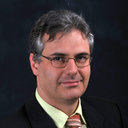
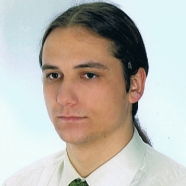
Dongyao Jia is a Senior Research Fellow at the School of Civil Engineering, The University of Queensland. His research focuses on intelligent transportation systems, vehicular cyber-physical systems, and traffic flow modeling, with applications in energy harvesting, car-following model calibration, and vehicle-to-everything communication. Research Themes: Traffic flow prediction, eco-driving optimization, vehicular networks, and cyber-physical system design Key Collaborations: Working with researchers in transportation engineering, computer science, and energy systems Recent publications highlight his work in integrating deep learning with traffic dynamics for acoustic energy harvesting and developing adaptive frameworks for car-following models. His studies on multi-agent reinforcement learning for C-V2X networks and heterogeneous platooning communication demonstrate technical depth across transportation and computer science disciplines. While no specific awards are mentioned in the text, his extensive publication record across high-impact journals like IEEE Transactions on Intelligent Transportation Systems and Transportation Research Part C indicates significant scholarly contributions. Technical Expertise: V2X communication protocols, traffic simulation platforms, machine learning integration for transportation Application Areas: Urban traffic management, sustainable mobility systems, vehicular safety networks
Alireza Talebpour is an Assistant Professor in the Department of Civil and Environmental Engineering at the University of Illinois. He leads the Smart City Lab and focuses on advancing transportation systems through research in automated vehicles, traffic flow theory, and quantum computing applications. His work bridges microeconomic principles with microscopic traffic modeling to enhance urban mobility solutions. Education Ph.D. Civil and Environmental Engineering, Northwestern University (2015) M.Sc. and B.Sc. Civil and Environmental Engineering, Sharif University of Technology (2009, 2007) Research Interests His research spans quantum computing for infrastructure optimization, human-automated vehicle interactions, and AI-driven traffic management. Key areas include: - Mixed traffic systems with connected/autonomous vehicles - Smart city infrastructure and policy design - Microscopic traffic simulation (e.g., TGSIM dataset) - Freight and public transit consolidation strategies Key Contributions Recent work explores: - Charging lanes for EVs and their traffic impacts - Lane-changing behavior in automated driving environments - Quantum algorithms for EV charging station placement - Safety implications of self-enforcing street designs Affiliations He chairs the Traffic Flow Theory Committee at the Transportation Research Board and collaborates on national efforts for autonomous vehicle integration. Current projects include: - Developing game-theoretic frameworks for intersection maneuvers - Enhancing traffic prediction via machine learning - Evaluating infrastructure impacts of truck platooning
Johan Olstam is an Adjunct Associate Professor at Linköping University, affiliated with the Department of Science and Technology (ITN) within the Communications and Transport Systems division. His primary research focuses on traffic modeling and simulation, particularly in the context of automated vehicles and mixed traffic environments. He contributes to advancing traffic system understanding through large data analysis and microscopic simulation techniques. His work addresses challenges in traffic flow optimization, infrastructure performance evaluation, and the integration of autonomous technologies into existing transportation frameworks. Key areas of expertise include traffic bottleneck identification, dynamic lane management, and the implications of connected/automated vehicles on safety and efficiency. Olstam collaborates on interdisciplinary projects involving logistics, communication systems, and urban planning. His recent publications emphasize practical applications of simulation models to real-world traffic scenarios. No formal student advising or grant details are explicitly listed in the provided materials. His affiliation with the Department of Science and Technology highlights involvement in technical disciplines such as organic electronics and media systems, though his primary focus remains traffic systems research. He is actively involved in academic publishing, contributing to journals like European Transport Research Review and IEEE Transactions on Intelligent Transportation Systems .
Baher Abdulhai is an Adjunct Associate Professor at the Department of Civil Engineering , McMaster University . He is a leading figure in Intelligent Transportation Systems (ITS), with a focus on adaptive traffic control, reinforcement learning, and smart mobility solutions. His work integrates machine learning, data science, and engineering principles to address urban traffic challenges. Abdulhai’s research spans over two decades, emphasizing innovations in traffic signal control (e.g., MARLIN-ATSC framework), autonomous vehicle integration, and sustainable transportation systems. He leads the Toronto Intelligent Transportation Systems Centre and Testbed , providing a platform for experimental and applied research. His contributions include developing algorithms for real-time traffic optimization, electric bus fleet management, and cyber-physical-social platforms for smart cities. Research Themes: Reinforcement learning in traffic systems, adaptive signal control, urban mobility modeling, and smart infrastructure. Key Projects: eMARLIN+, ONE-ITS platform, and studies on electrified transit systems. His publications highlight advancements in deep reinforcement learning applications, sensor data fusion, and policy optimization for traffic networks. Abdulhai’s work bridges theoretical research and practical implementations, with applications in congestion management, autonomous vehicle coordination, and sustainable urban planning.
Prof. Axel Klar is a Professor in the Department of Technomathematics at the Rheinland-Palatinate University of Applied Sciences (RPTU) Kaiserslautern-Landau. His research focuses on mathematical modeling of complex systems, with a strong emphasis on kinetic theory, fluid dynamics, and applied analysis. Key areas of expertise include traffic flow dynamics, fiber dynamics in industrial processes, pedestrian movement patterns, and biological systems such as cell motion and tumor growth. He develops and analyzes numerical methods for partial differential equations and stochastic systems, often addressing challenges in technical textile production, non-equilibrium thermodynamics, and multi-physics simulations. His work bridges microscopic particle-based models with macroscopic continuum descriptions, emphasizing asymptotic methods and domain decomposition techniques. Notable contributions include stochastic fiber lay-down models for nonwoven manufacturing, mesh-free particle methods for granular and rarefied gas flows, and kinetic-based traffic models with applications to autonomous vehicles and crowd control. Current research explores data-driven approaches for coupled systems in socio-economic and biomedical contexts. Prof. Klar’s interdisciplinary projects involve collaborations with industry partners (e.g., in textile engineering) and academic institutions globally. His team develops open-source numerical toolkits for applications ranging from radiation therapy optimization to climate-resilient infrastructure design. Recent efforts focus on AI-driven parameter estimation for high-dimensional PDE systems and uncertainty quantification in multi-scale modeling.
Qian-Yong Chen serves as an Associate Professor in the Department of Mathematics and Statistics at the University of Massachusetts Amherst, maintaining an office in LGRT 1521 with regular office hours (Tuesdays and Thursdays 11:15AM-12:45PM) and contactable via cqy@umass.edu or 413-545-9611. His academic credentials include: Ph.D. from Brown University (2004) M.S. from Chinese Academy of Sciences (1999) B.S. from University of Science & Technology of China (1996) Chen's research centers on Numerical Analysis and Scientific Computing , with specialized expertise in Computational Fluid Dynamics , Traffic Flow Modeling , and Nonlinear Partial Differential Equations . His work bridges theoretical mathematics and practical engineering applications, developing advanced numerical techniques for complex physical systems including turbulence, traffic networks, and quantum phenomena. Analysis of his 2001-2016 publications reveals consistent innovation in numerical methodologies: coarse-graining for turbulence, spectral/finite-volume reconstructions for hyperbolic PDEs, and uncertainty quantification in transportation models. Key trends include cross-disciplinary adaptation of optimization techniques and hybrid approaches combining dynamical systems theory with computational physics. No scientific awards are documented in the provided materials. Information regarding student advisement or research funding remains unspecified in the source text. The scraped content contains no references to laboratory facilities or collaborative research teams.
István Varga is an Associate Professor in the Department of Control for Transportation and Vehicle Systems at the Faculty of Transportation Engineering and Vehicle Engineering, Budapest University of Technology and Economics. His work bridges theoretical control systems and practical transportation applications, particularly in intelligent traffic management and autonomous mobility. His research interests are centered on traffic control , urban traffic modeling , autonomous vehicles , emission modeling , and intelligent transportation systems . He applies advanced control methodologies such as model predictive control (MPC), set-theoretic control, and LPV modeling to solve real-world traffic problems including congestion, safety, and environmental impact. His work often integrates simulation platforms like VISSIM and MATLAB for system design and validation. The recent publications (2019–2024) reveal a strong trend toward connected and automated mobility , with a focus on V2X communication, platooning in urban environments, dynamic traffic light integration, and testing infrastructure like ZalaZONE. His research also addresses policy-level questions such as speed limit changes and dynamic road pricing using simulation-based impact analysis. The articles consistently emphasize multi-objective optimization, balancing traffic performance with environmental sustainability. István Varga is actively involved in the Hungarian Research Centre for Autonomous Road Vehicles (RECAR), contributing to national-level advancements in autonomous transport technology. His earlier work includes significant contributions to nuclear power plant safety systems, demonstrating interdisciplinary expertise in safety-critical control systems. While specific grants and students are not listed, his extensive publication record and leadership in research initiatives suggest active project involvement and academic supervision. He has contributed to both theoretical frameworks and real-world implementations, including traffic-responsive signal control, emission modeling for motorways, and robust control of industrial systems. His collaborations span academia and industry, with frequent co-authorship with researchers from Budapest University of Technology and Economics and the Hungarian Academy of Sciences.
Dr. Hasan Ahmed serves as a Senior Lecturer and Director of Partnership Development within the School of Computing and Communications at Lancaster University. Based at InfoLab21, he maintains dual affiliations with the Communication Systems research group and the Vice-Chancellor's Office, reflecting his academic and strategic partnership roles. His research bridges theoretical and applied domains across communications engineering and computer science. His primary research areas include: Wireless Communications (VANET connectivity, MIMO-UWB channel modeling, TETRA systems) Cryptography (rank code cryptosystems, key pre-distribution for WSN) Network Security (electricity theft detection, intrusion detection systems) Machine Learning (CNN applications for security analytics) Image Processing (face recognition, segmentation algorithms) Smart Grids (energy efficiency, infrastructure security) Publications from 2010-2023 reveal an evolution from foundational work in communication theory toward AI-driven security solutions. Early contributions (2010-2012) focus on ray tracing for UWB channel modeling and VANET traffic flow, while post-2017 research increasingly applies neural networks to face recognition and smart grid security. The 2021-2023 papers demonstrate high-impact integration of deep learning for electricity theft and intrusion detection in critical infrastructure. Dr. Ahmed supervises PhD student Naif Alshammari and leads partnership development initiatives. His work with the Communication Systems group at InfoLab21 emphasizes collaborative projects in communication technologies and ICT security, though specific grant details remain unreported in the source materials. His administrative role as Director of Partnership Development indicates strategic leadership in institutional collaborations beyond core academic duties. He is embedded within Lancaster University's InfoLab21 ecosystem, contributing to the Communication Systems research group's focus on next-generation networks, IoT security, and wireless infrastructure. This environment supports his interdisciplinary work spanning electrical engineering and computer science frameworks.
Professor Motohiro Fujita is affiliated with Nagoya Institute of Technology, where he contributes to the Department of Civil Engineering and Department of Environmental and Urban Engineering. Holding a Doctor of Engineering from Nagoya Institute of Technology, his work bridges transportation engineering, urban planning, and disaster prevention. Doctor of Engineering (Nagoya Institute of Technology, 1990) Master of Engineering (Nagoya Institute of Technology, 1985) His research focuses on transportation demand forecasting, traffic congestion analysis, and engineering education integration. Notable projects include: Developing time-of-day Origin-Destination (OD) estimation models using traffic counts Studying congestion definition based on driver consciousness Advancing marketing-oriented approaches in engineering education Recent publications analyze urban freeway dynamics, traffic signal behavior, and residential environment planning. He has presented at major conferences like the European Transport Conference and Japan Society of Civil Engineers meetings. Award of the Japan Society of Civil Engineers (1999) Active in professional bodies, he serves on committees for Nagoya Expressway Public Corporation, Nagoya City Environmental Impact Assessment Board, and academic societies like the Japan Society of Civil Engineers.
Serge Hoogendoorn is a Professor in Traffic Systems Engineering within the Faculty of Civil Engineering & Geosciences at Delft University of Technology. With over 1,000 research outputs to his name, including 360 articles and 541 conference contributions, he stands as a leading figure in transportation research. His work spans theoretical foundations and practical applications in traffic engineering, with a particular focus on innovative modeling approaches. His educational background, though not explicitly detailed in the provided text, reflects the 'dr.ir.' designation in his title, indicating both a doctorate and engineering degree from the Dutch academic system. His research interests center around traffic flow theory , pedestrian dynamics , intelligent transportation systems , and mobility as a service , with recent work increasingly incorporating artificial intelligence and machine learning techniques. Analysis of his recent publications (2023-2025) reveals a strong trend toward applying advanced computational methods to transportation challenges. His work bridges theoretical traffic flow models with practical applications, particularly in pedestrian flow prediction, driving behavior analysis, and active transportation mode forecasting. The research demonstrates increasing integration of spatiotemporal modeling , graph neural networks , and synthetic data generation techniques to address complex mobility challenges. ERC Advanced Grant 2015 D. Grant Mickle Award 2016 Greenshields Prize 2016 Recognition for Dynamic speed limit control to resolve shock waves on freeways Professor Hoogendoorn has supervised 59 students throughout his career and has been actively involved in numerous research projects, most notably the CriticalMaaS project (2019-2023) focused on Mobility as a Service. His research group appears to collaborate extensively with colleagues like S. Hoogendoorn-Lanser, O. Cats, and N. van Oort. Beyond traditional academic work, he maintains strong engagement with public discourse on mobility topics, as evidenced by 27 press/media appearances discussing AI in mobility, intelligent bike paths, and post-pandemic traffic patterns. His work has practical applications in traffic management systems, pedestrian infrastructure design, and future mobility planning.
Francesco Zanlungo is a Researcher in the Department of Physics and Chemistry at the University of Palermo, working within the Emilio Segrè Office. His research focuses on pedestrian dynamics, human crowd modeling, and social interaction effects in collective behavior. University: University of Palermo Department: Physics and Chemistry - Emilio Segrè Academic Rank: Researcher Zanlungo's work explores collision avoidance mechanisms, stripe formation in cross-flows, and social group dynamics using computational physics and agent-based models. He has developed cellular automaton frameworks and congestion metrics to analyze pedestrian flow. His recent publications (2020-2025) highlight trends in modeling pedestrian interactions, social norms, and density-dependent dynamics in crowds. Key subfields include collision avoidance, group behavior, computational modeling, and urban mobility optimization. He maintains regular office hours at Viale delle Scienze 18, available Tuesday and Wednesday afternoons. His research contributes to understanding how social interactions shape collective movement patterns and informs crowd management strategies.
Kshitij Jerath serves as Associate Professor in the Department of Mechanical and Industrial Engineering, Robotics at the Francis College of Engineering, University of Massachusetts Lowell. His research focuses on self-organized dynamics in complex systems, multi-agent control, and robotic swarms, with significant contributions to traffic flow theory and sensor characterization. He directs the Emergent Dynamics, Control and Analytics Labs (EXALABS), advancing bottom-up control algorithms for minimal-intervention system guidance. Dr. Jerath's academic background includes: Ph.D. in Mechanical Engineering from Pennsylvania State University (2014), dissertation: 'Influential subspaces in self-organizing multi-agent systems' M.S. in Electrical Engineering from Pennsylvania State University (2011), thesis: 'Sensor noise modeling, characterization and simulation: An Allan variance tutorial' M.S. in Mechanical Engineering from Pennsylvania State University (2010), thesis: 'Impact of adaptive cruise control on the formation of self-organized traffic jams on highways' Bachelor's equivalent in Mechanical and Automation Engineering from Amity School of Engineering and Technology, India His research spans self-organized dynamics , multi-agent systems , and robotic swarm control , applying statistical mechanics principles to model emergent behavior in transportation networks and complex systems. Current work focuses on influencing macro-scale dynamics through minimal intervention by small agent subsets, with extensions to social ensembles and neural systems. His methodologies integrate control theory, network science, and machine learning for real-world applications in autonomous vehicles and system reliability. Recent publications (2023-2025) reveal strong trends in relational network applications for multi-agent learning, adaptive data granulation techniques, and human-swarm interaction frameworks. Key developments include database-inspired algorithms for sensor characterization, renormalization group approaches to traffic modeling, and fault-tolerant recovery mechanisms for robotic teams. These works demonstrate increasing convergence of control theory, database systems, and reinforcement learning in addressing complex system challenges. Dr. Jerath has received notable recognition including: Two Best Presentation awards at American Control Conference (2014, 2012) Kulakowski Travel Award from Penn State (2014) National Merit-cum-Means Scholarship from Indian Government (2013) 2nd place in ITS America Student Essay Competition (2012) His research is supported by grants including the CPS: Medium project 'Automated Discovery of Data Validity for Safety-Critical Feedback Control in Connected Vehicles' (2019) and a Graduate Teaching Fellowship from Penn State (2013). EXALABS maintains active collaborations with transportation agencies and robotics researchers to translate theoretical advances into practical applications. The Emergent Dynamics, Control and Analytics Labs (EXALABS) develops frameworks for modeling, quantifying, and influencing collective behavior across scales. Current projects include human-guided swarm control in virtual reality, traffic flow optimization using connected vehicle networks, and adaptive granulation techniques for large-scale sensor data. The lab employs interdisciplinary approaches combining control theory, statistical mechanics, and machine learning to solve problems in robotics, transportation, and system reliability.
Hao Xu serves as an Associate Professor at the University of Nevada, Reno, holding the Ralph E. and Rose A. Hoeper Professorship. His research laboratory operates from SEM Building, Room 337D, with contact via haoxu@unr.edu. His research spans critical domains in intelligent transportation systems: Intelligent control and machine learning for cyber-physical systems Networked control systems and unmanned aircraft applications Power control, smart grid integration, and wireless sensor networks Recent publications (2023-2025) demonstrate concentrated expertise in roadside LiDAR applications, developing algorithms for vehicle/pedestrian detection, trajectory prediction, and safety analysis under challenging conditions including snow and heavy traffic. His work integrates deep learning with optimization techniques to enhance data processing robustness, particularly for vulnerable road user protection and near-miss event quantification. While no specific scientific awards beyond his named professorship were documented, his research directly addresses critical transportation safety challenges through innovative sensor applications and data analytics. Information regarding student advising, research grants, and laboratory infrastructure details was not provided in available materials, though his publication output indicates active collaboration with transportation agencies on smart infrastructure development.
Dr. Karen Boyce serves as Senior Lecturer at Ulster University's Belfast School of Architecture & the Built Environment within the Faculty of Computing, Engineering and the Built Environment. With over 30 years of continuous research at FireSERT (Fire Safety Engineering Research and Technology Centre), she specializes in human behaviour during fire evacuations, particularly focusing on vulnerable populations including people with disabilities and elderly occupants. PhD in Fire Safety Engineering (1997), Thesis: "Towards the Characterisation of Disabled Persons for Evacuation" BSc in Mathematics and Computer Science (1984), Queen's University Belfast Her research program integrates experimental fire safety engineering with pedestrian dynamics, examining occupant movement through motion capture studies, funnel-shaped bottleneck analyses, and biomechanical measurements. Key contributions include an EPSRC-funded investigation of World Trade Centre evacuations on 9/11 and development of engineering data for the Society of Fire Protection Engineers Handbook. She has published over 60 research papers addressing evacuation modeling for diverse populations. Analysis of her 2019-2024 publications reveals accelerating focus on microscopic crowd flow modeling, with increasing emphasis on experimental biomechanics and cognitive components of pedestrian movement. Recent work quantifies stop/start processes in pedestrian traffic and examines demographic impacts on evacuation performance, reflecting growing urgency in adapting fire safety standards for aging populations and reduced mobility groups. Dr. Boyce holds significant leadership positions including Chair of the Programme Committee for the International Symposium Human Behaviour in Fire series and membership on editorial boards for Fire Science Reviews and Case Studies in Fire Safety. She serves on the Advisory Board of Fire and Materials and previously co-chaired the Planning Committee for the 12th International Association of Fire Safety Science Symposium (2017). As Principal Investigator for the "Means of Escape for Disabled People" project (2020-2023) and contributor to the HARMONISE infrastructure security initiative (2013-2019), she bridges academic research with regulatory impact. Her external roles include membership on the Northern Ireland Building Regulations Advisory Committee (NIBRAC) Part E technical sub-committee and External Examiner position at Glasgow Caledonian University since 2014.
Karol Żarski serves as a Senior Lecturer at Gdańsk University of Technology, specializing in transportation engineering and traffic modeling. His academic work focuses on applying simulation methods to solve practical urban mobility challenges. His research interests span multiple critical areas of modern transportation systems, including microscopic traffic simulation , road safety assessment , sustainable urban mobility planning , and intelligent transport systems . Dr. Żarski's work bridges theoretical modeling with practical applications for improving urban transportation networks, particularly through analyzing vehicle interactions, emissions, and safety metrics. His publication record from 2019-2024 reveals a strong focus on traffic flow optimization across various transportation modes. Recent work examines car-following models' impact on safety and emissions at signalized intersections (2024), bicycle traffic modeling for sustainable cities (2021), and speed management effects on highway safety (2020). His research consistently applies simulation methodologies to evaluate transportation interventions before implementation. Dr. Żarski frequently collaborates with researchers like J. Oskarbski, demonstrating strong interdisciplinary connections within the transportation research community. His work has practical implications for urban planners and transportation engineers seeking evidence-based solutions for traffic management challenges.