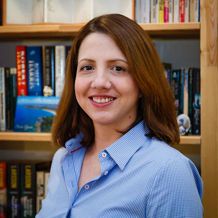
Dr. John David Carmichael is a Clinical Associate Professor of Medicine at the Keck School of Medicine of USC. He serves as Co-Chief of the Division of Endocrinology and Diabetes and Vice Chair of the Department of Medicine for Clinical Operations and Strategy. Additionally, he is the Co-Director of the USC Pituitary Center, focusing on clinical care and research for pituitary disorders. Education: BA in Biomedical Ethics from Brown University, MD from Virginia Commonwealth University/Medical College of Virginia Training: Internal Medicine at Virginia Mason Medical Center, Endocrinology Fellowship at NYU, Translational Research at UCLA His research spans over 20 years of clinical trials in pituitary disorders like acromegaly, Cushing’s disease, and prolactinomas. He integrates clinical outcomes with advanced imaging (7T MRI) and molecular studies (e.g., MAX protein regulation), emphasizing surgical techniques, medical therapies, and predictive modeling for recurrence. Notable awards include the NIH Loan Repayment Program (2009-2013) and NIH Clinical Research Feasibility Funds (2008-2009). He leads education initiatives for medical students, residents, and fellows at USC and contributes to clinical guidelines via the Endocrine Society.
P. Douglas Yoder is an Associate Professor in the School of Electrical and Computer Engineering at Georgia Institute of Technology. He holds office in Building BH, Room 219, and can be reached at 404/385-2652. Dr. Yoder leads the Computational Electronics and Photonics Group, focusing on semiconductor device research and development. Dr. Yoder received his B.S.E.E. degree with highest honors from Cornell University in 1990, followed by M.S. and Ph.D. degrees from the University of Illinois at Urbana-Champaign in 1991 and 1993-1994. His academic journey included a postdoctoral fellowship at the Swiss Federal Institute of Technology in Zurich, Switzerland, and professional experience at Bell Laboratories and Agere Systems before joining Georgia Tech in Fall 2003. Dr. Yoder's research generates new understanding of microscopic physical processes and macroscopic phenomena in semiconductor structures and devices. His work spans high-power ultraviolet laser diodes for communication and sensing applications, coupled electrothermal analysis of AlGaN/GaN field effect transistors, quantum charge transport for nanoelectronic devices, and quantum cascade lasers for biomolecular spectroscopy. His Computational Electronics and Photonics Group employs advanced simulation techniques to model semiconductor behavior at fundamental levels, with particular expertise in Monte Carlo charge transport simulation and electrothermal analysis. Analysis of Dr. Yoder's recent publications reveals a consistent focus on wide bandgap III-nitride semiconductors, particularly gallium nitride (GaN) and its alloys. His work bridges fundamental quantum transport phenomena with practical device applications, showing strong emphasis on laser diodes, photodetectors, and high-frequency electronic devices. The research demonstrates sophisticated integration of materials science, quantum mechanics, and device engineering principles. Member of Tau Beta Pi (1988-present) Member of Eta Kappa Nu (1988-present) Hertz Foundation Graduate Research Grant (1990) Unisys Scholarship (1989) MITRE Scholarship (1986) U.S. Air Force Summer Faculty Fellowship (2009) Senior Member of IEEE (2005) Dr. Yoder has advised numerous graduate students through their Ph.D. and M.S. research, with former students now working at major technology companies including Intel, Microchip, and Texas Instruments. His research has been supported by various funding sources, including the U.S. Air Force. Dr. Yoder actively participates in professional service as conference chair and committee member for major events in nitride semiconductors and numerical simulation of optoelectronic devices. Dr. Yoder directs the Computational Electronics and Photonics Group, which maintains expertise in full-band ensemble Monte Carlo methods, electrothermal simulation, and quantum transport modeling. The group collaborates with experimentalists to validate theoretical predictions and develop next-generation semiconductor devices. Current research directions include superlative student projects starting Fall 2025 focusing on intersections of mathematics, physics, and object-oriented programming.
Douglas Shepherd is an Associate Professor of Physics at Arizona State University (ASU), affiliated with the School of Life Sciences and the Center for Biological Physics. He leads the Quantitative Imaging and Inference (QI2) Lab, which focuses on developing high-throughput fluorescence imaging methods and statistical tools to study cellular organization in tissues and organs. His research contributes to the Chan Zuckerberg Initiative's Human Cell Atlas, particularly in mapping gene expression in the human lung. Education: Ph.D. in Physics, Colorado State University (2011) B.S. in Physics, University of California Santa Barbara (2003) Research interests span bioimaging, gene regulation in pathogenic bacteria, optical device development, and the physics of biological systems. The QI2 Lab emphasizes open science, sharing software and datasets for microscopy control and analysis via platforms like GitHub. Recruitment is ongoing for postdocs and students in theoretical/experimental roles. The lab’s work integrates advanced microscopy with computational modeling to address questions in tissue development and cellular decision-making. Recent technical innovations include structured illumination modules and light-sheet microscopy platforms for high-resolution imaging.
Professor Cheng Yan is a faculty member at the School of Mechanical, Medical and Process Engineering, Queensland University of Technology (QUT). His research focuses on energy storage materials, composites, and mechanical characterisation & numerical modelling. He holds a PhD in Engineering from the University of Sydney and has received prestigious awards such as the ARC Australian Research Fellowship (2003) and Queensland International Fellowship (2009). Professor Yan leads a team with over A$13 million in research funding, including multiple ARC grants. His work bridges advanced materials development with applications in batteries, biomaterials, and structural engineering. Education & Career: PhD in Engineering (University of Sydney). Academic roles include Professor at QUT since 2015, and prior positions at the University of Sydney as an ARC Research Fellow (2003–2007). Collaborates with institutions like Tohoku University, Johns Hopkins, and Karlsruhe Institute of Technology. Research Interests: Energy storage materials (Li-ion, Na-ion, Zn-air batteries), composite design (nanocomposites, bio-inspired materials), and mechanical characterisation of nanostructures. His work addresses challenges in battery safety, material durability, and bio-mimetic engineering. Recent trends in publications emphasize structural batteries, MXene-based sensors, and electrochemical mechanisms in novel cathode materials. Awards & Grants: Over 20 ARC grants including DP250102887 (2025–2027), DP210103266 (2021–2023). Honors include ARC Australian Postdoctoral Fellowship (1998) and Vice Chancellor Performance Awards (2010–2014). Advisory & Teams: Supervised over 10 PhD students, focusing on battery materials, composites, and numerical modelling. Leads interdisciplinary teams in advanced materials and sustainable technologies. Collaborates on national facilities like the Xe-plasma dual beam for materials characterization. Labs & Teams: Active in QUT’s Advanced Materials Research Group, contributing to facilities like the femtosecond laser micromachining system and in-situ transmission electron microscope setups.
Kazimierz Baczewski is a Professor at the Faculty of Mechanical Engineering, Military University of Technology (Warsaw), specializing in fuel engineering and biofuels technology. His research focuses on oxidation stability, low-temperature properties, and rheological behavior of conventional and alternative fuels. His primary research interests include: Fundamental analysis of diesel and aviation fuel aging processes Development of biofuel-blend stability enhancement methods Application of statistical quality control tools (Pareto-Lorenz, Ishikawa diagrams) for fuel monitoring systems Experimental characterization of fuel crystallization and rheological properties under extreme conditions His publication record demonstrates consistent focus on fuel quality optimization, particularly regarding: Impact of commercial depressants on diesel fuel performance Interaction between Jet A-1 aviation fuel and biodiesel components Oxidation stability mechanisms in military-grade fuels No scientific awards or formal student advisement records were documented in the available materials. His experimental work primarily utilizes advanced analytical techniques including microscopic crystallization analysis and rheological testing.
Alessandra Filabozzi is a Researcher at the Physics Department of the University of Rome Tor Vergata since 1992. She holds a PhD in Physics from the University of Rome La Sapienza and has held visiting professor roles at the Center Universitaire Paris Sud, Orsay (1998–2000). Her academic career includes teaching Physics courses for chemists, biologists, and agricultural students, alongside roles such as member of the Department of Physics Council (2012–2015), researcher representative at the Faculty of Sciences (2004–2012), and member of the National University Council (CUN) for Area 02 – Physical Sciences since 2017. Her research focuses on microscopic dynamics in molecular solids, quantum fluids, and biological systems like water, proteins, and membranes. She employs neutron, X-ray, and infrared spectroscopy techniques, collaborating at European facilities (ISIS, ILL, LLB, SOLEIL). Additional expertise includes cultural heritage diagnostics using neutron spectroscopy and instrumentation development for neutron detectors. She actively participates in academic governance and social initiatives, including the Rete29Aprile research network and advocacy groups like ATTAC Italia and Donne in Gene Onlus, which operates an anti-violence center in Rome.
Bryan Spring is an Associate Professor in the Department of Physics at Northeastern University's College of Science, where he leads the Spring Research Group focused on bridging biophysics, biomedical optics, and cancer biology. His work targets micrometastases left behind by standard cancer therapies through optical spectroscopic imaging and photophysics to visualize and eliminate residual tumors that lead to recurrence. Spring's research interests center on developing precision photomedicine approaches that address tumor heterogeneity, drug resistance, and molecular mechanisms of treatment escape. His group has pioneered tumor-targeted, activatable photoimmunotherapy (taPIT) that uses near-infrared light activation of molecular-targeted chromophores to selectively damage drug-resistant cancer cells while minimizing side effects. This approach enables microscopic-resolution 'optical biopsy' for identifying drug-resistant cancer cell deposits without invasive surgeries. His recent publications demonstrate a strong trend toward developing multicolor in vivo microendoscopy tools (hyperspectral, lifetime-resolved, and FRET imaging), real-time image analysis software, and molecular-targeted probes. The work spans from fundamental optical engineering to translational cancer research, with a particular focus on ovarian cancer treatment and overcoming drug resistance through photomedicine approaches. Scientific awards include the prestigious Smith Family Awards Program for Excellence in Biomedical Research (2017) and being selected as a Scialog Fellow for Advancing BioImaging (2021). His students have consistently won awards at major conferences, including multiple Poster of Excellence awards at the International Photodynamic Association World Congress. Professor Spring has secured significant research funding including an NIH-NCI R01 award ($3.2M), a Physical Sciences Oncology Network grant (~$2.7M), and an NCI R21 concept grant (~$0.5M). He maintains active collaborations with leading institutions including MD Anderson Cancer Center, Moffitt Cancer Center, Duke University, and Cornell University, as well as industry partners like Cellaria Bio. The Spring Research Group operates state-of-the-art facilities for developing precision photomedicine technologies, including custom femtosecond fiber lasers, GPU-accelerated hyperspectral image processing systems, and low-cost LED arrays for light-activated therapy. The lab's interdisciplinary team combines expertise in physics, optics, cancer biology, and computational imaging to advance next-generation cancer treatment approaches.
Dr. Qi Hu is a Schmidt AI in Science Postdoctoral Research Fellow at the University of Oxford's Department of Engineering Science, affiliated with Reuben College. Her research integrates artificial intelligence with optical hardware control to advance next-generation imaging systems, particularly in adaptive optics for microscopy. She holds a DPhil from the University of Oxford (2017–2021), focusing on phase and polarization aberration corrections in microscopes, and a prior degree from St. Hilda’s College, Oxford (2013–2017). Her work bridges machine learning and optics, emphasizing applications in microscopy and photonics. Notable contributions include neural network-driven adaptive optics frameworks and sensorless aberration correction methods. Key achievements include the EPSRC IAA Doctoral Impact Scheme grant (2021) and her role in developing universal adaptive optics systems. Research areas span optical microscopy, machine learning techniques, and adaptive optics, with affiliations to the Optical and Photonic Engineering group. Her publications highlight advancements in imaging system design, aberration correction algorithms, and AI-driven optical control, published in journals like Light: Science and Applications and Photonics .
Simon W. North is a Professor and former Executive Associate Dean in the Department of Chemistry at Texas A&M University, holding the John W. Bevan Professorship in Chemistry. He leads the North Research Group, focusing on understanding chemical reactivity at a microscopic level and developing advanced laser diagnostics for hypersonic flows and atmospheric chemistry. His affiliations include the National Aerothermochemistry Laboratory and the Center for Atmospheric Chemistry and the Environment. North earned his B.S. from the University of New Hampshire (1990), Ph.D. from UC Berkeley (1995), and completed postdoctoral work at Brookhaven National Laboratory (1995–1997). His research spans atmospheric photochemistry, laser diagnostics, and aerothermochemistry, with a focus on reaction dynamics, energy transfer, and flow field characterization. Research interests include state-resolved photodissociation studies, ozone chemistry, and hypersonic flow diagnostics using techniques like ion imaging and NO-based velocimetry. He has pioneered the VENOM (Vibrationally Excited NO Monitoring) technique for simultaneous velocimetry and thermometry in high-speed flows. North has been recognized with multiple teaching awards, including the College and University-level Association of Former Students Faculty Distinguished Achievement Awards (2010, 2009, 2004). His group has produced over 150 peer-reviewed publications and has advised numerous graduate students and postdocs, many of whom now hold academic or industry positions. His lab collaborates with aerospace engineering teams on hypersonic flow studies and has developed state-of-the-art experimental setups, including the Texas A&M hypersonic wind tunnel facility. Educational contributions include curriculum development in physical chemistry labs and outreach programs targeting K-12 and undergraduate STEM education.
Suzanah Boyd is a Researcher at the Macquarie Medical School, part of the Faculty of Medicine, Health and Human Sciences at Macquarie University. She holds a Doctor of Philosophy (PhD) and focuses on melanoma research, molecular oncology, and biomarker development. Her work spans understanding cancer genetics, treatment resistance mechanisms, and the application of circulating tumor DNA in clinical diagnostics. Research Interests: Dr. Boyd’s primary research areas include melanoma biology, biomarker discovery for cancer prognosis and treatment response, genetic mutations in cancer progression, and the molecular pathways involved in therapeutic resistance. Her studies leverage cutting-edge techniques like liquid biopsy to non-invasively monitor treatment efficacy and predict patient outcomes. Key Projects: She contributed to the 2015 Live-cell confocal microscope research initiative, collaborating with multidisciplinary teams to advance cellular imaging and oncology research. Publications: Her recent work highlights advancements in circulating tumor DNA as a predictive biomarker for anti-PD1 therapies and insights into BRAF/MEK inhibitor resistance mechanisms in melanoma. These studies underscore her expertise in translating molecular findings into clinical applications. Grants & Advising: While specific grant details are not listed, her involvement in collaborative projects indicates active participation in funded research initiatives. Labs/Teams: She is part of the Macquarie Medical School’s oncology research group, contributing to interdisciplinary efforts in melanoma and molecular oncology research.
Roles & Affiliations: Demie Kepaptsoglou is a Senior Lecturer in Physics at the University of York, Deputy Director of the SuperSTEM facility, and a Staff Scientist at the EPSRC National Facility for Advanced Electron Microscopy. She holds an affiliation with the School of Physics, Engineering and Technology. Previously, she served as a Staff Scientist at the University of Manchester’s School of Materials and a Postdoctoral Researcher at the University of Oslo’s Institute of Physics. Education: MScEng in Mining & Metallurgy Engineering (National Technical University of Athens, Greece, 2001) PhD in Materials Science (National Technical University of Athens, Greece, 2007) Research Interests: Her work focuses on advanced electron microscopy and spectroscopy techniques, applied to nanomaterials, thermoelectrics, topological insulators, and functional oxides. Key areas include defect analysis, interface studies, and the development of vibrational/magnon spectroscopy in electron microscopes. She explores applications in graphene, 2D materials, and spin-to-charge conversion systems. Grants & Collaborations: Leads projects such as 'New Horizons 2020' (magnon interfaces) and collaborates with institutions globally. Co-supervises PhD students Connor Murrill and Fayzah Talbi. Awards: European Microscopy Society Outstanding Paper Award (2020) Labs & Facilities: Based at the SuperSTEM facility (STFC Daresbury) and contributes to the York Nanocentre.
Qian-Yong Chen serves as an Associate Professor in the Department of Mathematics and Statistics at the University of Massachusetts Amherst, maintaining an office in LGRT 1521 with regular office hours (Tuesdays and Thursdays 11:15AM-12:45PM) and contactable via cqy@umass.edu or 413-545-9611. His academic credentials include: Ph.D. from Brown University (2004) M.S. from Chinese Academy of Sciences (1999) B.S. from University of Science & Technology of China (1996) Chen's research centers on Numerical Analysis and Scientific Computing , with specialized expertise in Computational Fluid Dynamics , Traffic Flow Modeling , and Nonlinear Partial Differential Equations . His work bridges theoretical mathematics and practical engineering applications, developing advanced numerical techniques for complex physical systems including turbulence, traffic networks, and quantum phenomena. Analysis of his 2001-2016 publications reveals consistent innovation in numerical methodologies: coarse-graining for turbulence, spectral/finite-volume reconstructions for hyperbolic PDEs, and uncertainty quantification in transportation models. Key trends include cross-disciplinary adaptation of optimization techniques and hybrid approaches combining dynamical systems theory with computational physics. No scientific awards are documented in the provided materials. Information regarding student advisement or research funding remains unspecified in the source text. The scraped content contains no references to laboratory facilities or collaborative research teams.
Deepak Uttamchandani is a Visiting Professor in the Electronic and Electrical Engineering department at the University of Strathclyde. His research focuses on Optical MEMS, optofluidics, and advanced microscopy technologies. He has contributed to projects like miniaturized light-sheet microscopes and MEMS-based sensors, collaborating with institutions like the EPSRC and MRC. His work aligns with UN Sustainable Development Goals, particularly in health and innovation. Research Interests: Optical MEMS, MEMS microphones, fiber optic sensors, and opto-electronic instrumentation. Notable contributions include 3D-printed optical components for microscopy and MEMS-controlled lasers. Awards include the 2017 IEEE Sensors Council Technical Achievement Award and the 2024 IEEE Joseph F. Keithley Award. He has supervised 6 doctoral students and led 16 projects, including Fast-tracking Health Innovation for NHS Scotland. Activities include committee memberships and PhD examinations. His work emphasizes interdisciplinary approaches in photonics and biomedical engineering.
Dr. Laura Clark is a Royal Society University Research Fellow at the University of York's School of Physics, Engineering and Technology. Her research focuses on advancing electron microscopy techniques for higher-resolution imaging and quantitative analysis of sensitive materials. She holds visiting researcher positions at the University of Oxford, University of Leeds, and the Electron Physical Science Imaging Centre (ePSIC) at Diamond Light Source. Dr. Clark's expertise includes transmission electron microscopy (TEM), ptychography, differential phase contrast imaging, and beam-shaping methodologies. Her research group develops theoretical models, computational simulations, and experimental protocols to overcome current limitations in nanoscale characterization, particularly for beam-sensitive materials like solar cell components and pharmaceuticals. She received her undergraduate and MSc degrees from the University of York and completed her PhD at the University of Antwerp. Her postdoctoral work included positions at Monash University and Oxford University before joining York in 2022. Dr. Clark has received multiple scientific honors including the European Microscopy Society Outstanding Paper Award (2020) and has served on committees of the Institute of Physics and Royal Microscopical Society. Her publication record demonstrates sustained contributions across electron microscopy techniques, with recent work exploring dose-efficient imaging, phase retrieval algorithms, and materials characterization for renewable energy applications. Dr. Clark leads a research group focused on pushing the boundaries of electron microscopy capabilities.
Oumeng Zhang serves as a Postdoctoral Scholar Research Associate in Electrical Engineering at the California Institute of Technology, working under Professor Changhuei Yang in the renowned Biophotonics Laboratory. As a Resnick Postdoctoral Scholar, Zhang contributes to cutting-edge research at the intersection of optics, computation, and biomedical applications. Zhang's research interests span multiple advanced imaging domains including biophotonics, computational microscopy, optical imaging, wavefront engineering, Fourier ptychography, non-line-of-sight imaging, and AI applications in medical imaging. The work focuses on developing novel tools that combine optics and microfluidics to tackle diagnostic and measurement problems in biology and medicine, with particular emphasis on pushing the performance of standard microscopes beyond their physical limitations through computational approaches. Analysis of Zhang's recent publications reveals a strong trend toward increasingly sophisticated computational imaging techniques that integrate artificial intelligence with advanced optical methods. The research demonstrates a progression from fundamental optical principles to complex multi-dimensional imaging systems capable of capturing molecular orientation, volumetric structures, and dynamic biological processes with unprecedented resolution. Key thematic areas include polarization imaging, quantitative phase retrieval, neural network-enhanced reconstruction, and multi-view optical systems that achieve isotropic resolution. Resnick Postdoctoral Scholar fellowship Zhang's research is supported through the Resnick Sustainability Institute fellowship and contributes to the broader research portfolio of the Biophotonics Laboratory, which receives funding from multiple federal agencies and private foundations supporting innovative biomedical imaging technologies. The laboratory environment fosters interdisciplinary collaboration between electrical engineers, biologists, and computer scientists working toward transformative diagnostic tools. The research takes place within Caltech's Biophotonics Laboratory, which specializes in developing novel optical tools that combine optics and microfluidics to tackle diagnostic challenges in biology and medicine. Major projects include Fourier Ptychographic microscopy, time-reversal optical focusing, and parallel microscopy systems that transform physical optical problems into computational challenges.