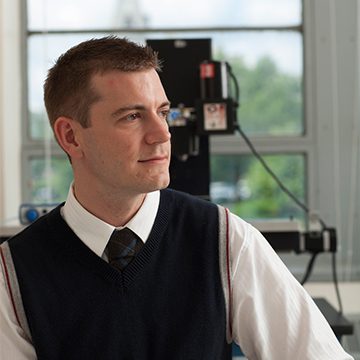
Danick Briand is a Senior Scientist at the Soft Transducers Laboratory within the Microsystems for Space Applications Group (LMTS) at École Polytechnique Fédérale de Lausanne (EPFL). His work focuses on MEMS and Microsystems for environmentally friendly technology , integrating flexible and printed electronics with applications in energy harvesting , smart sensing systems , and advanced gas sensing . Research Themes : Environmental sensors using microsystem technology Green microtechnologies and micromanufacturing Ultra-low energy MEMS Energy-saving and harvesting systems Recent Publications : Developed transient biodegradable sensors and microwave sensing technologies using printed and degradable materials Explored flexible piezoelectric systems and wearable sweat analyzers for biomedical applications Advanced inkjet-printed biosensors and eco-friendly fabrication methods Labs & Collaborations : Soft Transducers Laboratory (EPFL) Laboratory for Microsystems (LMTS)
Bradley Nelson is a Full Professor of Robotics and Intelligent Systems at ETH Zürich since 2002, leading the Institute for Robotics and Intelligent Systems. He holds a Ph.D. in Robotics from Carnegie Mellon University (1995), with prior roles as Assistant Professor at the University of Illinois at Chicago (1995-1998) and Associate Professor at the University of Minnesota (1998-2002). His research focuses on microrobotics and nanorobotics for biomedical applications, including targeted drug delivery and medical robotics. He leads the Microrobotics Lab (MSRL) and chairs international workshops/conferences. Awards include IEEE and ASME Fellowships, and Best Paper accolades at major robotics venues. Research interests emphasize magnetic microrobot navigation, smart materials, and clinical translation of robotic systems. His work bridges engineering and medicine, addressing challenges like cerebral vasculature navigation for drug delivery. He has developed electromagnetically controllable catheters and telesurgery frameworks. Leadership roles include Head of the ETH Department of Mechanical and Process Engineering and Chairman of the ETH Electron Microscopy Center (EMEZ). Notable contributions include magnetically guided microcatheters, variable-stiffness catheters, and clinical-ready navigation systems. Ongoing projects explore magnetoelectric effects and biodegradable micromotors for environmental and biomedical uses. His lab collaborates with industry and academic partners globally to advance robotic solutions for healthcare challenges.
Julia R. Greer serves as the Ruben F. and Donna Mettler Professor of Materials Science, Mechanics and Medical Engineering at the California Institute of Technology (Caltech), where she also holds the position of Executive Officer for Applied Physics and Materials Science since 2025. She earned her B.S. from MIT (1997) and M.S./Ph.D. from Stanford University (2000/2005), joining Caltech as Assistant Professor in 2007, promoted to Professor in 2013, and appointed to her current named professorship in 2019. Her research spans mechanics of hierarchical architectures , nanomaterials , and additive manufacturing , with significant contributions to energy storage systems and biomedical materials . Key focus areas include nano-scale mechanical properties, in-situ deformation analysis, and development of novel fabrication techniques for micro-architected materials. Her group pioneered hydrogel infusion additive manufacturing for metals and multiphoton 3D lithography standards. Analysis of recent publications reveals strong emphasis on solid-state battery interfaces (2025), bioresorbable microrobots (2024), and AI-enabled material design (2024), demonstrating cross-disciplinary impact across energy, healthcare, and quantum technologies. Her work consistently bridges fundamental nanomechanics with practical applications in energy storage and medical devices. 2024 ASME Nadai Medal 2024 SES A.C. Eringen Medal Elected to National Academy of Sciences (2025) Fletcher Jones Foundation Director (2019-2025) Professor Greer has advised over 40 PhD students including Seola Lee (2025) and Wenxin Zhang (2025), with research funded by collaborations spanning MIT, UCSF, Purdue, and ETH Zurich. Her group maintains active projects in lightweight nanoarchitected materials for impact absorption, electroactive polymers for braille devices, and 3D interdigitated solid-state batteries. Current leadership includes Editor-in-Chief of the Journal of Applied Physics (2024-) and direction of Caltech's Materials Science department.
Yayue Pan is a Professor at the Department of Mechanical and Industrial Engineering, University of Illinois Chicago (UIC) , and serves as the Director of NASA MIRO Center for In-Space Manufacturing: Recycling and Regolith Processing (CISM-R2) . Her research focuses on advancing Additive Manufacturing (AM) technologies for applications in biomedical engineering , energy storage , and smart structures . Ph.D., Industrial and Systems Engineering, University of Southern California (2014) M.S., Mechanical Manufacturing and Automation, Zhejiang University, China (2010) B.S., Industrial Engineering, Zhejiang University of Technology, China (2007) Her work addresses technical challenges in AM such as multi-material printing , multi-scale fabrication , and field-assisted processes . Notable projects include: Development of electrostatically-assisted direct ink writing (eDIW) for high-speed, high-resolution printing Continuous projection stereolithography for rapid solid object manufacturing Acoustic field-assisted particle patterning for smart composites Light-curable hydrogels for corneal repair applications Her 15 most recent publications (2022–2025) span topics in: Multi-material AM (conductive polymers, hierarchical composites) Biomedical applications (soft robotics, corneal repair) Energy components (battery electrolytes, supercapacitors) Field-assisted processes (acoustic, electrostatic, magnetic) Scientific Awards : 2024 ASME Chao and Trigger Young Manufacturing Engineer Award 2022 UIC Researcher of the Year Rising Star Award 2020 ASME CIE TC Leadership Award 2019 UIC Outstanding Teaching Award 2017 SME Outstanding Young Manufacturing Engineer Award NSF REU Supplements (2023–2024) Advising : Mentored 24+ graduate/undergraduate researchers, including 17 NASA/GPIP interns. Former advisees hold academic positions at University at Buffalo and University of North Carolina at Charlotte , and industry roles at Apple , GE Healthcare , and ANSYS . Grants : Recipient of a $4.65M NASA grant and multiple NSF awards. Collaborations include Northwestern University, University of Michigan, and NASA centers.
Zoran Cenev holds a Tenure Track Assistant Professor position within the Mechatronics and Dynamics section of the Department of Mechanical and Production Engineering at the School of Engineering, Aarhus University. His primary institutional affiliation is with AU Engineering, and contact details include email zoran.cenev@mpe.au.dk and telephone +45 20 64 75 44, with office location Aarhus N, 5128-140. Research interests focus on interdisciplinary applications of magnetic and robotic systems: Robotic micromanipulation via electromagnetic needles Ferrofluid-based biofabrication for skeletal muscle engineering Laser-induced photothermal droplet control Theoretical modeling of particle dynamics at fluid interfaces Surface engineering for underwater metallic stability Nanostructure formation through ion bombardment His recent publications (2023-2025) reveal a dominant trend in adapting ferrofluids for biomedical automation, particularly 3D bioprinting of magnetically responsive tissues and droplet manipulation on engineered surfaces. This work bridges mechanical engineering with regenerative medicine, emphasizing practical implementations of theoretical models for microscale precision. Scientific awards are not documented in the provided information. As a faculty member, Dr. Cenev likely mentors graduate students and pursues research grants, though specific advisees or funding details are absent. Departmental laboratories and workshops support his experimental work in mechatronics, with emphasis on magnetic manipulation systems and surface characterization.
Dr. Shirley Coyle is an Assistant Professor in the School of Electronic Engineering at Dublin City University (DCU) and Programme Chair for the BSc Global Challenges. She holds a BEng in Electronic Engineering from DCU (2000) and a PhD in Biomedical Engineering from NUI Maynooth (2005). Her career includes roles as a Telecoms Engineer at Siemens, Research Fellow at the National Centre for Sensor Research, and Team Leader of Wearable Sensors in the INSIGHT Centre for Data Analytics. She also studied part-time at the Grafton Academy for Fashion Design and later founded a consultancy in wearable technologies. Her research focuses on smart garments, wearable sensors, and sustainable textiles, with applications in healthcare, sports performance, and S.T.E.A.M. integration. Key interests include developing wearable chemical sensors, energy-autonomous sensing systems, and IoT-enabled rehabilitation devices. She has pioneered work on wearable sensors for monitoring chronic diseases, athlete training, and home rehabilitation using VR. Dr. Coyle’s work spans interdisciplinary collaboration, combining biomedical engineering with textile design. Her contributions include innovations in electrospun textiles, self-powered sensors, and sensor integration with microfluidics. She has held leadership roles in DCU’s Governing Authority and promotes STEM education through design-focused initiatives.
J. Edward Colgate is the Walter P. Murphy Professor of Mechanical Engineering and Director of the Human Augmentation via Dexterity (HAND) Engineering Research Center at Northwestern University's McCormick School of Engineering. He also holds the title of Breed Senior Professor of Design. His academic career includes leadership roles as founding co-Director of the Segal Design Institute and director of the Master of Science in Engineering Design and Innovation program. Colgate earned his Ph.D. (1988), S.M. (1986), and S.B. in Physics (1983) from the Massachusetts Institute of Technology. Colgate's research focuses on physical human-robot interaction with specialization in surface haptic interactive design and electroadhesion technology development. His work spans three interconnected domains: haptic interfaces (including wearable haptic arrays and Touchbot systems), robot dexterity through Shape-Based Remote Manipulation (SBRM) for overcoming communication delays, and high-speed electroadhesive actuators. The Northwestern Haptics Lab under his direction aims to create realistic virtual environments by merging these research vectors. His publications demonstrate consistent focus on tactile perception mechanisms, electroadhesion applications, and haptic rendering algorithms. Recent work explores texture playback fidelity, wearable electroadhesive arrays, robotic manipulation, and human-swarm control systems, reflecting interdisciplinary integration of mechanical engineering, materials science, and neuroscience principles. Awards: Elected to National Academy of Engineering (2021) for contributions to haptics, human-robot systems, and design education Inducted into National Academy of Inventors (2015) Educational initiatives include developing Northwestern's Design Thinking and Communication curriculum, establishing the Certificate in Engineering Design, and creating the Master of Science in Engineering Design and Innovation. He teaches ME 390: Introduction to System Dynamics using a flipped classroom model. Colgate directs the Northwestern Haptics Lab within the Center for Robotics and Biosystems, focusing on fundamental haptics research with applications in virtual reality, prosthetics, and human-assistive devices. The lab maintains active industry partnerships for technology transfer of haptic innovations.
Lukas Hiendlmeier is a Researcher at the Technical University of Munich, affiliated with the Munich Institute of Biomedical Engineering (MIBE) and the Associate Professorship of Neuroelectronics led by Prof. Bernhard Wolfrum. He holds a Master of Science in Mechanical Engineering from TUM. His research focuses on advanced fabrication technologies such as 3D printing, laser micromachining, and polymer material science, with applications in neuroelectronics and biomedical devices. Hiendlmeier’s work emphasizes developing self-folding bioelectronic interfaces, flexible electrodes, and implantable neural devices for peripheral nerve interfacing. His contributions include innovations in 4D printing techniques, thermoformed materials, and origami-inspired electrode designs. He collaborates on projects involving cell manipulation, microfluidic lab-on-a-chip systems, and closed-loop neural stimulation systems. Publications span topics like self-folding bioelectronics, flexible sensor arrays, and nanorobotics, showcasing expertise in materials science and biomedical engineering. His research bridges fundamental science and translational applications, addressing challenges in neural prosthetics, wearable diagnostics, and tissue engineering. Hiendlmeier is actively involved in the neuroTUM initiative and contributes to interdisciplinary teams at TUM, focusing on advancing neurotechnology through innovative fabrication methods and biomaterials.
Robert J. Wood is the Harry Lewis and Marlyn McGrath Professor of Engineering and Applied Sciences at Harvard University's School of Engineering and Applied Sciences (SEAS), where he also serves as Director of Graduate Studies. His primary academic focus is in Materials Science & Mechanical Engineering. Wood leads the Microrobotics Lab, located in the Science and Engineering Complex, and his research bridges robotics, bioengineering, and materials science. His work emphasizes biomimetic design principles, with notable projects including the RoboBee series (featuring crane fly-inspired landing mechanisms), springtail-mimicking jumping robots, and medical devices inspired by tapeworm anchoring systems. These innovations aim to advance soft robotics, surgical tools, and autonomous systems. Wood's research has been featured in recent breakthroughs such as soft-landing mechanisms for microrobots (2025), high-leap jumping robots (2025), and bio-inspired medical anchoring systems (2024). His lab focuses on interdisciplinary approaches to solve complex engineering challenges through nature-inspired solutions. No scientific awards are explicitly listed in the provided text. His advising and grant activities are not detailed here, though his lab's advanced projects suggest significant external funding and mentorship roles. The Microrobotics Lab serves as a hub for cutting-edge research in microscale systems and biomedical engineering applications.
Quan Zhou is a Professor leading the Robotic Instruments Group at the Department of Electrical Engineering and Automation, School of Electrical Engineering, Aalto University, Finland. He holds an M.Sc. in Control Engineering and a Dr.Tech. in Automation Technology from Tampere University of Technology. His research focuses on miniaturized robotics, robotic manipulation using contact, acoustic, magnetic, interfacial, and fluidic methods, integrating physics, mechatronics, and machine learning to address challenges in dexterous manipulation with applications in biomedicine, materials science, and industrial technologies. He directs the Master’s Programme in Automation and Electrical Engineering (AEE) at Aalto and coordinates the European Robotics Association’s Topic Group on Miniaturized Robotics. He has led the EU FP7 project FAB2ASM and chaired international conferences like MARSS 2019. Notably, he received the 2018 Anton Paar Research Award for Instrumental Analytics and Characterization. His research spans fundamental methodologies and practical applications, emphasizing interdisciplinary innovation. Recent work includes advancements in fluid-driven manipulation, biomimetic robotics, and acoustic particle control. His contributions bridge theoretical frameworks and real-world automation solutions, with publications in journals like Advanced Intelligent Systems , Nature , and Physical Review E . Prof. Zhou’s leadership roles include coordinating the EIT Digital Master's Programme in Autonomous Systems and chairing IEEE Finland robotics chapters. His work has been recognized through grants and awards, reflecting his impact on robotics and automation research and education.
Robert F. Shepherd is an Associate Professor and Director of Graduate Studies for Mechanical Engineering at Cornell University's College of Engineering. He holds appointments in Aerospace Engineering, Fiber Science, Materials Science, Mechanical Engineering, Systems Engineering, and Theoretical and Applied Mechanics. Educational background: B.S. Material Science & Engineering, University of Illinois (2002) M.B.A. General Management, University of Illinois (2009) Ph.D. Material Science & Engineering, University of Illinois (2010) His research focuses on disruptive manufacturing technologies (3D printing, microfluidics) and functional materials for novel devices. He develops soft actuators mimicking biological functions and enhances fabrication techniques for efficient biomimetic machines. His work bridges materials innovation with robotic applications. Publications primarily explore soft robotics, biomimetic systems, and advanced manufacturing, with consistent emphasis on material behavior and actuator design across diverse applications. Scientific awards: Senior Member, National Academy of Inventors (2022) ONR Young Investigator (2016) Cornell Engineering Teaching Award (2016) Extreme Mechanics Letters Award (2016) NAE FOE Fellow (2016) NAS KAVLI Fellow (2016) Leads the Shepherd Group Research Laboratory and Organic Robotics Lab, focusing on soft material systems and bio-inspired machines.
Alvin NG Theng Haw is an Adjunct Associate Professor at the Division of Information Technology and Operations Management, College of Business (Nanyang Business School), Nanyang Technological University (NTU). He combines over 20 years of global leadership experience in Sales and Product Management with academic roles, including serving as a Senior Career Fellow and executive coach for NTU’s Global Executive MBA and Full-Time MBA programmes. His work focuses on integrating Digital Transformation, Internet of Things (IoT), and Artificial Intelligence for Business into strategic frameworks. Research Interests : Alvin specializes in leveraging Digital Transformation and Advanced Technologies (IoT, AI) to drive business innovation. His publications in materials science demonstrate interdisciplinary applications of these technologies to fields like Soft Robotics, Self-Healing Materials, and Wearable Electronics. His expertise extends to Smart Cities, Sustainability Technology, and Industry 4.0, where he applies business strategies to technological challenges. Contributions : As a founding member of the World Economic Forum’s Digital ASEAN Skills Task Force, he advocates for digital literacy and skills development. His industry experience includes roles in networking, software, cloud platforms, and biorenewable materials, reflecting a bridge between business and engineering.
Niels Quack is an Associate Professor in Micro- and Nanosystems at The University of Sydney's School of Aerospace, Mechanical and Mechatronic Engineering. He joined the university in 2022 after serving as an SNSF Assistant Professor at EPFL (Switzerland). His roles include Academic Director of the Research and Prototype Foundry and membership in the University of Sydney Nano Institute. He holds a Dr.Sc. from ETH Zurich and an M.Sc. from EPFL. His research focuses on micro- and nanosystems engineering, integrating mechanics and photonics at the microscale. Key applications include fiber-optical communication, quantum sensing, and integrated photonics using diamond and silicon materials. Quack has pioneered silicon photonic MEMS and diamond micro-optics, with over 100 publications in journals like ACS Photonics , Optics Letters , and Nanoscale . He leads international collaborations with institutions like Ghent University (Belgium) and EPFL (Switzerland), and serves on editorial boards for IEEE Journal of Microelectromechanical Systems and SPIE Journal of Optical Microsystems . His awards include the Optica Senior Member distinction (2023) and Sydney Research Accelerator Prize (2023). Quack supervises PhD and Master's students in advanced micro- and nanosystems design, offering projects in programmable photonics and diamond-based biosensors. He actively recruits postdoctoral researchers and advises on funded projects like 'Nurturing Commercialization Opportunities for Multipoint Fiber-Optical Pressure Sensors.' His lab develops cutting-edge technologies such as vacuum-sealed silicon photonic MEMS and diamond nanopillar arrays, advancing applications in quantum sensing and optical communication systems.
Arnold Mathijssen is an Assistant Professor in the Department of Physics & Astronomy at the University of Pennsylvania, part of the School of Arts and Sciences. He leads the Mathijssen Lab, focusing on the physics of life, combining experimental and theoretical approaches in biophysics, fluid mechanics, and active materials. His research addresses fundamental questions about pathogen dynamics, biomedical material design, and collective behavior in living systems, with applications to public health and environmental science. Education includes a DPhil from the University of Oxford (2017), MSci and BSc from University College London (2012), and a teaching certificate from Stanford University (2019). He has held roles such as Postdoctoral Fellow at Stanford (2017-2020) and Director of the Working Group on Environmental and Biological Fluid Dynamics (2023-). Research interests span topics like hydrodynamic communication, pathogen clearance in airways, and bacterial contamination dynamics. Notable achievements include the 2025 Undergraduate Research Mentorship Award and media recognition for breakthroughs in optimizing coffee-brewing physics. He chairs conferences, edits scientific journals, and advocates for science accessibility through initiatives like 'Kitchen flows.' Lab affiliations: Centre for Soft and Living Matter at UPenn, Laboratory for Research on the Structure of Matter (LRSM). Media highlights include coverage in The New York Times, The Guardian, and New Scientist for his work on culinary fluid mechanics.
José Alvarado is an Assistant Professor of Physics at the University of Texas at Austin, affiliated with the College of Natural Sciences. His research focuses on biophysics, soft matter, and active matter, particularly exploring mechanical design principles in biological systems. He investigates topics such as planar cell polarity (PCP), actomyosin networks, and morphogenetic processes. Alvarado’s work integrates experimental and theoretical approaches, often involving collaborations with centers like the Center for Nonlinear Dynamics and Texas Robotics. His studies address questions about how biological systems achieve mechanical efficiency and how active matter principles apply to biological actuation and control. Key themes in his research include the nonlinear mechanics of actomyosin gels, the role of PCP in tissue shaping during convergent extension, and the design of biomimetic actuators for robotics. He has also contributed to understanding fluid dynamics in microscale systems, such as hairy surfaces and colloidal liquid crystals.