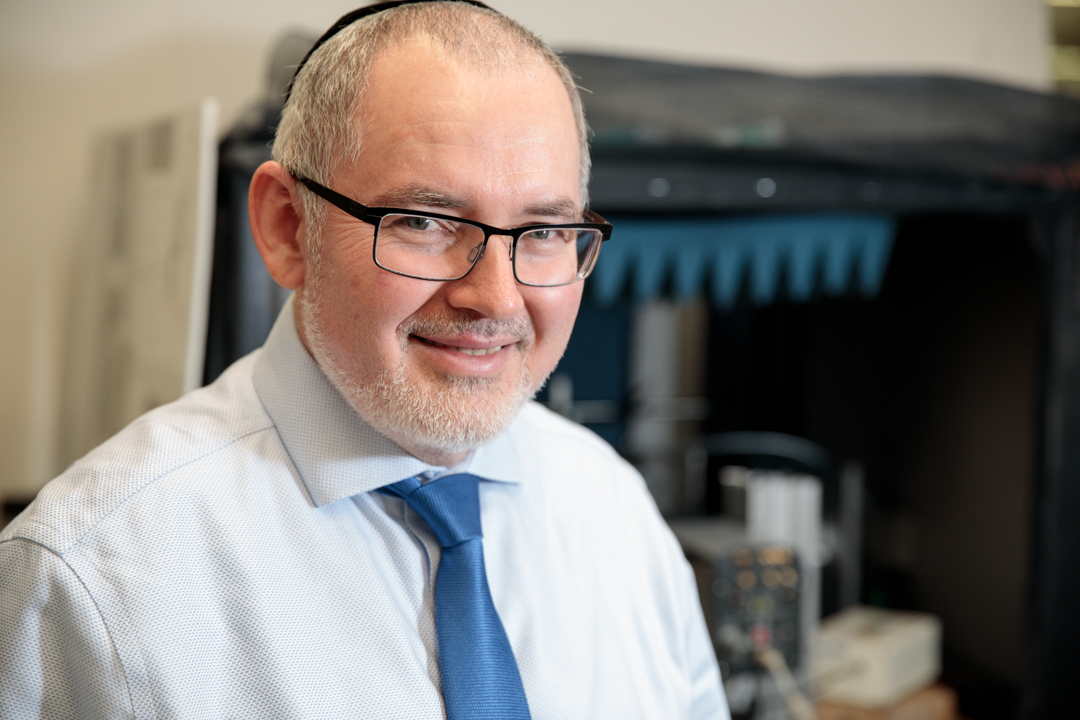
Professor Michael Keidar holds the A. James Clark Professorship at the George Washington University (GW) , School of Engineering and Applied Science, within the Mechanical and Aerospace Engineering department. He leads the Micropropulsion and Nanotechnology Lab , pioneering research in plasma medicine, micropropulsion systems, and plasma nanoscience. His lab collaborates with industry partners like Vector (licensed plasma thruster technology) and US Patent Innovations, LLC (a $5.3M grant for cold plasma cancer therapy). Key research areas include: Cold plasma applications in biomedical treatment Microthrusters for nanosatellites Synthesis of graphene and carbon nanotubes Multi-scale plasma simulations Scientific accolades include the 2017 Ronald C. Davidson Award and AIAA Engineer of the Year (2016-2017), alongside leadership in interdisciplinary projects with GW’s Global Food Institute .
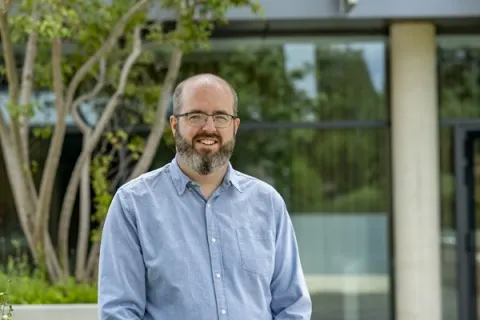
Dr Charlie Ryan is an Associate Professor in the School of Engineering at the University of Southampton , specializing in low-cost micropropulsion systems for small spacecraft. He leads the Astronautics Group and has a primary research focus on electrospray thrusters , Hall-effect thrusters , and small chemical propulsion systems using hydrogen peroxide. PhD in electrospray voltage effects from Queen Mary University of London (2011) Postdoctoral work on MEMS electrospray thrusters for cubesats (2011-2013, European Commission FP7 'MicroThrust') Post Doctoral Research Fellow at University of Surrey’s Space Centre (2014-2015) developing low-cost Hall-effect thrusters His recent research involves experimental characterization of ionic liquid ion sources , porous electrospray thrusters , and in-situ lunar propellants . Current projects include Protolaunch and SPRINT (Research England), Cryptalabs , and collaborations with SmallSpark. He has supervised 10 PhD students in propulsion technology and related fields. Publications demonstrate expertise in: Electrospray thruster diagnostics Dual-species ion emission mechanisms Flight-ready microthruster development Alternative propellants for Hall thrusters Lunar regolith-derived propulsion Modular thruster design Research funded by EPSRC , Royal Society , and Research England . His hardware has flown on space missions including the International Space Station.
Angelo Cervone is a Professor at Delft University of Technology's Department of Astrodynamics & Space Missions within the Faculty of Aerospace Engineering. His research focuses on advanced propulsion systems, CubeSat technology, additive manufacturing for space applications, and space systems design. He leads projects like LUMIO, a CubeSat mission to monitor lunar meteoroid impacts, and has contributed to the development of green propellants and smart composite structures with embedded sensors. His work integrates cutting-edge manufacturing techniques like laser powder directed energy deposition with propulsion system optimization, emphasizing sustainable and robust space technologies. Cervone has authored over 130 publications and edited the book Adaptive On- and Off-Earth Environments , reflecting his expertise in off-world infrastructure and robotic production systems. He received the Rhizome Award (2021) for advancing autarkic systems in off-Earth habitat development. Key Projects: LUMIO CubeSat mission, Rhizome habitat system development, smart propellant tank design Research Themes: CubeSat propulsion, lunar exploration, additive manufacturing for space, in-situ resource utilization His articles highlight advancements in micro-thrusters, structural health monitoring via fiber optics, and autonomous navigation systems for deep-space CubeSats. Cervone collaborates globally on missions requiring innovative propulsion architectures and materials science breakthroughs.
Prof. Henry Fu leads the Fluids and Biomechanics Lab at the University of Utah, focusing on complex biomaterials, low-Reynolds number hydrodynamics, and microscale propulsion systems. His research spans swimming microorganisms, microrobotic drug delivery, and bio-enabled sensing technologies. He advises graduate students like Anuruddha, Suraj, and Hossein, with contact via henry.fu@utah.edu. Key research areas include magnetic actuation of soft robots, bacterial motility mechanics, and nonlocal phononic crystals for wave control. His work bridges fluid dynamics, biomechanics, and biomedical applications, with recent breakthroughs in micropropulsion and material customization. Recent publications highlight advancements in soft robotics, bacterial propulsion dynamics, and metamaterial dispersion engineering. He collaborates on projects involving freeze-cast materials and magnetic microrobotics.
James Friend is a Professor at the University of California, San Diego, holding dual appointments in the Department of Mechanical and Aerospace Engineering, Jacobs School of Engineering and the Department of Surgery, School of Medicine. He serves as the Stanford S. and Beverly P. Penner Endowed Chair in Engineering and leads the Medically Advanced Devices Laboratory in the Center for Medical Devices at UCSD. Prior to joining UCSD in November 2014, he spent 14 years as a faculty member in Japan and Australia, where he founded micro/nanofabrication facilities including the $45 million Melbourne Centre for Nanofabrication and served as inaugural director of RMIT University's $35 million MicroNano Research Facility. Jacobs School of Engineering, Department of Mechanical and Aerospace Engineering School of Medicine, Department of Surgery Stanford S. and Beverly P. Penner Endowed Chair in Engineering Director, Medically Advanced Devices Laboratory Professor Friend's research focuses on exploring and exploiting acoustic phenomena at small scales, primarily for biomedical applications. His work spans acoustofluidics, medical device development, micro/nanofabrication, and the application of surface acoustic waves for diagnostics, drug delivery, and therapeutic interventions. He has pioneered techniques for ultrasound neuromodulation, point-of-care diagnostics, and microscale fluid manipulation with applications in neurology, oncology, and pediatrics. His research bridges fundamental acoustic science with practical clinical solutions, emphasizing translational impact. His recent publications reveal a strong emphasis on advancing acoustofluidic technologies for biomedical applications. Key trends include developing point-of-care diagnostic platforms for neurodegenerative diseases, creating novel ultrasound-based neural modulation techniques, and engineering microscale propulsion systems. His work also explores fundamental aspects of acoustic wave behavior at micro and nanoscales, with applications ranging from cell manipulation to battery technology enhancement. The interdisciplinary nature of his research spans engineering, physics, neuroscience, and clinical medicine. AIAA Jefferson Goblet Student Paper Award and ASME Best Paper Award Multiple excellence awards from Monash Faculty of Engineering (2006, 2008, 2011) Future Leader award from Davos Future Summit (2008) Top 10 emerging scientific leader of Australia (2009) Top 50 papers of Applied Physics Letters past 50 years (2012) IEEE Carl Hellmuth Hertz Ultrasonics Award (2015) IEEE Fellow (2018) Highly cited author by Royal Society of Chemistry (2020) UCSD Distinguished Teaching Award (2021) Professor Friend currently supervises 7 PhD students and 1 post-doc in his Medically Advanced Devices Laboratory. Over his career, he has successfully completed 37 postgraduate students and supervised 23 postdoctoral researchers. His research has been supported by over $29 million in competitive grant funding, reflecting the significance and impact of his work. His laboratory operates at the intersection of engineering and medicine, with strong collaborations across disciplines to translate fundamental discoveries into practical medical solutions. The Medically Advanced Devices Laboratory, which Professor Friend leads, focuses on developing innovative medical devices that leverage acoustic phenomena. The lab has developed handheld acoustofluidic circuits, novel centrifugation and separation techniques using omnidirectional spiral surface acoustic waves, and acoustogeometric streaming technologies. Recent projects include superfast battery recharging systems using surface acoustic waves and point-of-care diagnostic platforms for Alzheimer's disease detection. The laboratory maintains strong industry and clinical partnerships to accelerate the translation of research into practical medical applications.
Dr Alexander Daykin-Iliopoulos is a Senior Research Fellow at the University of Southampton, specializing in electric propulsion and plasma engineering for spacecraft systems. His research focuses on heaterless hollow cathodes, thermionic plasma sources, and miniature propulsion technologies. Specialist in Electric Propulsion Systems Member of Tony Davies High Voltage Laboratory Collaborator with European Space Agency His recent work explores low-power cathode development, plasma antenna applications, and high-current hollow cathode characterization. He actively supervises PhD students and participates in interdisciplinary research teams. Research Groups: Electrical Power Engineering Tony Davies High Voltage Laboratory
Timothee Pourpoint is a Professor in the School of Aeronautics and Astronautics at Purdue University. His research focuses on rocket propulsion systems, including hybrid rockets, hypergolic fuels, and combustion instability analysis. He is affiliated with the Purdue Altitude Chamber Facility, contributing to propulsion testing and diagnostics, and collaborates with Purdue's Mechanical Engineering department. Research Interests: Rocket propulsion and hybrid rocket engine design Hypergolic fuel characterization and ignition mechanisms Combustion instability diagnostics Advanced propulsion testing facilities Key Contributions: Development of dual-mode propulsion systems, characterization of mixed oxides of nitrogen, and 3D-printed catalyst bed technologies. Email: timothee@purdue.edu
Greger Thornell is a Professor at the Department of Materials Science; Microsystems Technology - MST at Uppsala University, where he conducts cutting-edge research in microsystems engineering. His work spans high-temperature ceramic microcomponents, microthrusters for space propulsion, lab-on-a-chip systems, and biomedical microdevices. He is affiliated with The Ångström Laboratory, a leading center for materials and microtechnology research. University: Uppsala University School: The Ångström Laboratory Department: Department of Materials Science; Microsystems Technology - MST Academic Rank: Professor Email: greger.thornell@angstrom.uu.se Thornell holds a TeknD degree and was recognized as an Excellent Teacher. His academic journey reflects a deep integration of education and research, with a focus on hands-on engineering pedagogy and innovation in microsystem design. His research interests center on Microsystems Engineering , particularly in the development of ceramic microcomponents capable of operating in extreme environments such as high temperatures and space. Key areas include microthrusters for small satellites, high-temperature sensors , microfluidic systems , and lab-on-a-chip platforms. He has pioneered work in optogalvanic spectroscopy using microplasma sources and developed paraffin-based actuators for valve and pump applications. His group also explores wireless pressure sensing in harsh environments and submersible microsystems for environmental monitoring. The 15 most recent publications highlight a consistent trend in advancing robust, high-performance microsystems for aerospace, environmental, and biomedical applications. His work frequently involves the use of ceramic materials like alumina and zirconia, enabling operation under extreme thermal and mechanical stress. There is a strong emphasis on integration , reliability , and miniaturization , with applications ranging from satellite propulsion to underwater exploration and gas sensing. Scientific recognition includes the Excellent Teacher award, reflecting his commitment to engineering education. Excellent Teacher Award Greger Thornell has advised numerous students and researchers, including Erika Åkerfeldt, Zahra Khaji, Peter Sturesson, and Kristoffer Palmer, many of whom have co-authored key publications. His collaborative network spans multiple disciplines, including space systems, materials science, and biomedical engineering. While specific grant details are not listed, his extensive publication record and long-term research themes suggest sustained funding in microsystem technologies. He is a core contributor to projects involving nanosatellites , space propulsion , and miniaturized submersibles , often in collaboration with teams focused on exploration systems like the HOPTER hopping robot. His work is centered at The Ångström Laboratory, where he leads research in ceramic MEMS , microthrusters , and high-temperature microsystems . His team focuses on fabricating and testing integrated devices for space and environmental applications, emphasizing reliability and performance under extreme conditions.
Kindracki Jan is a full-time Professor at the Division of Aircraft Engines , Faculty of Power and Aeronautical Engineering , Warsaw University of Technology . His office is located in room 306b, and he can be contacted at Jan.Kindracki@pw.edu.pl . Research Leadership: Chair of Educational Team for Space Technology Projects at PAN, Editor for "Journal of Power Technologies" Teaching: Courses on Aerospace Propulsion, Celestial Mechanics, and Experimental Techniques Research activities focus on Aerospace Propulsion and Combustion Physics , particularly: Rotating Detonation Engines (RDE) Cold Gas/Resistojet Propulsion Hybrid Propellant Combustion Spacecraft Robotics Microgravity Simulation Computational Modeling of Detonation Scientific Achievements include: Multiple Rector's Awards (2007-2019) PECS ESA Project Participation NCN Sonata Grant Leadership NCBiR Project Leadership (2016-2019) Awards span team and individual recognitions, including the Professor Zygmunt Szlachta Award and Best Paper Award at ISHPMIE 2012. Academic Leadership involves organizing international conferences like the Development Trends in Space Propulsion Systems series and mentoring over 138 engineering students and 77 interim projects as of 2020.
Professor Gary J. Cheng is a distinguished faculty member at Purdue University's Edwardson School of Industrial Engineering, with a courtesy appointment in the School of Materials Engineering. He holds numerous prestigious fellowships including AAAS, ASME, SME, RSC, RSA, and ISNM. Dr. Cheng received his PhD in Mechanical Engineering from Columbia University in 2002 and has established himself as a leading researcher in laser-based manufacturing and nanomaterials processing. His research focuses on advanced materials synthesis and processing , specifically in scalable manufacturing of 0D-3D micro/nanostructures, laser matter interaction, and mechanical/physical property enhancement of materials. Applications span energy transport, conversion and storage, load bearing, biomedical devices, and electrical and optical systems. Dr. Cheng heads the Scalable Micro Nano Manufacturing Lab (SMNML) and has secured significant research funding, including an NSF CAREER Award and ONR Young Investigator Award. Dr. Cheng teaches core manufacturing courses including IE370 'Manufacturing Process I', IE 470 'Manufacturing Process II', IE 570 'Advanced Manufacturing Process', and IE 670 'Advanced Topics in Nano-Manufacturing.' His publication record shows consistent high-impact output with over 200 peer-reviewed articles in top journals including Nature Materials, Advanced Materials, and Science Advances, with research trends indicating increasing focus on nanomanufacturing, energy applications, and biomedical materials. Among his numerous accolades are the ASME Milton C. Shaw Manufacturing Research Medal (2022), Purdue College of Engineering Outstanding Faculty Mentor Award (2021), and ASME Blackall Machine Tool and Gage Award (2025). He serves as Associate Editor for the Journal of Manufacturing Science and Engineering and Journal of Manufacturing Process, and as Subject Editor for the Journal of Materials Processing and Technology. Dr. Cheng has successfully mentored multiple PhD students including Maithilee Motlag, Bill Bihlman, and Biwei Deng. His research has been supported by significant grants from NSF, ONR, and other funding agencies, with several projects exceeding $1 million in value. The Scalable Micro Nano Manufacturing Lab continues to innovate in laser-based processing techniques with applications across multiple industries.
William Louisos is a Senior Lecturer in the Department of Mechanical Engineering at the University of Vermont, affiliated with the College of Engineering and Mathematical Sciences. He holds a Ph.D. and M.S. from the University of Vermont and a B.S. from SUNY Buffalo. His expertise spans Thermodynamics, Fluid Mechanics, and Propulsion systems. Louisos teaches courses including First-Year Design Experience, Mechanics of Solids, Thermodynamics, Fluid Mechanics, and Computational Fluid Dynamics. His research focuses on supersonic micronozzles, chaotic natural convection, and propulsion systems, with notable contributions to microscale fluid dynamics and aerospace applications. Publications highlight work on multiphase flow dynamics, chaotic flow patterns, and nozzle performance optimization. He has no documented scientific awards but maintains active research in propulsion and fluid mechanics. Louisos advises no listed students. His teaching spans undergraduate and graduate levels, emphasizing practical engineering design and computational methods. No lab affiliations are specified in the text.
Alina Alexeenko is the Reilly Professor of Aeronautics and Astronautics & Chemical Engineering at Purdue University. She holds a B.S. and M.S. in Mathematics/Applied Mathematics from Novosibirsk State University (1997-1999) and a Ph.D. in Aerospace Engineering from Pennsylvania State University (2003). Her research spans rarefied gas dynamics, micropropulsion, and lyophilization technology, with a focus on computational methods and MEMS applications. Education: B.S., Novosibirsk State University, Mathematics, 1997 M.S., Novosibirsk State University, Applied Mathematics, 1999 Ph.D., Pennsylvania State University, Aerospace Engineering, 2003 Her research interests include rarefied flow phenomena in high-altitude flight, micro-electro-mechanical systems (MEMS), and vacuum manufacturing processes. She pioneered fast computational algorithms for deterministic solutions of rarefied flows and co-founded the Advanced Lyophilization Technology Consortium (LyoHUB). Key contributions include novel microdevice concepts for gas sensing and smallsat propulsion, and innovations in microwave-assisted lyophilization. Recent articles focus on lyophilization optimization (e.g., closed-loop control, RF heating uniformity), micropropulsion systems (e.g., FEMTA thrusters), and aerospace applications like CubeSat deorbiting. Awards include the NSF CAREER Award (2011) and Purdue’s Excellence in Research Award (2013). Grants and leadership roles include directing LyoHUB and chairing AIAA Thermophysics committees. Her educational efforts include vertically integrated projects for small satellite development and interdisciplinary engineering curricula. Labs/Teams: Leads the Rarefied Gas Dynamics and Advanced Lyophilization (RGD & LyoHUB) research groups at Purdue, collaborating with industry and government agencies on propulsion, MEMS, and biopharmaceutical manufacturing.
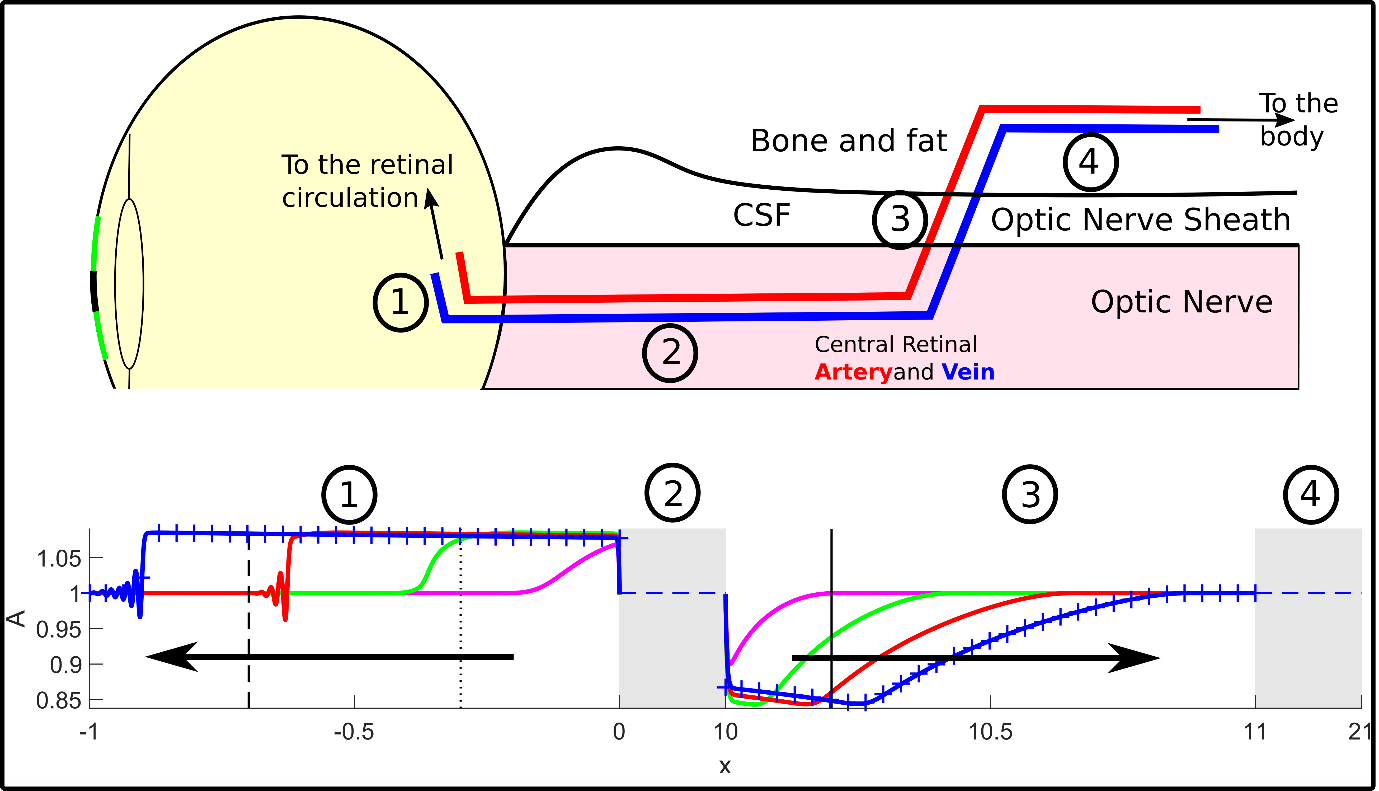
Tamsin Spelman is a Researcher at the Sainsbury Laboratory, University of Cambridge, where she has been a Research Associate in Professor Henrik Jönsson's group since January 2019. Her work bridges mathematics, biology, and engineering to study microscale phenomena in plant and biomedical systems. She earned her undergraduate and Master's degrees in Mathematics from the University of Cambridge in 2013, followed by a PhD in Mathematics from the same institution in 2017. Her doctoral research under Professor Eric Lauga focused on Artificial micro-devices: armoured microbubbles and a magnetically driven cilium . Prior to joining SLCU, she conducted microfluidic experiments at Université Grenoble Alpes and studied ocular blood flow at the University of Glasgow with Dr. Peter Stewart. Spelman's research centers on computational modeling of microscale systems, with expertise in plant biomechanics, microfluidics, and biomedical engineering. She investigates phenomena ranging from root hair development and cytoskeletal dynamics to retinal hemodynamics and microbubble propulsion. Her approach emphasizes close collaboration with experimentalists to ensure biological relevance and practical impact, as demonstrated in her science communication video on mathematics in plant science. Analysis of her 12 publications (2015-2025) reveals a clear evolution from fundamental fluid dynamics (2015-2017 bubble propulsion studies) toward biological applications. Since 2020, she has focused on plant cell mechanics—particularly microtubule organization under geometric constraints and root hair growth dynamics—while maintaining parallel work on ocular fluid mechanics. Her recent 2024-2025 publications demonstrate sophisticated modeling of vascular trauma responses and aqueous humor dynamics, showcasing her interdisciplinary approach. No scientific awards or fellowships were documented in the available information. Spelman has not supervised any students according to public records. Her research is supported by SLCU's core Gatsby Charitable Foundation funding alongside major grants from the Biotechnology and Biological Sciences Research Council (BBSRC), European Research Council (ERC), Human Frontier Science Program, and Wellcome Trust ISSF. She actively contributes to collaborative projects across multiple institutions. As a core member of the Jönsson Group, Spelman collaborates with Dr. Marie-Edith Chaboute and Dr. Atef Asnacios on plant cell biology projects, developing computational tools like Tubulaton for microtubule simulation. Her work with Dr. Peter Stewart on retinal hemorrhage modeling demonstrates her cross-disciplinary impact. She participates in SLCU's public engagement initiatives including the Cambridge Festival and Open Cambridge events.
Professor Roderick Boswell is a faculty member at the Research School of Physics, Australian National University. His research focuses on experimental plasma physics with applications in space propulsion systems. He leads investigations into plasma dynamics, thruster technologies, and complex plasma phenomena. Research interests center on helicon plasma sources, double layer formation, and magnetic field interactions in plasma systems. His recent work explores innovative propulsion methods and plasma-material interactions for aerospace applications. Recent publications demonstrate strong focus on micro-thruster development, plasma diagnostics, and spacecraft propulsion systems. Research combines theoretical modeling with experimental validation in specialized plasma facilities. Active in multiple collaborative projects including the Australian Plasma Thruster Project and radiofrequency plasma applications research. Leads a research group advancing plasma physics and space engineering capabilities.
Sandra M. Troian is a Professor of Applied Physics, Aeronautics, and Mechanical Engineering at the California Institute of Technology (Caltech), holding this position since 2006. She leads the Laboratory of Interfacial and Small Scale Transport (LIS2T), focusing on micro/nano-scale fluidic systems. Her academic journey includes a B.A. from Harvard University (1980), M.S. from Cornell University (1984), and Ph.D. from an unspecified institution (1987). She was a Moore Distinguished Scholar at Caltech (2004-2005). Her research integrates theoretical analysis, numerical simulations, and experimentation to study interfacial phenomena in confined and microscale systems. Key areas include thermocapillary-driven flows, nanoscale thermal effects (Kapitza boundary conductance, layering transitions), and nonlinear wave dynamics in liquid films. Experimental work explores non-contact lithography using patterned fields, biophysical Marangoni effects, and space micropropulsion systems. Recent work has addressed thermal tunneling across liquid/solid interfaces, resonant excitation for microarray patterning, and novel conic mode formations in conductive liquids. Her group's contributions bridge fundamental physics and engineering applications, with implications for nanotechnology, aerospace, and biophysics. Key Contributions: Thermocapillary instability control, nanofilm thermal behavior modeling, and microscale lithography innovations Teaching: APh/Ph 112 ab – Noise and Stochastic Resonance (2022-23) Labs: LIS2T Lab, specializing in interfacial transport phenomena