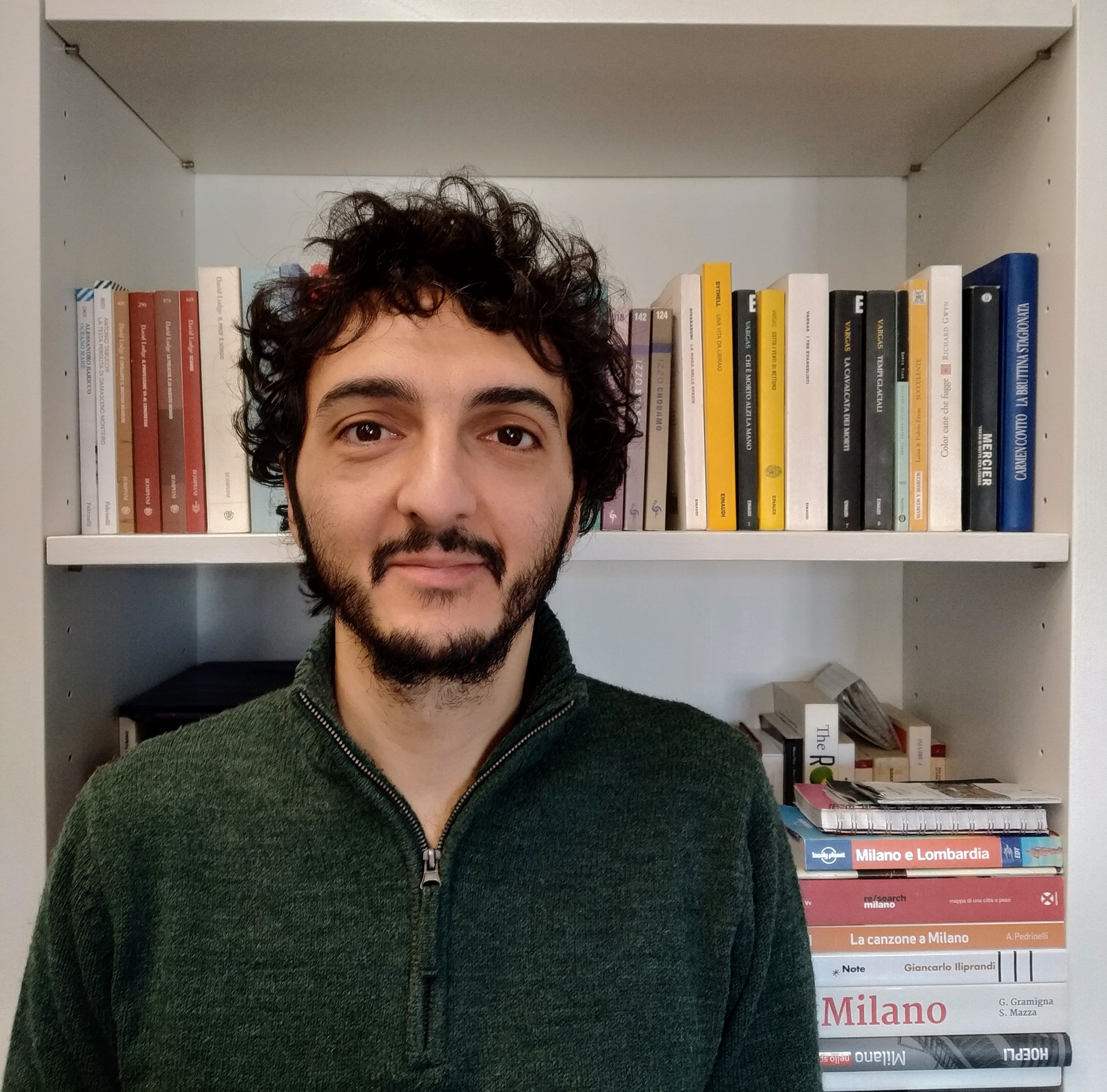
Giovanni Squillero is a Full Professor in the Department of Control and Computer Engineering (DAUIN) at Politecnico di Torino, Italy. He leads the CAD group (Electronic CAD & Reliability) and serves on Politecnico's Joint Committee for Teaching and Ph.D. Steering Committee (Pure and Applied Mathematics).
Riccardo Cantoro is an Associate Professor in the Department of Control and Computer Science (DAUIN) at Politecnico di Torino, where he is a member of the College of Computer, Film and Mechatronics Engineering and the College of Mechanical, Aerospace and Automotive Engineering. He is affiliated with the CAD - Electronic CAD & Reliability Group and the CARS@PoliTO Interdepartmental Center for Automotive Research and Sustainable Mobility. His work bridges academic research and industrial applications through multiple commercially funded projects. Scientific Disciplinary Sector: IINF-05/A - Information Processing Systems ERC Sectors: PE7_4, PE6_2, PE6_11, PE6_12 His research focuses on functional safety, functional testing, and microprocessor testing, with a strong emphasis on embedded systems and reliability. He applies machine learning and formal methods to enhance test efficiency and system robustness, particularly in automotive and safety-critical domains. His work integrates computer-aided design, fault modeling, and resilience assessment in both hardware and AI systems. The recent publications highlight a trend toward data-efficient and intelligent testing methodologies, combining machine learning (e.g., TabPFN, active learning) with traditional electronic design automation. Topics include microcontroller performance screening, CNN resiliency, FeFET device testing, and system-level test optimization, reflecting a cohesive research agenda in trustworthy computing and hardware reliability. Scientific Awards: No awards explicitly mentioned in the provided texts. Advising and Grants: Dr. Cantoro supervises numerous PhD students in Computer and Systems Engineering, focusing on functional safety, test methodologies, and AI for CAD. He leads multiple industry-funded research projects, including collaborations with Infineon Technologies and Dana-TM4 Italia, on topics such as ATPG tools, speed monitor modeling, and power module reliability. His role as Scientific Manager/Head underscores his leadership in applied research and technology transfer. Labs and Teams: He is a core member of the CAD - Electronic CAD & Reliability Group (DAUIN) and contributes to the CARS@PoliTO center, fostering interdisciplinary research in automotive systems and sustainable mobility.
Mariagrazia Graziano is an Associate Professor at the Department of Applied Science and Technology (DISAT) at Politecnico di Torino, where she also serves as Director of the Teaching and Language Lab (TLLab). Her academic career spans multiple institutions, including her involvement with doctoral colleges at the University of Palermo for 'Technologies and Methods for University Education' from 2022-2025. Her research interests are at the forefront of nanotechnology and quantum computing, focusing on areas including: Molecular field-coupled nanocomputing Logic-in-memory computing architectures Quantum hardware design and optimization Single-molecule devices for logic and memory applications Nanomagnetism and spintronics Micro-for-Nano (M4N) Systems for Single Molecule Sensors Dr. Graziano's work bridges fundamental physics with practical applications in electronics, with particular emphasis on next-generation computing paradigms that address the memory-wall problem and explore alternatives to traditional von Neumann architectures. Her research has significant implications for fields ranging from molecular electronics to quantum information processing. Her recent publications demonstrate a strong focus on molecular field-coupled nanocomputing, quantum optimization techniques, and single-molecule device modeling. These works reveal a consistent research trajectory toward developing novel computing architectures that leverage quantum effects and molecular-scale phenomena to overcome limitations of conventional semiconductor technology. Dr. Graziano has received notable recognition including the prestigious Marie Curie Intra-European Fellowship for Career Development from the European Commission (2014). She serves as Associate Editor for FRONTIERS IN ELECTRONICS (since 2022) and JOURNAL OF COMPUTATIONAL ELECTRONICS (since 2019), and has participated in program committees for major conferences including the IEEE Design Automation and Test Conference Europe. As an advisor, Dr. Graziano mentors numerous PhD students working on cutting-edge research in quantum computing, molecular electronics, and nanotechnology. Her supervision spans multiple doctoral programs at Politecnico di Torino, with students exploring topics from quantum algorithms for urban traffic optimization to single-molecule junctions for next-generation electronics. Additionally, she leads several research projects including TENS (Toward Excellence in Nanocharacterisation of single-molecule Sensors) and previously served as Scientific Leader for the Quantum Computing e Quantum Networking project. Dr. Graziano is actively involved in the VLSILAB research group, where she contributes to advancing the state-of-the-art in electronic design and nanoscale computing technologies. Her work on patents, particularly the 'Device for Realizing Boolean Logic Functions XOR XNOR Inside Racetrack Memory,' demonstrates her commitment to translating theoretical research into practical technological innovations.
Marcello De Matteis serves as Associate Professor in the Department of Physics at the University of Milano-Bicocca, Italy, specializing in Application-Specific Integrated Circuit (ASIC) design for medical physics, high-energy experiments, and sensor systems. With over 35 ASICs developed since 2005—including principal design of 20+ chips across 0.5μm CMOS to 16nm FinFET technologies—he bridges electronics engineering with clinical applications in proton therapy and neuroscience. His educational background features a double degree from the Top Industrial Managers for Europe (TIME) program: Industrial Engineering, Polytechnic University of Madrid (2003) Electronic Engineering, Polytechnic University of Milan (2004) Research focuses on radiation-hardened analog circuits for particle detectors (ATLAS Muon Drift Tubes), proton therapy instrumentation (Proton Sound Detector project), and neuromorphic biosensors using neuron-electronic junctions. His work emphasizes low-power, high-precision front-ends for ionoacoustic imaging, with recent publications targeting FLASH radiotherapy monitoring and quantum computing interfaces. Analysis of his 15 most recent publications reveals dominant trends in medical physics instrumentation (70% of works), particularly ionoacoustic dosimetry for proton beam therapy, alongside growing contributions to neuromorphic engineering (20%) and radiation-hardened design (10%). All leverage advanced CMOS/FinFET nodes (28nm–12nm) to address noise, power, and radiation tolerance challenges in clinical and space applications. Key career recognition includes: Italian National Scientific Qualification for Full Professor (Electronics, 2020) Technical Program Committee roles for IEEE ESSCIRC, PRIME, and ICICDT conferences Associate Editor for Journal of Circuits, Systems and Computers (World Scientific) As Principal Investigator for INFN-funded projects since 2018, he coordinates multi-institutional teams across Italy and Germany on proton therapy instrumentation. His grant portfolio includes: Proton Sound Detector (INFN): 4-unit collaboration (Milano-Bicocca, CNAO, LMU Munich, INFN Catania) for real-time Bragg peak localization ScalTech28/FinFet16 (INFN): Rad-hard ASIC design in 28nm/16nm for high-luminosity LHC upgrades SAFIR GEM (2022): Submarine acoustic monitoring infrastructure funded by University of Milano-Bicocca Current leadership spans two research streams: CMOS 28nm biosensors for neuron-electronic interfaces and proton sound detectors for hadron therapy. Previously, he directed MEMS sensor development at University of Salento (2008–2012) and served as technical lead for ATLAS Muon Drift Tube ASICs. His industry collaborations include Infineon, IMEC, and STMicroelectronics, with recent work integrating PVDF ultrasound arrays for melanoma diagnosis and FinFET neurons for neuromorphic computing.
Luca Cassano is an Associate Professor at the Department of Electronics, Informatics and Bioengineering (DEIB) at Politecnico di Milano, Italy. He leads the Hardware Forge research group, focusing on hardware security, RISC-V processors, and reliability of deep learning systems. He earned his Ph.D. in Information Engineering from the University of Pisa (2013), with prior postdoctoral research at CNR and Politecnico di Milano. His research spans hardware Trojans, microarchitectural attacks (e.g., Spectre/Meltdown), fault-tolerant design, and radiation-hardened systems. Notable achievements include winning the TTTC's E. J. McCluskey Doctoral Thesis Award (2014) and multiple best paper awards at IEEE conferences. He teaches courses on hardware accelerators and computer fundamentals, and collaborates with industry partners like TDS-Space and ESA on satellite systems and secure RISC-V cores. Research interests include: Hardware Security (Trojans, Side-Channel Attacks) Secure RISC-V Processor Design Deep Learning Reliability Fault-Tolerant Systems Selected articles highlight work on benchmarking deep learning resilience, transient execution attacks on RISC-V, and radiation effects mitigation. His work bridges theory and practice, addressing challenges in embedded systems, space computing, and cybersecurity. Grants and collaborations emphasize applied research in dependable and secure embedded systems.
Professor Luca Fanucci is a Full Professor of Electronics at the Department of Information Engineering , University of Pisa. He serves as Rector's Delegate for Inclusion of Students with Disabilities and leads research in integrated circuits, embedded systems, and assistive technologies . Institutional roles include membership in the National University Conference of Delegates for Disability (CNUDD) and leadership in the PhD program in Information Engineering. Born: Montecatini Terme (1965) Education: Laurea in Electronic Engineering (1992), PhD in Information Engineering (1996), University of Pisa Professional Journey: ESA research (1992-1996), CNR researcher (1996-2004), University of Pisa faculty (2004-present) His research focuses on: System-level design of integrated circuits and embedded systems Hardware-software co-design for low power consumption Spacecraft and satellite communication systems Medical devices and telemonitoring platforms Assistive technologies for disabilities Recent publications highlight AI in space applications and telemedicine systems . Key projects include the Ingeniars spin-off for satellite communications and the AsTech National Laboratory for assistive technologies. Scientific Recognition : IEEE Fellow (2019) 40+ patents H-index 34 (5000+ citations) He coordinates international conferences (DATE, HiPEAC, Spacewire) and serves as Associate Editor for Technology and Disability and Microprocessors and Microsystems journals.
Stefano Di Carlo is a Full Professor at the Department of Control and Computer Science (DAUIN) at Politecnico di Torino. He is the Coordinator of the Doctoral School in Artificial Intelligence and a member of the PolitoBIOMed Lab and the Doctoral School Council. His research spans Artificial Intelligence , Computer Architecture , Bioinformatics , and Cybersecurity , with a focus on 3D bioprinting , hardware security , and reliability analysis . Research Interests : Approximate computing systems Cybersecurity for connected vehicles Spiking neural networks and neuromorphic hardware Multicellular synthetic biological systems Hardware-based malware detection Biomedical simulation tools Article Trends : His recent publications address approximate computing (7/15), cybersecurity (6/15), and bioinformatics (4/15). Key subtopics include RISC-V security , gradient inversion attacks , photonic computing , and real-time fault injection . Scientific Awards : Best Paper Awards at IEEE AQTR (2010, 2012), IEEE DDECS (2013), and BIOINFORMATICS/BIOSTEC (2014) IEEE Computer Society Golden Core Award (2006), Meritorious Service Award (2010) IEEE Fellow (2011-) and Senior Member Advising & Grants : He supervises 14 PhD students and leads projects like Vitamin-V (RISC-V cloud services), APROPOS (approximate computing), and SERICS (cybersecurity). His lab, SMILIES, focuses on resilient computer architectures and bioinformatics . Labs & Teams : Lab 6 - Research Laboratory (DAUIN) SMILIES - Resilient computer architectures and life sciences PolitoBIOMed Lab - Biomedical engineering