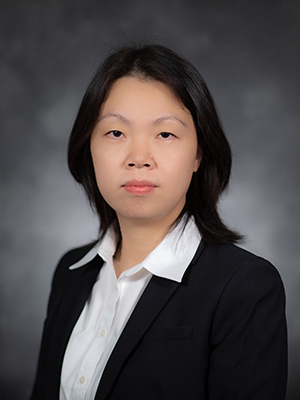
Amol Patil is a Research Engineer at the Institute for Frontier Materials (IFM), Deakin University, Australia. He holds an MTech in Textiles from IIT Delhi and a PhD in Textiles from Deakin University. His career spans industrial experience in Quality Assurance, R&D, and Product Development, followed by academic research focused on dyeing and finishing of textiles , environmental impact of textiles , and sustainable chemistry in fibre manufacturing . A key collaborator in industrial projects, he works on fibre-to-fibre recycling and microplastic pollution mitigation in laundry processes. Education: MTech (IIT Delhi), PhD (Deakin University) Affiliation: Institute for Frontier Materials, Deakin University Collaborations: ARC Research Hub for Functional and Sustainable Fibres, HeiQ-Marine Bioproducts (MBCRC) Research Trends The 15 most recent articles highlight his expertise in conductive polymers applied to cotton and polyester textiles, with implications for EMI shielding , gas sensing transducers , and smart materials . Topics include durable antimicrobial finishes , superhydrophobic treatments , and atmospheric aging resistance in textiles. His work bridges chemical engineering and environmental sustainability, particularly in reducing water usage and microplastic release during laundry.
Professor Frederic Coulon holds the position of Professor of Environmental Chemistry and Microbiology at the Cranfield Water Science Institute, part of Cranfield University's School of Management. His work focuses on transdisciplinary environmental science, including soil and water chemistry, bioremediation, wastewater treatment, and risk assessment. He leads research on microbial interactions in engineered systems, biodegradation of petroleum hydrocarbons, and emerging contaminants. His professional interests span soil and water chemistry, fate of chemicals in environmental systems, hazardous waste site remediation, and policy-influencing research. Key collaborators include BBSRC, NERC, Defra, and the European Commission. He has advised on contaminated land management and developed solutions for pragmatic risk-based remediation strategies. Research activities include microbial adaptations in cold environments, environmental monitoring technologies, and anaerobic digestion optimization. Over 200 peer-reviewed articles highlight his contributions to environmental engineering and science, with a focus on bioremediation, bioaerosol risk assessment, and sustainable waste management. Current projects address challenges in low-carbon remediation, landfill mining, and antimicrobial resistance in agricultural environments. He supervises multiple PhD students and collaborates internationally on initiatives like the UK-India vWa project and the REGENERATIS program for metallurgical site regeneration.
Kwanghee Jeong is a Research Fellow at the University of Western Australia , affiliated with the Fluid Science and Resources research group within the School of Engineering and Chemical Engineering Department . His work focuses on energy transport, decarbonisation technologies, and flow assurance. Education: PhD in Chemical Engineering (UWA, 2020), BSc in Mechanical Engineering (Dongguk University, 2014) Research Themes include: Flow Assurance for hydrogen, CO2, and natural gas pipelines Carbon Capture & Emissions Management (MOFs, Raman spectroscopy) Cryogenic Hydrogen Process Engineering (liquefaction, boil-off gas) Cold Energy Utilisation and Waste Heat Recovery Hydrate Formation Kinetics via Acoustic Levitation Article Trends reflect expertise in: Using Raman spectroscopy for real-time adsorption and phase transition analysis Developing Joule-Thomson loops to simulate pipeline conditions Optimizing Metal-Organic Frameworks for GHG separation Advancing hydrogen liquefaction efficiency through catalysis Addressing microplastics and hydrate nucleation via spectroscopic methods Scientific Awards : Best Poster Award (2023) - Natural Gas UWA Travel Award (2017) ARC PhD Scholarship (2016) He contributes to UN Sustainable Development Goals via decarbonisation research and has collaborated with Chevron, Woodside Energy, and Curtin University. His technical skills include Aspen HYSYS, OLGA simulations, HAZOP studies, and Differential Scanning Calorimetry (DSC).
Susan E. Burns is a Professor at the School of Civil and Environmental Engineering , Georgia Institute of Technology. She holds multiple administrative roles, including Interim Associate Vice President for Research Operations and Infrastructure and Associate Chair for Administration and Finance. Burns earned all her degrees (B.C.E., M.S., Ph.D.) in civil engineering from Georgia Tech. NSF CAREER Award (2000) Arthur Casagrande Professional Development Award (ASCE) Edmund Friedman Young Engineer Award (ASCE) Class of 1969 Teaching Scholar (Georgia Tech) Fellow, American Society of Civil Engineers (2013) Her research focuses on geoenvironmental engineering , emphasizing waste material reuse (dredged sediments, fly ash), stormwater treatment , soil erosion control , and microbially induced calcite precipitation (MICP) . Recent publications analyze microplastic transport, arsenic speciation in fly ash, and LCA of dredged sediment reuse. Funding sources include NSF, DOE, US Army Corps of Engineers, and state departments of transportation. Professor Burns has led major conference proceedings (e.g., IS Atlanta 2008, ICSE-5) and served on editorial boards like ASCE's Journal of Geotechnical and Geoenvironmental Engineering. Her administrative roles include chairing graduate committees, overseeing curriculum changes, and managing geosystems group operations.
Marika Kokko is a Professor of Bio- and Circular Economy at the University of Tampere, affiliated with the Faculty of Engineering and Natural Sciences and the Department of Materials Science and Environmental Engineering. Her research focuses on sustainable solutions for carbon dioxide utilization, nutrient recovery, and bioelectrochemical systems. She leads projects such as isoSUS (developing short-chain fatty acid conversion) and BioNH4 (recovering ammonium nitrogen from wastewater). Education: Doctor of Science (Technology), Tampere University of Technology (2013) Postdoctoral Researcher, University of Freiburg, Germany (2014–2016) Tenure-track career progression at Tampere University since 2016 Research Interests: CO₂ conversion via microbial electrosynthesis and bioelectrochemical processes Electrochemical nitrogen recovery from wastewater Microplastic analysis in environmental matrices Bioremediation of industrial waste streams Grants & Collaborations: Funded by Business Finland, Ministry of the Environment, and international consortia Active in interdisciplinary projects like CICAT2025 and UPCE Labs/Teams: Her research group investigates bioelectrochemical systems, microbial communities, and circular economy innovations. They collaborate with industry partners to scale sustainable technologies.
Lee Ferguson is a Professor of Civil and Environmental Engineering at Duke University, with additional appointments as Associate Professor in the Division of Marine Science and Policy. His research focuses on environmental analytical chemistry, particularly using high-resolution mass spectrometry to study per- and polyfluoroalkyl substances (PFAS) , microplastics , and endocrine disruptors . Ferguson Lab develops methods for contaminant detection in water systems and investigates chemical leaching from polymers. Ph.D. in Chemistry from Stony Brook University (2002) Former Assistant Professor at University of South Carolina (2003-2009) Recent work includes PFAS analysis in lithium-ion batteries, glyphosate detection in hard waters, and microplastic dye toxicity studies. Key publications explore urban watershed contamination, Sri Lankan drinking water CKDu links, and novel analytical methods for environmental pollutants. Applied Research Fellowship (2022), Kavli Frontiers of Science Fellow (2011) Testified before U.S. Senate on nanotechnology risks Co-founder of NC PFAS Testing Network As an advisor, he mentors Doctoral Candidates Patrick Faught and Anna Lewis , who investigate microplastic dyes and polymer additives. Lab research spans environmental fate of nanomaterials, contaminant bioavailability, and exposomics for health outcomes.
Dr. Jordan Crago is an Assistant Professor in the Department of Environmental Toxicology at Texas Tech University and affiliated with the STEM CORE program. His research specializes in aquatic toxicology, investigating how environmental chemicals impact development and reproductive success in fish and invertebrates through integrated field-laboratory approaches. Education: Ph.D. in Biological Sciences, University of Wisconsin, Milwaukee Bachelor of Science, Ohio University Dr. Crago's research employs field observations to guide laboratory experiments focused on adverse outcome pathways across diverse contaminants. His work spans pesticides, microplastics, perfluorinated compounds, and emerging pollutants, emphasizing multi-pathway effects on development and reproduction. He prioritizes identifying high-risk environmental chemicals through mechanistic studies using model organisms like zebrafish and fathead minnow. Analysis of his 2019-2025 publications reveals consistent focus on molecular, physiological, and behavioral endpoints in aquatic toxicology. Key themes include developmental/reproductive toxicity, transgenerational effects, and advanced methodologies like predictive molecular signatures and benchmark dose modeling. His work frequently addresses pesticide impacts, microplastic fate in food webs, and PFAS alternatives using zebrafish as a primary model system. Dr. Crago actively mentors undergraduate researchers, integrating them into data collection, analysis, and publication. Three mentees have co-authored peer-reviewed publications and conference presentations. He contributes to STEM education through Texas Tech's STEM CORE program and volunteers with Lubbock's Boys and Girls Club for after-school programs.
Prof. Dr. Nadine Göppert is a University Professor (W3) of Hydrogeology at the Institute of Geological Sciences , Freie Universität Berlin , Germany. She previously served as an Akademische Rätin and Senior Scientist at the Karlsruhe Institute of Technology (KIT) from 2011–2024, and held research positions at the Weizmann Institute of Science (2009–2011) and University of Karlsruhe (2008–2009). Her academic background includes a Dr. rer. nat. (2008) and Diploma in Geology (2002) from the University of Karlsruhe. Education Doctorate in Hydrogeology (2008), University of Karlsruhe Diploma in Geology (2002), University of Karlsruhe Her research focuses on karst hydrology , groundwater tracing , particle transport dynamics , and water quality monitoring in alpine and subtropical karst systems. Recent publications analyze tracer experiments , microplastic transport , and hydrochemical variability across diverse karst environments. Her teaching portfolio includes Applied Hydrogeology , Field Methods , and Laboratory Techniques for students in Geosciences and Water Engineering. She has supervised numerous theses on topics like karst groundwater dynamics and fluorescence-based water quality analysis .
Dr. Jingjing Qiu is an Associate Professor in the Department of Mechanical Engineering at Texas A&M University (TAMU), leading the Advanced Materials & Manufacturing (AM²) Lab. Her research focuses on advanced manufacturing, nanomaterials, multifunctional composites, sustainable materials, energy harvesting, and healthcare applications. She holds a Ph.D. in Industrial & Manufacturing Engineering from Florida State University (2008), and M.S./B.S. degrees in Materials Science from Beihang University (2004/2001). Prior to academia, she gained 1 year of industrial experience as a Quality Engineer at SAIC Motor. Research interests include AI-driven nanomaterials synthesis, low-carbon manufacturing processes, and biomedical innovations such as drug delivery systems for brain tumors. The AM² Lab emphasizes interdisciplinary collaboration in materials science, data science, and sensor integration for energy and medical devices. Recent work highlights include AI-assisted microplastics removal, thermoelectric energy harvesting via graphene aerogels, and neuromorphic computing systems. Her team actively pursues postdoctoral and PhD candidates for research in energy/healthcare materials, requiring expertise in nanomaterials characterization (e.g., SEM, XPS, electrochemical techniques) and interdisciplinary problem-solving. Lab facilities support cutting-edge fabrication and testing of functional materials. Publications span over 15 years, with recent trends in sustainable manufacturing, soft robotics, and bio-inspired materials. Ongoing projects include DOE-funded initiatives on rare earth recycling and low-carbon ceramic production. No scientific awards are explicitly listed in the provided texts.
Alison Elder, Ph.D., is an Associate Professor in the Department of Environmental Medicine at the University of Rochester School of Medicine and Dentistry. She is affiliated with several research programs including the Environmental Health Sciences Center, the Inhalation Exposure Facility, the Toxicology Training Program (as Co-Director), the Lung Biology and Disease Program, and the Multidisciplinary Training in Pulmonary Research Program. Her research focuses on the toxicology of inhaled ultrafine particles (UFPs) and engineered nanomaterials, with implications for pulmonary, cardiovascular, and central nervous system health. Ph.D. in Environmental Toxicology, University of California, Irvine (1997) B.S. in Chemistry, Chatham College (1992) Post-doctoral Fellow, Department of Environmental Medicine, University of Rochester (1997–2000) Dr. Elder’s research centers on the health impacts of airborne particulate matter, particularly how age, co-pollutants, and health status influence responses to inhaled particles. Her work explores the translocation of particles to extrapulmonary tissues, including the brain, and their role in neurodegenerative diseases like Alzheimer’s. She investigates mechanisms such as oxidative stress, inflammation, and glymphatic dysfunction. Her lab also studies airborne micro- and nanoplastics, focusing on exposure characterization and health implications. Her recent publications span topics including Alzheimer’s disease models, glymphatic impairment, nanoparticle dissolution, and diesel exhaust effects on lung barriers. These works emphasize particle-induced inflammation, neurotoxicity, and the intersection of environmental exposure with neurological outcomes. Young Investigator Award, Society of Toxicology (2009) Cornerstone Alumna Award, Chatham University (2007) Graduate Student Fellowship, U.S. EPA (1995–1996) College Chemistry Award, Society for Analytical Chemists of Pittsburgh (1992) Dr. Elder mentors graduate students in toxicology and has trained numerous postdoctoral fellows and technicians. She leads an active research laboratory funded by NIH and DOD, investigating air pollution’s role in brain health and military burn pit exposures. Her collaborative research includes work with experts in neuroscience, materials science, and environmental engineering. She is also involved in national workshops on nanomaterial risk assessment and children’s environmental health. She leads the Elder Lab, which conducts studies on air pollution and Alzheimer’s disease, characterizes airborne micro- and nanoplastics, and develops models for nanoparticle toxicity. The lab uses advanced techniques in particle characterization, animal modeling, and cellular assays to assess health risks.
Elvis Genbo Xu is an Associate Professor at the Department of Biology, University of Southern Denmark. His research focuses on environmental toxicology, particularly micro/nanoplastics and crude oil pollutants. He employs transcriptomics and bioinformatics to study marine ecosystems and embryonic model systems. University of Southern Denmark Department of Biology Active since at least 2018 Research Interests: Micro/Nanoplastics Crumb Rubber Marine Protected Areas Endocrine Disruptors Transcriptomics Bioinformatics Article Trends (2018-2019): Focus on nanoplastics and microplastics Environmental impact assessment Toxicity mechanisms in aquatic organisms Methodological innovations in plastic analysis Interdisciplinary approaches combining toxicology, materials science, and molecular biology Scientific Recognition: 2024 World's Top 2% Scientists 2023 Undervisningsprisen på Naturvidenskab 2021 Faculty Research Dissemination Prize 2020 Best ES&T Letters Paper Advising & Editorial Roles: Active PhD/Postdoc supervision Junior Editor at Journal of Hazardous Materials (2020) Editorial Board member for Environment International (2022)
Vernon Phoenix is a Professor of Environmental Engineering Science at the University of Strathclyde 's Faculty of Engineering , specializing in the Department of Civil and Environmental Engineering . His research bridges environmental engineering, biotechnology, and geochemistry, focusing on green infrastructure, bio-inspired solutions, climate resilience, and pollution control. Expertise in sustainable water/stormwater technologies Leadership in biomaterials for civil engineering Initiatives in waste valorization and bioeconomy Pioneer in microplastics assessment across environmental media Recent projects include EPSRC-funded investigations into groundwater chemistry in transboundary basins and the development of sustainable urban drainage systems. His work aligns with UN Sustainable Development Goals (SDGs) for climate action and clean water.
Matthew Fraser is a Professor and Associate Director at Arizona State University's School of Sustainable Engineering and the Built Environment. He is affiliated with the Urban Climate Research Center and serves as a Senior Global Futures Scientist. Education : Ph.D. in Environmental Engineering Science from Caltech (1998), M.S. in Environmental Engineering Science from Caltech (1993), B.S. in Chemical Engineering from Carnegie Mellon University (1991) His research focuses on urban air quality , alternative energy systems , and atmospheric monitoring . Recent work examines wildfire smoke impact, microplastics in desert soils, and ozone behavior in urban regions. Publications span Environmental Science and Technology , Atmospheric Environment , and Science of the Total Environment . Notable scientific awards include Arizona State University's 'Top 5%' Faculty Teaching Award (2018, 2021). Research grants include projects funded by the National Institutes of Health , US Department of Energy , and Semiconductor Research Corporation . Service Roles : Member of University Consortium for Atmospheric Research (2010–Present), Committee Member for ASU Sustainability Minor (2009–Present), and Chair of Science Advisory Board for Mid-Infrared Technologies for Health and the Environment Engineering Research Center (2007–Present)
Dr. Dominique Claveau-Mallet is an Associate Professor in the Department of Civil, Geological and Mining Engineering at Polytechnique Montréal. She holds a Tier 2 Canada Research Chair in Water Treatment in Decentralized or Small-Scale Facilities and serves as Co-Director of the Environmental Engineering Laboratory. Her affiliations include membership in the Center for Research, Development and Validation of Water Treatment Technologies and Processes (CREDEAU) and the Geothermal and Hydrogeology Research Group. Her research focuses on innovative solutions for water treatment challenges, with emphasis on: Decentralized wastewater systems and small-scale treatment facilities Microplastics capture and pollution mitigation strategies Phosphorus removal technologies using reactive filters Membrane filtration processes and hydraulic performance optimization Hydrogeology of contaminants in groundwater systems Analysis of her recent publications reveals strong research trends in microplastics characterization (capture methods, environmental fate, citizen science approaches), advanced filtration systems (reactive filters, membrane technologies), and sustainable wastewater treatment solutions for decentralized applications. Her work frequently combines experimental research with practical implementation studies. Awards & Recognition: Tier 2 Canada Research Chair (2020-present) Recipient of federal/provincial research grants including NSERC Discovery Grants She actively supervises graduate students, having recently directed 2 doctoral theses and 5 master's theses on topics spanning membrane filtration, phosphorus removal, and microplastics mitigation. Her research receives significant media coverage for its environmental impact, particularly regarding microplastics capture technologies and septic system management. Dr. Claveau-Mallet leads interdisciplinary teams at the Environmental Engineering Laboratory and collaborates extensively with municipal partners and citizen science initiatives. Current investigations focus on developing next-generation filtration systems and optimizing existing water treatment infrastructure for climate resilience.
Prof. İpek İmamoğlu is a Professor of Environmental Engineering at Middle East Technical University (METU), Ankara, Turkey, specializing in environmental chemistry and pollutant fate. She holds leadership roles, including former Vice Dean of the Faculty of Engineering (2012-2015) and Vice Chair of the Environmental Engineering Department (2009-2012). Her research focuses on organic compound fate, microplastic interactions, contaminated site management, and receptor modeling for pollutants like PCBs and PBDEs. Education: PhD from University of Wisconsin-Milwaukee (2001), M.S. from University of Newcastle upon Tyne (1996), and B.S. from METU (1995). Awards include the METU Ph.D. Dissertation Supervision Award (2017, 2010) and the British Chevening Scholarship (1995/96). She has supervised over 20 PhD and MS students in environmental chemistry and engineering. Research spans contaminated sediment remediation, PCB/PBDE degradation pathways, and policy impacts of microplastics. Her projects include TUBITAK-funded studies on microplastic-organic interactions and POPs management. She advises on national policies, including Turkey’s implementation of the Stockholm Convention on POPs. Key Projects: Molecular Level Microplastic-Organic Interactions (TUBITAK 2021), PCB Fate in Aquatic Sediments (TUBITAK 2015), and Zeolite-Wastewater Treatment (METU Funded 2002). Awards: UWM Dissertator Fellowship, NATO Travel Grant, and ISO 17025 Auditor Certification. Her publications (over 80) cover environmental forensics, receptor modeling, and bioremediation. She actively participates in international conferences and serves as a consultant for UNDP and EU-funded initiatives.