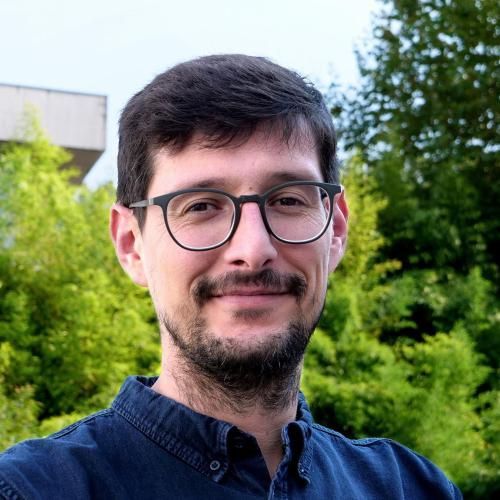
Lisa Martin de los Santos Kleinz is a Researcher at the Chair of Business Education within Faculty 03 at Johannes Gutenberg University Mainz. Her work focuses on innovative teaching methods and educational technology, particularly in business and economics disciplines. She is actively involved in research projects such as the CORE Coordination Project, Start2train (science for startups), and international cooperations in business education. Her research interests include flipped classroom methodologies, digital microlearning units, and the application of statistical tools (e.g., SPSS, STATA) in empirical research. She contributes to projects like TWIND-WiPäd, which explores the relevance of interdisciplinary teaching tools and project-based learning. As part of the research team under Prof. Dr. Olga Zlatkin-Troitschanskaia, she collaborates on initiatives advancing educational practices in higher education, including digital teaching innovations and evidence-based pedagogy. Her work bridges theoretical research with practical applications in business education.
Gema Vallejo Pérez is a Professor at the University of León, where she holds a permanent faculty position in the Faculty of Law, Department of Private and Business Law. Specializing in Roman Law, she is an active member of the DERECONSULE Constitutional Law Research Group and contributes to legal scholarship through interdisciplinary approaches. Academic Background: Doctorate (2011): "La protección de la legalidad urbanística en el Principado de Asturias" supervised by Dr. Francisco Sosa Wagner and Dr. Mercedes Fuertes López Doctorate (2018): "Bases romanísticas de la mediación como expediente intrajudicial y extrajudicial de resolución de conflictos y su proyección en el derecho actual" supervised by Dr. María José Bravo Bosch Research Focus: Her work centers on Roman Law foundations for modern mediation systems, gender dynamics in historical legal contexts, and innovative legal education methodologies. She pioneers gamification techniques like escape rooms for teaching Roman marriage law and develops "educational pills" for digital knowledge dissemination across age groups. Publication Trends: Recent works (2022-2025) reveal dual trajectories: legal scholarship on mediation in family/labor contexts and urban planning, alongside unexpected medical publications in pediatric resuscitation and oncology. This divergence suggests either interdisciplinary collaboration beyond her core field or data contamination in source materials, though her primary contributions remain firmly rooted in legal studies. Professional Impact: As an educator, she designs competency assessment frameworks for university teaching and advocates for gender-inclusive legal pedagogy. Her research group affiliation demonstrates commitment to constitutional law development within Spain's academic landscape. Operational Context: Based at the University of León, she bridges historical legal analysis with contemporary dispute resolution mechanisms, maintaining active involvement in thesis supervision and curriculum innovation despite absence of documented awards or specific grant details in available records.
María Consuelo Morán Astorga is a Professor at the University of León, affiliated with the College of Education and the Department of Psychology, Sociology and Philosophy. Her research focuses on personality psychology, psychological assessment, burnout syndrome, coping strategies, and emotional health in educational contexts. Research Interests: Personality and coping mechanisms Burnout and workplace stress Educational innovation through digital tools Emotional resilience in adolescents Psychological assessment methodologies Teacher training and competency evaluation Publication Trends (2019–2025): Her work spans personality assessment (e.g., NEO-PI-R adaptations), burnout in educators and healthcare workers, digital literacy tools, and resilience studies. She has pioneered the use of educational video capsules ("píldoras educativas") to enhance university teaching. Academic Leadership: Supervised by Dr. Dionisio Manga, she earned her doctorate in 2002 with a thesis comparing burnout in high-risk and non-high-risk university students and helping professionals.
Chryssa Sofianopoulou is an Associate Professor at the Department of Informatics and Telematics, Harokopio University of Athens. She holds a Mathematics bachelor’s and a PhD in Education Sciences from the University of Athens. Her research focuses on educational performance analysis, socio-economic factors in education, and ICT integration in learning. She serves as a visiting professor at the University of Cergy-Pontoise (France) and University of Mons (Belgium), and advises international educational policies. She is a key member of the OECD PISA Program, the Institute of Educational Policy Governing Board, and an EU National Expert. Her work includes studies on STEM education interventions, blended learning ecosystems, and microlearning strategies in MOOCs. Education: B.Sc. Mathematics (University of Athens), PhD Education Sciences (University of Athens) Research interests include socio-economic determinants of educational outcomes, geographical disparities in learning, and innovative pedagogical practices leveraging ICT. Her recent work emphasizes STEM co-teaching models and student attitude interventions in science education. Earlier studies explored hybrid learning systems at Harokopio University and mobile learning frameworks in MOOC environments. Her publications span interdisciplinary fields such as educational technology, STEM curriculum design, and policy analysis. She actively contributes to international educational initiatives and advises governmental bodies on education policy. Current research trends focus on bridging digital divides in learning through technology-enhanced pedagogies. Scientific Awards: No specific awards listed, but recognized through leadership roles in major educational initiatives. Advisory roles include advising the French Ministry of Education on educational performance strategies. Grant activities are inferred through her participation in OECD PISA and EU projects. She leads interdisciplinary teams focusing on educational policy and technology integration. Her lab/teams collaborate internationally on projects like the e-me STEM case study and blended learning ecosystem analyses.
Assoc. Prof. Fahme Dabaj is a faculty member in the Department of Educational Sciences at Eastern Mediterranean University (EMU). His academic journey includes a PhD in Communication (2012) from EMU, following an MS in Applied Mathematics and Computer Science (1993) and a BS in Civil Engineering (1989), both from EMU. His research focuses on educational technology, online learning dynamics, and the integration of ICT in educational systems. He has supervised numerous theses exploring topics like MOOC-infused flipped learning, mobile microlearning, and ICT usage in Libyan higher education. His work frequently examines student perceptions of technology in education, including studies on Facebook usage, online course design, and communication barriers in distance education. Key research themes include: 1) Design and implementation of effective online learning environments, 2) Impact of mobile technologies on student engagement, 3) Cross-cultural comparisons of ICT adoption in education, and 4) Quantitative analysis of news media consumption patterns. He has published extensively on topics ranging from student demographics in e-learning to regional diffusion patterns of distance education in North Cyprus. Prof. Dabaj currently oversees ongoing doctoral research on microlearning design effectiveness and MOOC integration in engineering education. His contributions to EMU's educational technology initiatives include pioneering studies on web page design for distance education and the role of constructivist approaches in teacher training programs.
Borja Rivero Jiménez is an Assistant Professor at the Department of Philosophy and Anthropology within the Faculty of Philosophy at the University of Santiago de Compostela (USC). His research focuses on social anthropology with emphasis on rural aging, food culture, and technological interventions in care systems. He holds a doctoral degree from UNED (2024) with a thesis titled Culture and loneliness: Silences, absences and memories in the sunset of rural life , supervised by Dr. Lorenzo Mariano Juárez and Dr. Julian Lopez Garcia. His academic work integrates qualitative methodologies, particularly ethnography, to explore themes such as loneliness in rural communities, public health policy design, and cultural dimensions of hunger. He has contributed to policy initiatives like Extremadura's Vital Plan for Social Inclusion and examined the role of digital tools in eldercare, including studies on TikTok's microlearning potential and accessibility innovations in education. Research outputs span topics from gastronomic tradition's role in sustainability to the impact of care robots among the elderly, reflecting a multidisciplinary approach bridging anthropology, sociology, and technology. His work often emphasizes marginalized populations in rural Spain and transnational issues like Guatemala's hunger challenges in development contexts. Rivero Jiménez co-founded the International Institute for Research and Innovation in Aging (4IE), fostering Spain-Portugal interdisciplinary collaboration. He actively engages in teaching innovation, advocating for dialogic methodologies and inclusive educational practices.
Ana García-Valcárcel Muñoz-Repiso is a Professor of Educational Technology at the Department of Didactics, Organization, and Research Methods, Faculty of Education, University of Salamanca. She has directed the Master’s program in ICT in Education and led the GITE-USAL research group until 2021, now part of EduDIG since 2022. Her research focuses on integrating emerging technologies in education and analyzing innovative educational practices. 37 doctoral theses directed 5 sexenios de investigación (last in 2018) Active in international conferences like TEEM, EDULEARN, and ICITED Key contributor to digital competence frameworks and multiculturalism in knowledge societies Her work spans collaborative learning, digital competence, and computational thinking, particularly in early childhood and primary education. She has developed frameworks for project-based learning (PBL) and evaluated ICT's impact on teacher training and social inclusion. Recent articles analyze microlearning, digital competence feedback systems, and multimedia learning theories. She has pioneered open educational resources (e.g., REA for disability awareness) and explored cinematic tools to teach inclusion values. Scientific Awards: Premio a la Mejor Tesis Doctoral en Tecnología Educativa 5 sexenios de investigación Last sexenio awarded in 2018 She has advised 12 doctoral students and collaborated on projects evaluating serious games, video games, and mobile learning. Her leadership in academic programs and research groups underscores her commitment to educational innovation.
Maria Isabel Dans Alvarez de Sotomayor is a Professor at the University of Santiago de Compostela, affiliated with the Department of Pedagogy and Didactics in the Faculty of Education Sciences. She holds a doctorate from the University of A Coruña (2014) with a thesis on 'Educational Possibilities of Social Networks', supervised by Dr. Mercedes González Sanmamed and Dr. Pablo César Muñoz Carril. Her research focuses on educational technology, social media usage in education, and digital parenting strategies. Key areas include analyzing risks/benefits of social networks for youth, parental control mechanisms, and innovative pedagogical practices. She is a member of the MESTURA Educational Research Group and has authored/co-authored over 40 publications across journals and conferences, including works on mentorship programs for incarcerated youth and digital resilience projects. Dr. Dans has led initiatives such as the 'Cartas de Esperanza' project using digital mentorship to support minors in Honduran detention centers. Her work emphasizes ethical technology integration, family-digital education dynamics, and inclusive educational strategies. She actively contributes to teacher training programs, designing curricula that address digital literacy and socio-emotional learning.
Miriam Beneito Cambra is an Associate Professor at the University of Valencia's Faculty of Chemistry , affiliated with the Department of Analytical Chemistry and the CLECEM research group (Liquid Chromatography, Capillary Electrophoresis and Mass Spectrometry). Education: Doctorate from the University of Valencia (2011), thesis: Desarrollo de métodos analíticos para el control de calidad de surfactantes y aditivos en productos de limpieza y de higiene personal , supervised by Dr. Guillermo Ramis Ramos and Dr. José Manuel Herrero-Martínez. Research Interests: Development of analytical methods for surfactants, additives, and contaminants in food/environmental matrices Application of liquid chromatography, capillary electrophoresis, and mass spectrometry Innovation in analytical chemistry education through digital tools and active learning methodologies Green Analytical Chemistry approaches and miniaturized devices Exploration of AI (e.g., ChatGPT) and 3D printing in analytical workflows Article Trends: Recent publications highlight her work on integrating 3D printing for sample preparation devices, AI applications in analytical chemistry education, paper-based microfluidic systems for antibiotic detection, and reticular framework materials for miniaturized analytical formats.
Ana García-Valcárcel Muñoz-Repiso is a full Professor at the University of Salamanca, affiliated with the Department of Didactics, Organization and Research Methods within the University Institute of Educational Sciences. Her work focuses on educational technology, digital competence development, and the integration of ICT in teaching and learning processes. She has coordinated over 37 theses and is actively involved in research networks like REUNI+D. Her research emphasizes collaborative learning strategies, robotics in early education, and teacher training in technology. Notable collaborations include studies on digital competence evaluation in students and the impact of mobile applications in primary education. Publications span topics such as argumentative skill development, microlearning strategies, and computational thinking through robotics. She has contributed to conferences and books on educational innovation and co-leads projects like the DigiCraft program for digital competency enhancement. Her work bridges theoretical research with practical applications, aiming to improve educational practices through technology integration and evidence-based pedagogy.
Dr. Theresa A. Chika-James is an Associate Professor in the Department of Management and Organizations at MacEwan University's School of Business, Alberta, Canada. She serves as Associate Dean for Research and External Engagement and previously chaired her department. Her career spans academic and industry roles in Nigeria, the UK, and Canada, including teaching at Cardiff Business School and industry experience in mass media, telecommunications, and financial services. Educational Background: PhD in Business Studies, Cardiff University MBA, University of South Wales Bachelor’s in Media Studies, Rivers State University of Science and Technology, Nigeria Her research focuses on organizational behavior, management education, and ethical leadership. She investigates organizational change dynamics, interpersonal mistreatment in workplaces, and service-learning pedagogies, with funding from SSHRC and MacEwan University. Her work bridges academic theory with practical solutions for contemporary organizational challenges. Recent publications address topics like workplace incivility, remote work isolation, and ethical leadership reforms. Her research has been presented at leading conferences including the British Academy of Management, European Academy of Management, and Society for Industrial and Organizational Psychology. She is certified as an Associate Fellow of AdvancedHE (formerly UK Higher Education Academy). Scientific Awards: 2024: Outstanding Reviewer Award (Africa Journal of Management) 2024: Dissemination Grant (MacEwan Research Services) 2021: Best Paper Award (Administrative Sciences Association of Canada) Dr. Chika-James supervises independent studies and collaborates with community partners to enhance business education through real-world applications.
Dr. Arlene Nicholas is a Professor in the Department of Business and Economics at Salve Regina University. With a Ph.D. in business administration from Touro University International (2007), she specializes in generational studies (Generation Z and Millennials), organizational behavior, and technology integration in education. Her work focuses on AI applications in business education, learning management systems, and online learning methodologies. B.S. in Biology (1992) M.A. in Human Resource Management (1994) M.S. in Information Systems Science (1996) Ph.D. in Business Administration (2007) Her research explores generational learning preferences , particularly Generation Z's engagement with digital education tools, and examines how AI transforms business education. She also investigates ethical frameworks for workplace surveillance , telework dynamics , and sustainable business models through benefit corporations. Her publications span from 2007 to 2025, reflecting sustained scholarly activity. Recent articles highlight AI ethics in academia , remote learning effectiveness , and workforce adaptation across generations. Her work combines technology impact analysis with pedagogical innovation , addressing both theoretical and practical challenges in modern business education.
Jennie De Gagne, PhD, DNP, RN-BC, CNE, ANEF, FAAN, serves as Associate Professor at Duke University School of Nursing, where she integrates dual expertise in research (PhD) and clinical practice (DNP) to transform evidence-based education addressing global nursing challenges. Her work bridges discovery and implementation through scholarship focused on cybercivility and educational technology management. Her academic credentials include a DNP from Duke University School of Nursing, PhD from Northcentral University, MSN from Walden University, and BSN from Ewha Womans University. Professional certifications encompass Board Certification in Nursing Professional Development (RN-BC) and Certified Nurse Educator (CNE) status. Dr. De Gagne's research examines cybercivility in health professions education, online teaching methodologies, educational informatics, population health for vulnerable groups, and self-management interventions. Current work investigates cybercivility promotion across curricula, policies, and guidelines for health professions students and faculty. Recent scholarship reveals expanding focus on artificial intelligence integration in nursing education, telehealth rapport-building, and resilience development for new graduate nurses. Her extensive publication record demonstrates evolving trends from foundational cybercivility studies toward AI applications and pandemic-responsive educational adaptations. Bibliometric analyses of online learning, social media, and microlearning reflect methodological rigor in tracking educational technology evolution. Recognition includes: Board Certification in Nursing Professional Development (RN-BC) Certified Nurse Educator (CNE) NLN Academy of Nursing Education Fellow (ANEF) Fellow of the American Academy of Nursing (FAAN) As founder and executive advisor of the North Carolina Korean Nurses Association, she demonstrates leadership beyond academia. Editorial roles with the Athens Journal of Health and ambassadorship for Sigma Theta Tau International Honor Society of Nursing extend her influence. Her grant-funded research addresses critical gaps in educational technology implementation and cyberethics frameworks. Dr. De Gagne maintains active engagement with professional organizations including the International Council of Nursing, American Nurses Association, and Global Korean Nursing Foundation, driving initiatives that shape nursing education standards globally.
Steffen Nixdorf is a Consultant Lecturer at the Vienna University of Technology , affiliated with the Faculty of Mechanical Engineering and Operations Science and the Department of Production and Maintenance Management . His work bridges academic research and industrial applications. Ph.D. in Industrial Engineering (Mechanical Engineering specialization) Dipl.-Ing. and B.Sc. in Industrial Engineering (Mechanical Engineering) Research Interests : Knowledge Management in Production Systems Reciprocal Learning in Human-Robot Interaction Predictive Data Analytics for Maintenance Digital Twins in Cyber-Physical Systems Work-Based Learning Frameworks Recent Research Trends : Focus on adaptive learning systems for robotics training, reciprocal learning mechanisms in Industry 5.0 environments, and predictive analytics for maintenance optimization. Publications emphasize collaboration between humans and machines in smart manufacturing contexts. Scientific Recognition : Best Paper Award (2020) at IFAC Conference on Advanced Maintenance Engineering Teaching Activities : Leads courses on Production Information Management Systems at TU Wien since Wintersemester 2022.
Patrick Plante is a full professor at TÉLUQ University specializing in distance learning and educational technology. His current affiliations include: Director of the Quebec Center for Research and Innovation in Educational Technology (i-TEQ) Co-director and founding member of the Observatoire du Numérique en Éducation (ONE) (2018-2024) Responsible for the “Discussions and Debates” section of the journal Médiations et médiatisations (M&M) Associate researcher at the Interuniversity Research Center on Training and the Teaching Profession (CRIFPE) Affiliated researcher with the AGE-WELL network and the SAVIE public research center His educational background is extensive: Postdoctoral fellowship (2015-2016) at TÉLUQ University within the AGE-WELL network Doctorate (Ph.D.) in educational technology (2003-2013), Université Laval Master of Arts (MA) in Educational Technology (2000-2003), Université Laval Educational Technology Certificate (1998-2000), Université Laval Certificate of pedagogy in college teaching, specialization in history (1997-1998), Université Laval Bachelor of History, specializing in political science (1994-1997), Université Laval Professor Plante's research spans educational technology, with a focus on serious games, gamification, and microlearning. He investigates the application of artificial intelligence in educational settings, educational design, and training in the health sector. His work also addresses needs analysis and theoretical frameworks for technology in education, particularly in relation to citizenship and social connections among older adults. His scientific recognition includes: AGE-WELL Postdoctoral Fellowship for research on serious games for seniors Professor Plante has been actively involved in research leadership through directing i-TEQ and co-founding ONE. While specific grant details are not provided in the source, his postdoctoral work was funded by AGE-WELL, indicating a history of competitive research funding. He leads the Quebec Center for Research and Innovation in Educational Technology (i-TEQ), a hub for advancing educational technology research and development. His prior role as co-director of ONE (until 2024) contributed to monitoring digital trends in education.