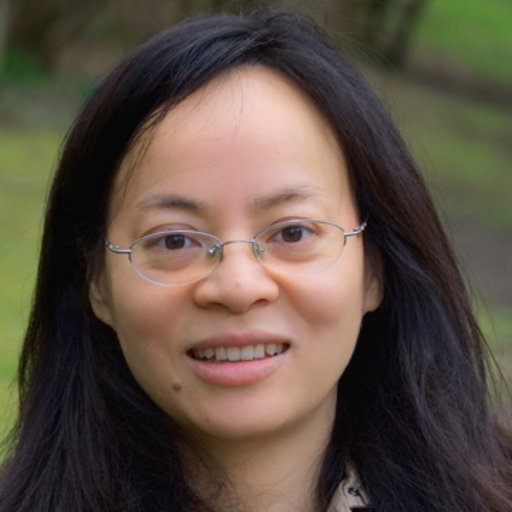
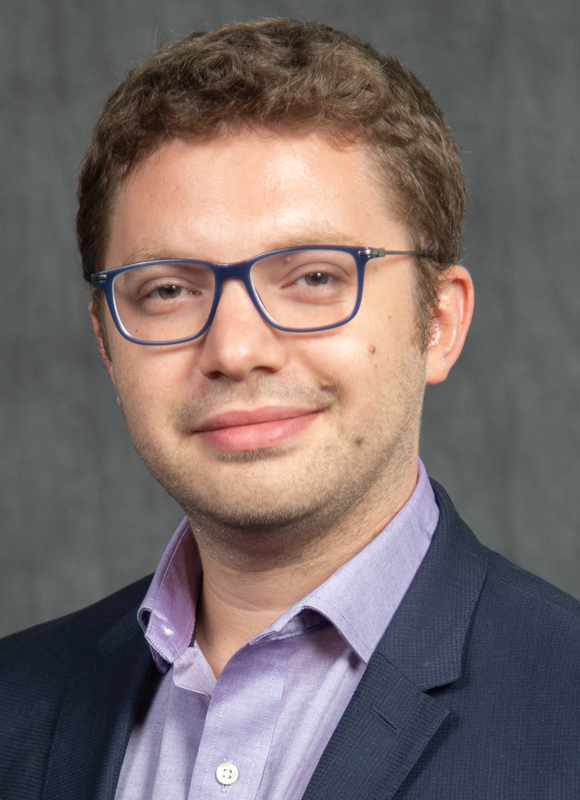
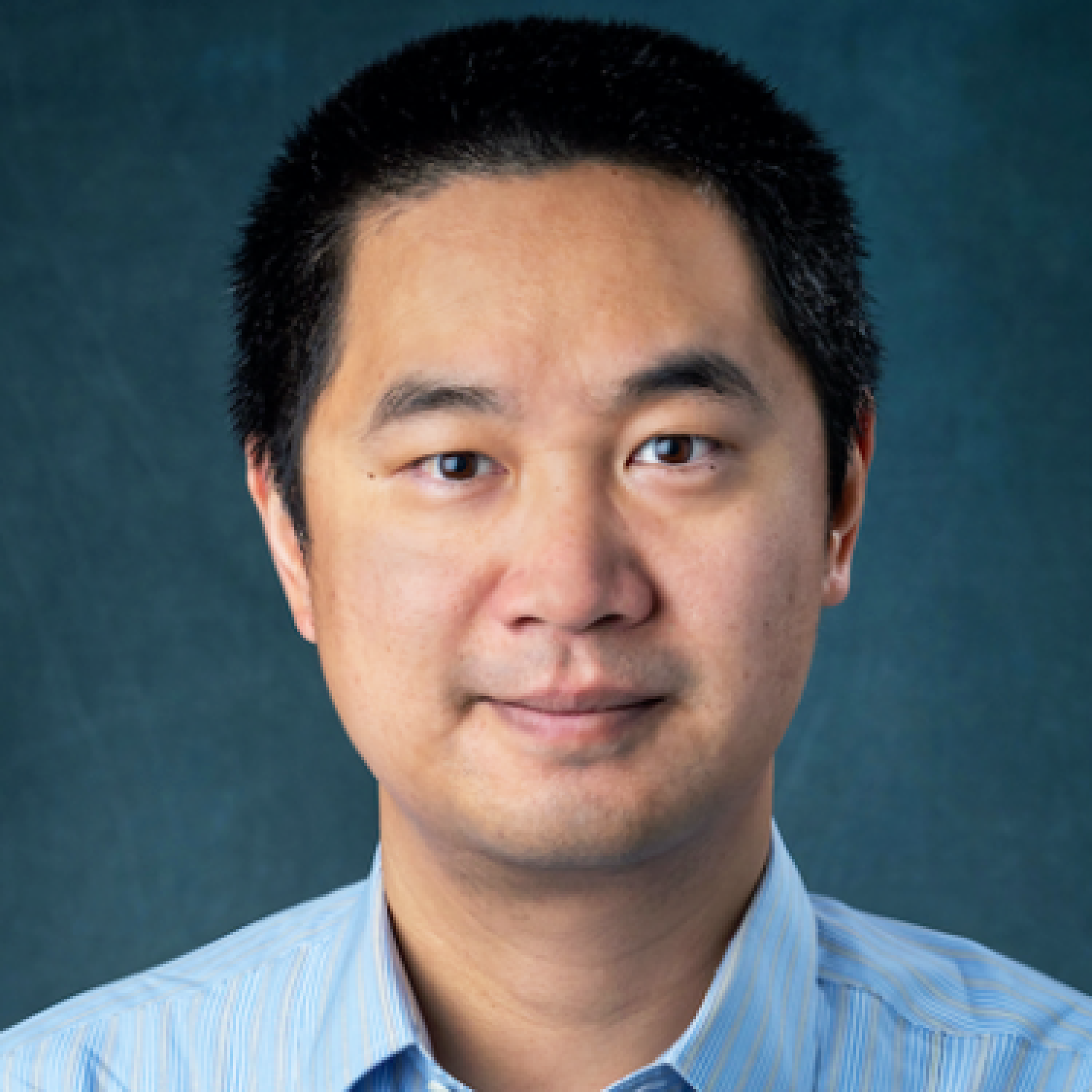
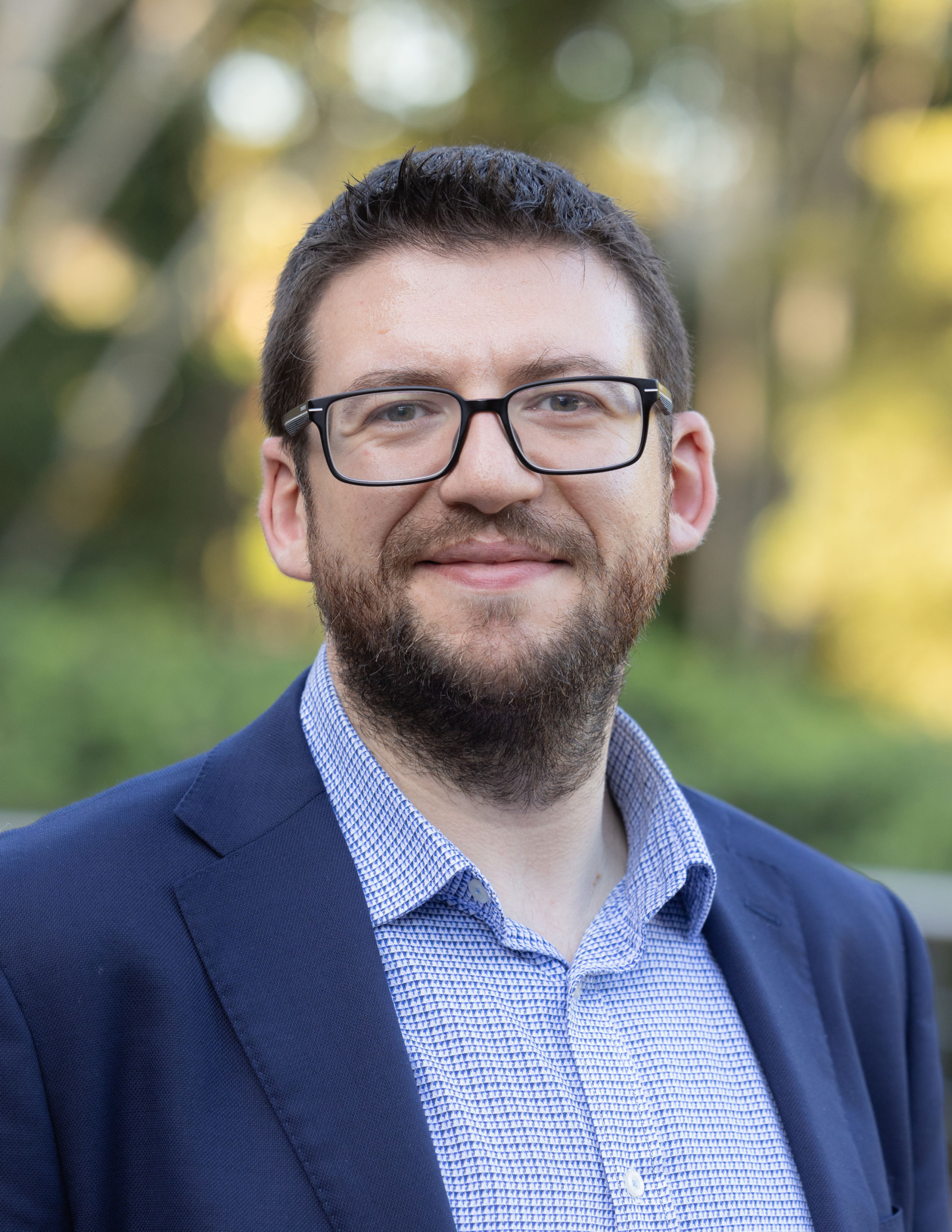
Shengrong Bu is an Associate Professor at the Department of Engineering, Brock University, Canada. She holds a Ph.D. in Electrical and Computer Engineering from Carleton University and has held academic positions at the University of Glasgow and industrial roles at Huawei Technologies. Her research bridges smart grid communications, wireless network security, and deep reinforcement learning applications. Ph.D., Electrical & Computer Engineering, Carleton University MEng by Research, Electrical Engineering, University of Wollongong BEng, Mechanical Engineering & Automation, Huazhong University Research focuses on: Multi-vector energy microgrids and smart grid communications Deep reinforcement learning for network optimization Game theory applications in energy systems Big data analytics for grid resilience Articles show expertise in P2P energy trading, fog computing resource allocation, and wireless security in smart grid environments, with funding from EPSRC and NSERC. Awards include multiple IEEE best papers and prestigious research fellowships. She supervises Ph.D. and MSc students in energy systems research.
Professor Kevin Parton is a Strategic Professor at the Gulbali Research Institute, affiliated with the University of New England. He has held significant academic leadership roles including Dean of the Faculty of Rural Management at the University of Sydney and Chair of the Department of Agricultural Economics and Business at the University of Guelph. His career spans over 48 years across universities, government agencies, and international research organizations in countries such as Australia, Canada, China, Ethiopia, and Papua New Guinea. His educational background includes a PhD in Agricultural Economics from the University of New England, a Postgraduate Diploma in Economic Statistics from the same institution, an MSc in Agricultural Economics from the University of Newcastle, a BCom (Honours) from the University of Liverpool, and a Certificate in Theology from Moore Theological College. He has been a registered HDR supervisor and has contributed to academic training and research management extensively. Kevin Parton's research interests are centered on development economics, climate change policy, renewable energy microgrids (particularly in Australia and Nepal), e-HRM systems, and the economic impacts of mining on Indigenous communities. His work contributes to several UN Sustainable Development Goals, especially those related to affordable and clean energy, climate action, and reduced inequalities. His recent publications (2023–2024) reflect a strong focus on renewable energy microgrids in Australia, the socio-economic impacts of mining in Papua New Guinea, and the barriers to e-HRM adoption in organizations. These works show a consistent theme of applying economic analysis to real-world sustainability and development challenges, often with policy implications. Reviewed for journals: PLOS ONE, Sustainability, Natural Resources Forum, Oxford Open Energy Member: Australian Agricultural and Resource Economics Society He has received over $1.5 million in competitive grant funding and has supervised HDR students, including internal supervision of a project on business empowerment (2006–2008). His research has led to datasets on communal irrigation in Thailand, climate change attitudes, and agricultural supply chains, with documented economic impact. He has also been involved in media outreach around renewable energy research at Charles Sturt University. Kevin Parton has been active in research networks across Australia, China, and the EU, with collaboration evident in recent publications and datasets. His work bridges academic research, policy development, and practical implementation in sustainable development and energy systems.
Murat Yildirim is an Associate Professor in the Department of Industrial and Systems Engineering at Wayne State University and Director of the Cyber Physical Systems Laboratory. He holds a PhD in Industrial and Systems Engineering from the Georgia Institute of Technology, where he also completed his M.S. in Operations Research and dual B.S. degrees in Industrial/Systems Engineering and Electrical/Computer Engineering. His research integrates mathematical programming and data analytics to optimize networked systems, with applications in renewable energy, predictive maintenance, and industrial IoT. Key focus areas include: Real-time inference integration for large-scale optimization Sensor-driven asset management and maintenance planning Decentralized optimization frameworks for energy systems Machine learning for failure prognostics His publications (2019–2024) predominantly explore renewable energy optimization (wind/solar maintenance, grid resilience), industrial IoT applications (inventory-maintenance coordination), and decentralized computing methods. Recent works emphasize deep learning for equipment prognostics and privacy-preserving optimization. Awards & Honors: INFORMS Energy, Natural Resources and Environment Best Paper Award (2018) Finalist for INFORMS Data Mining/Quality Statistics Awards (2015–2016) Doctoral Colloquium Poster Competition Winner (2015) Research Funding & Projects: Secured $4.54M total ($1.15M personal share) from NSF, DoE, Ford, and MTRAC. Major projects include DoE-supported PV degradation analytics ($2.8M), NSF-CPS grants for decentralized vehicle fleet optimization, and wind farm digitization initiatives. Laboratory: Leads the Cyber Physical Systems Laboratory (cyphysystemslab.com), focusing on scalable inference and optimization for industrial and energy systems. Advises 7 PhD students and has placed graduates in roles at JP Morgan, Walmart, and BLEND360.
Paul M.J. Van den Hof is a Full Professor at the Department of Electrical Engineering, Eindhoven University of Technology (TU/e), specializing in data-driven modeling and control of dynamic systems. He leads the Control Systems Group and is affiliated with multiple research centers, including EAISI High Tech Systems, Mobility, and Foundational, as well as the EIRES Research initiative. Research Interests: His work focuses on developing fundamental techniques for dynamic network modeling, closed-loop identification, data analytics, experimental design, and model-based control. Applications span industrial process control, oil reservoir engineering, high-tech mechatronic systems, and cyber-physical systems. Recent projects include SYSDYNET (dynamic network identification), NAPAS (nanometer-accurate actuation), and CADUSY (data-driven modeling using symbolic methods). Scientific Contributions: Van den Hof has authored over 250 research outputs, including foundational work on identifiability in dynamic networks, frequency domain identification, and distributed control algorithms. His 2024-2025 publications address challenges in fault detection, Bayesian network topology identification, and multi-step least squares methods. He emphasizes practical implementation through tools like the SYSDYNET MATLAB toolbox. ERC Advanced Research Grant (2015) Honorary Member, Hungarian Academy of Sciences (2016) IEEE Fellow (2007) and IEEE Life Fellow (2023) IFAC Advisor (2020)
Cristina Pop is a researcher affiliated with Babes-Bolyai University (Department of Clinical Psychology and Psychotherapy) and has contributed to interdisciplinary research spanning computer science , energy systems , and health informatics . Her work integrates machine learning and bio-inspired optimization algorithms to address challenges in renewable energy prediction , smart grid management , and health monitoring for seniors .
Wangda Zuo is an Associate Professor in the Department of Civil, Environmental and Architectural Engineering at the University of Colorado Boulder. His research focuses on building energy systems, renewable energy integration, and machine learning applications for energy optimization across buildings and power grids. Dr. Zuo's expertise spans building energy modeling and forecasting , renewable resource allocation for resilient communities , and data center energy efficiency . He develops advanced computational frameworks using deep learning and optimization algorithms to solve complex energy challenges, with emphasis on practical implementations for grid stability and energy conservation. His work bridges theoretical innovation with real-world applications through industry and agency collaborations. Analysis of his 2020 publications reveals dominant themes in machine learning-driven building energy forecasting and renewable energy deployment optimization. His research consistently addresses critical intersections between power systems and built environments, particularly focusing on data center grid services and electricity pricing impacts on commercial building efficiency. Dr. Zuo's distinguished recognition includes: Research Development Award from CU Boulder's Civil Engineering Department (2020) ASHRAE Distinguished Service Award (2017) Eliahu I. Jury Early Career Research Award from University of Miami Engineering College (2016) Four consecutive SEEDS Leadership Awards from University of Miami (2013-2016) IBPSA-USA Emerging Professional Award for energy modeling excellence (2016) University of Miami Provost Research Award (2014) IBPSA-USA Best Poster Award (2009) He currently mentors two mechanical engineering PhD students and actively recruits additional graduate researchers through his laboratory. While specific grant details aren't provided in the source material, his award portfolio demonstrates sustained success in securing competitive research funding. His laboratory functions as an interdisciplinary hub for energy systems innovation, with ongoing projects focused on building-grid integration and machine learning applications.
De Lapparent Matthieu is a Full Professor at HES and Director of the Interdisciplinary Institute for Business Development (IIDE) at the Haute école d'Ingénierie et de Gestion du Canton de Vaud. His expertise spans Transport and Logistics, Mathematical Economics, Econometrics, Industrial Organization, and Behavior Modeling . He leads research projects focusing on urban development, energy systems, and transportation economics. Affiliations: IIDE, HES-SO Key roles: Director, Principal Investigator (4 completed projects funded by Société du Grand Paris, Planair SA, etc.) Research interests include: - Discrete choice modeling for mobility and infrastructure decisions - Energy network optimization (gas distribution, microgrids) - Urban sustainability and brownfield rehabilitation - Risk analysis in transportation and decision-making Recent studies explore EV charging dynamics, blockchain in energy markets, and spatial distribution of employment in Île-de-France. His work integrates quantitative methods with policy applications, emphasizing practical tools for urban planners and industry. Grants and projects total over CHF 100k in funding. Collaborations include institutions like Société du Grand Paris, Mobil'Homme Sàrl, and academic partners within HES-SO.
Georgios Konstantinou is an Associate Professor in Energy Systems at the School of Electrical Engineering and Telecommunications, University of New South Wales (UNSW) Sydney. He leads the Real-Time Simulations Laboratory (RTS@UNSW), which hosts the largest Real-time Digital Simulation Laboratory in Australia. Dr. Konstantinou is also an ARC Future Fellow (FT240100038, 2025-2029) for the project "Integration and Stability of Power Electronics Defined Low Inertia Grids," and previously held an ARC Early Career Research Fellowship (DE170100370) focused on High-voltage DC grids. Dr. Konstantinou's educational background includes: PhD in Electrical Engineering from the University of New South Wales (UNSW), Sydney, Australia (2012) Thesis: "Harmonic Elimination Pulse Width Modulation of Modular and Hybrid Multilevel Converter Topologies" Diploma of Electrical Engineering (5-year degree, equivalent to Masters) from Aristotle University of Thessaloniki, Greece (2007) Graduate Diploma in University Learning and Teaching from UNSW (2015) His research focuses on power electronics and energy systems, with particular expertise in HVDC transmission systems, multilevel converters, real-time digital simulations, and hardware-in-the-loop testing. Dr. Konstantinou's work addresses critical challenges in grid integration of renewable energy and energy storage systems, with an emphasis on stability and control of power electronics-defined grids. His research bridges theoretical advancements with practical applications through close collaboration with industry partners including CSIRO and AGL. Analysis of Dr. Konstantinou's recent publications reveals a strong focus on grid-forming converters, digital twin technologies, and advanced control strategies for power systems with high renewable penetration. His work increasingly integrates artificial intelligence and machine learning techniques with traditional power system engineering to address stability challenges in low-inertia grids. Key themes include real-time simulation methodologies, fault analysis in HVDC systems, and innovative control approaches for power electronics interfaces. Dr. Konstantinou's scientific recognition includes: ARC Future Fellow (FT240100038, 2025-2029) ARC Early Career Research Fellow (DE170100370) Australia-China Young Scientist Exchange Program participant (2015) Next Steps Initiative Grant awardee (2016) Associate Editor for IEEE Transactions on Power Electronics Dr. Konstantinou actively supervises research students in areas including multilevel power electronics converters, HVDC systems, modular multilevel converters, and grid integration of large-scale renewable energy systems. His current research is supported by multiple grants totaling over $1.5 million, including an ARC Future Fellowship ($1,066,000), CSIRO Global Power System Transformation Initiative grants ($365,000 each), and various international collaboration grants. These projects focus on real-time simulation, grid integration of renewables, and stability of power electronics-defined grids. As the leader of the Real-Time Simulations Laboratory (RTS@UNSW), Dr. Konstantinou oversees Australia's largest Real-time Digital Simulation Laboratory with extensive capabilities in HVDC networks, multiterminal DC grids, power system protection relay testing, renewable energy systems, and smart grids. The laboratory serves as a critical resource for both academic research and industry collaboration, providing hardware-in-the-loop testing capabilities for next-generation power system technologies.
Adam Abdin is a researcher specializing in interdisciplinary systems optimization, with a focus on urban mobility, critical infrastructure resilience, and space engineering. His work bridges operations research, AI applications, and climate adaptation strategies. He collaborates extensively with institutions on projects involving pandemic response, energy systems, and autonomous technologies. Key research areas include predictive maintenance frameworks, climate change exposure modeling, and on-orbit servicing mission optimization. Developed methodologies for coordinating traffic-power systems and enhancing AI-driven risk management in space missions. Recent research emphasizes strategic planning for pandemic control and optimizing testing strategies, as well as designing resilient energy systems against extreme weather events. His publications highlight contributions to electric vehicle rate design, cyber-risk mitigation in space AI, and comprehensive frameworks for critical infrastructure interdependency.
Bjorn Sturmberg is a Senior Research Fellow at the School of Engineering, Australian National University (ANU), specializing in renewable energy systems and grid integration. He holds a PhD from the University of Sydney and focuses on battery storage, electric vehicles, photovoltaics, and energy policy. His research addresses sustainability challenges in Australia and global contexts. Key research interests include renewable energy deployment impacts, hydrogen production optimization, grid reliability, and prosumer-driven energy systems. He has collaborated on projects like the Southcoast-grid Reliability Feasibility (SRF) and Next Generation Electric Bus Depot initiatives. Sturmberg has authored influential papers on offshore renewable energy feasibility, socio-economic impacts of energy transitions, and hydrogen production variability. His work integrates technical innovation with policy advocacy, evidenced by contributions to Australia’s Climate Change Authority submissions. He leads or co-investigates seven projects funded between 2019-2024, focusing on microgrids, decarbonization finance, and energy equity for renters.
Amy L. Stein is a Cone Wagner Professor of Law at the University of Florida Levin College of Law , specializing in Environmental Law , Energy Law , and Artificial Intelligence Regulation . Her work bridges legal frameworks with technological advancements and climate policy. Research Interests : Focuses on sustainability, AI governance, renewable energy, and federalism in energy policy. Key Contributions : Analyzed generative AI's environmental impact, energy storage regulation, and federal-state dynamics in climate policy.
Mohammad Farhan Khan is a Lecturer in Data Science at the University of Roehampton, affiliated with the School of Arts, Humanities, and Social Sciences. His research bridges mathematical modeling, AI, and sustainable development goals.
Ramazan Çağlar is an Associate Professor in the Department of Electrical Engineering at Istanbul Technical University, College of Engineering. His research focuses on modern power systems, including microgrids, renewable energy integration, reliability assessment, and intelligent control of distributed energy resources. He actively publishes in high-impact journals and leads research initiatives in smart grid technologies. Research Interests: His work spans electric power distribution, system reliability, microgrid dynamics, induction motors, and power transmission. He integrates advanced computational methods such as machine learning, Bayesian inference, and optimization algorithms to solve complex problems in energy systems. His recent focus includes fault prediction using drones, energy forecasting with neural networks, and optimal allocation of distributed generators. Recent Research Trends: Analysis of his latest publications (2022–2024) reveals a strong trend toward data-driven and AI-enhanced modeling in microgrids and renewable integration. He combines physical models with machine learning (e.g., neural ODEs, autoencoders, LSTMs) and applies multi-objective optimization techniques like multiverse optimization. His work increasingly emphasizes uncertainty quantification, real-time control, and sustainable energy solutions. Scientific Projects: Completed: Reliability Evaluation of Power Station Designed for DC-Fed Traction Systems in Light Rail Transit (2011–2021). Advising and Grants: He is currently supervising 14 theses in progress, indicating an active role in mentoring graduate students. While specific grant details are limited, his long-running project funded by ITU's BAP (Scientific Research Projects) suggests sustained research funding. His collaborations include international researchers, particularly in Africa and the Middle East. Labs and Research Teams: Though not explicitly named, his research activities suggest leadership in a power systems and smart grid laboratory at ITU, focusing on reliability, optimization, and AI applications in energy infrastructure.
Alireza Olama is a Postdoctoral Researcher in the Department of Information Technology at Åbo Akademi University's Faculty of Science and Engineering. His work bridges parallel and distributed computing with machine learning and numerical optimization, contributing to the UN Sustainable Development Goals through algorithmic advancements. Doctoral research: Distributed framework for sparse convex optimization (2019, Universidade Federal de Santa Catarina) Master's thesis: Lyapunov Based Hybrid Model Predictive Control (2017) Research spans: Developing novel algorithms for distributed convex optimization (e.g., ADMM variants, Augmented Lagrangian methods) Creating software tools for sparse convex programming Applying optimization techniques to energy management systems Advancing GPU-accelerated machine learning frameworks Recent publications focus on ℓ0 sparsity, distributed consensus optimization, and hybrid control systems. Active in the academic community through conference presentations and collaborations with institutions like Norwegian University of Science and Technology (NTNU) and KTH Royal Institute of Technology.
Aníbal T. de Almeida is a Full Professor at the University of Coimbra, Portugal, and Director of the Institute for Systems and Robotics (UC), an interdisciplinary research institute with over 150 researchers. His work spans automation, robotics, and energy-efficient technologies, particularly focusing on advanced electric motors and drives. PhD in Electrical Engineering from Imperial College, University of London Over 50 funded national and international projects in industrial automation and energy efficiency General Chair of IEEE EPQU 2011 and IEEE IROS 2012 (the largest robotics conference globally) His research interests include: Smart microgrid architecture and resiliency Life cycle assessment of electric motor technologies Decarbonization strategies for urban and industrial sectors Recyclable and repairable electronic components Wildfire risk mitigation through robotic systems Sustainable energy access in developing countries Recent publications demonstrate expertise in voltage unbalance analysis, multi-criteria optimization for decarbonization, and 3R (resilient/reparable/recyclable) battery design. Awards include the 2015 IEEE CEMRA Award for educational materials on energy harvesting in mobile robots, IEEE IROS Fellow since 2020, and IEEE Robotics and Automation Society Distinguished Lecturer since 2018. As an international consultant, he advises the European Commission, US Department of Energy, World Bank, UNDP, and CLASP, while serving on the Board of Directors of CLASP (Washington, USA) since 2014. His work bridges cutting-edge robotics with sustainable energy systems, influencing global policy and technological standards.