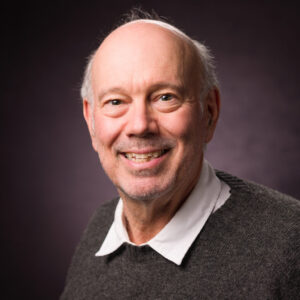
Subhankar Ganguly is a Researcher III in Electrical Engineering at the National Renewable Energy Laboratory (NREL), specializing in Power Systems Engineering. His work focuses on enhancing microgrid stability and inverter-based resource integration through advanced simulations and hardware experiments. Research Interests: Power systems stability, microgrid controllers, renewable energy integration, and smart grid technologies. Key Contributions: Development of secondary control architectures, hardware-in-the-loop simulations, and machine learning-assisted PV inverter modeling. Email: Subhankar.Ganguly@nrel.gov Recent research highlights include grid-forming inverter performance analysis, multi-vendor system compatibility studies, and practical frameworks for microgrid flexibility. He actively collaborates on international projects, emphasizing scalable solutions for renewable energy systems.
Joshua Comden serves as a Researcher III at the National Renewable Energy Laboratory (NREL) within the Energy System Control and Optimization group, focusing on Power Systems Engineering and Grid Modernization. His work develops optimal control schemes for distributed energy resources to enhance power grid resilience through real-time decision-making frameworks. His academic credentials include: PhD in Applied Mathematics and Statistics – Operations Research from Stony Brook University Master’s in Applied Mathematics and Statistics – Operations Research from Stony Brook University Bachelor’s in Chemical Engineering from the University of Delaware Comden’s research integrates operations research with power engineering, specializing in online and distributed optimization/control of power systems. His fellowship training in decision support enables effective translation of complex models for grid operators, addressing challenges in voltage regulation, microgrid management, and incentive design under uncertainty. Recent publications reveal accelerating impact in microgrid energy management, distributionally robust optimization, and grid-forming inverter control, with 17 outputs since 2023 demonstrating growing influence in power systems modernization. His recognition includes: Woo Jong Kim Dissertation Award (2020) Comden actively contributes to professional communities through memberships in the IEEE Control Systems Society, IEEE Power and Energy Society, and the Institute for Operations Research and the Management Sciences (INFORMS), fostering cross-sector collaboration in energy systems research. At NREL, he operates within the Energy System Control and Optimization group, advancing control algorithms for distributed energy integration while collaborating with national labs and industry partners on grid resilience initiatives.
Aadil Latif serves as a Researcher IV in Electrical Engineering at the National Renewable Energy Laboratory (NREL), working within the Grid Planning and Analysis Center under Energy Systems Analysis. His research focuses on grid modernization, renewable energy integration, and power system resilience with significant contributions to national energy transition initiatives. His primary research domains include: Renewable Energy systems integration Battery Energy Storage optimization Electric Vehicle grid impacts Power Systems engineering Electric Power Distribution modernization Inverter technology applications Distributed Energy Resources management Recent publications demonstrate expertise in advanced simulation techniques (HELICS co-simulation), neural network modeling for battery systems, and comprehensive grid resilience studies like the PR100 project for Puerto Rico. His work bridges theoretical research with practical grid modernization challenges, emphasizing scalable solutions for renewable integration. No scientific awards were documented in available sources. Student advising and grant funding details remain unspecified. Latif actively contributes to NREL's Grid Planning and Analysis Center, collaborating with multi-institutional teams on critical energy infrastructure projects including the PR100 initiative and advanced storage system analysis.
Richard Bryce is a Senior Researcher & Business Development Lead in the Power Systems Engineering department at the National Renewable Energy Laboratory (NREL). His work focuses on advanced energy storage systems, grid dynamics, and renewable energy integration.
Dr. Kenneth (Mark) Bryden is a Professor in the Department of Mechanical Engineering at Iowa State University and serves as the Program Director for Simulation, Modeling, and Decision Science at the U.S. Department of Energy’s Ames Laboratory. He is the founding director of these programs and has dedicated his career to integrating computational models, data, and information to enhance engineering decision-making for complex systems. Education: PhD in Mechanical Engineering, University of Wisconsin-Madison (1998) MS in Mechanical Engineering, University of Wisconsin-Madison (1993) BS in General Engineering, Idaho State University (1977) Dr. Bryden’s research spans integrated computational environments, energy systems, and sustainability. His work focuses on model federation across engineering, human, and natural systems, with applications in bioenergy, cookstove optimization, and decision science. He has developed open-source frameworks for CAD/analysis software integration and tools for assessing energy interventions in developing regions. His publications include over 180 peer-reviewed articles and the textbook Combustion Engineering . Key research themes include multiscale simulation, thermal modeling of biomass systems, and computational methods for sustainable development. His work has addressed CO₂ sequestration, microgrid energy systems, and environmental impacts of agricultural residue harvesting. Scientific Awards: ASME Melville Medal (2013) R&D 100 Awards (2010, 2009, 2006) Excellence in Technology Transfer Awards (National and Regional) Best Paper Awards (ANNIE, AIAA, ISES) Dr. Bryden’s practical contributions include founding two startups and the nonprofit ETHOS, which mobilizes 150+ researchers to provide clean energy solutions to off-grid communities. His fieldwork in Mali led to scalable household lighting systems using locally adapted technology. He holds three patents and has secured significant grants for energy systems research.
Sebastian Schwarz is a researcher at the Chair of Automation of Complex Power Systems at RWTH Aachen University. He works on energy flexibility management and optimization within multi-energy systems, contributing to the development of advanced power scheduling algorithms and digital twin architectures. Research Focus: Energy Systems Optimization Demand Response and Flexibility Modeling Multi-Energy System Integration Polynomial Chaos Theory Applications Agent-Based Scheduling Frameworks Open-Source Software Development Scientific Contributions: Development of the pycity_scheduling framework (2022) Computational performance studies of ADMM algorithms (2023) Inverse simulation methods under uncertainty (2023) Modular digital twin architectures (2023) Email: sebastian.schwarz@eonerc.rwth-aachen.de
Professor Sondoss El Sawah is a leading academic at UNSW Canberra's School of Systems & Computing, where she serves as Deputy Director of the Capability Systems Center. With over 90 publications including high-impact journal articles recognized by Web of Science, she has established herself as a prominent researcher in systems thinking and modeling. Her research focuses on advancing systems thinking methodologies to address complex socio-environmental-technical challenges. Key application areas include climate change adaptation, defense strategic decision-making, resource management, and the water-food-environment-energy nexus. She has led numerous ARC and industry-funded projects tackling high-stakes policy issues, with significant impact on defense asset management and sustainable resource planning. Professor El Sawah's recent work explores novel intersections between AI, education, and systems thinking, particularly through her ARC Discovery Project on 'Machine-education methodologies and algorithms for designing trusted multi-skilled evolutionary learners.' Her research has pioneered practical tools for promoting systems thinking in Australia's future force design and strategic asset sustainability. International Environmental Modelling and Software Society Research Award (2018) Australian Operations Research Society Rising Star Award (2016) - first female recipient Peter Cullen Trust Fellowship (Outstanding Fellow of the Year, 2014) Editor of the Journal of Environmental Modelling and Software (A*) Vice President of the Modelling and Simulation Society of Australia and New Zealand (2020-) She has significantly influenced policy through commissioned work for Queensland State Government and Department of Defence, developing good modeling practices for decision support. Her educational impact includes revitalizing systems thinking curriculum at UNSW and teaching at the European Summer School on decision making. Professor El Sawah also founded the IEEE Systems Modelling Conference and maintains strong international collaborations, including an honorary Associate Professor affiliation at Australian National University.
M. Elmorshedy is an academic researcher specializing in Electrical Engineering and Renewable Energy Systems , with a focus on Control Systems , Power Electronics , and Hybrid Energy Optimization . His work often involves collaborations with co-authors like D. Almakhles, Kotb M. Kotb, and S. M. Allam. Elmorshedy's research spans applications in Photovoltaic Systems , Wind Energy , and Model Predictive Control for inverters and electrical drives. He has contributed to advancements in Seventeen-Level Switched Capacitor Inverters and Hybrid Renewable Energy Systems for residential and microgrid contexts. Recent publications highlight trends in Power System Optimization , Grid Integration , and Emission Reduction through innovative control strategies. Key collaborations include studies on Linear Induction Motors and PMSG Control under unbalanced conditions.
Heracles Polatidis is an Associate Professor in Energy Technology, specializing in wind power, at the Department of Earth Sciences, Uppsala University, Campus Gotland, Sweden. He has been a faculty member since June 2013 and holds the academic title of Docent. His work is centered on sustainable energy systems, with a strong emphasis on decision-making frameworks for renewable energy deployment. Born in Thessaloniki, Greece, in 1972 B.Sc. in Mechanical Engineering, Aristotle University of Thessaloniki (1995) M.Sc. in Chemical and Process Engineering, Heriot-Watt University, UK (1996) Ph.D. in Energy Analysis and Decision Modeling, University of the Aegean, Greece (2003) Marie-Curie Research Fellow at Keele University (UK) and University of Maastricht (Netherlands) during PhD studies Adjunct Lecturer and Post-Doctoral Researcher, University of the Aegean (2003–2013) Heracles Polatidis’s research spans energy planning, multi-criteria decision analysis (MCDA), environmental policy, renewable energy technologies, and rational energy use. His work integrates technical, environmental, and socio-economic dimensions to support sustainable energy transitions, particularly in isolated and island contexts. He has developed and applied decision-support tools such as the MCDA-RES software for evaluating renewable energy projects. His recent publications (2023–2025) reflect a strong trend toward applying MCDA methodologies to island energy systems, decarbonisation pathways, and public engagement in energy transitions. Key themes include sustainable wind farm planning, alternative fuel buses, and energy scenario evaluation, often with a focus on Reunion Island, the Faroe Islands, and other island communities. His work combines modeling, spatial analysis, and stakeholder perspectives to inform policy and planning. Scientific contributions and publications include: Peer-reviewed articles in journals such as Energy Reports , SMART ENERGY , Renewable & Sustainable Energy Reviews , and International Journal of Green Energy Book chapter: Managing the Transition to Renewable Energy: Theory and Practice (2008) Development of decision frameworks for wind-hydro systems, geothermal energy, and water storage in Sub-Saharan Africa Applications in CO₂ emissions decomposition and industrial energy efficiency in Greece Polatidis has collaborated extensively with researchers including Andrew Barney, Martin Kügemann, Stefanos Xenarios, and Dias Haralambopoulos. His work has been cited in Mendeley and picked up by news outlets, indicating academic and societal impact. While the provided text does not list specific grants or students supervised, his long publication record and leadership in energy planning suggest active research supervision and project involvement. He is also engaged in educational initiatives, including distance learning in wind power project management.
Enrico Carpaneto is a Tenured Associate Professor at the Department of Energy (DENERG) of Politecnico di Torino , where he has held teaching and research roles since 2003. He is a member of the Power Electronics Innovation Center (PEIC) and leads the GUSEE research group. Current academic rank: Associate Professor Primary research focus: Electrical Power Systems and Grid Technologies Email: enrico.carpaneto@polito.it Research Interests Carpaneto specializes in: Microgrid modeling and optimization Virtual Synchronous Machine technologies Power converter applications for grid services Renewable energy integration in power systems Grid stability analysis and fault response His work emphasizes sustainable energy solutions for critical infrastructure like road tunnels, combining power electronics with advanced control strategies. Recent Publications Trends His 2023-2024 publications focus on: Virtual synchronous machine implementations Grid-forming and grid-following converter behaviors Microgrid energy community models Induction motor diagnostic testing Robust stability analysis for grid-connected systems These works demonstrate his expertise in modernizing power systems through advanced converter control and sustainable energy management.
Francesco Demetrio Minuto is a Fixed-term tenure-track assistant professor at the Department of Energy (DENERG) at Polytechnic University of Turin, where he is also a member of the Interdepartmental Center Ec-L - Energy Center Lab. His academic activities span across multiple engineering disciplines as an invited member of both the College of Electrical and Energy Engineering and the College of Mechanical, Aerospace, and Automotive Engineering. Dr. Minuto's research focuses on energy communities, techno-economic analysis of renewable energy systems, green hydrogen production, and energy storage technologies including lithium-ion batteries and hydrogen storage. His work addresses critical challenges in sustainable energy transition, with particular emphasis on hydrogen technologies, energy storage optimization, and community-scale renewable energy integration. His research aligns with key Sustainable Development Goals, particularly Goal 7 (Affordable and clean energy), Goal 11 (Sustainable cities and communities), and Goal 13 (Climate action). His recent publication record demonstrates strong expertise in hydrogen technologies, energy storage systems, and renewable energy community modeling, with numerous high-impact publications in leading energy journals. His work often involves sophisticated modeling approaches including stochastic simulation frameworks, MILP optimization, and techno-economic analysis to address real-world energy challenges. Dr. Minuto actively mentors the next generation of energy researchers, supervising five PhD students working on cutting-edge energy projects. His teaching portfolio includes PhD-level instruction on 'Safety of new energy carriers in confined spaces' and undergraduate courses such as 'Energy and Renewable Energy Sources' and 'Applied Thermodynamics and Heat Transfer' across multiple engineering programs. He is currently involved in the EU-funded TIPS4PED research project (2024-2027) under the Horizon Europe program, focusing on Positive Energy Districts and urban energy planning. His research bridges theoretical modeling with practical applications in the energy transition, contributing to both academic knowledge and real-world energy solutions.
Najmeh Bazmohammadi is an Assistant Professor at the Faculty of Engineering and Science , Aalborg University , specializing in Electric Power Systems and Microgrids . Her teaching portfolio includes PhD courses on Microgrids: Modelling, Control, and Energy Management and Advanced Optimization and Control in Power and Energy Systems . Research Interests : Microgrid control, energy management systems, battery degradation, digital twins, renewable energy integration, and hybrid energy systems. Projects : Co-investigator in the HECATE project (Hybrid Electric Regional Aircraft) and supervisor for a Digital Twin framework in Microgrids project. Collaboration : Works with Professors Josep M. Guerrero and Juan C. Vasquez on maritime, space, and rural electrification projects. Publications : 72+ publications since 2012, focusing on microgrid optimization, energy storage, and control systems. Expertise : Model predictive control, multi-carrier energy systems, and resilience strategies for remote and space-based communities.
Jingxuan Wu is a Postdoctoral Researcher at the Department of Electric Power Systems and Microgrids, Faculty of Engineering and Science, Aalborg University, Denmark. His work focuses on microgrid control, renewable energy integration, and power system stability, with significant contributions to harmonic mitigation and grid-forming converter technologies. Research interests span: Microgrid energy management systems for high-renewable penetration Deep learning-based wind power forecasting Advanced harmonic suppression in VSG-based microgrids Fractional-order control for grid stability His publications (14 total 2021-2025) demonstrate increasing impact in IEEE Transactions and Energy Conversion journals. As Principal Investigator for the completed project Energy Management System for Renewable Energy Sources Integrated Microgrids (2021-2024), he led research under supervisors Guerrero and Vasquez. Current collaborations include international teams in power electronics and renewable integration, centered at AAU Energy's Pontoppidanstraede facility in Aalborg.
Amjad Anvari-Moghaddam is a Full Professor at AAU Energy , Aalborg University's Faculty of Engineering and Science. As Vice-Head of Department (Head of Research) and leader of the iGRIDS Research Group , he coordinates the Integrated Energy Systems Laboratory (IES-Lab) . His work focuses on: Renewable/Hybrid Power Systems Planning and Control Microgrids and Active Energy Networks Power Electronic Control & System Optimization Energy Markets and Economic Modeling Operations Research Applications in Energy His recent research trends show strong emphasis on AI applications in energy systems, grid-forming controls for renewable-dominant networks, and decentralized energy markets. He serves as Editor-in-Chief for Academia Green Energy and associate editor for multiple IEEE journals. Scientific recognitions include: World's Top 1% Highly-Cited Researcher (Clarivate, 2020-2023) Stanford's Top 2% Scientists (2020-2023) IEEE Outstanding Leadership & Service Awards He has organized 10+ courses on energy optimization and advanced control systems since 2013, and participates in 35+ research projects including COPPER (electricity grid resilience) and BidX (PtX market strategies).
Thomas Geury is a postdoctoral researcher at the MOBI - Electromobility Research Centre within the Free University of Brussels (VUB) , specializing in Electrical Engineering-Power Technology. His work focuses on advanced power electronics, energy storage, and electric vehicle systems. Education: PhD in Engineering Sciences and Technology (2017), Université libre de Bruxelles Master in Electrical Engineering (2012), Université libre de Bruxelles Bachelor in Electromechanical Engineering (2010), Université libre de Bruxelles His research interests include electric vehicles , vehicle-to-grid systems , energy storage , and power electronics . He has contributed to projects involving battery management, modular converters, and sustainable energy integration. Recent work highlights optimization frameworks for DC-DC converters , microgrid design for marine applications , and smart charging infrastructure . His publications emphasize efficiency, modularity, and interoperability in renewable energy and electric mobility systems. Scientific Awards: The Best Paper Award on Energy for Sustainable Mobility (2024) Geury collaborates on EU-funded projects like HARPOONERS (marine electrification) and FLEXMSC (megawatt charging). He has served as a chair for IEEE conference sessions on modular converter design and control systems.