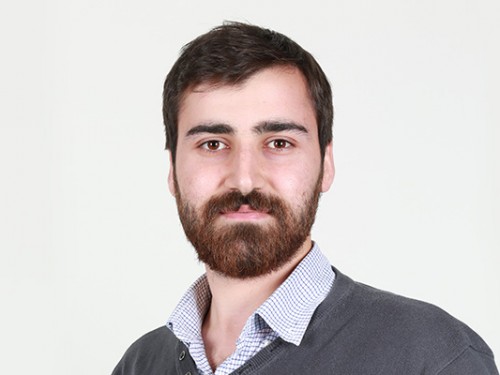
Ali DURUSU is a researcher at Yıldız Technical University, College of Engineering , with a focus on Renewable Energy Systems and Photovoltaic Power Plants . His work spans techno-economic modeling, energy optimization, and smart grid integration. Research Interests : Solar power plant design, grid integration, energy economics, MPPT algorithms, hybrid systems, and smart grid technologies Advisory : Has advised 25 theses on renewable energy topics Projects : Involved in 15 research initiatives Recent publications emphasize peer-to-peer energy trading, distributed storage, and optimization techniques. He has contributed to 80 WoS-indexed publications with significant citations (H-Index: 8 in WoS, 11 in Scopus) and participated in 43 peer-reviewed conferences.
Prof. Dr. Belgin Emre Türkay is a Professor at the Department of Electrical Engineering, Istanbul Technical University. Her work spans renewable energy systems, smart grids, and power engineering, with a focus on optimization algorithms and energy storage integration. Education: PhD in Electrical Engineering, Istanbul Technical University (1986). Her research interests include: Renewable Energy Systems Smart Electricity Grids Electrical Energy and Power Systems Optimization Algorithms for Dynamic Economic Dispatch Recent publications explore applications of quantum genetic algorithms, grey wolf optimizers, and puma optimizers in power systems, alongside integration of regenerative energy in metro lines and sustainable sources in data centers. Notable scientific recognition includes the Best Paper Track award (2023). Projects include coordinated control of energy storage systems and demand-side management for smart homes (2020-2023).
Mehmet BÜYÜK is an Associate Professor at the Department of Electrical and Electronics Engineering, Faculty of Engineering, Adıyaman University. He serves as Vice Dean of the Faculty since August 2023. He holds a PhD from Çukurova University (2019) and has been an IEEE member since 2015. Education: BSc (2007-2012), MSc (2015), PhD (2019) in Electrical and Electronics Engineering from Çukurova University. Professional roles include Research Assistant (2015-2020), Research Lecturer (2020-2022), Assistant Professor (2022-2023), and current Associate Professor status. Research focuses on renewable energy systems, electric vehicles, power electronics converters, and grid integration challenges. Notable projects include wireless power transfer systems, V2G/V2H interfaces, and smart home energy management. Publications emphasize power quality solutions, inverter topologies, and fuel cell applications. Awards include multiple TÜBİTAK incentives and a Wiley Top Cited Article recognition. Active in reviewing for top journals like Renewable and Sustainable Energy Reviews. Current activities include leading the faculty as Vice Dean, supervising student projects, and collaborating on TÜBİTAK-funded research projects addressing renewable energy challenges and emergency power systems.
Farzaneh Bagheri is an active Assistant Professor in the Department of Electrical and Electronics Engineering at Antalya Bilim University, Turkey, since 2021, following her Research Assistant role at the same institution in 2019. She holds a Ph.D. from Eastern Mediterranean University (2019), M.Sc. from Azarbaijan Shahid Madani University (2010), and B.Sc. from Shahid Beheshti University (2005), all in Electrical and Electronics Engineering. As an IEEE and Industrial Electronics Society (IES) member, she serves as a regular reviewer for IEEE, Elsevier, and MDPI journals. Her educational background demonstrates a consistent focus on power engineering: Ph.D. in Electrical and Electronics Engineering, Eastern Mediterranean University, Cyprus (2019) M.Sc. in Electrical and Electronics Engineering, Azarbaijan Shahid Madani University, Iran (2010) Bachelor's in Electrical and Electronics Engineering, Shahid Beheshti University, Iran (2005) Research interests center on power electronics control systems with emphasis on power inverter control , microgrid stability , renewable energy management , and laboratory validation . Her work bridges theoretical control design with industrial applications, particularly in grid-tied systems for solar and wind energy conversion under unstable conditions. Publication trends (2021–2025) reveal deep specialization in sliding mode control variants applied to photovoltaic inverters, dynamic voltage restorers, and battery chargers. Key themes include chattering reduction, grid distortion resilience, and multi-level converter topologies for renewable integration, with increasing focus on AI-driven fault diagnosis and digital twin modeling in her 2025 output. Scientific awards are not explicitly listed in the source material. She contributes to European and national research/industrial projects in power systems and power electronics, though specific grant details are omitted. No student advising roles are documented, but her faculty position suggests graduate mentorship responsibilities. Laboratory validation work implies hands-on experimental leadership. Her IEEE/IES membership and journal reviewing activities indicate active participation in professional communities. Experimental research is conducted within power electronics laboratories, with recent projects emphasizing solar plant integration and AI maintenance tools.
Öznur Özkasap is a Professor in the Department of Computer Engineering at Koc University's Graduate School of Sciences and Engineering. She serves as Head of Department and has research interests spanning distributed systems, computer networks, and energy-efficient networking protocols. Her work integrates artificial intelligence into distributed computing frameworks and explores security in peer-to-peer systems. Education: PhD (2000), MSc (1994), and BS (1992) from Ege University Research Areas: Distributed Systems, Cloud/Edge Computing, Network Security, and AI applications in distributed environments Her recent publications focus on blockchain-assisted distributed systems, federated learning optimization, and energy-efficient frameworks for software-defined networks. She explores multi-objective load balancing, decentralized energy trading, and secure P2P architectures. Key trends include cross-disciplinary applications of distributed computing in healthcare and energy systems. Professor Özkasap contributes to advancing edge computing, IoT-based sensor systems, and privacy-preserving mechanisms in decentralized environments. Her work addresses challenges in reliable network protocols, microgrid energy sharing, and security vulnerabilities in autonomous systems.
Ömer Cihan Kıvanç is a faculty member at the Faculty of Engineering and Natural Sciences, İstanbul Okan University, specializing in electrical engineering and power electronics. His research focuses on advanced motor control systems, energy management strategies, and smart grid technologies. He has contributed to innovative solutions in electric vehicles, renewable energy integration, and optimization algorithms. His work spans the design of high-efficiency electric motors (e.g., brushless DC and PMSM drives), hybrid energy storage systems, and intelligent energy management systems leveraging AI techniques like deep reinforcement learning and neural networks. He has also explored regenerative braking systems and V2G (Vehicle-to-Grid) technologies to enhance grid stability and energy efficiency. Key research trends include optimizing energy storage systems for industrial vehicles, improving prosumer comfort in smart grids, and developing cost-effective home energy management solutions. His studies often combine experimental validation with advanced modeling in tools like MATLAB/Simulink. Notably, his projects emphasize real-world applications, such as energy-efficient chargers using GaN semiconductors, crimping techniques for high-power plugs, and sensorless motor control methodologies. He has collaborated on interdisciplinary initiatives, including unmanned ground vehicle development and electro-hydraulic power steering systems. His advising and grants focus on fostering innovation in electric propulsion, energy systems, and automation. He has contributed to the development of laboratories and research centers at the university, though specific lab affiliations are not detailed in the provided texts.
Aykut Fatih GÜVEN is an associate professor at Yalova University, specializing in renewable energy systems and optimization algorithms. His work focuses on sustainable energy integration in microgrids, hybrid systems, and electric vehicle (EV) infrastructure. He has conducted extensive research on metaheuristic optimization algorithms like the Artificial Rabbit Algorithm and Cheetah Optimization, applying them to energy storage, distributed generation, and grid stability challenges. Education: Yalova University (PhD implied via academic rank). Research interests include renewable energy optimization, smart grid technologies, and algorithm-driven solutions for energy efficiency. His studies often address real-world applications such as EV charging stations, hydrogen storage, and cost-effective hybrid systems for public facilities. Key trends in his articles include hybrid energy system design, algorithmic optimization for control systems, and sustainability assessments in regional energy projects. He has explored topics like protective relay coordination, fractional PID controllers, and the economic feasibility of off-grid solutions. His work emphasizes practical implementations, such as feasibility studies for hybrid systems in Turkish regions (e.g., Yalova, Mugla) and the integration of renewable energy into public hospitals and hotels.
Uğur Fesli is a Lecturer PhD at Gazi University's Vocational School of Technical Sciences, Department of Electronics and Automation, and Deputy Director of the Clean Energy Research and Application Center (Temenar). He holds a PhD in Energy Systems Engineering from Gazi University (2023), a postgraduate degree from Zonguldak Bülent Ecevit University (2009), and a bachelor's in Electrical Education from Gazi University (2006). Research Expertise Dr. Fesli's research spans power system optimization , renewable energy integration , and advanced control strategies for power electronics. His work focuses on electric vehicle charging infrastructure, grid stability, and efficient energy conversion, employing techniques like model predictive control and metaheuristic algorithms. Publication Trends His 11 recent articles (2023–2025) emphasize sustainable energy systems , with recurring themes in EV fast-charging technologies, fault-tolerant power converters, and microgrid control. Dominant methodologies include model predictive control (MPC), sliding mode control, and optimization algorithms applied to real-world power challenges. Projects & Leadership He leads multiple funded initiatives, including: Photovoltaic grid-connected quasi-Z source inverter performance comparison (2025–present) Wireless EV charging with dynamic alignment (2024–present) Smart transformer design for grids (2023–present) Cyber-physical attack detection via deep learning (2021–2025) Professional Engagement Active IEEE and IEEE Industrial Electronics Society member; peer-reviews for journals including IEEE Transactions on Industrial Electronics .
Dr. Oğuz Taşdemir serves as a Lecturer in the Department of Electrical and Electronics Engineering at Kırşehir Ahi Evran University's Faculty of Engineering and Architecture since 2025, following his tenure as full-time teaching staff at the university's Kaman Vocational School (2017-2025). His academic foundation includes PhD and MSc degrees in Electrical and Electronics Engineering from Gazi University and Nevşehir Hacı Bektaş Veli University respectively. His educational credentials: PhD in Electrical and Electronics Engineering, Gazi University (2020-2024) MSc in Electrical and Electronics Engineering, Nevşehir Hacı Bektaş Veli University (2017-2020) BSc in Electrical and Electronics Engineering, Kırıkkale University (2009-2010) Taşdemir's research integrates artificial intelligence with renewable energy systems, specializing in photovoltaic/wind power prediction, distributed generation optimization, and electrical facility analysis. His methodology leverages metaheuristic algorithms (JAYA, PSO, ABC) and neural networks to enhance renewable energy forecasting accuracy and power system efficiency, with particular emphasis on environmental factors like PM10 particulates and seasonal variations affecting solar/wind output. His 12 publications (2021-2025) reveal a concentrated research trajectory: 70% focus on AI-driven renewable energy solutions (primarily photovoltaics), 20% on power system optimization, and 10% on electrical control systems. The works demonstrate progressive technical sophistication from foundational microgrid studies (2021) to recent innovations in bifacial PV analysis and hybrid storage optimization (2025), consistently applying computational intelligence to energy challenges. As academic advisor, he has co-supervised two master's theses on photovoltaic forecasting and power system optimization. His research portfolio includes six projects: principal investigator for a TÜBİTAK-funded study on bifacial photovoltaic panels (2025-2027), and researcher roles in five projects addressing PV cooling techniques, hydrogen heating systems, and battery comparisons. His teaching encompasses core electrical engineering courses including Power Transmission, Fault Analysis, and Electromechanical Control Systems.
Murat Fahrioğlu is a faculty member in the Department of Electrical and Electronics Engineering at Middle East Technical University Northern Cyprus Campus (METU NCC), within the College of Engineering. His academic expertise lies in power systems, demand side management, and renewable energy integration. Ph.D. in Electrical Engineering, University of Wisconsin-Madison, 1999 M.Sc. in Electrical Engineering, University of Wisconsin-Madison, 1994 His research interests focus on enhancing power system reliability and efficiency through demand management, game theory applications, and sustainable energy solutions. He investigates nonlinear pricing models, customer outage cost calibration, and the role of distributed generation in preventing outages. His work emphasizes the economic and strategic dimensions of power system operations, particularly in deregulated environments. He has also explored the integration of solar and wind energy in Northern Cyprus, assessing hybrid systems and grid connection challenges. The recent publications reflect a strong trend in applying computational and economic models—particularly game theory and neural networks—to optimize demand management contracts, locational marginal pricing, and distributed generation integration. His work bridges electrical engineering with economics, contributing to smarter, more resilient power grids. While no specific scientific awards are listed in the provided text, his sustained publication record in reputable journals such as IEEE Transactions on Power Systems and Electric Power Systems Research indicates scholarly recognition. Murat Fahrioğlu has advised graduate research, as evidenced by his doctoral and master’s theses. His research projects include demand management program design, integration of distributed generation, and optimal economic dispatch using TCSC devices. These efforts contribute to robust, cost-effective power systems and support sustainable energy transitions. His research has practical implications for regulators, Independent System Operators (ISOs), and utilities aiming to enhance grid stability and incorporate renewable energy sources efficiently. His focus on Northern Cyprus highlights regional energy challenges and opportunities in solar and wind hybrid systems.
Dr. Hamza Abunima is an Assistant Professor at the Electrical Electronics Engineering Department of Uskudar University since 2021. He holds a PhD in Power Systems and Energy Conversion from Universiti Sains Malaysia (2020), an MSc in Electrical Engineering from Universiti Teknikal Malaysia (2015), and a BSc in Electrical Engineering from The Islamic University of Gaza (2011). His research focuses on power systems optimization, renewable energy integration, and smart grid technologies. He has published extensively on topics such as mixed-integer programming for scheduling, microgrid operations, and photovoltaic system reliability. Abunima has led or participated in projects like the establishment of a Power Systems and Electric Machines Laboratory (expiring 2024) and research on industrial energy problems (expiring 2024). His administrative roles include Erasmus Coordinator (2022–2023) and membership in the Exam Schedule Preparation Committee (2023–present). He teaches courses such as Power Systems, Fuzzy Logic and Neural Networks, and Circuit Theory II. His research interests emphasize optimizing energy systems through mathematical modeling and control strategies, with a focus on renewable energy integration challenges and grid stability. Recent work includes studies on PV system efficiency, demand-side management, and stochastic optimization for microgrids.
Ramazan Çağlar is an Associate Professor in the Department of Electrical Engineering at Istanbul Technical University, College of Engineering. His research focuses on modern power systems, including microgrids, renewable energy integration, reliability assessment, and intelligent control of distributed energy resources. He actively publishes in high-impact journals and leads research initiatives in smart grid technologies. Research Interests: His work spans electric power distribution, system reliability, microgrid dynamics, induction motors, and power transmission. He integrates advanced computational methods such as machine learning, Bayesian inference, and optimization algorithms to solve complex problems in energy systems. His recent focus includes fault prediction using drones, energy forecasting with neural networks, and optimal allocation of distributed generators. Recent Research Trends: Analysis of his latest publications (2022–2024) reveals a strong trend toward data-driven and AI-enhanced modeling in microgrids and renewable integration. He combines physical models with machine learning (e.g., neural ODEs, autoencoders, LSTMs) and applies multi-objective optimization techniques like multiverse optimization. His work increasingly emphasizes uncertainty quantification, real-time control, and sustainable energy solutions. Scientific Projects: Completed: Reliability Evaluation of Power Station Designed for DC-Fed Traction Systems in Light Rail Transit (2011–2021). Advising and Grants: He is currently supervising 14 theses in progress, indicating an active role in mentoring graduate students. While specific grant details are limited, his long-running project funded by ITU's BAP (Scientific Research Projects) suggests sustained research funding. His collaborations include international researchers, particularly in Africa and the Middle East. Labs and Research Teams: Though not explicitly named, his research activities suggest leadership in a power systems and smart grid laboratory at ITU, focusing on reliability, optimization, and AI applications in energy infrastructure.
Jörg Raisch is a Professor of Control Systems at the Technische Universität Berlin since March 2006. He previously held positions at Otto-von-Guericke University Magdeburg and the Max Planck Institute for Dynamics of Complex Technical Systems. His research focuses on hybrid and hierarchical control systems , distributed consensus-based control , and control of time-dependent event-discrete systems using tropical algebras. Alma Mater: University of Stuttgart (Technical Cybernetics), UMIST Manchester (Control Systems) Postdoctoral work: University of Toronto (Systems Control Group) His work spans applications in process technology , medical systems , and energy technology . Recent publications emphasize max-plus algebra , P-time event graphs , and over-the-air consensus in clustered networks. He has served on editorial boards of journals like Automatica and Discrete Event Dynamic Systems , and led the IFAC Technical Committee TC1.3 on Discrete Event and Hybrid Systems from 2017-2020. Awards: DFG fellowship for habilitation
Assoc. Prof. Dr. Yücel Çetinceviz is a faculty member at Kastamonu University's Faculty of Engineering and Architecture, Department of Electrical-Electronics Engineering, where he serves as a Doctoral Academician since 2018. He also holds administrative positions as Department Chair (since 2022) and Vocational School Director (since 2020). His academic career at Kastamonu University began in 2009 as Teaching Staff at the Vocational School's Electronics and Automation Department before transitioning to his current role. Dr. Çetinceviz received his academic education from Gazi University and Karabük University: PhD : Electrical and Electronics Engineering, Karabük University, Institute of Science (2011-2017) Master's : Electrical Education, Gazi University, Institute of Science (2008-2011) BSc : Electrical Education, Gazi University, Faculty of Technical Education (2002-2006) Dr. Çetinceviz's research focuses on three primary areas: Electrical Machines and Energy Conversion, Power Electronics, and Control Theory and Applications. His work demonstrates a strong emphasis on practical applications of electrical engineering principles, particularly in the domains of electric vehicles, renewable energy systems, and motor control technologies. His research bridges theoretical concepts with real-world implementations, often involving electromagnetic modeling, thermal analysis, and advanced control techniques. Notably, his recent work shows increasing focus on electric vehicle technologies, including in-wheel motor design and battery systems, reflecting industry trends toward sustainable transportation solutions. His publication record reveals consistent scholarly output with increasing impact in recent years, particularly in high-quality international journals (SCI-expanded). The research themes across his publications demonstrate a cohesive progression from fundamental electrical machine design to sophisticated control systems for emerging applications like electric vehicles and renewable energy integration. Dr. Çetinceviz has received prestigious recognition for his scholarly contributions: TÜBİTAK Publication Incentive Award (2017) TÜBİTAK Publication Incentive Award (2012) TÜBİTAK Publication Incentive Award (2011) As an academic advisor, Dr. Çetinceviz has supervised five graduate students to completion, with ongoing supervision of additional students. His research is supported by significant projects including a principal investigator role in a 2020-2022 project on high-torque-density axial flux permanent magnet motors for electric vehicles, and advisory roles in defense industry-related projects. His intellectual property contributions include two patents related to electrical steel production and magnetic composite materials. Dr. Çetinceviz collaborates extensively with colleagues both within and outside Kastamonu University, with notable long-term collaborations with Erdal Şehirli (14 publications since 2014) and Durmuş Uygun (12 publications since 2011). His work appears to involve laboratory research focused on electrical machine testing, power electronics implementation, and control system development, though specific lab names aren't mentioned in the provided information.
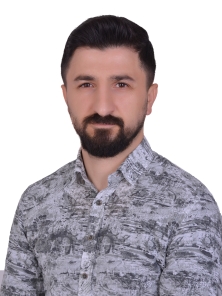
Yasin Kabalcı is a researcher at Nevşehir Hacı Bektaş Veli University , focusing on power systems , smart grids , and renewable energy integration . His work addresses critical challenges in power quality , signal processing , and communication systems for energy networks. A co-author of multiple academic publications, he explores topics like harmonic estimation , photovoltaic converters , and low-cost metering solutions . Research Themes : Power systems, smart grids, IoT in energy, harmonic analysis, renewable energy integration, MPPT algorithms. Key Contributions : Development of optimization algorithms (DSA, ABC, PSO), wireless monitoring systems, and smart metering infrastructures. Publications span smart grid architecture, multi-channel communication for renewables, and noise-insensitive harmonic estimation. His collaborative work with Ersan Kabalcı and international experts highlights interdisciplinary approaches to energy systems.

.jpeg)