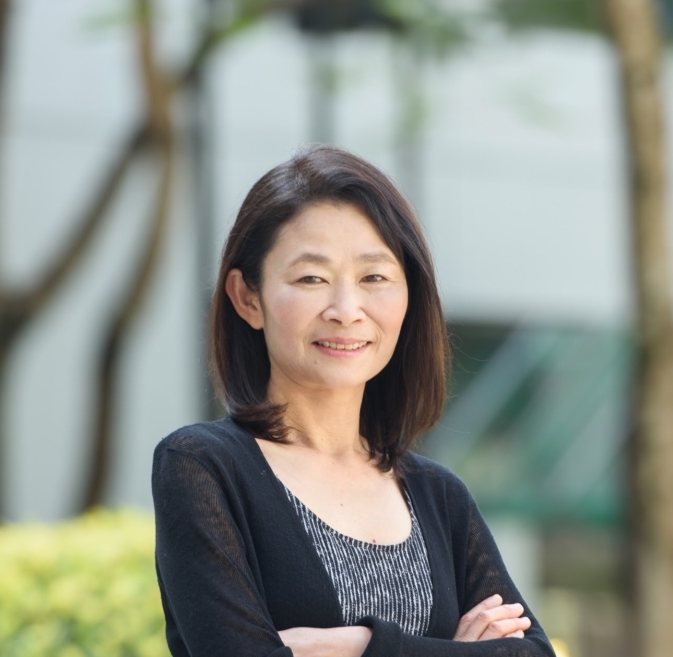
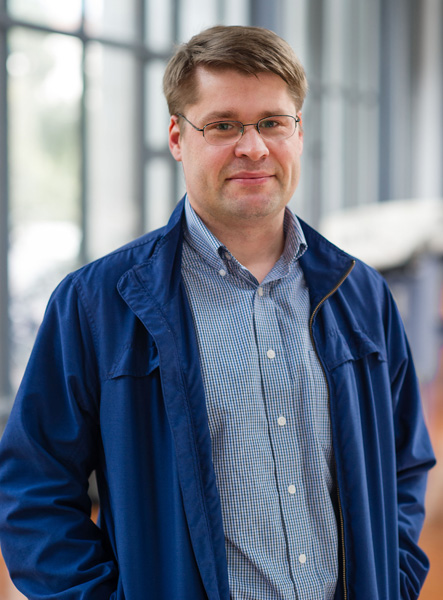
Ching Kwan Lee is a Professor of Sociology at the University of California, Los Angeles (UCLA). Her work focuses on global and comparative issues, including labor politics, political sociology, decolonization, and the dynamics of Chinese capitalism. She is renowned for her trilogy on Chinese labor and global expansion, including Gender and the South China Miracle , Against the Law , and The Specter of Global China . Lee has also authored groundbreaking studies on Hong Kong’s decolonization struggles and African-China relations. Education: PhD in Sociology from the University of California, Berkeley. Research Interests : Globalization and its social impacts Comparative labor movements and protest dynamics Decolonization and postcolonial state formations Sino-African economic and labor relations Hong Kong’s political trajectory and transnational activism Her recent work explores resistance to 'global China,' including mass mobilizations in Hong Kong documented in Forever Hong Kong: A Global City’s Decolonization Struggle (2025). She co-edits the Cambridge Elements in Global China and leads the Global Hong Kong Studies @UC initiative. Awards & Recognition : 2024 Distinguished Career in Political Sociology Award Multiple book prizes for The Specter of Global China Fellowships at Stanford’s Center for Advanced Study and Princeton’s Institute for Advanced Study Grants & Initiatives : Lead researcher on NSF grants studying platform capitalism and labor in China Initiated comparative projects on Brazil, India, China, and South Africa ( Southern Interregnum ) Co-editor of volumes on Hong Kong’s Umbrella Movement and global labor studies
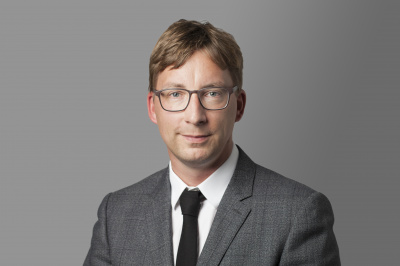
Sebastian Raisch is a Full Professor of Strategic Management at the Geneva School of Economics and Management (GSEM), University of Geneva, where he also serves as Director of the Executive MBA program. He is affiliated with the Institute of Management and holds a Ph.D. from the University of Geneva. His academic work is deeply rooted in understanding how organizations balance stability and change, particularly in the face of digital transformation. Research Interests: His primary areas of expertise include strategic management, organizational ambidexterity, organizational paradox, artificial intelligence in organizations, and digital transformation. His research investigates the dynamics of corporate growth and decline, strategic renewal, and the integration of human and artificial intelligence in organizational decision-making. He is especially interested in how firms navigate tensions between competing demands such as exploration and exploitation, automation and augmentation, and stability and innovation. Publications and Trends: His recent publications (2023–2025) show a strong shift toward the role of artificial intelligence in management, with a focus on hybrid human-AI systems, ethical AI, and the strategic implications of AI adoption. Earlier works center on ambidexterity, paradox theory, and corporate turnaround, establishing him as a leading scholar in these domains. Scientific Awards: Strategic Management Society’s Best PhD Paper Award Emerald Publishing Group’s Citation of Excellence Award Journal of Management’s Scholarly Impact Award Editorial and Professional Service: Sebastian Raisch serves as Associate Editor at the Academy of Management Review and sits on the editorial boards of the Academy of Management Journal and the Strategic Management Journal . He has advised numerous doctoral students and supervised research projects on organizational innovation and digital strategy, though specific names are not listed in the provided materials. He has not received explicit mention of research grants, but his extensive publication record suggests active research funding. Labs and Research Teams: While no formal lab is mentioned, Raisch leads or contributes to research initiatives within the Institute of Management at GSEM, particularly in strategic management and digital innovation. He collaborates with scholars across Europe and the U.S., including notable co-authors like J. Schad, S. Krakowski, and M. Tushman.
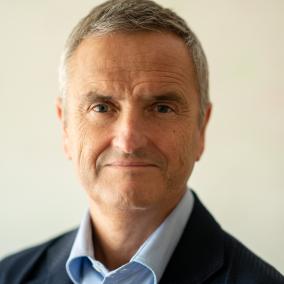
Ricardo Caballero is the Ford International Professor of Economics at the Massachusetts Institute of Technology's School of Humanities, Arts, and Social Sciences, where he previously served as Chairman of the Economics Department from 2008 to 2011. A leading scholar in macroeconomics and financial economics, his research focuses on safe assets, monetary policy, financial crises, and international economics. His research interests center on the macroeconomic implications of financial frictions, with particular emphasis on safe asset shortages, risk premium dynamics, and monetary policy transmission mechanisms. Caballero's work has pioneered the risk-centric approach to macroeconomics, explaining phenomena such as the Wall Street/Main Street disconnect, global imbalances, and the collapse of interest rates through the lens of safe asset scarcity and risk intolerance. His research bridges theoretical modeling with empirical analysis of financial crises and policy interventions. Caballero's recent publications demonstrate a consistent focus on financial conditions indexing, monetary policy frameworks, and the interaction between financial markets and the real economy. His work increasingly examines how central banks can target financial conditions directly and how risk premia evolve during crises, with applications to pandemic-era economic policy and zero lower bound environments. 2002 Frisch Medal of the Econometric Society Smith Breeden Prize by the American Finance Association Journal of Finance 2014 Brattle Group Prize 2022 Banque de France-TSE Senior Prize in Monetary Economics and Finance Elected Fellow of the Econometric Society (1998) Elected Fellow of the American Academy of Arts and Sciences (2010) As an NBER Research Associate and frequent policy advisor, Caballero has influenced central bank thinking globally through his work on financial stability, monetary policy frameworks, and global imbalances. His research has informed policy discussions at the Federal Reserve, IMF, and multiple central banks regarding crisis management, safe asset creation, and the appropriate monetary response to financial shocks. Caballero maintains active collaborations with major financial institutions and central banks worldwide, translating theoretical insights into practical policy frameworks.
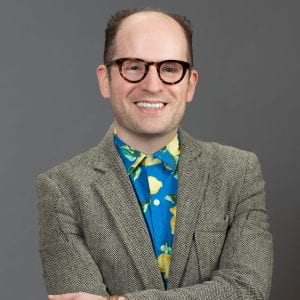
Jordi Galí is a Professor at the Department of Economics and Business at Universitat Pompeu Fabra (UPF), a Senior Researcher at the Center for Research in International Economics (CREI), and a Research Professor at the Barcelona School of Economics (BSE). He holds a PhD from MIT and has played a central role in shaping modern macroeconomic theory, particularly the New Keynesian framework used by central banks worldwide. Education: PhD in Economics, Massachusetts Institute of Technology (MIT), 1989 Master in International Management, ESADE, 1985 Bachelor in Economics, Universitat Pompeu Fabra, 1994 His research focuses on macroeconomic theory, monetary economics, and macroeconometrics. He is best known for his work on the New Keynesian Phillips Curve, optimal monetary policy rules, and the role of technology and expectations in business cycles. His influential book, Monetary Policy, Inflation and the Business Cycle , is a standard reference in graduate programs globally. The most recent articles highlight a continued focus on critical issues in modern macroeconomics: the implications of a low natural rate of interest (r*), the effectiveness of monetary policy at the zero lower bound, the role of wage and price flexibility, and the interaction between fiscal and monetary policy. His work increasingly integrates heterogeneity, financial frictions, and experimental methods, reflecting the evolving frontiers of the field. Scientific Awards: BBVA Foundation Frontiers of Knowledge Award (2025) Yrjo Jahnsson Award (2005) Premi Rei Jaume I d'Economia (2004) Premio Nacional de Investigación “Pascual Madoz” (2022) Three ERC Advanced Grants Foreign Honorary Member, American Economic Association (2020) Galí has advised numerous central banks, including the ECB, Federal Reserve, and Banque de France. He has held leadership roles as President of the European Economic Association (2012), co-editor of the Journal of the European Economic Association , and co-director of the CEPR International Macroeconomics Programme. He is a Research Fellow at CEPR, a Research Associate at NBER, and a Fellow of the Econometric Society. He has also been actively involved in public policy debates in Spain and Europe, particularly on issues of productivity, labor market reform, and fiscal policy. His research program continues to explore the design of stabilization policies in open and currency union economies.
Aybars Tuncdogan is a Reader in Digital Innovation and Information Security at King’s Business School, King’s College London. He holds affiliations with the King’s AI Institute, King’s Cybersecurity Centre (Informatics), and King’s Cybersecurity Group (War Studies). A Fellow of the Higher Education Academy, he also serves on the editorial review board of Industrial Marketing Management . Education : PhD in Management, Rotterdam School of Management, Erasmus University MPhil in Business Research (Distinction), Erasmus University Bachelor’s in Business Management & Computer Science (Honors), Earlham College Research Interests : His work focuses on three pillars of digital innovation: generation (crowdsourcing, AI), marketing (digital brand personality, sales ambidexterity), and protection (information security, corporate espionage). He integrates psychology (individual differences, social identity) and computer science (machine learning/AI) frameworks. Publications Trends : Recent work addresses cybersecurity challenges in retail, AI ethics in healthcare, and interdisciplinary innovation. He frequently publishes in top-tier journals like Journal of Management and Scientific American , blending academic rigor with practitioner impact. Awards & Contributions : 2015 Best Paper Award (shared) Edited books including Oxford Handbook of Individual Differences and Strategic Renewal Teaching & Pedagogy : Develops innovative teaching methods like inquiry-based learning to foster student creativity. Taught modules on digital marketing, consumer behavior, and research methods. Labs/Teams : Contributes to cybersecurity initiatives at King’s, focusing on AI-driven defense mechanisms and organizational cyber resilience strategies.
Professor Eero Vaara, currently at Saïd Business School, University of Oxford, is a globally recognized expert in organizational theory, strategic change, and institutional dynamics. With 39 publications in Financial Times top 50 journals between 2008-2022, his work explores historical perspectives, discursive processes, and paradoxes in organizational transformations. Affiliation: Saïd Business School, University of Oxford Research Focus: Strategic change, institutional work, narrative theory, and historical embeddedness Eero’s research bridges macro-institutional and micro-practice approaches, emphasizing how unmaterialized decisions, discursive struggles, and temporal dynamics shape organizational trajectories. His work spans multinational corporations, public sector governance, and extreme contexts, with a growing interest in historical analysis and critical discourse studies. His recent publications highlight themes such as strategy-as-practice , national identity , and temporal intentionality . Articles like Near-histories and strategy emergence and Discursive legitimation demonstrate his interdisciplinary approach combining institutional theory, paradox theory, and narrative analysis. Scientific Awards: Academy of Management fellowship Ranked 11th most published management scholar in FT top 50 journals (2008-2022) Eero’s collaborative research style and resilience in the publication process have led to influential contributions in strategic management and organizational studies. His colleague Eric Zhao notes that his work “opens up new ways of thinking about organizations, strategy, and change,” reflecting Oxford Saïd’s commitment to research excellence.
Joshua D. Kertzer is the John Zwaanstra Professor of International Studies and Government at Harvard University, where he also serves as Director of Graduate Studies. His research integrates international security, political psychology, and foreign policy analysis. His work examines public opinion formation, elite decision-making, and experimental approaches to international relations. Recent studies focus on how observers assess resolve in international conflicts, partisan influences on foreign policy attitudes, and the psychological foundations of reputation costs. Publications demonstrate methodological innovation in combining survey experiments with archival research, exploring topics from democratic credibility to signaling in crisis diplomacy. His award-winning research has been recognized by the International Studies Association and American Political Science Association.
Francesco Antonio Perotti is a PhD Alumni in Business and Management from the University of Agder, Norway, and the University of Turin, Italy. He holds a Lecturer position at the School of Management and Economics, University of Turin. His primary research focuses on Circular Economy, Knowledge Management, Innovation, and Digital Transformation. He contributes to high-impact journals and serves on editorial boards. His work bridges theoretical insights with practical applications, emphasizing sustainable business practices and organizational leadership. Perotti is also a member of national and international research groups and engages in academic dissemination through conferences and teaching. His research explores topics like open innovation in sustainability, digital transformation leadership, and mitigating knowledge sabotage in organizations. He has published in journals such as Innovation: Organization and Management , Creativity and Innovation Management , and Journal of Business Research . His recent studies analyze SMEs' adaptation to circular economy models and AI-driven leadership strategies. Perotti’s work addresses strategic drivers for business survival in sustainability transitions and the implementation of digital tools in circular enterprises.
Giovanni Gavetti is the Doreen L. and David I. Chemerow ’73 T’75 Professor of Strategy at the Tuck School of Business, Dartmouth College, where he serves as Area Chair for Strategy. He previously held the position of Associate Professor at Harvard Business School before joining Tuck in 2012. Education : PhD (2000) and MA (1998) in Management from the University of Pennsylvania; BA (1993) in Economics from Bocconi University, Milan. His research focuses on the cognitive foundations of strategy, exploring how cognition, evolutionary theory, and organizational learning shape strategic decision-making. He emphasizes behavioral theory, analogical reasoning, and microfoundations of capabilities, with a particular interest in overcoming cognitive biases and inertia in strategic contexts. Gavetti’s recent articles span strategic leadership, organizational cognition, and evolutionary dynamics, often bridging behavioral science with traditional strategy frameworks. His work addresses topics like collective interpretation, strategic foresight, and the interplay between cognition and organizational performance. Scientific Awards : 2015 Strategic Management Society Best Paper Prize; 2014 Teaching Excellence Award at Tuck. Gavetti supervises numerous student-authored case studies at Tuck, including works on Patagonia, NPR, Uber in India, and The Minerva Project. His teaching philosophy centers on cultivating a strategic mindset through foundational principles and timeless case studies, often co-developing cases with former students.
Professor Thomas Maak is the inaugural Professorial Chair in Ethics & Trust at the University of Queensland Business School. He also serves as Co-Lead of the Ethics and Governance Alliance and Discipline Convenor for Management. Previously, he held roles including Director of the Centre for Workplace Leadership at the University of Melbourne, Full Professor at ESADE Business School, and Visiting Professor at the Wharton School. His research focuses on responsible leadership, ethics, and the intersection of business with global societal challenges. Maak holds a PhD from the University of St. Gallen and completed the INSEAD International Director’s Program. His career spans academia and industry collaborations with firms like PricewaterhouseCoopers, BMW, and Novo Nordisk. He has led projects such as the PwC-INSEAD initiative on high-performing organizations and co-directed the 'Neuroscience of Leadership' study with Arizona State University. His research interests include ethical decision-making, political CSR, and organizational neuroscience. He has published extensively in journals like the Academy of Management Learning & Education and the Journal of Business Ethics . Awards include the Max-Weber-Prize (2008), Carolyn-Dexter-Award finalist, and the Jef Van Gerwen SJ Chair (2011). He has chaired major conferences, including the 2022 World Congress in Bilbao, and served as Past-President of the International Society of Business, Economics, and Ethics (ISBEE).
Oliver Laasch is a Professor of Responsible Management at ESCP Business School in Berlin and holds an adjunct professorship in Social Entrepreneurship at the University of Manchester. He has held academic roles at institutions including the University of Nottingham Ningbo (China), Tecnológico de Monterrey (Mexico), and Seoul National University (South Korea), along with visiting positions at the University of Tübingen’s Global Ethic Institute and Copenhagen Business School. His research focuses on responsible management, alternative business models, disruptive activism, and qualitative methods. He has published in top-tier journals such as the Academy of Management Learning and Education , British Journal of Management , and Journal of Business Ethics . Laasch co-authored the Research Handbook of Responsible Management and Sage Handbook of Responsible Management Learning and Education , and has contributed to practitioner outlets like Harvard Business Review and Forbes . He designs and teaches courses at all academic levels, including the Coursera MOOC Managing Responsibly with 40,000+ enrollees. His work on the United Nations Principles for Responsible Management Education (PRME) initiative has been pivotal. He has served as an editorial board member for journals like Academy of Management Learning and Education and Long Range Planning , editing over 40 special issues and books. Laasch advises companies and universities on staff development and has pioneered frameworks for integrating sustainability into business education. His research emphasizes systemic change, ethical leadership, and the intersection of activism with corporate responsibility.
Associate Professor at the University of Klagenfurt , affiliated with the Department of Management Control and Strategic Management under the Faculty of Economics and Law . Research focuses on agent-based modeling applied to organizational dynamics , complex systems , and managerial economics . Holds a doctoral degree in Social Sciences and Economics (2012) and venia docendi in Business Economics (2018) . Core faculty member in the Self-Organizing Systems research cluster Academic editor for PLoS ONE and editorial board member for multiple journals Recipient of the 2021 Advancement Award (Humanities/Social Sciences) from Carinthian government Research integrates computational simulation with organizational theory , examining phenomena like decentralized task allocation , incentive mechanisms , and reproducibility in social sciences . Teaching portfolio includes business analytics , management control , and scientific modeling at undergraduate and graduate levels. Recent publications explore organizational resilience , team coordination dynamics , and financial modeling using agent-based simulation techniques. Active participant in international conferences like Social Simulation Conference and European Conference on Operational Research .
Yuriy Gorodnichenko serves as the Quantedge Presidential Professor in the Department of Economics at the University of California, Berkeley since 2018. His extensive academic affiliations include being a Faculty Research Associate at the National Bureau of Economic Research (2014-present), Research Fellow at the Institute for the Study of Labor (2007-present), International Fellow at the Kiel Institute for the World Economy (2011-present), and Research Consultant for both the European Central Bank (2018-present) and European Investment Bank (2017-present). He also serves as Editor of the Journal of Monetary Economics (2018-present) and Member of the Executive Committee of the Association for Comparative Economic Studies (2019-present). Education: Ph.D., Economics, University of Michigan, 2007 M.A., Statistics, University of Michigan, 2004 M.A., Economics (high honors; valedictorian), Economics Education and Research Consortium at National University of Kyiv-Mohyla Academy, Kiev, Ukraine, 2001 B.A., Economics (honors; valedictorian), National University of Kyiv-Mohyla Academy, Kiev, Ukraine, 1999 Gorodnichenko's research spans multiple subfields of economics with particular emphasis on monetary economics, public finance, international economics, and macroeconomics . His scholarly approach typically combines both macroeconomic and microeconomic data with rigorous theoretical and statistical analyses. His work is organized into five major categories: monetary economics, aggregate implications of informational frictions, business cycles, development/productivity/income differences, and inequality. As an applied macroeconomist, he frequently bridges methodological approaches across different economic subdisciplines. His publication record demonstrates consistent high-impact research across top economics journals including American Economic Review, Journal of Political Economy, and Review of Economic Studies. The trajectory of his work shows increasing focus on the microfoundations of macroeconomic phenomena, particularly how information frictions affect economic behavior and policy transmission mechanisms. His recent publications have increasingly addressed the distributional consequences of monetary policy and the role of cultural factors in economic development. Scientific Awards and Honors: Fellow, Econometric Society (2021) Highly Cited Researcher, Clarivate (2021) Distinguished Teaching Award, Social Science Division, UC Berkeley (2020) World Junior Prize in Monetary Economics and Finance (2018) NSF CAREER award (2012) Sloan Research Fellowship (2013) Multiple #1 rankings among young economists by RePEc (2014-2021) Best paper award, American Economic Journal: Economic Policy (2015) Gorodnichenko has received consistent recognition for his teaching and advising from UC Berkeley's Economics Department, including multiple runner-up positions and a win for the Best Advisor Award (2014). His research has been supported by prestigious grants including the NSF CAREER award and Sloan Research Fellowship. His impact metrics are substantial with over 19,000 citations and an h-index of 54, reflecting significant influence in the economics profession. While the scraped text doesn't specify dedicated research laboratories, Gorodnichenko maintains active research collaborations through his affiliations with major economic research institutions including NBER, IZA, and Kiel Institute. His editorial roles at leading journals position him at the center of contemporary macroeconomic research discourse.
Kevin Douglas Hoover is a Professor of Economics and Professor of Philosophy at Duke University's Trinity College of Arts & Sciences since 2006. His research bridges macroeconomics, monetary economics, the history of economics, and the philosophy of empirical science, with a focus on causal search methodologies, microfoundational programs, and the methodology of economic modeling. Education: Ph.D., University of Oxford, 1985 M.A., University of Oxford, 1983 B.A., University of Oxford, 1979 Research Interests: Hoover’s work examines the intersection of economics and philosophy, particularly causal inference in econometrics, the history of macroeconomic thought, and the role of first principles in economic analysis. He has written extensively on figures like Charles S. Peirce and John Maynard Keynes, exploring their contributions to economic theory and methodology. Awards: Best Paper Award, International History of Economics Society (2015) Grants & Advising: Principal Investigator: NSF-funded 'Models and Causal Structure in Econometric Analysis' (2010–2012) Faculty Member: NEH grant 'Teaching the History of Political Economy' (2009–2010) Organized conferences on growth economics and the history of economic thought Collaborations: Engaged with institutions like the Austrian National Bank, Bank of Albania, and University of Vienna, reflecting his interdisciplinary and international academic network.
Nicolai J. Foss is a Professor of Strategy at the Department of Strategy and Innovation, Copenhagen Business School (CBS). He holds additional roles as Honorary Adjunct Professor at the University of Southern Denmark, External Chair of the Danish Institute for Advanced Studies (2020–2025), and Professor II at the Norwegian School of Economics. A Knight of the Order of the Dannebrog, he previously held the Rodolfo Debenedetti Chair of Entrepreneurship at Bocconi University (2016–2019). His academic journey includes degrees from the University of Copenhagen (M.Sc., 1989) and a PhD from CBS (1993). He has held visiting professorships at Warwick, Hong Kong Polytechnic University, and others. Research interests focus on strategic management (resource-based view, microfoundations), organizational design (knowledge processes, open innovation), entrepreneurship (cross-country analyses, strategic entrepreneurship), and social science methodology. He has authored over 266 journal articles, 109 book chapters, and 26 books, with a Google Scholar h-index of 116 and ~60,000 citations. Recognitions include Clarivate’s Highly Cited Researcher status since 2018 and being ranked the 13th most cited living business scholar globally. Professional contributions include founding CBS’s Department of Strategic Management and Globalization (2005), directing World Class Environment programs at CBS, and serving on ERC panels and the Strategic Management Society board. He co-founded influential think tanks like the Danish Research Unit for Industrial Dynamics and CEPOS. His work is featured in outlets like the Wall Street Journal and Forbes , and he has been a columnist for Danish newspapers Børsen and Berlingske .