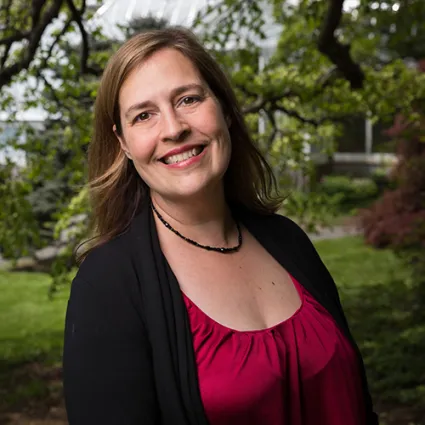
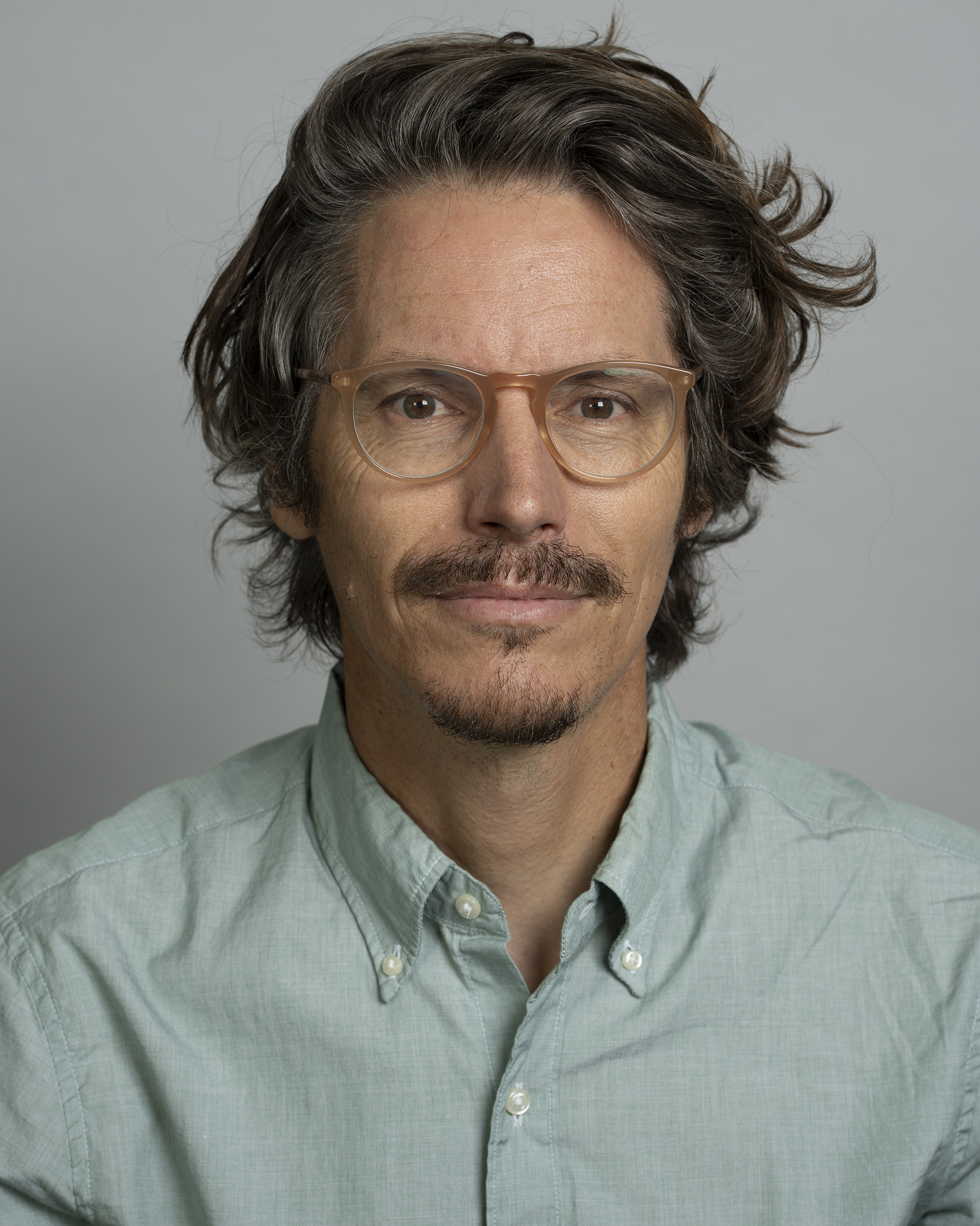
Mark Abbott is a Professor at the University of Pittsburgh, specializing in paleoclimatology and environmental science. He holds a PhD from the University of Minnesota (1997) and conducted postdoctoral research at the University of Massachusetts. His research integrates stratigraphy, geochemistry, and isotopic analysis to study climate change impacts on human societies and environmental systems. Abbott leads projects recovering lake sediment cores to document Holocene climate variability, focusing on annual-resolution records for temperature and drought reconstructions. He has authored over 50 peer-reviewed articles, with recent work emphasizing monsoon dynamics, Arctic mercury deposition, and tropical Andean glacial retreat. His fieldwork spans North America, South America, and Asia, including collaborative projects in Alaska, Peru, and India. Education: PhD in Geology (Minnesota, 1997), MS (Colorado, 1991), BA in Biology (Colorado, 1987) Postdoctoral Training: Climate System Research Center (UMass) Research interests include reconstructing past environmental changes via lacustrine archives, with emphasis on human-environment interactions. His lab analyzes stable isotopes, organic biomarkers, and sedimentology to address critical climate questions. Recent studies highlight climate-vegetation-fire linkages in the Pacific Northwest and Holocene lake-level changes in Canada/Yunnan. Recent articles focus on decadal-to-millennial climate shifts in mountain regions, Arctic permafrost dynamics, and anthropogenic impacts on lake ecosystems. Abbott’s work is supported by grants from NOAA and the NSF, with field sites in the Canadian Rockies, Himalayas, and Alaskan Arctic.
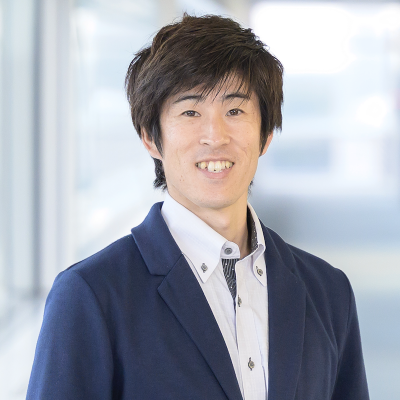
Hirokatsu Kataoka serves as Chief Senior Researcher at the National Institute of Advanced Industrial Science and Technology (AIST) in Japan, with multiple academic affiliations including Academic Visitor at the Visual Geometry Group (VGG) at University of Oxford, Visiting Associate Professor at Keio University, and Adjunct Associate Professor at Tokyo Denki University. He is Principal Investigator of both cvpaper.challenge and LIMIT.Lab, and serves as Research Advisor for SB Intuitions. Dr. Kataoka earned his Ph.D. in Engineering from Keio University (April 2011 - March 2014), where he received the Fujiwara Prize in 2014 as valedictorian equivalent. His research primarily focuses on innovative pre-training methodologies that eliminate dependency on natural image datasets, with his Formula-Driven Supervised Learning (FDSL) framework being particularly influential in the field. Kataoka's research interests center around representation learning with limited data resources, including zero-shot, unsupervised, and synthetic learning approaches. His work explores how visual/multimodal models can be effectively trained with minimal real-world data, addressing critical ethical concerns related to large-scale datasets. He has pioneered methods using fractal geometry, mathematical formulas, and procedural generation to create effective pre-training frameworks that rival traditional ImageNet-based approaches. His publication record shows a clear trajectory toward solving the challenges of learning with limited resources, with recent work expanding FDSL to audio processing, microfossil analysis, and visible-to-infrared translation. His papers consistently address the core challenge of building robust visual recognition systems without relying on massive annotated datasets, with increasing focus on practical applications across diverse domains. Scientific Awards & Recognition ACCV 2020 Best Paper Honorable Mention Award for 'Pre-training without Natural Images' AIST Best Paper Award (2019, 2022) BMVC 2023 Best Industry Paper Finalist Featured in MIT Technology Review His 3D ResNets paper ranks among the top 0.5% most-cited CVPR papers over a five-year period Dr. Kataoka actively advises numerous researchers across multiple institutions, with his research team comprising Ph.D. and Master's students from various universities. He has served as Area Chair for CVPR 2024 and 2025, will serve as IEEE TPAMI Associate Editor beginning in 2025, and organizes the LIMIT Workshop series at major computer vision conferences. His LIMIT.Lab, established in June 2025, serves as a collaboration hub focused on building multimodal AI models under constrained resources including compute, data, and labels.
Dr. Keyron Hickman-Lewis is a Lecturer in Planetary Exploration at Birkbeck, University of London, with academic positions spanning institutions like the Natural History Museum and Imperial College London. He holds a M.EarthSci from the University of Oxford (2015) and a Ph.D. in Earth Sciences from CNRS Orléans and Università di Bologna (2019). His research focuses on the co-evolution of Earth and early life, planetary exploration (including Mars 2020 Perseverance rover missions), and technique development for analyzing ancient microbial biosignatures. Key interests include microbial mats, Archaean geology, and astrobiological field analogs like Lake Abhe (Djibouti) and Martian environments. Notable achievements include identifying Earth's oldest microbial traces (3.5 Ga) and studying Mars sample return strategies. He is a Fellow of the Geological Society (FGS) and serves on the European Astrobiology Network Association Council. Teaching includes modules on planetary science, geology, and remote sensing. Supervision focuses on astrobiology and planetary exploration topics. Key publications highlight breakthroughs in microbial mat preservation, Mars sample analysis, and Early Archaean stromatolite interpretation. Collaborations span international institutions including NASA, CNRS, and the University of Bologna.
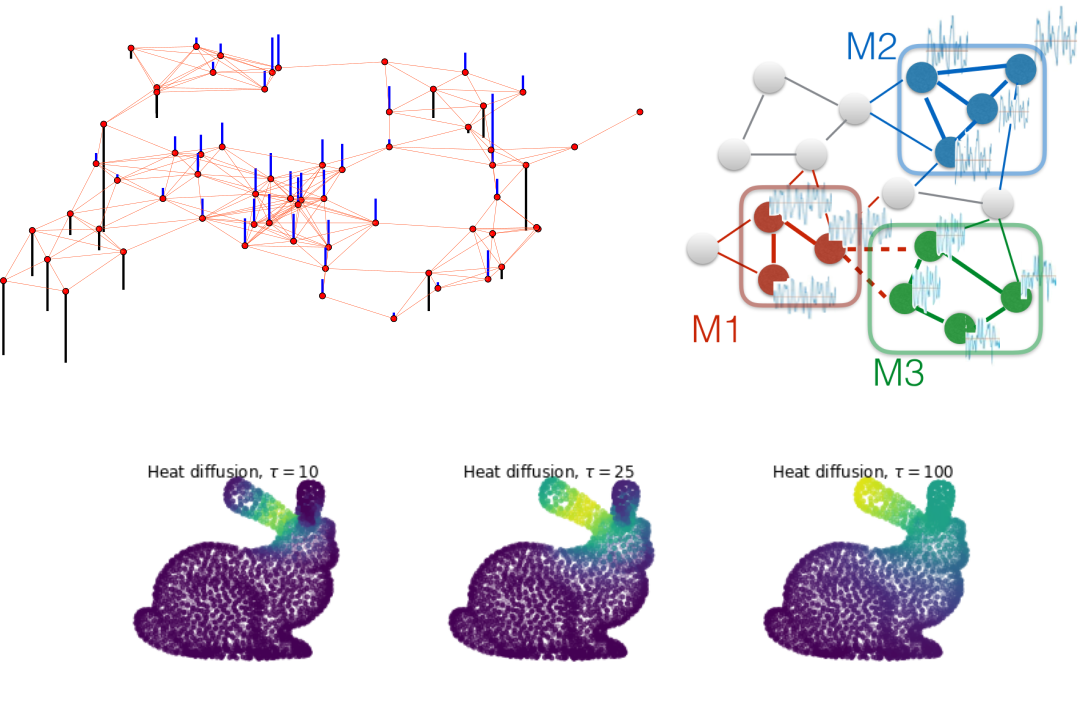
Benjamin Ricaud is an Associate Professor and Group Leader in Machine Learning at UiT The Arctic University of Norway's Department of Physics and Technology. His core affiliations include membership in the Machine Learning Group, Visual Intelligence center, and co-directorship of the Digital Technology Innovation Lab focused on Arctic-region tech startups. He also co-chairs the annual Northern Light Deep Learning conference. Ricaud's research spans: Fundamental ML : Graph signal processing, explainable AI, and generative models Applications : Microfossil classification, medical diagnostics (retinal aging), drug analysis, and climate data interpretation Emerging domains : Self-supervised learning and biological data analysis using Raman spectroscopy His recent publications (2020-2025) cluster in three domains: Graph ML methodologies (35%) Biomedical/biological applications (40%) Geoscience/climate informatics (25%) with consistent focus on interpretability and real-world data challenges. Teaching includes Image Processing (FYS-2010), Pattern Recognition (FYS-3012), and Machine Learning (FYS-2021). He leads outreach initiatives developing AI exhibits for Tromsø Science Centre.
Sara Pruss is the Esther Cloudman Dunn Professor of Geosciences at Smith College, where she has established herself as a leading researcher in geobiology and paleontology. Her work focuses on critical transitions in Earth's history, particularly mass extinctions and the evolution of early life forms. She maintains an active research program that combines field work, laboratory analysis, and theoretical approaches to understand the complex interactions between life and Earth's environments through geological time. Education: Ph.D., University of Southern California M.S., University of Southern California B.S., University of Rochester Professor Pruss's research spans several interconnected areas within geobiology and paleontology. Her primary focus is on understanding mass extinction events, particularly the end-Permian extinction and Cambrian-Ordovician transitions. She investigates how these events affected marine ecosystems and the subsequent recovery patterns. Her work on Neoproterozoic carbonates and early animal evolution has provided important insights into the environmental conditions that facilitated the emergence of complex life. Professor Pruss also examines microbial sedimentary structures and their implications for interpreting ancient environments. Her research often combines detailed field observations with geochemical analyses to reconstruct paleoenvironments and understand the taphonomic processes that affect fossil preservation. Analysis of Professor Pruss's recent publications reveals a consistent focus on critical transitions in Earth's history. Her work spans the Ediacaran-Cambrian boundary, the Cambrian-Ordovician transition, and the Permian-Triassic extinction. A recurring theme is the relationship between environmental changes (particularly oxygenation and redox conditions) and biological evolution. Her research increasingly incorporates geochemical proxies like mercury chemostratigraphy to identify potential volcanic triggers for extinction events. The geographical scope of her work is global, with field sites in North America, Scotland, Namibia, and the Arctic. Scientific Awards: Outstanding Contributions to Geobiosciences by the Society for Geobiology and Geomicrobiology (2014) Sherrerd Prize for Distinguished Teaching by Smith College (2015) Professor Pruss has mentored numerous undergraduate students through her research lab at Smith College. Several of her former students, including Katie Castagno, Jana Burke, Kelsey Moore, Sophie Westacott, and Kiara Gomez, have gone on to earn PhDs from prestigious institutions like MIT, Yale, and Woods Hole. Her research has been consistently supported by major funding agencies including the National Science Foundation and the National Geographic Society. Beyond her research mentorship, Professor Pruss has been actively involved in programs aimed at supporting underrepresented women in STEM fields, demonstrating her commitment to inclusive excellence in science education. Professor Pruss leads an active research laboratory at Smith College that combines field, laboratory, and analytical approaches to geobiological research. Her lab has produced numerous publications with undergraduate co-authors, reflecting Smith's strong emphasis on undergraduate research. The lab's work often involves international collaborations with researchers from institutions around the world. Current research directions include investigating the relationship between oxygenation and early animal evolution, studying microbial influences on sedimentary structures, and examining the environmental triggers for major extinction events throughout Earth's history.
Rowan C Martindale is an Associate Professor at the University of Texas at Austin's Department of Earth and Planetary Sciences within the Jackson School of Geosciences. His research focuses on marine paleoecology, mass extinctions, and carbon cycle perturbations in deep time, particularly the Triassic-Jurassic and Toarcian Ocean Anoxic Event. He leads the Martindale Lab, which investigates Jurassic reef crises, Lagerstätten preservation, and modern reef decline. His work integrates field studies, geochemical analyses, and educational tools like board games to enhance STEM engagement. Affiliations: UT Austin Non-vertebrate Paleontology Lab GSA Geobiology & Geomicrobiology Division (Executive Committee) Education: Doctoral research centered on Triassic/Jurassic boundary reef collapse linked to ocean acidification. Postdoctoral opportunities at Scripps and Humboldt Foundation were declined. Research Interests: Reconstruction of ancient reef ecosystems, exceptional fossil preservation mechanisms, and applying paleontological insights to modern conservation. Key projects include the Pliensbachian/Toarcian reef crisis and Jamaican coral reef monitoring. Publications: Over 50 peer-reviewed articles since 2015, emphasizing Jurassic paleoecology, fossil preservation, and education innovation. Top-tier journals include Paleontology , Geology , and Papers in Palaeontology . Awards: NSF CAREER Award (2019) UT Austin Teaching Excellence Award (2017) Advising & Grants: Supervised 15+ graduate students and postdocs. Secured NSF grants for reef research and educational initiatives like the GeoPATHS program in Jamaica. Labs/Teams: Collaborates with global institutions on field projects in Morocco, Jamaica, and the Caribbean. Lab focuses on combining fieldwork, microscopy, and geochemical analyses.
Dr Michael Montenari is a Lecturer in Palaeontology and Stratigraphy at Keele University's School of Life Sciences. He serves as Programme Director for Environmental Science and Sustainability and Environmental Management. His academic career includes a PhD (1999) and Habilitation (2005) in Earth Sciences, with postdoctoral research at the CNRS (France) and University of Tübingen (Germany). Education: Dr. rer. nat. (PhD) in Earth Sciences, Friedrich-Alexander-Universität Erlangen-Nürnberg (1999) Diplom-Geologe (MSc), Albert-Ludwigs-Universität Freiburg (1996) Studies at Université-Louis-Pasteur (France), UCLA (USA), and others Research Interests: Focuses on Palaeoecology, microfossil analysis, stromatolite genesis, and geodynamic processes in the Variscan Belt and Rodinia fragmentation. His work integrates stratigraphy, geochemistry, and sedimentology to explore Earth's geological history. Teaching & Advising: Leads modules in Palaeontology, Stratigraphy, and fieldwork. Supervised PhD students including Steve Rogers (2015) and Tim Ferriday (2014). Active in interdisciplinary environmental science programs. Recent Research Trends: Articles emphasize Carboniferous and Jurassic stratigraphy, geochemical reconstructions of ancient ocean systems, and mineralogical modeling. Highlights include studies on ammonoid taxonomy and Southern Ocean carbon dynamics.
Sonal Khanolkar is a researcher at GEOMAR Helmholtz Center for Ocean Research Kiel, Germany, specializing in paleoceanography and marine biogeochemistry. Her work focuses on reconstructing past climate conditions using geochemical proxies and microfossil analysis from ocean sediment cores. Her research interests encompass: Paleoceanography Marine Biogeochemistry Climate Reconstruction Foraminifera Geochemistry Paleoclimatology Dr. Khanolkar employs advanced techniques including stable isotope analysis (carbon, oxygen, boron), trace element geochemistry, and biomarker studies to investigate climate dynamics during the Paleogene period. Her recent publications reveal a strong emphasis on using foraminiferal proxies to reconstruct atmospheric CO 2 , sea surface temperatures, and ocean chemistry across critical climate transitions such as the Paleocene-Eocene Thermal Maximum and Middle Eocene Climatic Optimum. Her research spans multiple ocean basins, with significant contributions to International Ocean Discovery Program (IODP) Expedition 378 in the South Pacific, where she analyzed sediment cores to understand Paleogene climate-ocean interactions. She actively develops and refines paleoproxy methodologies, including high-precision femtosecond laser ablation ICP-MS for trace element analysis in foraminifera and boron isotope applications for pH reconstruction. Her work integrates field data from ocean drilling expeditions with laboratory analyses to address fundamental questions about Earth's climate system evolution. Contact: skhanolkar@geomar.de
Gyoung-Ah Lee is a Professor in Anthropology at the University of Oregon, specializing in environmental archaeology, paleoethnobotany, and the origins of agriculture in East Asia. She has conducted fieldwork across Asia, Australia, Canada, and North America, focusing on the transition from foraging to farming and cultural niche construction. Education: B.A., Seoul National University (1992) M.S., University of Toronto (1997) Ph.D., University of Toronto (2003) Her research spans Neolithic to early historic societies, with expertise in phylogenetics of crops, traditional farming technologies, and quantitative archaeology. She teaches courses on food origins, East Asian archaeology, archaeobotany, and plant-human interactions. Recent publications examine Neolithic dietary patterns in Jeju Island, niche construction in Korea, and land use transformations in North China. These works integrate isotope analysis, soil micromorphology, and interdisciplinary methodologies. Active grants include the Korean Studies Promotion Service Grant (2015-20) and National Geographic Science & Exploration Grant (2015-16). Her fieldwork in Northeast China and Jeju Island reflects global research scope.
Senior Professor Guang R. Shi is a leading academic at the School of Earth, Atmospheric and Life Sciences (SEALS) within the University of Wollongong , Australia. His research spans geology, paleontology, and stratigraphy, with over 25 years of experience. He has conducted extensive fieldwork globally, focusing on marine invertebrate fossils and their paleoecological implications. Research Interests : Palaeontology, Palaeoecology, Stratigraphy, Marine Geoscience, Biostratigraphy, and Paleobiogeography. Funding : Principal Investigator for Australian Research Council (ARC) Discovery Projects on deep-time biodiversity and Permian body size evolution (2023-2026, 2015-2020). Supervision : Actively supervises Doctor of Philosophy candidates in geochronology, sedimentology, and tectonic studies. Publications : Extensive contributions to journals like Nature Geoscience , Earth Science Reviews , and Journal of Paleontology , with recent works on Permian-Triassic CO2 dynamics, marine ecosystem collapses, and brachiopod biogeography.
Dr. Diana Boyer is a Professor of Geology at Winthrop University's College of Arts and Sciences. She holds a Ph.D. and M.S. in Geology from the University of California, Riverside, and a B.S. in Geology from the University of Delaware. Her research focuses on reconstructing ancient marine communities and understanding mass extinctions, particularly the End Devonian Hangenberg Crisis. She employs geochemical, sedimentological, and paleontological proxies to investigate environmental drivers of biodiversity loss, with recent attention to parallels between ancient extinctions and modern ocean changes. Dr. Boyer has secured external funding from the National Science Foundation and the Petroleum Research Fund, producing extensive publications in professional journals. She collaborates closely with students on microplastic research in coastal environments and teaches courses including Historical Geology, Oceanography, and Dinosaurs!. Her fieldwork includes studies in the Bahamas and the Great Basin region of the U.S. Education: Ph.D., Geology, University of California, Riverside M.S., Geology, University of California, Riverside B.S., Geology, University of Delaware Research Interests: Dr. Boyer’s work integrates multiple disciplines to understand how marine ecosystems respond to environmental stressors. Her studies of Devonian black shales reveal dynamic paleoenvironments and the interplay between anoxia, trace fossils, and biotic crises. She explores mechanisms behind mass extinctions using innovative proxy combinations, emphasizing the importance of interdisciplinary approaches. Current projects include microplastic distribution patterns in beach sands and refining stratigraphic models for late Paleozoic events. Teaching & Advising: In addition to graduate supervision, Dr. Boyer advises undergraduate research projects, particularly in microplastic analysis. She teaches field courses in the Bahamas and lab-intensive modules on geochemistry and paleontology. Labs & Collaborations: Collaborations span institutions for multi-proxy studies of ancient oceans. Her lab focuses on trace fossil analysis, isotopic geochemistry, and sedimentological modeling.
Adrian Parker is a Professor of Geography at Oxford Brookes University's School of Law and Social Sciences. He holds degrees including a DPhil from the University of Oxford. His research focuses on Quaternary science, geoarchaeology, and palaeoecology across the Middle East, North Africa, Southern Africa, and southern England. Key areas include multi-proxy environmental reconstruction using phytoliths, pollen, and geochemistry, with emphasis on understanding human-environment interactions during critical climatic transitions. Dr. Parker leads the Human Origins and Palaeo Environments (HOPE) group within the Centre for Environment and Society (CES). His fieldwork spans UAE, Saudi Arabia, Yemen, and Lesotho, addressing topics like Holocene socio-ecological systems, Neolithic settlement patterns, and climate change impacts. Recent projects include a £41,900 Ras al-Khaimah-funded geoheritage study and a £1,563 University of Michigan collaboration on phytolith analysis. He teaches modules on Quaternary Environmental Change and Arid Zone Environments. Professional accolades include Fellowships from the Society of Antiquaries, Royal Geographical Society, Royal Anthropological Institute, and Higher Education Academy. His advisory work includes mentoring two active PhD students: Sophie Edwards (hominoid craniodental morphology) and Kira Raith (Quaternary climate-landscape dynamics). Publications span over 40 peer-reviewed articles in journals like Quaternary Science Reviews , Scientific Reports , and Antiquity , with a focus on integrating geological and archaeological evidence to reconstruct past environments and human adaptations. His research bridges archaeology, geology, and environmental science, emphasizing interdisciplinary approaches to understanding long-term socio-ecological systems.
Patrick A. Rafter is an Assistant Professor in the Chemical Oceanography department at the University of South Florida College of Marine Science . His research focuses on marine carbon cycling , isotope geochemistry , and paleoceanography , with specific interests in understanding carbon dynamics across geological timescales and developing methods for marine carbon dioxide removal (mCDR) . Key Research Themes Carbon cycling in modern and ancient oceans Application of stable and radiocarbon isotopes Biogeochemical impacts of climate change Deep-sea circulation and carbon sequestration Marine carbon removal strategies Recent Work explores carbonate dissolution fluxes, glacial-interglacial CO2 cycles, and alkalinity enhancement in the California Current System. His Ocean and Climate Lab integrates field measurements with modeling to trace carbon pathways. Contact : prafter@usf.edu
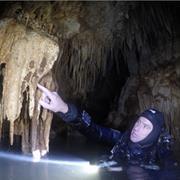
Eduard Gordon Reinhardt is a full professor at McMaster University's School of Earth, Environment and Society, specializing in marine geoarchaeology and paleoclimatology. He joined McMaster in 1998 as an assistant professor, advancing to full professorship. His research focuses on coastal environmental change, climate-sea level interactions, and underwater archaeological sites in the Mediterranean, Middle East, and Mesoamerica (Yucatan Peninsula). Education: B.A. Honours in Directed Interdisciplinary Studies (Marine Geoarchaeology), Carleton University (1989–1993) PhD in Earth Sciences (Senate Medal recipient), Carleton University (1993–1996) Postdoctoral fellowships (Killam and NSERC), Dalhousie University (1996–1998) Research Interests: Marine geoarchaeology and submerged cave systems Reconstructing paleoenvironments using sediment cores and isotopic analysis Impact of climate change on human populations Geochemical proxies (e.g., μXRF, clumped isotopes) His work integrates geology, archaeology, and environmental science to explore human-environment interactions. Key Research Trends: Recent articles emphasize tropical cyclone impacts in Mesoamerica, Maya/Paleoindian site access via submerged caves, and Holocene sea-level changes. Methods include high-resolution core scanning (Itrax XRF) and isotopic analysis. Awards: Senate Medal for PhD research (Carleton University) Teaching & Fieldwork: Instructs courses in Paleoecology, Coral Reef Environments, and Advanced Paleoenvironmental Analysis. Leads field studies in karst systems (e.g., Yucatan Peninsula) and coastal archaeological sites. Labs/Teams: Active in McMaster's geoarchaeology and paleoclimatology research groups, collaborating on projects involving underwater cave systems and ancient harbors (e.g., Caesarea Maritima, Israel).
Oscar Branson is an Official Fellow and Director of Studies in Natural Sciences (Earth Sciences) at Queens' College, University of Cambridge. His academic career focuses on understanding Earth's climate history through the study of marine microfossils and biogeochemical processes. His research spans several key areas: Paleoclimatology and paleoceanography Biomineralization processes in marine organisms Geochemical proxies for reconstructing past climate conditions Foraminifera ecology and geochemistry Elemental and isotopic composition of marine carbonates Climate change impacts on marine ecosystems Branson's recent publications demonstrate a strong focus on understanding the fundamental mechanisms behind geochemical proxy systems used in paleoclimate research. His work combines detailed laboratory analyses with field observations to improve our understanding of how marine organisms incorporate chemical signatures into their shells. His research has particular relevance for understanding how current climate change compares to natural variability in Earth's history. Among his notable contributions are advancements in understanding boron isotopes as pH proxies, the mechanisms behind magnesium-calcium ratios as temperature proxies, and the role of symbionts in controlling elemental incorporation in marine microfossils. His methodological innovations, including the development of the Kgen algorithm for carbonate chemistry calculations, have provided new tools for the paleoclimate research community. As Director of Studies in Earth Sciences at Queens' College, Branson plays a key role in undergraduate education and mentorship within the Natural Sciences Tripos at the University of Cambridge.