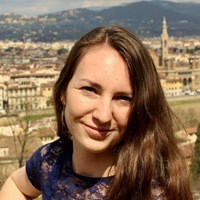
Dr. Keyron Hickman-Lewis is a Lecturer in Planetary Exploration at Birkbeck, University of London, with academic positions spanning institutions like the Natural History Museum and Imperial College London. He holds a M.EarthSci from the University of Oxford (2015) and a Ph.D. in Earth Sciences from CNRS Orléans and Università di Bologna (2019). His research focuses on the co-evolution of Earth and early life, planetary exploration (including Mars 2020 Perseverance rover missions), and technique development for analyzing ancient microbial biosignatures. Key interests include microbial mats, Archaean geology, and astrobiological field analogs like Lake Abhe (Djibouti) and Martian environments. Notable achievements include identifying Earth's oldest microbial traces (3.5 Ga) and studying Mars sample return strategies. He is a Fellow of the Geological Society (FGS) and serves on the European Astrobiology Network Association Council. Teaching includes modules on planetary science, geology, and remote sensing. Supervision focuses on astrobiology and planetary exploration topics. Key publications highlight breakthroughs in microbial mat preservation, Mars sample analysis, and Early Archaean stromatolite interpretation. Collaborations span international institutions including NASA, CNRS, and the University of Bologna.
Dr Michael Montenari is a Lecturer in Palaeontology and Stratigraphy at Keele University's School of Life Sciences. He serves as Programme Director for Environmental Science and Sustainability and Environmental Management. His academic career includes a PhD (1999) and Habilitation (2005) in Earth Sciences, with postdoctoral research at the CNRS (France) and University of Tübingen (Germany). Education: Dr. rer. nat. (PhD) in Earth Sciences, Friedrich-Alexander-Universität Erlangen-Nürnberg (1999) Diplom-Geologe (MSc), Albert-Ludwigs-Universität Freiburg (1996) Studies at Université-Louis-Pasteur (France), UCLA (USA), and others Research Interests: Focuses on Palaeoecology, microfossil analysis, stromatolite genesis, and geodynamic processes in the Variscan Belt and Rodinia fragmentation. His work integrates stratigraphy, geochemistry, and sedimentology to explore Earth's geological history. Teaching & Advising: Leads modules in Palaeontology, Stratigraphy, and fieldwork. Supervised PhD students including Steve Rogers (2015) and Tim Ferriday (2014). Active in interdisciplinary environmental science programs. Recent Research Trends: Articles emphasize Carboniferous and Jurassic stratigraphy, geochemical reconstructions of ancient ocean systems, and mineralogical modeling. Highlights include studies on ammonoid taxonomy and Southern Ocean carbon dynamics.
Adrian Parker is a Professor of Geography at Oxford Brookes University's School of Law and Social Sciences. He holds degrees including a DPhil from the University of Oxford. His research focuses on Quaternary science, geoarchaeology, and palaeoecology across the Middle East, North Africa, Southern Africa, and southern England. Key areas include multi-proxy environmental reconstruction using phytoliths, pollen, and geochemistry, with emphasis on understanding human-environment interactions during critical climatic transitions. Dr. Parker leads the Human Origins and Palaeo Environments (HOPE) group within the Centre for Environment and Society (CES). His fieldwork spans UAE, Saudi Arabia, Yemen, and Lesotho, addressing topics like Holocene socio-ecological systems, Neolithic settlement patterns, and climate change impacts. Recent projects include a £41,900 Ras al-Khaimah-funded geoheritage study and a £1,563 University of Michigan collaboration on phytolith analysis. He teaches modules on Quaternary Environmental Change and Arid Zone Environments. Professional accolades include Fellowships from the Society of Antiquaries, Royal Geographical Society, Royal Anthropological Institute, and Higher Education Academy. His advisory work includes mentoring two active PhD students: Sophie Edwards (hominoid craniodental morphology) and Kira Raith (Quaternary climate-landscape dynamics). Publications span over 40 peer-reviewed articles in journals like Quaternary Science Reviews , Scientific Reports , and Antiquity , with a focus on integrating geological and archaeological evidence to reconstruct past environments and human adaptations. His research bridges archaeology, geology, and environmental science, emphasizing interdisciplinary approaches to understanding long-term socio-ecological systems.
Oscar Branson is an Official Fellow and Director of Studies in Natural Sciences (Earth Sciences) at Queens' College, University of Cambridge. His academic career focuses on understanding Earth's climate history through the study of marine microfossils and biogeochemical processes. His research spans several key areas: Paleoclimatology and paleoceanography Biomineralization processes in marine organisms Geochemical proxies for reconstructing past climate conditions Foraminifera ecology and geochemistry Elemental and isotopic composition of marine carbonates Climate change impacts on marine ecosystems Branson's recent publications demonstrate a strong focus on understanding the fundamental mechanisms behind geochemical proxy systems used in paleoclimate research. His work combines detailed laboratory analyses with field observations to improve our understanding of how marine organisms incorporate chemical signatures into their shells. His research has particular relevance for understanding how current climate change compares to natural variability in Earth's history. Among his notable contributions are advancements in understanding boron isotopes as pH proxies, the mechanisms behind magnesium-calcium ratios as temperature proxies, and the role of symbionts in controlling elemental incorporation in marine microfossils. His methodological innovations, including the development of the Kgen algorithm for carbonate chemistry calculations, have provided new tools for the paleoclimate research community. As Director of Studies in Earth Sciences at Queens' College, Branson plays a key role in undergraduate education and mentorship within the Natural Sciences Tripos at the University of Cambridge.
Dr. Adam McArthur is the Director of the Turbidites Research Group and leads the Sedimentary Processes Research Cluster at the University of Leeds' School of Earth and Environment. He specializes in deep-marine sedimentology, particularly turbidite systems, and employs multidisciplinary approaches including outcrop analysis, organic geochemistry, and seismic interpretation. His work spans global locations such as New Zealand, Mexico, Brazil, and the North Sea. Education: PhD in Geology (University of Aberdeen, 2012) BSc (Hons) in Geology (University of Aberdeen) Research Interests: Multidisciplinary study of sedimentary environments Interaction of sedimentary processes with active tectonics Deep-water systems evolution, including channel and canyon architecture Palynology and organic matter studies for paleoenvironmental reconstruction Key Projects: East Coast Basin Project (New Zealand) Baja California deep-marine systems Hikurangi Margin sedimentation studies (New Zealand) Advising & Collaboration: Supervises 13+ PhD/MSc students globally Co-leads international field and lab-based research Labs/Teams: Turbidites Research Group (TRG) - focuses on advancing understanding of deep-marine sedimentary systems through integrated field, experimental, and analytical approaches.
Simon Caporn is a Professor in Ecology and Environmental Science at Manchester Metropolitan University, where he leads research on peatland and heathland ecosystem responses to anthropogenic pressures including nitrogen deposition and climate change. His work integrates long-term field experiments with policy-relevant applications for habitat restoration and carbon management. His academic background includes: BSc in Biology, University of York PhD in Plant Physiology, University of Sussex Caporn's research program focuses on nitrogen pollution impacts, peatland carbon dynamics, and restoration ecology. He has maintained a nitrogen manipulation experiment on Welsh heather moorland for over 20 years under DEFRA's acidification research programme and led NERC-funded climate change experiments examining warming and water table effects on raised bogs. Current collaborations with Moors for the Future prioritize Sphagnum reintroduction in Southern Pennine blanket bogs, addressing both biodiversity recovery and carbon sequestration potential. His methodology combines manipulative field studies with metabolic fingerprinting and stable isotope analysis to develop bioindicators of ecosystem stress. Analysis of his recent publications reveals evolving research trajectories: early work established nitrogen deposition thresholds for semi-natural habitats, while current studies integrate restoration engineering (e.g., micropropagated Sphagnum), climate adaptation strategies, and novel applications like carbon credit schemes. Technological advancements feature prominently, including smartphone-based GNSS for field surveys and high-resolution wetness mapping for restoration planning. The consistent thread remains understanding how peatland ecosystems regulate carbon storage under environmental change. Caporn directs significant externally funded research initiatives: DEFRA Terrestrial Umbrella Programme (long-term nitrogen deposition impacts) NERC climate manipulation experiment on Welsh ombrotrophic peatlands CARE-PEAT partnership (EU-funded carbon loss reduction from peatlands) Moors for the Future blanket bog restoration monitoring His field research teams operate across UK peatlands using permanent experimental plots, remote sensing validation, and interdisciplinary approaches linking plant physiology with landscape-scale carbon cycling. Current efforts emphasize translating ecological findings into practical restoration metrics and policy frameworks for peatland conservation.
University of the Highlands and IslandsUnited Kingdom
Steven Andrews is a Lecturer in Geography at the University of the Highlands and Islands (UHI) Inverness and serves as Project Coordinator for the Doctor Flow Country World Heritage Project at the Environmental Research Institute. He holds an Honorary Research Fellow position at the University of Aberdeen since 2015. His research focuses on climatic influences on sedimentation in continental settings, particularly in lakes and North Atlantic regions. He has conducted extensive fieldwork in East Greenland and Northern Scotland, contributing to hydrocarbon exploration studies through industry-funded projects. Education: PhD in Climatic Cyclicity from the University of Aberdeen (2008) Research Interests: Paleoclimatology, sedimentological records of extinction events (P-T & T-J), and North Atlantic basin studies Andrews has published extensively on topics including hydrocarbon trap dynamics, Triassic mudstones, and Boltysh Crater sedimentology. He was awarded the prestigious Polar Medal in 2024 for his contributions to Arctic research. His work bridges academic research with industrial applications in petroleum geology and environmental monitoring. Awards: Polar Medal (2024) Collaborations: Active in multi-institutional projects involving University of Aberdeen, industry partners, and international teams
Ed Garrett is an Assistant Professor (Lecturer) in Physical Geography within the Department of Environment and Geography at the University of York. He joined the department in 2019 after holding research and teaching positions at the Geological Survey of Belgium and Durham University, where he also completed his PhD. Garrett leads the Creating a Climate Resilient World research group and currently serves as Principal Investigator for two active research projects: Partnership on sea-level change along Brazilian shores (SLABS) funded by NERC (2023-2025) and Connecting Blue Carbon Research (2023). Garrett's research program focuses on the globally significant and often interlinked hazards of subduction zone earthquakes, tsunamis, and sea-level rise. He utilizes sedimentary and geomorphic records to reconstruct the timing, rates, and magnitudes of these processes over annual to multi-millennial timescales. His methodological approach draws on diverse techniques including field-based surveying, sedimentology, microfossil analysis, geochronology and geophysical modeling. A significant new strand of his research examines carbon storage in intertidal environments, particularly saltmarsh blue carbon ecosystems and their relationship with sea-level rise. Analysis of Garrett's recent publication record (2021-2025) reveals three major research trajectories: (1) paleoseismic and paleotsunami studies focusing on megathrust earthquakes in Chile, New Zealand, and Japan; (2) relative sea-level reconstruction using microfossil and geochemical proxies across multiple global regions including the UK, Ireland, Australia, and the USA; and (3) blue carbon research examining organic carbon accumulation in saltmarshes and the implications for climate change mitigation. His work demonstrates strong international collaboration, with field sites spanning six continents and partnerships with researchers from over 20 countries. Garrett has secured significant research funding through the Natural Environment Research Council (NERC), including as Principal Investigator for the Partnership on sea-level change along Brazilian shores project (2023-2025) and the Connecting Blue Carbon Research project (2023). His research group includes multiple postdoctoral researchers and has produced over 40 peer-reviewed publications, two book chapters, and one edited book since 2013. Garrett leads the Creating a Climate Resilient World research group at York, which focuses on understanding past environmental changes to inform future climate resilience strategies. The group maintains active field programs in Chile, New Zealand, the UK, and Brazil, with particular expertise in coastal sedimentology, microfossil analysis, and blue carbon assessment. The group collaborates extensively with international partners including the Geological Survey of Belgium, Durham University, and research institutions in Chile, Japan, and Australia.
Dr. Alix Cage is a Senior Lecturer in Environmental Change at Keele University's School of Life Sciences, where she also serves as Director for PGT Research Programmes. She holds a BSc in Geological Oceanography from Bangor University, an MSc in Quaternary Science from Royal Holloway University, and a PhD in Physical Geography from the University of St Andrews. Her office is located in the William Smith Building (WS1.14). Her research focuses on reconstructing marine environmental changes using multi-proxy approaches with specialties in: High-resolution palaeoceanography of shelf seas Holocene and late-Holocene climate variability Benthic foraminifera as palaeoenvironmental indicators Land-ocean interactions in Arctic environments Geochemical and biological proxy development Recent publications demonstrate strong emphasis on millennial-scale climate variability, Antarctic ice-ocean interactions, and coastal carbon dynamics, with methodologies spanning sedimentology, micropalaeontology, and geochemical analysis. Research consistently addresses climate-ocean connections across the North Atlantic-Arctic domain. She has supervised multiple MSc students investigating palaeoceanography in the Canadian Arctic and Celtic Sea regions. In 2012, she secured a NERC Small Grant as Co-Investigator for the 'Millennium' project studying Holocene tephra constraints on North Atlantic climate variability.
Dr. Steven Rogers is a Senior Lecturer in Geology and Programme Director for Geology programmes at Keele University's School of Geography, Geology and the Environment. His research spans sedimentary geology, geoscience education, and curriculum innovation, with particular focus on decolonizing geoscience curricula and developing immersive learning experiences. Dr. Rogers leads pedagogical projects including the GGE-UROP undergraduate research programme and The Student Journal of Natural Sciences. His geological research examines Paleozoic carbonate systems, microfossil analysis, and continental sedimentology. Recent publications demonstrate strong commitment to improving diversity in geosciences through projects like The Equator Project, which addresses barriers for ethnic minority students in Geography, Earth and Environmental Science postgraduate research. Educational innovations include developing virtual fieldwork experiences, interactive digital platforms for laboratory simulations, and patchwork assessment methodologies. Dr. Rogers serves as Associate Editor for Geoscience Communications and holds Senior Fellowship of the Higher Education Academy.
Dr. Savannah Worne is a Vice-Chancellor Independent Research Fellow at Loughborough University's Department of Geography and Environment (School of Social Sciences and Humanities). She holds a PhD in Geography from the University of Nottingham. Her research focuses on paleoclimatology, geochemistry, and oceanography, with emphasis on reconstructing past climate changes using isotopic and sedimentological techniques. She is also affiliated with Nottingham Trent University as an Honorary Research Associate and Hourly Paid Lecturer. Education: PhD in Geography, University of Nottingham (2015-2020) Her research interests include Bering Sea oceanographic dynamics, Mid-Pleistocene Transition climate shifts, and subarctic Pacific nutrient cycling. She employs stable isotope analysis, sediment core studies, and paleoceanographic modeling to explore these topics. Recent work highlights ocean deoxygenation, silicic acid cycling, and sea ice response to climate change. Dr. Worne has contributed 13 key publications spanning 2018–2025, focusing on marine geochemistry, paleoclimate reconstruction, and ocean circulation patterns. Her articles emphasize isotopic methods and their application to understanding long-term climate systems. Awards: Fellow of the Higher Education Academy (2022–present) Committees: Member of the Office for Environmental Protection's College of Experts; Chair of the Silicofossil Group (Micropalaeontological Society) Her professional roles include peer review for journals like Quaternary Science Reviews and Palaeoceanography and Paleoclimatology. She collaborates with institutions like the British Geological Survey and AECOM, contributing to environmental consulting and geological research.
Dr. Guy Harrington is an Honorary Senior Lecturer in Palaeobiology, jointly affiliated with the University of Birmingham and the British Geological Survey. He holds a PhD in Cenozoic Palynology from the University of Sheffield, an MPhil in Biological Sciences from the University of Cambridge, and a BSc in Geography and Geology from Keele University. His research focuses on Cenozoic palynology, biostratigraphy, and the response of plant communities to climate change, particularly during the Paleocene-Eocene Thermal Maximum (PETM). He has supervised numerous PhD students, including Marcelo Mota, Carlos D’Apolito, and Philip Jardine, and teaches courses on palynology and micropalaeontology. His work includes projects with the International Ocean Discovery Program (IODP) and the Bighorn Basin Coring Project, exploring deep-time environmental dynamics and microbial ecosystems in coalbed sediments. Dr. Harrington’s professional roles include serving as Past-President of AASP (The Palynological Society) and associate editor for Paleoceanography . His research integrates field studies, geochemical analyses, and palynological data to address macroecological patterns and climate-driven ecological shifts.
Anna Davies-Barrett is a Research Fellow in human palaeopathology at the University of Leicester’s School of Archaeology and Ancient History, part of the College of Social Sciences, Arts and Humanities. She leads UKRI-funded research on the historical impacts of tobacco consumption, focusing on respiratory and oral health in industrial-era populations. She holds a PhD from Durham University (2019) and an MSc from the University of Sheffield (2015). Her research integrates osteological analysis, environmental studies, and intersectional theory to explore disease prevalence in ancient and historical societies. Key areas include respiratory diseases linked to aridification and urbanization in the Middle Nile Valley, dental health indices, and methodological advancements in palaeopathology. Education : PhD in Palaeopathology (Durham University / British Museum, 2015–2018) MSc Human Osteology and Funerary Archaeology (University of Sheffield, 2014–2015) BA Archaeology and Anthropology (University of Kent, 2011–2014) Awards : PPA European Annual Conference Early Career Award (2025) BABAO Bill White Prize for Student Poster (2016, 2017) Her work investigates how environmental changes, cultural practices, and social stratification influenced health outcomes. Recent projects include developing an ‘Index of Oro-dental Disease’ and analyzing tobacco’s impact on skeletal health in 16th–19th century Europe. She also serves as an Early Career Researcher Representative and Associate Fellow of the Leicester Institute for Advanced Studies. Publications span respiratory disease trends, dental pathology, and methodological innovations, with contributions to journals like International Journal of Paleopathology and PLOS ONE . Current research emphasizes metabolomics and osteological biomarkers to trace historical tobacco use.
Professor Jennifer Pike is a faculty member and Head of School in the School of Earth and Environmental Sciences at Cardiff University, where she has been a Reader since 2013 and previously held positions as Lecturer and Senior Lecturer since 1997. Her research focuses on marine diatoms and their application in reconstructing paleoceanographic and paleoclimatic conditions, especially in the Antarctic region. PhD in Oceanography, University of Southampton (1996) BSc in Geology, University of Birmingham (1991) Her research interests include marine diatoms, Antarctic palaeoclimate, ice-ocean interactions, isotopes from biogenic silica, and sub-annual to millennial-scale palaeoceanography. She uses diatom assemblages and oxygen isotopes in biogenic silica to infer past sea-ice extent, glacial meltwater discharge, and ocean productivity. Her work spans polar and temperate regions, with a strong emphasis on high-resolution sediment records. Her recent publications (2020–2024) reflect a sustained focus on Antarctic and polar ocean dynamics, with studies on silicon isotopes, diatom seasonality, sea-ice reconstructions, and biogeochemical cycling. These articles appear in leading journals such as Nature Geoscience , Nature Communications , and Paleoceanography and Paleoclimatology , indicating her work’s high impact. Thematic trends include proxy development, climate feedback mechanisms, and paleoenvironmental reconstruction using microfossils and geochemistry. Jennifer Pike has not been explicitly mentioned as receiving scientific awards in the provided text. She has supervised or collaborated on numerous research projects, evident from her extensive publication record with diverse co-authors across international institutions. While specific grants are not listed, her involvement in major oceanographic programs such as the Ocean Drilling Program suggests significant research funding support. She has contributed to authoritative reference works, including the Encyclopedia of Quaternary Science . Her research is conducted through laboratory and field-based analysis of marine sediments, particularly laminated sequences that preserve high-resolution climate records. She is part of a broader research team at Cardiff University focused on Earth system science, paleoclimatology, and environmental change.
Dr Christopher Smart is an Associate Professor (Reader) in Palaeontology at the University of Plymouth's School of Geography, Earth and Environmental Sciences. He is also the Stage 1 Earth Sciences Leader and a member of the Marine Institute Strategy Team. His research focuses on micropalaeontology, palaeoceanography, and the impacts of ocean acidification, with a particular emphasis on foraminifera and geological boundary events like the Cretaceous-Paleogene (K/Pg) boundary. He has supervised numerous PhD, MRes, MSc, and MGeol students across topics ranging from marine microfossil analysis to climate change effects on marine ecosystems. Dr Smart teaches modules in palaeontology, micropalaeontology, and general geology at undergraduate and postgraduate levels, including leadership of the Ocean Geoscience module (GEOL2016). He has organized and led fieldwork trips across the UK and internationally, such as residential field studies in Cornwall, Wales, and East Greenland. His research outputs include datasets on foraminifera assemblages (e.g., ForCenS-LGM), studies on historical ocean acidification events, and analyses of volcanic impacts on marine biota. His work contributes to the UN’s Sustainable Development Goals (SDGs), particularly those addressing climate action and sustainable marine ecosystems. His recent studies explore modern analogues for ancient environmental crises, such as the response of marine organisms to high CO2 environments and post-eruption ecological recovery in volcanic regions like Montserrat.


 24.01.25.jpg)