Dr. Fei Deng is a Research Fellow at the University of New South Wales (UNSW), affiliated with the Graduate School of Biomedical Engineering. He holds prestigious fellowships including the NHMRC EL1 Fellowship and NSW Cancer Institute ECR Fellowship. His research focuses on CRISPR-based biosensing, point-of-care diagnostics, and in vivo biosensing devices, with over 45 journal articles and $12M in grants secured. Key contributions include advancements in CRISPR/Cas biosensors, liquid-metal-driven nanomaterials, and photodynamic therapy for cancer treatment. Awards include the Royal Society of NSW Early Career Award and ECAN ECR Award. Education: PhD in Biomedical Engineering from UNSW (Australia). Research interests span biosensing technologies, CRISPR applications, and diagnostic innovations. Recent work emphasizes ultrasensitive detection systems, with notable publications in Nature Communications , ACS Nano , and Biosensors and Bioelectronics . He has co-founded Casbio Pty Ltd and advises Avicena Systems Limited.
Dr. Giancarlo Pascali is a Conjoint Associate Professor at the School of Chemistry, UNSW Sydney , and Radiochemistry Team Leader at ANSTO's Camperdown cyclotron site. With a PhD in "Innovative Biomedical Technologies" from the University of Lecce (2004), he has held research positions at IFC-CNR , NIH , and GMP facilities in Milan and Pisa. His expertise spans radiochemical methods , radiopharmaceutical development , and microfluidic automation for nuclear medicine production. Education: PhD in Innovative Biomedical Technologies, University of Lecce (2004) BSc in Chemistry, University of Pisa (2001) Research interests focus on M 3 : Molecules, Methods, Machines . In Molecules , he designs radiopharmaceuticals for cancer , dementia , and inflammatory diseases . For Methods , his work explores photochemistry , electrochemistry , and mechanochemistry to label biomolecules with 18 F and other isotopes. Under Machines , he pioneers microfluidic systems for automated radiochemistry, emphasizing safety and process reliability . Editorial & Leadership Roles: Editorial Board Member of Nuclear Medicine and Biology , Contrast Media & Molecular Imaging , and Current Radiopharmaceuticals Executive Board of ANZSNM , ARTnet , and ASMI Asia-Oceania Director and iSRS2025 Chair for SRS
Dr. Stephen Warren-Smith is a Senior Research Fellow at the Future Industries Institute, University of South Australia (UniSA), where he conducts cutting-edge research in optical fiber technology and photonics. He is affiliated with the Laser Physics and Photonic Devices Laboratories within UniSA STEM (Science, Technology, Engineering and Mathematics), and serves as a Research Degree Supervisor for graduate students. Dr. Warren-Smith's primary research interests span optical fiber technology, photonics, and biosensors, with a particular focus on developing novel fiber optic sensing platforms for biomedical and environmental applications. His work encompasses microstructured optical fibers, fluorescence sensing, and the integration of machine learning techniques for enhanced sensor performance. He has made significant contributions to the fields of harmonic generation in optical fibers, NV center-based quantum sensing, and multimode fiber applications. Analysis of Dr. Warren-Smith's recent publications reveals a strong trend toward developing sophisticated fiber optic sensing platforms with diverse applications. His work demonstrates increasing integration of advanced materials (like diamond with NV centers) and computational methods (particularly deep learning) to overcome traditional limitations in optical sensing. The research spans fundamental physics of light-matter interactions in fibers to practical applications in medical diagnostics, environmental monitoring, and industrial process control. A notable pattern is the development of multi-parameter sensing capabilities within single fiber platforms, enabling simultaneous measurement of various physical and chemical properties. Dr. Warren-Smith has secured significant research funding including ARC Future Fellowships (FT200100154), ARC Discovery Projects (DP190102896), and support from the Australian National Fabrication Facility (Optofab Node) utilizing Commonwealth and South Australian State Government resources. His research has received substantial citation counts, with several papers cited multiple times in Web of Science and Scopus. Dr. Warren-Smith leads research activities within the Laser Physics and Photonic Devices Laboratories at UniSA STEM. His team specializes in the design, fabrication, and characterization of advanced optical fiber devices, with particular expertise in microstructured optical fibers, suspended core fibers, and integrated photonic sensing platforms. The laboratory maintains strong connections with the Australian National Fabrication Facility (Optofab Node) for advanced device fabrication capabilities and collaborates extensively with institutions including RMIT University, University of Melbourne, University of Adelaide, and international partners in China.
Professor Elena Pirogova is a faculty member of RMIT University’s School of Engineering, part of the STEM College. She holds the roles of Professor and Associate Dean of the Electrical & Biomedical Engineering Discipline. Her research focuses on biomedical engineering, biomaterials, therapeutic peptides, and biological effects of electromagnetic radiation. She earned her PhD in Biomedical Engineering from Monash University (2002) and a BEng (Hons) in Chemical Engineering from the National Technical University of Ukraine (1991). Academic Positions: Professor (2020–present), Associate Dean (2018–present), and roles in research leadership since 2002. Teaching: Coordinates courses in biomedical engineering design, project management, and professional engineering projects at both undergraduate and postgraduate levels. Research: Over 170 publications in areas like tissue engineering, microfluidics, and wearable technologies. Key projects include biofabrication of scaffolds, electromagnetic radiation effects on cells, and smart textile applications. Supervision: Advises on advanced projects involving biomaterials, medical devices, and interdisciplinary engineering solutions. Her work bridges engineering and healthcare, emphasizing translational research in regenerative medicine and medical technology. She is active in curriculum innovation, particularly post-pandemic educational strategies.
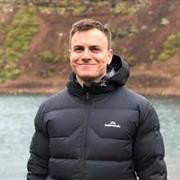
Andrew Care is a Senior Lecturer and Academic Director of the Biologics Innovation Facility (BIF) at the University of Technology Sydney (UTS), within the School of Life Sciences. He holds a PhD in Chemistry and Biomolecular Sciences from Macquarie University and has held prestigious fellowships, including the Cancer Institute NSW Early Career Fellowship and UTS Chancellor's Research Fellowship. His research focuses on combining synthetic biology and nanomedicine to engineer biologically-derived nanoparticles for drug delivery and vaccines. He is actively involved in industry collaborations, notably as a Chief Investigator in the ARC ITRC IDEAL Hub. Teaching and leadership roles include Program Director for the Biomedical Engineering program and coordination of the Australasian Synthetic Biology Challenge, which fosters student innovation. He has been recognized with a UTS Vice-Chancellor’s Teaching Citation and multiple Dean’s Awards for integrating Work Integrated Learning (WIL) and enhancing student engagement. His contributions to education and research excellence have earned awards for collaboration and partnership. Research interests span nanoparticle engineering, neurodegenerative disease therapies, and biomanufacturing. Notable projects include developing an Alzheimer’s vaccine using encapsulin protein cages and investigating nanoparticle interactions in brain cells. His work bridges academia and industry, emphasizing translational applications in healthcare. Awards: UTS Vice-Chancellor’s Research Excellence Award (2024), UTS Teaching Citation (2024), Multiple Dean’s Awards for Science Initiative, Innovation, and Student Experience. Leadership: Academic Lead of BIF, Editor of SYNTHESIS Magazine, and EMCR Representative in research committees. Grants: Providence Foundation Project Grant (2023), ARC IDEAL Hub funding. Andrew’s labs, including the Biologics Innovation Facility, provide advanced training in biomanufacturing and nanomedicine, equipping students and professionals for industry roles. His research aims to address unmet clinical needs through innovative biomedical solutions.
Dr. Mehdi Jafarian is a Senior Lecturer in the School of Chemical Engineering at the University of Adelaide . His work focuses on hydrogen production , CO2 capture , solar thermal energy , and chemical looping combustion . Key research areas include: Solar thermal integration in industrial processes Hydrogen generation via methane pyrolysis CO2 sequestration technologies Advanced water treatment systems Thermochemical energy storage Research Trends : Recent publications emphasize hydrogen production optimization , PFAS removal , and molten metal reactor systems . Sub-fields span flash reactor modeling , hydrodynamic cavitation , and membrane-free electrolysis . Contact : mehdi.jafarian@adelaide.edu.au
Associate Professor Robert Nordon is a faculty member at UNSW Sydney's Graduate School of Biomedical Engineering. He holds an MB BS, BMedSci, and PhD, with research focusing on advanced manufacturing and medical technologies. Since 2016, he has secured over $5M in research grants for projects in point-of-care diagnostics, cell/gene therapy manufacturing, and stem cell science. Research interests span three primary domains: Developing microfluidic single-use disposables for scalable clinical cell production Modeling cardiovascular development using stem cell-based microfluidic systems Creating computational tools for single-cell analysis and lineage tracking His publications (2017-2024) demonstrate strong emphasis on microfluidic device engineering, stem cell dynamics, and biomaterials development. Recurring themes include hematopoietic stem cell expansion, cardiac cell behavior, and peptide-based biomaterials. Significant grants include: ARC Linkage Grant LP160100570: Scaling microfluidics for cell manufacture (2016-2019) ARC Linkage Grant LP160100573: 3D microstructures for medical devices (2016-2019) ARC Linkage Grant LP190100029: Electrophoretic cell sorters (2020-2023) CRC-P: Microbioreactor for affordable cell/gene therapy (2021-2023) Current research trainees include Farzaneh Ziaee and Eric Du.
Pouya Dehghankelishadi is a Research Fellow at Monash University's Department of Drug Delivery, Disposition and Dynamic. His work focuses on developing multi-functional drug delivery systems using porous silicon nanoparticles and gold nanoclusters for cancer treatment, particularly glioblastoma and breast cancer. He holds a PhD from the University of South Australia (2022) and a Doctorate of Pharmacy (PharmD) from Tehran University of Medical Sciences (2014). Education: PhD in Nanomedicine, University of South Australia (2022) Doctorate of Pharmacy (PharmD), Tehran University of Medical Sciences (2014) Research Interests: Targeted drug delivery systems for cancer therapy Nanoparticle engineering (porous silicon, gold nanoclusters) Theranostics and biomedical applications of nanomaterials Radiosensitiser delivery to tumour microenvironment Article Trends: His publications emphasize nanoparticle-based drug delivery systems, with recent work focusing on aptamer-targeted carriers, implantable biosensors, and stimuli-responsive nanocarriers for brain cancer treatment. Themes include nanomedicine design, cancer therapeutics, and biomedical imaging. Advising/Grants: No formal advisees listed. Research is conducted under Prof. Nicolas Voelcker's lab, with a focus on translational nanomedicine. Labs/Teams: Active member of Prof. Voelcker's lab at Monash University, contributing to interdisciplinary research in drug delivery and biomedical engineering.
David Fletcher is an Adjunct Professor at the University of Sydney's School of Chemical and Biomolecular Engineering. He holds a BSc and PhD in Mathematics from the University of Exeter (UK) and a Habilitation à Diriger des Recherches (HDR) from the Institut National Polytechnique de Toulouse (France). His expertise spans computational fluid dynamics (CFD), fluid-structure interaction (FSI), and multiphase flow modeling with applications in biomedical systems, pharmaceutical inhalers, and chemical engineering. Education: BSc Mathematics, University of Exeter (1979) PhD, University of Exeter (1982) HDR in Chemical Engineering, Université de Toulouse (2002) Research Interests: Coupled systems simulation (e.g., combustion, micro-flows, biomedical applications) CFD education and software development Bioinspired heart valve design for pediatric use PFAS degradation via CFD-optimized reactors Key Projects: Polymeric heart valve design collaboration with Cincinnati Children’s Hospital CFD modeling of pharmaceutical inhalers with Macquarie University Bubble column optimization for energy-efficient bioreactors Awards: Recognized among the Top 2% of global researchers in 2019, 2021, and 2023 (PLOS Biology ranking). International Collaborations: France (INP Toulouse), Malaysia (Universiti Malaysia Pahang), UK (University of Birmingham), USA (Ann & Robert H. Lurie Children’s Hospital). Students: Supervised PhD graduates now in academia (China, Saudi Arabia) and industry (Australia, India).
Dr. Francisco Tovar Lopez is a Lecturer at the School of Engineering, RMIT University. He holds a B.Eng in Mechanical Engineering from UNAM and a PhD in Biomedical Engineering from RMIT. His research focuses on advancing biomedical technologies through microfluidics, nanotechnology, and computational modeling. He has pioneered projects in artificial organs, blood clot detection systems, and lab-on-a-chip platforms. Dr. Tovar has secured notable awards including the ARC-DECRA fellowship and Mexico’s SNI-I recognition. His work bridges mechanical engineering with healthcare applications, emphasizing fluid dynamics and biomaterials. Education B.Eng in Mechanical Engineering (UNAM) PhD in Biomedical Engineering (RMIT University) Research Interests Lab-on-a-Chip technologies Micro/nanofabrication Blood flow dynamics and thrombosis Portable diagnostic systems Medical sensor development Recent Article Trends His 2023 work emphasizes ECMO oxygenator thrombosis detection and environmental sensor applications, reflecting growing focus on translational biomedical engineering. Key themes include microfluidic platforms for hematology and integration of nanoscale sensors. Awards DECRA-ARC Fellow (2012) VC Research Fellow (2012) National Research System Level 1 (Mexico, 2014) Advising Open to PhD supervision in areas like real-time medicine and lab-on-a-chip cancer detection. Active in industry collaborations through projects like Vitalmex Innovamedica.
Brendan Dyett is a Research Fellow at RMIT University, supported by an Australian Research Council Discovery Early Career Award. His research focuses on nanoscale dynamics at interfaces using microscopy and scattering techniques. He investigates lipid nanoparticle-cell interactions, non-wetting thin films, and surface nanobubbles/droplets, with applications in overcoming biological barriers for therapeutic delivery. He is affiliated with RMIT’s Research & Innovation Portfolio and teaches courses such as CHEM1015 (Environmental Chemical Issues) and ONPS2186 (Applied Science Project). His research interests span colloid and surface chemistry, nanomedicine, and modeling/simulation. He contributes to UN Sustainable Development Goals 3 (Good Health) and 10 (Reduced Inequalities). Recent projects include developing lipid nanocarriers for mRNA delivery and antimicrobial peptide encapsulation. Awards: Australian Research Council Discovery Early Career Award Grants: ARC-funded research on lipid nanoparticle mechanistic studies Collaborations: Industry projects and media inquiries welcomed His work bridges fundamental materials science with biomedical applications, emphasizing nanostructured systems for drug delivery and disease treatment.
Dr. Gungun Lin is a Senior Lecturer and Senior Research Fellow at the School of Mathematical and Physical Sciences, University of Technology Sydney (UTS). He is also a core member of the Institute for Biomedical Materials and Devices (IBMD). His academic journey includes a Master of Science from the University of Ulm (Germany) and a PhD (Summa Cum Laude) from Chemnitz University of Technology (Germany). Dr. Lin’s research focuses on microfluidics, lab-on-a-chip technologies, magneto-MEMS, and biomedical applications of smart micro/nanorobots. He has led over $6M in research funding, including ARC DECRA and NHMRC fellowships. Research Interests: Dr. Lin’s work spans fundamental and applied aspects of microfluidics, magnetic microrobots, biosensing, and functional nanomaterials. He investigates magneto-electrical properties of nanostructures for sensing and actuation, and develops high-dimensional bioanalysis tools using advanced materials and microfabrication techniques. Recent projects include in vivo imaging systems, wearable sensors, and tumor organoid models for drug screening. Grants & Awards: He has secured major grants including ARC Discovery Projects (DP250101003), NHMRC Early Career Fellowships, and ARC IDEAL Hub funding. His awards include the 2024 Vice Chancellor's Award for Research Excellence and 2023 Dean’s Award for Science & Collaboration. Teaching & Supervision: Dr. Lin teaches courses like Chemistry & Materials Science and Advanced Nanomaterials. He supervises PhD/Master’s students in microfluidics, microrobotics, and biomedical engineering. Notable supervisees include Zelyu Chen (PhD candidate, 2023–present) and Guocheng Fang (PhD alumnus). Labs & Collaborations: His lab is part of UTS’s ARC High-throughput Device Fabrication Facility. Collaborations span industries and institutions like the Australia-China Joint Research Center for Point-of-Care Testing and the NHMRC.
Dr. Bill Soderstrom is an ARC Future Fellow and leads the Microbial Super-Resolution Microscopy Lab at the Australian Institute for Microbiology and Infection (AIMI), UTS. He holds roles including Program Director for the Bachelor of Advanced Science (Pre-Med and Pharma Majors) and serves on the UTS Academic Board (2023-2024). With a PhD in Biophysics (Stockholm University, 2014) and MSc in Engineering Physics (KTH & Karolinska Institute), his research focuses on bacterial morphology during UTIs, employing advanced imaging and genetic techniques. His lab develops methodologies like cryo-CLEM and vertical imaging of bacteria to study cell division dynamics. Key achievements include securing $3M+ in grants (ARC, MRFF), pioneering UTI vaccine development, and receiving the Dean's Award and FASM Fellowship. His work impacts medical imaging, microbial pathogenesis, and antibiotic alternatives. Education: - PhD in Biophysics, Stockholm University, 2014 - MSc in Engineering Physics (KTH/Karolinska Institute), 2010 Research Interests: Utilizing super-resolution microscopy and microfluidics to investigate UTI-causing bacteria (e.g., UPEC, Klebsiella) under stress. Projects include identifying division inhibitors, imaging protein complexes in live bacteria, and developing mRNA vaccines for UTIs. Lab innovations: cryo-CLEM, vertical bacterial imaging, and multi-species infection models. Grants & Collaborations: - $1.8M MRFF grant for UTI mRNA vaccine (2023) - ARC Discovery Project on DamX dynamics (2021) - Collaboration with CSIRO/UNSW on vaccine development Labs & Teams: Lab webpage: soderstromlab.com Interdisciplinary team includes postdocs (e.g., Dr. Alaska Pokhrel), PhD/Master’s students, and international collaborators (OIST Japan, Institut Cochin France).
Dr. Senthil Arumugam is a Senior Lecturer at Monash University's Biomedicine Discovery Institute, specializing in cell biology and developmental biology. He holds a PhD from the Max Planck Institute of Molecular Cell Biology and Genetics and conducted postdoctoral research at the Curie Institute. His work focuses on intracellular trafficking mechanisms, particularly endosomal dynamics and their roles in development, using advanced imaging techniques like lattice light-sheet microscopy and adaptive optics. He leads projects on EHD proteins in cellular physiology and HIV capsid cargo transport. Dr. Arumugam is also an Editor-in-Chief of BMC Biology and actively supervises PhD students. Education: PhD (Max Planck Institute), M.Sc. (TIFR), B.Sc. (Chemistry) External roles: Former Group Leader at UNSW (2016–2019), Visiting Researcher at National Centre for Biological Sciences Research interests include self-organization of molecules, advanced fluorescence imaging, and computational modeling. His recent studies explore stochastic intracellular transport dynamics and the toxic mechanisms of amyloid-β oligomers. Collaborations span international institutions, emphasizing interdisciplinary approaches to cellular and developmental biology. Publications highlight contributions to understanding endosomal maturation, gene silencing in plants, and HIV capsid functions. His lab employs cutting-edge microscopy techniques to visualize cellular processes in living tissues, advancing insights into developmental patterning and disease mechanisms.
Victor Cadarso Busto is an Associate Professor in the Department of Mechanical and Aerospace Engineering at Monash University, Australia, and a founding member of the Centre to Impact Antimicrobial Resistance (AMR). He holds leadership roles in strategic groups like Community Engagement and Industry. His expertise spans applied micro/nanotechnologies, photonics, microfluidics, and biosensors, with a focus on advancing life sciences and biomedical engineering. Dr. Cadarso earned his PhD in Physics from the Universitat Autònoma de Barcelona. He has held postdoctoral fellowships, including a Marie Curie Fellowship (2009–2012) and an Ambizione Fellowship at the Paul Scherrer Institute. Since 2016, he has led the Applied Micro and Nano-Technology Lab at Monash, developing scalable technologies for biological applications, antimicrobial surfaces, and climate change mitigation. His research addresses critical challenges such as antimicrobial resistance, sustainable regenerative medicine, and reducing methane emissions from livestock. He has pioneered novel devices like SU-8-based MOEMS, commercialized polymers, and founded two micro/nanotechnology startups. Key collaborators include institutions like the Australian Research Council and industry partners such as PolVax Pty Ltd. Recent projects include developing acoustic-based cell imaging systems, microfluidic biosensors for bacterial detection, and non-invasive embryo metabolic imaging. His work aligns with UN Sustainable Development Goals, particularly in health, clean energy, and innovation.