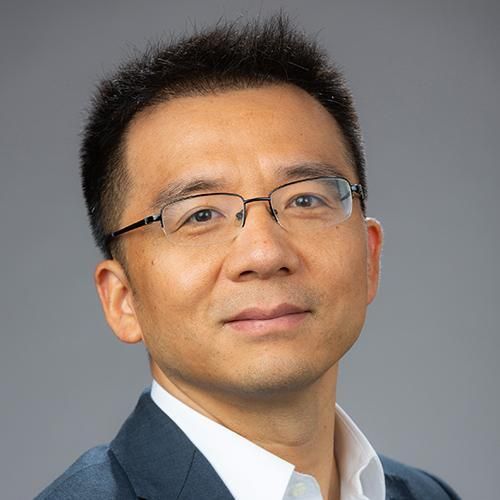
John G Georgiadis is the Interim Chair and R. A. Pritzker Professor of Biomedical Engineering at Illinois Institute of Technology's Armour College of Engineering. He holds affiliations with the Illinois Tech Digital Medical Engineering and Technology (IDMET) Research and Education Center. His academic journey includes a Ph.D. (1987) and M.S. (1984) in Mechanical Engineering from UCLA, and a Diploma in Mechanical Engineering from the National Technical University of Athens (1983). Georgiadis’ research focuses on aging-related changes in the brain and skeletal muscle, leveraging MRI and computational models. Key projects include intramyocellular biotransport, cerebral microvasculature imaging, and multiscale brain mechanics. He has pioneered advancements in magnetic resonance elastography (MRE) for non-invasive tissue stiffness measurement, contributing to clinical applications in neurology and cardiology. His awards include the NSF Presidential Young Investigator Award (1991–1997) and Fellow status in the American Institute for Medical and Biological Engineering. Georgiadis has authored over 150 peer-reviewed publications and holds multiple patents in medical device technology and imaging techniques. His work bridges biomechanical engineering, computational imaging, and clinical diagnostics, with implications for aging populations and chronic disease management. Professional memberships include the Biomedical Engineering Society, IEEE, and AIMBE. His labs focus on translational research, integrating advanced imaging modalities with biomechanical principles to address complex biomedical challenges.
Tony Jun Huang is the William Bevan Distinguished Professor of Mechanical Engineering and Materials Science at Duke University, with additional professorships in Electrical and Computer Engineering and Biomedical Engineering. His research focuses on acoustofluidics, optofluidics, and micro/nano systems for biomedical diagnostics and therapeutics. Ph.D. in Mechanical and Aerospace Engineering (UCLA, 2005) Huang's research has revolutionized biomedical microsystems through acoustofluidic technologies, enabling contactless particle manipulation, exosome isolation, and advanced diagnostic platforms. His work has been cited over 36,000 times (h-index: 102) with 30 issued/pending patents. Recent publications highlight his innovations in acoustic tweezers, extracellular vesicle analysis, topological acoustofluidics, and AI-assisted biomimetic imaging. His lab develops technologies for single-cell analysis, non-invasive diagnostics, and programmable material systems. 2023 Highly Cited Researcher (Web of Science) 2020 Fellow of the National Academy of Inventors (NAI) 2019 Van C. Mow Medal (ASME) 2017 Analytical Chemistry Young Innovator Award (ACS) 2010 NIH Director's New Innovator Award Huang has taught courses including ME 535: Biomedical Microsystems and mentored numerous graduate students through his Duke Acoustofluidics Lab. His lab's technologies are applied in cancer biomarker detection, Alzheimer's diagnostics, and wound healing hydrogels.
Jie Sun is a Guest Researcher at the Quantum Component Physics department of Chalmers University of Technology, focusing on graphene integration and micro-LED display technologies. Active in semiconductor processing and nanomaterials for optoelectronic applications Specializes in transfer-free graphene synthesis and bump-fabrication methodologies Research Trends: Recent work emphasizes micro-LED fabrication (Au-Au micro-bumps, indium bumps), graphene transparent electrodes , and plasmon-enhanced light extraction . Collaborative projects address quantum dot color conversion and localized surface plasmon resonance in nanorod structures. Projects: Involvement in grants from Formas , ÅForsk , and Carl Tryggers Stiftelse for sustainable wastewater treatment, graphene-based microbial fuel enhancement, and 2D material transfer methods.
Mattia Tagliavento is a Researcher in Geochemistry at Goethe University, Frankfurt, specializing in clumped isotope thermometry and carbonate sedimentology. His work focuses on developing Dual Clumped Isotope Thermometry (∆47/∆48) and applying it to study extinct organisms' thermophysiology and ancient climate systems. He operates the Kiel IV + MAT 253Plus system at Goethe University and investigates Jurassic carbonate platforms, cold-water methane seeps, and Mesozoic vertebrate biology. Education: B.Sc. in Earth Science (2013), Sapienza University of Rome M.Sc. in Exploration Geology (2016), Sapienza University of Rome Ph.D. in Geochemistry (2019), University of Copenhagen Research Interests: His studies integrate clumped isotope analysis with stable isotopes and pyrite framboids to unravel diagenetic processes, paleoenvironments, and organism physiology. Key areas include: Thermophysiology of non-avian dinosaurs (e.g., Troodon) Cenozoic climate evolution in Mediterranean basins Diagenetic origins of chalk microfabrics Publications: Recent work emphasizes methodological advances in triple clumped isotope analysis and applications to methane seep systems, eggshell mineralization, and Eocene climate-greening links. His articles bridge geochemistry with paleontology, offering novel insights into organism-environment interactions. Labs & Teams: Active in Goethe University's Geochemistry Lab, focusing on cutting-edge mass spectrometry and clumped isotope workflows. Collaborates internationally on projects involving carbonates, fluid inclusions, and fossilized biominerals.
Dr. Faisal Mohd-Yasin is a Senior Lecturer in the School of Engineering and Built Environment at Griffith University, specializing in Electrical and Electronic Engineering. He has been with Griffith University since 2010, initially as a Lecturer (2010-2016) and promoted to Senior Lecturer in 2017. He is also a member of the Queensland Quantum and Advanced Technologies Research Institute (QUATRI) since 2025. His research spans microelectronics, MEMS technology, compound semiconductors, and electronic sensors/instrumentation, with particular expertise in silicon carbide-based devices for harsh environments. Dr. Mohd-Yasin holds dual PhD qualifications: a Doctor of Philosophy (Engineering) from Multimedia University, Cyberjaya, Malaysia (2014) and a PhD in Engineering from Ibaraki University, Hitachi, Japan (2009). His educational background provides a strong foundation for his interdisciplinary research that bridges semiconductor physics, sensor technology, and electronic circuit design. His research interests focus on Microelectromechanical systems (MEMS), compound semiconductors (particularly $$ ext{SiC}$$), electronic sensors, and electronic instrumentation. He has made significant contributions to the development of silicon carbide MEMS devices for harsh environments, piezoelectric energy harvesters, and noise analysis in microelectronic systems. His work has important applications in sustainable cities (SDG 11), health and well-being (SDG 3), and clean energy (SDG 7). Analysis of his recent publications reveals a strong trend toward MEMS sensor technology, particularly silicon carbide-based devices for harsh environments, and noise analysis in piezoelectric sensors. His research also demonstrates a growing interest in engineering education, with several publications on practical electronics teaching methods. The publications span electrical engineering, sensor technology, energy harvesting, and engineering education, reflecting his interdisciplinary approach to research and teaching. Dr. Mohd-Yasin has successfully supervised multiple doctoral and masters students through completion, including Utkarsh Jadli (PhD on Parasitic Capacitances of Power Transistors), Siti Aisyah Zawawi (PhD on MEMS capacitive microphone), Mei Kum Khaw (PhD on magnetically actuated droplets), Abid Iqbal (PhD on AlN thin films), Noraini Marsi (PhD on MEMS pressure sensors), and Kai Meng Mui (Masters on Power management IC). He has also secured numerous research grants totaling over $1.5 million from various sources including Griffith University, Innovative Manufacturing CRC, IRU, and Malaysian research councils. He is actively involved in professional service as a peer reviewer for the IEEE Sensors Conference series (2015-2025), Micro and Nano Engineering Conference series (2009-2018), and the International Conference on Solid-State Sensors, Actuators and Microsystems (2018-2019). He is also a member of IEEE (Institute of Electrical and Electronics Engineers) since 1997. Dr. Mohd-Yasin's research is primarily conducted through the Queensland Quantum and Advanced Technologies Research Institute (QUATRI), where he collaborates with researchers working on advanced semiconductor technologies and quantum applications. His laboratory work focuses on MEMS fabrication, sensor characterization, and circuit design for harsh environment applications.
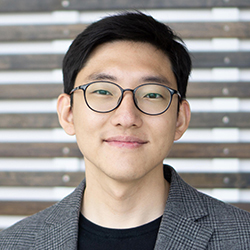
Junsoo Kim is an Assistant Professor of Mechanical Engineering at Northwestern University, leading the Soft Matter Mechanics Lab . His research focuses on understanding mechanics in soft materials, identifying theoretical limits of their properties, and designing molecular structures for applications in robotics, biomedical devices, and polymer pollution solutions. He holds a PhD from Harvard University and undergraduate/graduate degrees from Seoul National University. Research Interests : The lab investigates soft materials' mechanical behavior, with emphasis on hydrogels, polymer networks, and fatigue resistance. Key applications include biomedical devices and sustainable materials. Recent work has explored hydrogel elasticity, fracture mechanics in polymers, and chemical pumps for energy systems. Awards : 2023 Hanwha Non-Tenure Faculty Award Kavli Frontiers of Science Fellow (2023) Scialog Fellow (2023) Teaching : Undergraduate: Solid Mechanics, Thermodynamics Graduate: Fracture Mechanics, Soft Materials His publications span Nature , Science , and Advanced Materials , addressing topics like fatigue-resistant polymers and hydrogel design. The lab emphasizes translational research bridging fundamental science and engineering applications.
Dr. Ajay Achath Mohanan is a Lecturer at the Malaysia School of Engineering, Monash University. He holds a PhD in Engineering from Monash University Malaysia (2016) and a Bachelor of Engineering in Electrical and Computer Systems Engineering from the same institution (2009). His research focuses on flexible surface acoustic wave (SAW) sensors integrated with ZnO nanostructures, transitioning from rigid to flexible substrates. Key areas include piezoelectric ZnO thin films on polymers, low-temperature hydrothermal synthesis of nanowires, and UV-LED photolithography for sensor fabrication. He teaches ECE2071 - Computer Organisation and Programming and ECE3091 - Engineering Design . Mohanan leads or collaborates on projects such as flexible Lamb wave resonators for wastewater monitoring and graphene-integrated acoustic sensors. He has contributed to over 15 peer-reviewed publications since 2009, addressing topics like SAW resonator design, nanowire growth, and semiconductor defect analysis. His research aligns with UN SDG 4 (Quality Education) and SDG 9 (Industry, Innovation, and Infrastructure). Mohanan’s work emphasizes sustainable sensor technologies for environmental and industrial applications. He operates in the Micro and Nano Devices Lab, advancing flexible electronics and wearable sensor platforms.
Bin Li is an Associate Professor and Associate Chair of Actuarial Science in the Department of Statistics and Actuarial Science at the University of Waterloo. He holds a PhD in Applied Mathematical and Computational Sciences (2013, University of Iowa), and master's and bachelor's degrees in Computational Mathematics from Xi’an Jiaotong University (2008 and 2005, respectively). His research focuses on quantum optics and optical engineering, particularly in developing robust laser-driven systems for quantum light sources, solid-state emitters, and trapped ion quantum computing. He has pioneered techniques like Notch-filtered Adiabatic Rapid Passage (NARP) and advanced femtosecond pulse engineering for high-performance quantum systems. His work bridges theoretical quantum physics with experimental optical innovations. Research interests include: Optical driving schemes for quantum emitters Adiabatic inversion and rapid passage methodologies Individual ion addressing in quantum simulators Spin dynamics in 2D perovskite materials Publications span 2018–2025, emphasizing advancements in quantum engineering, ultrafast optics, and atomic-scale systems. While no scientific awards are explicitly listed, his impactful contributions to quantum technologies suggest active recognition in the field. Advising and grants: No specific advisees or grants are documented in the provided texts, though his research activities imply involvement in graduate supervision and funding programs.
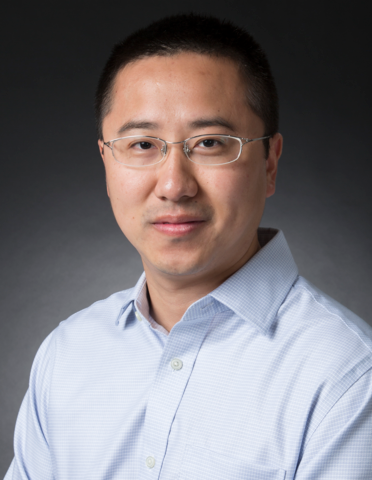
Chi Zhou is an Associate Professor and Director of Graduate Studies in the Department of Industrial and Systems Engineering at the University at Buffalo. He also holds an adjunct appointment as Adjunct Associate Professor in the Department of Computer Science and Engineering. His research focuses on additive manufacturing, rapid prototyping, and advanced material systems. Zhou has a PhD in Industrial and Systems Engineering (2011) from the University of Southern California, with additional degrees in Computer Science and Industrial Engineering. His work bridges manufacturing processes, material science, and computational methods. Key research areas include inkjet printing process optimization, hydrogel-based 3D printing, thermal insulation materials from agricultural byproducts, and smart material systems like magnetorheological metamaterials. He has pioneered methods for real-time process monitoring and defect detection in additive manufacturing. Zhou’s recent publications emphasize sustainable manufacturing solutions, such as bio-based insulation materials and cost-effective silica aerogel production. His contributions also span energy harvesting (e.g., conductive hydrogel generators) and advanced structural designs using triply periodic minimal structures. He has led interdisciplinary projects integrating digital twins for cyber manufacturing systems and geometric deep learning for mass customization applications.
Herbert Shea is a Professor at École polytechnique fédérale de Lausanne (EPFL), where he leads the Microsystems for Space Technologies Laboratory (LMTS) within the School of Engineering and Institute of Microengineering. His research spans soft robotics, electrostatic actuation, and haptic interfaces with significant contributions to wearable technologies and microfabrication techniques. Shea's research focuses on developing novel actuation mechanisms for soft robotics, particularly zipping electrostatic actuators, electroadhesion technology, and dielectric elastomer systems. His work emphasizes miniaturization, energy efficiency, and practical implementation in wearable haptic interfaces for virtual and augmented reality applications. Recent research explores wafer-level microfabrication techniques, stretchable electronics, and novel approaches to fluid manipulation through electrowetting. Analysis of his recent publications reveals a strong trend toward creating more efficient, compact, and versatile soft robotic systems. His research group has made significant advances in reducing actuation voltages while maintaining performance, developing novel fabrication methods for liquid-encapsulated actuators, and creating reliable sensing systems for robotic manipulation. The interdisciplinary nature of his work bridges materials science, electrical engineering, and mechanical design to solve practical challenges in human-robot interaction. Shea collaborates extensively with researchers across multiple institutions, particularly with Samuel Rosset, Vito Cacucciolo, and Florian Hartmann. His research is supported by organizations including the Swiss National Science Foundation and the European Union, reflecting the significance and potential impact of his work in soft robotics and wearable technologies.
Kevin T. Turner is the John Henry Towne Department Chair and Professor of Mechanical Engineering and Applied Mechanics at the University of Pennsylvania's School of Engineering and Applied Science, with a secondary affiliation in Materials Science and Engineering. He leads the Turner Research Group, which investigates mechanics, materials, and manufacturing challenges, specializing in micro/nano-systems, adhesion, fracture mechanics, and advanced manufacturing. His research focuses on three primary thrusts: Materials with programmable mechanical properties (e.g., electroadhesives for robotics) Fracture and adhesion in structured/heterogeneous materials Printed and flexible sensors (including biodegradable cellulose-based variants) Key projects include tunable adhesion surfaces, architected materials for damage tolerance, and additive manufacturing stress control. Turner's recent publications (2022-2023) demonstrate a strong emphasis on adhesion mechanics, robotics applications, and nanomaterial design. Trends include bio-inspired structures, machine learning optimization, and interdisciplinary approaches bridging mechanics with biomedicine and agriculture. Computational methods like physics-informed neural networks are increasingly utilized for material property analysis. He directs an active research laboratory developing novel sensor technologies and materials systems, collaborating widely across engineering and applied science disciplines.
Ørjan Grøttem Martinsen is a Professor of Electronics at the Department of Physics, Faculty of Mathematics and Natural Sciences, University of Oslo. He also holds a temporary research position at the Medical Technology Business Area of Oslo University Hospital. With over three decades of experience, he has established himself as a leading expert in bioimpedance research and applications. Education: High-voltage engineer degree (1983) Cand. scient. in electronics/measurement technology (1990) Dr. scient. with thesis on skin's electrical properties (1995) Professor Martinsen's research centers on bioimpedance—the passive electrical properties of biological tissues that vary with anatomy and physiology. His work spans diverse applications including medical diagnostics (skin cancer detection), food quality assessment (fresh vs. thawed fish), skin condition monitoring (moisture levels), and stress level evaluation. His research bridges physics, engineering, and medical applications, creating practical diagnostic tools from fundamental electrical principles. He has pioneered methods to characterize tissue properties through impedance measurements, with particular focus on electrodermal activity and skin impedance. His recent publications (2022-2025) demonstrate a strong interdisciplinary approach combining bioimpedance with machine learning, robotics, and advanced signal processing. The work spans from fundamental biophysics (GABA detection, tissue characterization) to practical applications (dental anxiety assessment, ADHD treatment evaluation). Key trends include integration of AI with bioimpedance measurements, development of novel sensor systems, and expansion into new application areas like optogenetics and micro-robotics. Awards and Recognition: IEEE Senior Member (2006) CLABIO Award (2012) Fellow at Institute of Physics (FInstP) (2015) Dr. Honoris Causa, Tallinn University of Technology (2018) UiO Innovation Award (2019) Member of Norwegian Academy of Technical Sciences (2021) Professor Martinsen has served as Editor-in-Chief of the Journal of Electrical Bioimpedance since 2010 and was President of the International Society for Electrical Bioimpedance (2010-2016). His research has attracted significant funding, enabling collaborations across engineering, medical, and biological disciplines. He has supervised numerous students and researchers in the Bioimpedance Group at UiO, fostering a strong research environment that bridges theoretical and applied work. His work is conducted primarily through the Oslo Bioimpedance Group and Sensorama SmartSense research teams, which focus on developing innovative measurement techniques and applications of bioimpedance technology. These groups maintain strong collaborations with medical institutions and industry partners to translate research findings into practical healthcare solutions.
Joakim Jaldén is a Professor at the Division of Information Science and Engineering, School of Electrical Engineering and Computer Science (EECS), KTH Royal Institute of Technology. He holds a Ph.D. in Electrical Engineering from KTH (2007) and completed post-doctoral studies at Vienna University of Technology (2007-2009). With affiliations at Stanford University and ETH Zürich, his academic journey reflects global expertise. 2002: M.Sc. in Electrical Engineering, KTH 2007: Ph.D. in Electrical Engineering, KTH 2007-2009: Post-Doctoral Researcher, Vienna University of Technology Jaldén's research spans Signal Processing , Wireless Communications , and Biomedical Data Analysis . He pioneered MIMO communications and later developed ELISpot/FluoroSpot analysis algorithms commercialized by Mabtech AB. His work on cell migration tracking (IEEE ISBI 2012) and distributed optimization (ECO-PANDA method) demonstrates interdisciplinary impact. Key publication trends include Hidden Markov Models for DNA sequencing, Reinforcement Learning in communication systems, and Low-Complexity Beamforming for MU-MIMO networks. His 2024 work on mmWave MIMO beam coherence showcases continued leadership in wireless channel modeling. Scientific recognition includes: IEEE Signal Processing Society 2006 Young Author Best Paper Award Ingvar Carlsson Career Award 2009 (Swedish Foundation for Strategic Research) IEEE ISBI 2012 Best Paper Award Bitplane Awards (2013-2015) for cell tracking challenges As Program Director of KTH's 5-year Electrical Engineering Degree Program (CELTE) since 2016 and Vice-Chair of EECS Faculty Board , Jaldén leads academic initiatives. His collaborations with industry (e.g., Mabtech AB) and roles as examiner for advanced courses in communication systems highlight his educational impact.
Igor Bargatin is an Assistant Professor of Mechanical Engineering and Applied Mechanics at the University of Pennsylvania's School of Engineering and Applied Science. His research focuses on micro- and nanoelectromechanical systems (MEMS/NEMS) for energy conversion, optics, and smart materials. He develops innovative devices such as thermionic energy converters and photophoretic flyers, leveraging interdisciplinary approaches across mechanical engineering, materials science, and applied physics. Research Interests: Photophoretic propulsion and near-space flight systems Ultralight robust materials (e.g., nanocardboard) Thermionic energy conversion and surface engineering MEMS/NEMS fabrication and microscale devices Key Contributions: Developed lightweight photophoretic flyers capable of carrying payloads in the mesosphere Pioneered tunable work function surfaces for high-efficiency thermionic converters Advanced mechanical metamaterials with unprecedented strength-to-weight ratios Awards & Grants: NSF CAREER Award (2019) for thermal transport research in metamaterials Labs & Affiliations: Center for Environmental Building & Design (collaborator) University of Pennsylvania Nanofabrication Facility
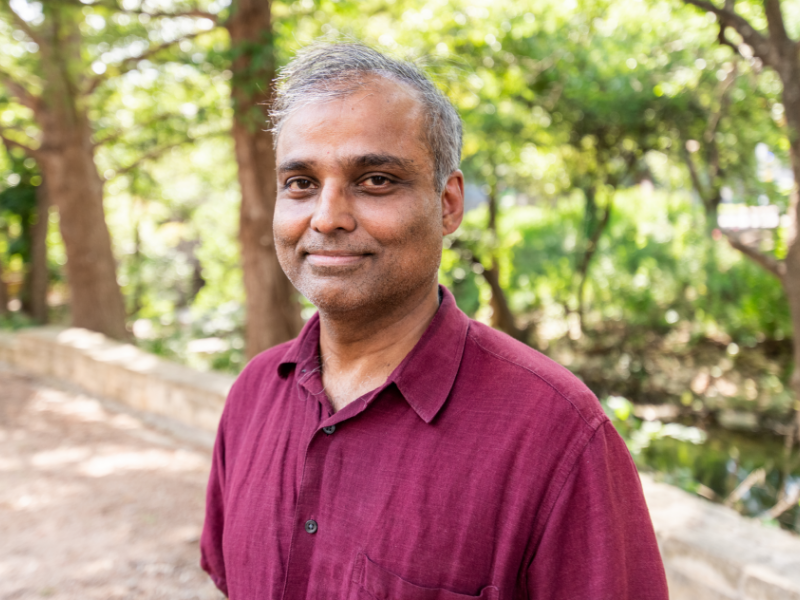
S.V. Sreenivasan is a Professor and holds the Cockrell Family Regents Endowed Chair #7 in Engineering at The University of Texas at Austin. He is a leading nanotechnologist specializing in high-throughput nanofabrication techniques for electronics, displays, and healthcare applications. As the Director of the NSF-funded NASCENT Center, he leads interdisciplinary research in nanomanufacturing systems. He co-founded Molecular Imprints Inc. and currently serves as Chief Technologist at Canon Nanotechnologies, Inc. His research focuses on scalable nanotechnologies, including molecular imprint lithography, metal-assisted chemical etching, and advanced 3D integrated circuits. He has authored over 130 papers and holds 100+ patents. His work emphasizes bridging academic innovation with industrial applications, particularly in semiconductor manufacturing and nanoelectronics. Dr. Sreenivasan has received prestigious awards such as the ASME Leonardo da Vinci Award (2009), TAMEST O'Donnell Award (2010), and election to the National Academy of Engineering (2021). He is a Fellow of the National Academy of Inventors (2016) and ASME (2020). His research groups develop novel fabrication methods like nanoshape imprint lithography and precision inkjet printing systems. Collaborations include Magic Leap and Canon, focusing on next-gen displays and semiconductor tools. He advocates for accessible nanotechnology through portable fabrication platforms.