Prof. Dr. Ahmet Tutar is a faculty member in the Department of Chemistry at Sakarya University . His academic activities include teaching courses such as Organic Chemistry I/II , Organic Synthesis Design , and Stereochemistry , alongside supervising numerous master's theses in organic synthesis and humic substance applications. Research Interests: Focus on bromination reactions , BODIPY dye synthesis , humic/fulvic acid characterization , computational chemistry , and pharmaceutical applications of organic compounds. Key Article Trends: Recent publications emphasize photobromination methods , metal-organic frameworks , and biological activity of brominated derivatives , with keywords spanning organic synthesis , biochemistry , and environmental chemistry . Thesis Supervision: Guided 35+ master's theses (2007-2013) on topics like synthesis of brominated indan derivatives , humic acid extraction , and photobromination of terpenes .
Mengliang Zhang is an Associate Professor in the Department of Chemistry and Biochemistry at Ohio University, College of Arts and Sciences. He leads an interdisciplinary research group focused on mass spectrometry and chemometrics, with applications in forensic, food, agricultural, environmental, and material sciences. His lab develops innovative analytical strategies for detecting toxicants, characterizing nanomaterials, and profiling metabolites in botanicals and food systems. Ph.D., Chemistry, Ohio University, 2015 Dr. Zhang’s research integrates instrumentation, chemometrics, and computational tools to address complex analytical challenges. His group works on forensic fiber and ignitable liquid analysis, plant metabolomics, nanomaterial surface chemistry, and environmental toxicant monitoring. His work is highly interdisciplinary, bridging chemistry, data science, and real-world applications in forensics and public health. His recent publications demonstrate a strong trend in advancing ambient ionization mass spectrometry (especially DART-MS), chemometric modeling, and metabolite profiling across diverse matrices—from fire debris to broccoli microgreens. His work increasingly emphasizes automation, quantitation, and database development for botanical phytochemicals. Scientific honors include the MTSU Distinguished Research Award (Early Career), and his students have received prestigious awards such as the Goldwater Scholarship and multiple URECA recognitions. He is actively supported by federal grants from NSF, USDA, DOE, DOJ (NIJ), and FEMA. Dr. Zhang mentors a vibrant research team of graduate and undergraduate students, guiding them in publishing high-impact research and presenting at national conferences like ASMS, Pittcon, and AAFS. He has organized sessions at SciX and served on editorial boards of Journal of Forensic Sciences and Journal of AOAC INTERNATIONAL . His lab recently relocated to Ohio University in August 2024, equipped with advanced instrumentation including UHPLC-QTOF-MS and DART-MS systems.
M.T.O. (Chiel) Jonker is an Assistant Professor at the Faculty of Veterinary Medicine , Utrecht University , affiliated with the Institute for Risk Assessment Sciences (IRAS) and its Toxicology division . He specializes in exposure assessment of hydrophobic organic chemicals (e.g., PFAS , PAHs , PCBs ), focusing on sorption processes , bioaccumulation dynamics , and passive sampling techniques in both in vivo and in vitro settings. His research emphasizes methodological innovation for high-quality chemical analysis (GC-MS, LC-MS) and environmental risk assessment . Recent work includes PFAS degradation , sediment toxicity testing , and temperature/salinity effects on contaminant partitioning. His 2018-2024 publications highlight passive sampling calibration , mechanistic toxicity models , and bioavailability prediction using polyoxymethylene and silicone rubber samplers .
R. Kenneth Marcus serves as the Robert Adger Bowen Professor of Chemistry in Clemson University's College of Science Department of Chemistry, where he has maintained an active research program for 38 years. His work bridges analytical instrumentation development and advanced separation science with applications spanning nuclear safeguards to biomedical diagnostics. His academic foundation includes dual Bachelor of Science degrees in Chemistry (with honors) and Physics from Longwood College (1982), followed by a Ph.D. in Chemistry from the University of Virginia (1986). This multidisciplinary training underpins his innovative research approach. Dr. Marcus's research focuses on two synergistic thrusts: (1) plasma-based atomic spectrochemical techniques using glow discharge sources, particularly the liquid sampling-atmospheric pressure glow discharge (LS-APGD) microplasma for optical emission and mass spectrometry; and (2) capillary-channeled polymer (C-CP) fiber stationary phases for high-speed protein and extracellular vesicle separations. Current efforts target field-deployable nuclear safeguards instrumentation and exosome isolation platforms for clinical applications, leveraging commodity polymers like polypropylene and nylon. His 2024-2025 publications reveal a strategic convergence where LS-APGD mass spectrometry enables ultra-high-resolution isotopic analysis for nuclear applications, while C-CP fiber chromatography advances exosome purification across diverse biological matrices. This dual focus positions his work at the intersection of national security needs and emerging biomedical diagnostics. His distinguished recognition includes: Fellow of the Royal Society of Chemistry (2010) Fellow of the American Association for the Advancement of Science (2012) Fellow of the Society for Applied Spectroscopy (2016) Fellow of the National Academy of Inventors (2018) Clemson University Researcher of the Year (2019) South Carolina Governor’s Award for Excellence in Science Research (2001) Dr. Marcus has mentored 44 Ph.D. and 17 M.S. students to completion. His research receives sustained support from the National Nuclear Security Administration (NNSA) through Oak Ridge National Laboratory for nuclear safeguards instrumentation, the National Science Foundation (NSF) for chromatography development, and the Advanced Mammalian Biomanufacturing Innovation Center (AMBIC) for metal speciation studies in bioreactors. His laboratory occupies dedicated spaces (BRC 102, 102A, and 106) within Clemson's AG Biotech/Biosystems Research Complex, housing specialized instrumentation for plasma source development, mass spectrometry coupling, and high-throughput fiber chromatography systems that support collaborative work with nuclear security agencies and biomedical researchers.
Trine Grønhaug Halvorsen is a Professor at the University of Oslo's Department of Pharmacy, within the Faculty of Mathematics and Natural Sciences. Her research focuses on developing innovative analytical methods for protein analysis in complex biological samples using mass spectrometry. She specializes in sample preparation techniques, smart sampling strategies, and biomarker quantification. Education: PhD in Drug Analysis (2003), Cand.pharm. (1998) Awards: Publication Award (2001) for pioneering liquid-phase microextraction work Research interests include molecularly imprinted polymers, antibody-based capture methods, and electromembrane extraction. Her work emphasizes improving analytical sensitivity and speed for low-abundance proteins in clinical and biomedical contexts. Recent articles highlight advancements in smart samplers, dried blood spot analysis, and LC-MS-based protein quantification. These studies address challenges in biomarker detection and clinical diagnostics. Labs/Teams: Pharmaceutical Analytical Chemistry Group, SmartProteinAnalysis@UiO Teaching: Courses in bioanalytical chemistry, drug analysis, and sample preparation
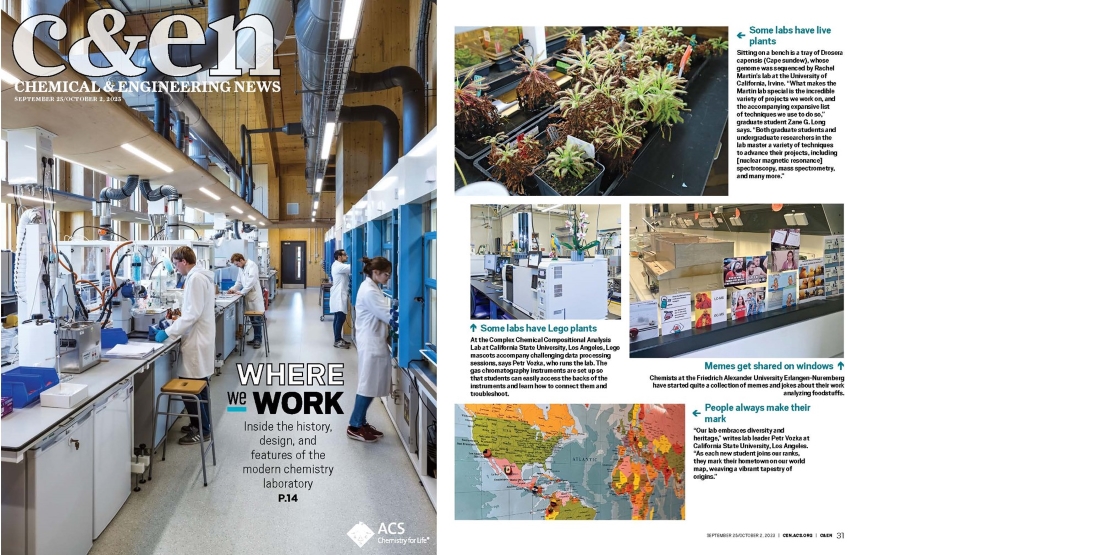
Dr. Petr Vozka is an Assistant Professor in the Department of Chemistry and Biochemistry at California State University, Los Angeles, where he leads the Complex Chemical Composition Analysis Lab (C³AL). His research focuses on the characterization of complex chemical mixtures using state-of-the-art techniques, including two-dimensional gas chromatography and high-resolution mass spectrometry, with applications in environmental science, plastic waste conversion, and forensic analysis. Dr. Vozka's research interests span multiple critical areas including the analysis of complex chemical mixtures, microplastics in the environment, conversion of plastic waste into alternative fuels, environmental impact of oil spills, and forensic fingerprint analysis. His work on microplastics has gained significant attention, with media coverage highlighting his findings that microplastics can penetrate blood vessels and have been found in the brain. His research on the Huntington Beach oil spill investigated the long-term effects of oil contamination on beaches used for recreation. Dr. Vozka has organized significant academic events including the Multidimensional GC: From Petroleum to Beyond symposium at ACS Fall 2025 and serves on the organizing committee for the Multidimensional Chromatography Workshop (MDCW). His laboratory, C³AL, is equipped with advanced instrumentation including GC-TOFMS, GC×GC-FID, and GC×GC-TOFMS systems, supported by partnerships with LECO Corporation and Anton Paar. Recipient of LECO Corporation's Pegasus® BT GC-MS instrument through a competitive selection process Principal Investigator for research funded by Naval Air Warfare Center Aircraft Division Collaborator with researchers from Purdue University, UCT Prague, Delft University of Technology, and California State Polytechnic University Dr. Vozka actively mentors undergraduate and graduate students, with numerous students receiving research awards including CSU COAST Undergraduate Student Research Grants, NSF REU placements, and Dean's List honors. His students regularly present research at national conferences including ACS meetings and the Multidimensional Chromatography Workshop. The C³AL lab provides hands-on experience with cutting-edge analytical instrumentation, preparing students for careers in analytical chemistry and related fields. As part of the LECO-C³AL Facility partnership, Dr. Vozka's lab serves as a training ground for students in comprehensive two-dimensional gas chromatography and mass spectrometry techniques. The facility aims to enhance knowledge and expand opportunities for students while equipping them with skills necessary to excel in graduate programs and analytical positions in industry and the military.
Jared L. Anderson serves as the Alice Hudson Professor in the Department of Chemistry at Iowa State University, where he leads an active research group focused on advancing separation science and analytical chemistry. His laboratory develops innovative approaches to chemical measurement and analysis using ionic liquids, polymeric ionic liquids, and magnetic ionic liquids for applications in pharmaceutical analysis, environmental monitoring, and nucleic acid diagnostics. Dr. Anderson's research interests center on separation science with particular emphasis on the application of ionic liquids in chromatographic separations and sample preparation. His group has pioneered techniques using magnetic ionic liquids for nucleic acid extraction, developed novel stationary phases for comprehensive two-dimensional gas chromatography, and created polymeric ionic liquid-based sorbent coatings for solid-phase microextraction. These innovations address critical challenges in pharmaceutical quality control, particularly in the analysis of genotoxic impurities in active pharmaceutical ingredients. His recent publications demonstrate a strong focus on practical analytical solutions, with research trending toward point-of-care diagnostic applications using smartphone technology, 3D printed extraction devices, and advanced nucleic acid analysis techniques. The work bridges fundamental chemistry with real-world applications in food safety, environmental monitoring, and clinical diagnostics. Dr. Anderson actively mentors graduate students and postdoctoral researchers, with several former trainees securing competitive academic positions and industry roles. His group maintains collaborations with academic research groups across Europe, South America, North America, and Asia, as well as numerous industrial partners in the pharmaceutical sector. The laboratory participates in the ACS Project SEED program, providing research opportunities for underrepresented high school students. The Anderson Research Group operates state-of-the-art facilities for developing and testing novel separation methodologies, with particular expertise in gas chromatography, liquid chromatography, and microextraction techniques. Current projects focus on creating tunable solvents for specific analytical challenges, with applications spanning from pharmaceutical quality control to environmental monitoring and clinical diagnostics.
Jose Manuel Herrero Martinez is a Professor in the Department of Analytical Chemistry at the Universitat de València's Faculty of Chemistry. His research focuses on advanced analytical methodologies, including capillary electrophoresis, mass spectrometry, and sustainable sample preparation techniques. Education: PhD in Analytical Chemistry from Universitat de València (2004), thesis on capillary electrophoresis for environmental/industrial quality control. His research spans green analytical chemistry , aptamer-based extraction , metal-organic frameworks (MOFs) , and miniaturized paper-based devices . Recent work emphasizes 3D printing applications, eco-friendly solvents, and innovative sorbent materials for drug/environmental contaminant analysis. Key trends in his publications include solid-phase microextraction advancements , allergen detection in food , and AI integration in scientific research . Collaborative projects highlight cross-disciplinary approaches with materials science and environmental toxicology. As a supervisor, he has mentored researchers like M. Vergara-Barberán and H. Martínez-Pérez-Cejuela, with a focus on translating theoretical concepts into practical analytical tools.
Dr. Joanna Gambetta serves as a Lecturer in Food Science at the University of Newcastle , affiliated with the School of Environmental and Life Sciences . With academic qualifications from Montpellier SupAgro (MSc in Oenology and Viticulture) and the University of Adelaide (PhD in Wine Science), her research focuses on grape and wine quality assessment , biotic/abiotic stress impacts on aroma composition , and practical solutions for vineyard challenges in Australian contexts. Education : MSc in Oenology and Viticulture, Montpellier SupAgro PhD in Wine Science, University of Adelaide Research Interests span three primary domains: Antifungal microbial volatile organic compounds (VOCs) for biocontrol applications, particularly against Botrytis cinerea and Alternaria alternata through novel analytical approaches Climate change adaptation strategies in viticulture, including modeling vine phenology and mitigating sunburn damage via secondary metabolite analysis Food chemistry innovations in plant-based protein gels and dairy alternatives, integrating fermentation and enzymatic crosslinking Publication Trends reveal a multidisciplinary approach combining analytical chemistry (SPME-GC-MS, LC-MS/MS), chemometrics , and industrial collaboration . Her work bridges agricultural science with food sensory analysis , while recent studies tackle plant-based cheese development using pea protein emulsions.
Hlengilizwe Nyoni is an Assistant Research Professor at the Energy and Environmental Sustainability Laboratories of Pennsylvania State University. He leads the Environmental Contaminants Analytical Laboratory, specializing in advanced analytical techniques such as high-resolution mass spectrometry (UHPLC-Orbitrap, GC-QQQ) and passive sampling technologies for assessing contaminants in aquatic environments. His work focuses on developing novel methods for monitoring pharmaceuticals, microplastics, and emerging pollutants. Research interests include environmental analytical chemistry, water sustainability, and the application of cutting-edge instrumentation for contaminant detection. He has contributed to studies on antibiotic residues in wastewater, microplastic recovery using nanomaterials, and the design of passive sampling devices for polycyclic aromatic hydrocarbons (PAHs). Nyoni’s expertise spans analytical method optimization, environmental risk assessment, and sustainable water treatment solutions. Notable contributions include a $100,000 grant-funded study on microplastic analysis and the development of molecularly imprinted membranes for environmental monitoring. His research bridges analytical chemistry with environmental engineering, addressing global challenges in pollution control and water resource management.
Ankit Malik is an Assistant Professor at the University of North Carolina (UNC) School of Medicine, affiliated with the Department of Microbiology and Immunology. His research focuses on mucosal immunity, specifically how immune responses at gastrointestinal surfaces distinguish between pathogens, commensals, and environmental antigens, and how dysregulation leads to inflammatory bowel diseases (IBD) and gastrointestinal cancers. His interdisciplinary work combines immunology, genetic engineering, microbiology, and bioinformatics. Research Focus Dr. Malik’s lab investigates intestinal immune homeostasis , immune tolerance breakdown in inflammatory diseases , and chronic inflammation-driven carcinogenesis . Key projects include: Mapping cellular pathways that maintain gut immune balance Elucidating mechanisms linking gut inflammation to cancer Developing translational models for IBD and sepsis Publications His work spans immune signaling (e.g., IFNγ, TNF/TNFR, SYK-CARD9), inflammasome biology , and microbiome research . Recent contributions include studies on: 2023 : Epithelial IFNγ signaling in gut immunity 2022 : Autoimmune neuropathy after Campylobacter infection 2020 : Microbiota restoration in sepsis
Jose Grau Escribano is a contracted researcher in the Department of Analytical Chemistry , affiliated with the GICAPC Research Group on Analytical Control of Cosmetic Products . His work focuses on microextraction methodologies for low-volume samples, with a strong emphasis on green chemistry principles and sustainable analytical techniques. Education : PhD in Analytical Chemistry from Universitat de València (2022), with thesis on Development and Evaluation of Microextraction Methodologies for Small Sample Volumes Supervised by Dr. Amparo Salvador Carreño and Dr. Alberto Chisvert Sania Research Interests : Specializes in microextraction techniques for complex matrices like biological fluids and environmental samples Advances green chemistry through solvent reduction, nano-materials, and alternative solvents like deep eutectic solvents Develops high-throughput methods and automated systems for clinical and environmental applications Scientific Contributions : Recent publications highlight trends in miniaturized sample preparation , magnetic sorbent applications , and green solvent implementation across biomedical (cortisol/saliva analysis) and environmental (UV filters/PCBs detection) domains. His work bridges analytical chemistry with practical applications in infant product safety and stress biomarker monitoring.
Salvador Garrigues Mateo is a Professor at the University of Valencia in the Faculty of Chemistry and Department of Analytical Chemistry . He leads the research group SOLINQUIANA (Solutions & Innovation in Analytical Chemistry) , focusing on green analytical chemistry and innovative spectroscopic methods. Education: PhD in Analytical Chemistry from the University of Valencia (1993) with a thesis on Quantitative analysis by Fourier Transform Infrared Spectrometry . Research Interests: Green Analytical Chemistry, Fourier Transform Infrared Spectroscopy (FTIR), Ion Mobility Spectrometry (IMS), environmental and biomedical analysis, sample preparation techniques, and forensic chemistry. His recent publications highlight trends in environmental analysis (wastewater drug monitoring, bioaerosol assessment), forensic chemistry (illicit drug detection, synthetic cannabinoids), and green sample preparation (natural sorbents, microextraction techniques). He also contributes to food analysis (oil degradation, essential oil authentication) and biomedical applications (urinalysis for drug exposure, serum diagnostics). His work emphasizes green chemistry principles , focusing on reducing solvent consumption, developing non-invasive testing protocols, and applying chemometrics for improved analytical accuracy. He has published extensively on spectroscopic methods for both environmental and clinical applications, often combining FTIR with ion mobility spectrometry for enhanced detection capabilities. Contact: salvador.garrigues@uv.es
Hector Martinez Perez-Cejuela is a Lecturer in the Faculty of Chemistry at the University of Valencia , affiliated with the CLECEM research group specializing in Liquid Chromatography, Capillary Electrophoresis, and Mass Spectrometry. His research focuses on advanced sample preparation techniques using metal-organic frameworks (MOFs) and other nanomaterials for environmental, pharmaceutical, and food safety applications. Education: PhD in Analytical Chemistry (2023) from the University of Valencia Research Interests: Hector's work centers on Miniaturized extraction methods (e.g., solid-phase microextraction) Green chemistry approaches for sustainable sample preparation MOF-based materials for selective pollutant removal Hybrid sorbents in biofluid and environmental analysis Portable analytical devices using 3D-printing Chemiluminescence and fluorescence detection systems Publication Trends: Recent studies highlight his expertise in environmental contaminant analysis , MOF functionalization , and green sample preparation with applications in drug detection, pesticide monitoring, and water safety. Articles span journals in analytical chemistry, environmental science, and material engineering. Research Group: Collaborates with the CLECEM group on developing cutting-edge analytical methodologies.
Dr. Ying Cheng is a Research Associate at the University of Newcastle, holding dual appointments in the School of Environmental and Life Sciences and the School of Architecture and Built Environment within the College of Engineering, Science and Environment. Her work focuses on developing innovative technologies for sustainable environmental remediation and energy recycling, with particular expertise in sensor development and green synthesized nanomaterials. Dr. Cheng earned her Doctor of Philosophy from the University of Newcastle, following a Master of Engineering from Fujian Normal University in China. Her undergraduate studies were completed at China Agricultural University, where she focused on soil aggregate and organic carbon stability in the North China plain. During her master's studies, she specialized in remediation of printing sewages using green synthesized nanomaterials and biomaterials, and her PhD research centered on the fabrication of biocompatible anode electrodes in Microbial fuel cells (MFCs) for sewage treatments and energy recovery. Her research spans multiple areas with sensor technology accounting for 70% of her focus, followed by environmental assessment and monitoring (10%), environmental nanotechnology (10%), energy generation (5%), and One Health (5%). She has developed green synthesized graphene-based nanocomposites and biomaterials for environmental applications, with particular expertise in creating functional materials that combine bacterial strains like Burkholderia species with nanomaterials for enhanced contaminant removal. Her primary research focus since graduation has been method development of rapid and reliable in-field detection and sensor invention for environmental risk assessment. Analysis of her recent publications reveals a strong trend toward integrating advanced sensing technologies with machine learning for environmental monitoring. Her work increasingly focuses on developing portable, field-deployable solutions for detecting contaminants like volatile organic compounds, arsenic, and petroleum hydrocarbons. Many of her studies combine nanomaterials with biological systems to create innovative remediation approaches, particularly for simultaneous removal of multiple contaminants from water systems. 33 peer-reviewed journal articles 1 book chapter 1 patent 6 research grants totaling $2,444,668 Dr. Cheng has secured significant research funding for projects focused on rapid field-based assessment methods for contaminated sites. Her collaborative work frequently involves researchers like Liang Wang and Ravi Naidu, with whom she has developed several field-deployable solutions that simplify environmental monitoring and make it more accessible. Her laboratory work centers on green synthesized nanomaterials for environmental applications, with established expertise in microbial fuel cells for wastewater treatment and energy recovery.