Dr. Chishu Homma is a faculty member at RWTH Aachen University , holding the Chair of Micro- and Nanosystems within the College of Electrical Engineering and Information Technology and affiliated with the Institute of Materials for Electrical Engineering . His research bridges nanotechnology, materials science, and biosensing. Current focus: Graphene-based sensory systems Expertise: Peptide-nanostructure interactions Key applications: VOC detection, biomimetic sensors Recent work demonstrates enantioselective odorant detection in humid conditions and de novo peptide design for catalytic nanoarchitectures. His publications highlight the integration of biological molecules with 2D materials for advanced sensing capabilities.
Ruchi Sharma is a Research Fellow at the University of Oregon's Knight Campus, working in Marian Hettiaratchi's laboratory since September 2024. Her research focuses on advancing drug delivery technologies and biomaterial-cell interactions through interdisciplinary engineering approaches. Her academic background includes: PhD in Biomedical Engineering, University of Victoria (2022) Master's degree in Biotechnology, Taiwan Bachelor's degree in Life Science and MBA in Marketing and Finance, India Dr. Sharma specializes in microfluidic platforms for precision microparticle production, particularly drug-loaded microspheres, and develops 3D bioprinted neural tissue models to innovate Parkinson's disease therapies. Her work bridges biomaterials science, regenerative medicine, and microengineering to solve challenges in targeted therapeutic delivery. Within the Hettiaratchi Lab, she investigates biomaterial-cell interactions to optimize drug delivery vehicles, combining neural engineering principles with translational medical applications. Her research has significant implications for neurodegenerative disease treatment and regenerative cell therapies. Outside academia, Dr. Sharma maintains a balance between scientific rigor and personal life through cooking and family time.
Yunus Alapan is a researcher leading the Bio-integrated Robotics Lab at the University of Wisconsin-Madison's Mechanical Engineering Department. His work focuses on developing soft microrobots for healthcare applications, integrating robotics, microtechnology, and bioengineering to create bionic cellular and tissue robots for precision manipulation in disease modeling, cell manufacturing, and drug delivery. Education: PhD in Mechanical and Aerospace Engineering, Case Western Reserve University (2016) MS in Mechanical Engineering, Yıldız Technical University (2012) BS in Mechanical Engineering, Yıldız Technical University (2011) Research Interests: Microrobots, soft robotics, biohybrid systems, mechanobiology, and immunoengineering. His lab bridges robotics and biomedicine to address challenges in personalized therapy and in vitro disease models. Recent Publications: Focus on microrobotics for targeted therapies, optofluidic cell analysis, and light-driven microswimmers. These studies emphasize translational applications in cancer treatment, immunotherapy, and drug delivery systems. Awards: 2018 USPTO Patents for Humanity Program Honorable Mention 2017 Humboldt Postdoctoral Research Fellowship 2015 NASA Tech Briefs Top-100 Design Entry Advising & Teaching: Advises students in mechanical engineering and biomedical engineering. Teaches courses including M E 342 (Design of Machine Elements), M E 491 (Mechanical Engineering Projects), and supervises graduate research (M E 790/890). Labs/Teams: Leads the Bio-integrated Robotics Lab, collaborating with interdisciplinary teams across UW-Madison and international institutions.
Dr. Alba Calatayud-Sanchez is a Research Fellow at ICFO's Neurophotonics and Mechanical Systems Biology group. Her research focuses on developing advanced microfluidic and nanoplasmonic tools for biomedical applications, including single-cell analysis, biosensing, and drug toxicity testing. She holds a PhD in Microfluidics and Biosensors from the University of the Basque Country. Research interests span microengineering approaches for biological applications, including micro-contact printing, fiber-optic nanosensors, and cell adhesion monitoring technologies. Her work integrates principles from photonics, nanotechnology, and cell biology to create novel diagnostic platforms. Recent publications demonstrate innovation in microfluidic biosensor design, nanoplasmonic detection methods, and single-cell analysis techniques, with applications in drug screening, biomolecular detection, and cellular monitoring. Collaborates within interdisciplinary teams at ICFO to develop optical technologies for biological systems analysis.
Joe Fujiou Lo is an Associate Professor in the Department of Mechanical Engineering at the University of Michigan-Dearborn's College of Engineering and Computer Science. He is also affiliated with the Bioengineering Program, focusing on interdisciplinary research that bridges microengineering and biomedical applications. Education: Ph.D. in Biomedical Engineering from the University of Southern California B.S. in Bioengineering from the University of California, Berkeley Research Interests: Bioengineering: Innovations in gas microfluidics for hypoxia modeling, microfluidic biosensors, and 3D-printed microTesla fluidics for integrated bioreactors. Biophotonics: Development of frequency-domain fluorescence lifetime techniques for non-invasive tissue analysis and low-cost imaging systems. Medical Applications: Diabetes research through artificial pancreatic islets, wound healing via oxygen-modulating smart bandages, and tissue histology alternatives. Publications Trends: His work emphasizes microfluidic and photonic technologies to address challenges in diabetes and wound healing. Key themes include oxygen gradient modulation, VEGF detection, and non-invasive collagen analysis using fluorescence lifetime methods. Labs & Teams: Leads the DBP (Design-Based Prototyping) lab, focusing on translating microengineering innovations into practical clinical solutions through multidisciplinary collaboration.
Dr. Tanveer Ul Islam is a Research Fellow in the Microsystems group at Eindhoven University of Technology, with a joint affiliation at EPFL Switzerland. His research develops artificial cilia systems to model biological processes and disease mechanisms, particularly ciliopathies. His core research areas include microfluidic device development, magnetic actuation systems, bioinspired sensors, and nanomaterial engineering. Dr. Islam's work bridges microengineering with biomedical applications through biomimetic approaches. Dr. Islam's research outputs focus on magnetic artificial cilia systems, with recent advances in programmable metachronal motion and curved-surface applications. His work demonstrates progression from fundamental fluid dynamics to applications in sweat sensing and organ-on-chip technologies, emphasizing manufacturability through novel fabrication techniques.
Cédric Meinen is a Lecturer at the École Polytechnique Fédérale de Lausanne (EPFL), primarily affiliated with the School of Engineering. He holds dual roles as an ETS/HES Engineer in SEL - Management and Operations Manager in DLL-STI Engineering, reflecting his involvement in both technical and administrative capacities. His academic presence spans multiple departments and laboratories, including the Nanoelectronic Devices Laboratory (NANOLAB) under the Institute of Microengineering (IEM) and sections within STI-SEL. Education: Cédric Meinen specializes in Electrical and Electronics Engineering , as highlighted in his profile. This aligns with his teaching portfolio, which includes foundational courses like Electronics I and Electrical and Electronic Systems I/II . Research Interests: His work focuses on analog and digital circuit design, semiconductor device modeling (Bipolar/MOSFET), signal acquisition systems (e.g., physiological signals, bio-sensors), and practical applications of operational amplifiers. He integrates principles from applied physics into his teaching and laboratory work, emphasizing measurement techniques and data analysis. Labs/Teams: He is a core member of the Nanoelectronic Devices Laboratory (NANOLAB), contributing to microelectronic and nanoelectronic research. Additionally, he supports engineering education through STI-SEL and DLL-STI units.
Adam A. Stokes is a Professor and Personal Chair in Bioinspired Engineering at the University of Edinburgh's School of Engineering. He serves as Head of the Institute for Bioengineering, Deputy Director of the CDT in Robotics and Autonomous Systems, and leads the interdisciplinary Soft Systems Group with approximately 20 researchers. His academic background includes degrees in engineering, biomedical science, and chemistry. Research focuses on robotics, physical chemistry, electrical engineering, materials science, nanotechnology, optics, proteomics, and cell biology. His work bridges fundamental science and applied engineering with recent publications covering fluidic soft systems, underwater robotics, battery technology, and pandemic-related manufacturing solutions. Honors include the DDE Academic Entrepreneurship Award (2021) and Principal's Award for Innovation (2020). He actively contributes to professional communities as an Associate Editor for IEEE Robotics and Automation Letters and member of the UK-RAS Network Executive Committee.
Tom Pike is Professor of Microengineering in the Department of Electrical and Electronic Engineering at Imperial College London. His research develops microinstruments for space and terrestrial applications, including silicon microseismometers deployed on NASA's InSight Mars mission and the upcoming Farside Seismic Suite lunar mission. His lab analyzes extraterrestrial seismic data and advances gravity-sensing technologies. Research focuses on miniaturized sensors for planetary exploration, seismic data interpretation, and Earth-based gravity measurement systems.
Roles & Affiliations: Gary K. Fedder is the Howard M. Wilkoff Professor of Electrical and Computer Engineering at Carnegie Mellon University (CMU), with courtesy appointments in Mechanical Engineering and Biomedical Engineering. He serves as Faculty Director of the Manufacturing Futures Institute (MFI) and has held administrative roles including Vice Provost for Research, Associate Dean for Research in the College of Engineering, and Interim CEO of the Advanced Robotics for Manufacturing (ARM) Institute. Education: B.S. and M.S. in EECS from MIT (1982, 1984) Ph.D. in EECS from UC Berkeley (1994) Research Interests: Focuses on MEMS (microelectromechanical systems), advanced manufacturing, digital twins, aerosol jet printing, and stretchable electronics. His work spans microsensor design, implantable systems, and integration of MEMS with emerging technologies like nanomaterials and robotics. Current projects include generative manufacturing, smart manufacturing systems, and bioelectronics. Awards & Recognition: IEEE Fellow (2007) NSF CAREER Award (1996) Carnegie Ladd Research Award (1996) Ross Tucker Award (1993) Advising & Grants: Over 300 publications and 21 patents. Led the proposal for the $70M America Makes Institute and co-founded the ARM Institute. Serves on editorial boards of journals like Journal of Micromechanics and Microengineering and co-edits the Advanced Micro- and Nanosystems book series. Labs & Initiatives: Directs the MFI, which focuses on agile and sustainable manufacturing. Leads the MEMS Laboratory at CMU, advancing microsystem technologies and their applications in healthcare, robotics, and industry.
Dr. Yi Zheng is an Assistant Professor affiliated with Syracuse University's BioInspired Institute. His research focuses on developing stem cell-based in vitro models to study human embryonic development and disease mechanisms. These models aim to elucidate lineage diversification, tissue patterning, and morphogenesis, offering platforms for drug screening and understanding birth defects. Key research interests include microengineered organoids, single-cell genomics, and mechanobiology. His lab integrates engineering approaches like microfluidics to create controllable developmental platforms. Notable achievements include pioneering studies on embryoid lineage roadmaps and human epiblast modeling. Awards: Robert M. Caddell Memorial Award, NSERC Postdoctoral Fellowship, Barbara and Frank Milligan Fellowships. Labs: BioInspired Institute at Syracuse University. Publications span stem cell engineering, developmental biology, and microfluidic diagnostic tools, reflecting interdisciplinary innovation at the intersection of biology and engineering.
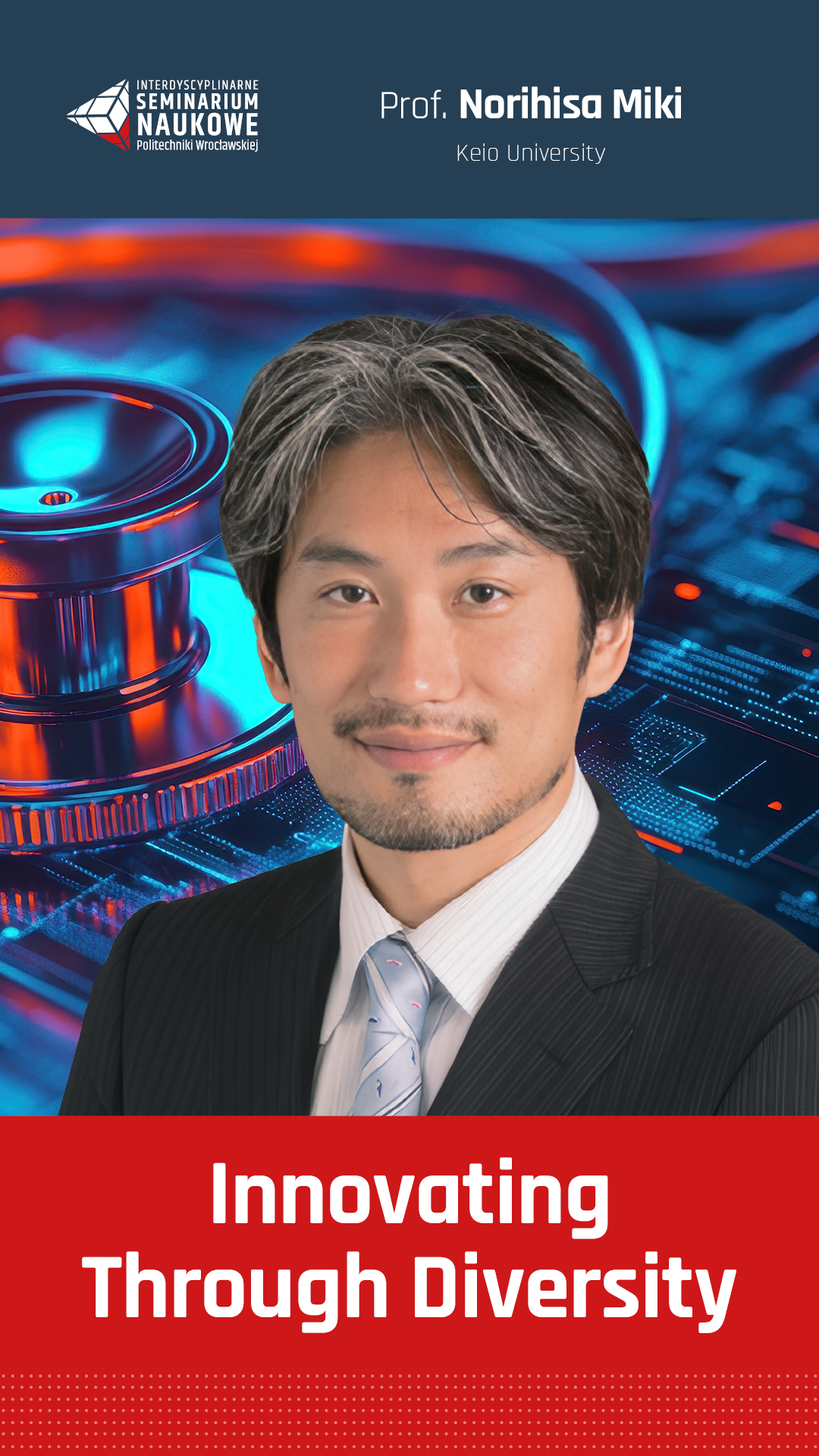
Prof. Norihisa Miki is a Full Professor at Keio University's Department of Mechanical Engineering, serving as Department Head and Chair of International Affairs within the Faculty of Science and Technology. He holds a Ph.D. in mechano-informatics from the University of Tokyo (2001) and conducted postdoctoral research at MIT's microengine project (2001–2003). His expertise spans MEMS-based biomedical devices, medical engineering, neuroscience, and media arts. He pioneered a world-smallest drone during his doctoral work and later founded a healthcare startup, integrating entrepreneurship education into his academic roles. Additionally, he chairs the Japanese Society for Mechanical Engineers' Micro-Nano Science and Technology Division (2023) and leads Keio Ice Skating Club as its president. Education: Ph.D. in Mechano-Informatics (University of Tokyo, 2001) Research Focus: Interdisciplinary innovation in micro-nano technologies, biomedical interfaces, and art-science collaborations His recent work bridges engineering with neuroscience and media arts, emphasizing practical applications in healthcare and entrepreneurship. He actively promotes international academic collaboration through his administrative roles.
Clément Renaud Jean Choné is affiliated with the École Polytechnique Fédérale de Lausanne (EPFL), holding roles in both research and doctoral programs. He is an Assistant Doctoral Student at the Laboratoire des systèmes embarqués (ESL) and a Host Doctoral Student at the Laboratoire de circuits pour télécommunications (TCL), both under the School of Engineering (STI) and the Institute of Microengineering (IEM). Additionally, he is enrolled in the Doctoral Program in Microsystems and Microelectronics (EDMI) within EPFL's Doctoral School (EDOC). His primary office location is ELG 121. Research Affiliations: Laboratoire des systèmes embarqués (ESL) - Focus: Embedded Systems Laboratoire de circuits pour télécommunications (TCL) - Focus: Telecommunication Circuits His research interests center on microelectronics, circuit design, and systems engineering, with a specific emphasis on embedded systems and telecommunication applications. He contributes to interdisciplinary projects at the intersection of microtechnology and signal processing.
Joachim Tobias Tapparel is a Researcher at the Laboratory of Telecommunications Circuits (TCL) within the School of Engineering (STI) at École Polytechnique Fédérale de Lausanne (EPFL) . His role involves assisting in doctoral research activities related to telecommunications circuits and technologies. He is affiliated with the Institute of Microengineering (IEM) and holds a position as an Assistant-doctorant, focusing on advanced circuit design and telecommunications infrastructure development. His research interests include signal processing, integrated circuit design, and next-generation communication systems. Currently based at the ELD 131 and ELD 133 laboratories on EPFL's campus, he contributes to both academic and applied research projects in the field of telecommunications engineering. No specific awards or grants are explicitly mentioned in his profile, but his involvement in a leading research laboratory suggests active participation in cutting-edge technological advancements.
Christian Leinenbach serves as a Senior Scientist at the École polytechnique fédérale de Lausanne (EPFL) within the School of Engineering. His primary affiliation is with the Institute of Microengineering (IMT) at the Laboratory for Photonic Materials and Characterization (LPMAT), where he conducts research on photonic materials. Additionally, he holds roles in the Institute of Materials (IMX) for administration and in the SMX teaching unit. He is also a Lecturer for the Doctoral Program in Materials Science and Engineering. His research expertise lies in Materials Science , with a focus on Metallurgy and Advanced Manufacturing . He explores high-performance metals and alloys, including advanced steels, Ni-base, Ti-base, and High Entropy Alloys, alongside computational alloy design and sustainable metallurgy. His work in Additive Manufacturing addresses fundamental materials science challenges in metal 3D printing. Dr. Leinenbach actively mentors PhD students, currently guiding a team of seven doctoral candidates: Aydemir Abdullah Borges Esteves Paulo Davi Chmielewska Julia Kinga Kuglarz Karol Jan Taylan Umut Vels Wouter Yang Jian He has successfully supervised seven former PhD graduates, including Baganis Antonios Nikolaos, Ferretto Irene, Griffiths Seth James, Jin Shan, Lindström Carl Tore Viktor, Oza Meet Jaydeepkumar, and Schuster Marvin Lennard. As a member of the Laboratory for Photonic Materials and Characterization, he contributes to cutting-edge research in photonic materials, fostering interdisciplinary collaboration between microengineering and materials science.