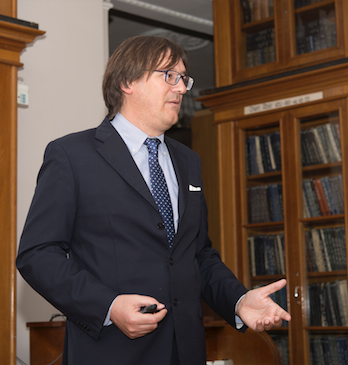
Roberta Tolve is a Temporary Assistant Professor at the Department of Biotechnology, University of Verona. She specializes in Food Science and Technology with a focus on sustainable food processing, functional food development, and bioactive compound extraction. Her research emphasizes natural deep eutectic solvents (NADES) for valorizing agricultural by-products and enhancing food nutritional profiles. She contributes to interdisciplinary projects like RAINDROP (rice by-product valorization) and SustaIn4Food (Veneto agro-food sustainability). Teaching responsibilities include courses on Unit Operations in Food Technologies, Quality Management in the Food Industry, and Project Management for food engineering students. She actively participates in academic governance as a researcher representative in the Academic Senate and the Biotechnology Departmental Council. Her research portfolio spans 30+ peer-reviewed articles since 2015, covering topics such as microencapsulation of bioactives, low-FODMAP food development, and eco-friendly packaging. Major projects include PNRR-funded initiatives and collaborations with industry spin-offs like Microbion and Genartis.
Prof. Dr. Sabine Kühn is a Professor of Food Technology and Sensory Science at the Department of Nutritional Science (Fachbereich Oecotrophologie) of Niederrhein University of Applied Sciences. Her roles include leadership in the Food Technology and Sensory Laboratory, where she oversees research and teaching in food processing, sensory analysis, and sustainable resource utilization. She actively participates in university governance as a member of the Department Council, Deputy Chair of the Examination Board, and member of the Senate. Her academic journey includes a Diplom-Ingenieurin in Food Technology (2008) and a PhD (2014) from Rheinische Friedrich-Wilhelms-Universität Bonn, focusing on polyphenol recovery from onion processing residues. Her research emphasizes bioactive compound extraction from agricultural byproducts, microencapsulation techniques, and sustainable food production. Notable projects include CO₂-based extraction of cranberry pomace compounds and flavor masking of polyphenolic extracts. Publications span topics like supercritical fluid extraction, in vitro digestion of polyphenols, and valorization of food industry wastes. Her work bridges food chemistry, environmental engineering, and sensory science, addressing both technical and sustainable challenges in food technology. Laboratory and administrative roles reflect her commitment to advancing practical and innovative solutions in food science education and industry collaboration.
Felix Abik is a Postdoctoral Researcher at the University of Helsinki’s Department of Food and Nutrition (Faculty of Agriculture and Forestry), specializing in food materials science under Asst. Prof. Kirsi S. Mikkonen. His work focuses on hydrocolloid-stabilized emulsions, interfacial morphology visualization, and delivery systems for bioactive compounds. He is part of the Academy of Finland-funded ENVISION project (2019–2023) and a corporate-funded Valo Therapeutics initiative. Education: Master of Science in Molecular Nutrition & Food Technology from Aarhus University (2019), and Bachelor of Science in Chemistry from Bandung Institute of Technology (2016). His research integrates NMR spectroscopy, atomic force microscopy (AFM), and adsorption studies to analyze food emulsions and biomaterials. Key Research Areas: Hydrocolloid chemistry, emulsion stabilization mechanisms, interfacial behavior of food stabilizers, and applications of wood-derived hemicelluloses in food systems. His work addresses sustainable food technologies and advanced material characterization. Recent Activities: Visiting researcher at Quadram Institute (2023) and ISIS Pulsed Neutron Source (2023). Peer reviewer for International Journal of Biological Macromolecules and Journal of Dispersion Science and Technology . Grants: ENVISION (Academy of Finland), Valo Therapeutics Oy collaboration. His research outputs include 10 peer-reviewed publications (2021–2024) focusing on emulsion systems, biomaterials, and food science innovations.
Prof. Jasper van der Gucht is a Professor of Physical Chemistry and Soft Matter at Wageningen University & Research. He leads an interdisciplinary group focused on understanding the microscopic mechanisms governing the mechanical properties and functionality of soft materials, particularly biopolymers and colloidal systems. His research combines experimental characterization, theoretical modeling, and computer simulations to address topics like polymer materials based on electrostatic interactions, structure formation in drying films, and fracture mechanics of biopolymer networks. Education & Teaching: He teaches courses in Advanced Soft Matter, Colloid Science, General Chemistry, and Winter School Physical Chemistry. He supervises MSc and BSc theses in Physical Chemistry, Biotechnology, and Molecular Life Sciences. Research Interests: His work spans biopolymer mechanics, colloidal science, rheology, and material design. Key themes include the mechanics of soft granular materials, phase segregation in pastes, and sustainable materials for food applications. He employs advanced techniques like laser speckle imaging and microfluidics. Ancillary Activities: He serves as a representative of WUR in the Dutch Physics Council (2023–2026), coordinates postgraduate courses, and is Chief Editor of the Soft Matter section in Frontiers in Physics (2017–present). Labs & Teams: His lab integrates experimental and computational approaches to study soft matter phenomena, collaborating on projects like developing sustainable plastics and understanding plant-pathogen interactions through hyphal mechanics.
Professor Emel Önder Karaoğlu serves in the Department of Textile Engineering at Istanbul Technical University's Faculty of Textile Technologies and Design. With an h-index of 18 and 2127 citations, her research focuses on advanced textile applications for thermal energy storage and functional materials. Her primary research interests form a distinctive fingerprint in materials science, including Phase Change Material integration for heat storage Electrospinning techniques for nanofiber production Organoclay-modified polyurethane nanocomposites Thermal energy storage textiles Polyethylene glycol applications in smart fabrics Her work bridges fundamental material science with practical textile applications, particularly in sustainable energy storage solutions. Analysis of her recent publications (2018-2025) reveals strong thematic consistency in thermal management materials, with increasing focus on renewable energy storage applications and biomedical implementations like magnetic hyperthermia. Her research output demonstrates methodological expertise in electrospinning and nanocomposite characterization. Professor Karaoğlu has supervised 16 graduate students as indicated by institutional records, though specific names aren't publicly listed. Her laboratory work centers on nanofiber production and thermal property characterization, utilizing equipment for electrospinning, scanning electron microscopy, and thermal analysis.
Mario Pagliaro is a chemistry and energy scholar based at the Italian National Research Council (CNR) in Palermo, Italy. He leads a research group focused on nanochemistry, green chemistry, solar energy, and the bioeconomy, with a strong emphasis on open science and education. Nanochemistry & Green Chemistry : Innovator in catalysis and sustainable materials, including commercialized catalysts and bioactive compounds. Solar Energy : Pioneer of the term 'helionomics' and advocate for rethinking solar energy education. Open Science : Co-author of widely viewed open-access studies on research evaluation and preprints. Scientific Recognition : Top 2% World Ranking (2020) in composite career impact Fellow of the Royal Society of Chemistry (2014) Multiple awards for prolific authorship in ACS Sustainable Chemistry & Engineering and Organic Process Research & Development His group’s research, conducted in partnership with over 20 countries, has produced nearly 300 highly cited papers and 22 books, including the seminal Flexible Solar Cells (2008), translated into Chinese.
Massimo Sgarzi is an Associate Professor in the Department of Molecular Sciences and Nanosystems at Ca' Foscari University of Venice. His laboratories are located at the Scientific Campus (via Torino) in Study 609 (ALFA building) and Laboratories 4 & 8 (BETA building). His research focuses on sustainable materials chemistry with emphasis on: Lignin valorization for functional nanomaterials and biofuels Photocatalytic systems for environmental remediation and pollutant degradation Biobased nanocomposites for water treatment applications Green synthesis of nanoparticles and smart materials Sustainable chemical processes at ambient conditions His recent publications demonstrate strong trends in developing lignin-derived nanoarchitectures for environmental applications, with particular focus on synergistic adsorption-photocatalysis systems. Research frequently incorporates waste valorization (rice husk silica, kraft lignin) and emphasizes circular economy principles through recyclable catalysts and biomass conversion.
Dr. Kiruba Krishnaswamy is an Assistant Professor with joint appointments in the Department of Biomedical, Biological and Chemical Engineering (College of Engineering) and the Division of Food, Nutrition and Exercise Sciences (College of Agriculture, Food and Natural Resources) at the University of Missouri. She leads the Food Engineering and Sustainable Technologies (FEAST) research program, which focuses on addressing hidden hunger through circular food systems and sustainable development goals. Post-Doc (Chemical Engineering) - University of Toronto PhD (Bioresource Engineering) - McGill University MTech (Food and Agriculture) - Tamil Nadu Agricultural University & McGill University (Commonwealth Scholar) BTech (Food Process Engineering) - Tamil Nadu Agricultural University Her research integrates sustainable food process engineering, micronutrient fortification, and food waste valorization. Key focus areas include upcycling acid whey from Greek yogurt production, enhancing nutritional value of underutilized crops like millet and pawpaw, and developing culturally appropriate food technologies. The FEAST lab emphasizes community engagement through partnerships with indigenous groups like the Osage Nation. Recent publications demonstrate expertise in spray drying, microencapsulation, and circular economy applications for food security. She received the prestigious NSF CAREER Award (2024) for her work on micronutrient recovery systems. Krishnaswamy teaches the Zero Hunger Challenge course, which brings interdisciplinary students together to address food-environment-health connections. NSF CAREER Award (2024) - $532,000, 5-year grant The FEAST lab collaborates with agricultural engineers, nutritionists, and indigenous communities to develop sustainable food technologies. Current projects include creating nutritious food products from food industry waste, optimizing drying processes for native fruits, and building frameworks to address the 'double burden of malnutrition' through systems thinking approaches.
Dr. Randolph J. Nudo serves as University Distinguished Professor and Vice Chair of Research in the Department of Physical Medicine and Rehabilitation at the University of Kansas School of Medicine. He concurrently holds the position of Associate Director at the Landon Center on Aging and the Marion Merrell Dow Distinguished Professorship in Aging. His educational foundation includes: BS in Psychology/Statistics from Pennsylvania State University MS in Psychology from Florida State University PhD in Psychology/Neuroscience from Florida State University Post Doctoral Fellowship in Physiology at the University of California at San Francisco Leading the Cortical Plasticity Laboratory with continuous NIH funding since 1985, Dr. Nudo investigates neural self-repair mechanisms following brain injury. His research integrates neuroscience with engineering to develop implantable microdevices for neural pathway repair, biomaterials for cranial defect treatment, and wearable imaging systems for brain hemodynamics monitoring. Key focus areas include traumatic brain injury recovery, stroke rehabilitation, and age-related neural changes, utilizing rodent and non-human primate models to explore cortical reorganization and therapeutic interventions. Analysis of his 2023-2025 publications reveals dominant themes in biomaterial-based therapies for TBI (hydrogels, polymeric drug delivery), advanced neuroimaging techniques (photoacoustic imaging), and closed-loop neuromodulation systems. His work consistently bridges fundamental neuroplasticity research with translational applications, particularly in motor recovery following cortical injury and the development of time-sensitive therapeutic windows for intervention. Dr. Nudo's scientific recognition includes: Fellow of the American Heart Association (FAHA) Fellow of the American Society of Neurorehabilitation (FASNR) With uninterrupted NIH support since 1985, his laboratory has secured substantial grant funding for neurotrauma research. Though specific advisees aren't detailed in source materials, his Cortical Plasticity Laboratory functions as a collaborative hub for neuroscientists, engineers, and clinicians developing novel rehabilitation technologies. Current projects include patent-pending implantable microdevices and biomaterial systems for neural repair. The Cortical Plasticity Laboratory drives interdisciplinary innovation through partnerships with biomaterials engineers, imaging scientists, and neurosurgeons. Current initiatives focus on thiolated tissue hydrogels for bone regeneration, closed-loop brain-spinal interfaces, and deep-structure imaging technologies to monitor real-time hemodynamic responses during rehabilitation.
Bogusław Białko is a Professor at the Department of Thermal Sciences , Faculty of Mechanical and Power Engineering, Wrocław University of Science and Technology. His research focuses on thermal systems, refrigeration cycles, and sustainable energy technologies. Current affiliation: Faculty of Mechanical and Power Engineering, Wrocław University of Science and Technology Specialization: Thermal Engineering, Heat Transfer, Refrigeration Research Interests Białko's work spans experimental and theoretical studies in phase change materials (PCMs), heat pump systems, and adsorption chillers. His recent publications address energy efficiency in residential heating, thermodynamic modeling of refrigerants, and fluid dynamics in microencapsulated PCM slurries. Key areas include: Heat Transfer Optimization Thermodynamic Cycle Analysis Sustainable Cooling and Heating Systems Advanced Refrigerant Technologies Microchannel Flow Dynamics Phase Change Material Applications Article Trends His recent work emphasizes low-carbon energy solutions, with experiments on R245fa refrigerant, hybrid adsorption chillers, and PCM-based thermal storage. Studies often integrate environmental engineering principles with mechanical systems to reduce energy consumption and emissions. Scientific Contributions Białko has published extensively in high-impact journals like Energies and Experimental Heat Transfer , with a focus on practical applications in refrigeration and heat management. His collaborations include researchers such as Bartłomiej A Nalepa and Krzysztof Dutkowski. Contact: boguslaw.bialko@pwr.edu.pl .
Jose Brandao Delgado serves as an Assistant Professor and Extension Food Safety Specialist at Utah State University's Department of Nutrition, Dietetics, and Food Sciences, based at the Logan Campus. His work integrates academic research with practical industry collaboration to advance food safety standards and regulatory compliance across Utah's agricultural sector. His educational foundation includes: PhD in Food Science from Louisiana State University (2019) BS in Food Technology from Escuela Agrícola Panamericana Zamorano (2012) Dr. Brandao's research centers on developing innovative food safety solutions for Utah's unique agricultural challenges, with particular emphasis on pathogen control in irrigation systems and food waste reduction. His expertise spans food toxicology, safety practices in food processing, and agricultural pathogen management, directly addressing critical gaps in fresh produce safety. Through extension programs, he translates complex food safety science into actionable industry protocols for both consumer and manufacturing contexts. Analysis of his 15 most recent publications (2015-2024) reveals a consistent research trajectory focused on practical food safety interventions. His work predominantly addresses irrigation water decontamination using surfactant-modified zeolite filtration systems, demonstrating significant pathogen reduction efficacy for high-risk pathogens like Salmonella and Listeria in strawberry and lettuce production. Secondary themes include horticultural by-product valorization, shelf-life extension techniques, and household food waste reduction strategies—showcasing his commitment to sustainable food systems from farm to consumer. No scientific awards were documented in the provided materials. Dr. Brandao actively secures research funding to support Utah's food safety infrastructure while mentoring students through courses like NDFS 6180 - Food Safety Inspection and Auditing. His dual extension appointments in Consumer Food Safety Education and Food Safety of Manufacturing Industry (both ongoing since 2024) demonstrate his commitment to bridging academic research with real-world industry implementation across multiple food system sectors.
Dragana Cetojević-Simin is a Professor at Singidunum University, where she serves as head of undergraduate, master's and doctoral studies for the Environment and Sustainable Development program since April 2024. She obtained her full professor title in biology in March 2021 and previously earned the title of scientific adviser in biotechnical sciences in January 2016. Doctoral dissertation in Biology, Faculty of Science, Novi Sad (2006-2009) Specialist studies in Medical Genetics, Faculty of Medicine, Novi Sad (2004-2007) Master's studies in Microbiology, Faculty of Science, Novi Sad (1996-1998) Basic studies in Biology, Faculty of Science, Novi Sad (1989-1993) Secondary school in Biology, Gimnazija JJ-Zmaj, Novi Sad (1987-1989) Dr. Četojević-Simin's research focuses on the bioactivity of natural products, synthetic compounds and xenobiotics, with over 70 publications in international journals, 2705 citations, and an h-index of 28 (Google Scholar, June 2025). Her work spans pharmacology, toxicology, food science, and environmental chemistry, examining antioxidant, antimicrobial, and antiproliferative properties of various plant extracts and compounds. Her recent publications demonstrate a strong focus on plant bioactives, particularly pomace and fruit extracts, with applications in food science, cancer research, and environmental remediation. The research shows interdisciplinary collaboration across chemistry, biology, and environmental science, with emphasis on sustainable approaches to waste valorization and natural product utilization. Editor-in-Chief of Archive of Oncology (2017-2022) Associate Editor of Frontiers in Pharmacology (2021-present) Coordinator of European project iPAAC Joint Action (2018-2021) Reviewer for COST, EU, and OTKA (Hungary) projects Dr. Četojević-Simin has mentored numerous doctoral students at the University of Novi Sad and served on dissertation committees. She has managed multiple international and national research projects (2004-2019) and has been actively involved in editorial work for prestigious journals. Her research has significant implications for food safety, environmental protection, and cancer treatment development. As head of the Environment and Sustainable Development program, she leads academic initiatives focused on integrating environmental science with sustainable practices, continuing her commitment to interdisciplinary research that addresses contemporary environmental challenges.
Joana Cristina Pacheco Barbosa is a researcher at the Centre for Biotechnology and Fine Chemistry (CBQF) , affiliated with the Escola Superior de Biotecnologia at Universidade Católica Portuguesa . She holds a CEEC Junior Researcher contract and works on PRR-funded projects, focusing on alternatives to traditional antibiotic therapy. PhD in Biology (Molecular Biology & Genetics) from Universidade de Aveiro (2020) MSc in Molecular Biotechnology (2012) from Universidade de Aveiro BSc in Biotechnology (2010) from Universidade de Aveiro Her research emphasizes antimicrobial peptides , probiotic characterization , and plant-based food alternatives , with expertise in molecular biology, mass spectrometry, and bioengineering. Recent work includes microencapsulation technologies for oxygen-sensitive bacteria and heterologous expression systems for lantibiotics. Scientific output trends (2022-2025) show specialization in: Antimicrobial peptides (100% project overlap) Gut microbiota engineering (90% project focus) Food microbiology (75% output) Biosensor development (50% publication coverage) Scientific Awards : 2023: Best Writing award - Microbe Art Contest 2022: Faecalibacterium duncaniae Biofilm Prize 2023: Somewhere? anywhere... everywhere! Recognition She supervises MSc dissertations and co-supervised 7 academic works , while participating in technology transfer projects and science outreach campaigns for student engagement.
Prof. Dr. Gamze Köse is a prominent Turkish academic in the field of bioengineering and tissue engineering. Affiliated with Yeditepe University's Faculty of Engineering, Department of Genetics and Bioengineering, she has dedicated her career to advancing regenerative medicine through innovative biomaterials research. Education: PhD in Biotechnology (Middle East Technical University, 1996-2002) Master's in Biotechnology (Middle East Technical University, 1994-1996) BSc in Biological Sciences (Middle East Technical University, 1989-1994) Her research focuses on the development of advanced biomaterials for tissue regeneration, stem cell-based therapies, and surface modification of implant materials. With over 20 years of experience, she has pioneered techniques in cell encapsulation, scaffold design, and growth factor delivery systems. Recent publications highlight her expertise in bone regeneration, cartilage engineering, and vascularized tissue constructs. Her work demonstrates consistent innovation in polymer-based scaffolds, peptide functionalization, and multi-component biomaterial systems. Scientific Awards: 2011 L’Oreal Türkiye Young Scientist Award ODTÜ Best PhD Thesis Award Prof. Mustafa Parlar Foundation Best Master's Thesis Award Multiple Yeditepe University Faculty of Engineering Best Academician Awards Feyzi Akkaya (FABED) Outstanding Young Scientist Award Prof. Köse has supervised numerous PhD and Master's students in stem cell research, scaffold development, and regenerative medicine applications. Her extensive grant portfolio includes TÜBİTAK projects, European Commission funding, and industry collaborations. She leads cutting-edge research in the Center of Excellence for Biomaterials and Tissue Engineering, contributing to both fundamental science and clinical translation in regenerative medicine.
Bridgette Maria Budhlall, Ph.D., is a Professor and Department Chair of Plastics Engineering at the University of Massachusetts Lowell's Francis College of Engineering. She holds a Doctorate in Polymer Science and Engineering from Lehigh University and a Bachelor's in Natural Sciences from the University of the West Indies. With 8 years of industrial experience at Air Products and Chemicals, Inc., her research bridges fundamental science and applied technology. Her expertise spans: Polymer colloids and soft matter Stimuli-responsive materials for drug delivery and biosensors Nanomanufacturing of biomedical devices and coatings Biodegradable shape-memory polymers Her publications focus on advanced materials for nanomedicine, organic electronics, and environmental applications, with recurring themes of colloidal assembly, polymer functionalization, and structure-property relationships in nanocomposites and stimuli-responsive systems. Awards & Honors: Mark and Elisia Saab Endowed Professorship (2011, 2012) INEST Fellow (2006) Ken Earhart Award (1998) Ticona Award (1998) She leads multiple grants including NSF-funded projects on nanomanufacturing ($300K) and bio-based plastics education ($200K), an Army grant for semipermeable membranes ($500K), and industry collaborations with Raytheon and Biosurfaces, Inc. She directs the Budhlall Polymer Colloids & Soft Matter Group , developing scalable technologies for biosensors, drug delivery, and smart coatings.