Professor Aniruddha Desai is a Research Professor and Director of the Centre for Technology Infusion (CTI) at La Trobe University. He holds a Bachelor’s in Industrial Electronics, a Master’s in Micro-electronics, and a PhD in Computer Science. His expertise spans microelectronics, AI, IoT, and sensor networks, with a focus on socially impactful applications like transportation, healthcare, and precision agriculture. Research Interests: Ultra-low power systems Micro-nano electronics AI/ML and edge computing IoT and sensor networks Transportation and logistics Major Projects: Led multi-million-dollar R&D programs in areas such as smart cities, energy management, and smart farming. Notable collaborations include the IIT Kanpur - La Trobe University Research Academy and the Asian Smart Cities Research and Innovation Network. Awards: Recipient of the 2016 Vice-Chancellor’s Award for Research Excellence and the 2020 Victorian Tall Poppy Award for Science. Served on advisory panels for the Australian Research Council and provided expert testimony in parliamentary inquiries. Labs/Teams: Directs the CTI, which delivers technology-based innovations to industry and government. Co-founded the Asian Smart Cities network to advance urban technology solutions.
Dr. Patrick W. C. Ho is a Lecturer in the Department of Electrical & Computer Systems Engineering (ECSE) at Monash University Malaysia School of Engineering. He holds a PhD in Electronics Engineering from the University of Nottingham Malaysia Campus (2016), with research focusing on non-volatile FPGA architectures using memristors. His academic journey includes roles as a Scholarly Teaching Fellow and unit coordinator for courses like ECE2131 Electrical Circuits and ECE4063 Large Scale Digital Design. He has industry experience with Intel Microelectronics and Altera Corporation, alongside teaching A-level Physics at Methodist College Kuala Lumpur. Education: BEng (First Class Honours) in Engineering (2009) MSc in Science (2012) PhD in Electronics Engineering (2016) Research Interests: Dr. Ho specializes in memristor-based non-volatile memory systems, VLSI design, and FPGA architectures. His work bridges hardware design with emerging materials, as seen in his Q1 journal article on memristive LUTs. Collaborations with CAD-IT expand his focus into AI, image processing, and object recognition. Recent projects include studies on memristor substrate performance (2023–2026) and UAV communication reliability (2021–2024). Teaching and Industry Engagement: As ECSE’s Industrial Training Advisor and IAP representative, he actively connects academic curricula with industry needs. His teaching spans foundational engineering courses and advanced digital design modules. Labs and Collaborations: Active in CAD-IT partnerships for student FYP co-sponsorship. Research groups focus on nanotechnology, machine learning integration in UAV systems, and memristor material analysis.
Can Ding is an Associate Professor in the School of Electrical and Data Engineering at the University of Technology Sydney (UTS), affiliated with the Faculty of Engineering and IT. He is a core member of the Global Big Data Technologies Centre (GBDTC). Ding holds a BEng in Microelectronics from Xidian University (2009) and a joint PhD in Electromagnetic Fields and Microwave Technology from Xidian University and Macquarie University (2016). His research focuses on engineering electromagnetics, particularly in base station antennas for 5G/6G networks, cross-band interference mitigation, and antenna array design. He has led numerous industry-collaborative projects, including ARC-funded initiatives, and has over 120 publications in top-tier journals/conferences, featured in IEEE's 'What’s Hot in Antennas and Propagation.' Teaching highlights include coordinating foundational electrical engineering courses and studio subjects, recognized with UTS's 2023 'Mid-Career Educator of the Year' award. He actively contributes to professional societies like IEEE AP-S, serving as an editor and conference organizer. His awards include the ARC DECRA grant (2020), Top 2% World Scientist (2023), and multiple outstanding reviewer distinctions. His grants include 'Advancing Millimeter-Wave Base Station for 6G' (ARC DP, 2025–2027) and 'Maximizing 5G Signal Transparency' (UTS Bluesky, 2024). Ding supervises students in antenna design and has mentored over a dozen researchers, many of whom have won international conference awards.
Gurpreet Singh Gill is a Research Fellow at The University of Western Australia (UWA), School of Engineering, Department of Electrical, Electronic and Computer Engineering. He holds a Ph.D. from UWA (2022) and prior degrees from Punjab Technical University and Sri Guru Granth Sahib World University, Punjab, India. His research focuses on MEMS/NEMS, thin-film materials, optical MEMS, and infrared sensing/imaging technologies. He previously worked at the Central Electronics Engineering Research Institute, India, and currently leads projects in micro/nano electromechanical systems and their applications in optoelectronics and infrared sensing. **Education**: B.Tech in Electronics & Communication Engineering (2013, Punjab Technical University) M.Tech in Electronics & Communication Engineering (2015, Sri Guru Granth Sahib World University) Ph.D. in Microelectronics (2022, The University of Western Australia) **Research Interests**: MEMS/NEMS device design and applications Thin-film materials for optical and infrared systems Optical MEMS and optoelectronic devices Infrared sensing and imaging technologies **Awards**: Nanoscale Advances Poster Prize (2019) ADHOC Postgraduate Scholarship (2017) Scholarship for International Research Fees (SIRF) (2017) **Grants & Advising**: Gill has received scholarships for international research fees and postgraduate support. He collaborates with interdisciplinary teams and leads research projects funded by UWA and external grants. His work contributes to UN SDGs related to affordable and clean energy, industry innovation, and infrastructure. **Labs & Teams**: Active in UWA’s Microelectronics Research Group and collaborates with global institutions on MEMS-based sensing systems.
Dr. Faisal Mohd-Yasin is a Senior Lecturer in the School of Engineering and Built Environment at Griffith University, specializing in Electrical and Electronic Engineering. He has been with Griffith University since 2010, initially as a Lecturer (2010-2016) and promoted to Senior Lecturer in 2017. He is also a member of the Queensland Quantum and Advanced Technologies Research Institute (QUATRI) since 2025. His research spans microelectronics, MEMS technology, compound semiconductors, and electronic sensors/instrumentation, with particular expertise in silicon carbide-based devices for harsh environments. Dr. Mohd-Yasin holds dual PhD qualifications: a Doctor of Philosophy (Engineering) from Multimedia University, Cyberjaya, Malaysia (2014) and a PhD in Engineering from Ibaraki University, Hitachi, Japan (2009). His educational background provides a strong foundation for his interdisciplinary research that bridges semiconductor physics, sensor technology, and electronic circuit design. His research interests focus on Microelectromechanical systems (MEMS), compound semiconductors (particularly $$ ext{SiC}$$), electronic sensors, and electronic instrumentation. He has made significant contributions to the development of silicon carbide MEMS devices for harsh environments, piezoelectric energy harvesters, and noise analysis in microelectronic systems. His work has important applications in sustainable cities (SDG 11), health and well-being (SDG 3), and clean energy (SDG 7). Analysis of his recent publications reveals a strong trend toward MEMS sensor technology, particularly silicon carbide-based devices for harsh environments, and noise analysis in piezoelectric sensors. His research also demonstrates a growing interest in engineering education, with several publications on practical electronics teaching methods. The publications span electrical engineering, sensor technology, energy harvesting, and engineering education, reflecting his interdisciplinary approach to research and teaching. Dr. Mohd-Yasin has successfully supervised multiple doctoral and masters students through completion, including Utkarsh Jadli (PhD on Parasitic Capacitances of Power Transistors), Siti Aisyah Zawawi (PhD on MEMS capacitive microphone), Mei Kum Khaw (PhD on magnetically actuated droplets), Abid Iqbal (PhD on AlN thin films), Noraini Marsi (PhD on MEMS pressure sensors), and Kai Meng Mui (Masters on Power management IC). He has also secured numerous research grants totaling over $1.5 million from various sources including Griffith University, Innovative Manufacturing CRC, IRU, and Malaysian research councils. He is actively involved in professional service as a peer reviewer for the IEEE Sensors Conference series (2015-2025), Micro and Nano Engineering Conference series (2009-2018), and the International Conference on Solid-State Sensors, Actuators and Microsystems (2018-2019). He is also a member of IEEE (Institute of Electrical and Electronics Engineers) since 1997. Dr. Mohd-Yasin's research is primarily conducted through the Queensland Quantum and Advanced Technologies Research Institute (QUATRI), where he collaborates with researchers working on advanced semiconductor technologies and quantum applications. His laboratory work focuses on MEMS fabrication, sensor characterization, and circuit design for harsh environment applications.
Professor Yiu-Wing Mai is a University Chair and Professor of Mechanical Engineering at The University of Sydney, affiliated with the School of Aerospace, Mechanical and Mechatronic Engineering. He is a globally recognized authority in fracture mechanics and advanced materials science, with contributions spanning four decades. His research focuses on nanocomposites, electromagnetic materials, and fracture mechanics models for composites and ceramics. Mai has pioneered methods for strengthening and toughening materials, including the crack-wake bridging model and essential work of fracture framework. His academic distinctions include Fellowships from the Royal Society, Australian Academy of Science, and Chinese Academy of Engineering. He has received prestigious awards such as the AA Griffith Medal (2016), AGM Michell Medal (2016), and ICCM21 Scala Award (2017). Mai’s work has practical applications in industries like green manufacturing and battery technology. Research interests include polymer nanocomposites, multifunctional materials (e.g., fire-retardant composites), and energy storage systems. His recent studies emphasize nanotechnology-driven advancements in Li-ion batteries and thermal management materials. Mai has authored over 500 publications and holds honorary professorships at institutions worldwide.
Professor Omid Kavehei is a Professor of Intelligent Microsystems in the Faculty of Engineering at the University of Sydney, serving as Deputy Head of the School of Biomedical Engineering. Previously, he held roles as a Research Fellow at the University of Melbourne and Lecturer at RMIT University. His research focuses on biomedical microsystems, nanotechnology, and brain-inspired hardware for healthcare applications, particularly epilepsy monitoring and seizure prediction. Education: PhD (specific institution not explicitly stated) His work bridges nanoelectronics and healthcare, aiming to develop low-power, brain-inspired devices for sensory perception and medical diagnostics. Key interests include neuromorphic engineering, wearable sensors, and AI-driven medical systems. Awards include the Ramaciotti Biomedical Research Award (2021), Microsoft AI for Accessibility Grant (2019), and multiple teaching/research excellence awards from the University of Sydney. His recent work explores neuromorphic cytometry for cell analysis, edge AI for ECG/EEG diagnostics, and closed-loop neurostimulation systems. Collaborations include the Sydney Nano Institute, Brain and Mind Centre, and industry partners like Microsoft. Current research students are advancing topics like bio-inspired algorithms for seizure detection, hardware-friendly machine learning models, and flexible sensor systems for aquatic environments. Grants include funding for neurophysiology platforms, quantum sensors, and semiconductor design. Labs/teams: Involved in the Centre for Drug Discovery Innovation and collaborations across engineering, neuroscience, and clinical domains.
Professor Gregg Suaning is a leading academic in Biomedical Engineering at the University of Sydney, affiliated with the School of Biomedical Engineering, The University of Sydney Nano Institute, and the Brain and Mind Centre. He holds a PhD from UNSW and has over 25 years of experience in implantable neuroprosthetics, focusing on restoring sensory functions for the blind and deaf. His work spans academic and industry roles, including contributions to Cochlear's cochlear implant innovations and pioneering visual prosthetic research. Education: PhD (UNSW, 2003), MSc and BSc (California State University, 1986-1988). Research interests center on developing implantable bionics to restore vision and hearing. Notable projects include the Phoenix 99 suprachoroidal visual prosthesis and facial nerve paralysis interventions. He has authored over 150 peer-reviewed papers and secured $60M+ in research funding. Awards include the Bartimaeus Award for contributions to the blind community and multiple innovation awards. He leads IEEE's Engineering in Medicine and Biology Society committees and holds senior IEEE membership. Current projects focus on facial nerve paralysis treatments, high-density micro-electrode arrays, and improving cochlear implant efficacy. His lab collaborates with clinical partners to advance biocompatible neural interfaces and prosthetic systems.
Professor Stan Skafidas is a leading academic at the University of Melbourne , holding the Professor of Nanoelectronics title in the Department of Electrical and Electronic Engineering under the Faculty of Engineering and Information Technology. He serves as Deputy Dean, Engagement and maintains an honorary professorial fellowship in the Department of Medicine. Education: PhD (University of Melbourne, 1997) Masters (Research) (University of Melbourne) Bachelors Degree (University of Melbourne) Research Interests: Nanoelectronics for biomedical applications Printable electronics and graphene technology Wireless communication systems Medical diagnostics and biosensor development Cognitive technology for dementia care Scientific Achievements: Awards: Fellow of Australian Academy of Technological Sciences and Engineering (ATSE) (2012) Richard Newton Award for Research Excellence (2009) INNOVIC 'Innovation Excellence' (2009) Fellow of Institution of Engineers of Australia (2007) Patents: Adaptive Frequency Hopping (US Patent 7027418) - foundational for Bluetooth robustness High-isolation Transmit/Receive Switch on CMOS (2009) Approach for managing communications channels (multiple patents) Commercialization: Co-founded Bandspeed (acquired by Broadcom) Co-founded Nitero (acquired by AMD) Recent Publications focus on printable electronics (475+ publications), with trends in wearable biosensors, 60GHz wireless systems, and dementia care technology. His 2025 work on nanomaterials for biosensors and 3D printed CMOS circuits demonstrates his interdisciplinary approach.
Dr. Jarek Antoszewski is an Associate Professor and Principal Research Fellow in the Department of Electrical, Electronic and Computer Engineering at The University of Western Australia (UWA). He holds a PhD in Semiconductor Physics from the Polish Academy of Sciences (1982) and an MEngSc from UWA (1995). His primary affiliations include the Microelectronics Research Group (MRG) and the Institute of Agriculture. Education: MPhysics, Teacher’s College, Olsztyn, Poland (1977) PhD in Semiconductor Physics, Polish Academy of Sciences (1982) MEngSc, The University of Western Australia (1995) Research interests focus on semiconductor materials characterization, microelectronic device design, infrared photodetector technology, and MEMS systems. His work includes developing Quantitative Mobility Spectrum Analysis (QMSA) and pioneering HgCdTe-based infrared imaging arrays. He has secured over $6.4M in ARC grants and led major industrial collaborations. Awards: President of The Polish Academy of Sciences Award (1981) John de Laeter Innovation Award (1997) 2008 DSTO Eureka Prize Grants and Projects: Managed over $6M in ARC-funded projects, including a $2.9M Defence Next Generation Technologies Fund grant (2018–2021). Key roles in MEMS integration, nanofabrication facility upgrades, and infrared imaging technologies. Lab involvement: Led refurbishment of MRG’s nanofabrication and MBE facilities. Current manager of the MBE facility and contributor to new clean room development in the Faculty of Engineering.
Professor Rodica Ramer is a distinguished academic in the School of Electrical Engineering and Telecommunications at the University of New South Wales. She holds the position of Professor of Microelectronics and is responsible for the RF, microwave and millimetre-wave engineering program, microwave antennas, and electromagnetics. Her extensive academic career spans decades with significant contributions to microwave engineering and related fields. Professor Ramer's research interests encompass a broad spectrum of advanced technologies including Microwave, millimetre-wave, and terahertz technologies; RF MEMS switches and integrated switch matrices; RF MEMS phase shifters and tunable filters; CMOS integrated RF MEMS; reconfigurable devices and integrated blocks; and microwave antennas. Her work bridges theoretical exploration with practical applications, particularly in the development of novel microwave components and systems. Analysis of Professor Ramer's recent publications reveals a strong focus on cutting-edge microwave component design, with particular emphasis on 3D printing applications for antenna systems, waveguide technology innovations, and RF MEMS integration. Her research consistently addresses challenges in miniaturization, performance enhancement, and cost reduction for microwave systems across various frequency bands from microwave to terahertz ranges. AAEE Member ASEE Member IEAust Member European Microwave Association Member IEEE MTT-S Senior Member IEEE AP-S Senior Member IEEE CommSoc Senior Member IEEE WIE Senior Member Electromagnetics Academy Fellow Professor Ramer has been instrumental in advancing microwave engineering education and research at UNSW. Her work spans theoretical development, practical implementation, and mentoring of junior researchers. She has contributed significantly to the microwave community through her leadership roles in professional organizations and her extensive publication record that demonstrates continuous innovation in the field.
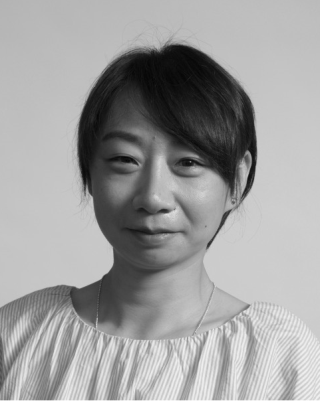
Dr. Ying Xu serves as a Researcher at the International Centre for Neuromorphic Systems (ICNS) within Western Sydney University, specializing in neuromorphic computing and hardware implementations. Her academic qualifications include: PhD from Western Sydney University (2019) M.Sc. in Microelectronics from Waseda University, Japan (2008) Bachelor of Electrical Engineering from Xidian University (2006) Her research focuses on biologically inspired computing systems with expertise in neuromorphic auditory processing , analog-digital circuit design , and hardware-accelerated machine learning . She bridges theoretical neuromorphic principles with practical VLSI implementations for next-generation computing architectures. Based at Western Sydney University's Penrith (Werrington South) campus in Room BA.2.01, she contributes to the ICNS research ecosystem advancing neuromorphic technologies through mixed-signal hardware solutions.
Dr. Renjie Gu is a Research Fellow at the University of Western Australia (UWA), affiliated with the Microelectronic Research Group (MRG) in the School of Electrical, Electronic and Computer Engineering. He holds an ARC Super Science Fellowship and specializes in molecular beam epitaxy (MBE) growth of semiconductor materials for infrared detectors, lasers, and solar cells. His work contributes to UN Sustainable Development Goals related to affordable and clean energy. Education: PhD in Semiconductor Materials (Chinese Academy of Sciences, 2012). Research focuses on MBE epitaxial growth, thin film characterization, and applications in optoelectronic devices. His recent publications (2024) highlight advancements in HgCdTe film growth, terahertz spectroscopy for carrier mobility analysis, and infrared sensing technologies. Awards: ARC Super Science Fellow (Microelectronic Research Group) Collaborations: Active research networks in Australia and globally, focusing on infrared materials and sensor technologies. Labs/Teams: Core member of UWA's Microelectronic Research Group (MRG), leading MBE-based semiconductor research initiatives.
Nur Hazliza is a Lecturer in the Department of Common Engineering at the Malaysia School of Engineering, Monash University Malaysia. She holds a PhD in Electrical & Electronics Engineering from Universiti Kebangsaan Malaysia (UKM), completed in 2019, with a focus on MEMS-based true north determination. Her research has been recognized with awards, including the Islamic Innovation Challenge 2019 Gold Medal and a gold medal at the 2017 International Conference and Exposition on Inventions. She has over ten years of teaching experience, previously serving as Head of Tutor and Diploma Coordinator at UCSI University (2008–2015) and part-time lecturer at Segi University (2017–2018). Her expertise spans MEMS, IoT, embedded systems, control systems, robotics, and digital signal processing. Education: PhD (UKM, 2019), MSc Microelectronics (UKM, 2015), Bachelor of Electronics Engineering Technology (UniKL, 2008). Current Project: Leading as Chief Investigator in the 'Agriculture 4.0' project (2023–2025), focusing on digital twins and deep learning for agriculture. Her research trends emphasize sensor development, navigation systems (e.g., gyrocompassing), and applications in agriculture and food safety (e.g., honey adulteration detection). Recent articles highlight innovations in MEMS, optical fiber sensors, and machine learning. Awards: Islamic Innovation Challenge Gold Medal (2019), 2017 National Intellectual Property Awards finalist. Activities: Peer reviewer for journals like Spectrochimica Acta and Measurement , mentor for internships, and organizer of STEM programs like Long Pasia Solar STEM.
Dr. Gilberto A. Umana Membreno is an Associate Professor and Principal Research Fellow at The University of Western Australia (UWA), and a Senior Industry Support Engineer for the Australian National Fabrication Facility (ANFF). His expertise spans semiconductor optoelectronics, device design/optimization, and infrared sensing technologies. He leads advanced device design and materials characterization efforts in the MRG, focusing on HgCdTe, type-II superlattices, and wide bandgap materials. He holds a BEng(Hons) and PhD from The University of Western Australia. His research emphasizes semiconductor device physics, optoelectronics, and reliability engineering, with applications in quantum sensing and emerging materials. He has contributed to 156 peer-reviewed publications and secured 17 grants, including projects on infrared technologies and sensor development. Key collaborations include work on GaN-based chemical sensors and III-V superlattice materials. He actively participates in interdisciplinary projects, such as the National Facility for Performance Characterisation of Infrared Technologies (2023-2024), and has supervised two research students. His work aligns with UN Sustainable Development Goals in Agriculture, Space, and Diagnostics through innovations in sensor technologies and material systems.