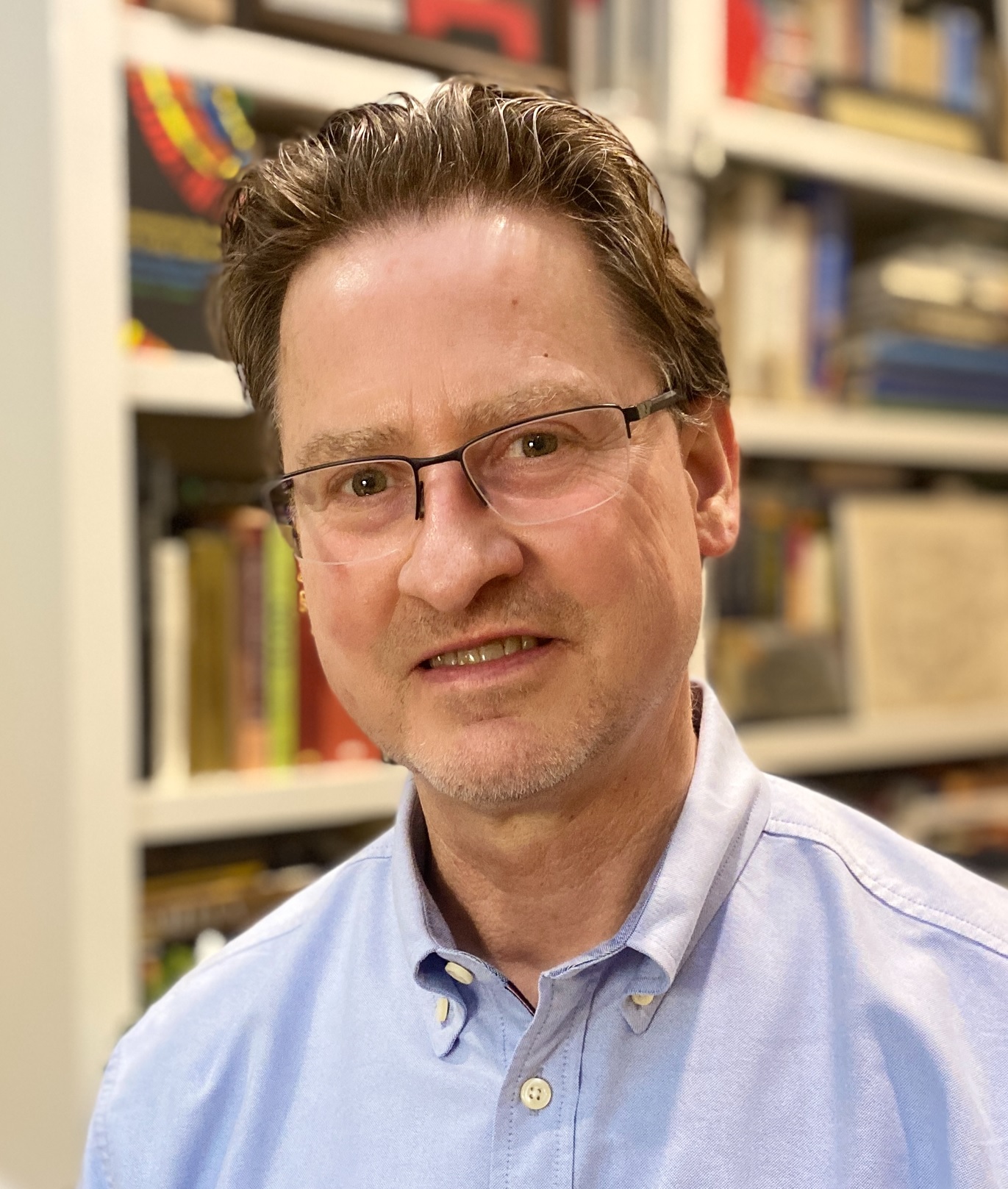
Shenyi Liu is a Doctoral Researcher at Aalto University's Department of Electrical Engineering and Automation , focusing on advanced semiconductor packaging and reliability engineering. Active in the Electronics Integration and Reliability research group, Liu contributes to developing innovative interconnect solutions for MEMS and power electronics. Email: shenyi.liu@aalto.fi Research Interests center on low-temperature bonding technologies , 3D packaging architectures , and failure mechanism analysis in electronic components. Key methodologies include solid-liquid interdiffusion (SLID) bonding and thermal-mechanical stress characterization. Publication Trends show expertise in MEMS integration , interconnect reliability , and power component packaging , with recent work addressing TSV interconnects, die-attach fatigue cracks, and Cu-Sn-In bonding systems. Collaborations span materials engineering and applied physics domains.
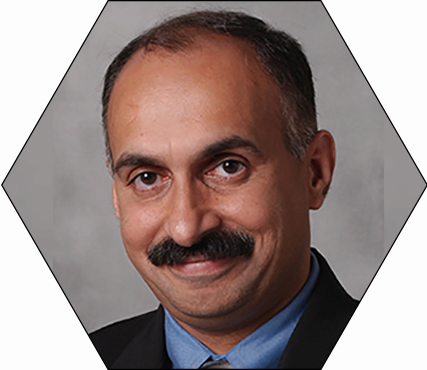
Mervi Paulasto-Kröckel is a Professor in the Department of Electrical Engineering and Automation at Aalto University, specializing in Electronics Integration and Reliability. With a doctoral degree in Engineering and Technology from Helsinki University of Technology (1995) and a Master's degree from the same institution (1990), her work focuses on microelectronics packaging, MEMS, and sustainable electronic manufacturing. Doctoral Degree: Engineering and Technology, Helsinki University of Technology (1995) Master's Degree: Engineering and Technology, Helsinki University of Technology (1990) Her research explores advanced packaging techniques like SLID bonding, reliability of microbumps, and thermally conductive materials. Recent work includes buried aluminum nitride for silicon-on-insulator and fatigue crack analysis in IGBT modules. Her publications emphasize low-temperature processes, interdiffusion, and MEMS reliability. Awards include the JVST A Best ALD Paper Award (2021) and a Best paper award (2000). She leads projects like PowerizeD and 3DPiezoMems, focusing on digitalization and 3D MEMS development. Best paper award (2000) JVST A Best ALD Paper Award (2021)
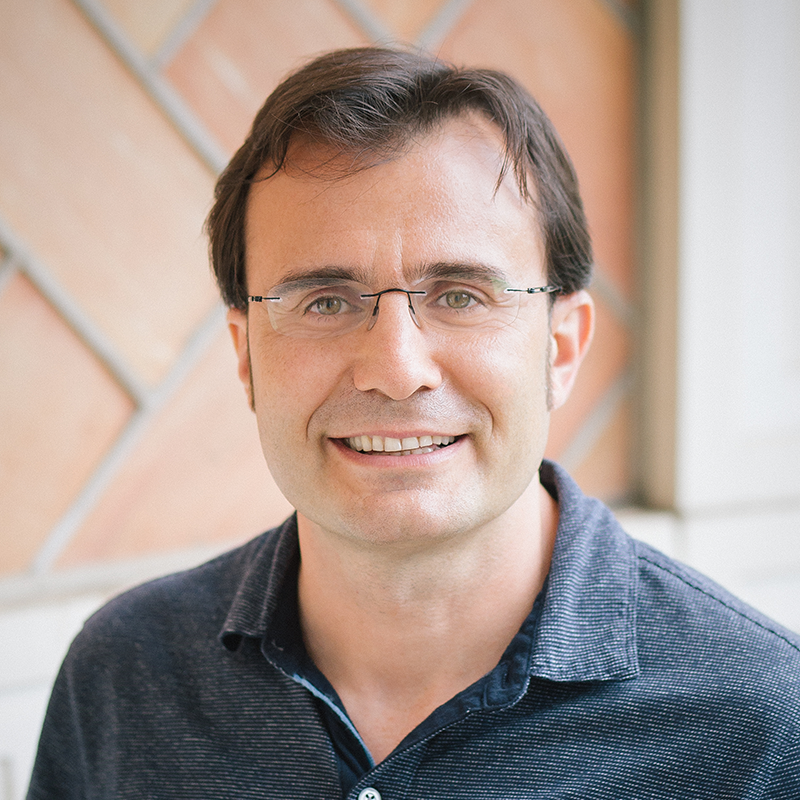
Professor David R. Clarke is the inaugural Extended Tarr Family Professor of Materials at Harvard School of Engineering and Applied Sciences. He is a Senior Fellow of the Hong Kong Institute for Advanced Study (HKIAS) and member of the US National Academy of Engineering. PhD in Physics (University of Cambridge) B.Sc. in Applied Sciences (Sussex University) ScD (University of Cambridge) His research spans fundamentals and applications of ceramics, metals, semiconductors, and polymers, focusing on mechanical properties, thermal barrier coatings, dielectric elastomers, oxidation fundamentals, and microelectronics reliability. Recent work explores electro-adhesive forces and nanopore evolution in yttria-stabilized zirconia. With over 500 publications in journals like Nature and Advanced Materials, Clarke's work has been cited >50,000 times (h-index 107). He holds 13 patents and has advised students across MIT, UC Berkeley, and Harvard. 2008 Japanese NIMS Award 1993 Humboldt Senior Scientist Award Distinguished Life Member, American Ceramic Society Teaching includes undergraduate courses on heat transfer and materials design, plus graduate courses on dislocations and composites. His lab recently worked on quantum dot displays and fatigue crack sensing technologies.
Professor John D. Cressler is a tenured faculty member at the Georgia Institute of Technology, holding a position within the School of Electrical and Computer Engineering in the College of Engineering. His research focuses on cutting-edge semiconductor technologies, particularly silicon-germanium heterojunction bipolar transistors (SiGe HBTs) for mixed-signal applications spanning RF, microwave, mm-wave, analog, and digital domains. His research interests center on atomic-scale bandgap engineering for next-generation semiconductor devices, with emphasis on SiGe HBT technology development, radiation-hardened circuits for space applications, cryogenic electronics, and device-circuit interactions. His team explores fundamental device theory, broadband noise analysis, profile optimization, 2-D/3-D simulation, compact modeling, and radiation effects. Current projects include Europa-surface mission electronics, D-band/sub-THz systems, and radiation-tolerant receiver designs. Analysis of his 15 most recent publications (2024-2025) reveals a dominant focus on radiation-hardened electronics for space applications (40% of works), millimeter-wave circuit design (30%), and SiGe HBT reliability optimization (30%). Key trends include Europa mission electronics development, D-band/sub-THz circuit innovation, and advanced radiation mitigation techniques using SiGe BiCMOS technology. Professor Cressler teaches multiple courses including ECE 3040 (Microelectronic Circuits), ECE 3450 (Semiconductor Devices), ECE 6444 (Silicon-Based Heterostructure Devices and Circuits), and the interdisciplinary IAC 2002 course on Science, Engineering and Religion. His research is supported by industrial collaborations and Georgia Tech facilities including the Georgia Electronic Design Center (GEDC), NanoTECH, and C-STAR.
Elyse Rosenbaum is the Melvin and Anne Louise Hassebrock Professor in Electrical and Computer Engineering at the University of Illinois at Urbana-Champaign. She also serves as the Acting Associate Dean for Research at the Grainger College of Engineering. She is the director of the NSF-supported Center for Advanced Electronics through Machine Learning (CAEML), a collaboration between the University of Illinois, North Carolina State University, and Penn State University. Education: Ph.D. in Electrical Engineering, University of California, Berkeley, 1992 M.S. in Electrical Engineering, Stanford University B.S. in Electrical Engineering, Cornell University (with distinction) Research Interests: Her research focuses on machine learning applications in electronics, ESD-robust high-speed I/O circuit design, compact modeling, behavioral modeling of circuits, and CDM-ESD protection for advanced packaging technologies. Scientific Awards: IEEE Fellow for contributions to electrostatic discharge reliability of integrated circuits Best Student Paper Award, IEDM Outstanding and Best Paper Awards, EOS/ESD Symposium Technical Excellence Award, SRC NSF CAREER Award IBM Faculty Award ESD Association’s Industry Pioneer Recognition Award Advising and Grants: She supervises graduate and undergraduate researchers, primarily focusing on those with strong academic records and relevant experience. Her work is supported by NSF and other prominent organizations. Labs and Teams: She leads the CAEML center, which aims to apply machine learning to optimize microelectronic circuits and systems, enhancing design automation and reliability.
Debbie Senesky is an Associate Professor at Stanford University in both the Aeronautics and Astronautics Department and the Electrical Engineering Department, as well as a Senior Fellow at the Precourt Institute for Energy. She serves as the Principal Investigator of the EXtreme Environment Microsystems Laboratory (XLab) and Site Director of nano@stanford. Dr. Senesky received her B.S. in mechanical engineering from the University of Southern California (2001), followed by M.S. (2004) and Ph.D. (2007) degrees in mechanical engineering from the University of California, Berkeley. Prior to joining Stanford, she held positions at GE Sensing (formerly NovaSensor), GE Global Research Center, and Hewlett Packard. Her research focuses on developing nanomaterials and electronic systems capable of operating in extreme environments, including high-temperature conditions for Venus exploration, microgravity synthesis of nanomaterials, and harsh environment electronics. Dr. Senesky's work bridges multiple disciplines, connecting aerospace engineering, electrical engineering, materials science, and space technology to solve challenges in extreme environment applications. Dr. Senesky has made significant contributions to the field of high-temperature electronics, GaN-based sensors, graphene aerogel synthesis in microgravity, and materials for space applications. Her recent publications demonstrate a strong focus on practical applications of these technologies, particularly for space exploration and extreme environment sensing. Presidential Early Career Award for Scientists and Engineers (PECASE), NASA (2025) Emerging Leader Abie Award from AnitaB.org (2018) Early Faculty Career Award from NASA (2012) Gabilan Faculty Fellowship Award (2012) Sloan Ph.D. Fellowship (2004-2006) Dr. Senesky actively advises students at all levels, from undergraduate to postdoctoral researchers, and has established herself as a leader in promoting diversity in STEM through her role as Faculty Advisor for the Stanford Chapter of the National Society of Women Engineers. Her collaborative approach is evident in her numerous interdisciplinary projects and partnerships with NASA, industry, and other research institutions. She directs the EXtreme Environment Microsystems Laboratory (XLab), which focuses on developing technologies for operation in extreme environments including high temperature, radiation, and microgravity conditions. The lab's work has applications for space exploration, particularly for Venus missions, as well as terrestrial applications requiring robust electronics.
Suresh K. Sitaraman is a Regents' Professor and Morris M. Bryan, Jr. Professor in Mechanical Engineering at the Georgia Institute of Technology's George W. Woodruff School of Mechanical Engineering. His primary research focuses on Computer-Aided Engineering (CAE) and Design, manufacturing processes, micro/nano engineering, and mechanics of materials. He leads the Computer-Aided Simulation of Packaging Reliability (CASPaR) Lab and is involved in flexible hybrid electronics research through the Flexible Electronics Center . Dr. Sitaraman holds a Ph.D. from The Ohio State University (1989), M.A.Sc. from the University of Ottawa (1985), and B.E. from the University of Madras (1982). His research includes developing novel techniques like fixtureless magnetic actuation for interfacial fracture testing, compliant micro-scale interconnects for stress mitigation, and synchrotron X-ray diffraction analysis for through-silicon vias (TSVs). He has pioneered studies on carbon nanotube forests' mechanical properties and reliability challenges in 3D microsystems. His awards include the NSF CAREER Award (1997-2002), ASME Fellow designation (2004), and Sigma Xi Sustained Research Award (2008). He has authored over 150 publications and holds multiple patents on compliant interconnect technologies and packaging reliability solutions. Key Research Themes: Micro/nano-scale material characterization, physics-based predictive modeling, flexible electronics, 3D integration, and thermal management. Labs/Initiatives: CASPaR Lab ( caspar.gatech.edu ), Flexible Hybrid Electronics Center. Industry Impact: Contributions to semiconductor packaging, wearable electronics, and advanced manufacturing techniques.
Muhannad S. Bakir is the Dan Fielder Professor in the School of Electrical and Computer Engineering at Georgia Institute of Technology, and Director of the 3D Systems Packaging Research Center . His research focuses on heterogeneous integration , electrical/photonic interconnects , thermal modeling , and electronics for healthcare , with over 180 publications and 12 U.S. patents. Research areas include: Advanced cooling and power delivery for emerging systems Biosensor-CMOS integration 2.5D/3D IC packaging Polylithic integration technology Nanofabrication for microsystems Scientific accolades include: 2018 IEEE EPS Exceptional Technical Achievement Award 2013 Intel Early Career Faculty Honor Award 2012 DARPA Young Faculty Award 2011 IEEE CPMT Outstanding Young Engineer Award Best paper awards at IEEE ECTC, IITC, and CICC 2020 Georgia Tech Doctoral Thesis Advisor Award His lab explores integrated 3D systems with emphasis on co-design of thermal, power, and electrical networks for machine learning and healthcare applications.
Kaushik Nayak is an Associate Professor in the Department of Electrical Engineering at the Indian Institute of Technology Hyderabad . His research spans semiconductor device physics, mesoscopic electronics, and electro-thermal effects in nanoscale transistors, with recent work on diamond MOSFETs, 2D material contacts, and thermal resistance in nano-sheet FETs. Ph.D., Indian Institute of Technology Bombay M. Tech., Microelectronics, IIT Bombay B.E., Electronics & Telecommunication, Utkal University He teaches advanced courses on semiconductor device modeling, mesoscopic electronics, and electromagnetic wave propagation. His publications focus on nanoelectronics, device variability, and high-temperature operations. Contact: knayak@ee.iith.ac.in .
Gianluca Piazza is the STMicroelectronics Professor of Electrical and Computer Engineering at Carnegie Mellon University (CMU), with a courtesy appointment in Mechanical Engineering. He directs the John and Claire Bertucci Nanotechnology Laboratory (CMU Nanofab). Previously, he was the Wilf Family Term Assistant Professor at the University of Pennsylvania. His research focuses on piezoelectric micro/nano electromechanical systems (M/NEMS) for RF communication, optomechanics, chemical/biological sensing, and mechanical computing. Key projects include nanorelays for low-power computing, ultrasound-based wireless powering, and piezoelectric MEMS for energy harvesting. Education: PhD (2005) in Electrical Engineering from UC Berkeley; MS (2001) from University of Texas at Austin and Politecnico di Milano (Italy). Research Interests: M/NEMS design, micro/nano fabrication, piezoelectric materials, mechanical switches, and energy-efficient electronics. His work bridges fundamental science and applied engineering, with patents in micromechanical resonators and awards including the IBM Young Faculty Award (2006) and multiple IEEE Best Paper Awards. Grants & Collaborations: NSF LEAP-HI grant ($2M) for nanorelay development (2020); CMU Kavčić-Moura Endowment funding. Collaborates with Maarten de Boer (Mechanical Engineering) and institutions like the University of Pennsylvania and City University of Hong Kong. Labs & Teams: Leads the Piazza Micro and Nano Systems Laboratory, focusing on NEMS/MEMS innovation. Active in CMU’s Center for Silicon System Implementation and Engineering Research Accelerator.
Kevin Pipe is a Professor of Mechanical Engineering, Applied Physics, and Electrical Engineering at the University of Michigan’s College of Engineering, where he also serves as Associate Dean for Undergraduate Education. He holds a Ph.D. (2004) and dual bachelor's/master's degrees (1999) in Electrical Engineering from MIT. His research focuses on microscale heat transfer in electronic/optoelectronic devices, thermoelectric energy conversion, and medical thermal applications. Key projects include molecularly engineered high-conductivity polymers, phase-change materials for thermal management, and cryoanesthesia devices. His work has been featured in Wired and Phys.org , and he received the DARPA Young Faculty Award (2009) and ME Achievement Award (2008). Research collaborations include work with MSE Professor Jinsang Kim’s group on polymer thermal conductivity and computational sprinting projects with computer science partners. His lab explores thermal interfaces in high-power diode lasers, spinal cool-sensing circuits, and ultra-rapid cooling anesthesia systems. Over 60 peer-reviewed articles and patents document his contributions to thermal sciences and materials engineering. Current efforts emphasize translating lab innovations into clinical and industrial applications. Education: Ph.D. in EE, MIT (2004) M.Eng. in EECS, MIT (1999) S.B. in EECS, MIT (1999) Key Awards: Defense Advanced Research Projects Agency Young Faculty Award (2009) ME Achievement Award (2008) Lab Focus Areas: Thermal management of microelectronics Thermoelectric materials Medical thermal devices Grant activities include DARPA-funded projects and industry partnerships. His interdisciplinary approach bridges mechanical, electrical, and biomedical engineering to address thermal challenges in computing and healthcare.
Prof. Juin J. Liou serves as the UCF Pegasus Distinguished Professor and Lockheed Martin St. Laurent Professor of Engineering in the Department of Electrical and Computer Engineering at the University of Central Florida, where he has held faculty positions since 1987. Education: B.S. (Honors) in Electrical Engineering, University of Florida, 1982 M.S. in Electrical Engineering, University of Florida, 1983 Ph.D. in Electrical Engineering, University of Florida, 1987 Research Focus: Prof. Liou specializes in Electrostatic Discharge (ESD) protection systems critical for integrated circuit reliability, semiconductor device modeling, and RF circuit design. His pioneering work addresses ESD challenges in next-generation technologies including silicon nanowire, organic semiconductors, and gallium nitride (GaN) devices, where miniaturization intensifies vulnerability to electrostatic damage. His research bridges theoretical modeling with practical implementation to solve industry-critical protection failures. Awards and Leadership: Ten teaching/research excellence awards from University of Central Florida Six major awards from IEEE IEEE-EDS Distinguished Lecturer Multiple honorary professorships Research Impact: Secured over $14.5 million in funding from NSF, DARPA, NASA, NIST, and semiconductor industry leaders including Intel, Texas Instruments, and Analog Devices. Authored 10 books, 270+ journal papers (18 invited reviews), and 220+ conference papers while holding 8 U.S. patents (4 pending). Served as IEEE EDS Vice-President, Treasurer, and Board of Governors member, plus editorial roles for Microelectronics Reliability and IEEE journals.
Jeffrey C. Suhling is the Quina Distinguished Professor and Department Chair of Mechanical Engineering at Auburn University . His research focuses on the mechanical and thermal behavior of lead-free solder alloys , particularly in automotive electronics and high strain rate applications . He has extensively studied the reliability of hybrid SAC-LTS solder joints under thermal cycling, vibration, and shock. Scientific awards : Quina Distinguished Professor His work integrates finite element modeling , microstructural analysis , and machine learning to predict solder joint failure and optimize material performance. Key areas include creep behavior , damage accumulation , and interfacial reliability in extreme environments.
Georges Gielen is Full Professor in the Department of Electrical Engineering (ESAT) at KU Leuven, Belgium, and part-time Research Director at imec. He has held multiple leadership roles including Chair of ESAT Department (2012-2013, 2020-2024) and Vice-Rector for Science, Engineering & Technology (2013-2017). His academic career spans over 30 years at KU Leuven, progressing from Assistant to Full Professor. His research focuses on analog and mixed-signal integrated circuit design automation , with expertise in CAD tools, design optimization, sensor interfaces, and neuromorphic systems. His work bridges hardware design with machine learning, particularly in hardware-efficient AI implementations and biomedical applications. He has pioneered techniques for automated analog circuit sizing, topology synthesis, and reliability-aware design in nanometer CMOS. Gielen has received numerous accolades including the IEEE CAS Mac Van Valkenburg Award (2015), IEEE CAS Charles Desoer Award (2020), and EDAA Achievement Award (2021). He holds an ERC Advanced Grant AnalogCreate and is an IEEE Fellow since 2002. As a prolific scholar, he has chaired major conferences including DATE (2006), ICCAD (2007), and ESSCIRC (2017). He has graduated over 55 PhD students through the MICAS research group at KU Leuven, currently supervising 13 doctoral candidates. His research team collaborates extensively with imec and industry partners on cutting-edge projects in carbon-aware AI accelerators, uncertainty-aware design, and neuromorphic sensor interfaces.
Mehdi Asheghi is an Adjunct Professor at Stanford University specializing in advanced thermal management solutions. His research focuses on heat transfer optimization, electronics cooling, and energy-efficient systems using cutting-edge materials science and micro/nanofabrication techniques. His work spans high-heat-flux cooling, phase-change materials, and thermal interface technologies, with applications in power electronics, integrated circuits, and sustainable energy systems. Innovations include microchannel coolers, copper nanowire composites, and porous thermal structures. With publications addressing thermal challenges from chip-scale to industrial systems, his research advances reliability and performance in electronic devices and energy infrastructure.