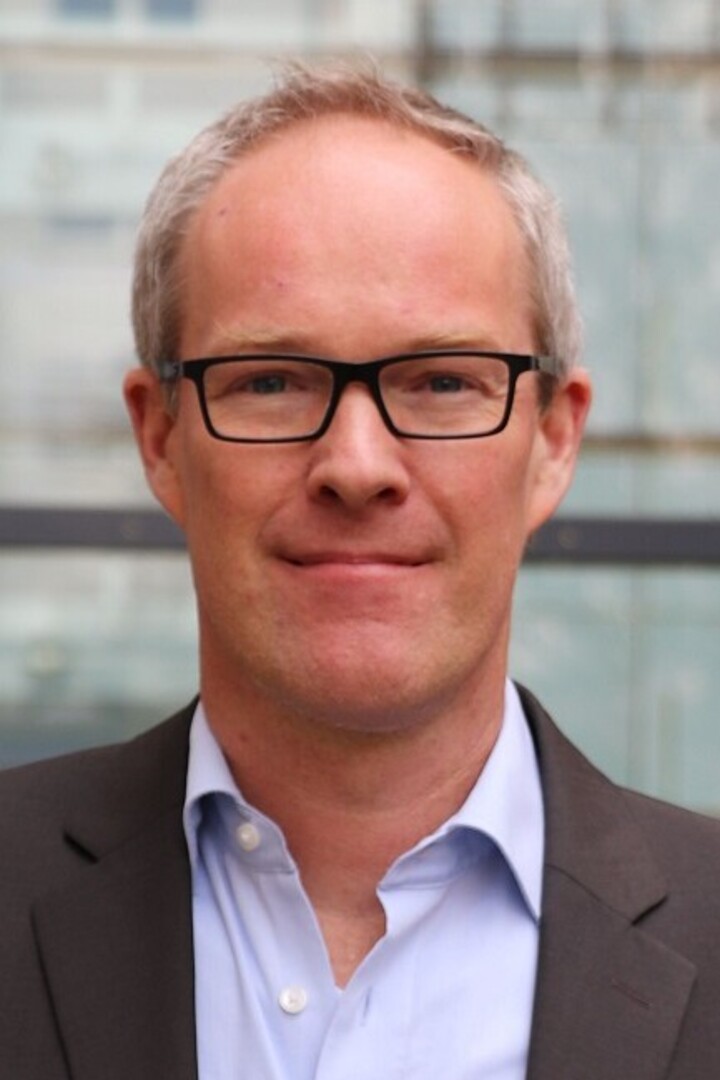
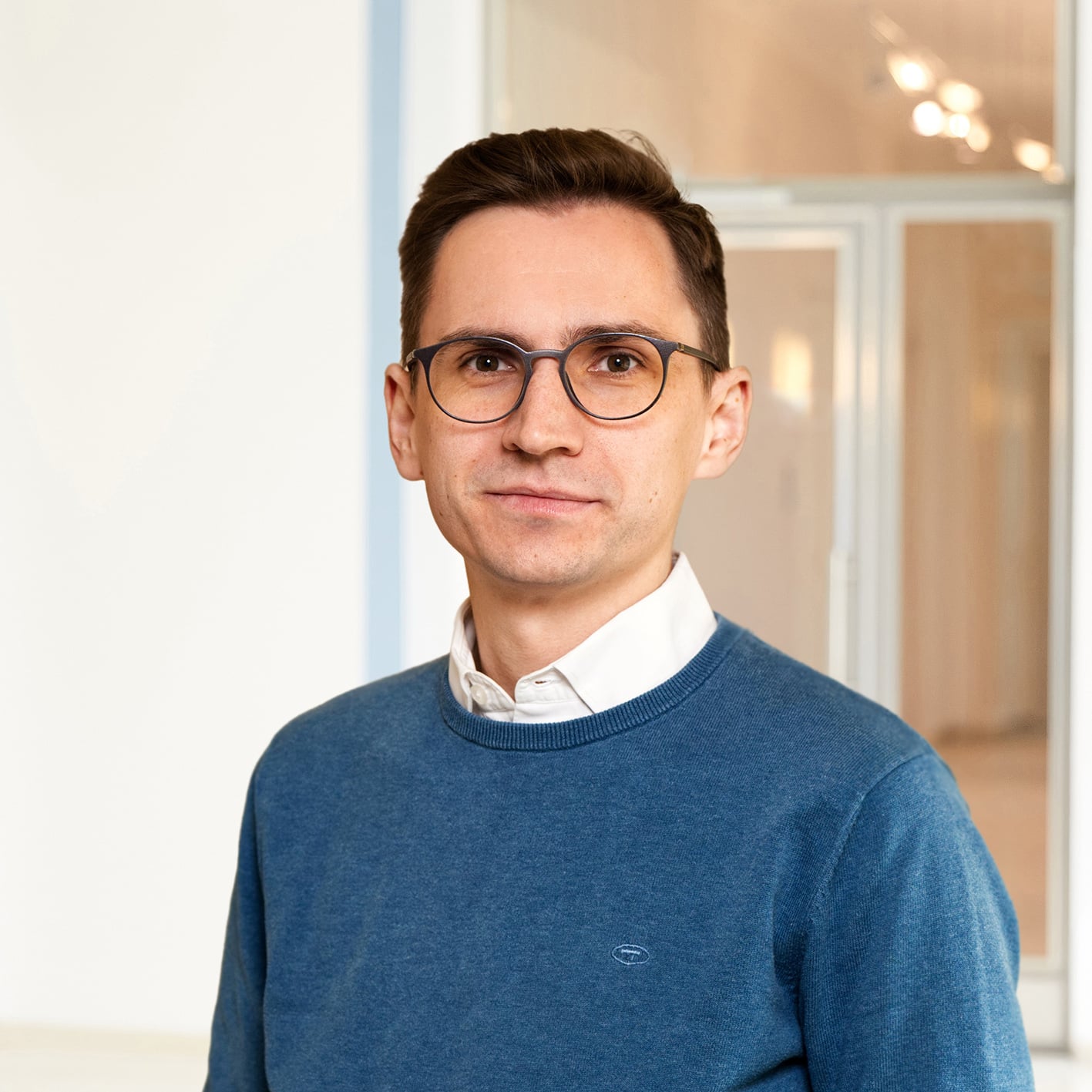
Professor Christian Bizer is a leading figure in web-based systems and data integration at the University of Mannheim , where he chairs Information Systems V: Web-based Systems . His research focuses on integrating data from multiple sources using large language models and LLM-based agents, with applications in product data extraction and DBpedia knowledge graph construction. He co-founded the DBpedia project and initiated the WebDataCommons initiative. Current research areas: Entity matching, schema matching, table annotation, information extraction, data discovery Key projects: WebMall benchmark, WInte.r integration framework, Schema.org analysis His work applies to e-commerce data integration and knowledge graph construction, with empirical studies on schema.org adoption. He supervises PhD students including Alexander Brinkmann and Ralph Peeters. Scientific Awards: Best Paper at iiWAS 2024 SWSA Ten-Year Award at ISWC 2019 Yahoo FREP Award 2015 Semantic Web Challenge winners Teaching includes courses on web data integration, web mining, large language models, and data mining for master's programs. He leads the DWS PhD colloquium and team projects on LLM agents for data integration.
Prof. Dr. Johannes Sauer is a Professor at the Technical University of Munich (TUM), holding dual affiliations with the TUM School of Management and the TUM School of Life Sciences . His academic focus is on production and resource economics, with expertise in agricultural sustainability, policy evaluation, and circular economy strategies in Asia-Pacific and Latin America. Education: Bachelor’s/Master’s in Agricultural Economics from Universities of Tübingen, Hamburg, and Imperial College London. Doctorate (summa cum laude) in Agricultural Economics from the University of Bonn (2004). Research Interests: Prof. Sauer’s work spans productivity and resilience in agricultural systems, adoption of sustainable technologies, water resource valuation, and bioeconomic trends. He emphasizes smart technologies and circular economy applications in developing regions. His research employs econometric methods to analyze policy impacts and environmental-economic trade-offs. Key Trends in Publications: Recent articles highlight climate-smart agriculture, ICT adoption in rural China, and agroforestry’s role in reducing ecological-economic trade-offs. He explores behavioral drivers of policy participation and innovative tools like the IoFarm decision support system. Awards: 2021 Honorary Professorship at ANU OECD Fellow Awards (2010, 2016) Best Paper Awards (2008–2015) Consulting & Roles: OECD and Asian Development Bank consultant, ESRC Peer Review College member, and liaison lecturer for the German National Academic Foundation. He advises on agri-environmental policies and international development. Labs/Teams: Active in collaborative projects such as PONDERFUL Framework and IPM Popilia , focusing on nexus research and pest management strategies.
Albert Esteve is a research professor in the Department of Sociology at the Autonomous University of Barcelona and serves as the director of the Center for Demographic Studies (Centre d'Estudis Demogràfics or CED). He also holds the position of Rector at the European Doctoral School of Demography. His research specializes in demography with particular focus on family structures, households, and macro-level demographic patterns through international comparisons. Esteve frequently utilizes survey and population census data in his work and has made significant contributions to the Integrated Public Use of Microdata Series (IPUMS) project's international version. Esteve's scholarly output demonstrates consistent productivity with publications spanning from 2006 to 2025, including multiple articles in 2024 and forthcoming publications in 2025. His research portfolio reveals several key thematic areas including fertility patterns (particularly in Spain and Latin America), household composition across different cultural contexts, marriage and cohabitation patterns, and the relationship between education and demographic behavior. He has conducted extensive comparative work across Europe, Latin America, East Asia, and Africa. Esteve has secured significant research funding from prestigious organizations including the European Research Council and the Government of Spain. His leadership roles at the Center for Demographic Studies and the European Doctoral School of Demography position him at the forefront of demographic research and education in Europe.
Daniel Wilhelm is a Professor of Statistics and Econometrics at LMU Munich, with a courtesy appointment in the Department of Economics. His research focuses on econometric theory, nonparametric methods, measurement error modeling, and statistical inference. He leads the Statistics and Econometrics Group at LMU and holds affiliations with the Centre for Microdata Methods and Practice (CeMMAP), Institute for Fiscal Studies (IFS), and the Centre for Research and Analysis of Migration (CReAM). Wilhelm’s work includes groundbreaking contributions to NPIV estimation, robust statistical testing, and the development of R and Stata packages for rank inference and econometric analysis. His recent publications address topics like rank-based inference, measurement error detection, and high-dimensional independence testing. He organizes academic events such as the Munich Econometrics Seminar and the LMU-Todai Econometrics Workshop. His research emphasizes methodological rigor and practical applications, with a focus on improving statistical techniques for social science and policy analysis.
Prof. Dr. rer. pol. Bernd Frick is a full Professor of Economics at the University of Paderborn , Faculty of Business Administration and Economics, where he heads the Department of Economics – Institute Department 1: Management. Active and born in 1959, he is based in Paderborn, Germany, and his research spans Organizational Economics , Corporate Governance , Personnel Economics , Law & Economics , and Sports & Cultural Economics . Education & Academic Focus: Although specific degrees are not listed, his title "Dr. rer. pol." (Doctor of Economics and Social Sciences) indicates advanced training in economics. His work integrates microeconomic theory with empirical analysis, focusing on labor markets, firm governance, and the economics of professional sports. Research Interests: Organizational Economics & Theory of the Firm: Analyzing internal labor markets, co-determination, and governance structures. Personnel Economics & Labor Policy: Examining incentive systems, wage determination, and employment practices. Sports Economics: Extensive studies on player remuneration, coaching careers, doping, and the economic impact of regulations like the Bosman ruling. Law & Economics: Evaluating the economic effects of legal frameworks, including disability employment laws and co-determination statutes. Cultural Economics: Investigating art markets, reputation, and value creation in creative industries. Publication Trends: Over 100 peer-reviewed articles and monographs reveal a consistent focus on empirical sports economics (e.g., Bundesliga performance, marathon incentives), labor market institutions (works councils, co-determination), and governance issues. Recent work explores gender competitiveness in athletics and the longevity of coaching careers under performance pressure. Scientific Awards & Honors: While no major named awards are listed, his extensive publication record, editorship of academic volumes (e.g., Economics of Grassroots Sports ), and frequent policy-oriented commentary establish him as a leading voice in applied economics. Advising & Grants: Details on specific doctoral students or funded projects are not provided, but his role as editor, co-author with international scholars (e.g., Robert Simmons, Joachim Prinz), and policy consultant (e.g., Federal Ministry of Labour) imply active supervision and grant involvement. Labs & Teams: While no dedicated lab is mentioned, his institutional affiliation with the Institute Department 1: Management suggests collaboration within a multidisciplinary team of economists and management scholars at Paderborn.
Prof. Martin Leroch holds the Chair of Economics and Business Ethics at Pforzheim University since 2020. Previously, he worked as an economist and consultant at Lademann & Associates GmbH (2016–2020), specializing in competition law damages litigation. He earned his Dr. rer. pol. from the University of Hamburg (2008) and conducted postdoctoral research there until 2011, followed by roles at Johannes Gutenberg University Mainz and Martin Luther University Halle-Wittenberg. His research focuses on institutions shaping economic behavior, behavioral impacts of violence, judicial independence effects on asylum policies, and expressive crimes. He explores cultural influences on workplace behavior and media market dynamics. Teaching spans global economics, microeconomics, game theory, and law & economics, with international experience in India and Ethiopia. Publications emphasize interdisciplinary approaches, combining quantitative analysis with institutional theory. He co-edited the 2023 volume Power and Responsibility and serves on the editorial board of Homo Oeconomicus .
Benjamin Jung is Professor of Economics at the University of Hohenheim, specializing in international trade, quantitative modeling, and trade policy. He holds a PhD from Eberhard Karls University Tübingen and has held positions at the University of Konstanz, Paris School of Economics, and research fellowships at CESifo and IAW. His research examines trade policy impacts, firm-level trade dynamics, and welfare implications of economic integration. Key awards include the Young Economist Award (2009) and Best Paper Award (2008). RWT Group Dissertation Award FIW Research Conference Best Contribution (2007) GEP Postgraduate Conference Best Paper (2008) Young Economist Award (2009)
Dr. Julia Mink is a Tenure Track Assistant Professor at the University of Bonn, specializing in empirical environmental and health economics. Her research focuses on quantifying societal costs of pollution, climate change, and inequality through quasi-experimental methods and large-scale data analysis. Current affiliations: Institute for Applied Microeconomics, University of Bonn Previous affiliations: French National Research Institute for Agriculture, Food and Environment (INRAE) Her research combines environmental economics with health outcomes, emphasizing: Health impacts of air pollution and agricultural pesticides Inequality distribution in pollution exposure Climate resilience via healthcare systems Long-term socioeconomic impacts of disasters Recent publications analyze air pollution healthcare costs, pesticide effects on child development, and climate shocks in sub-Saharan Africa. She collaborates with researchers in Berkeley, Paris, and within the University of Bonn. Teaching roles: Environmental Economics (Graduate), Introductory Econometrics (Undergraduate) Argelander Professorship recipient
Dr. Sebastian Link is a Research Associate at the ifo Center for Macroeconomics and Surveys since April 2018, specializing in macroeconomics with microdata, expectation formation, labor economics, policy evaluation, and minimum wage research. His work provides critical insights for economic policymakers through rigorous analysis of business survey data and macroeconomic trends in the German economy. Dr. Link earned his doctorate (Dr. oec. publ.) summa cum laude from Ludwig-Maximilians-Universität München, with a dissertation on expectation formation during economic change. His academic background includes: Master of Science in Economics, LMU München (2011-2013) Bachelor of Science in Economics, University of Mannheim (2008-2011) Study Abroad at University of Copenhagen, Denmark (2010-2011) His research examines how firms form expectations about inflation and wages, the price and employment effects of minimum wages, corporate tax impacts on investment decisions, and business behavior during economic crises. He utilizes sophisticated analysis of the ifo Business Survey microdata to understand heterogeneous firm responses to policy changes and economic shocks across different sectors of the German economy. Dr. Link's publication record shows consistent contribution to high-impact economic research, with recent work analyzing business responses to potential US trade policy shifts under Trump 2.0, wage inflation expectations accuracy, and the mechanisms through which corporate tax increases affect investment behavior. His research bridges academic rigor with practical policy relevance, frequently informing economic forecasting and policy discussions in Germany. His scholarly recognition includes: Egon-Sohmen Promotionsstipendium (2013-2016) Stipendium der Studienstiftung des deutschen Volkes (2009-2013) Gebührenstipendium der Universität Mannheim (2009-2011) Dr. Link has extensive teaching experience at LMU München, having instructed courses in International Trade, Managerial Economics, Empirical Economics, and Macroeconomics from 2014 to 2018. His research is supported by significant projects including the Gemeinschaftsdiagnose (2022-2026), minimum wage and tax policy research (2023-2026), and pandemic impact studies (2022-2024), funded by the German Federal Ministry for Economic Affairs, German Research Foundation, and Deutsche Bundesbank. As a key contributor to the ifo Economic Forecast and frequent media commentator on labor market developments, particularly Kurzarbeit (short-time work) trends, Dr. Link plays an important role in translating complex economic research into actionable insights for policymakers, businesses, and the public.
Junyi Zhu is a Research Professor at the Research Centre of the Deutsche Bundesbank. His research focuses on labor economics, applied microeconomics, and public economics with a particular emphasis on household finance, wealth distribution, and policy analysis. He has contributed to significant projects like the Panel on Household Finances (PHF) in Germany, providing microdata insights into household wealth dynamics. His work bridges theoretical economic models with empirical analysis, addressing issues such as credit constraints, tax policy, and wealth inequality. Affiliations: Deutsche Bundesbank Research Centre since 2010 Research interests include the redistribution effects of price level changes, household saving behaviors, and the interplay between inheritance and marital sorting. His publications span journals like the Journal of the European Economic Association and German Economic Review . Zhu has presented at numerous international conferences, including the World Congress of the International Microsimulation Association and the European Meeting of the Econometric Society. His work emphasizes policy-relevant findings, such as solutions to bracket creep and the design of effective economic stimulus measures. Despite extensive contributions, no specific scientific awards are documented in the provided materials.
Ufuk Akcigit is the Arnold C. Harberger Professor of Economics at the University of Chicago and a Research Professor at the Halle Institute for Economic Research (IWH), where he heads the Research Group on the Economic Gap between East and West Germany. He is also a Co-director of the Growth Academy, a Research Associate at the National Bureau of Economic Research (NBER), and a Research Affiliate at the Centre for Economic Policy Research (CEPR). Additionally, he is a Fellow of the Econometric Society. He received his Ph.D. from the Massachusetts Institute of Technology (MIT). His research focuses on Macroeconomics, Economic Growth, Firm Dynamics, Innovation, and Entrepreneurship. He has made significant contributions to understanding business dynamism, the role of innovation in growth, and firm behavior in developing countries. His work often combines theoretical models with empirical analysis using microdata and historical sources, particularly examining knowledge diffusion between frontier and laggard firms. His recent publications explore declining business dynamism, the impact of managerial delegation in developing countries, and the role of credit card financing for small businesses. He has pioneered real-time economic monitoring through the Intuit QuickBooks Small Business Index, which tracks near real-time employment trends across 422,000 small businesses in the US, Canada, and UK. Akcigit has been honored with the Max Planck Humboldt Research Award and is a Fellow of the Econometric Society, recognizing his contributions to economic theory and empirical analysis. He leads the Research Group on the Economic Gap between East and West Germany at IWH, investigating structural differences in productivity and innovation, and co-directs the Growth Academy which fosters interdisciplinary research on economic growth mechanisms.
Dr. Anna Primpeli is an Alumni Researcher at the University of Mannheim's Data and Web Science Group within the School of Business Informatics and Mathematics . Her research focuses on data extraction, integration, and entity matching, with particular emphasis on leveraging active learning and semantic web technologies. She contributes to large-scale benchmark datasets such as the Web Data Commons series, which provide foundational resources for entity resolution and data mining. Her work often intersects with practical applications in product data integration and web-scale data analysis. Teaching contributions include courses on Web Mining , Data Mining , and Large-Scale Data Integration , reflecting her expertise in both theoretical and applied aspects of data science. Key research trends in her publications include improving entity matching through active learning techniques, developing robust benchmarking frameworks, and utilizing schema.org annotations for scalable data integration. She has collaborated extensively with colleagues like Christian Bizer and contributed to initiatives like the MWPD2020 Semantic Web Challenge.
Moritz Drechsel-Grau is an Assistant Professor of Economics at LMU Munich's Center for Economic Studies. He holds a Ph.D. in Economics from the University of Mannheim (2021). His research focuses on socioeconomic inequalities using structural models and microdata, with expertise in Macroeconomics, Labor Economics, and Public Economics. Key research areas include the effects of minimum wages on employment and reallocation, gender disparities in corporate careers, and the role of income inequality in debt dynamics. He has been recognized with the 2020 WFA PhD Candidate Award for Outstanding Research. His work often involves collaborative projects, such as the Global Income Dynamics Project. Current research explores housing booms, labor mobility, and income inequality across German regions. Notable publications include analyses of German income dynamics (Quantitative Economics, 2022) and the macroeconomic impacts of rising inequality on household debt (Review of Financial Studies, 2024). His methodologies integrate structural models with empirical data to address policy-relevant questions.
Prof. Dr. Harald Strotmann is a Professor of Economics at Pforzheim University’s Business School, serving as Vice Dean since 2014. He leads the MBA International Management program and has held roles including Head of the Economics Department (2009–2014). His research focuses on labor markets, microdata analysis, sustainable development, and corporate social responsibility (CSR), with notable work on Germany’s Hartz IV reforms and multinational company impacts in rural India. Key projects include evaluations of labor market policies and collaborations with Bayer CropScience on CSR initiatives. Education: Earned his doctoral degree from the University of Hohenheim with a study on labor market dynamics and startup performance in Baden-Württemberg. Research emphasizes empirical microdata, regional economics, and policy evaluation. Research trends span labor market reforms, sustainability, and CSR’s role in development. Recent work explores empowerment in rural India and corporate contributions to health capabilities. His 2022 study on gender-based community empowerment in India highlights intersections of development and gender studies. Awards: Multiple teaching awards (2008, 2012) and the Südwestmetall-Award (2001) for doctoral research. Active in academic leadership, including editorial roles for journals like the European Journal of Development Research and Journal of Happiness Studies . Advising/Grants: Led over 20 projects for German ministries, including evaluations of minimum wage policies and the Kommunal-Kombi employment program. Collaborated with companies like Bayer, Bosch, and Mahle on sustainability and innovation initiatives. Labs/Teams: Involved in interdisciplinary teams studying CSR, sustainable development, and labor market policy. Key partnerships include the Institute for Applied Economic Research (IAW, Tübingen) and international collaborations with institutions like the Human Development and Capability Association (HDCA).
Max Löffler is an Assistant Professor at Maastricht University's Department of Microeconomics and Public Economics within the School of Business and Economics. He holds dual affiliations with Maastricht University and the University of Cologne, where he participates in the ERC HIPPO project. His academic network includes CESifo, ECONtribute, IZA, and ZEW research institutions. His research focuses on public and urban economics, particularly taxation effects, inequality dynamics, housing markets, and climate change economics. Löffler employs advanced econometric methods to analyze fiscal policies, labor supply responses, and the socioeconomic impacts of events like natural disasters. His work bridges theoretical economics with practical policy applications, often involving large-scale microdata analysis. His publication record shows strong emphasis on tax policy (corporate, property, local), inequality measurement, and climate vulnerability. Recent work demonstrates increasing focus on housing markets and climate economics, while maintaining core expertise in fiscal policy analysis. Key methodological approaches include quasi-experimental designs, structural modeling, and microsimulation techniques. Veni grant 'Housing Markets and Inequality' (NWO) Dutch Ministry Starter Grant (2025) University Teaching Qualification (BKO, 2024) ERC Starting Grant HIPPO project member Junior Start-Up Grant 'Housing Booms and Segregation' Löffler actively supervises PhD students as co-promoter and oversees numerous bachelor/master theses annually. His research is supported by multiple competitive grants including NWO Veni and Dutch Ministry funding. He contributes to policy consulting through ZEW and IZA, with reports available via Maastricht University's research portal. Current projects examine housing inequality, climate vulnerability, and fiscal consolidation effects. He leads research teams within the Department of Microeconomics and Public Economics and collaborates extensively with German research institutions. The Veni-funded project on housing markets represents his primary current research thrust, while ongoing work with the HIPPO team explores broader urban economic dynamics.