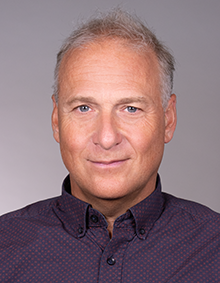
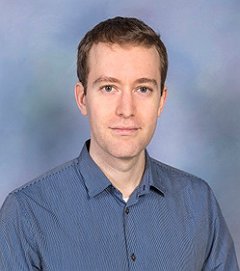
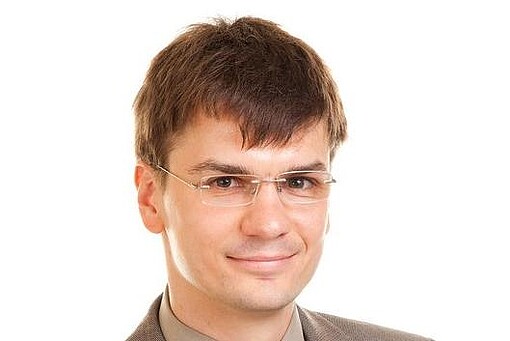
Prof. Dr. Olaf Just serves as Professor and Head of both the Master's program in Mechanical Engineering (Lightweight Construction and Robotics) and the Bachelor's program in Robotics and Automation at Westphalian University of Applied Sciences' Department of Mechanical Engineering in Bocholt. His research expertise spans: Embedded Robotics using ROS2, Universal Robots, and MoveIt! Industrial Control Systems (SPS) with TIA-Portal and Step7 Microcontroller-based hardware/software development in C/C++ Autonomous navigation and Computer Vision via the Ruhr TurtleBot Competition ROS-Navigation Stack and Gazebo simulation environments Prof. Just teaches core courses including Technical Informatics (TIN), Embedded Robotics (EMR), Microcontroller Technology (MCT), and Robot Programming with ROS2/Python (ROP). He actively organizes the Ruhr TurtleBot Competition to advance student capabilities in robotics, emphasizing practical integration of mechatronic systems and industrial automation technologies through hands-on project work.
Emmanuel Baccelli is a Professor for 'Open and Secure IoT Ecosystem' at Freie Universität Berlin's Department of Mathematics and Computer Science, holding a dual appointment with Inria (French national research institute for digital sciences) and the Einstein Center Digital Future (ECDF). His research focuses on the intersection of low-power protocols, deeply embedded open source software, and IoT security, addressing the critical trade-off between energy efficiency and security in resource-constrained devices. Professor Baccelli's research interests span Distributed Algorithms, Computer Networks, Internet of Things, Open Source Software Development, Wireless Networks, Internet Architecture, Network Protocol Design & Analysis, Cybersecurity, TinyML, and Standardisation . His work emphasizes Privacy-by-Design principles, advocating for open specifications and open source solutions to enhance user control, privacy, and sovereignty in IoT ecosystems. He investigates how deeply embedded open source software can improve both functionality and security of IoT devices, with particular attention to the technical challenges of maintaining security while preserving energy efficiency. Baccelli's publication record demonstrates consistent contributions to networking standards, particularly in low-power and lossy networks. His research has significantly influenced IoT protocols and standards, with numerous RFC publications that form foundational elements of modern IoT networking infrastructure. His work bridges theoretical networking concepts with practical implementations in constrained environments. As an educator and mentor, Professor Baccelli has advised multiple PhD students through completion, including Koen Zandberg (defended June 2025), Oliver Hahm (defended December 2016), and Juan Antonio Cordero (defended September 2011), with Zhaolan Huang currently working on Ultra-Low Memory Footprint Machine Learning. He actively seeks new students interested in programming, cybersecurity, applied mathematics, communication protocols, and tinyML. Professor Baccelli co-founded and coordinates the RIOT open source community, an operating system for IoT devices based on microcontrollers. His work extends beyond technical domains to include engagement with humanities scholars, lawyers, and designers on open source philosophy and practice. He maintains active involvement in standardization efforts through the IETF, contributing to multiple working groups focused on IoT and networking protocols.
Prof. Gerold Bausch is a faculty member at HTWK Leipzig within the Faculty of Engineering . He leads the Electronic Engineering Lab (EEL) and serves as Coordinator for International Relations and Examination Board Member at HTWK Leipzig. His research focuses on Embedded Systems , Machine Learning , and Digital Signal Processing . Specializes in low-power embedded systems with ARM and RISC-V architectures Supervises thesis projects in collaboration with institutions like Fraunhofer-Institut and Max-Planck-Institut Developed innovative measurement systems for infrastructure monitoring Recent research trends include machine learning on microcontrollers , energy-autonomous sensor applications , and low-power wide-area networks . He has received prestigious awards such as the Actemium-Förderpreis and VDI Bezirksverein Leipzig Förderpreis . His work bridges academic research with industry applications through partnerships with companies like Siemens AG and ANDAV Electronics GmbH. Scientific Awards: Actemium-Förderpreis für Angewandte Digitalisierung (1st Prize) VDI Bezirksverein Leipzig e.V. Förderpreis (1st Prize) He supervises numerous Bachelor's and Master's students , guiding projects in embedded systems, signal processing, and biomedical technologies. His research emphasizes practical solutions for industrial challenges and environmental monitoring.
Konstantinos Mamouras is an Assistant Professor at the Department of Computer Science, Rice University. His research focuses on programming abstractions for data streams, runtime verification for cyber-physical systems, program semantics, and Kleene Algebra with Tests. Rice University, Houston, TX Department of Computer Science Research Interests : Design of programming abstractions for streaming data Runtime verification of cyber-physical systems Formal methods in program verification Kleene Algebra with Tests (equational theories) Efficient automata-based processing Quantitative monitoring frameworks Recent Scientific Contributions : 2025: Membership Testing for Semantic Regular Expressions (PLDI 2025) 2024: HybridSA GPU regex acceleration (OOPSLA 2024) 2024: Efficient regex with lookaround (POPL 2024) 2023: Bit Vector Automata for regex (OOPSLA 2023) 2021: Quantitative monitoring framework (RV 2021) Scientific Awards : 🏆 Distinguished Paper Award, PLDI 2024 🏆 Best Paper Award, EuroSys 2021 🏆 EATCS Best Theory Paper Award, FoSSaCS 2015 Advising : Mentored PhD student Lingkun Kong (2023) Advised MSc student Zhifu Wang (2022) Current advisees: Alexis Le Glaunec and Agnishom Chattopadhyay Teaching : Spring 2023: IoT Programming and Data Analysis (COMP 418/518) Fall 2022: Reasoning about Algorithms (COMP 382) Spring 2021: Reasoning about Software (COMP 403/503)
Malte Groß is a Professor at Ulm University of Applied Sciences, serving as Chairman of the Examination Board for the Mechatronics and Medical Engineering degree programs. Based in room Q267 at Albert-Einstein-Allee 53-55, Ulm, Germany, he oversees academic examinations while maintaining active teaching responsibilities. His research and teaching expertise spans core engineering domains: Measurement and Sensor Technology (including physiological applications) Medical Engineering device development Microcontroller systems design Analog/digital circuit implementation Renewable energy systems (solar island applications) Professor Groß teaches specialized courses across Mechatronics (MC) and Medical Engineering (MT) programs, including Physiological Measurement Technology, Sensor Technology and Biosignal Processing, and Microcontroller Applications. He maintains regular office hours every Tuesday from 1:30-4:30 PM for examination-related student consultations, reflecting his administrative commitment to these interdisciplinary programs.
Pawel Buczek is a Professor at the Department of Information and Electrical Engineering within the Faculty of Technology and Informatics at Hamburg University of Applied Sciences. His office is located at Berliner Tor 7, Room 10.04, 20099 Hamburg, with contact number +49 40 428 75-8443. Professor Buczek's research program operates at the intersection of computational materials science and critical systems engineering: High performance computer-based design of functional quantum materials, with applications in renewable energy generation and quantum/spintronic computers Design and analysis of mission- and safety-critical systems, particularly in railway and space flight applications His teaching encompasses computer simulations and numerical analysis, microcontrollers, design and analysis of mission-critical systems, highly dependable software, and system engineering with RAMS (Reliability, Availability, Maintainability, and Safety). Professor Buczek actively supervises PhD students Sebastian Paischer and David Eilmsteiner and leads multiple research projects including SPEELS, SAMS4PIV, SPINELS, SolarAlgen, Solar Decathlon Europe 21 (SDE21), and DEUM.
Prof. Dr. Klaus Wuest is a faculty member at the Technische Hochschule Mittelhessen (University of Applied Sciences) in the School of Engineering , specifically affiliated with the Department of Mechanical Engineering . His areas of expertise include embedded systems , microprocessors , microcontrollers , and robotics . Teaches courses such as "Scientific and Technical Fundamentals," "Software Testing," and "System-Level Programming" Consultation hours available by appointment via email
Jakob Czekansky is a Lecturer for Special Tasks at the Technical University of Central Hesse (THM) , affiliated with the Department of Mathematics, Natural Sciences and Computer Science (MNI) and the Institute of Technology and Computer Science . He holds an M.Sc. in Engineering and Computer Science (2020) and a B.Sc. in Computer Science Engineering (2018), both from THM. His research focuses on embedded systems , autonomous driving , and remote laboratory technologies . He leads the MICRO project—a virtual microprocessor lab—and has collaborated on industrial projects like a ZIM-funded wood analysis system with Rinntech-Metriwerk GmbH. Key interests include: Microcontroller development Edge computing for autonomous vehicles Hybrid lab infrastructure Computer vision applications He supervises student theses in embedded systems, distributed software, and quantum computing visualization. As a member of the International Association of Online Engineering (IAOE) and Global Online Laboratory Consortium , he promotes remote-access education tools.
Dr. Frank Hannig is a Professor at the Department of Computer Science, Friedrich Alexander University Erlangen-Nuremberg (FAU), Germany. He serves as the Head of the Architecture and Compiler Design Group within the Hardware-Software-Co-Design department (Department 12). With a career spanning over two decades at FAU since 2003, he has established himself as a leading researcher in hardware-software co-design, compiler design, and embedded systems. Dr. Hannig received his Diploma degree in Electrical Engineering/Computer Science from the University of Paderborn in 2000, followed by his Dr.-Ing. degree in Computer Science from FAU in 2009 with a thesis on "Scheduling Techniques for High-Throughput Loop Accelerators." He completed his habilitation (Dr.-Ing. habil.) in 2018 with a thesis titled "Domain-specific and Resource-aware Computing," which qualifies him for a full professorship in the German academic system. His research focuses on hardware-software co-design, compiler design for embedded systems, reconfigurable computing, parallel systems, and machine learning acceleration. Dr. Hannig has made significant contributions to domain-specific and resource-aware computing, with applications in image processing, automotive systems, and edge AI. His work bridges the gap between high-level programming models and efficient hardware implementations, particularly for resource-constrained environments. Dr. Hannig's recent publications reveal a strong trend toward efficient machine learning deployment on embedded devices and microcontrollers, with particular emphasis on memory optimization, hardware acceleration, and low-precision computing. His research spans multiple domains including computer architecture, machine learning, and embedded systems, with a focus on practical implementations for real-world applications. Dr. Hannig serves as an Associate Editor for IEEE Embedded Systems Letters and the Journal of Real-Time Image Processing. He has organized numerous prestigious conferences including SLOHA 2021, ARC 2021, and Euro-Par 2021, demonstrating his leadership in the academic community. As an educator, Dr. Hannig teaches courses on Domain-Specific and Resource-Aware Computing on Multicore Architectures, Parallel Systems, and Embedded Systems. He has supervised numerous students through lectures, exercises, and seminars covering electronic system level design and multi-core architectures. Dr. Hannig leads several significant research projects including InvasIC (DFG Transregional Collaborative Research Centre), ExaStencils (Advanced Stencil-Code Engineering), and HBS (DFG Research Training Group on Heterogeneous Image Systems). His work with the HIPAcc open-source project has contributed to domain-specific language and compiler development for image processing applications.
Prof. Dr.-Ing. Arnold Beck serves as a faculty member at Dresden University of Applied Sciences within the Faculty of Computer Science/Mathematics. His office is located in room Z356 at the Friedrich-List-Platz 1 campus in Dresden, Germany, and he can be contacted at +49 351 462 2130 or via email at beck@informatik.htw-dresden.de. His regular office hours are held on Wednesdays from 11:00-12:00. Professor Beck specializes in low-level programming systems with research interests spanning: Compiler and Interpreter Design Programming Languages (particularly C) Microcontroller Architecture (Atmel/AVR) Embedded Linux Applications for Server and Home Control He teaches foundational courses across multiple Computer Science degree programs including: Programming I (C language) - mandatory for Computer Science, Media Informatics, Business Informatics, and Administration Informatics programs Programming II - covering advanced programming concepts Compiler/Interpreter - focusing on formal language processing and implementation His teaching methodology integrates theoretical foundations with hands-on implementation, emphasizing structured programming, algorithm development, and data structuring in C. Assessment approaches combine complex software projects with written examinations to evaluate student comprehension of core programming concepts. Professor Beck's research activities center on practical applications of microcontroller technology and embedded systems, with documented work involving Atmel/AVR microcontrollers and Linux-based control systems for server and home automation environments.
Dominik Hujo is a researcher at the Chair of Automation and Information Systems at the Technical University of Munich (TUM). He holds a Master of Science degree and contributes to advanced research in industrial automation and AI integration. His research focuses on industrial cyber-physical systems , digital twins , human-machine interaction , and AI deployment in manufacturing environments . His work emphasizes real-time requirements, embedded systems, and data management for production processes. Dominik's publications from 2023-2025 demonstrate expertise in multi-agent coordination , predictive maintenance , edge-cloud architectures , and SysML modeling for mechatronic constraints . Key application areas include construction machinery, gear assembly, and logistics systems. He actively collaborates with researchers like Prof. Birgit Vogel-Heuser and Marius Krüger on projects such as KI.Fabrik (AI Factory) and OpAI4DNCS (Operator-AI Interaction for Distributed Control Systems).
Prof. Dr.-Ing. Hans-Werner Groh serves as Vice Dean for Vehicle Electrics and Electronics at Saarland University of Applied Sciences ( School of Engineering ), where he has been actively involved in the Department of Automotive Engineering since 2013. His academic contributions span both theoretical and applied domains in automotive engineering, with a focus on electrical systems, control engineering, and energy management. His research interests include: Vehicle access control systems (Passive Entry/Passive Start - PEPS, Remote Keyless Entry - RKE) Vehicle data communication (bus systems) Control of small motors in vehicles Battery monitoring and management systems Embedded microcontrollers for automotive applications Integrated circuit technology and simulation methodology Printed circuit board design and manufacturing Prof. Groh also oversees R&D projects in the Master's program, such as Saarland-specific automotive engineering tasks.
Prof. Armand Eyebe Fouda is a Professor in the Algorithmic Algebra and Discrete Mathematics research group. His work focuses on nonlinear dynamics, chaos theory, and their applications in engineering and biomedical systems. He has contributed to advancements in signal processing, cryptography, and antenna design through innovative mathematical and computational methods. Research interests include chaotic systems, ordinal pattern analysis, and hardware implementation of complex algorithms. His recent work explores applications in radar technology, renewable energy systems, and medical diagnostics through ECG signal processing. He has developed novel encryption algorithms and microcontroller-based systems for real-time monitoring and synchronization. Publications span over 15 years, emphasizing trends in chaos-based cryptography, fractional-order systems, and biomedical signal classification. His contributions bridge theoretical mathematics with practical engineering solutions, particularly in embedded systems and nonlinear circuit design.
Prof. Dr. Wolfram Koepf is a retired (emeritus) professor in the Department of Mathematics at the University of Kassel, Germany, with a focus on Computer Algebra and Symbolic Computation . His research emphasizes algorithmic approaches to mathematical problems, particularly involving orthogonal polynomials, hypergeometric functions, and power series representations. He has contributed to both theoretical advancements and practical implementations, such as improvements in Maple software for formal power series handling. Key research areas include Algorithmic Integration , Cryptography (e.g., image encryption algorithms), and Algorithmic Summation . He has authored textbooks like Computer Algebra: An Algorithm-Oriented Introduction . His work frequently bridges pure mathematics and computational tools, with publications spanning symbolic computation, dynamical systems analysis, and educational aspects of mathematics.
Jae Kyu Lee is a distinguished Professor in the Department of Information Systems at Korea University's College of Business, with an extensive publication record spanning over three decades from 1987 to 2023. He earned his PhD from Massachusetts Institute of Technology in 2009 with research on semiconductor technology, demonstrating his strong technical foundation before transitioning to information systems research. Lee's research interests center on Information Systems, Electronic Commerce, and Cybersecurity, with a notable recent focus on the 'Bright Internet' concept he developed as a framework for reconciling privacy with security. His scholarly work demonstrates evolution from early research in decision support systems and AI applications in business to contemporary work on deepfake detection, state-led cyberattacks, and preventive cybersecurity approaches. His research methodology often combines theoretical development with practical applications, particularly in electronic commerce systems and knowledge management. Analysis of his 15 most recent publications reveals a clear trajectory toward cybersecurity and internet architecture, with the 'Bright Internet' concept emerging as his signature contribution to the field. His work spans both theoretical foundations (axiomatic theories in IS research) and applied security solutions (deepfake detection, malware analysis), demonstrating versatility across the research spectrum. The interdisciplinary nature of his work connects computer science, business administration, and policy studies. Lee has held significant editorial responsibilities, serving as editor for journals including Electronic Commerce Research and Applications and Decision Support Systems. He has also played leadership roles in major conferences, including PACIS 2019 in X'ian, China, and ICIS 2017 in Seoul, South Korea. His collaborative network includes prominent scholars across the Pacific Asia region and internationally. His research has practical implications for businesses implementing secure e-commerce systems, policymakers developing internet governance frameworks, and technology developers creating next-generation security solutions. The Bright Internet concept represents a potentially transformative approach to internet architecture that addresses fundamental tensions between privacy and security in the digital age.