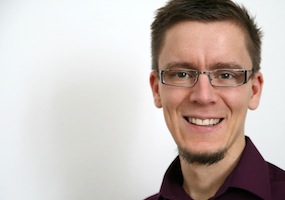
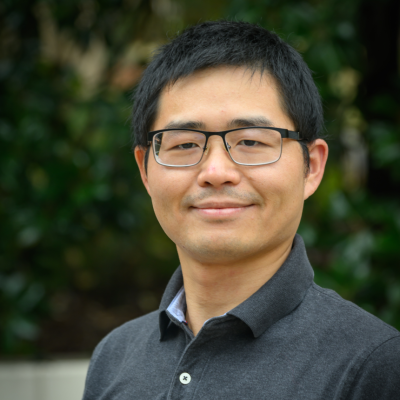
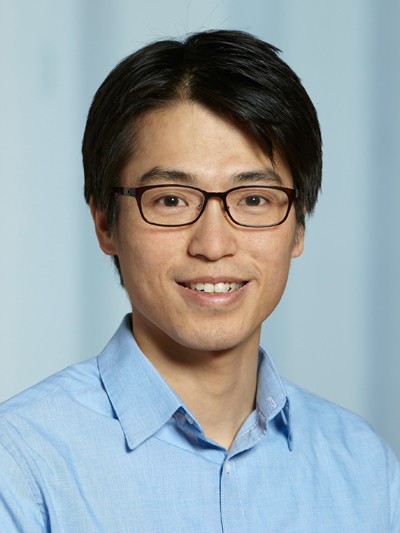
Prof. Jens Altenburg holds the position of Professor of Microprocessor Technology and Embedded Systems at Bingen University of Applied Sciences. His work focuses on robotics, embedded systems, and control engineering. He is affiliated with Department 2, where he contributes to study programs in Computer Science, Electrical Engineering, and related fields. His research interests span robotics, UAVs, and microprocessor-driven automation. Notable publications include works on flight control systems (AONE test bench), image processing for robots, and solar-powered robotics (SOPHOCLES). He has authored technical books on microcontroller programming and mobile robotics, emphasizing practical experimentation and AI integration. While no specific awards are mentioned in the text, his contributions to educational materials and experimental systems highlight his impact in engineering education and applied research.
Frank Piessens is a Full Professor in the Department of Computer Science at KU Leuven's Faculty of Engineering Science, where he leads the Distributed and Secure Software (DistriNet) research group. His research focuses on cutting-edge security challenges at the hardware-software interface. His research interests span: Hardware-software co-design for end-to-end security Confidential computing architectures Microarchitectural side-channel mitigation Secure IoT development Compiler-based security mechanisms Control-flow integrity techniques Recent publications (2024-2025) demonstrate strong focus on: Hardware security cost/performance tradeoffs Processor-level security enhancements (RISC-V, high-end CPUs) IoT device lifecycle security Control-flow leakage prevention Microcontroller IP protection He currently supervises PhD students including M. Bognár and H. Winderix, and leads major research initiatives such as: Hardening confidential computing through vertically integrated system design (2025-2031) Designing secure hardware for software-exploitable attacks (2025-2029) Compiler-based mitigations for microarchitectural side-channels (2023-2027) Security Arms Race at the Hardware-Software Boundary (2020-2025)
Prof. Martin Teufel is a Professor at the University of Teacher Education Styria, Austria, affiliated with the Institute for Digital Media Education. He specializes in educational technology with a focus on mobile learning, digital competency, and innovative teaching methodologies. His work includes developing MOOC-based learning systems and analyzing student digital preparedness. Key projects include the Styrian University Conference digital competency analysis and the Digital Learning Lab initiative. He holds a BEd from the University of Graz and actively contributes to teacher training programs integrating emerging technologies. Research interests span digital pedagogy, seamless learning environments, and computational thinking tools like BBC micro:bit. His publications highlight patterns in online learning behaviors and institutional digital transformation strategies. He advises on educational technology policy and has led cross-institutional studies on student readiness for digital education. His work often bridges theory and practice through collaborative formats like the Hochschuldidaktik-Café for educators' professional development. Teaching responsibilities include courses on digital media in education and technology-enhanced learning design. He manages educational technology projects and serves as a consultant for digital learning infrastructure. His GPG public key (F361ADE9) indicates active engagement in secure academic communication.
Dr. Wanja Hofer is a former research staff member at the Department of Computer Science 4 (Distributed Systems and Operating Systems) at Friedrich-Alexander-Universität Erlangen-Nürnberg (FAU). She specialized in embedded systems, real-time operating systems, and aspect-oriented programming. Her research focused on optimizing hardware-centric systems like Sloth and CiAO, addressing challenges in interrupt handling, scheduling, and software product line variability. Her academic journey includes a PhD in 2014 titled Sloth: The Virtue and Vice of Latency Hiding in Hardware-Centric Operating Systems . She contributed to key projects such as Sloth (time-triggered RTOS) and CiAO (aspect-oriented OS family), emphasizing scalability and configurability for automotive and embedded domains. Hofer also held roles like Web chair for EuroSys 2009 and co-maintained the EuroSys Research Directory. Her teaching involved Basics of Systems Programming in C and OS-related seminars. She advised over 15 graduate students on topics ranging from MPU-based task isolation to filesystem-level variability management. Notable contributions include hardware-accelerated interrupt handling, aspect-oriented OS design, and embedded system energy optimization. Hofer currently works at Brose Fahrzeugteile, applying her expertise in embedded systems and real-time computing to automotive technologies. Her work bridges academic innovation with industrial applications, particularly in safety-critical and resource-constrained environments.
Pedro Neves Rito is an Associate Professor at the Department of Communication and Art within the School of Education at the Polytechnic Institute of Viseu, where he has been teaching since 2007. His teaching focuses on web programming, creative programming, microcontroller programming, sensors, and ICT training for pre-school and primary school teachers. He is also a member of the CI&DEI Research Group and has served as Coordinator of the Information and Communication Technologies Area since 2022. His educational background includes: Doctorate in Information Technologies and Systems from the University of Minho (2015) Master's degree in Multimedia in Education from the University of Aveiro (2007) Degree in Computer Engineering from the Instituto Superior de Engenharia de Coimbra Numerous professional certifications including Adobe Certified Expert in Dreamweaver CS3 and Flash CS3 Rito's research spans multiple innovative areas at the intersection of technology and education. His primary interests include the adoption and diffusion of technologies, creative programming and application development, video game design, and tangible interfaces. He has extensively explored how gamification techniques can enhance learning experiences, particularly in programming education, and has investigated the potential of augmented reality in educational contexts. His work often focuses on practical applications for classroom settings, especially for pre-school and primary school teachers. His recent publications show a strong trend toward integrating artificial intelligence in educational game design, with particular emphasis on STEAM education and programming concepts. He has conducted systematic reviews on the educational potential of video games and developed frameworks for designing educational mobile video games. His research consistently emphasizes practical implementation strategies for educators, with a growing focus on AI applications in educational settings. Rito actively supervises numerous graduate students across various programs, particularly in Arts, Multimedia, and Education fields. He has led and participated in multiple research projects including "dEweB - Digital Era: WEB 3.0 and beyond," "Smart City Kids Lab," and "Eco-sensors4Health." His work demonstrates a commitment to applying technology innovations in real educational settings through practical implementation and teacher training.
Wenwen Wang is an Associate Professor in the School of Computing at the University of Georgia's Franklin College of Arts & Sciences. His research focuses on computer systems, compiler design, and embedded systems security. He holds a Ph.D. in Computer Science from the University of Chinese Academy of Sciences (2014). Education: Ph.D., Computer Science, University of Chinese Academy of Sciences, 2014 His research emphasizes dynamic binary translation, compiler optimization, and secure embedded systems. Notable contributions include frameworks like JavART (JIT compiler optimization) and BSan (memory error detection). He received the 2021 M. G. Michael Award for Sciences from the Franklin College. Wang has secured two NSF grants totaling $1.2 million, including CSR: Small grants for FALCON (2023–2027) and Modernizing Dynamic Binary Translation Systems (2023–2027). He advises three graduate students: Ruili Fang, Yage Hu, and Boyang Yi. His work addresses challenges in cross-architecture virtualization, GPU-based graph computing, and hardware-triggered security mechanisms. Recent projects include Liberator (GPU graph processing) and InvisiGuard (embedded device integrity).
Francisco Javier Pérez Castelo is a Professor in the Department of Industrial Engineering at Universidade da Coruña (UDC), specializing in Systems and Automation Engineering. He is affiliated with the Escola Técnica Superior de Enxeñaría and leads research in the Cyber Science and Technology Research Group. His research focuses on Intelligent Instrumentation, Industrial Internet of Things (IIOT), Knowledge Engineering, Expert Systems, and Intelligent Systems for modeling, optimization, and control . His work bridges theoretical control systems with practical applications in marine engineering, power electronics, and industrial automation. His research has significant applications in ship automation, marine systems control, and industrial robotics. Pérez Castelo's publication record shows a consistent trajectory in control systems and automation, with recent work emphasizing intelligent instrumentation, IIOT applications, neural networks, and expert systems in marine environments. His research has evolved from fundamental control theory to applied intelligent systems with strong industry connections. Patent: Universidade da Coruña (UDC) - 22/03/2013 request date, 11/08/2015 grant date Patent: Universidade da Coruña (UDC) - 01/10/2010 request date, 26/12/2013 grant date Patent: Universidade da Coruña (UDC) - 04/02/2008 request date, 29/03/2011 grant date Patent: Universidade da Coruña (UDC) - 19/07/2005 request date, 20/05/2009 grant date He has supervised numerous bachelor's and master's theses on topics including autonomous vehicles for ship maintenance, marine stability optimization, digital camera stabilization systems, and solar-powered LED lighting. His research has been supported by various funding entities including EMALCSA, CONSELLERIA DE EDUCACIÓN, Instituto Nacional de Ciberseguridad, and Ministerio de Ciencia e Innovación. Pérez Castelo actively collaborates with researchers across Spain and internationally, with projects spanning from 1995 to the present, demonstrating sustained research productivity. He teaches across multiple programs including the Master's Degree in Industrial Informatics and Robotics, Degree in Naval Engineering, and Degree in Marine Technologies, covering subjects such as Industrial Drives, Automation and Control Systems, Ship Installation Automation, and Advanced Control of Marine Systems. His teaching laboratory is located in the Laboratorio de Automática (ETSNM).
Massimo Poncino is a Full Professor at the Department of Control and Computer Science (DAUIN) within the Faculty of Engineering at Politecnico di Torino. He serves as Scientific Advisor for the STMicroelectronics partnership and coordinates basic engineering subjects. A Senior Member of IEEE since 2012 and Fellow since 2012, he has served on editorial boards for IEEE Transactions on Computer-Aided Design, IEEE Design & Test of Computers, and ACM Transactions on Design Automation. Education: Laurea in Electronic Engineering (1989) and PhD in Computer and Systems Engineering (1993) from Politecnico di Torino Academic Career: Visiting Scientist University of Colorado (1993-1994), Researcher at Politecnico di Torino (1995-2001), Associate Professor at University of Verona (2001-2004), Full Professor at Politecnico di Torino (2006-present) His research focuses on energy-efficient digital systems , including design automation of SoCs, hardware-aware AI, battery management, cyber-physical systems, and embedded systems. Recent publications highlight advancements in digital twins for batteries , low-power neural network deployment , and IoT privacy . Scientific Awards: Recognition of Service Award - ACM (2013) Certificate of Appreciation - IEEE Circuits and Systems Society (2006, 2008, 2009) IEEE Fellow (2012-) Research Involvement: EU H2020, VI/VII Framework Programs evaluator Scientific Director for projects: Approxim@ction, EMBAI, DISLO-MAN, DAMASCO Member of EDA research group Teaching: Course director for Energy Management for IoT (2019-2025) Lecturer for Computer Science courses (2003-2025)
Dr. Senay Purzer is a Professor of Engineering Education at Purdue University's School of Engineering Education in West Lafayette, Indiana. Her office is located in ARMS 1331 with a research lab in WANG 3583. Her educational background shows she has established herself as a prominent researcher in engineering education, with particular expertise in understanding how students learn engineering concepts and develop design skills. Dr. Purzer's research focuses on the relationship between self-efficacy beliefs, team interactions, and student achievement; student interactions in diverse teams; the role of group argumentation in engineering design; and P-12 engineering education. Her recent publications (2023-2025) demonstrate a growing emphasis on ethical considerations in engineering design, data management, and socially transformative approaches to engineering education that address diversity, equity, and sustainability concerns. Her scholarly work spans numerous areas including design reasoning, innovation processes, assessment methodologies, and the integration of engineering concepts into K-12 education. She has published extensively in journals such as the Journal of Pre-College Engineering Education Research (J-PEER), where she has contributed annual reports and conceptual frameworks. Dr. Purzer actively collaborates with other researchers in the field, particularly with colleagues like Quintana on projects related to semantic fluency in design reasoning and argumentation processes. She is currently recruiting graduate students to work on research projects focused on engineering teamwork, diversity in engineering teams, and argumentation in engineering design.
Olin Hartin serves as a Professor of Practice in Arizona State University's School of Electrical, Computer and Energy Engineering, leveraging over 30 years of Fortune 500 industry experience in science and technology. Based at the Tempe campus (GWC 340, Mailcode 5706), he maintains an active research profile with 25 patents and more than 60 scholarly publications. His academic credentials include: Ph.D. in Electrical Engineering M.S. in Electrical Engineering M.S. in Physics B.S. in Physics Hartin's research centers on advanced device technologies and materials, with demonstrated expertise in nanoengineering, RF circuit design, and semiconductor physics. His work bridges theoretical modeling with practical fabrication challenges, particularly in gallium nitride transistor development and electromagnetic compatibility. Recent projects address thermal management in high-power devices and noise isolation techniques for mixed-signal integrated circuits, driven by industry applications in wireless infrastructure. Analysis of his publication history reveals sustained focus on GaN HEMTs since 2010, with increasing emphasis on machine learning applications for FPGA deployment. His work consistently targets real-world implementation challenges, reflecting his industry background through patents in antenna design, ESD protection, and RF component optimization. Professional recognition includes: Senior Member of IEEE In teaching, Hartin supervises senior design laboratories (EEE 488/489) and instructs core courses including Hardware Design Language/Programming Logic (EEE 333), Circuits II (EEE 334), and Machine Learning with FPGA Deployment (EEE 405). His industry perspective enriches curriculum development, though specific grant funding details are not publicly documented. While no dedicated research lab is specified, his patent portfolio indicates ongoing collaboration with semiconductor industry partners.
Dr. habil. Simon János PhD is an Associate Professor at the University of Szeged's Faculty of Engineering, Institute of Technology. Born on July 27, 1980, he maintains his office at 6724 Szeged, Moszkvai krt. 9. Room F9, with contact number +36-62-546-575. His educational background includes IT engineering and electrical engineering from Technical College of Subotica (1999-2005), Certified Computer Engineering from University of Novi Sad (2005-2008), PhD in Engineering from University of Osijek (2008-2014), and habilitation from Óbuda University Doctoral School of Security Sciences (2020). English (intermediate, complex) Serbian (advanced, complex) Dr. Simon's research focuses on design and programming of Internet of Things environments, hardware and software development of mobile robots and wireless sensor networks, and analysis of Industry 4.0 case studies. His teaching portfolio includes Computer Modeling, Simulation courses, Microcontrollers, Graphical Programming at BSc level, and Real-time systems, Autonomous and intelligent robots at MSc level. He serves as Associate Editor for Analecta Technica Szegedinensia and is a member of the Higher Education Management Education Methodology Association (FIOM). His international experience includes CEEPUS mobility to Timisoara, Erasmus mobility to multiple Romanian cities, and participation in IoTTech Expo Global in London.
Prof. Taekwang Jang is an Associate Professor at the Department of Information Technology and Electrical Engineering, ETH Zürich. He leads the Energy Efficient Circuits and IoT Systems Group, focusing on analog and mixed-signal circuits for energy-constrained applications such as wireless sensor nodes and biomedical electronics. His research includes sensor interfaces, energy harvesters, power converters, and communication systems. He holds 15 patents and has authored over 80 peer-reviewed publications. Key awards include the 2024 IEEE Solid-State Circuits Society New Frontier Award and the SNSF Starting Grant. Educations: B.S. and M.S. in Electrical Engineering, KAIST (2006, 2008) Ph.D. in Electrical Engineering, University of Michigan (2017) Affiliations: Chair of IEEE Solid-State Circuits Society, Switzerland Chapter Associate Editor for Journal of Solid-State Circuits (JSSC) Research Interests: His work spans energy-efficient integrated circuits, biomedical interfaces, and IoT systems. Notable contributions include low-power keyword spotting ICs, ultra-low-noise amplifiers, and neural stimulation systems. He emphasizes practical applications in healthcare and wearable devices. Awards: 2024 IEEE Solid-State Circuits Society Distinguished Lecturer 2022 IEEE ISSCC Jan Van Vessem Award 2009 IEEE CAS Guillemin-Cauer Best Paper Award Advising & Grants: Supervises a team of researchers and has secured grants including the SNSF Starting Grant. His lab collaborates with institutions like the Competence Center for Rehabilitation Engineering and Science. Labs & Teams: Leads the Energy-Efficient Circuits and Intelligent Systems group at ETH Zurich, focusing on interdisciplinary projects at the intersection of circuits, systems, and biomedical engineering.
Prof. Wolfgang Ecker is a Professor at the Technical University of Munich (TUM), affiliated with the Chair of Design Automation within the TUM School of Computation, Information and Technology . His research focuses on Electronic Design Automation (EDA), RISC-V processor architectures, and hardware-software co-design. He leads projects advancing EDA tools for embedded systems, neural network acceleration, and formal verification methodologies. Ecker's work bridges machine learning techniques with traditional EDA challenges, addressing topics like energy-efficient AI inference and automated documentation generation. His contributions span compiler optimization, FPGA implementations, and fault analysis in digital systems. Recent research highlights include contributions to the TRISTAN project for RISC-V ecosystem development, model-driven architecture frameworks, and AI-driven timing analysis. He actively collaborates on open-source EDA tools and explores Rust-based embedded systems development. Ecker’s lab emphasizes practical applications in edge computing and automotive microcontroller safety, with a strong emphasis on interdisciplinary collaboration across TUM’s CIT School. His publications (15 most recent listed) reflect a focus on EDA tool innovation, processor design, and leveraging machine learning for hardware optimization. While no specific awards are mentioned, his involvement in ERC-funded projects and leadership in international collaborations underscores his academic impact.
David Hovemeyer is an Associate Teaching Professor at the Whiting School of Engineering, Johns Hopkins University . He holds a PhD (2005) and MS (2001) in Computer Science from the University of Maryland and a BA (1994) from Earlham College. Prior to joining JHU in 2019, he taught at Vassar College and York College of Pennsylvania. Education : PhD, MS, and BA in Computer Science Research : Focuses on static analysis , systems software , and computer science education Projects : FindBugs, CloudCoder, ProgSnap2, FunWithSound His recent work includes frameworks for declarative autograders , formats for programming process data , and tools for educational software development . He has been recognized with Excellence in Teaching Awards and contributes to open-source educational platforms like GitHub. Scientific Awards : 2024 Whiting School Teaching, Advising, and Mentoring Award Excellence in Teaching Award (multiple years) David maintains an active role in the academic community through peer instruction , programming contests, and recommendation letter advising . He also develops tools like FreePoll and Declarative Autograder Framework to enhance teaching efficiency.
Roman Franz Froschauer is a Professor of Production Informatics at the Upper Austria University of Applied Sciences, Research Center Wels. Since 2018, he has served as Director of Studies for the Master's program in Robotic Systems Engineering and leads the Smart Automation & Robotics research group. His career spans academic and industrial roles, including senior software development and project management at AlpinaTec Technical Products GmbH (2010-2016). Education: Ph.D. in Computer Science (2010) from Johannes Kepler University Linz; Master's in Industrial Informatics (2005) from Upper Austria University of Applied Sciences. Research Areas: Software engineering for intelligent automation systems, human-robot interaction (HRI), control systems, and applications of IEC 61499 standards. His work focuses on proactive collaboration, trajectory planning, and user-centered design for assistive robots in office and industrial settings. Scientific Activities: Active in peer-review, conference organization, and technology development. Projects include VRoboCoop (human-robot trust), MARIE (office robotics), and Autility (automated utility vehicles). Key Contributions: Frameworks for modular manufacturing (PlugBot), skill-based engineering, and intralogistics automation (ATLAS).