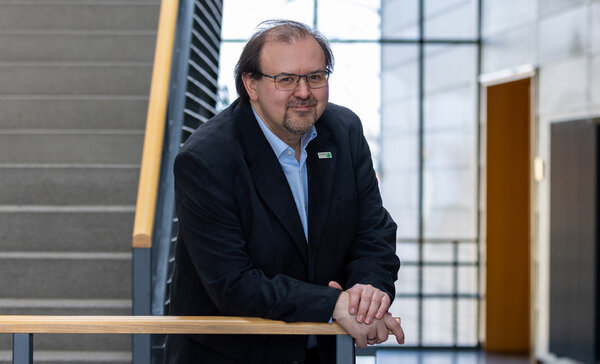
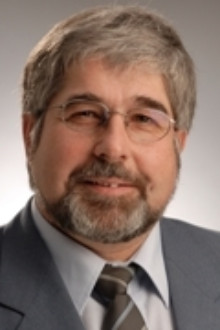
Prof. Dr. Wolfram Koepf is a retired (emeritus) professor in the Department of Mathematics at the University of Kassel, Germany, with a focus on Computer Algebra and Symbolic Computation . His research emphasizes algorithmic approaches to mathematical problems, particularly involving orthogonal polynomials, hypergeometric functions, and power series representations. He has contributed to both theoretical advancements and practical implementations, such as improvements in Maple software for formal power series handling. Key research areas include Algorithmic Integration , Cryptography (e.g., image encryption algorithms), and Algorithmic Summation . He has authored textbooks like Computer Algebra: An Algorithm-Oriented Introduction . His work frequently bridges pure mathematics and computational tools, with publications spanning symbolic computation, dynamical systems analysis, and educational aspects of mathematics.
Jae Kyu Lee is a distinguished Professor in the Department of Information Systems at Korea University's College of Business, with an extensive publication record spanning over three decades from 1987 to 2023. He earned his PhD from Massachusetts Institute of Technology in 2009 with research on semiconductor technology, demonstrating his strong technical foundation before transitioning to information systems research. Lee's research interests center on Information Systems, Electronic Commerce, and Cybersecurity, with a notable recent focus on the 'Bright Internet' concept he developed as a framework for reconciling privacy with security. His scholarly work demonstrates evolution from early research in decision support systems and AI applications in business to contemporary work on deepfake detection, state-led cyberattacks, and preventive cybersecurity approaches. His research methodology often combines theoretical development with practical applications, particularly in electronic commerce systems and knowledge management. Analysis of his 15 most recent publications reveals a clear trajectory toward cybersecurity and internet architecture, with the 'Bright Internet' concept emerging as his signature contribution to the field. His work spans both theoretical foundations (axiomatic theories in IS research) and applied security solutions (deepfake detection, malware analysis), demonstrating versatility across the research spectrum. The interdisciplinary nature of his work connects computer science, business administration, and policy studies. Lee has held significant editorial responsibilities, serving as editor for journals including Electronic Commerce Research and Applications and Decision Support Systems. He has also played leadership roles in major conferences, including PACIS 2019 in X'ian, China, and ICIS 2017 in Seoul, South Korea. His collaborative network includes prominent scholars across the Pacific Asia region and internationally. His research has practical implications for businesses implementing secure e-commerce systems, policymakers developing internet governance frameworks, and technology developers creating next-generation security solutions. The Bright Internet concept represents a potentially transformative approach to internet architecture that addresses fundamental tensions between privacy and security in the digital age.
Shilin Zhu is an Assistant Professor in the Department of Computer Science and Engineering at the University of California, San Diego's Jacobs School of Engineering. Having completed their PhD at UCSD in 2021 with a dissertation titled 'Computing Images with Diverse Illumination Effects,' Zhu has established a prolific research career spanning computer graphics, computer vision, and machine learning. Zhu's research interests center around advanced rendering techniques, autonomous driving perception systems, privacy-preserving technologies, and wireless localization. Their work bridges theoretical computer science with practical applications, particularly in developing robust systems for challenging environments like foggy weather for autonomous vehicles and creating privacy-preserving solutions using smart LED technology. Zhu has made significant contributions to neural rendering, particularly in photon mapping and denoising techniques that improve the efficiency and quality of computer-generated imagery. Analysis of Zhu's publication record shows a clear progression from foundational work in rendering and computer vision during their PhD studies to increasingly applied research in autonomous systems and privacy technologies. Their most recent work demonstrates a growing interest in interdisciplinary applications, including agricultural technology and bioinformatics, while maintaining technical depth in core computer science areas. The research consistently features innovative applications of deep learning to traditional computer graphics and vision problems. Zhu has collaborated extensively with leading researchers in the field, including Zexiang Xu, Hao Su, Ravi Ramamoorthi, and Henrik Wann Jensen, reflecting strong integration within the computer graphics and vision research communities. Their work has appeared in top-tier venues including SIGGRAPH, CVPR, and ACM Transactions on Graphics.
Dr. Pramod Mahajan is a Senior Scientist and Working Group Leader for Packaging & Storage at the Department of System Process Engineering, Leibniz Institute for Agricultural Engineering Potsdam-Bornim (ATB). He also holds a Visiting Professor position at Mae Fah Luang University, Thailand. His work focuses on postharvest technology, mathematical modeling of packaging systems, and sustainable food storage solutions. Mahajan has extensive experience in developing innovative packaging materials, gas control systems, and sensor technologies for fresh produce preservation. Education: Ph.D. (Post Harvest & Food Engineering) from IIT Kharagpur (2002), M.Tech. (Post Harvest Engineering) from IIT Kharagpur (2010), B.Tech. (Agricultural Engineering) from Punjabrao Krishi Vidyapeeth (1996). Research Areas: Modified atmosphere packaging (MAP), ethylene dynamics, condensation management, and digital twins for cold chain optimization. Key projects include NOVISHPAK (biodegradable packaging for fish), Fruity-Twin (condensation management in apple storage), and EthyModel (ethylene modeling in perforated packaging). His research emphasizes integrating IoT, machine learning, and predictive modeling to enhance food supply chain efficiency.
Jian Chen is a prolific academic researcher with affiliations across multiple institutions worldwide, primarily in China but also including international universities. The DBLP disambiguation page lists 47 distinct individuals with this name, working in various departments including Computer Science, Electrical Engineering, Telecommunications Engineering, and other technical fields at prestigious institutions such as Zhejiang University, Xidian University, Northeastern University, and Ohio State University. Research interests span a wide range of technical domains including artificial intelligence, machine learning, computer vision, network security, medical imaging, and electrical engineering. Recent publications indicate active research in deep learning applications, image processing, trajectory analysis, and biomedical informatics. The publication output is substantial, with numerous papers appearing in IEEE Access, Pattern Recognition, and other high-impact journals. The research trends show a strong focus on practical AI applications across multiple domains, with particular emphasis on medical imaging, network security, and intelligent control systems. Many publications involve collaborative work with researchers across different institutions, indicating an active research network. While specific awards are not listed in the provided DBLP information, the volume and quality of publications suggest recognition within the academic community. The research output demonstrates expertise in both theoretical development and practical implementation of computational methods. Jian Chen appears to be actively mentoring students, as evidenced by the numerous collaborative publications, though specific student names aren't detailed in the DBLP records. The research spans both fundamental algorithm development and applied problem-solving across various engineering and computer science domains.
Prof. Miriam Föller-Nord is the Dean of the Faculty of Computer Science at Mannheim University of Applied Sciences since March 2014. She has held academic positions since 2004, including leading the Institute for Embedded and Mobile Computing (2008–2015). Her research focuses on Embedded Systems, IoT/Industry 4.0, Medical Technology, and Networking. She advises students on topics such as Mobile Systems, IoT, and MedTech. Education: Postdoctoral research at the German Cancer Research Center (1997–1998) in medical physics, developing Multileaf Collimators for radiation therapy. Professional Highlights: Prior to academia, she worked at Siemens Medical Solutions (2003–2004) and MRC Systems GmbH (1999–2002), leading projects in embedded systems and medical device software. Her expertise includes real-time microcontroller programming and software development in C++/Visual Basic. Leadership Roles: As Dean, she oversees faculty operations and collaborates on initiatives like the MARS Center for Entrepreneurship. She also served as Program Leader for the Institute of Embedded and Mobile Computing, driving interdisciplinary research in IoT and Industry 4.0 applications. Labs/Teams: Former director of the Institute for Embedded and Mobile Computing, fostering innovation in medical embedded systems and IoT.
Jonathan Larochelle is a Researcher and Academic Staff member at the Faculty of Mechanical Engineering and Mechatronics, Karlsruhe University of Applied Sciences, Germany, where he contributes to Prof. Laura Maria Comella's Lab for Intelligent Embedded Systems. He holds a M.Sc. in Microsystems Engineering from the University of Freiburg (2020–2023) and a B.Eng. in Engineering Physics from Université Laval, Canada (2015–2019). His research focuses on sustainable electronics within the circular economy, particularly IoT devices and embedded systems, with an emphasis on low-power machine learning and environmental sensing applications. Key projects include the Brain-MEP initiative for developing ultra-low-power neurostimulation devices through optimized ML algorithms and a novel optical sensor with adjustable field-of-view for environmental monitoring. His work integrates sustainability principles with technological innovation, collaborating with medical centers and agricultural partners like the Kompetenzzentrum Obstbau Bodensee. Recent publications highlight advancements in EEG seizure detection algorithms and energy-efficient sensor technologies. He maintains active engagement with interdisciplinary research and critical perspectives on technology's societal impacts, evident in his engagement with sustainability-focused media and open-source contributions. Larochelle is affiliated with the Laboratory for Intelligent Embedded Systems (HKA-IES) and has held roles as Scientific Staff and Teaching Assistant at the University of Freiburg's Microsystems Engineering department. His technical expertise spans embedded system design, signal processing, and low-power hardware optimization.
Joachim Becker is a Lecturer at the Institute of Microelectronics, part of the Faculty of Engineering, Computer Science and Psychology at the University of Ulm. He teaches multiple courses in the Summer semester 2025 including Signal Processing , Mixed-signal CMOS Chip Design , Analog Circuits , and Microcontroller Project . His expertise spans microelectronics with a focus on analog circuit design, integrated systems, and CMOS technologies. Research interests include advanced signal processing techniques, mixed-signal system design, and video technology applications. Though no specific awards or grants are listed, his active teaching involvement suggests ongoing contributions to engineering education.
Manuel Keßler is an apl. Prof. Dr. and Adjunct Professor at the University of Stuttgart's Institute of Aerodynamics and Gas Dynamics , serving as Deputy Head of the Institute and Head of the Helicopters and Aeroacoustics working group. His research focuses on Helicopter Aeromechanics , Aeroacoustics , and High-Fidelity CFD Simulations . He leads projects involving rotorcraft noise reduction, computational fluid dynamics validation, and advanced simulation frameworks like the FLOWer solver. His work integrates experimental and numerical methods, with applications in compound helicopters (e.g., Airbus Helicopters' RACER), eVTOL systems (Volocopter), and distributed propulsion demonstrators. Keßler's technical expertise includes programming in C++, Python, and various assemblers, alongside experience with microcontroller systems (AVR, ARM7, etc.). He oversees the Institute's HPC-cluster (Prandtl) and teaches courses on Fluid Mechanics, Aeroacoustics, and programming optimization. His research spans rotor-fuselage interactions, dynamic stall mitigation, and aeroelastic phenomena, with a strong emphasis on validating numerical models against flight-test data. Notable contributions include numerical investigations of noise sources in distributed propulsion systems, CFD simulations of rotorcraft in ground effect, and aeroacoustic studies of counter-rotating open rotors. His interdisciplinary approach bridges computational methods with real-world engineering challenges, advancing rotorcraft design and noise mitigation strategies.
Christoph Kalkuhl is an academic staff member at the University of Tübingen , affiliated with the Faculty of Mathematics and Natural Sciences and the Department of Physics . His work focuses on electronics design, microcontroller systems, and nanoanalytics in biomedicine. Office address: At Morgenstelle 14, Tübingen, 72076 Phone: 29-76290 Research Interests Electronics design and development Microcontroller-based systems Nanoanalytics applications in biomedical contexts Applied physics instrumentation Semiconductor device engineering
Professor Michael Karagounis is a current faculty member at Dortmund University of Applied Sciences and Arts, teaching electronics since 2016. Previously, he served as Professor of Electrical Engineering at Hamm-Lippstadt University of Applied Sciences (2013-2016). His career uniquely bridges academic research and semiconductor industry experience at Infineon and Intel. His educational foundation includes: Communications Engineering degree from Cologne University of Applied Sciences Supplementary Electrical Engineering studies at Open University of Hagen Research focuses on Microelectronics with specialization in Analog and Mixed-Signal Circuit Design, RF Circuits, and Integrated Circuit Design for Automotive and Consumer Electronics. His work targets critical applications including automotive microcontroller power systems and smartphone navigation circuitry, emphasizing practical implementation of theoretical design principles in industrial settings. He actively supervises student theses, leveraging his semiconductor industry background to provide real-world context for academic concepts. His research projects in microchip design demonstrate applied engineering approaches, though specific grant details are not provided in available sources. The absence of lab-specific information suggests integrated departmental research facilities rather than a named independent laboratory.
Prof. Dr. Claus Fühner is a Professor of Computer Engineering at the Faculty of Computer Science of Ostfalia University of Applied Sciences. His research interests include: Systems and Software Engineering for embedded systems Implementation of embedded systems from microcontrollers to cloud Functional safety Wireless communication (Bluetooth Low Energy, LoRaWAN) AI, neural networks, and LLMs in technical systems Railway automation Recent research projects (2016-2023) show a focus on practical applications in IoT and embedded systems, with an increasing emphasis on AI and LLMs. Key projects include SmartFreightWagon for railway freight digitalization (2023) and autonomous vehicle research using deep learning (2020). Prof. Fühner regularly supervises student theses and is open to industry collaboration. He can be contacted via email at c.fuehner@ostfalia.de.
Andreas Gollwitzer is Professor of Electrical Engineering and Technical Computer Science at HFU Furtwangen University since October 2009, specializing in digital systems and measurement technology. His work bridges theoretical research with practical instrumentation development across multiple engineering domains. His academic credentials include: Diplom-Ingenieur (FH) from FH Amberg-Weiden (1999) Diplom-Ingenieur from Fernuniversität Hagen (2003) Doktor-Ingenieur from Universität Bayreuth (2009) Professor Gollwitzer's research spans digital signal processing , microcontroller programming , and precision measurement systems , with strong emphasis on sensor technology and analog-digital hybrid systems . His experimental approach integrates optical, microwave, and electrochemical methodologies for advanced instrumentation, particularly in interferometry and high-frequency measurement applications. His 2008-2010 publications reveal a consistent focus on calibration-free measurement techniques and real-time sensor systems , demonstrating interdisciplinary work connecting electrical engineering with materials science and physical chemistry. Key themes include interferometric precision, microwave-based process monitoring, and impedance modeling for chemical sensors. As an active IEEE member, he regularly presents at international conferences including IEEE Frequency Control Symposium and OPTO, with expertise covering both theoretical modeling and hardware implementation of measurement systems.
Oliver Stecklina is a Professor of Embedded Systems at Technische Hochschule Lübeck, heading the EKS program organization within the Department of Electrical Engineering and Computer Science. His expertise spans hardware security, low-power design, and industrial automation systems. Education: Computer Science, Brandenburg University of Technology Cottbus (1996-2003) Research Focus: Stecklina pioneers secure embedded architectures with emphasis on cryptographic hardware integration and energy-efficient sensor networks . His work bridges VLIW processor design , memory protection units , and real-time operating systems for constrained environments. Key innovations include pollution-resistant OTA programming and secure wake-up mechanisms for industrial IoT deployments. Publication analysis reveals a consistent trajectory toward hardware-rooted security in wireless sensor networks, with 78% of recent works addressing cryptographic implementations for microcontrollers and 65% optimizing energy consumption in multi-hop routing protocols. Awards: No scientific awards documented in source materials. Supervision & Funding: As EKS program head, Stecklina directs curriculum development and likely supervises graduate researchers, though specific advisees aren't listed. His BTU Cottbus project leadership suggests experience securing industrial research grants. Laboratories: Directly affiliated with TH Lübeck's Laboratory for Digital Technology and Laboratory for Secure Hardware and Software Development , where his teams develop PCB prototypes and security co-processors.
Martin Bayer serves as a Professor in the Faculty of Electrical Engineering at Augsburg University of Applied Sciences. His office is located in room A 3.20, and he can be reached at +49 821 5586-3374 or martin.bayer@tha.de. Professor Bayer contributes to the academic mission of the university through specialized teaching and research activities within the engineering domain. Professor Bayer's research focuses on advanced technological domains with particular emphasis on: Data Technology - exploring innovative approaches to data processing and management systems Microcomputer Technology - investigating embedded systems and microcontroller applications Systems Engineering - developing integrated solutions for complex engineering challenges Professor Bayer teaches courses in Systems Engineering and Microcomputer Technology, providing students with practical knowledge in these specialized areas. His teaching approach emphasizes hands-on experience with modern technologies and real-world applications in electrical engineering education.