Agustín Castillo Martínez is a Professor (Interim Substitute) specializing in Construction Engineering. He obtained his PhD from the Universidad de Granada in 2016, supervised by Dr. José Carlos de San Antonio Gómez and Dr. Miguel Angel León Casas. His doctoral research focused on historical construction systems of Granada's sugar industry. Research Interests: Martínez's work bridges industrial heritage conservation with contemporary sustainability challenges. Key areas include: Rehabilitation of abandoned infrastructures (e.g., 'El Caminito del Rey') for regional development Daylight optimization and grove impacts in urban environments BIM applications in heritage projects Historical analysis of ports, machinery, and construction materials Geometric and geotechnical adaptations in industrial buildings Publication Trends: His 15 most recent articles (2011-2024) reveal a consistent focus on sustainable reuse of historical infrastructures, methodological innovations in heritage documentation (BIM, catalogs), and environmental interactions in urban design. Earlier works emphasize Granada's industrial archaeology, while recent outputs expand into sustainable lighting and infrastructure revitalization.
Drew Ferrier is a Professor of Biology and Co-Chair of the Department of Biology at Hood College . He also serves as Director of the Center for Coastal and Watershed Studies and the Sustainability Studies program, focusing on the water-food-energy nexus. Education Ph.D., University of Maryland M.A., Miami University B.A., Washington and Jefferson College His research spans marine and freshwater ecology, watershed conservation, harmful algal blooms, invertebrate adaptations, and algal-invertebrate symbioses. He emphasizes hands-on learning and community engagement through initiatives like the Coastal Semester program and urban gardening projects. The recent articles highlight his work on harmful algal blooms, urban runoff mitigation, and agricultural best-management practices. These studies align with interdisciplinary approaches in environmental science, hydrology, and sustainable resource management. Dr. Ferrier’s work has secured funding from agencies such as NOAA, the National Park Service, USDA, NSF, and local organizations. His projects focus on water quality monitoring, climate change adaptation, and promoting STEM education through applied research. He leads the Center for Coastal and Watershed Studies , which collaborates with the Frederick Food Security Network to develop vegetable rain gardens for low-income communities.
Manuela Zude-Sasse is a Research Professor at the Leibniz Institute for Agricultural Engineering and Bioeconomy (ATB) in Potsdam, Germany, and former Professor at Beuth University of Applied Sciences Berlin (2009–2017). As Working Group Leader for Precision Horticulture, she focuses on spectro-optical measurement methods (LiDAR, hyperspectral analysis) for fruit quality assessment, canopy modeling, and data science applications in bioeconomy. M.Sc. in Chemistry/International Agronomy (1996, TU Berlin) Ph.D. in Horticulture summa cum laude (1999, TU Berlin) Habilitation in Applied Plant Physiology (2004, Humboldt University) Her research spans Precision Fruit Production , Plant Phenotyping , and 3D Sensor Integration , with projects like CrackSense (fruit cracking prediction) and horDIGrow (resource-efficient horticulture). She employs LiDAR, hyperspectral imaging, and time-resolved fluorescence to analyze temperate and tropical fruits. Recent publications in Plant Phenomics and Horticulturae demonstrate her work on spatial chlorophyll estimation via LiDAR and fruit water stress indices. Her studies in the Journal of Food Engineering (2024) and Postharvest Biology and Technology (2023) highlight machine learning applications for ripeness detection and 3D canopy analysis. Technology Transfer Award (State of Brandenburg, 2003) Silver Medal for Innovation (Agritechnica, 2017) She leads the SMART Farming Technology Research Center (SFTRC) collaboration in Malaysia and serves on editorial boards for Plant Phenomics , International Agrophysics , and Biosystems Engineering . Her 3D point cloud methodologies enable non-contact fruit biomechanics and nutrient management studies.
Adrian Sorin Rosca serves as Associate Professor and Director of the Department of Automotive, Transportation and Industrial Engineering within the Faculty of Mechanics at University of Craiova. His dual expertise spans mechanical engineering and public health epidemiology, reflecting an unusual interdisciplinary trajectory from agricultural engineering in the 1970s to contemporary medical research. His research interests include Industrial Engineering, Computer-Aided Design, Finite Element Analysis, and Public Health Epidemiology. Early work focused on agricultural mechanics and fertilizer effects, evolving through mechanical engineering (thermovision, bioresins, pneumatic systems), and culminating in significant contributions to pandemic response research since 2020. Recent publications demonstrate deep engagement with COVID-19 prognostics, vaccine efficacy, and comorbidity analysis. Analysis of his 15 most recent publications reveals a dramatic research pivot: 80% of 2023-2024 works address medical topics while maintaining engineering methodology. This unique crossover combines mechanical modeling approaches with clinical epidemiology, particularly in geriatric pandemic response and comorbidity interactions. His work consistently applies engineering precision to biological systems. Professional activities include leadership in sustainable development education through Erasmus exchanges and Solar Decathlon participation. His departmental directorship oversees automotive, transportation, and industrial engineering programs with emphasis on transdisciplinary collaboration.
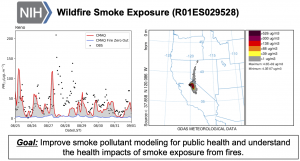
Heather Holmes is an Associate Professor in the Department of Chemical Engineering at the University of Utah, with adjunct appointments in Mechanical Engineering and Atmospheric Sciences. She directs the Holmes Lab, focusing on atmospheric pollutant transport using ground-based sensors, numerical models, and satellite remote sensing. Her research bridges atmospheric physics, air quality forecasting, and public health policy applications. Education: PhD in Mechanical Engineering, University of Utah (2010) MS in Mechanical Engineering, University of Utah (2007) BS in Mechanical Engineering, Montana State University (2001) Postdoctoral Training: University of Hamburg, Meteorological Institute (2010-2011) Georgia Institute of Technology, Environmental Engineering (2012-2013) Her research investigates atmospheric turbulence dynamics, wildfire smoke transport, and pollution dispersion in complex terrain. Key projects include NSF-funded wildfire modeling in mountainous regions, NIH-sponsored health impact studies of smoke exposure, and NASA-supported satellite aerosol retrieval validation. The Holmes Lab's work integrates field measurements with computational models to improve air quality predictions during extreme events like winter inversions and wildfires. Her recent publications demonstrate a strong focus on atmospheric modeling validation, wildfire emissions quantification, and satellite remote sensing techniques. Recurring themes include cold air pool dynamics, plume rise parameterization, and health-relevant pollution exposure metrics, often using interdisciplinary approaches combining atmospheric science with data analytics. Awards and Honors: National Science Foundation CAREER Award Fulbright Scholar Award (Australia, 2023) She mentors graduate and undergraduate researchers in atmospheric modeling, dispersion analysis, and remote sensing applications. Her team collaborates on NIH R01 grants investigating wildfire smoke exposures and extreme heat impacts on public health, leveraging HYSPLIT and WRF modeling frameworks. The Holmes Lab maintains active research programs in three areas: 1) Atmospheric turbulence characterization using field data, 2) Turbulence parameterization development for numerical models, and 3) Air quality estimation methods for health policy applications. Current projects include the NSF-funded CREATE-AQI air quality forecasting initiative for Utah.
Prof. Dr.-Ing. Ralf Feser serves as Professor of Corrosion Protection Technology at the Department of Computer Science and Natural Sciences, South Westphalia University of Applied Sciences in Iserlohn, Germany. He directs the Laboratory for Corrosion Protection Technology and leads the Competence Center for Strategic Corrosion Protection. His research focuses on nanoscalable materials, corrosion protection systems, fuel cells, and sustainable engineering solutions with emphasis on ecological and economic sustainability. PhD in Materials Science from Friedrich-Alexander-Universität Erlangen-Nürnberg Former researcher at Max Planck Institute for Iron Research Director of the Institute for Maintenance and Corrosion Protection (IFINKOR) Active researcher with current projects funded through 2026 Professor Feser's research spans corrosion science, surface engineering, and nanomaterials with particular focus on zinc-based coatings , fuel cell durability , and sustainable corrosion protection systems . His work integrates fundamental electrochemical principles with practical industrial applications, addressing challenges in photovoltaic infrastructure, drinking water systems, and offshore energy installations. He has developed innovative approaches for monitoring protective effects and estimating material lifespans through holistic system solutions rather than isolated measures. His publication trends reveal growing focus on renewable energy applications, particularly corrosion challenges in photovoltaic systems and hydrogen technologies. Recent work emphasizes practical solutions for drinking water infrastructure rehabilitation and advanced characterization of metallic coatings through electrochemical methods. The research consistently bridges fundamental corrosion mechanisms with real-world engineering applications across multiple industries. Professor Feser has supervised over 60 bachelor's and master's theses, mentoring students in corrosion-related research across diverse applications including photovoltaics, fuel cells, drinking water systems, and offshore wind energy. His laboratory receives funding from multiple German federal ministries and environmental foundations for projects addressing critical infrastructure challenges. The Corrosion Protection Laboratory operates as both an academic research facility and applied research center through the An-Institute 'Institute for Maintenance and Corrosion Protection gGmbH', providing industry-relevant solutions while training next-generation corrosion engineers.
H. Wörtche is an active researcher affiliated with Wageningen University & Research , focusing on interdisciplinary studies at the intersection of environmental science, computer science, and engineering. Their work spans urban microclimate dynamics, sensor network optimization, biomechanics, and acoustic ecology. Research Focus Urban green infrastructure's impact on thermal comfort and microclimate regulation Machine learning applications for anomaly detection in sensor networks Acoustic masking effects in urban environments Biomechanical sensor validation for movement analysis Robotic systems in dynamic maritime environments Publication Trends Recent studies emphasize urban sustainability through green infrastructure, lightweight machine learning for embedded systems, and environmental acoustics. They combine empirical fieldwork with computational modeling, particularly in sensor network analysis and real-time data fusion .
Đurđa Petrov serves as an Associate Professor at the University of Belgrade's Faculty of Forestry within the Department of Landscape Architecture and Horticulture. Her academic career spans over a decade at this institution, where she teaches courses including Landscape Engineering, Decorative Dendrology, and Urban Green Management. Graduated from University of Belgrade Faculty of Forestry (2008) Completed specialization at Wonkwang University, South Korea (2007) Earned Assistant Professor title in Landscape Architecture (2014) Her research focuses on the intersection of landscape design and climate resilience, with particular emphasis on plant adaptation in urban environments. Petrov investigates how woody species respond to Belgrade's changing climate patterns while developing methodologies for sustainable urban green spaces. Her work bridges theoretical horticulture with practical applications in landscape restoration, especially in post-conflict zones like Lebanon's Syrian settlements. Analysis of her recent publications reveals a consistent trajectory toward climate-responsive landscape solutions, with increasing attention to phenological shifts and plant breeding for urban resilience. Her collaborative work with Serbian climate scientists demonstrates interdisciplinary approaches to environmental challenges. Award for 'Dodola garden' project at II International Garden Festival in Aljaris, Spain (2011) Plaque of VI Salon of Landscape Architecture for 'Dodola Garden' (2011) Award for 'Garden at the Edge of the World' at III International Garden Festival (2012) Petrov has contributed to two national research projects and participated in international workshops including CEEPUS summer schools and AUB's 'e-scape Transitional Settlement' program. Her work with Landscape Architects without Borders extends her research into humanitarian contexts, while her membership in the Association of Landscape Architects of Serbia connects her to national professional networks. Current work focuses on climate adaptation strategies for urban green infrastructure in Southeast Europe.
María de los Ángeles Pérez Fernández is a Full Professor in the Department of Physical, Chemical and Natural Systems within the Faculty of Experimental Sciences at Universidad Pablo de Olavide. Her academic foundation includes a Doctorate from the University of Salamanca (1996) with thesis research on shrub legume seed germination under ecological factors supervised by Dr. José Manuel Gómez Gutiérrez. Her research focuses on Ecology, Soil Microbiology, and Legume-Rhizobia Symbiosis , particularly examining nutrient cycling mechanisms in nutrient-deficient ecosystems. Key interests include plant-microbe interactions in Mediterranean and South African grasslands, cycad conservation biology, and rehabilitation of degraded soils through legume-based systems. Her work bridges fundamental ecological principles with practical applications in soil restoration and sustainable agriculture. Analysis of her 15 most recent publications (2023-2025) reveals dominant trends in nutrient acquisition strategies (especially nitrogen and phosphorus cycling), microbial symbiosis in extreme environments (hypersaline, nutrient-poor soils), and conservation physiology of endangered cycads . Her methodology emphasizes controlled greenhouse experiments, field studies in South African and Iberian ecosystems, and molecular characterization of microbial communities. 2025: 5 publications on Encephalartos-Vicia-Cajanus systems 2024: 3 publications on light-microbe interactions and coastal ecosystems 2023: 7 publications spanning cycad ecology, metabolic regulation, and symbiotic trade-offs Her doctoral program supervision includes Biodiversity and Conservation Biology at Universidad Pablo de Olavide. While specific grant details aren't provided, her extensive publication record on soil remediation and nutrient cycling suggests sustained research funding in ecological restoration. Her work maintains strong international collaborations, particularly with South African institutions studying native legumes and cycads. Pérez Fernández leads research in Mediterranean and South African ecosystems, directing laboratory investigations into rhizosphere processes while conducting fieldwork in nutrient-limited environments. Her team integrates soil enzymology, microbial ecology, and plant physiology to address challenges in ecosystem restoration under climate change pressures.
Dr. Danijela Jungić is an Assistant Professor at the Department of Soil Science , Faculty of Agriculture , University of Zagreb. Her research focuses on soil chemistry , soil quality and protection , and soil water deficit under climate change conditions. She teaches courses in Pedology , Soil Chemistry , and Land Use Evaluation , and consults with students on Mondays from 12 PM to 2 PM. Academic Qualifications: PhD (2012), University of Zagreb Master's Degree (2009), University of Zagreb Research Interests: Dr. Jungić investigates soil-plant-water relationships under climate change, specializing in soil erosion prevention , humus dynamics , and agricultural land suitability . Her work spans pedological assessments in Istria, Pannonian agroregions, and floodplains, with a focus on sustainable irrigation and nutrient management. Projects: She coordinates EU directive-compliant water protection initiatives in agricultural areas and regional soil quality monitoring programs. Her research includes modeling soil water retention, assessing humus depletion, and evaluating irrigation suitability in Međimurje and coastal regions. Teaching: Dr. Jungić contributes to courses in soil science, pedogeography, and environmental protection. She leads fieldwork and laboratory analyses for students across multiple faculties, including the Faculty of Science's Geography and Biology departments.
Dr. Christopher Leung is an Associate Professor at The Bartlett School of Architecture, University College London (UCL), specializing in the engineering and manufacture of novel devices for improving the environmental performance of buildings. His research focuses on passive thermally activated devices that harness solar energy and radiant cooling to operate shading systems and moveable insulation, enhancing building facade performance without active energy consumption. His academic journey at UCL began with a Bachelor of Science (Honours) in 1994, followed by a Diploma of Architecture in 1998, a Master of Architecture in 2001, and a Doctor of Engineering in 2014. He also completed professional architectural training and became a Registered Architect in 2002. His professional experience includes working in environmental design consultancy and architectural practices on technically complex buildings such as hospitals and laboratories from 1995 to 2005, followed by research positions at UCL since 2004. Dr. Leung's research interests center on passive energy harvesting for building systems, particularly through 'heat-motors' - devices that convert thermal energy to mechanical work using phase-change materials like wax. His work bridges architecture, engineering, and manufacturing, with a focus on developing standards for communicating design intent in digital fabrication. He has made significant contributions to BS 8888 on Technical Drawings and Product Documentation as an active member of the UK's British Standards Institute since 2021. His laboratory work combines thermal testing with full-scale field monitoring of prototype systems. His publication portfolio demonstrates a clear trajectory from early explorations of responsive architecture and environmental feedback systems toward more recent work on shape memory materials, technical documentation standards, and the integration of AI/ML in manufacturing for construction. His research consistently addresses the challenge of balancing available ambient energy resources with building responsiveness to environmental changes through passive systems. Scientific Recognition Fellow of the Higher Education Academy (FHEA) Thermographer Level One and Two certifications Autodesk Certified User of Fusion360 Active member of British Standards Institute committees since 2021 Dr. Leung has been actively involved in doctoral training, having joined UCL's doctoral training center for Virtual Environments, Imaging and Visualization in 2005. His industry collaborations include Haque Design + Research Ltd, which sponsored his Engineering Doctorate research. He regularly presents at international conferences and provides continuing professional development to architectural firms, focusing on manufacturing for construction and passive building technologies. His current research directions include developing new standards for communicating shape transformations in technical documentation and exploring the application of AI/ML in machine readability for construction manufacturing requirements. He maintains active collaborations with organizations including the Aluminium Federation UK and various manufacturing companies to advance the practical implementation of his research findings.
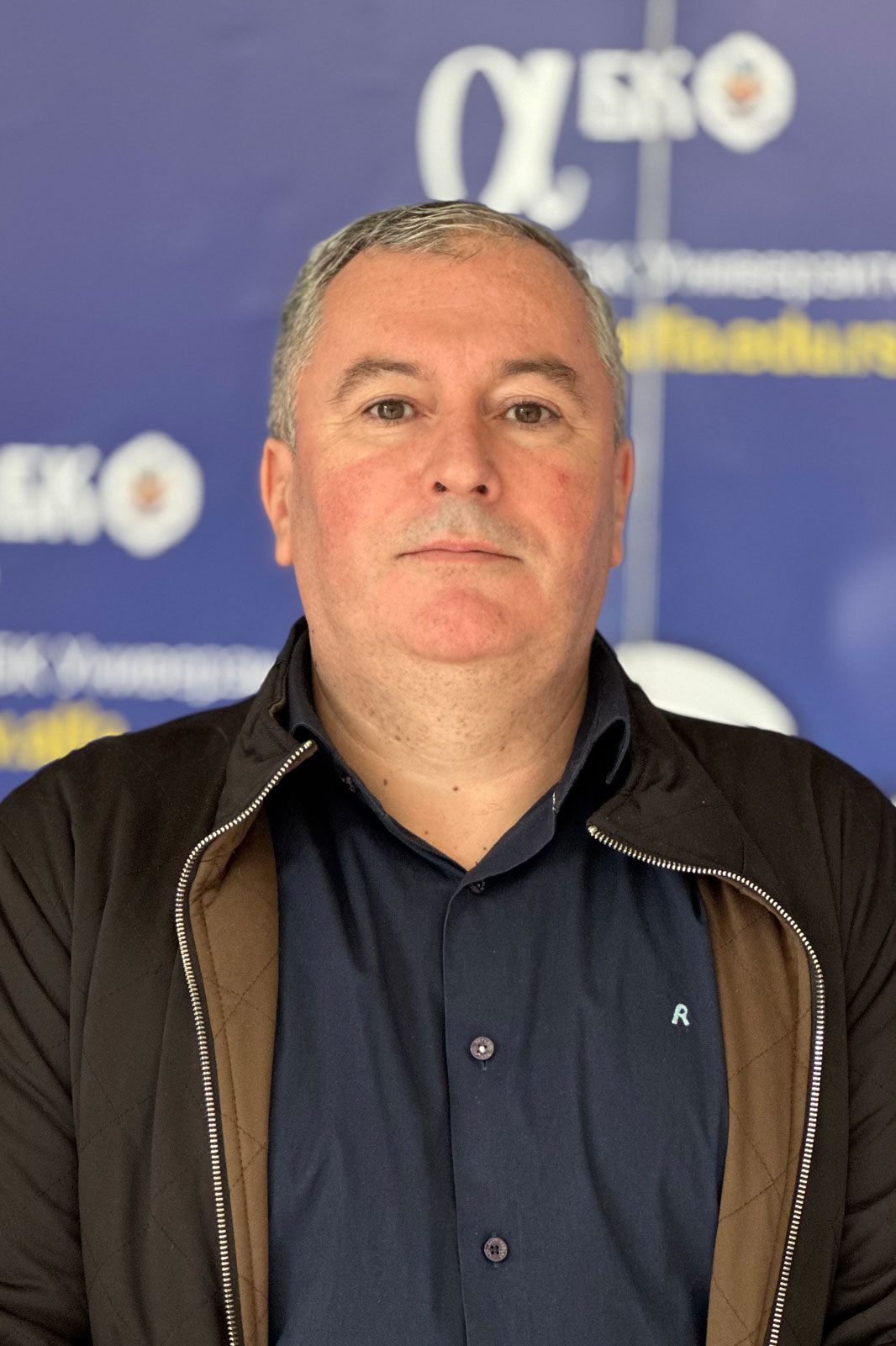
Dragan Vuckovic is an Assistant Professor at Alfa BK University's Faculty of Information Technologies in Belgrade since July 2022. His academic journey includes a Doctorate in Environmental Sciences (2019) from the Academy of Economics, Faculty of Economics and Engineering Management in Novi Sad, a Master's in Occupational Safety Engineering (2004) from the University of Niš, and technical education in electrical engineering and computer science. Doctorate: Environmental Sciences (2019), Academy of Economics, Novi Sad Master's: Occupational Safety Engineering (2004), University of Niš Professional Engineer: Electrical Engineering & Computer Science (2008), Technical College of Professional Studies, Niš Diploma: Electrical Engineering (1997), Technical College of Niš His research spans interdisciplinary domains including: Environmental science applications in e-waste recycling Occupational safety engineering Neuro-fuzzy modeling for thermal comfort prediction Hazardous material risk management Telecommunication system reliability analysis Cartography and urban spatial analysis His recent publications demonstrate a focus on integrating computational methods with environmental and safety engineering challenges, particularly through predictive modeling, policy analysis, and GIS applications. Dr. Vuckovic's academic work bridges information technology with practical solutions for urban environments and industrial risk mitigation.
Minzhou Chen is a doctoral researcher at Aalto University's Department of Energy and Mechanical Engineering, specializing in thermal comfort engineering for aging populations. Their work bridges mechanical engineering and gerontological design, focusing on personalized climate control systems. Affiliation: Aalto University Department: Energy and Mechanical Engineering Research Groups: Energy Conversion and Systems Research interests center on elderly thermal physiology, local cooling device development, and environmental adaptation strategies. Current studies examine: Thermal response variations due to sex/BMI Respiratory parameter-body composition correlations Adaptive cooling systems for extreme weather Airflow sensitivity in pre-frail/non-frail seniors Key publication trends show interdisciplinary work combining mechanical engineering principles with gerontological needs, particularly in optimizing personal comfort systems for aging demographics. Active collaborations include international researchers from institutions including KAUST and American University of Beirut, with publications appearing in top-tier journals like Building and Environment and Energy and Buildings.
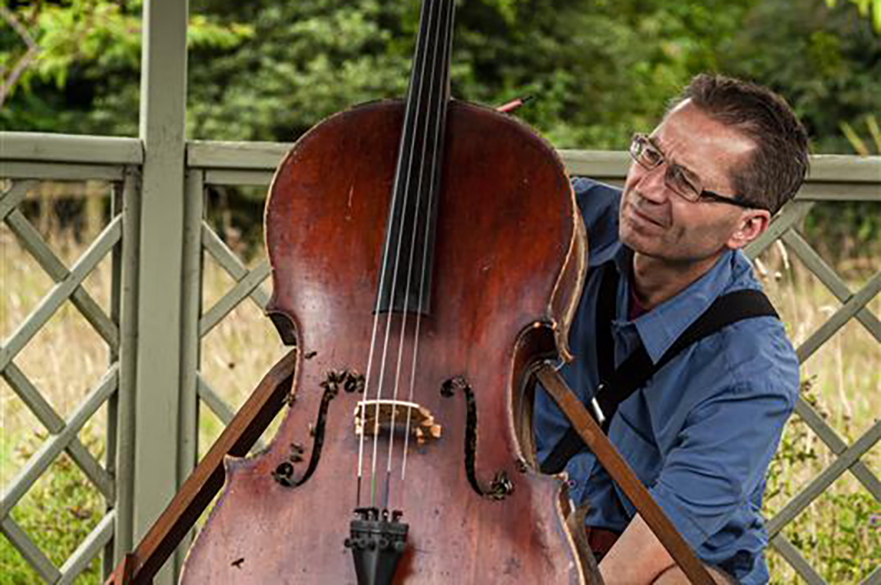
Dr. Martin Bencsik is a Professor at Nottingham Trent University's School of Science & Technology, with research spanning MRI/NMR physics and honeybee behavior monitoring. He leads undergraduate modules in Forensic Databases and Biometrics while pioneering the use of accelerometers for automated bee colony health assessment. PhD in MRI from University of Nottingham Lecturer at NTU since 2003, promoted to Professor in 2023 Collaborator with artist Wolfgang Buttress His research interests include: Non-invasive condition monitoring Machine learning for ecological data Bioacoustic signal analysis Hybrid MRI/NMR sensor systems Pollinator health assessment Medical physics safety Recent publications demonstrate a transition from: MRI pressure mapping in soft solids Microbubble contrast agents To: predictive analytics for bee colonies Acoustic identification of insects Environmental sensor networks He contributes to EPSRC and H2020 B-GOOD funded projects while maintaining active collaborations with D.C. De Graaf (Ghent University), M.I. Newton , and R.J. Paxton .
Antti Kinnunen is a Postdoctoral Researcher at Aalto University's Department of Built Environment and Real Estate Economics. His work focuses on urban sustainability, carbon sequestration, and the intersection of environmental policy with real estate finance. Doctoral degree in Engineering and Technology, University of Iceland (2025) Doctoral degree in Engineering and Technology, Aalto University (2024) Master's degree in Natural Sciences, University of Helsinki (2020) His research explores: Biogenic carbon sequestration in urban environments Climate impacts of changing urban typologies Biodiversity criteria in sustainable real estate EU Nature Restoration Law implementation Urban consumer carbon handprints Recent publications highlight trends in: Whole life carbon analysis of buildings Vegetation loss in Helsinki's new residential areas Carbon-biodiversity synergies in urban green spaces