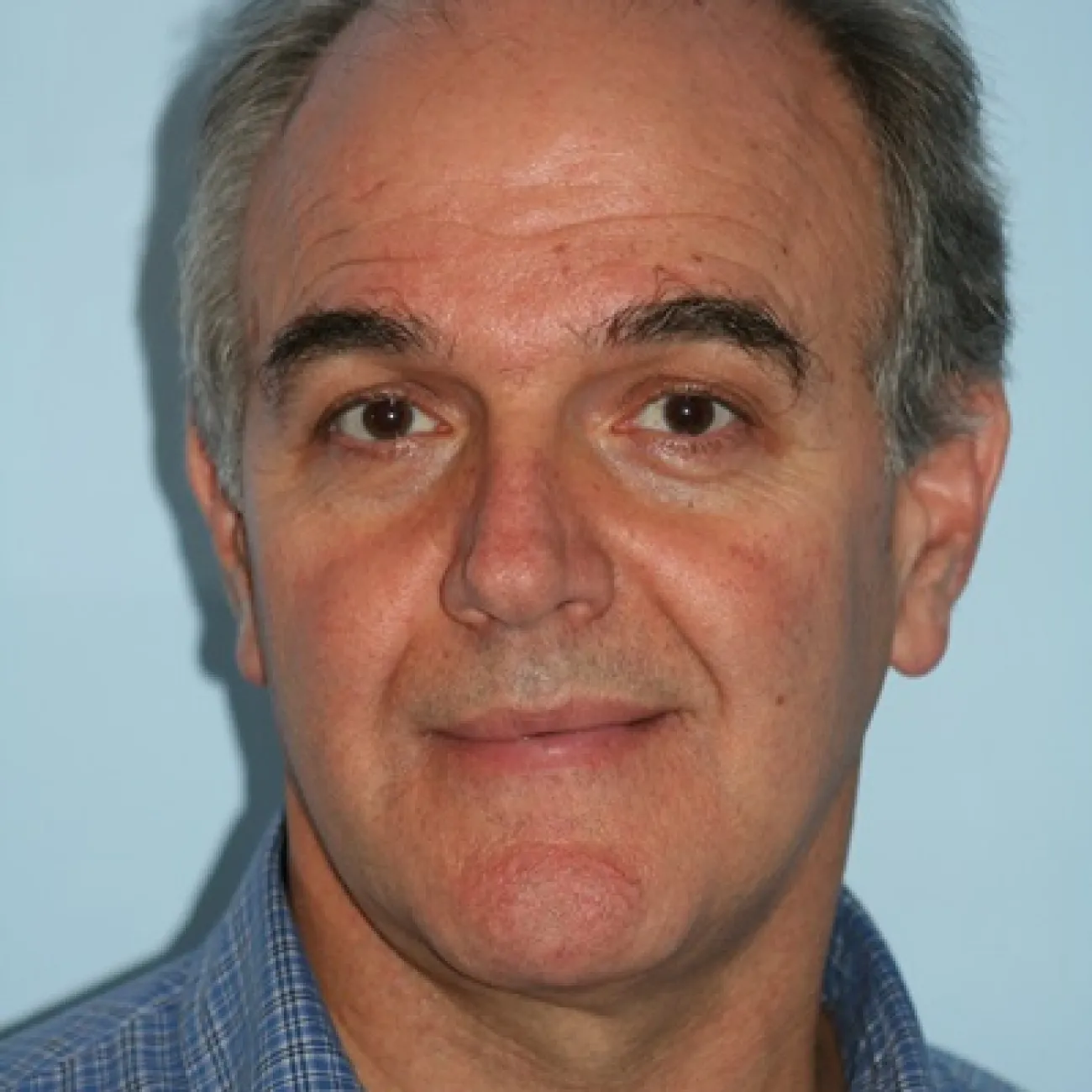
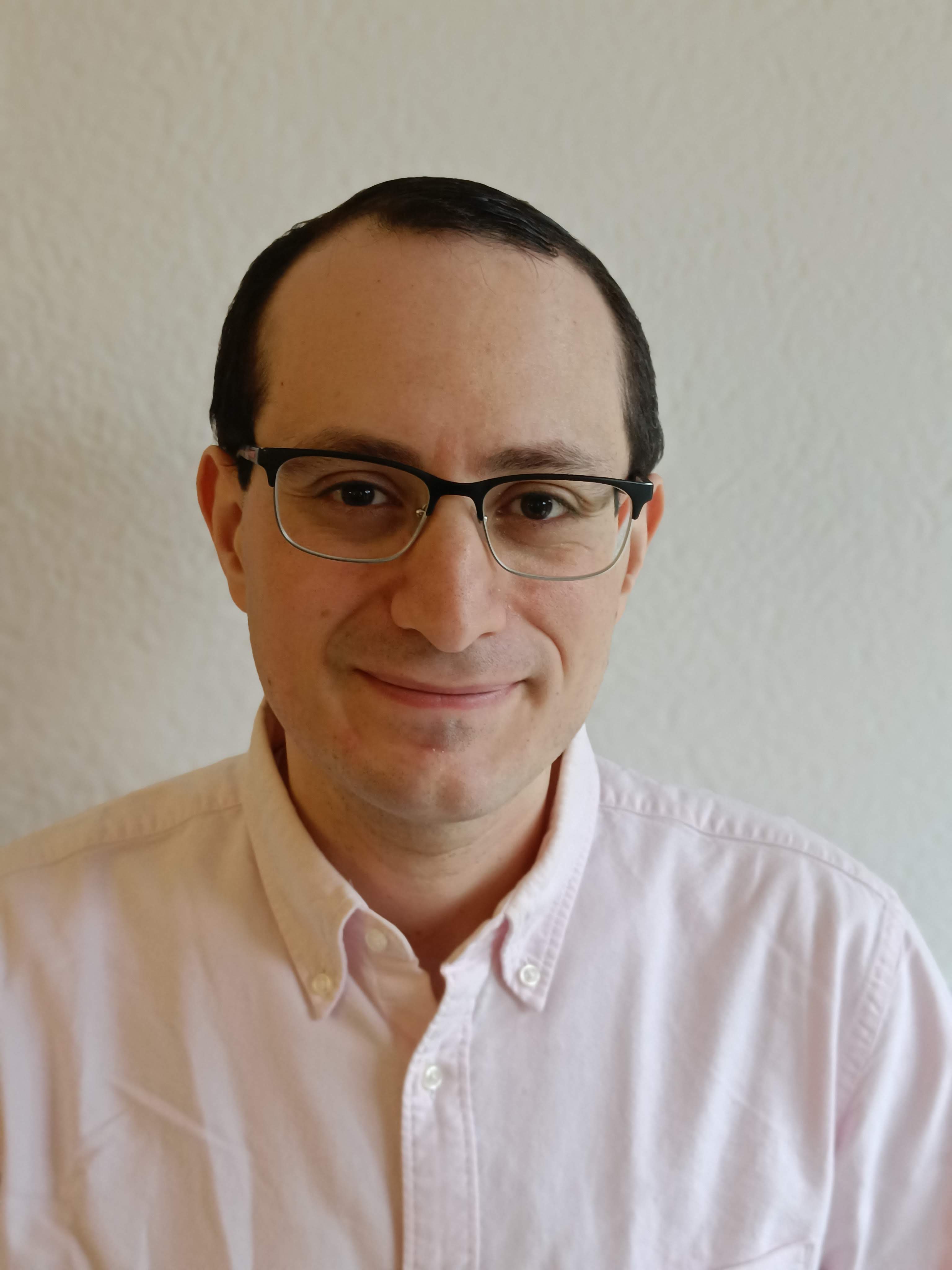
Professor Stephen Sweeney is a prominent academic in photonics and nanotechnology at the University of Glasgow. He holds a BSc from the University of Bath and a PhD from the University of Surrey. His research focuses on semiconductor materials for photonic devices, with applications in communications, energy, and biomedical fields. He leads the Semiconductor Photonic Materials and Devices group and serves as Convenor for Postgraduate studies in the James Watt School of Engineering. Education: BSc Applied Physics (University of Bath), PhD in Semiconductor Laser Physics (University of Surrey) Roles: Professor of Photonics and Nanotechnology, former Head of Physics Department at University of Surrey Industries: CTO of Zinir Ltd (UK photonics start-up) His research interests span laser technology, photonic integration, and energy-efficient systems. He has authored over 185 publications and holds prestigious fellowships from the Institute of Physics and SPIE. Recent work includes advancements in mode-locked lasers and photonic crystal devices. Awards: Fellow of the Institute of Physics Fellow of SPIE Grants & Collaborations: EPSRC Leadership Fellowship, EU advisory roles, and partnerships with global research agencies. His lab develops cutting-edge photonic systems for communications and sensing.
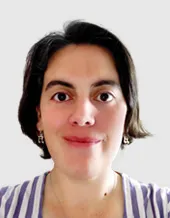
Elena del Valle is a Research Professor at the Technical University of Munich and Universidad Autónoma de Madrid, specializing in Theoretical Condensed Matter Physics. As a Hans Fischer Fellow at TUM-IAS, her research focuses on quantum optics, light-matter interactions, and nanophotonics. Her work explores quantum light generation, including single-photon sources, N-photon bundles, and quantum correlations in cavity-QED systems. She investigates fundamental phenomena such as photon statistics, entanglement, and polariton dynamics in semiconductor nanostructures. Del Valle's research demonstrates strong trends in quantum emitter technologies and nanophotonic device applications, with publications frequently appearing in high-impact journals like Nature Photonics and Physical Review Letters. Her contributions advance quantum communication, sensing, and computing platforms. She has received numerous awards including the Excellence Award for University Professors (2020), Ramón y Cajal award (2014), and Humboldt Research Fellowship (2011). She supervises research in quantum optics and mentors students in nanophotonics. As Principal Investigator of multiple projects, she leads the 'Novel quantum-light sources' focus group at TUM-IAS, collaborating with experimental groups to develop next-generation quantum technologies.
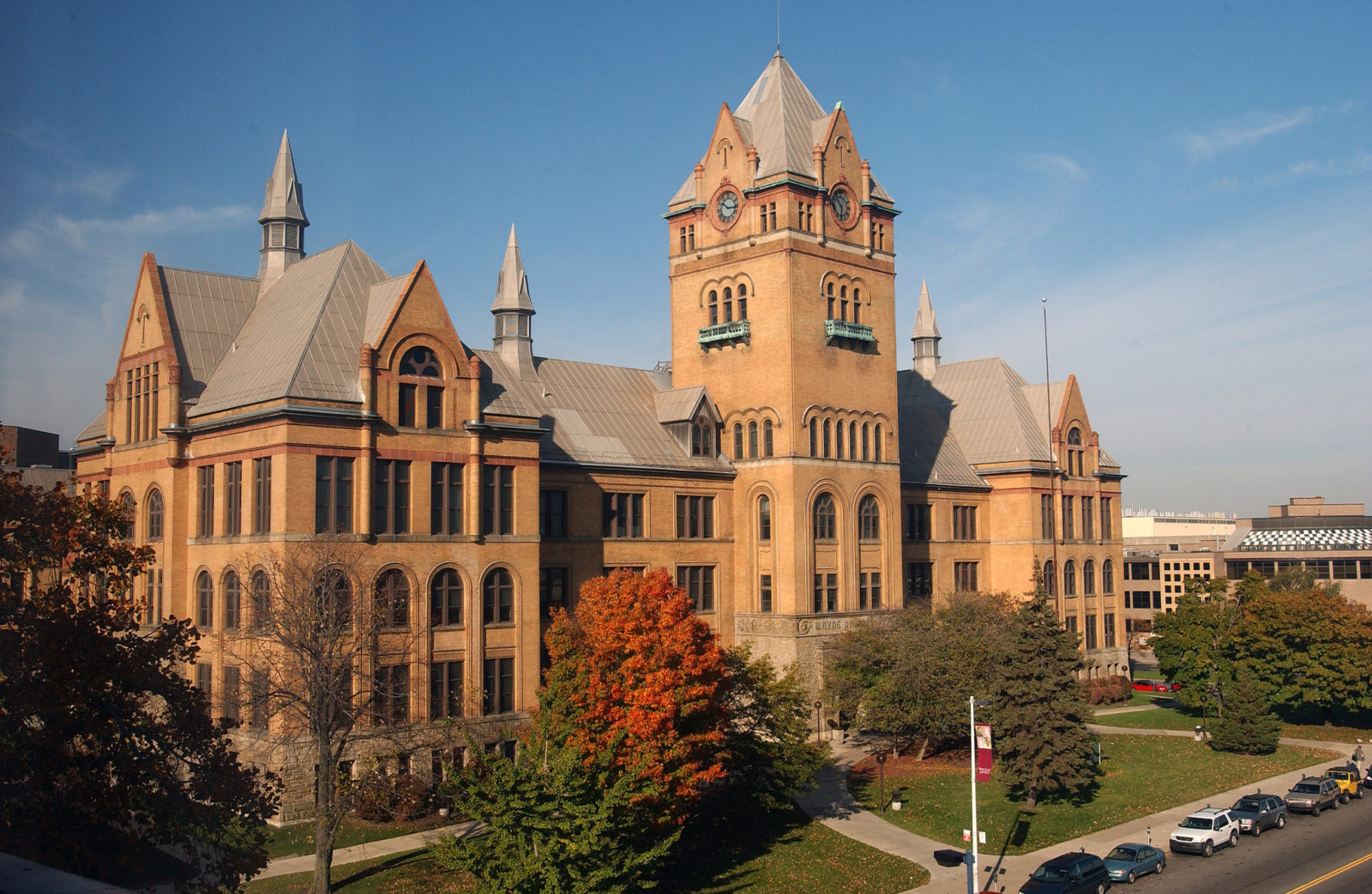
Dimitrios Sounas is an Assistant Professor in the Department of Electrical and Computer Engineering at Wayne State University's College of Engineering. His research bridges electromagnetics, metamaterials, and acoustic systems, with a focus on nonreciprocal devices and time-modulated technologies. He has held academic roles at The University of Texas at Austin and Polytechnique Montreal. Ph.D. in Electrical and Computer Engineering, Aristotle University of Thessaloniki (2009) Diploma/M.Eng. in Electrical and Computer Engineering, Aristotle University of Thessaloniki (2004) His research explores advanced electromagnetic systems, including magnetless circulators, time-modulated metasurfaces, and topological phonon transport. Current projects investigate nonreciprocal acoustic filters and broadband delay lines. Recent publications highlight innovations in time-varying capacitors for energy trapping (2023), non-reciprocal Willis coupling (2023), and magnet-free circulators via photonic crystal modulation (2023). Earlier works established foundational concepts in microwave nonreciprocity and optical signal processing. Scientific accolades include: Brillouin Medal, International Phononics Society (2023) EurAAP Leopold B. Felsen Award (2020) IEEE Senior Membership (2020) He supervises research students in electromagnetic theory, metamaterial simulations (CST, COMSOL), and microwave measurements, with recent Ph.D. advisee Saeed Keshavarz completing work on topological microwave components for wireless systems.
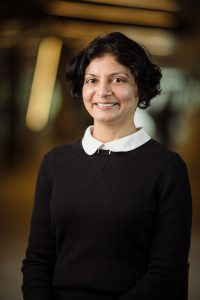
Dr. Sudha Mokkapati is an Associate Professor in the Department of Materials Science and Engineering at Monash University. Her research focuses on semiconductor nano-photonics, nano-lasers, and nanostructured solar cells. She holds a PhD from the Australian National University (2008) and has held academic positions at Cardiff University (2016–2019) and postdoctoral roles at ANU's Centre for Sustainable Energy Systems and Research School of Physics and Engineering. Education: M.Sc. Physics, University of Hyderabad M.Tech. Materials Science and Engineering, Indian Institute of Technology Kanpur Ph.D. Physics, Australian National University Research Interests: Semiconductor nanostructures for optoelectronics Nanowire-based lasers and solar cells Photon management in thin-film solar cells Plasmonic and nanophotonic device engineering Her recent publications emphasize advancements in gas sensing technologies, photonic resonators, and nanoscale optoelectronic devices. She leads projects on chemical detection platforms and wafer-scale 2D heterostructure synthesis. Collaborations span international institutions, addressing sustainable energy and nanotechnology challenges aligned with UN Sustainable Development Goals. Grants/Projects: All-electronic platform for real-time toxic gas detection (2024–2025) Low-cost wireless sensors for chemical hazards (2021–2023) van der Waals Epitaxy for flexible optoelectronics (2017–2020) Labs/Teams: Engaged in nanophotonics and materials engineering research groups at Monash, focusing on device fabrication and characterization for energy and sensing applications.
Dr. Axel Lubk is a Group Leader at the Institute for Solid State Research (IFW Dresden) , specializing in advanced electron microscopy techniques for materials science. His research spans four key areas: (1) TEM method development (high-resolution imaging, tomography, holography, and in-situ techniques), (2) charge particle optics and scattering theory , (3) magnetic nanotextures (domain walls, skyrmions), and (4) plasmonics (mode hybridization in heterogeneous structures and semiconductor heterostructures). Dr. Lubk’s work focuses on three-dimensional magnetic texture analysis using electron holography and tomography, particularly in systems like skyrmion tubes , FeGe , and Cr2O3 thin films . He has pioneered techniques for vector-field electron tomography and phase retrieval under varying boundary conditions, advancing nanoscale magnetic imaging. His recent studies include plasmonic properties in AgAu nanosphere chains , thermoelectric multilayer systems , and topological insulators like NiRh2Sb and TaTMTe4 . Dr. Lubk has published extensively in high-impact journals such as Nature Communications and Advanced Materials , with a focus on TEM instrumentation and quantitative analysis . He frequently presents at international conferences like the International Microscopy Congress and European School of Magnetism , emphasizing applications in spintronics , quantum materials , and nanostructured systems . His contributions to holographic vector-field electron tomography and machine learning for spectrum-image data have set new standards in electron microscopy.
A. Douglas Stone is the Carl A. Morse Professor of Applied Physics and Physics at Yale University and Deputy Director of the Yale Quantum Institute. His research focuses on theoretical condensed matter physics and optics, with contributions to quantum transport, laser physics, and mesoscopic systems. He holds a PhD from MIT (1983) and has been recognized with awards like the Willis Lamb Medal (2015) and Phi Beta Kappa Science Book Award (2014). Roles: Deputy Director, Yale Quantum Institute; Carl A. Morse Professor of Applied Physics and Physics Affiliations: Yale University; multiple collaborations with experimental groups in optics and photonics Research Interests: Quantum chaos, wave chaos in microcavities, coherent perfect absorption, steady-state ab initio laser theory (SALT), and mesoscopic physics. His work bridges theoretical advancements with experimental applications in lasers, quantum computing, and nanophotonics. Key Projects: Development of SALT for microlaser design, exploration of topological photonics, and studies on quantum measurement and error correction in quantum systems. Grants & Awards: Over 20 grants and fellowships, including NSF support and major prizes in laser science and condensed matter physics. Labs/Teams: Leads the Stone Research Group at Yale, collaborating on projects like random lasers and quantum coherence.
Kerry J. Vahala serves as the Ted and Ginger Jenkins Professor of Information Science and Technology and Applied Physics at the California Institute of Technology, where he has maintained continuous faculty appointment since 1985. He progressed from Research Fellow (1985) to Assistant Professor (1986-90), Associate Professor (1990-96), Professor (1996-2002), and Jenkins Professor (2002-present), serving as Executive Officer of the Department of Applied Physics from 2013-2025. His academic background includes: B.S. in Applied Physics, Caltech (1980) M.S. in Applied Physics, Caltech (1981) Ph.D. in Applied Physics, Caltech (1985) Professor Vahala's research pioneers ultra-high-Q optical microresonators that confine light for exceptionally long durations (Q factors exceeding 1 billion in chip-based devices). His work explores nonlinear optical phenomena including soliton microcombs and second-harmonic generation, cavity optomechanics involving radiation-pressure coupling, and integrated photonic systems for quantum and classical applications. The Vahala Research Group has established foundational techniques for high-Q resonator fabrication and demonstrated breakthrough applications in low-noise microwave generation and quantum light sources. Analysis of his 2023-2025 publications reveals strong emphasis on system integration of microresonators with photonic circuits, particularly using silicon nitride platforms. Key trends include development of practical microwave photonics systems (spiral resonators, low-noise oscillators), quantum light generation (photon pairs, 780nm sources), and novel resonator architectures (micro-Fabry-Pérot cavities, Moiré-effect devices) addressing previously intractable challenges in the 'green gap' and thermal limitations. His scientific recognition includes: Charles Hard Townes Medal (2025) As Executive Officer until 2025 and current Jenkins Professor, Vahala has directed departmental strategy while maintaining active research leadership. His group receives substantial research funding evidenced by advanced nanofabrication capabilities and recent high-impact publications, though specific grant details aren't provided in source materials. The group maintains strong industry and academic collaborations visible through multi-institutional publications. The Vahala Research Group operates specialized laboratories for nanofabrication and optical characterization at Caltech, focusing on pushing Q-factor limits and developing application-specific resonator systems. Their current work integrates microresonators with photonic circuits to create self-contained systems for communications, sensing, and quantum information processing, as demonstrated by recent advances in isolator-free lasers and microwave photonics.
Professor Michalis Zervas serves as Professor of Optical Communications at the University of Southampton's Optoelectronics Research Centre (ORC), leading pioneering research in photonics and laser technologies. His work integrates advanced optical systems with artificial intelligence to solve complex challenges in telecommunications, manufacturing, and medical diagnostics through major collaborations with industry and international research bodies. His primary research spans Optical Communications, Photonics, and Fibre Lasers, with specialized focus on deep learning applications for laser control optimization, coherent beam combination, and optical fibre sensor development. Current investigations include high-power photonics systems for industrial manufacturing and novel laser-based biomedical diagnostic platforms that bridge physics with healthcare innovation. Recent publications (2025) reveal a decisive trend toward AI-photonic integration, where deep learning algorithms enhance precision in laser-material interactions across diverse applications—from microbead cleaning and paint analysis to psoriasis treatment simulation and diatom imaging. This interdisciplinary approach demonstrates consistent methodological innovation in merging computational intelligence with fundamental laser physics. Supervises 6 PhD students including Rosemary Catriona Clark and Fedor Chernikov in ORC's photonics programs Secures major funding from EPSRC (Smart Fibre-Optic High Power Photonics, Hearing Light) and US Air Force Office of Scientific Research Leads collaborative projects with Professor Sir David Payne and Professor Johan Nilsson across national manufacturing hubs As co-leader of the Smart Lasers and Special Fibres research group within the Advanced Laser Laboratory, Zervas drives experimental photonics innovation through state-of-the-art fibre laser systems and optical resonator technologies. His team maintains strategic partnerships with global industry leaders in photonics manufacturing and medical device development.
Matthias Meier is a Full Professor at the Institute of Biochemistry, University of Leipzig, and Principal Investigator at Helmholtz Pioneer Campus, Helmholtz Zentrum München. His research focuses on advancing microfluidic organ-on-chip technology for single-cell and whole-organ disease modeling. Education: PhD in Biophysics (University of Basel, 2006) Research Interests: Dr. Meier's work bridges bioengineering and metabolic disorders, using organ-on-chip platforms to study stem cell differentiation, pancreatic/adipose tissue interactions, and dynamic microenvironmental signals. His lab integrates microfluidics with hiPSC-derived organoids for obesity and diabetes research. Publication Trends: Recent studies emphasize organ-on-chip systems, single-cell analysis , and stem cell engineering , with applications in cardiovascular disease modeling, spatial transcriptomics, and bioelectronic monitoring. Scientific Awards: Feodor-Lynen Postdoctoral Fellowship (2008) Emmy-Noether Fellowship (2012-2018) ERC Consolidator Grant (2017) Advising & Grants: He has led independent research groups with major grants, focusing on energy imbalance mechanisms and patient-specific organoid models for metabolic disease therapies. Labs & Teams: The Matthias Meier Lab develops microfluidic platforms to control chemical, architectural, and mechanical cues for hiPSC differentiation, emphasizing spatial protein profiling and organoid assembly.
Dr. Luiz Felipe Aguinsky is a Lecturer in Computational Nanoelectronics and Deputy Group Leader of the DeepNano Research Group at the University of Glasgow. He holds a PhD (Dr. techn.) from TU Wien, Austria, where he specialized in semiconductor fabrication process modeling. As an Erwin Schrödinger Fellow at ETH Zurich, he developed machine learning-enhanced models for memristors. His research focuses on computational nanoelectronics, combining advanced simulation techniques with cutting-edge materials science. Education: PhD (Dr. techn.) in Microelectronics, TU Wien (Austria), 2019 (with distinction) Erwin Schrödinger Fellowship at ETH Zurich's Computational Electronics Group (2021–2023) Research Interests: His work integrates machine learning with atomistic simulations to address challenges in semiconductor manufacturing. Key areas include: High-performance TCAD for nanofabrication processes Quantum transport and neuromorphic computing Applied computer graphics for nonimaging applications Level-set methods for surface evolution modeling Publications Trends: Recent work emphasizes knudsen diffusion modeling for nanofabrication, atomic layer deposition simulations, and plasma etching optimization. Cross-disciplinary methods like ray tracing and machine learning feature prominently in his latest projects. Awards & Fellowships: EUROSOI-ULIS Best Poster Award (2021) Erwin Schrödinger Fellowship (FWF, 2023–2025) Professional Activities: Active member of IEEE Nanotechnology Council's Modelling & Simulation Technical Committee. Co-author of over 15 peer-reviewed publications since 2019, with contributions to IEEE NANO, SISPAD, and EuroSOI conferences. Labs/Teams: Leads computational modeling efforts in the DeepNano Research Group, collaborating globally on TCAD innovations for next-generation semiconductor devices.
Ali W. Elshaari is an Associate Professor at the Royal Institute of Technology (KTH) in Stockholm, Sweden. He holds a B.S. in Electrical Engineering from the University of Benghazi (2007) and a Ph.D. in photonics from the Rochester Institute of Technology (2011). His postdoctoral research at TU Delft’s Kavli Institute of Nanoscience focused on quantum transport. Currently, he leads the Quantum Nano Photonics Group, pioneering work in topological and quantum integrated photonics to develop high-performance circuits for communication, sensing, and metrology. His research spans hybrid quantum photonics, strain-tunable systems, and superconducting detectors, with applications in quantum communication and quantum materials characterization. Elshaari's research interests include integrating single-photon emitters into CMOS-compatible platforms, exploring quantum phenomena like entanglement and coherence, and developing advanced photonic materials (e.g., hexagonal boron nitride and Cu₂O). He has contributed to on-chip single-photon generation/filtering, strain-tunable photonic circuits, and slow-wave superconducting detectors. His work bridges experimental and theoretical approaches, leveraging imaging techniques and phase retrieval algorithms. Elshaari is an editorial board member for Nature Portfolio - Scientific Reports , Wiley Advanced Quantum Technologies , and EPJ Quantum Technology . He teaches courses in quantum technology, electromagnetism, and optical physics. His funding includes grants from the Wallenberg Foundation, Swedish Research Council, Vinnova, and the European Research Council. His lab actively recruits students for bachelor’s and master’s projects in quantum photonics and nanophotonics.
Philippe Tassin is a Professor of Physics at Chalmers University, specializing in electromagnetic structured media and computational electrodynamics. He teaches optics, quantum mechanics, and computer science courses, earning recognition through the Golden Chalk award and Chalmers' Pedagogical Prize. M.Sc. and Ph.D. (summa cum laude) from Free University of Brussels Postdoctoral work at Iowa State University and Ames Laboratory (US DOE national lab) His research spans metamaterials, plasmonics, and nanophotonics, with significant contributions to inverse design methodologies using machine learning. He has authored influential papers in Science , Nature Photonics , and Physical Review Letters , and frequently presents at international conferences. Recent publications highlight advancements in liquid metal composites for electromagnetic absorption, AI-driven metasurface design, and adaptive meshing for photonic simulations. His work integrates computational physics with experimental validation across multiple electromagnetic domains. KAW Fellowship Swedish Research Council Grant IEEE & SPIE Fellowships BAEF Alumni Award Frans Van Cauwelaert Award (Royal Flemish Academy) As editor of Photonics and Nanostructures , member of the Young Academy of Sweden, and vice-chair of IEEE Photonics Sweden Chapter, he actively contributes to academic leadership and public science communication.
Dr. Bahareh Marzban is a Researcher at the Institute for Quantum Electronics within the Department of Physics at ETH Zurich, Switzerland. Her work focuses on advanced semiconductor laser technologies and quantum photonics for integrated photonic systems, with current contact details including office location HPT F 11, Auguste-Piccard-Hof 1, Zürich, and email bmarzban@ethz.ch. Her primary research interests span semiconductor lasers, quantum optics, and silicon photonics. She specializes in developing group IV semiconductor lasers (GeSn/SiGeSn) for monolithic integration with silicon platforms, with significant contributions to microdisk/microring laser designs, quantum walk comb sources, and mid-infrared laser technologies. Her work bridges fundamental quantum phenomena with practical applications in optical communications and sensing systems, emphasizing electrically pumped configurations for real-world deployment. Analysis of her publication trends reveals a sustained focus on overcoming material limitations in silicon-compatible lasers, with recent work (2024-2025) advancing tunable frequency combs and ultra-stable broadband sources. Her research demonstrates consistent innovation in quantum-engineered photonic devices, particularly through quantum walk implementations for comb generation and strain-engineered group IV laser designs achieving record-low thresholds on silicon substrates. As part of ETH Zurich's Institute for Quantum Electronics, Dr. Marzban contributes to cutting-edge research in laser physics and integrated photonics, collaborating within multidisciplinary teams to develop next-generation optical technologies for communication, metrology, and quantum information processing applications.
Takao Aoki is a Professor at the School of Advanced Science and Engineering , Waseda University. His research focuses on Quantum Optics , Nanophotonics , and Quantum Information Science , particularly in cavity quantum electrodynamics (QED) systems with nanofiber optics and microtoroidal resonators. Key Research Areas : Semiconductors, optical properties of condensed matter, atomic physics, quantum computing, and photon pair generation. Notable Projects : Japan Society for the Promotion of Science grants for time-domain-multiplexed quantum cluster states and nonlocal coherent coupling in cavity QED systems. Recent publications highlight advancements in single-photon sources , coupled-cavity QED , and graphene optical nonlinearity . His work has enabled ultra-low-loss tapered optical fibers and high-fidelity quantum teleportation , contributing to scalable quantum technologies and secure optical communications. Scientific Awards : 2024 Waseda Research Award 2018 Waseda Research Award He has supervised master's research and taught courses in Optics , Quantum Electronics , and Advanced Quantum Optics . His patents include quantum computing units, photon generators, and entanglement devices.
Romuald Houdré is a Full Professor at the École Polytechnique Fédérale de Lausanne (EPFL), affiliated with the School of Basic Sciences (SB) and the Department of Physics (IPHYS). He holds dual roles in teaching and research within the School of Physics (SB-SPH). His research focuses on photonic crystals, optical microcavities, and their applications in biophotonics, semiconductor physics, and quantum optoelectronics. Education and Career: PhD in Condensed Matter Physics from École Polytechnique (France), 1985 Habilitation, Pierre and Marie Curie University, Paris 6, 1998 Joined EPFL in 1988, leading molecular beam epitaxy and microcavity activities Appointed Full Professor at EPFL in 2011 Research Interests: Photonic crystal cavities and optical trapping for biomedical sensing Nanophotonics and semiconductor materials (GaN-based systems) Nonlinear optics and quantum phenomena in polaritonic systems Development of lab-on-chip technologies for single-cell analysis Achievements: Over 220 publications, including 89 invited talks 5 patents and 4 book chapters High h-index (H=56 in WOS, H=68 in Google Scholar) Teaching: Optics II (Bachelor in Physics) Photonics for the Doctoral School in Photonics (EDPO) Supervised over 20 doctoral students Labs/Groups: Research conducted in the Quantum Optoelectronics Laboratory (LOEQ) and the SCI-SB-RH group, focusing on integrated photonics and biophotonics applications.