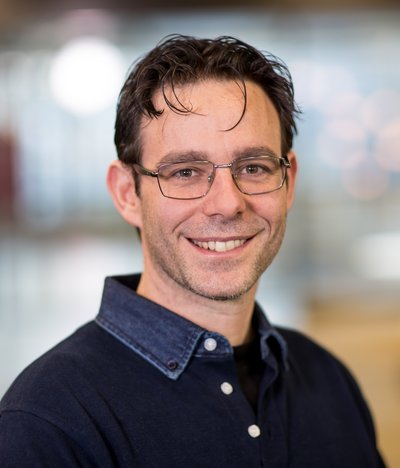
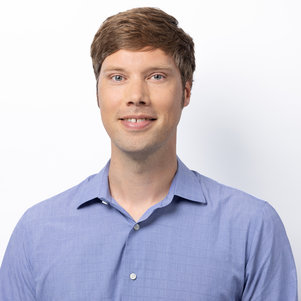
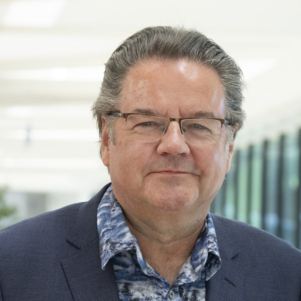
Yali Tang is an Assistant Professor in the Department of Mechanical Engineering at Eindhoven University of Technology (TU/e), specializing in fluid dynamics and transport phenomena within multiphase flows and physicochemical conversions . Her work targets Iron Power technology , green steel production , and alkaline water electrolysis for hydrogen generation, combining advanced computational models with experimental validation . Education: Master's in Chemical Engineering from Sichuan University (2011) PhD in Mechanical Engineering at TU/e (2015) with Prof. Hans Kuipers Research Interests: She focuses on interphase interactions , interfacial transport mechanisms , and high-resolution simulations (down to 40 nm mesh) to predict bubble coalescence and film dynamics. Her studies on hydrogen bubble growth , dendritic iron formation , and gas distribution in electrolyzers aim to refine reactor design and industrial processes. Collaborations with industrial partners ensure practical applicability of her computational models. Recent Publications: Her 2025 work includes dimensional analysis of liquid film formation, solutal Marangoni effects in electrolysis, and X-ray validation of gas distribution models. Earlier studies (2020–2023) cover defluidization behavior of iron fines, CFD-DEM modeling of raceways, and acoustic field applications in particle dynamics. Labs & Collaborations: She leads computational efforts within the Power & Flow group under Prof. Niels Deen, contributing to the EIRES Research cluster. Her work bridges academic research with industrial innovation in fluid dynamics and energy transition technologies.
Massimo Mischi is a Full Professor at the Faculty of Electrical Engineering of the Eindhoven University of Technology (TU/e) and chairs the Signal Processing Systems (SPS) Division , the largest division at TU/e with over 250 researchers. He founded the Biomedical Diagnostics (BM/d) Lab in 2012, which now includes 180 researchers and clinical/industrial advisors, focusing on biomedical signal processing for diagnostics and monitoring.
Michel Versluis is a Full Professor at the University of Twente, Netherlands, specializing in Physical and Medical Acoustics within the Physics of Fluids group. His work focuses on microbubbles and microdroplets for medical imaging and therapy, as well as microfluidic applications in medicine and nanotechnology. University of Twente, Physics of Fluids group His research bridges physics and biomedical engineering, with publications in high-impact journals like PNAS and IEEE Transactions. Recent work emphasizes ultrasound-driven microbubble dynamics, additive manufacturing of flow phantoms, and deep learning for super-resolution imaging. 2025 publications: vascular phantoms, PROTEUS simulator, acoustic microbubble control 2024 innovations: 3D-printed medical devices, immunogenic cell death optimization Contact: m.versluis@utwente.nl
Rudie P.J. Kunnen is an Associate Professor at the Faculty of Applied Physics and Science Education , Eindhoven University of Technology, leading the Turbulent and Multiphase Flows group. His research focuses on heat, mass, and particulate transport in turbulent flows, with applications in geophysics and industry. Active in UN Sustainable Development Goals related to environmental protection Collaborator in projects like Active Contamination Control for Equipment and SubstrateS Research Interests : Turbulent flow dynamics, rotating convection, vortex structures, thermophoresis, plasma-liquid interactions, and geostrophic turbulence. His work combines experimental and numerical approaches (e.g., direct numerical simulation, particle image velocimetry). Scientific Awards : NWO Vici Prize (2024) Advising and Collaborations : Supervised multiple BSc and MSc theses at TU/e. Collaborates with researchers like F. Toschi and H.J.H. Clercx on turbulence projects.
T.J.C. van Terwisga is a Professor at the Ship Hydromechanics and Structures department of Delft University of Technology (Faculty of Mechanical, Maritime and Materials Engineering). His research focuses on cavitation phenomena, vortical flows, and microbubble dynamics, with applications in ship hydrodynamics and marine technology. PhD in Mechanical Engineering (specialization in cavitation physics) Editorial Board Member: The Journal of Ocean Technology (2006–present) Research Interests : Cavitation inception and erosion mechanisms Air lubrication systems for ship drag reduction Underwater shipping noise propagation Bubble dynamics in vortical flows Experimental fluid mechanics Hydrofoil performance optimization Scientific Contributions : Developed advanced calibration methods for microbubble measurement systems Investigated air lubrication regime transitions under varying flow conditions Studied cavitation onset in counter-rotating vortex flows Explored bubble capture mechanisms in vortical flows Contributed to underwater soundscape modeling for maritime operations Editorial Roles : Editor, The Journal of Ocean Technology (2006–present) Editor, The Journal of Ocean Technology (2009–present)
Sabrina Santos Oliveira is an Associate Professor with a shared position between the Cell Biology, Neurobiology and Biophysics division of the Department of Biology and the Pharmaceutics division of the Department of Pharmaceutical Sciences at Utrecht University's Faculty of Science. Her research focuses on Molecular Targeted Therapies, particularly using nanobodies to enhance the selectivity of photodynamic therapy for cancer treatment. Dr. Oliveira received her initial introduction to Utrecht University through an internship at the Department of Pharmaceutical Sciences in 2004 during her studies at the Faculty of Pharmacy of Coimbra University in Portugal. After graduation, she obtained an individual doctoral grant from the Portuguese Foundation for Science and Technology (FCT) to complete her PhD research on Targeted Cancer Therapies (2004-2008). She then worked as a postdoc on nanobody-based tracers for optical molecular imaging (2008-2012). In 2012, she was awarded a VENI grant from the Netherlands Organisation for Research (NWO-STW), which allowed her to start her own research line focused on rendering photodynamic therapy more selective to cancer cells using nanobodies. In 2016, she received a Starting Grant from the European Research Council (ERC) to continue her research. She was appointed Assistant Professor in July 2016 and Associate Professor in May 2019. Dr. Oliveira's research group focuses on developing and evaluating improved therapies directed at relevant molecular targets. Her work primarily centers on nanobody-targeted photodynamic therapy, which uses the small size and binding specificity of nanobodies to target photosensitizers specifically to cancer cells. This approach aims to improve the selectivity of photodynamic therapy, which is currently limited by the non-specific interaction of hydrophobic photosensitizers with all cell types. Her ERC-funded KILLCANCER project (Starting Grant #677582) has investigated the mechanism of nanobody-targeted PDT and evaluated this approach in larger animals, with the goal of translating findings to human patients. The research has potential applications in treating various cancers, including feline oral carcinoma, which is being studied in collaboration with the University Clinic for Companion Animal Health. Analysis of Dr. Oliveira's recent publications reveals a strong focus on translating nanobody technology from basic research to clinical applications. Her work spans multiple therapeutic areas including cancer treatment, viral infection therapies, and advanced drug delivery systems. The research demonstrates significant translational potential, with applications in both human and veterinary medicine, particularly in improving cancer treatment options through more selective targeting approaches. VENI grant from Netherlands Organisation for Research (NWO-STW) (2012) Starting Grant from European Research Council (ERC) (2016) Individual doctoral grant from Portuguese Foundation for Science and Technology (FCT) Dr. Oliveira's laboratory includes a technician, multiple postdocs, and PhD students working on various aspects of nanobody-targeted therapies. Her research has been highlighted by the Morris Animal Foundation as a promising new treatment for cats suffering from oral squamous cell carcinoma, demonstrating the translational potential of her work from bench to bedside (and clinic). The collaborative nature of her research is evident in the numerous collaborations with other departments and institutions, including the University Medical Center Utrecht and veterinary clinics.
David Maresca is an Associate Professor in the Imaging Physics department at the Faculty of Applied Sciences, Delft University of Technology. His research focuses on the intersection of ultrasound imaging physics and molecular engineering, with the goal of enabling ultrasound imaging of cells across space and time in living opaque organs. His research interests include: Biomolecular acoustic sensors Functional ultrasound neuroimaging Transcranial ultrasound Nonlinear ultrasound imaging Engineering of acoustic biosensors Ultrasound imaging of brain function Dr. Maresca's work centers on developing technologies that combine ultrasound physics with molecular engineering to create new imaging capabilities. His lab pioneers approaches to image cells within opaque organs using ultrasound, with applications in neuroscience and biomedical imaging. His research spans from fundamental ultrasound physics to the development of acoustic biosensors and imaging techniques that can detect cellular processes. His recent publications demonstrate a strong focus on advancing ultrasound imaging capabilities, particularly in nonlinear ultrasound techniques, contrast-enhanced ultrasound, and applications in neuroimaging. His work shows increasing interdisciplinary collaboration across physics, engineering, and neuroscience. Dr. Maresca has received recognition including the HFSP Cross-Disciplinary Fellowship. His academic background includes a Ph.D. in Biomedical Engineering from Erasmus MC, an M.Sc. in Acoustics, and a Master's degree in Physics from Université Paris Diderot. He completed postdoctoral work at Caltech and Institut Langevin, ESPCI. His research is supported by collaborations across institutions, with recent work involving researchers from multiple universities and research centers. Dr. Maresca's lab is actively contributing to advancing ultrasound imaging technology and its applications in biomedical research.
Nico de Jong is a researcher at Erasmus MC in the field of cardiology. His work focuses on advanced ultrasound technologies and contrast agents for cardiovascular diagnostics. Key research areas include microbubble dynamics, beamforming techniques, and high-speed 3D imaging systems. Institution: Erasmus MC Department: Cardiology Academic Role: Researcher Recent publications highlight innovations in: Capacitive Micromachined Ultrasound Transducer (CMUT) arrays for ultrafast 3D imaging Subharmonic contrast imaging for blood pressure monitoring Microbubble stabilization mechanisms and acoustic behavior
Dr. C.F. (Rene) van Nostrum is an Associate Professor at the Department of Pharmaceutics, Faculty of Science, Utrecht University , where he has worked since 1999. His academic career spans roles in teaching physical chemistry to pharmacy students and leading groundbreaking research in advanced drug delivery systems. Active researcher in nanomedicine and biodegradable polymers Co-supervisor for 33 PhD graduates Recipient of prestigious grants and awards Education: PhD in Physical Organic Chemistry (1990-1995), University of Nijmegen MSc in Chemistry (1984-1990), University of Nijmegen Research Focus: Van Nostrum’s work centers on drug delivery systems , with emphasis on nanostructured carriers like polymer micelles, hydrogels, and nanoparticles. His innovations include thermosensitive micelles for targeted release and protein-imprinted nanoparticles as artificial antibodies. The research bridges materials chemistry and biomedical applications, contributing to sustainable development goals in health and well-being. Scientific Achievements: Thomson Reuters Highly Cited Researcher (2014) EJPS Best Paper Award (2004) Theme editor for Advanced Drug Delivery Reviews and International Journal of Pharmaceutics Grants and Leadership: He secured over €1.6 million in grants, including an NWO-CW VIDI grant (€908k) and Utrecht University High Potentials grant (€563k). His projects focus on biodegradable polymers and protein imprinting technologies.
Professor Antonius F.W. van der Steen is affiliated with Delft University of Technology (TU Delft) in the Faculty of Applied Sciences , specifically the ImPhys department. His career spans roles at Erasmus MC, including leadership in Biomedical Engineering and Experimental Echocardiography. Education: Master in Applied Physics (1989), PhD in Medical Sciences (1994) from Radboud University Medical Centre Research Interests : Focused on biomedical ultrasound, cardiovascular biomechanics, and advanced imaging technologies. Key areas include: Catheter-based imaging systems High frame rate ultrasound for real-time monitoring Ultrasound contrast agent development Biomechanical assessment of atherosclerosis Photoacoustic and intravascular ultrasound integration 2025 Research Trends : Recent publications emphasize computational imaging techniques, microbubble stability optimization, and multimodal diagnostic tools combining ultrasound with CT or photoacoustic modalities. Collaborations : Active in inter-institutional research networks, particularly with Erasmus MC and Delft University of Technology.
J. Westerweel is a Professor in the Department of Fluid Mechanics at Delft University of Technology, School of Mechanical Engineering. His research focuses on experimental fluid dynamics, particularly in Particle Image Velocimetry (PIV) , turbulent flow , and microfluidic systems . He has contributed extensively to understanding coherent structures , drag forces , and flow measurement methodologies . Research Trends: Recent works emphasize 3D flow reconstruction , microbubble dynamics , programmable hydrodynamics , and industrial fluid applications such as gypsum slurry flow optimization. His studies span both fundamental turbulence analysis and applied techniques in rowing propulsion , compliant coatings , and cavitation mitigation . Editorial Contributions: He has served as an editor for Experiments in Fluids and Flow, Turbulence and Combustion , ensuring quality in experimental methods across fluid mechanics.
Simona Turco is an Assistant Professor at the Electrical Engineering department at Eindhoven University of Technology. She is affiliated with the Biomedical Diagnostics (BM/d) Lab and the Eindhoven MedTech Innovation Center (e/MTIC). Her research focuses on model-driven analysis of medical images and biosignals for oncology and perioperative care. MSc Biomedical Engineering, University of Pisa (2012) Professional Doctorate in Engineering (PDEng), TU/e (2015) PhD, TU/e (2018) Her research integrates pharmacokinetic modeling and machine learning to advance diagnostics in cancer (angiogenesis imaging) and perioperative risk prediction. She utilizes contrast-enhanced ultrasound and MRI for multi-scale functional and molecular analysis. Key subfields include microbubble dynamics, dispersion imaging, and biosignal modeling. Recent publications highlight applications in prostate cancer radiogenomics, renal cell carcinoma, adenomyosis, and patient-ventilator asynchrony. She combines mathematical modeling with data-driven approaches for clinical translation, supported by collaborations with healthcare partners. Scientific Awards: Academy Van Leersum Grant (2019) Best Paper (3rd place), IEEE-EMBS (2017) Best Poster Awards at European Symposium on Ultrasound Contrast Imaging (2019) and IEEE-EMBS Benelux (2017) Hanart Fonds Fellowship (2019) She contributes to projects like MEDICAID (cardiovascular diagnostics) and PISANO SPS (perioperative innovation), with over 86 research outputs and 5 datasets. Her work aligns with the UN Sustainable Development Goals for healthcare innovation.
Martin Verweij is a Researcher in the Cardiology department at Erasmus MC, specializing in advanced ultrasound engineering for medical diagnostics. His work bridges electrical engineering and cardiovascular imaging through innovative transducer design and contrast-enhanced ultrasound methodologies. Research focuses on Transducer Engineering (100% fingerprint match), Beamforming (42%), and Microbubble Contrast Agents , with significant contributions to CMUT array development and acoustic streaming calibration. Key projects include high-frame-rate 3D ultrasound systems and microbubble dynamics simulation for improved cardiac imaging precision. Recent publications demonstrate accelerating innovation in monolithic ultrasound probe integration (2025) and nonlinear imaging physics (2024), establishing trends toward miniaturized, high-speed diagnostic hardware with clinical cardiovascular applications. Verweij maintains active supervision of graduate researchers (1+ supervised works) and extensive international collaborations, as evidenced by multi-institutional publications and global research network maps.
Jason Voorneveld is an Assistant Professor in Cardiology at Erasmus University Medical Center, specializing in ultrasound velocimetry and blood flow dynamics. His research focuses on developing advanced ultrasound technologies for cardiovascular assessment, with expertise in high-frame-rate imaging, contrast-enhanced ultrasound, and microbubble characterization. Research directions include: Non-invasive blood pressure measurement techniques High-speed 3D ultrasound probe development Microbubble mechanics for contrast imaging Validation of echo-particle image velocimetry Voorneveld earned his PhD from Erasmus MC in 2019 after completing his Master's in Biomedical Engineering at the University of Cape Town. His research contributions have been recognized with multiple awards including the Dekker Postdoc Fellowship and PhD Cum Laude distinction.
Gonzalo Collado Lara is a Researcher at Erasmus MC, specializing in Cardiology. His work focuses on ultrasound contrast agents, radiation therapy, and medical physics. Research Interests: Development of microbubbles for ultrasound imaging Applications in proton and photon dosimetry Sonoporation and acoustic behavior analysis Recent Trends: His publications highlight advancements in phase-change contrast agents for proton range verification, radiation-sensitive ultrasound agents, and microbubble stability studies.