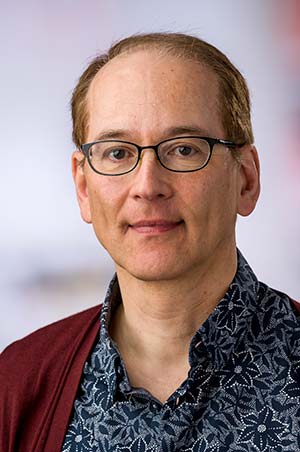
Zandrea Ambrose is an Associate Professor at the University of Pittsburgh's School of Medicine, affiliated with the Department of Infectious Diseases and Microbiology. Her research focuses on HIV therapies, prevention strategies, and eradication through cellular and molecular virology and animal models. Education: BA (1994) from Ohio Wesleyan University, PhD (2001) from the University of Washington The Ambrose laboratory investigates critical challenges in HIV treatment and prevention. Key areas include developing long-acting injectable nanoparticle formulations like rilpivirine for prophylaxis, studying drug resistance emergence in tissues, and exploring novel HIV-protein interactions in human cells (e.g., T cells, macrophages) for drug development. Her work also examines the inefficiency of certain microbicides after repeated use and the persistence of HIV-infected cells in anatomical sites, aiming to guide targeted therapies toward a potential cure.
Florian Hladik is a Professor in the Vaccine and Infectious Disease Division at Fred Hutchinson Cancer Center and holds academic appointments at the University of Washington School of Medicine as Research Professor of Obstetrics & Gynecology and Adjunct Research Professor of Medicine. He earned his MD and PhD from the University of Vienna, Austria in 1993. Dr. Hladik is board-certified in Dermatology and Venereology in the European Union and holds ECFMG Certification in the US, though he no longer practices as a physician. Dr. Hladik's research focuses on HIV transmission, prevention, and pathogenesis. Key areas include: Pathogenesis of sexual HIV transmission and the role of HSV Development and evaluation of microbicides HIV latency, reservoirs, and eradication strategies Mucosal immunology and biomarkers Impact of contraceptives and opioids on HIV risk He is a member of the Pathogen-Associated Malignancies Integrated Research Center (PAM IRC) at Fred Hutch and serves as Chief of the Clinical Research Division in the Department of Obstetrics & Gynecology at the University of Washington. Scientific Awards: No scientific awards were listed in the provided information. Dr. Hladik's advising activities and research grants were not detailed in the provided text. He leads research within the Vaccine and Infectious Disease Division at Fred Hutch and the Clinical Research Division at the University of Washington, focusing on mucosal immunology and HIV prevention.
Susana Valente is Professor and Chair of the Department of Immunology and Microbiology at the University of Florida's UF Scripps Biomedical Research institute, with joint appointments at The Wertheim UF Scripps Institute and The Scripps Research Institute. Her research focuses on HIV molecular virology and therapeutic strategies for viral eradication. Her educational background includes a Ph.D. in Microbiology-Virology from the University of Paris Diderot (2002), Master's degrees in Biotechnology from De Montfort University and Biochemistry from University of Paris Diderot, and a Bachelor's in Applied Chemistry and Biotechnology from New University of Lisbon. Dr. Valente's work centers on host-virus interactions in HIV replication and latency, pioneering the 'block-and-lock' cure strategy using compounds like didehydro-cortistatin A (dCA) to suppress viral reactivation. Her lab identifies critical host factors (e.g., p32 chaperone, p400 chromatin remodeler) that regulate HIV transcription, aiming to develop therapies targeting cellular mechanisms without compromising cell viability. This approach addresses drug resistance and aims for functional HIV cure. Analysis of her 15 most recent publications reveals dominant themes in HIV transcriptional control (73%), chromatin remodeling (40%), and latency-reversal therapeutics (60%), with significant cross-over into SARS-CoV-2 research (20%) during the pandemic. The work spans virology, molecular biology, and pharmacology with strong translational emphasis. Major scientific awards include: NIAID MERIT Award (2022) Landenberger Foundation Award for early career investigators (2010-2012) NIAID Career Transition Award (K22) (2007-2008) amfAR Fellowship (1998-2002) She actively mentors researchers in the Valente Lab and leads substantial grant funding including the HOPE Martin Delaney Collaboratory for HIV Cure (UM1), multiple NIH R01 awards on HIV transcriptional control, and projects developing Tat degraders and brain organoid models for neuroHIV research. Current grants focus on therapeutic disruption of HIV transcription, block-and-lock agents, and HIV-associated neurocognitive disorders. The Valente Lab at UF Scripps' Jupiter campus operates as a multidisciplinary research hub investigating host-pathogen interactions, with active collaborations across virology, immunology, and nanotechnology fields to develop novel HIV prevention and cure strategies.
Susana Valente is currently Professor and Chair of the Department of Immunology and Microbiology at the University of Florida Scripps Biomedical Research. She also holds professor positions at The Scripps Research Institute and The Wertheim UF Scripps Institute since 2022. Previously, she served as Associate Professor (2017-2022) and Assistant Professor in various departments at Scripps Research from 2009-2017, following a postdoctoral fellowship at Columbia University. Dr. Valente's research focuses on molecular interactions critical for HIV replication within host cells, with the goal of developing therapeutics that inhibit HIV-1 replication and target the latent viral reservoir. Her work spans virology, molecular biology, and epigenetics, with particular emphasis on transcriptional regulation of HIV-1 and host factors that influence viral latency and reactivation. She has pioneered the 'block-and-lock' strategy for HIV cure research, which aims to permanently silence the latent HIV reservoir. Her laboratory has made significant contributions to understanding how host chromatin remodelers regulate HIV transcription and how compounds like didehydro-cortistatin A (dCA) can suppress viral reactivation. Recent publications demonstrate her continued leadership in identifying novel host factors and developing therapeutic strategies targeting HIV transcription. Dr. Valente has received numerous awards including the NIAID MERIT Award (2022), Landenberger Foundation Awards, and NIAID Career Transition Awards. She serves on editorial boards for Viruses and Retrovirology and has been a permanent member of NIH study sections. As Principal Investigator, she leads multiple NIH-funded projects including the HOPE (HIV Obstruction by Programmed Epigenetics) Martin Delaney Collaboratory for HIV Cure, and research on host factors regulating HIV latency and reactivation. Her work bridges basic science with therapeutic development for HIV cure strategies.