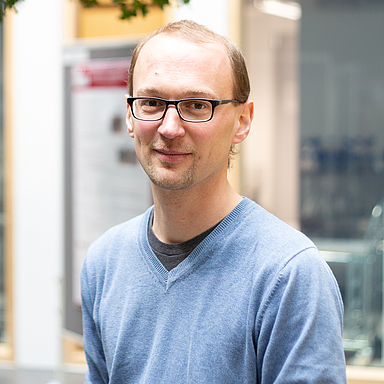
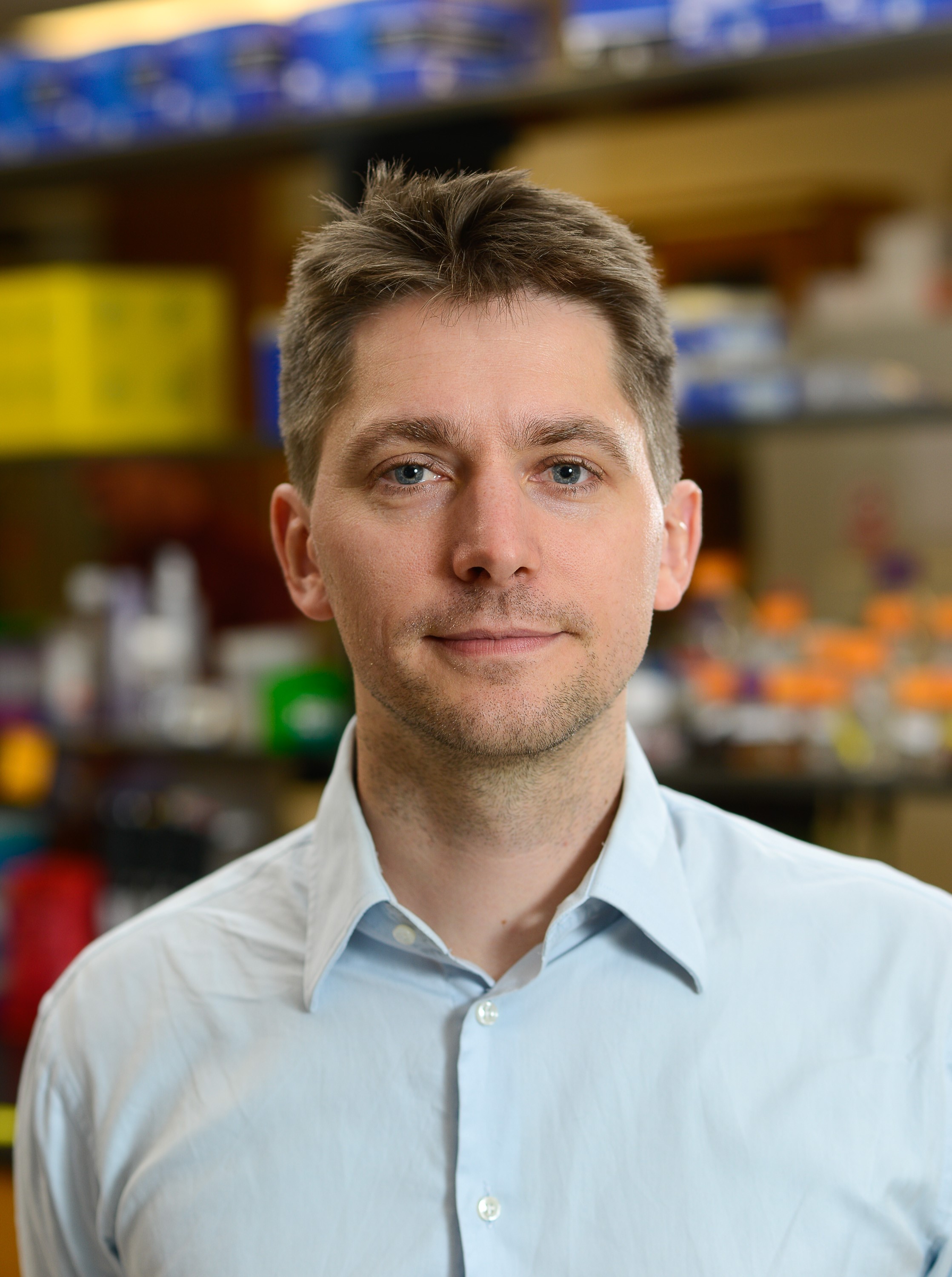
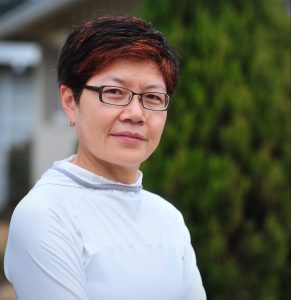
Regina Ragan is a Professor in the Department of Materials Science and Engineering at the Samueli School of Engineering, University of California, Irvine. Her research focuses on nanomaterials, self-assembly, and surface-enhanced Raman scattering (SERS) for applications in optical communication, energy systems, and biomedical diagnostics. Education: Ph.D. in Applied Physics, California Institute of Technology, 2002 M.S. in Applied Physics, California Institute of Technology, 1998 B.S. in Materials Science and Engineering, University of California, Los Angeles, 1996 Her work integrates scanning probe microscopy and first-principles calculations to study thermodynamic driving forces in self-assembly and structure-function relationships. Recent publications highlight applications in antimicrobial susceptibility testing, environmental monitoring, and plasmonic device fabrication. The Ragan group develops low-cost diagnostic tools using SERS for telemedicine applications. Current lab members include graduate students and postdoctoral researchers working on nanoscale systems from atomic to mesoscale. Scientific Awards: NSF CAREER Award for fundamental studies of biological/inorganic interfaces Research Trends: Recent articles show a focus on SERS-based diagnostics, plasmonic nanoantennas, machine learning-assisted spectral analysis, and scalable synthesis of 3D graphene architectures. Subfields span quantum plasmonics, stress-activated materials, and biofilm monitoring.
Sophie Dove is an Honorary Associate Professor at the School of Biological Sciences , University of Queensland, and an Affiliate Associate Professor at the Global Change Institute . Her research focuses on coral reef photobiology, climate change impacts, and symbiotic relationships in marine ecosystems. PhD in Biological Sciences, University of Sydney MA in Philosophy, University of Southern California MA (Hons) in Mathematics and Philosophy, University of Edinburgh Her work examines coral-dinoflagellate symbiosis , particularly how host and symbiont interactions maintain reef productivity under climate stress. Key questions include the role of symbiont parasitism, coral heterotrophy, and reef accretion-erosion balance under ocean acidification and warming. She collaborates with institutions like the Great Barrier Reef Marine Park Authority and CSIRO Publishing. Recent publications span coral bleaching mechanisms , ocean acidification effects , and biochemical adaptations in symbiotic organisms. Her studies integrate molecular biology, biogeochemistry, and ecophysiology to predict reef futures under climate stress. She has contributed to scientific consensus reports on the Great Barrier Reef and developed methodologies for analyzing coral and sponge physiology. Her interdisciplinary approach bridges marine ecology, protein biochemistry, and climate science.
Prof. Ton Bisseling is a distinguished Professor at the Laboratory of Molecular Biology, Wageningen University & Research. His research focuses on plant-microbe symbiosis, particularly root nodule development in legumes, mycorrhizal interactions, and the genetic mechanisms underlying symbiotic relationships. He has supervised over 70 PhD candidates, including ongoing projects like 'The role of endodermis in mycorrhizal symbiotic interactions' and 'Recruiting microbial communities to combat soil salinization.' Key research interests include understanding symbiotic gene regulation, auxin biosynthesis in nodules, and the role of strigolactones in plant-microbe communication. His work bridges fundamental biology with agricultural applications, addressing sustainable crop production challenges. Bisseling has contributed to 431 research outputs spanning articles, datasets, and book chapters. Notable datasets include RNA sequencing studies on ectomycorrhizal roots and strigolactone biosynthesis. He actively engages in public discourse on topics like nitrogen fixation and Chinese PhD student recruitment in Dutch academia. Current projects involve microbial community analysis in saline agriculture and citrus pathogen mechanisms. His lab collaborates globally, with recent studies in China, the Netherlands, and Saudi Arabia.
Professor David Ackerley (Victoria University of Wellington) is a leading microbiologist and enzyme engineer specializing in directed evolution of bacterial enzymes for biotechnological applications. As Biotechnology Programme Director since 2006, he lectures in foundational courses like BTEC101 and BTEC201. Academic rank: Professor of Biotechnology Institutional affiliation: Victoria University of Wellington Research focus areas: Microbial Biotechnology, Drug Discovery, Synthetic Biology His research employs Darwinian evolutionary principles to engineer enzymes with enhanced activities, particularly targeting non-ribosomal peptide synthetases and nitroreductases for antibiotic development and cancer therapy. Recent work explores metagenomic domain substitution in pyoverdine biosynthesis and Purpuramine R from marine sponges. Key publications demonstrate innovations in metagenomic library construction , CRISPR screening for regeneration genes, and structural characterization of engineered enzymes. His team has developed NTR 2.0 , a high-efficacy nitroreductase for targeted cell ablation. Current research projects include: Clean solutions from dirty genes: Plastic-degrading enzyme discovery Engineering enzymes for CAR T-cell-chemotherapy synergy Repurposing niclosamide against Gram-negative superbugs Grants from the Health Research Council of New Zealand, Royal Society of New Zealand, and Cancer Society of NZ support his work. Collaborations span biomedical research, synthetic biology, and environmental applications.
Anne Berit C. Samuelsen serves as Associate Professor at the Department of Pharmacy, University of Oslo, where she also holds the position of Head of Education. Her academic foundation includes a Cand.pharm. degree and Dr.scient. doctorate, establishing her expertise in pharmaceutical sciences. Her research centers on polysaccharides from natural sources—particularly higher plants, cereals, and fungi (Basidiomycota)—with specialized focus on β-glucans. Key interests include carbohydrate chemistry, pharmacognosy, and the development of biopolymer-based pharmaceutical applications. Her work bridges fundamental structural characterization with practical drug delivery solutions, notably through liposome coating technologies and immunomodulatory compound development. Recent publications reveal a strong trajectory in fungal polysaccharide research, particularly with Pleurotus eryngii and Albatrellus ovinus species. Her team employs advanced techniques like diffusion-ordered NMR spectroscopy to analyze polysaccharide structures while investigating biological activities related to immune receptor binding (Dectin-1, Toll-like receptors) and therapeutic applications. This work demonstrates consistent output in high-impact journals including Carbohydrate Polymers and ACS Applied Bio Materials . She actively contributes to academic instruction through courses such as FARM1150 (Pharmaceutically Oriented Biochemistry), FARM3100 (Pharmacognosy), and FARM5200 (Use of Biopolymers in Pharmaceuticals). Her leadership extends to the Bioactive Natural Substances and Health Effects (BioNatH) research group and the Glyconor Consortium, where she investigates natural product applications for health improvement.
Martin Kaltenpoth serves as Director at the Max Planck Institute for Chemical Ecology in Jena since 2020 and Professor for Evolutionary Ecology at Johannes Gutenberg University of Mainz since 2015. Previously, he led the Research Group Insect Symbiosis at the MPI for Chemical Ecology from 2009 to 2015. Education: PhD in Biology (summa cum laude), University of Würzburg, 2006 Diploma in Biology (with honors), University of Würzburg, 2003 His research centers on insect-bacterial symbioses , investigating evolutionary, ecological, and chemical dimensions of host-microbe interactions. Key foci include nutritional and defensive symbiosis in beetles, genomic adaptations of symbiotic bacteria, and chemical mediation of symbiotic relationships. His work bridges entomology, microbiology, and chemical ecology to unravel coevolutionary mechanisms. Analysis of recent publications reveals dominant trends in beetle-microbe systems, emphasizing symbiont roles in cuticle synthesis, antifungal defense, and host-plant adaptation. His studies frequently employ genomic, biochemical, and experimental approaches across diverse insect lineages. No scientific awards were documented in the source material. While specific advisees and grants remain unlisted, his leadership of research groups and dual academic appointments indicate active supervision of graduate researchers and externally funded projects in symbiosis evolution. Currently directing research at the Max Planck Institute, Kaltenpoth advances understanding of symbiotic systems with implications for evolutionary theory and sustainable pest management strategies.
Manuel Kleiner is an Associate Professor in the Department of Plant and Microbial Biology at North Carolina State University. His research focuses on metabolic and physiological interactions in host-microbe systems, microbial ecology, and the application of metagenomics and high-resolution mass spectrometry to study complex microbiota-host relationships. Research Highlights: Development of metaproteomic techniques to quantify protein expression, analyze community structure via biomass contributions, and track isotope ratios to understand nutrient flow between hosts and microbiota. Creator of the "transductomics" approach to detect horizontal gene transfer via viral transduction in intestinal systems. Collaborates with researchers such as Theriot, Sartor, Sheikh, Ziegler, and Gonzalez. Recent Trends: His 2025 publications emphasize gut microbiome dynamics, maize root-microbe interactions, transplantation biology, and advancements in metaproteomic methodologies. Key themes include dietary impacts on microbiota, stable isotope probing, and synthetic microbial communities for plant and human health. Laboratory Tools: The Kleiner Lab utilizes quantitative metagenomics, high-resolution mass spectrometry, and computational modeling to dissect functional interactions in symbiotic systems across diverse environments, from marine organisms to agricultural crops.
Ehud Gazit is a distinguished Professor in the Department of Molecular Microbiology and Biotechnology at Tel Aviv University's Faculty of Life Sciences. He holds the Chair for Nano-Biology and serves as Vice President for Research and Development at Tel Aviv University. Professor Gazit has held numerous prestigious visiting appointments including at Umeå University, Fudan University, and Cambridge University. His academic journey began with a B.Sc. (summa cum laude) from Tel Aviv University's Special University Program for Outstanding Students in 1991, followed by a Ph.D. (with distinction) from the Weizmann Institute of Science in 1997, and postdoctoral training at MIT from 1997-2000. Professor Gazit's research focuses on molecular structure and self-assembly at the nano-scale, particularly examining protein folding, unfolding, and misfolding phenomena. His laboratory investigates the mechanisms and significance of protein unfolding and misfolding, with experimental systems including bacterial toxin-antidote systems, type II diabetes-related amyloidogenic proteins, and the VHL tumor suppressor protein. His work bridges fundamental biochemistry with nanotechnology applications, exploring how molecular self-assembly can be harnessed for technological innovation. His recent publications demonstrate a strong trajectory in peptide-based nanomaterials, with particular emphasis on amyloid formation mechanisms, peptide self-assembly for functional materials, and therapeutic applications targeting neurodegenerative diseases. His work spans multiple disciplines including biochemistry, nanotechnology, materials science, and biomedical engineering, showing increasing integration of fundamental research with practical applications. Professor Gazit has received numerous prestigious awards including: 2020 Landau Prize in Sciences and Arts in the Field of Healthy Aging 2019 Rappaport Prize for Excellence in Biomedical Research 2018 Foreign Fellow of the National Academy of Sciences, India 2016 ERC Advanced Grant from the European Research Council 2015 Elected Member of the European Molecular Biology Organization (EMBO) Professor Gazit has been actively involved in mentoring students and researchers, as evidenced by his extensive publication record with numerous collaborators. He has secured significant research funding including an ERC Advanced Grant. His professional activities include editorial board memberships for journals including Journal of Peptide Science, Nanoscience & Nanotechnology - Asia, and Amyloid. He previously served as Chief Scientist of the Ministry of Science and Technology (2012-2014). His laboratory has developed innovative approaches to studying molecular self-assembly, with particular expertise in peptide nanostructures. The research team has made significant contributions to understanding amyloid formation mechanisms while simultaneously developing novel biomaterials with applications ranging from electronics to medicine. They have established strong collaborations with research groups worldwide, creating a dynamic interdisciplinary research environment focused on the intersection of biology and nanotechnology.
David N. Langelaan is an Associate Professor in the Department of Biochemistry and Molecular Biology at Dalhousie University, within the Faculty of Medicine. He holds a PhD from Dalhousie University and has been a department member since 2016. His research focuses on structural biology, protein-protein interactions, cellular signaling, and protein engineering. Key projects include hydrophobin characterization and engineering, studying MITF's role in melanoma and development, and analyzing rhodoquinone biosynthesis in anaerobic environments. Education: PhD, Dalhousie University. Research Themes: Structural biology, protein assemblies, microbial biochemistry, cancer biology. His lab employs techniques like NMR spectroscopy, X-ray crystallography, and isothermal titration calorimetry. Current lab members include graduate students (Raymond He, Trilok Neupane) and honours students (Alex Bouchard, Janani Venkat). Funding is provided by agencies such as NSERC, CFI, and the Dalhousie Medical Research Foundation. Publications highlight contributions to antimicrobial mechanisms, transcription factor signaling, and hydrophobin self-assembly. Recent work examines MITF coactivator interactions and rhodoquinone biosynthesis pathways in bacteria.
Dr. Holger Scheib is an Honorary Associate Professor in the School of the Environment at The University of Queensland. His research focuses on venom evolution, toxinology, and biomedical applications, particularly in reptiles, cnidarians, and other venomous organisms. He collaborates extensively with international researchers on projects involving venom structure-function relationships, evolutionary biology, and clinical implications of venom variation. Research interests span venom evolution, toxin structure and function, and their applications in biomedical contexts. He investigates venom diversity across species, including reptiles, sea anemones, and cnidarians, focusing on how these toxins interact with biological systems. His work also explores the intersection of venom components with allergens and their structural similarities, contributing to a deeper understanding of venom’s ecological and medical significance. His recent publications highlight advancements in understanding venom evolution, toxin structures, and clinical implications. Studies include comparisons of venom proteins with allergens, analyses of venom variation in rattlesnakes, and investigations into the molecular mechanisms of bacterial secretion systems. These works contribute to both basic biological research and potential applications in medicine and biodiscovery. No scientific awards or grants are explicitly mentioned in the provided text. Dr. Scheib’s research is primarily conducted through collaborations within the School of the Environment and international academic networks. No specific lab or team affiliations are detailed.
Jane Howe is an Associate Professor at the University of Toronto with joint appointments in the Department of Materials Science & Engineering and the Department of Chemical Engineering and Applied Chemistry. Her research focuses on in situ microscopy techniques, advanced materials characterization, and energy storage systems. Dr. Howe holds nine US patents related to electron microscopy and materials development, and has been recognized with two R&D 100 Awards for innovations in lithium battery technology and nano-structured carbon materials. Before joining UofT, Jane worked as a Senior Applications Scientist at Hitachi High-Technologies (2012–2017) and served as a Staff Scientist and Principal Investigator at Oak Ridge National Laboratory (2001–2012). She earned her Ph.D. in Ceramic Science from Alfred University in 2001, followed by a postdoctoral fellowship at ORNL. Her expertise spans materials processing, corrosion science, and advanced electron microscopy techniques, including in situ TEM and correlative microscopy. Her research portfolio includes over 100 peer-reviewed publications, with recent work emphasizing nanomaterials for energy storage, corrosion-resistant coatings for nuclear fuel containers, and Bayesian optimization of carbon nanolattices. Jane’s lab also explores microbial interactions in anaerobic cultures and novel catalysts for CO₂ hydrogenation, reflecting her interdisciplinary approach to materials science challenges. Education: Ph.D. in Ceramic Science, Alfred University (2001) Postdoctoral Fellowship, Oak Ridge National Laboratory (2001–2008) Key Awards: R&D 100 Award (2020s): Lithium Battery Technology R&D 100 Award (2020s): Nano-Structured Carbon Materials Grants & Collaborations: Active in Canada’s nuclear fuel container materials research and US-Canada cross-border microscopy partnerships.
Mikhail Gelfand is a Full Professor and Director of the Center for Molecular and Cellular Biology at Skolkovo Institute of Science and Technology (Skoltech), where he also serves as Vice President for Biomedical Research. His distinguished career spans multiple prestigious institutions including Lomonosov Moscow State University and the Higher School of Economics. His educational background includes: 1985: MSc in mathematics (functional analysis) 1993: PhD in physics-mathematics (biophysics) 1998: DSc in biology (molecular biology) 2007: full professor (bioinformatics) Professor Gelfand's research focuses on molecular evolution, comparative genomics, systems biology, and metagenomics. His work examines eukaryotic processes including alternative splicing, mRNA editing, and chromatin structure, as well as bacterial genome evolution and transcription regulation. His lab combines data on three-dimensional chromatin structure, epigenetic states, and gene expression to obtain an integrated view of genome functioning across diverse organisms from humans to amoebae. One major research direction focuses on the evolution of transcript splicing and editing, while comparative analysis of bacterial genomes yields functional annotations of novel enzymes, transporters, and transcription factors. His recent publications demonstrate a strong focus on RNA editing in cephalopods, bacterial genome analysis, and computational approaches to understanding chromatin structure. The work spans molecular biology, evolutionary biology, and bioinformatics, with particular emphasis on how RNA editing contributes to adaptation and molecular evolution across metazoans. His research shows how edited adenines are more frequently substituted with guanine in evolution than their unedited counterparts, suggesting RNA editing may enhance adaptation. His notable awards include: The President of Russian Federation's Award for Young Doctors of Science (2000) The "Best Scientist of the Russian Academy of Sciences" award (2004) A. A. Baev Prize in Genomics and Genoinformatics (2007) Member of Academia Europaea (2010) As Director of the Center for Molecular and Cellular Biology, Professor Gelfand leads a research group that combines computational and experimental approaches to study genome function and evolution. His lab's work has significant implications for understanding molecular mechanisms of evolution and adaptation across diverse biological systems, from bacteria to complex eukaryotes. His research on metagenomics extends to practical applications in areas including coral disease, aphids, and oil wells.
David A. Tirrell serves as Provost and holds the Ross McCollum-William H. Corcoran Professorship in Chemistry and Chemical Engineering at the California Institute of Technology. He earned his B.S. (1974) from MIT, M.S. (1976) and Ph.D. (1978) from the University of Massachusetts at Amherst, and received an honorary doctorate (D.h.c.) from Eindhoven Technical University. Chair, Division of Chemistry and Chemical Engineering (1999-2009) Director, Beckman Institute (2012-2018) Provost (2017-present) His research focuses on macromolecular chemistry and genetic code reengineering to incorporate non-canonical amino acids into proteins. This work enables novel approaches to biomaterials design , proteomic analysis , and protein evolution with applications in tissue regeneration and molecular imaging . Recent publications highlight 3D-printable cellular composites , engineered bacterial films , and non-canonical amino acid applications in medical contexts. Scientific recognitions include election to: American Academy of Arts and Sciences American Philosophical Society All three branches of U.S. National Academies (Sciences, Engineering, and Medicine) As principal investigator of the Tirrell Lab , he has mentored numerous students and researchers like Sophie Miller, Hanwei Liu, and Grace Wang, whose work spans synthetic biology , genetic code modification , and advanced proteomic techniques .
B. Montgomery Pettitt is a Professor in the Department of Biochemistry and Molecular Biology at the University of Texas Medical Branch (UTMB). His research spans biophysics, chemical physics, and computational science, focusing on DNA compaction in bacteriophages, protein folding mechanisms, and multiscale modeling of biomolecular systems. Education: BS in Chemistry and Mathematics from University of Houston (1975), PhD in Physical Chemistry from University of Houston (1980) Postdoctoral Training: University of Texas (1980-1983), Harvard University (1983-1985) Research interests center on thermodynamic barriers in viral DNA packaging, protein solubility and phase transitions, and multiscale computational methods linking atomic and macroscopic properties. His work has implications for genomics, nanotechnology, and therapeutic delivery systems. Key publication themes include DNA conformational dynamics, protein collapse thermodynamics, solvation energetics, ion pair interactions in protein-DNA complexes, and validation of continuum-solvent models. These studies employ computational approaches and experimental data integration. His laboratory develops theoretical frameworks and computational tools to analyze solute-solvent interactions, leveraging proximal distribution functions and activity models to understand biological processes across disparate length and time scales.
Tancredi Caruso is an Associate Professor at the School of Biology and Environmental Science, University College Dublin. He holds a PhD in Ecology from the University of Siena (2006) and a Postgraduate Certificate in Higher Education Teaching (2015). His career includes roles as Reader and Lecturer at Queen's University Belfast, and research fellowships at Freie Universität Berlin and the University of Siena. Research Interests : Caruso's work focuses on biodiversity processes, aboveground-belowground linkages, ecological networks, and ecosystem responses to perturbations. His research has led to over 100 peer-reviewed publications and grants from the Alexander von Humboldt Foundation, NERC, EU Marie Sklodowska-Curie program, and others. Teaching & Professional Activities : Coordinates modules on environmental science, soil ecology, and conservation. Active in professional committees, including the IEA Committee. Languages: Italian, English, German (fluent), and French (reading). Grants & Collaborations : Leads projects like the ReEcoNet initiative. Recent grants include funding for wheat genetic diversity (EU), soil-microbe interactions (Leverhulme Trust), and climate-land use impacts (NERC). Key Contributions : Pioneered studies on mycorrhizal networks, soil microbial responses to drought, and the ecological role of oribatid mites. His work bridges theoretical ecology and applied conservation, emphasizing stochastic processes and biodiversity resilience.