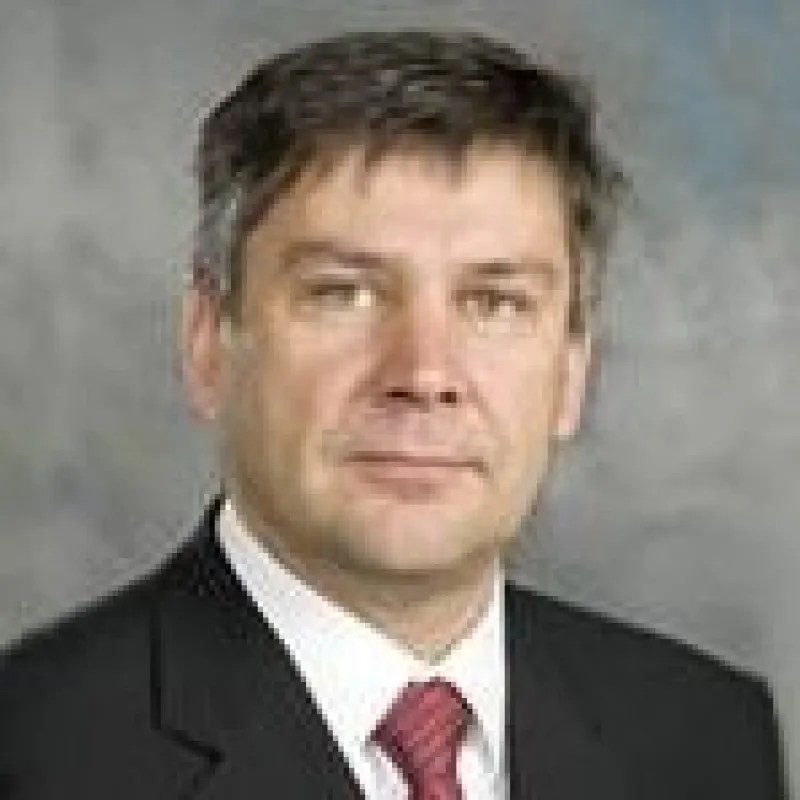
Prof. Dr. Karsten Niehaus serves as Head of the Proteome and Metabolome Research Group at the Center for Biotechnology (CeBiTec) and Faculty of Biology, University of Bielefeld. His research focuses on proteomics and metabolomics applications in plant-microbe interactions, bacterial stress responses, and disease model systems. His laboratory employs advanced mass spectrometry imaging and cell phenotyping technologies to investigate molecular responses in crops like sugar beet and grapevines under abiotic stress conditions, as well as in cancer models where differentiation therapy impacts tumor malignancy. The group also explores microbial biotechnology through Xanthomonas campestris studies on xanthan production and stress adaptation. Selected publications highlight innovations in 3D microfluidics for biomarker detection and bioinformatics platforms like MetHoS for metabolomics data analysis. His work appears in journals covering Frontiers in Plant Science , Scientific Reports , and Journal of Experimental Botany . Contact: kniehaus@cebitec.uni-bielefeld.de | Office: UHG W7-117
David Jaclin is an Associate Professor at the School of Sociological and Anthropological Studies, University of Ottawa, where he directs the HumAnimaLab. His work bridges Anthropology and Communication Studies, focusing on human-nature relationships through media ecology and multispecies ethnographies. Doctorate in Anthropology from Muséum d'Histoire Naturelle (Paris) Doctorate in Communication from University of Montreal Postdoctoral fellowship at MIT (HASTS) via Fyssen Foundation His research explores the history of domestication , anthropocenic reconfigurations , and informational processes across ecological contexts. Current projects span from atmospheric rivers in California to microbial transformations in Quebec mines , with interdisciplinary forays into cloud seeding in Taiwan and hydroelectric dismantling in Europe . Key trends across his publications include: Challenging traditional nature/culture dichotomies Developing transductive models of animality Interrogating postnatural ontologies Reconceptualizing communication as ecological process Scientific contributions include Fyssen Foundation Postdoctoral Fellowship Editorial leadership at Social Science Information Founding the HumAnimaLab's experimental ethnographic methods He investigates emergent relationalities through multi-sited ethnographies , focusing on domestication circuits , biological transfigurations , and ecologies of expression that challenge taxonomic boundaries while revealing the co-constitutive nature of human-animal interactions.
Dr. Michael E. Nemergut is a dual-board certified physician at Mayo Clinic in Rochester, Minnesota, specializing in Pediatric Critical Care Medicine and Pediatric Anesthesiology. He holds academic appointments in the Department of Anesthesiology and Perioperative Medicine within the Mayo Clinic Children's Center. Education: University of Virginia (MD, Ph.D.), Johns Hopkins (Fellowship, Residencies) His research focuses on anesthetic neurotoxicity in pediatric populations, pain management protocols, and anticoagulation strategies in critical care. Notable recent publications span topics from NanoLuc luciferase mechanisms to pediatric ECMO hemostasis. Scientific Awards: Multiple Top Doctors recognitions (2021-2023), Excellence Through Teamwork (2019), Howard Hughes Fellowship (1996) Dr. Nemergut maintains extensive professional memberships in anesthesiology and pediatric medical societies, contributing to clinical practice committees and education initiatives at Mayo Clinic.
Gabriele Andrea Lugli is a Fixed-term researcher at the University of Parma's Department of Chemical, Life and Environmental Sustainability Sciences, teaching Genomics of Microbial Ecosystems, Microbiology Applied to Materials Science, and Applied Microbiology and Probiogenomics for Biotechnology and Materials Science undergraduate and graduate programs. His research centers on microbial genomics with emphasis on human gut microbiome dynamics and food microbiology. Key interests include bifidobacteria-host molecular interactions, bacteriophage ecology in dairy fermentation, probiotic mechanisms, and microbial contributions to environmental sustainability. He employs metagenomic, genomic, and machine learning approaches to investigate microbial biodiversity in cheese production and gut health contexts. Analysis of his recent publications reveals a cohesive focus on genomic characterization of microbial communities across food and human ecosystems. His work consistently explores bifidobacterial adaptation, vitamin biosynthesis pathways, and phage-host dynamics, demonstrating translational applications in probiotics, nutrition, and food safety. The integration of computational methods with experimental microbiology defines his methodological signature.
Dr. Richard O'Brien is an Associate Professor in the Department of Chemistry at the University of South Alabama , affiliated with the College of Arts and Sciences . His academic career spans decades, with a research focus on ionic liquids , thiol-ene chemistry , and phase transfer catalysis . He earned his B.S. in Professional Chemistry from South Dakota State University (1985), M.S. in Chemistry from the University of North Dakota (1987), and Ph.D. in Chemistry from the University of Nebraska-Lincoln (1992). B.S., Professional Chemistry, South Dakota State University (1985) M.S., Chemistry, University of North Dakota (1987) Ph.D., Chemistry, University of Nebraska-Lincoln (1992) Dr. O'Brien's research, often in collaboration with Dr. John H. Davis Jr., explores novel lipid-inspired ionic liquids synthesized via thiol-ene and thiol-yne reactions. His work investigates how sulfur incorporation and structural modifications affect melting points and thermophysical properties, aiming to develop advanced materials for lubricants, heat transfer fluids, and separation technologies. Recent studies include boronium-based ionic liquids with hydrolytic stability, cyclopropanated lipidic derivatives, and anti-microbial textile dyes. His teaching philosophy emphasizes critical thinking, accountability, and fairness, particularly in laboratory settings. He coordinates chemistry instrumentation for key technologies (NMR, UV-Vis, AA, microwaves, fluorescence, electrochemical systems) and received the Top Prof award from the Azalea Chapter of Mortar Board in 2011. Dr. O'Brien's work bridges synthetic organic chemistry, materials science, and applied engineering, contributing to both academic research and industrial applications.
Bhanu Jena, Ph.D. (dr. hc. mult.) is the George E. Palade University Professor & Distinguished Professor at Wayne State University School of Medicine, Department of Physiology. He serves as Founder-Director of the Institute of NanoBioScience and maintains his laboratory at 5245 Scott Hall. As the only living University Professor and the second in Wayne State University's 160-year history, Dr. Jena holds one of the most prestigious academic appointments at the institution. Dr. Jena received his B.Sc. from BJB College in Orissa, India (1975), M.Sc. in Reproductive Endocrinology from Utkal University (1978), and Ph.D. in Reproductive Endocrinology from Iowa State University (1988). Following postdoctoral training at Iowa State and Yale Universities (1988-1994), he joined Yale University as an Assistant Professor before moving to Wayne State University in 2000 as a tenured full Professor. Dr. Jena's research centers on molecular and cellular physiology, with a groundbreaking focus on porosomes - the universal secretory machinery in cells that he discovered. His laboratory investigates how cells secrete, challenging traditional views of exocytosis. A second major research focus involves designing novel approaches, techniques, and instrumentation for biological problem-solving, including developing a force microscope capable of imaging intracellular structures at nanometer resolution in real-time. His recent publications reveal an evolving research trajectory spanning cellular secretion mechanisms, Alzheimer's disease therapeutic approaches, cystic fibrosis treatments, antiviral strategies against enveloped viruses, and advanced microscopy techniques. This multidisciplinary work bridges fundamental cell biology with clinical applications across neuroscience, respiratory diseases, and infectious disease. Elected Foreign Member of the Georgian National Academy of Science Fellow of the American Association for the Advancement of Science (AAAS) Swebelius Cancer Research Award Sir. Aaron Klug Award ASAS Basic Biological Science Award Ranbaxy Basic Research in Medical Sciences Award Elected Foreign Member of the Korea Academy of Science & Technology George E. Palade Gold Medal Six Honorary Doctorates With over 30 years of instructional experience, Dr. Jena teaches courses in cell biology, nanoscience/nanomedicine, physiology, endocrinology, and biochemistry. His lab receives primary funding from NIH and NSF grants. The Jena Lab continues to pioneer research on cellular nanomachines and their implications for human health, maintaining active collaborations across multiple disciplines while accepting new MS, PhD, and MD/PhD students into its research programs.
Annalisa Ferretti is an Associate Professor at the University of Modena and Reggio Emilia, specializing in the Department of Chemical and Geological Sciences. Her research focuses on paleontology, biostratigraphy, and geochemical analysis of conodonts, with a particular emphasis on their role in understanding paleoenvironmental changes and diagenetic processes. Research Interests: Paleoecology, Sr isotope stratigraphy, fossil diagenesis, deep-sea vertebrate evolution, and ironstone formation mechanisms. Teaching: Courses in Paleoclimatology, Paleontology, and Evolution for Geosciences and Natural Sciences programs. Her scientific work spans from Cambrian bioapatite studies to Late Triassic conodont evolution, with notable contributions on mineralization processes, extinction events, and planetary analogs for Martian spherules. She also participates in academic governance initiatives related to inclusive education. Notable Publications: Investigations on conodont apatite isotopes, Devonian extinction dynamics, Eocene iron ooid genesis, and paleoclimatic reconstructions using fossil proxies. Office: Via Campi 103, Modena. Student Reception: Fridays 9:00-10:00 AM by prior telephone arrangement.
Professor Sim Reaney is a leading catchment hydrologist at Durham University , specializing in flood hazards and diffuse pollution across temperate, tropical, and mountainous environments. His research integrates simulation modeling with field measurements to advance understanding of hydrological connectivity and its role in environmental management. Professor in the Department of Geography Co-Director, Institute of Hazard, Risk and Resilience (2025–present) His work focuses on: Hydrological processes in diverse climates Development of the SCIMAP diffuse pollution risk mapping toolset CRUM3 catchment hydrological model applications Climate change impacts on water quality and flood risk Nature-based solutions for flood mitigation Recent publications highlight applications in Java (Indonesia), Nepal, and the UK, with emphasis on tropical hydrology, high-resolution microbial pollution analysis, and climate-flood interactions. His modeling approaches have informed decision-making for Defra, Environment Agency, and international stakeholders. Scientific awards include: RCUK Post-Doctoral Research Fellow (2007–2012) Multiple grants from NERC , UK Space Agency , and GCRF Current supervision includes PhD projects on flood risk reduction in Nepal, Java, and water quality modeling in the UK.
Anne Goldizen is a Professor at the School of the Environment at the University of Queensland, Australia. With over 130 journal articles, 3 book chapters, 12 conference papers, and 1 data collection throughout her career, she has established herself as a leading researcher in animal behavior and conservation biology. Her work spans multiple continents and ecosystems, focusing particularly on marsupial ecology, predator-prey dynamics, and marine mammal behavior. Dr. Goldizen's research interests center on animal social behavior, particularly in marsupials like kangaroos and wallabies, but also extending to marine mammals and other species. Her work examines social structure, mating systems, vigilance behavior, dispersal patterns, and the impact of environmental factors on animal populations. She has made significant contributions to understanding the complex social dynamics of eastern grey kangaroos, the conservation challenges facing northern quolls, and the acoustic communication of humpback whales. Her research employs sophisticated methodologies including genetic analyses, long-term field observations, and experimental approaches to unravel the intricate relationships between animal behavior and ecological processes. Analysis of her most recent publications reveals a researcher with remarkable breadth and depth. Her work spans terrestrial and marine ecosystems, examining everything from marsupial social networks to coral reef ecology. A consistent theme throughout her career has been investigating how animals respond to environmental pressures, whether through behavioral plasticity, social organization, or physiological adaptations. Her research on kangaroo sociability, quoll conservation, and whale communication demonstrates both theoretical sophistication and practical relevance to wildlife management and conservation. Dr. Goldizen has collaborated extensively with researchers across multiple institutions and disciplines. Her work often involves long-term field studies that require significant logistical coordination and team management. While specific grant information isn't provided in the available text, her extensive publication record suggests successful acquisition of competitive research funding. She has mentored numerous early-career researchers, as evidenced by her collaborations with junior authors on many publications.
Cyril Kahn is a Lecturer at University of Lorraine with extensive research in nanoliposome technology and biomaterials development. His work bridges pharmaceutical sciences, tissue engineering, and biomedical applications with a particular focus on drug delivery systems. His primary research interests include Nanoliposome Technology , Drug Delivery Systems , Tissue Engineering , and Biomaterials Development . Kahn's research demonstrates significant innovation in creating targeted delivery systems for neuroprotective agents, particularly using curcumin and other natural compounds. His work on GelMA hydrogels and 3D printing represents cutting-edge approaches to scaffold development for tissue regeneration. Analysis of his recent publications (2023-2025) reveals a strong emphasis on Nanoliposome functionalization for targeted drug delivery Advanced hydrogel systems for tissue engineering Multiscale biomaterial design incorporating natural compounds Microfluidic platforms for drug testing Sustainable biomaterial processing techniques Kahn's research shows consistent progression toward more complex, multi-functional biomaterial systems with therapeutic applications. His technical expertise spans nanoliposome formulation, hydrogel characterization, 3D bioprinting, and in vitro testing of biomaterials. The interdisciplinary nature of his work connects pharmaceutical sciences with tissue engineering and materials science.
Dr. Nicholas Matzke is a Senior Lecturer at the School of Biological Sciences , University of Auckland, New Zealand. His research revolutionizes biogeography by integrating extinction, fossils, organismal traits, and paleogeography into computationally efficient frameworks. Education: PhD in Integrative Biology (2013), University of California, Berkeley MA in Geography (2003), University of California, Santa Barbara Double BSc in Biology and Chemistry (1998), Valparaiso University Dr. Matzke's research spans three major domains: phylogenetic biogeography (developing methods to model trait-dependent dispersal), bacterial flagellum evolution (collaborating on experimental and bioinformatic analyses), and macroevolutionary modeling (integrating fossils and morphological data). His work on the FBD-MSC model and trait-dependent dispersal has transformed divergence time estimation and biogeographical inference. Recent publications show consistent focus on: Integrating molecular and fossil data in phylogenies Quantifying trait-dispersal interactions in rails and crocodiles Modeling historical biogeography using BioGeoBEARS Reconstructing evolutionary timelines with Bayesian methods His 2021 work on Caninae phylogeny demonstrates the power of combined MSC-FBD approaches, while 2019 studies on crocodilian range expansion revealed unexpected trait-dispersal correlations. Scientific Recognition: 2015-2018: Discovery Early Career Researcher Award (DECRA) Fellow at Australian National University 2017: Associate Fellow of The Higher Education Academy As an accredited PhD supervisor with active Marsden Grant projects, Dr. Matzke trains students in phylogenetics, computational modeling, and paleogeographic reconstruction. His lab combines custom software development with empirical studies across diverse taxa, from Rana frogs to Crocodylus crocodiles.
Dr. Zackary Falls is an Assistant Professor in the Department of Biomedical Informatics at the Jacobs School of Medicine and Biomedical Sciences, University at Buffalo, where he leads a data-centric computational laboratory focused on drug discovery and pharmacoinformatics. Education & Training PhD, Computational Chemistry, University at Buffalo, 2017 BS, Chemistry, Canisius College, 2012 NLM T15 Postdoctoral Fellowship, Jacobs School of Medicine and Biomedical Sciences, 2020 Research Interests His group integrates structural bioinformatics, chemoinformatics, and clinical informatics to develop and apply the multiscale CANDO drug-discovery platform. Current thrusts include: AI-driven design of non-addictive analgesics and overdose-rescue drugs targeting the opioid crisis. Repurposing FDA-approved drugs against COVID-19. Rational design of combination therapies for KRAS-driven non-small-cell lung cancer. Large-scale analytics on EHR and Medicaid claims to understand health disparities in addiction treatment. Scientific Awards Sinsheimer Scholar Award 2024 T15 Informatics Training Fellowship Award 2017 Marjorie Winkler Fellowship Award 2012, Gordon Harris Fellowship Award 2012, Merck Index Award 2012 Funding & Grants Since 2020, Dr. Falls has served as PI or Co-I on grants totaling ≈ $35 million from NIH (NIDA, NCATS, NLM), NIST, Empire AI, and private foundations. Key projects include: Principal Investigator, “A translational bioinformatics approach to elucidate and mitigate polypharmacy-induced adverse drug reactions,” NIDA, $1.05 M, 2022-2027. Co-Principal Investigator, CTSA SUNY Buffalo Hub, NCATS, $29.2 M, 2025-2031. Co-Investigator, “BRIGHT Short-Term Training,” NLM, $0.67 M, 2022-2027. Group & Collaborations He leads the Falls Group , currently mentoring three trainees and collaborating closely with Prof. Ram Samudrala’s team and multiple academic/industry partners. The lab is housed within UB’s Center for Computational Research and the Witebsky Center for Microbial Pathogenesis and Immunology.
Luísa Reis-Castro is a Postdoctoral Fellow at the University of Southern California’s Society of Fellows in the Humanities, hosted by the Anthropology Department and affiliated with the USC Dornsife Center on Science, Technology and Public Life. She will transition to an Assistant Professor role in the same department starting August 2023. Her research bridges anthropology, science and technology studies, and environmental humanities to examine human-nonhuman relations in health and disease control, particularly focusing on mosquito-borne diseases in Brazil. BA in Social Sciences (Universidade Federal de Minas Gerais, Brazil) MSc in Cultures of Arts, Science and Technology (Maastricht University, Netherlands) MA in Studies on Society, Science and Technology (Maastricht University, Netherlands) PhD in History, Anthropology, and Science, Technology, and Society (MIT, USA) Reis-Castro’s work investigates the sociopolitical and ecological dimensions of mosquito science, particularly Aedes aegypti , in Brazil. Her research explores how biotechnological interventions to control pathogens like Zika and dengue reflect and reconfigure national ideologies, racialized ecologies, and global health disparities. She employs multi-sited ethnography and interdisciplinary methodologies to critique the entanglement of science, environment, and inequality. Her publications analyze transgenic mosquito projects, microbial geographies, and epidemic narratives, linking these to broader debates on biotechnology, public health ethics, and environmental justice. Notable awards include the Rappaport Student Paper Award, Jane Goodall Award, and Sérgio Buarque de Holanda Prize. She has been supported by the Wenner-Gren Foundation, National Science Foundation, and Social Science Research Council. Rappaport Student Paper Award (AAA) Jane Goodall Award (ASA) Sérgio Buarque de Holanda Prize (LASA) Best Dissertation Honorable Mention (LASA Brazil Section) Reis-Castro’s research contributes to the LOST Network (Law, Organization, Science, and Technology) and engages with global questions of science’s role in addressing planetary health crises. Her upcoming book, Vectors of Health , synthesizes her fieldwork in Brazil, tracing how mosquito science intersects with racialized politics and environmental transformation.
Petri Niemi is a Researcher at LUT University within the School of Engineering Sciences , specifically affiliated with the Industrial Engineering and Management (IEM) department. His work spans interdisciplinary domains, linking engineering with business practices. Current research focuses on soil science and agricultural management, particularly analyzing soil pore structure, microbial interactions, and long-term agricultural impacts. His earlier contributions center on supply chain management, logistics optimization, and educational pedagogy, including experiential learning frameworks and student guidance systems. Research Trends: Recent publications highlight sustainable soil management and pore dynamics, while earlier works emphasize knowledge development in supply chains and logistical service innovation. His expertise bridges quantitative analysis, organizational behavior, and user-centric design. Education & Practice: While formal educational details are not public, his pedagogical involvement includes student guidance and curriculum development for secondary and higher education programs.
Dr. rer. nat. Xu Li is a researcher at the Institute of Semiconductor Technology within the TU Braunschweig (Technische Universität Braunschweig), Germany. Affiliated with the Faculty of Electrical Engineering, Information Technology, Physics , Xu Li contributes to interdisciplinary research spanning materials science, environmental science, and computer engineering. Fields of Interest : Materials Science, Environmental Science, Biotechnology, Sensor Technology, Computer Science, Civil Engineering, IoT Contact : xu.li@tu-braunschweig.de Xu Li's research focuses on: Materials Science : Developing magnetoelectric sensors with energy harvesting capabilities, exploring concrete shrinkage mechanisms using porous aggregates. Environmental Science : Investigating microplastic impacts on soil ecosystems and carbon dynamics in tea plantations. Biotechnology : Advancing PCR-based mutation detection for viral pathogens. Computer Science : Innovating face recognition algorithms and agricultural IoT systems.