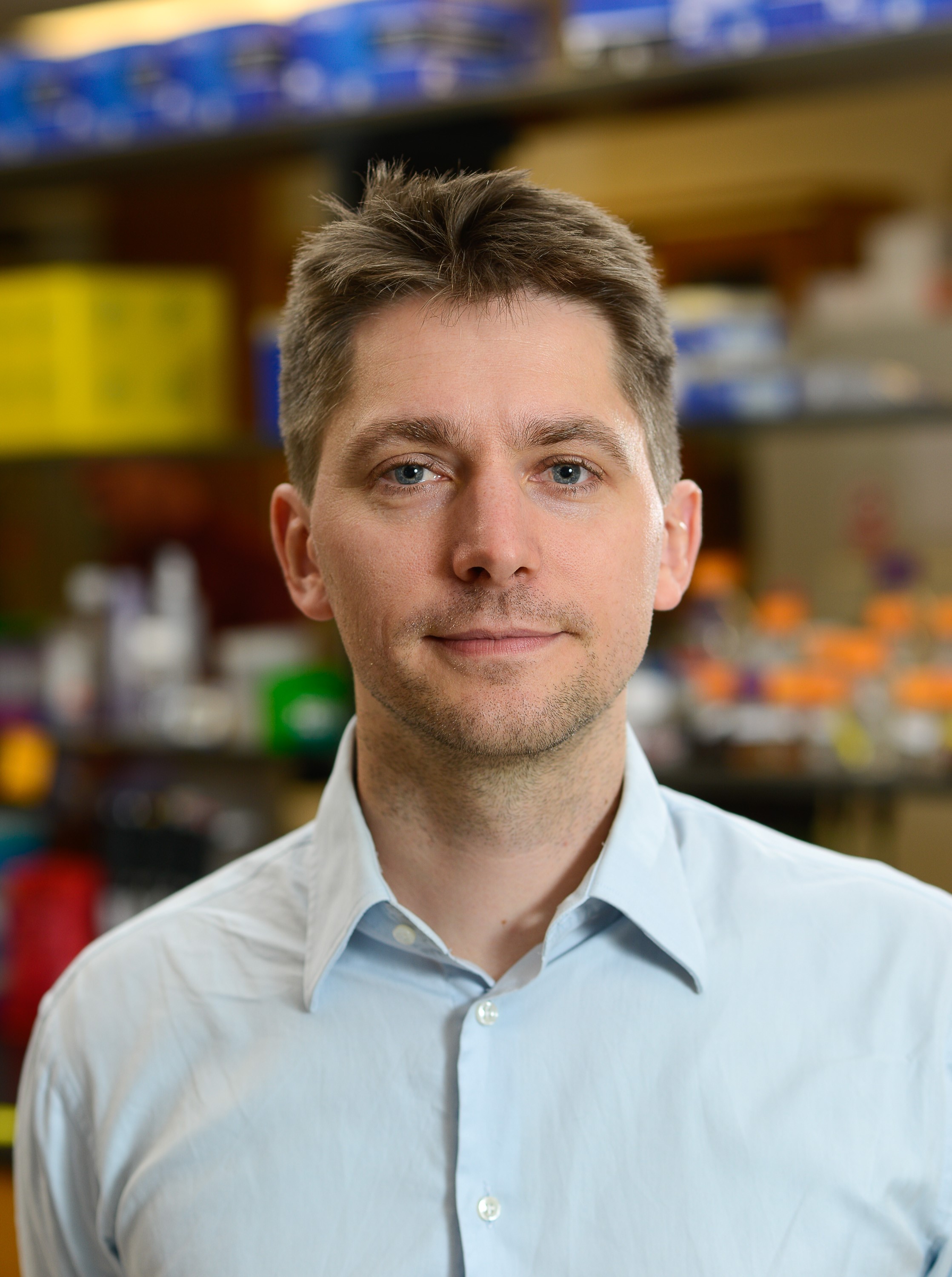
Hauke Smidt is a Personal Professor at Wageningen University & Research, affiliated with the Molecular Ecology group within the Faculty of Veterinary Medicine and Animal Sciences. His research focuses on microbial ecology, particularly gut microbiota dynamics, antibiotic resistance, environmental microbiology, and the One Health framework. Smidt has supervised over 50 PhD students and contributed to 519 publications, including studies on microbiome resilience, fermented food impacts, and bioremediation strategies. Education and affiliations include leadership roles in projects addressing antimicrobial resistance, pig health, and drinking water microbiology. His work spans collaborations across Europe and Asia, with notable contributions to understanding microbial community responses to environmental stressors and dietary interventions. Smidt is actively involved in public outreach, as seen in media contributions discussing microbiome research and health benefits. Key projects include aquifer treatment for drinking water, microbiome simulation models, and combating plant pathogens. His awards and recognition are not explicitly listed, but his extensive publication record and project leadership highlight significant academic impact.
Peter A. Raymond is the Oastler Professor of Biogeochemistry at Yale University's School of the Environment and Department of Geology and Geophysics. He serves as Senior Associate Dean of Research & Director of Doctoral Studies and is Co-Director of the Yale Center for Natural Carbon Capture. Raymond leads the Raymond Biogeochemistry Lab, which investigates the biogeochemistry of inland waters, enhanced weathering, methane cycling, and blue carbon systems through cutting-edge field, laboratory, and modeling approaches. Education B.S., Marist College Ph.D., College of William and Mary/Virginia Institute of Marine Science Research Focus Raymond's research fundamentally reshapes our understanding of carbon cycling in aquatic systems, demonstrating that rivers serve as dynamic conduits rather than passive pipes in the global carbon cycle. His work examines how biology and watershed variables alter carbon chemistry in streams, rivers, and estuaries, with particular emphasis on understanding global carbon cycles in relation to climate change. Raymond employs radiocarbon measurements to explore the age and turnover of carbon in aquatic ecosystems, revealing that rivers are variable sources of both old and young terrestrial dissolved organic carbon to oceans. The Raymond Lab is particularly known for developing the Pulse-Shunt Concept, which challenges traditional views of riverine biogeochemistry by emphasizing the episodic and dynamic nature of elemental fluxes. Current research directions include enhanced weathering and alkalinity studies for carbon removal, global greenhouse gas budgets through projects like RECCAP 2, natural methane cycling in aquatic systems, and blue carbon ecosystems such as mangroves and salt marshes. Publication Trends Raymond's recent publications (2023-2025) demonstrate a strong focus on global carbon and methane cycling, with particular attention to inland water systems' role in the Earth's climate system. His work increasingly integrates large-scale datasets with field measurements to understand how climate change and human activities affect greenhouse gas emissions from rivers and streams. A significant portion of his recent work contributes to international efforts like the Global Carbon Project, aiming to refine estimates of global carbon and methane fluxes. His research also shows growing emphasis on carbon removal strategies, particularly enhanced rock weathering through the Earthshot-funded GOAL-A project, and their potential for climate mitigation. Scientific Recognition Fellow of the American Association for the Advancement of Science Member of the Connecticut Academy of Science and Engineering Coastal and Estuarine Research Federations Cronin Award for Young Scientists ISI highly cited author Past Editor and Chief of the American Geophysical Union's journal Global Biogeochemical Cycles Mentorship and Funding Professor Raymond currently mentors four doctoral students (Jon Gewirtzman, Shou-En "Samuel" Tsao, Benjamin Saalidong, and Mingyu Zhang) and masters student Bella Garrioch. His research is supported by multiple grants from the National Science Foundation (NSF), including CAREER awards, and participation in the Earthshot-funded GOAL-A (Global Ocean And Land Alkalinization) project. Raymond has also been involved in significant collaborative projects with USGS data to research how climate and land use change alter carbon export from US watersheds, and with Lamont Doherty to develop methods for measuring air-sea gas exchange of CO2 in rivers and estuaries. Research Infrastructure The Raymond Biogeochemistry Lab at Yale is a dynamic research group comprising research scientists, postdocs, doctoral and masters students, and postgraduate researchers. The lab recently acquired a Mini Carbon Dating System (MICADAS) at Yale, significantly expanding their research capabilities in ecosystem carbon turnover and verification of natural climate solutions. The lab collaborates globally on projects in the Arctic, Hudson River, and middle Atlantic Bight, and is actively involved in the NASA Carbon Monitoring System BlueFlux field campaign to assess carbon exchange in coastal wetlands.
Natalie H. Brito is an Associate Professor of Applied Psychology at New York University (NYU), affiliated with the Steinhardt School of Culture, Education, and Human Development. Her research focuses on how early social and cultural contexts shape neurocognitive development in infants and toddlers, particularly in areas of attention, memory, and socio-emotional skills. Prior to NYU, she completed a postdoctoral fellowship at Columbia University Medical Center and was a Robert Wood Johnson Health and Society Scholar. Dr. Brito’s work bridges developmental psychology, neuroscience, and public policy, emphasizing the need for equitable environments that support healthy child development. She has received prestigious awards such as the APS Rising Star Award and NIH grants, reflecting her impactful contributions to understanding developmental trajectories. Her research also extends to policy implications, such as the effects of paid maternal leave on infant brain function and the role of structural inequities in maternal mental health. Key themes include early life stress, gut microbiome influences, and the neurobiological underpinnings of cognitive development. Dr. Brito has published extensively in journals like Child Development , Developmental Cognitive Neuroscience , and JAMA Psychiatry , with a focus on innovative methodologies (e.g., the OWLET gaze-tracking tool). She teaches courses on developmental psychology and the principles of applied psychology, fostering interdisciplinary approaches to human development. Her scientific accolades include recognition from the International Society of Developmental Psychobiology and the American Psychological Association, underscoring her leadership in advancing developmental science and equity-focused research.
Peter K. Kitanidis is a Professor in the Department of Civil and Environmental Engineering and the Institute for Computational and Mathematical Engineering at Stanford University . His research focuses on groundwater flow , hydrologic forecasting , and stochastic inverse modeling , with applications to pollutant remediation and CO₂ storage monitoring . Education : Diploma, National Technical University of Athens (1974) M.S., MIT (1976) Ph.D., MIT (1978) Research Interests : Groundwater modeling and contaminant transport Hydraulic tomography and aquifer characterization Stochastic methods for uncertainty quantification Bioremediation and enhanced in-situ pollutant decay Dilution and mixing processes in heterogeneous media Real-time river flow forecasting Scientific Awards : L.G. Straub Award (1979) W.L. Huber Research Prize (1994) ISI Highly Cited Researcher (2001) AGU Hydrologic Sciences Award (2011) ASCE Pioneers in Groundwater Lecturer (2011) Advising and Grants : Advised 20+ PhD and MS students (1978–2018) Principal investigator on NSF, EPA, and DOE-funded projects Developed software for groundwater data analysis and CO₂ monitoring Contributed to bioremediation protocols and hydraulic tomography algorithms Labs and Teams : Kitanidis Laboratory for groundwater crisis solutions Collaborated with Oak Ridge National Laboratory and Stanford Hydrogeology Group Mentored postdocs (2000–2017) in reactive transport and inverse modeling
Jennifer Smith is a faculty researcher at the Scripps Institution of Oceanography, University of California, San Diego, where she leads the Smith Lab within the Center for Marine Biodiversity and Conservation. Her work focuses on coral reef ecosystems, integrating ecology with conservation, restoration, and sustainability. Her research explores how human activities such as nutrient pollution, invasive species, and climate change affect benthic marine communities. She has pioneered the use of large-area imaging and structure-from-motion technology to monitor long-term changes in Maui's coral reefs, including responses to sequential bleaching events and wildfire impacts. Her lab investigates microbial interactions with corals and the role of algae in reef degradation and resilience. Dr. Smith’s publication record reveals a strong focus on coral-algal interactions, nutrient dynamics, invasive seaweeds, and ecosystem-scale analyses. Her work spans tropical regions including Hawaii and the Great Barrier Reef, contributing to global understanding of reef resilience. She mentors graduate students and collaborates widely across marine science disciplines. Scientific Awards: No awards mentioned in the provided text. Advising and Grants: Dr. Smith advises graduate students such as Orion McCarthy and Morgan Winston. Her lab conducts long-term monitoring supported by institutional and likely federal funding, though specific grants are not listed. She leads field campaigns in Hawaii and publishes in high-impact journals. Labs and Teams: The Smith Lab is actively engaged in coral reef research, focusing on resilience, restoration, and human impacts. The team includes researchers and volunteers who conduct field surveys, analyze imagery, and produce outreach materials such as the 'Underwater Gardens' film.
Lawrence Goodridge is a Professor and Director of the Canadian Research Institute for Food Safety (CRIFS) at the University of Guelph's Ontario Agricultural College. He holds the Leung Family Professorship in Food Safety and leads research at the intersection of food safety, antibiotic resistance, and One Health principles. His work focuses on applying genomic technologies to study foodborne pathogens (E. coli, Salmonella, Listeria, Cronobacter) and leveraging wastewater surveillance for infectious disease outbreak prediction. Academic History: BSc Microbiology (University of Guelph, 1995), MSc Food Microbiology (2003), PhD Food Microbiology (2002), followed by post-doctoral training in Food Safety at the University of Georgia (2002). Joined CRIFS in 2003. Research Interests: Genomic analysis of pathogen emergence, wastewater-based epidemiology, bacteriophage applications, and consumer education strategies for food safety. His lab develops innovative methods for rapid pathogen detection in food systems and environmental samples. Articles Trends: Over 100 peer-reviewed publications emphasize genomic surveillance of foodborne pathogens and SARS-CoV-2, with a focus on wastewater sampling innovations. Recent work explores multi-modal data integration for public health forecasting and ethical data protection frameworks for surveillance programs. Awards: While no specific prizes are listed, his $50M+ research funding from Canadian/international sources underscores recognition of his impactful work. Grants support projects like phage-based sanitization and antimicrobial resistance tracking. Advising & Labs: Leads CRIFS laboratory operations and collaborates globally on food safety initiatives. His research has informed food industry guidelines and policy frameworks for mitigating pathogen risks in agricultural and environmental systems.
Dr. Stephanie Spahr is a Research Group Leader at the Leibniz Institute of Freshwater Ecology and Inland Fisheries (IGB) in Berlin, Germany, where she leads the Organic Contaminants research group within the Department of Ecohydrology and Biogeochemistry. Previously, she served as a Junior Research Group Leader at the University of Tübingen's Center for Applied Geoscience (2019-2021) and as a Postdoctoral Researcher at Stanford University's Department of Civil and Environmental Engineering (2016-2019). Dr. Spahr earned her PhD in Environmental Chemistry from the Swiss Federal Institute of Technology Lausanne (EPFL) and the Swiss Federal Institute of Aquatic Science and Technology (Eawag) in 2016. Her doctoral research focused on the formation of N-nitrosodimethylamine during water disinfection with chloramine. She completed her MSc in Geoecology at the University of Tübingen in 2012, with thesis work on carbon and nitrogen isotope analysis of benzotriazoles conducted at Eawag, and her BSc in Geoecology/Ecosystem Management at the same institution in 2010. Dr. Spahr's research focuses on trace organic contaminants in aquatic systems, with particular expertise in transformation processes of contaminants in natural and engineered systems, advanced oxidation processes for water treatment, urban blue-green infrastructure, and compound-specific isotope analysis. Her work bridges environmental chemistry, engineering, and ecology to address water quality challenges in urban and natural water systems. She employs advanced analytical techniques to track contaminant sources and transformation pathways, with a strong emphasis on practical applications for water treatment and environmental protection. Her recent publications demonstrate a strong focus on biochar-based water treatment technologies, particularly for stormwater management. She investigates how biochar amendments can remove trace organic contaminants from urban runoff, with recent work examining persulfate activation mechanisms, the role of chloride in reactive species formation, and the performance of engineered media filters under dynamic conditions. Her research also extends to understanding contaminant transport in rivers, the ecological impacts of pollutants, and developing analytical methods for environmental monitoring. The interdisciplinary nature of her work connects chemical processes with ecological outcomes. Outstanding Review Paper Award 2023 in Environmental Science: Water Research & Technology Selected for the Falling Walls Female Science Talents Intensive Track 2023 Selected mentee in the Leibniz Mentoring Programme 2022-2023 Best poster award (1st prize) at the Wasser 2022 of the Water Chemistry Society Selected fellow in the Postdoc Academy for Transformational Leadership 2020-2022 (Robert Bosch Stiftung) Selected fellow in the Athene Program for early female career researchers at the University of Tübingen, 2020-2021 As a Research Group Leader, Dr. Spahr supervises multiple research projects including 'POllution in UrbaN ponds, eco-evolutionary Dynamics, and Ecosystem Resilience (POUNDER)', 'Dynamic hyporheic zone', 'NYMPHE', and the 'Incident-related special investigation programme for the environmental disaster in the Oder River'. She serves on the Executive Board of the German Water Chemistry Society and heads its Expert Committee on 'Oxidative Processes'. Her collaborative work spans numerous institutions across Germany and internationally, addressing critical water quality challenges through interdisciplinary approaches. Dr. Spahr leads the Organic Contaminants research group at IGB Berlin, which focuses on understanding the fate and treatment of organic pollutants in water systems. Her team employs advanced analytical techniques including compound-specific isotope analysis to track contaminant sources and transformation pathways. The group collaborates extensively with other departments at IGB and with international partners on projects addressing urban water challenges and ecological impacts of pollution. Current research emphasizes innovative water treatment technologies, particularly biochar-based systems for stormwater management, and investigating the complex interactions between contaminants, aquatic ecosystems, and human activities.
Ian Bradley is an Assistant Professor in the Department of Civil, Structural and Environmental Engineering at the University at Buffalo, State University of New York. His research focuses on creating sustainable biological processes to address needs in engineered and natural systems for water and wastewater treatment and resource recovery. Education: PhD in Environmental Engineering, University of Illinois at Urbana-Champaign (2017) MS in Environmental Engineering, University of Illinois at Urbana-Champaign (2011) MS in Civil Engineering (Structures), University of Illinois at Urbana-Champaign (2010) Research Interests: Dr. Bradley specializes in microalgal-based nutrient recovery, wastewater surveillance for public health monitoring, PFAS degradation using nanomaterials, and sustainable resource recovery systems. His work integrates biological processes with environmental engineering to optimize wastewater treatment efficiency and develop predictive models for water quality and health outcomes. Publications: His recent research includes advancements in microalgal cultivation (EcoRecover process), wastewater-based epidemiology for SARS-CoV-2 tracking, and computational enzyme design for PFAS remediation. These studies demonstrate interdisciplinary expertise spanning environmental engineering, biotechnology, and public health analytics.
Dr. Zaheer Nasar is a Reader in Atmospheric Aerosols at Cranfield University's School of Aerospace, Transport and Manufacturing. His work focuses on real-time bioaerosol characterization, indoor/outdoor air quality dynamics, and environmental health impacts of particulate matter. He leads the NERC-funded Light-Induced Fluorescence sensor project and contributes to the BioAirNet network (NE/V002171/1) as Co-I. Research Interests Physico-chemical and biological characterization of aerosols Spatio-temporal dynamics of particulate matter (PM) and bioaerosols Quantitative microbial risk assessment (QMRA) methodologies Low-cost air quality sensor networks and machine learning calibration Urban green infrastructure effects on air pollution Policy development in Hindu Kush Himalayan air quality Recent publications emphasize machine learning-enhanced sensor calibration (2024 IEEE paper), wastewater plant bioaerosol risks (2024 Water Research), and urban air quality interventions across the UK and Lahore. He has secured over £1.6M in grants from NERC, STFC, and UKRI GCRF, with significant work on BTEX exposure in Nigeria and SARS-CoV-2 risks in wastewater facilities. Scientific Recognition Fellow of the Higher Education Academy (FHEA) Co-investigator in multiple NERC/UKRI projects Active participant in BSI bioaerosol standards committee As an advisor, he mentors five postgraduate researchers including Reece Dillon and Hathaikarn Tathong, with a strong publication record in journals like Environmental Science: Atmospheres , Risk Analysis , and BJPsych Open . His work bridges environmental science, public health, and policy implementation through interdisciplinary research.
Dr. Aaron Bivins serves as an Assistant Professor in the Department of Civil and Environmental Engineering at Louisiana State University (LSU), part of the prestigious College of Engineering. His position is based at 3240E Patrick F. Taylor Hall in Baton Rouge, LA. He is reachable via email at abivins@lsu.edu and holds professional certifications including P.E. (Professional Engineer) and BCEE (Board Certified Environmental Engineering Specialist). Education: Ph.D. in Environmental Engineering, Georgia Institute of Technology (2019) M.S. in Environmental Engineering, Georgia Institute of Technology (2015) B.S. in Civil Engineering (Cum Laude), Georgia Institute of Technology (2007) Research Focus: Dr. Bivins’ lab leverages environmental microbiology to advance public health outcomes by addressing microbial threats in engineered and natural systems. Key research areas include microbial transport dynamics, pathogen detection in diverse environments, and risk assessment methodologies. His work emphasizes practical applications such as improving wastewater surveillance protocols, mitigating antimicrobial resistance risks, and enhancing drinking water safety. Projects span microbial source tracking, environmental health interventions, and quantitative risk modeling. Awards & Recognition: EPA STAR Fellowship (2015–2019) Fulbright-Nehru Scholarship (2017) Professional Experience: Prior to LSU, he was a Post-Doctoral Fellow at the University of Notre Dame (2019–2021). Earlier roles include Engineering Associate positions at URS Corporation (2011–2012) and BP-Barber in Savannah, GA (2007–2011). His career bridges academic research with industry applications in environmental engineering. Labs & Teams: Leads the Bivins Lab at LSU, a research group dedicated to interdisciplinary environmental microbiology studies with direct implications for public health policy and infrastructure design.
Manuel Kleiner is an Associate Professor in the Department of Plant and Microbial Biology at North Carolina State University. His research focuses on metabolic and physiological interactions in host-microbe systems, microbial ecology, and the application of metagenomics and high-resolution mass spectrometry to study complex microbiota-host relationships. Research Highlights: Development of metaproteomic techniques to quantify protein expression, analyze community structure via biomass contributions, and track isotope ratios to understand nutrient flow between hosts and microbiota. Creator of the "transductomics" approach to detect horizontal gene transfer via viral transduction in intestinal systems. Collaborates with researchers such as Theriot, Sartor, Sheikh, Ziegler, and Gonzalez. Recent Trends: His 2025 publications emphasize gut microbiome dynamics, maize root-microbe interactions, transplantation biology, and advancements in metaproteomic methodologies. Key themes include dietary impacts on microbiota, stable isotope probing, and synthetic microbial communities for plant and human health. Laboratory Tools: The Kleiner Lab utilizes quantitative metagenomics, high-resolution mass spectrometry, and computational modeling to dissect functional interactions in symbiotic systems across diverse environments, from marine organisms to agricultural crops.
Ke Wu is a Professor in the Department of Computer Science and Engineering at the University of Michigan. Their research focuses on the intersection of machine learning, biostatistics, and healthcare technology, with an emphasis on mobile health interventions, causal inference, and Bayesian methods. They lead a small, hands-on research group mentoring PhD students and postdocs. Key interests include developing predictive models for health outcomes, improving treatment effect estimation, and leveraging mobile technology for caregiver support. Their work has addressed critical challenges in clinical decision-making, public health surveillance, and healthcare innovation. Research projects span synthetic data generation for electronic health records, mHealth app development for care partners of traumatic brain injury patients, and algorithmic fairness in reinforcement learning. Ke Wu emphasizes interdisciplinary collaboration and has contributed to global health studies, including analyses of pneumonia etiology in low-resource settings and the PERCH study. Their group's methodologies often integrate wearable sensor data and machine learning to address real-world health challenges. Advising priorities include fostering student independence while maintaining close mentorship, with expectations for consistent research productivity and professional development. Students are encouraged to pursue teaching roles (e.g., GSI positions) and internships aligned with career goals. Funding support for conference participation is available through institutional and external grants. Ke Wu's contributions extend to statistical methodology, including Bayesian latent class models and dynamic risk prediction frameworks. They actively engage in translational research, bridging computational methods with clinical and public health applications, and prioritize open-source software development to advance reproducible research practices.
Brian Ingalls is a Professor in the Department of Applied Mathematics and cross-appointed to Biology at the University of Waterloo. His research applies mathematical and control-theoretic approaches to biological systems, including genetic regulatory networks, microbial communities, and cellular metabolism. Institutional Affiliation: Faculty of Mathematics, University of Waterloo Contact: bingalls@uwaterloo.ca His work focuses on systems biology and synthetic biology , particularly sensitivity analysis of biochemical networks, optimal experimental design, and mathematical modeling of cellular processes. Research funding comes from NSERC and CIHR . Notable contributions include the textbook Mathematical Modeling in Systems Biology (MIT Press, 2013) and the Ingalls Quantitative Cell Biology Lab , which investigates intracellular and intercellular network dynamics through computational and experimental methods. Key Collaborations: iGEM Waterloo, Chemical Engineering, and international synthetic biology networks Advising: Mentored 15+ graduate students and postdocs across applied math, biology, and engineering fields
Hans Christian Bruun Hansen is a Professor in Environmental Chemistry at the Department of Plant and Environmental Sciences, Faculty of Science, University of Copenhagen. His research focuses on solid-solution processes governing pollutant fate in soils and sediments with applications in soil and water remediation. His primary research areas include: Engineering and reactivity of iron(II)iron(III) hydroxides ("green rusts") Phosphate bonding in anoxic soils Fate of natural toxins like ptaquiloside and glucosinolates Hansen pioneered critical discoveries in environmental chemistry, including demonstrating green rusts' reducing capacity for nitrate-to-ammonium conversion and dehalogenation of chlorinated compounds. His recent work shows green rusts can form 1 nm thick iron oxide sheets for catalytic applications. His research on natural toxins documented carcinogenic ptaquiloside in soil and elucidated degradation kinetics. Hansen has secured over 35 million DKK in research funding through projects like SupremeTech (phosphorus remediation) and Iron-X (solvent degradation). He teaches environmental chemistry from BSc to PhD levels and has supervised 69 MSc and 25 PhD theses. As Head of the Section for Environmental Chemistry and Physics (40 researchers), he leads initiatives like the EnvEuro MSc program and Sino-Danish Water Research Center. His laboratory focuses on nanoscale remediation materials and natural toxin analysis.
Marc Habash is an Associate Professor at the School of Environmental Sciences, University of Guelph. His work focuses on microbial interactions in environmental systems, particularly pathogen detection, microbial biofilms, and water quality. He holds a BSc in Cellular and Molecular Biology from the University of Toronto, an MSc in Microbiology and Immunology from the University of Western Ontario, and a PhD in Environmental Biology from the University of Guelph. Research interests include molecular and culture-based detection of waterborne pathogens, microbial source tracking using Bacteroidales spp., and biofilm formation studies involving probiotics. Collaborative efforts examine proteomic analysis via mass spectrometry techniques. His lab is located in the Edmund C. Bovey Building (Room 3238). Publications emphasize environmental microbiology applications: from yeast tolerance mechanisms to advanced PCR methods for microbial viability quantification. Recent work explores bacterial surface dynamics, insect pest diapause induction, and enzymatic dehalogenation processes. Research consistently bridges fundamental microbiology with practical environmental monitoring solutions. No scientific awards are listed. Advising and grants sections remain unpopulated in available records. His interdisciplinary approach connects environmental engineering, molecular biology, and ecological systems analysis.