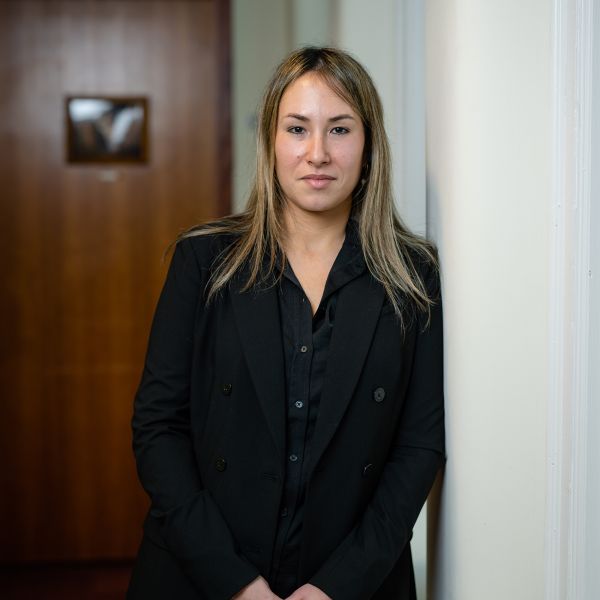
Noam AuslanderView profile
Assistant Professor
Noam Auslander, Ph.D. is an Assistant Professor in the Molecular and Cellular Oncogenesis Program at The Wistar Institute's Ellen and Ronald Caplan Cancer Center. She joined The Wistar Institute in 2021 after completing postdoctoral training at the National Center of Biotechnology Information (NCBI). Dr. Auslander holds a B.S. in computer science and biology from Tel Aviv University and earned her Ph.D. in computer science from the University of Maryland with a combined fellowship at the National Cancer Institute. Dr. Auslander's research focuses on developing advanced machine and deep learning methods to identify factors that drive cancer development and predict patient prognoses. Her work specifically targets the development of deep learning methods to identify new infectious agents in cancer and biologically interpretable machine learning strategies that improve outcome prediction. Her laboratory has several key research directions: Characterization of the Tumor Microbiome with Machine Learning, Quantification of Gut Microbial Genes and Development of Fecal Biomarkers, New Virus Characterization and Detection of Pathogenic Viral Sequences, and Biologically Informed Classifiers of Cancer Treatment Responses. Her publication record demonstrates a strong trajectory in computational cancer biology, with recent high-impact publications in Nature Communications, Nature Medicine, and other top-tier journals. Her work bridges the gap between complex computational methods and biological insights, with particular emphasis on making machine learning models biologically interpretable for clinical translation. V Foundation Grant for Cancer Research ($600,000) Women Scientists Innovation Award for Cancer Research Dr. Auslander leads a research team including a postdoctoral fellow (Abdurrahman Elbasir), graduate students (Anastasia Lucas, Andrew Patterson, Julia C Malnak), and research staff (McKenna Reale, Bryant Duong). Her lab received significant funding for a project aimed at improving immunotherapy responses in cancer patients by identifying reliable biomarkers that predict patient responses to immunotherapy treatments.