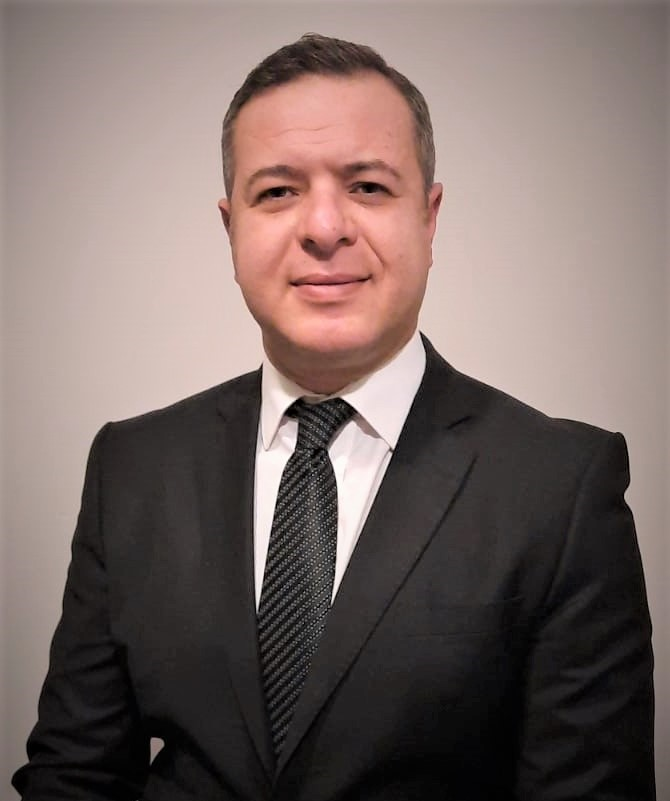
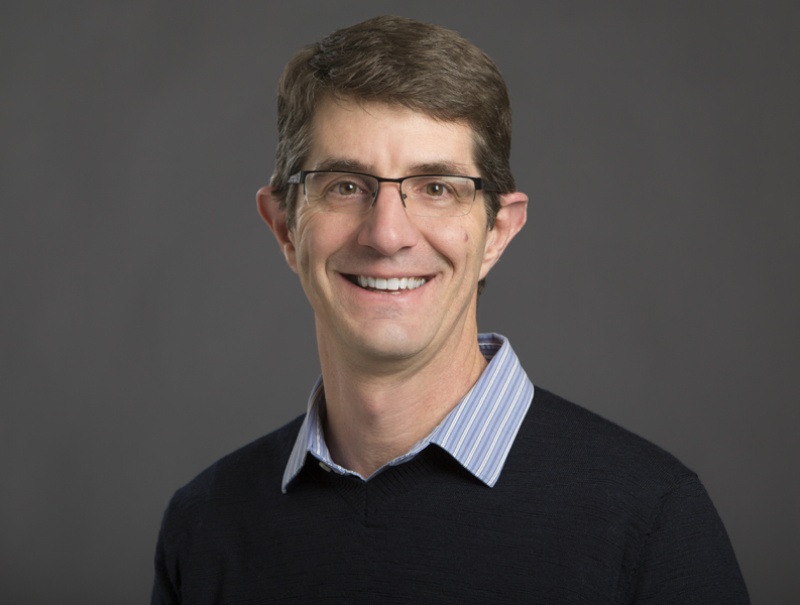
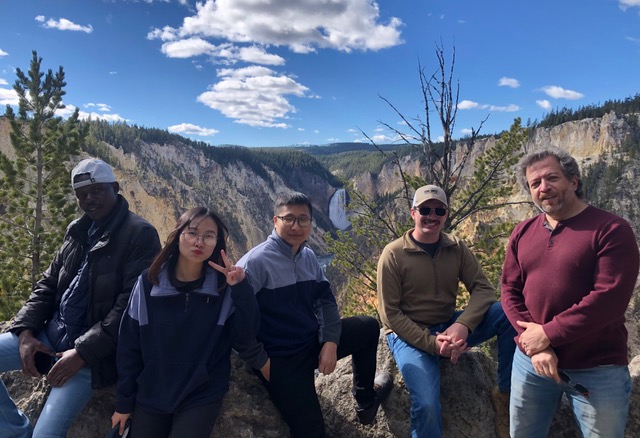
Dr. Brooke K. Mayer is a Professor in the Civil, Construction and Environmental Engineering department at Marquette University . Her research focuses on developing sustainable water and wastewater treatment technologies that address both microbial and chemical contaminants. Key areas include phosphorus removal and recovery, waterborne virus detection, and advanced oxidation/electrochemical treatments. Ph.D., Environmental Engineering, Arizona State University (2008) M.S., Environmental Engineering, Arizona State University (2006) B.S., Civil Engineering (Environmental Concentration), Arizona State University (2004) Her research has been supported by multiple grants including: NSF CAREER Award (2016-2022): 'Harnessing the Power of the Phosphate-Binding Protein PstS to Recover Phosphorus' NSF Science and Technology Center (STC) (2021-2026): Science and Technologies for Phosphorus Sustainability (STEPS) U.S. Army ERDC Grant (2022-2024): Novel technologies to mitigate water contamination Dr. Mayer's group has contributed to understanding: Electrocoagulation for emerging contaminant removal Titanium dioxide photocatalysis for organic contaminant mitigation Phosphorus recovery using bio-based adsorbents Arsenic removal via electrolysis-RO coupling Mitigation of disinfection byproducts Scientific awards include the NSF CAREER Award and leadership roles in major research centers. Her students include Joe Heffron, Yiran Tong, and Patrick Mullen.
Adèle Mennerat is a Lecturer at the University of Picardie Jules Verne specializing in behavioral ecology, evolutionary ecology, and host-parasite interactions. Currently on research leave, she collaborates with Sigrunn Eliassen and Christian Jørgensen at the University of Bergen on extra-pair mating behavior and animal cooperation. Education: Doctor in Evolution, Ecology, Genetic Resources and Paleontology, Montpellier II University (CNU 67 section) Her research integrates molecular, ecological, and evolutionary approaches to investigate host defense mechanisms against parasites. Key foci include insect-parasitoid coevolution (Asobara tabida), pathogen transmission in avian social networks, and anthropogenic impacts on parasite virulence. She pioneered studies on avian self-medication through aromatic plant use in blue tit nests, revealing bacterial inhibition and fitness benefits. Mennerat's recent publications (2009-2014) demonstrate consistent interdisciplinary work bridging field ornithology, aquaculture parasitology, and molecular ecology. Her salmon lice research exposes virulence-farming connections, while blue tit studies established chemical ecology principles in wild bird disease management. This body of work emphasizes eco-evolutionary dynamics across diverse host-parasite systems. She maintains extensive international collaborations including Lucy Aplin and Ben Sheldon (University of Oxford), Arne Skorping and Olav Moberg (University of Bergen), Dieter Ebert (University of Basel), and the ESP Team at CEFE-CNRS. Her research involves field studies across Europe with strong institutional partnerships. Mennerat is affiliated with BIPE/EDYSAN research groups and previously collaborated with CEFE-CNRS's ESP Team. Her current work at the University of Bergen centers on behavioral evolution within animal social systems, building on her expertise in host-parasite coevolution.
Dr. Knut Franke is a senior researcher at the Institute of Food Science and Human Nutrition , Leibniz University Hannover , where he leads projects in the Food Technology Section . His work spans food process optimization, chocolate physics, and robotics in food production. Research Interests : Confectionery technology, egg product functionality, acrylamide reduction, robot-assisted food handling, and plant-based protein alternatives. Publication Trends : Recent studies focus on chocolate surface properties, fat bloom prediction, and bigel-based fat replacements in baked goods. Institute Collaboration : Active in the Institute of Food Science and Human Nutrition with emphasis on food technology and process modeling.
Dr. Shan Goh serves as Senior Lecturer in Microbiology at the University of Hertfordshire's School of Life and Medical Sciences within the Department of Clinical, Pharmaceutical and Biological Science. Her research centers on antimicrobial resistance (AMR) mechanisms and alternative therapeutic strategies through a One Health lens, focusing on pathogens including Clostridioides difficile , MRSA, Escherichia coli , and Mycobacterium bovis . Her academic foundation includes a BSc (Hons.) in Microbiology and Pathology and a PhD in Microbiology from the University of Western Australia. Her doctoral work examined bacteriophage characteristics of Clostridium difficile , establishing her trajectory in microbial pathogenesis research. Dr. Goh's research program investigates horizontal gene transfer via phages and extracellular vesicles, antimicrobial development using peptide nucleic acids and cationic peptides, and AMR transmission dynamics across human-animal-environment interfaces. Current work emphasizes C. difficile genomics and vesicle-mediated resistance spread, with significant implications for clinical and agricultural settings. Recent publications (2023-2025) reveal concentrated efforts on mobile genetic elements in C. difficile , membrane vesicle functions, and cross-disciplinary applications including clinical trials for ulcerative colitis and veterinary vaccine development. These outputs demonstrate methodological diversity spanning molecular biology, clinical research, and food safety applications. Her scientific recognition includes: Visiting Scientist Scholarship from the Swedish Institute (2006) Dr. Goh actively mentors postgraduate researchers and leads substantial grant-funded projects. Key initiatives include bacteriophage applications for surgical site infections (2023-2026), C. difficile surveillance in UK pig populations (2023-2027), and multiple UK Food Safety Research Network collaborations under the F-CAPS program focusing on pork safety and pathogen detection. She operates within the Biosciences Research Group and Extracellular Vesicle Research Unit, while contributing to the Centre for Agriculture, Food and Environmental Management and the Research Centre for Mechanisms of Disease and Drug Discovery, enabling integrated approaches to AMR challenges through interdisciplinary team science.
Dr. Ashli Elizabeth Brown Johnson is a Professor at Mississippi State University's Division of Agriculture, Forestry, and Veterinary Medicine. She holds a Ph.D. in Chemistry from the University of South Florida and a B.A. in Natural Sciences. Education University of South Florida: Ph.D. in Chemistry University of South Florida: B.A. in Natural Sciences Dr. Brown Johnson's research spans agronomy, environmental toxicology, and wildlife biology. Her work focuses on soil microbiology , herbicide interactions , microplastic/PFAS contamination , and olfactory signaling in giant pandas . She employs advanced analytical techniques like solid-phase microextraction (SPME) for environmental and chemical ecology studies. Recent publications highlight trends in agricultural sustainability (cover crops, no-till farming), environmental remediation (biochar for phosphate runoff), and conservation biology (panda pheromone detection). Her work often intersects chemistry with ecological and agricultural applications. Professional affiliations include the American Chemical Society , Association of Official Analytical Chemists , Association of Public Health Laboratories , and Food Emergency Response Network .
Larry Hanson is a Professor at Mississippi State University's College of Veterinary Medicine, specializing in aquatic animal health with a focus on channel catfish diseases. His research spans virology, bacteriology, and immunology within aquaculture systems, with particular expertise in Ictalurid herpesvirus and bacterial pathogens affecting catfish production. His research interests encompass Fish virology, particularly herpesviruses in aquaculture Bacterial pathogens including Aeromonas hydrophila and Edwardsiella ictaluri Disease management strategies for commercial catfish operations Immunological responses in fish to viral and bacterial challenges International aquaculture health with recent work in Nigeria Emerging pathogens and disease diagnostics Dr. Hanson's publication record shows consistent research activity since the 1980s, with recent work examining viral diversity, bacterial pathogenesis, biosecurity implementation, and economic impacts of diseases in aquaculture. His research bridges fundamental science with practical applications for disease management in commercial fish production systems. His scientific contributions include development of diagnostic methods, characterization of fish pathogens, and international collaboration on aquaculture health management, particularly in Nigeria where he has worked on improving biosecurity practices for small-scale producers. Dr. Hanson has mentored numerous students and collaborated extensively with researchers across multiple institutions, contributing to the advancement of aquatic animal health science through both laboratory research and field applications in commercial aquaculture settings.
Jane Greatorex serves as Senior Tutor, Undergraduate and Graduate Tutor, and Director of Studies in Pre-Clinical Medical and Veterinary Sciences at Lucy Cavendish College, University of Cambridge. She holds a PhD from the Open University and maintains active roles across the university's School of Clinical Medicine and Department of Veterinary Medicine. Her research spans critical virology domains including blood-borne viruses, HIV diagnostics, Ebola outbreak response, and influenza transmission dynamics. Greatorex specializes in next-generation sequencing applications for identifying resistance mutations in HIV and human herpes viruses, alongside investigating H1N1 influenza shedding and survival. Her work bridges laboratory research with real-world pandemic response, having led teams during the 2015 Ebola outbreak in Sierra Leone and contributing to national policy discussions during the COVID-19 pandemic. Analysis of her recent publications reveals strong focus on viral transmission mechanisms, diagnostic innovation, and infection control. Her work spans laboratory virology, clinical epidemiology, and public health implementation, with consistent emphasis on practical applications for outbreak management and pandemic preparedness. Key trends include molecular characterization of viral resistance, environmental virus survival, and real-world transmission dynamics. Greatorex plays significant institutional roles beyond research: she oversees student admission, education, and welfare at Lucy Cavendish College; recruits Junior Research Fellows and Post-doctoral Research Associates; lectures Masters students; and supervises undergraduate projects. Her leadership extends to high-containment laboratory operations and emergency response teams, maintaining readiness for future viral outbreaks through her placement on national scientist response lists.
Mats Leifels is a Research Fellow at the Dr. Karl Landsteiner Private University of Health Sciences, focusing on the Department of Water Quality and Health. His work bridges molecular virology and environmental health, specializing in detecting enteric viruses and microbial contaminants in water systems. Education: PhD in Molecular Methods for Enteric Virus Detection (Ruhr University Bochum, 2017), Master's in Viability PCR for Viruses in Surface Waters (2013), Bachelor's in RNA Thermometers in Cyanobacteria (2011) His research interests include environmental virology, biofilm dynamics in drinking water, wastewater-based epidemiology for SARS-CoV-2, and molecular techniques like viability PCR. Recent studies explore viral transport mechanisms, pharmaceutical removal in treatment plants, and microplastic contaminant interactions. Key trends in his publications (61 total, 15 most recent shown) span wastewater surveillance of arboviruses and SARS-CoV-2 variants, biofilm impacts on water quality, and advanced PCR methods for viral infectivity. Topics like "From Lab to Lake" highlight field applications of molecular tools. Scientific contributions are recognized by two major awards: the Young Scientist Award for the Dissertation (2018) and the Gateway Fellowship Postdoc Stipend (2017) . He actively collaborates in international workshops (e.g., ONE WATER 2024, WaterMicro2025) and serves as a panel moderator.
Naim Deniz Ayaz is a Professor at the Department of Food Hygiene and Technology, Faculty of Veterinary Medicine, Kırıkkale University. He graduated from Ankara University's Faculty of Veterinary Medicine in 2003 and earned his Ph.D. in Food Hygiene and Technology from Ankara University's Institute of Health Sciences in 2008. Fields of Interest: Food Hygiene, Food Microbiology, Bacteriophages, Biocontrol of Pathogens, Antibiotic Resistance, Meat Type Determination, Analysis Methods Development Institutional Affiliations: Member of the Ministry of Agriculture and Forestry's COVID-19 Commission; Head of the Biological Hazards Commission; Scientific Committee Member of the Turkish Veterinary Medical Association; Member of TARPOL and REEV-Med; Regional Associate for AAVMC-CIVME; Evaluator for VEDEK His research focuses on foodborne pathogens, bacteriophage-based biocontrol strategies, and antibiotic resistance mechanisms. He has led studies on microbial safety in meat products, probiotic efficacy, and pandemic-related food hygiene challenges. Recent work emphasizes phage stability, Salmonella control, and molecular characterization of pathogens in livestock. His publications highlight interdisciplinary trends in food microbiology, veterinary public health, and pandemic adaptation in education. Key themes include bacteriophage applications, microbial risk analysis, and foodborne disease prevention. Leadership Roles: Vice Dean of Kırıkkale University Faculty of Veterinary Medicine (2011-2016); Columnist for a national newspaper; Former member of Contaminants Commission and National Red Meat Council He contributes to national agricultural policy development and international veterinary education accreditation frameworks.
Sripriya Sundararajan is an Associate Professor in the Division of Neonatology at the University of Maryland School of Medicine, where she serves as Medical Director of the Neonatal Intensive Care Unit and Neonatal Director of OB-MFM relations. Her clinical leadership encompasses oversight of a Level IV NICU, the implementation of evidence-based practices, and coordination of multidisciplinary care for high-risk infants. Dr. Sundararajan received her MD in Pediatrics from Chennai Medical College, India after completing medical school at Stanley Medical College, India. She recertified in Pediatrics and completed her fellowship training in Neonatal-Perinatal Medicine from the University of Virginia. She maintains active membership in the American Academy of Pediatrics (Section on Neonatal-Perinatal Medicine), the Society for Pediatric Research, and serves as a council member of the Eastern Society for Pediatric Research. Her research program focuses on improving outcomes for preterm infants through multiple critical pathways: reducing morbidities including necrotizing enterocolitis and retinopathy of prematurity, studying the impact of red blood cell transfusions, investigating delayed cord clamping benefits, and establishing standardized guidelines for blood product use in the NICU. She has implemented quality improvement initiatives including the WARM bundle to reduce hypothermia and led institutional efforts to incorporate delayed cord clamping into clinical practice. Her work extends to collaborative revisions of neonatal cardiac classification with Maternal-Fetal Medicine and Pediatric Cardiology specialists. The publication record demonstrates consistent focus on neonatal transfusion practices, retinopathy of prematurity, intestinal microbiome development, and neonatal hypothermia prevention. Her most recent work explores intestinal barrier maturation, retinal blood flow measurements, and innovative approaches to managing complex congenital heart disease in infants. Mentor recognition award from the University Of Maryland School Of Medicine and Office of Student Research for transformational impact on medical students (2017, 2018, 2019, 2021) Eastern Society for Pediatric Research – Council Member / Co-Chair for Planning Committee Dr. Sundararajan actively mentors medical students through the Foundations of Research and Critical Thinking program and serves as faculty mentor for Lois Young-Thomas House of the Core Mentoring Group. She has secured NIH R21 and Gerber Foundation grants focusing on intestinal barrier maturation in preterm infants, with responsibilities for IRB protocols, subject enrollment, data collection, and dissemination of results. Her educational contributions include serving as Course Director for the pathophysiology curriculum in the Neonatal-Perinatal fellowship program (2015-2022) and participating in the National Neonatology Curriculum through flipped classroom guides. As Medical Director of a Level IV NICU, she creates systems to evaluate, monitor, and improve patient and team-based care while coordinating obstetric and pediatric subspecialty providers. Her leadership extends to mediating conflicts between providers and families and serving as liaison between NICU staff and hospital administration.
William Clarke is a Professor at the School of Civil Engineering, University of Queensland. His research centers on environmental engineering, with a focus on organic waste degradation processes, including anaerobic digestion, landfill emissions management, and bioremediation. He has served as Associate Editor for Waste Management (2008-2013) and holds a position on the Managing Board of the International Waste Working Group. Clarke's research explores methods to accelerate waste solubilization, landfill emission mitigation, and resource recovery from organic waste. Key areas include: Anaerobic digestion optimization for municipal solid waste and agricultural residues. Biogenic hydrogen sulfide production for mineral processing. Pathogen and heavy metal fate in waste treatment systems. Integration of circular economy principles in waste-to-energy frameworks. His recent publications emphasize microbial community dynamics in waste degradation, methane mitigation in landfills, and valorization of fruit waste and agricultural byproducts. Trends indicate a strong focus on pilot-scale validation, process modeling, and sustainable technology deployment. Clarke leads significant grants, including ARC projects on bioplastics, PFAS remediation, and landfill methane oxidation. He actively supervises doctoral candidates, with research themes spanning waste management, bioenergy systems, and environmental biotechnology. His laboratory facilities support advanced analysis of waste degradation processes and contaminant mobility.
Dr. Paul Fisher is an Adjunct Senior Fellow at the School of Civil Engineering, University of Queensland. His research focuses on coral reef ecology, thermal stress responses, and environmental engineering, with a strong emphasis on understanding coral-algal symbiosis under climate change impacts. PhD in Marine Sciences from the University of Queensland (2006) Research themes include coral bleaching mechanisms, antioxidant enzyme dynamics, sediment transport in coastal systems, and marine pollution monitoring. His work integrates field observations and experimental studies to address environmental and hydraulic challenges. Selected recent publications explore topics such as lake modeling for microbial risk assessment, suspended sediment monitoring during floods, and antioxidant responses in Symbiodinium. He collaborates extensively with marine and environmental scientists across Australia and the Pacific. His email contact is p.fisher@uq.edu.au.
Michael Schoeny, PhD is an Associate Professor in the Department of Community, Systems and Mental Health Nursing at Rush University College of Nursing. His academic appointment reflects his expertise in community health nursing, mental health, and systems approaches to healthcare delivery. Dr. Schoeny maintains an active research program with numerous publications spanning multiple domains of public health and nursing research. Dr. Schoeny's research interests span several interconnected domains of public health and nursing. He has made significant contributions to understanding and addressing health disparities, particularly among African American communities. His work includes developing and evaluating physical activity interventions specifically tailored for African American women across the lifespan, from pregnancy through older adulthood. He has also conducted important research in community violence prevention, child welfare systems, and maternal-infant health outcomes, with a particular focus on breastfeeding and mother's own milk feeding for very low birth weight infants. More recently, his research has expanded into areas of cognitive decline prevention among older women with cardiovascular disease and infection control practices in healthcare settings. Analysis of Dr. Schoeny's recent publications reveals several important trends in his research program. His work consistently focuses on community-based interventions to address health disparities, with particular attention to culturally appropriate approaches for minority populations. He has developed expertise in physical activity interventions for specific populations, including working women, pregnant women, and older women with cardiovascular conditions. His research on violence prevention and child welfare often examines housing stability and its impact on family outcomes. In maternal and infant health, he has made significant contributions to understanding barriers to breastfeeding among vulnerable populations. Additionally, his more recent work in infection prevention demonstrates his ability to address emerging healthcare challenges through rigorous scientific investigation. Dr. Schoeny's collaborative approach is evident in his extensive publication record, which includes work with researchers across multiple disciplines including nursing, medicine, public health, psychology, and social work. His research frequently addresses the social determinants of health and seeks to develop practical interventions that can be implemented in community and clinical settings.
Mark Gomelsky is a Professor in the Department of Molecular Biology at the University of Wyoming. He earned his Ph.D. in Biological Sciences from the Institute for Genetics and Selection of Industrial Microorganisms in Moscow, Russia, and completed post-doctoral training at Institut Pasteur in Paris and the University of Texas Medical School in Houston. His research spans bacterial signal transduction, photoreception, and synthetic biology, with a focus on cyclic di-GMP (c-di-GMP) signaling, Listeria-plant biofilms, and engineered bacterial systems for medical applications. Education: Ph.D. in Biological Sciences (1991), Institute for Genetics and Selection of Industrial Microorganisms, Moscow, Russia Post-doctoral training, Institut Pasteur, Paris, France Post-doctoral training, University of Texas Medical School, Houston, USA Dr. Gomelsky’s research has pioneered c-di-GMP signaling in bacteria, revealing its role in biofilm formation and virulence. His lab discovered novel photoreceptors and engineered near-infrared light-activated enzymes for optogenetic applications, including diabetes and neuronal regulation. Key projects include: Listeria-plant biofilms: Investigating exopolysaccharide synthesis and contamination prevention on fresh produce. Listerial bactodrones: Developing genetically modified Listeria strains for targeted cancer therapy via tumor microenvironment activation. Metabolic engineering: Manipulating Rhodobacter sphaeroides for hydrogen production and asymmetric bacterial cell division. His publications emphasize bacterial signaling, biofilm dynamics, and optogenetic tools. Over 90 research papers reflect his expertise in molecular microbiology and synthetic biology. Awards include AAAS Fellowship (2016) and the Jack Kenney Award (2016). Lab members include postdocs, Ph.D. students, and research assistants, with collaborations across microbiology, synthetic biology, and medical applications.
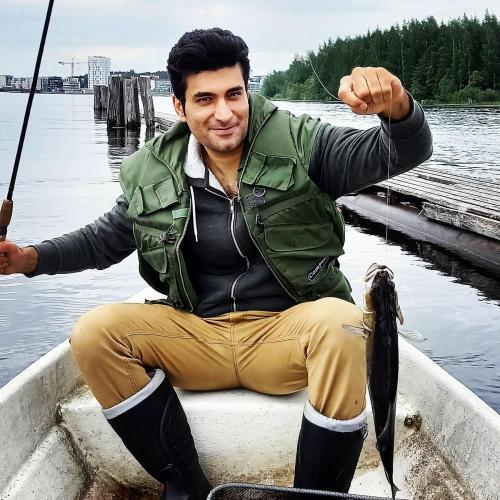
Dr. Fazel Abdolahpur Monikh serves as a Postdoctoral Researcher in the Department of Plankton and Microbial Ecology at an institution located in Stechlin, Germany (address: Zur alten Fischerhütte 2, 16775 Stechlin OT Neuglobsow). His work centers on the ecotoxicological effects of engineered nanomaterials and microplastics in freshwater ecosystems, utilizing experimental and modeling approaches to assess environmental risks. His primary research areas encompass aquatic microbial ecology, nanotoxicology, and plastic pollution. Specifically, he investigates the heteroaggregation of nanoplastics with natural colloids, the impact of tire wear particles on bacterial-fungal community dynamics and elemental cycling, and the role of environmental stressors in facilitating horizontal gene transfer of antibiotic resistance genes. His studies integrate field observations with controlled microcosm experiments to evaluate ecological consequences. Analysis of his recent publications (2022-2025) reveals a consistent focus on the environmental fate and biological interactions of nanomaterials. Key themes include the development of standardized ecotoxicity testing protocols, the influence of natural organic matter on nanomaterial behavior, and the assessment of nanoplastic aggregation dynamics. His methodological contributions span analytical workflows for nanomaterial quantification and multimedia modeling frameworks. He is an active member of the Aquatic Microbial Ecology research group, collaborating on projects examining plankton dynamics and microbial responses to emerging contaminants in freshwater habitats across international teams.