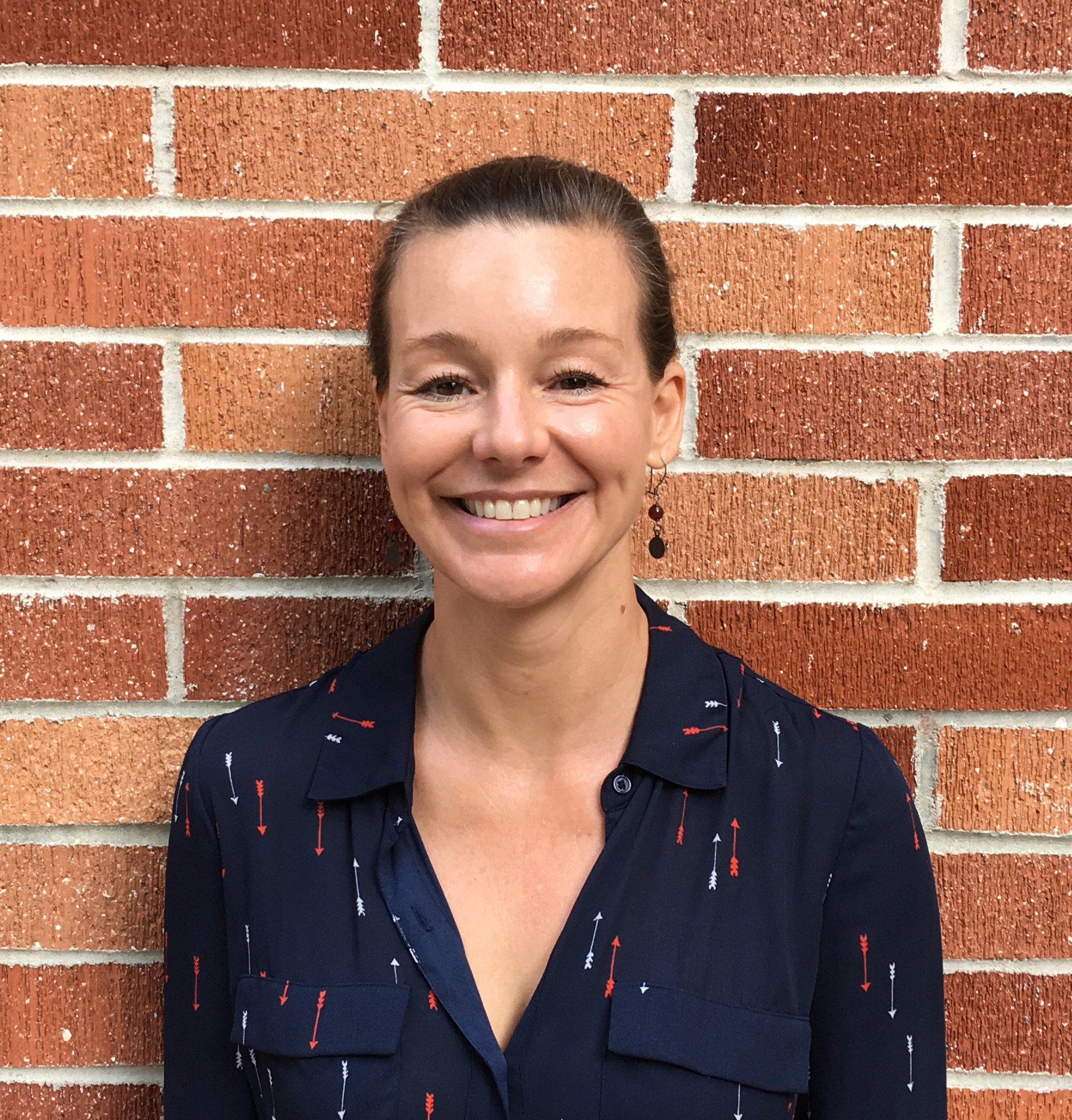
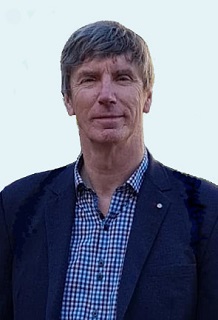
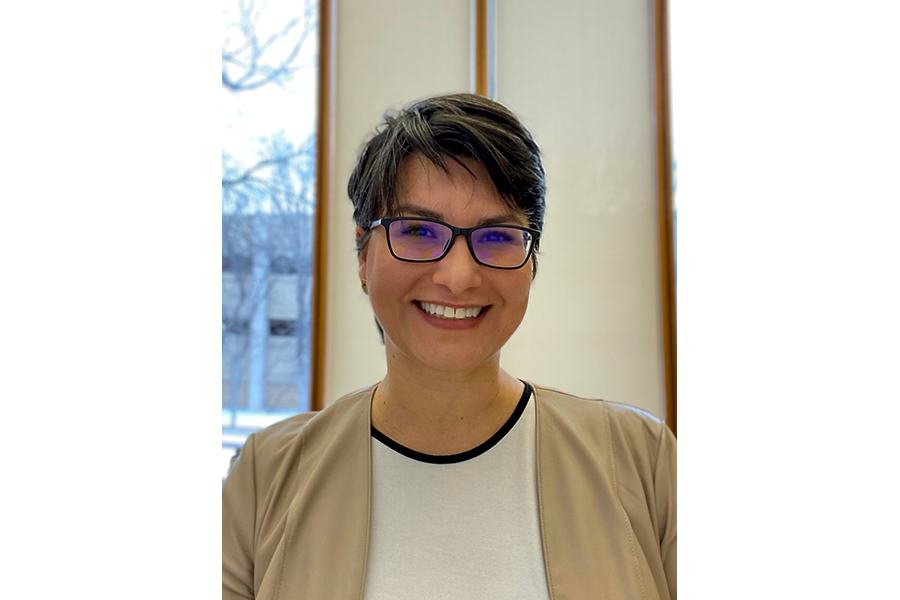
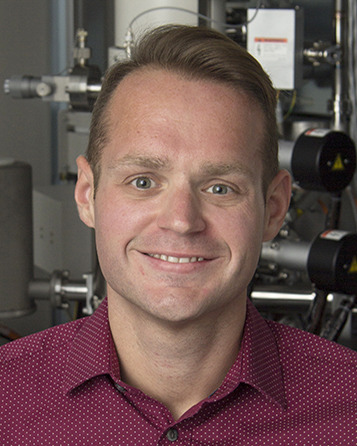
Vanessa Muros is a lecturer and Director of the Experimental and Archaeological Sciences Laboratory (EASL) at UCLA's Cotsen Institute of Archaeology, with expertise in archaeological conservation and materials analysis. She holds a PhD from the University of Peloponnese (2021), MSc from University College London (1999), and BA from Boston University (1996). Specializes in in-situ preservation and technical analysis of cultural heritage materials Has worked at the British Museum, University of Chicago's Oriental Institute, and UCLA/Getty Conservation Program Active fieldwork in Greece (Palace of Nestor excavations) and Peru (Corral Redondo Project) Research interests focus on archaeological glass and metal conservation, deterioration mechanisms, and innovative field analysis techniques. Publications emphasize material characterization, non-destructive methods, and interdisciplinary collaboration. Scientific awards include: 2022 Samuel H. Kress Foundation Conservation Grant 2022 American Institute for Conservation Holly Maxson Grant 2017 Antiquities Endowment Fund support
Dr. James Mead is a Research Associate at the Department of Computing Science of the University of Oldenburg, Germany, within the Division of Microrobotics and Control Engineering. He holds a PhD in nanoscale adhesion characterisation from the University of Queensland (2019) and has professional experience in mechanical engineering consultancy and microscopy engineering. Education: Bachelor of Mechanical and Materials Engineering with First-Class Honors (University of Queensland, 2012) Professional Experience: Post-doctoral Research Officer and Microscope Engineer at University of Queensland (2019–2020) His research investigates nanoscale robotic automation , nanogranular tunnelling strain sensors , and adhesive behavior of one-dimensional materials . Though no scientific awards are mentioned, his work bridges interdisciplinary domains of nanotechnology, robotics, and materials science. Current affiliations include collaboration with the Centre for Microscopy and Microanalysis and the School of Mechanical and Mining Engineering at UQ.
Professor Filip Braet is an esteemed academic at The University of Sydney , serving as the Director of Sydney Microscopy and Microanalysis , Sydney Node Director of Microscopy Australia , and Professor of Structural Cell Biology within the Molecular Biomedicine Research Theme in the School of Medical Sciences . With over 35 years of experience, he specializes in correlative microscopy and biomolecular labeling to study structure-function relationships in cancer, vascular biology, and liver disease. Research Interests: Structural cell biology, cancer biology, vascular biology, chemical biology, nanobiotechnology, correlative imaging, and microscope development. Service Expertise: Core facility management, business planning, risk management, health and safety protocols, customer relations, and strategic infrastructure planning. Teaching Focus: Life sciences, histology, cellular microscopy, structural cell biology, and advanced imaging techniques. Current Projects include multimodal imaging in pathology, human liver atlas development, correlative microscopy workflows across X-ray/electron/photon modalities, and data ethics in bio-imaging. His work intersects the Cancer and Obesity/Diabetes/Cardiovascular Disease themes, employing cellular signaling, molecular analysis, and pathology approaches. Scientific Contributions span 3D ultrastructural mapping, fenestrae dynamics, and nanoparticle applications in cancer therapy. He has supervised numerous PhD projects on correlative microscopy and liver disease mechanisms.
Dr. Aleksey Sadekov is a Senior Research Fellow at the University of Western Australia (UWA), affiliated with the Centre for Microscopy, Characterisation & Analysis and the UWA Oceans Institute. He leads the ICP-MS laboratory platform, managing its development and operations since 2022. His academic background includes a PhD in Earth Sciences from the Australian National University and postdoctoral roles at the University of Edinburgh (2008-2011) and University of Cambridge (2011-2017). Education: Bachelor's in Geology, Moscow State University PhD in Earth Sciences, Australian National University Research Interests: Focus on isotope geochemistry, in-situ analytical methods, and applications in environmental sciences, paleoclimatology, and biomineralization. Projects include studying Early Earth evolution and Indigenous rock engravings in Western Australia. Key areas: coastal environments, biomineralization mechanisms, and geochemical proxies for climate and pollution monitoring. Articles Trends: Recent work emphasizes Paleozoic and Archean geology, biomineralization processes, and climate-related oceanography. Studies on foraminifera and calcite crystallography highlight methodological innovations in microanalysis. Grants & Projects: Lead investigator for Nuclear Security Centre at UWA (2024-2026) Geochemical analyses of Pilbara groundwater (Rio Tinto, 2022) Microchemical analysis of fish otoliths (2022) Labs & Teams: Oversees the ICP-MS platform and collaborates with Microscopy Australia and the Centre for Microscopy & Materials Analysis (CMCA).
Dr. Tianqi Zhang is an ARC DECRA Fellow at the University of Sydney's School of Chemical and Biomolecular Engineering. He earned a BSc in Chemistry (Wuhan University, 2018) and a PhD in Plasma Chemistry & Engineering (University of Sydney, 2023). Currently a Postdoctoral Research Associate and DECRA Fellow (2025), his work focuses on plasma-driven sustainable technologies including ammonia synthesis, CO₂ conversion, and wastewater treatment. He leads the 'Plasma-driven electrocatalytic nitrogen reduction' project, aiming to develop low-emission ammonia production methods. Awards include ARC DECRA ($488k), NSW Environment Trust Grant ($1.6M), and Clarivate Highly Cited Researcher 2024. Research interests span plasma chemistry for gas conversion (nitrogen fixation, CO₂ reduction), plasma-liquid interactions for environmental remediation, and plasma-electrocatalytic energy systems. He collaborates widely, publishing in ChemCatChem , Chemical Engineering Journal , and Energy and Environmental Materials . Supervising PhD candidates, he offers scholarships via email inquiry. Key contributions include plasma-catalytic nitrogen fixation models, microbubble plasma fertigation systems, and plasma-enabled superoxide anion biofilm removal. His work bridges fundamental plasma science with industrial applications in agriculture, energy, and environmental sustainability.
Scott Lerner is the Arthur and Katherine Shadek Professor of Humanities and French and Italian at Franklin & Marshall College, where he has served since 1995. He chairs the Department of Italian Studies & Hebrew and has held leadership roles in Comparative Literary Studies and Judaic Studies. Educated at Yale (B.A.) and Harvard (Ph.D. in Comparative Literature), his research focuses on 19th–20th century French/Italian literature, Jewish identity, Proust, the Dreyfus Affair, and intersections of psychoanalysis, critical theory, and film. His current project, Italy Out of the Ghetto: A Catholic Nation in the Jewish Mirror , examines Jewish-Christian intersections in Italian culture. He co-edited The New Italy and the Jews and authored works on Proust and the Dreyfus Affair. Awards include NEH Fellowships and Woodrow Wilson grants. He teaches courses in French, Italian, Judaic Studies, and Comparative Literature, and leads F&M's Tuscany summer program. Education: Ph.D. (Harvard, Comparative Literature), B.A. (Yale, English) Fellowships: NEH (2020–21), Frankel Institute (2007–08), Woodrow Wilson (2007–09) Publications: Books on Proust, Italian-Jewish history, and edited volumes on modern Jewish literatures Teaching: Courses include French literary analysis, comparative modernism, and trauma in Jewish studies His research bridges literary and cultural studies, emphasizing how Jewish narratives reflect broader national and religious identities. He has served on editorial boards for journals like Journal of Jewish Identities and reviewed for NEH grants.
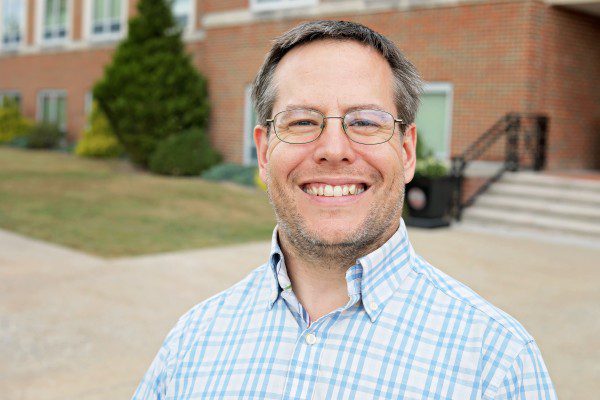
Stephen Kuehn is an Associate Professor of Geology and Director of the CU Electron Microprobe Laboratory at Concord University, located within the College of Science, Mathematics, and Health. His research focuses on tephrochronology, particularly using volcanic ash layers for chronological and environmental studies. He has conducted fieldwork in locations such as Newberry Volcano (Oregon), Alaska, and Canada's Yukon region, emphasizing cryptotephra analysis in glacial ice and lake sediments. Dr. Kuehn holds a Ph.D. from Washington State University and has prior experience as a Visiting Assistant Professor at Washington and Lee University and a Post-Doctoral Research Fellow at the University of Alberta. His technical expertise includes electron microprobe analysis, ICP-OES, and the development of standardized analytical protocols for volcanic glass characterization. His research spans applications in Quaternary geology, climate change, archaeology, and paleoseismology. He actively promotes data standardization through initiatives like the Tephra Information Portal (TIP) and collaborates internationally to improve tephra data interoperability and accessibility. Dr. Kuehn’s lab at Concord University integrates advanced microanalytical instrumentation into undergraduate education, providing students with hands-on experience in geochemical analysis and field-based research. He has published extensively on tephra correlation methods, volcanic eruption histories, and paleoenvironmental reconstructions.
Kimberly Buffie is an Instructor in the Chemistry Department at the University of Winnipeg, affiliated with the Richardson College for the Environment and Science. With over 15 years of teaching experience, she specializes in laboratory instruction and lectures for courses like CHEM 0100 Foundations of Chemistry and CHEM 1111 Introduction to Chemical Properties. Her roles include coordinating labs for multiple courses, emphasizing collaborative learning and student engagement. Education: M.Sc. (Chemistry), University of Manitoba, 2007 B.Sc. (Honours), The University of Winnipeg, 2005 Research Interests: Pedagogy in chemistry education and analytical chemistry applications in cultural artifact analysis. Her work bridges teaching methodologies and practical laboratory techniques, with publications in chemical education and materials science. Kimberly has contributed to committees focusing on university safety protocols and scholarships. Her research publications highlight analytical methods for pigment identification in cultural objects and catalytic reactions, reflecting her dual focus on education and applied chemistry. Lab and Teaching Roles: Coordinates labs for foundational chemistry courses and actively promotes student-centered learning environments. She has implemented group work approaches to enhance collaborative problem-solving in laboratory settings.
Maurice Waddle is a Lecturer in Psychology at the University of York since 2023. He previously held roles such as Associate Lecturer at the University of York (2018–2023) and The Open University (2018–2019), and Tutor at the Centre for Lifelong Learning (2015–2019). He earned a BSc (2010–2013) and PhD (2013–2018) in Psychology from the University of York. His research focuses on interpersonal communication in political contexts, particularly politicians' interactions during interviews, speeches, and parliamentary debates. Key interests include evasive responses, adversarial discourse at Prime Minister’s Questions (PMQs), and personalized exchanges ('playing the man, not the ball'). He collaborates with scholars like Prof. Peter Bull and Dr. Jan Boehnke. Teaching includes advanced modules like Microanalysis of Communication and courses in Social Psychology and Qualitative Research. His work utilizes both qualitative and quantitative methods, with a focus on cross-cultural comparisons and emotional dynamics in political communication. Publications span books, journal articles, and chapters, emphasizing adversarial political discourse and audience engagement. His research has been presented at conferences such as the Psychology of Democracy Conference and the British Psychological Society meetings.
Jennifer L. Mass is the Andrew W. Mellon Professor of Cultural Heritage Science at Bard Graduate Center, an advanced graduate research institute in New York City dedicated to the cultural histories of the material world. She holds a PhD and MS in Inorganic Chemistry from Cornell University and a BA in Chemistry from Franklin and Marshall College. PhD Inorganic Chemistry, Cornell University MS Inorganic Chemistry, Cornell University BA Chemistry, Franklin and Marshall College Professor Mass's research program centers on understanding the materials chemistry of cultural heritage and how this chemistry affects an object's visual and functional properties over time. Her work examines how surfaces of antiquities, works of decorative art, the built environment, and sacred objects evolve, sometimes enhancing desirability but often obscuring original functions. She investigates the historical context of acceptable patinas and interventions to better understand culturally significant objects. Her specific research areas include central European porcelain, vert antique furniture finishes, Pablo Picasso's canvas re-use in his Blue Period, and the patinas of copper alloys from antiquity to 19th century architectural ornament. Analysis of Professor Mass's publications reveals a strong focus on pigment degradation mechanisms, particularly cadmium and arsenic-based pigments in modern paintings. Her work frequently examines Edvard Munch's The Scream and Henri Matisse's works, using advanced analytical techniques like reflectance imaging spectroscopy and synchrotron radiation X-ray fluorescence mapping. Her research bridges chemistry, art history, and conservation science to address critical questions about material stability and historical authenticity in cultural heritage objects. Professor Mass has presented her research on topics such as "Nineteenth-Century Black Patinas on Ancient Bronzes," exploring the chemical innovations and Asian influences behind these patinas. Her work challenges assumptions about selenium-based patinas on ancient bronzes, questioning whether they represent fakes, 19th-century imitations of Japanese shakudō, or undocumented restoration techniques. Research on cadmium pigment degradation in Munch's The Scream Studies of pigment migration in historic paintings Investigation of black patinas on ancient bronzes Analysis of Picasso's painting techniques
Laura Smithers is an Assistant Professor in the Department of Higher Education Leadership at the University of Nevada, Reno, College of Education and Human Development. Her work interrogates the intersections of assessment regimes, datafication, and affective dynamics in higher education, with theoretical foundations in poststructuralism, feminist new materialisms, and queer theory. She actively explores concepts like ontopower, precarity, and swarms in educational systems. Education: Ph.D. in Critical and Sociocultural Studies in Education (University of Oregon, 2018), M.S.Ed. in Educational Psychology (University of Florida, 2006), and dual B.A. degrees in Government and Politics & Economics (University of Maryland, College Park, 2004). Experience: A decade in student-athlete academic services as academic counselor and learning specialist. Her research focuses on affective and material-discursive forces shaping educational environments, particularly through the lenses of the student success movement, predictive analytics, and the politics of belongingness. While her publications span 2017-2025, they collectively challenge neoliberal logics in educational policy and practice. Current projects examine the interdependence of systems and feelings of unbelonging, advocating for interventions at the collective affect level. Notable article themes include: Critical analyses of datafication and predictive analytics in higher education Post-qualitative methodologies and speculative reforms Theoretical explorations of affect, precarity, and swarms Interrogations of measurement, optimization, and institutional power
Spencer Reisbick is a Research Associate in the Condensed Matter Physics and Materials Science Department at Brookhaven National Laboratory. His work focuses on ultrafast electron microscopy (UEM) for studying dynamic structural and electronic processes in materials. University of Minnesota: PhD (2020) and MS (2017) in Chemical Physics Ripon College: BA (2014) in Chemistry and Physics Research interests include ultrafast imaging , structural defects , photoinduced phase transitions , and spin dynamics . His publications highlight advancements in UEM technology, defect-mediated phonon dynamics, and laser-free GHz stroboscopic techniques. Recent work (2025) explores tunability of electrically driven UEM, spin-wave propagation, and acoustic excitation mechanisms in piezoelectric materials. Earlier studies (2023–2024) address artifact elimination, RF-based pulse generation, and magnetic crosstie formation. 2018 Microscopy and Microanalysis Student Scholar Award 2023 Microscopy and Microanalysis Postdoctoral Scholar Award He develops open-source frameworks like UEMtomaton to support UEM lab startups, emphasizing technological accessibility and educational training in advanced microscopy.
Lilian Pozzer is an Associate Professor and Department Head in the Faculty of Education at the University of Manitoba, specializing in Curriculum, Teaching and Learning. Her research focuses on multimodal microanalysis of communication in science classrooms, integrating gesture-speech dynamics, visual representations, and sociocultural frameworks. Doctor of Philosophy (Education) - University of Victoria Master of Arts (Curriculum & Instruction) - University of Victoria SSHRC Postdoctoral Fellowship (2008-2010) - McGill University Her key research areas include: Multimodal analysis of science teaching Sociocultural studies in education Graphicacy and scientific literacy Gender inclusivity in STEM education Eco-social justice in science pedagogy She has made significant contributions to understanding classroom communication and interaction analysis, with a particular emphasis on visual representations (inscriptions) in science education. Scientific awards include: SSHRC Postdoctoral Fellow Pozzer's work bridges discourse analysis and critical content analysis to explore inter- and intra-species relations in educational contexts.
Walter Wenzel is a Full Professor of Soil Protection and Soil Management at the Institute of Soil Research, Department of Natural Sciences and Sustainable Resources, University of Natural Resources and Life Sciences (BOKU) in Vienna, Austria. With a career spanning over three decades at BOKU, he has established himself as a leading expert in soil science, particularly in soil carbon dynamics, phosphorus cycling, and remediation of contaminated sites. His research addresses critical challenges in sustainable agriculture and environmental protection. Prof. Wenzel's research interests focus on soil protection, soil management, plant nutrition, soil carbon sequestration, and remediation of contaminated sites. His work bridges fundamental soil science with practical applications for sustainable land management. He employs advanced analytical techniques including chemical imaging to study nutrient dynamics at microscale levels, particularly in the rhizosphere. His research has significant implications for climate change mitigation through soil carbon management and sustainable nutrient cycling in agricultural systems. Analysis of his recent publications (2022-2025) reveals a strong focus on soil health monitoring, particularly in Lower Austria, with emphasis on carbon sequestration potential, phosphorus dynamics, and the development of innovative analytical methods for studying soil processes. His work increasingly integrates advanced imaging techniques to visualize biogeochemical processes at microscale levels, providing new insights into nutrient availability and contaminant behavior in soils. Innovation Award Plant Nutrition, Groupe Roullier (2018) Two Elsevier Frequently Cited Author Awards for articles in Environmental Pollution (2010) Professor honoris causa, Czech University of Life Sciences, Prague (2009) Co-memorial medal, 50th Anniversary of the Czech Agricultural University, Prague (2002) Soil Culture Prize of the Vienna Chamber of Commerce (1993) Prof. Wenzel leads numerous research projects, primarily funded by Austrian federal and state governments, the European Commission, and the Austrian Science Fund. His current projects focus on soil health monitoring in Lower Austria, carbon sequestration potential, phosphorus dynamics, and the development of methods for plastic and microplastic detection in soils. He actively collaborates with multiple institutes within BOKU and international partners. His leadership extends to advising on European soil policy, as evidenced by his analysis of the European Commission's proposal for a Soil Health Directive.
Pierre Haenecour is an Assistant Professor at the Department of Planetary Sciences, University of Arizona, and a researcher at the Lunar and Planetary Laboratory (LPL). His work bridges astromaterials analysis, cosmochemistry, and astrobiology, focusing on presolar grains, asteroid samples, and bioessential compounds in extraterrestrial materials. B.A. and M.S. in Geology and Geochemistry, Free University of Brussels M.A. and Ph.D. in Earth and Planetary Sciences, Washington University in St. Louis His research employs nano- and microanalytical techniques at the Kuiper-Arizona Laboratory for Astromaterials Analysis to study presolar grains from meteorites and stardust from supernovae and AGB stars. He investigates thermal processes on asteroids using in-situ electron microscopy, aiming to understand solar system formation and the origins of life. His group prepares for Bennu sample analysis under NASA's OSIRIS-REx mission and contributes to the NASA Alien Earths project. Recent publications highlight collaborations on Bennu's organic matter (2025), irradiation experiments on SiC grains (2019), and presolar grain characterization in CO chondrites (2023-2025). Grants include TRIF-funded acquisitions of microscopy equipment. Students include graduate researcher Lucas Smith (PTYS). Outreach activities feature lectures on stardust and the OSIRIS-REx mission.