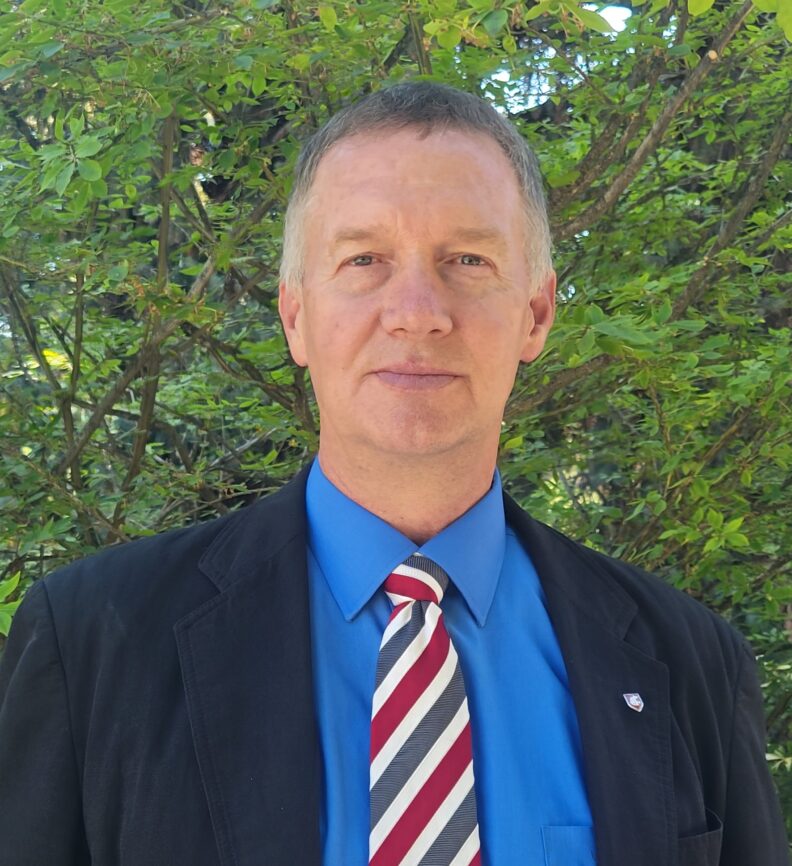
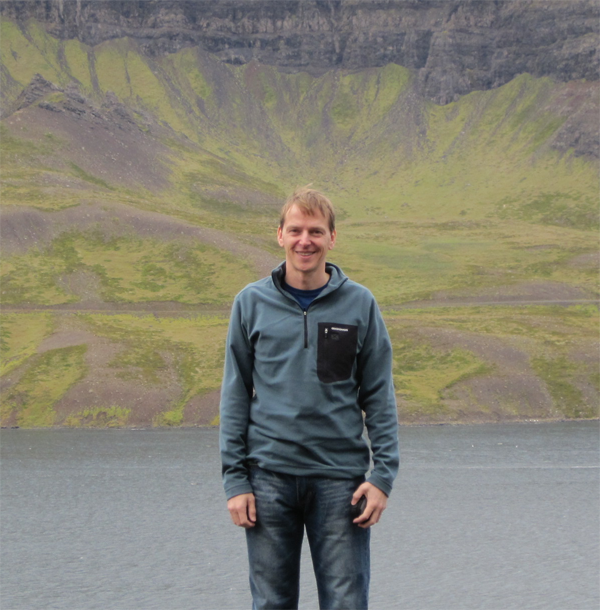
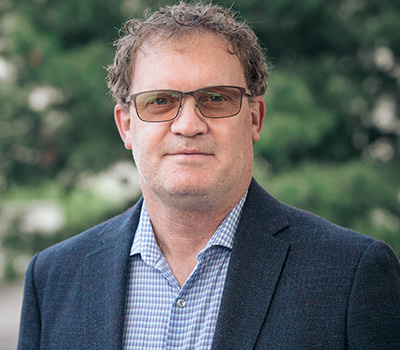
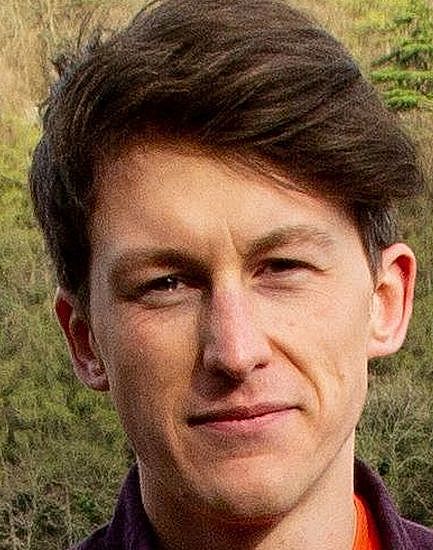
David P. Field is a Professor at Washington State University's Voiland College of Engineering and Architecture , where he serves as Director of the Institute of Materials Research and Associate Dean for Research and Graduate Education. His expertise spans physical metallurgy , materials characterization , and microstructure engineering . Ph.D. in Mechanical Engineering, Yale University, 1991 M.S. in Mechanical Engineering, Brigham Young University, 1988 B.S. in Mechanical Engineering, University of Wyoming, 1987 Research focuses on metal deformation , recrystallization mechanisms , and advanced microscopy techniques , particularly addressing texture evolution and grain boundary engineering . Key article trends include computational modeling of microstructural heterogeneity, additive manufacturing of titanium, and thermomechanical processing of uranium-molybdenum alloys. Scientific recognitions include: 2024 Plenary Lecture at ICOTOM 20 2023 Fellow of ASM International 2015 MLK Distinguished Service Award 2011 Best Paper in Physical Sciences, Microscopy and Microanalysis Field has advised 15+ graduate researchers and led international collaborations at institutions like Universite de Lorraine and IISC Bangalore. His work integrates experimental and computational approaches to solve materials challenges in energy and manufacturing sectors.
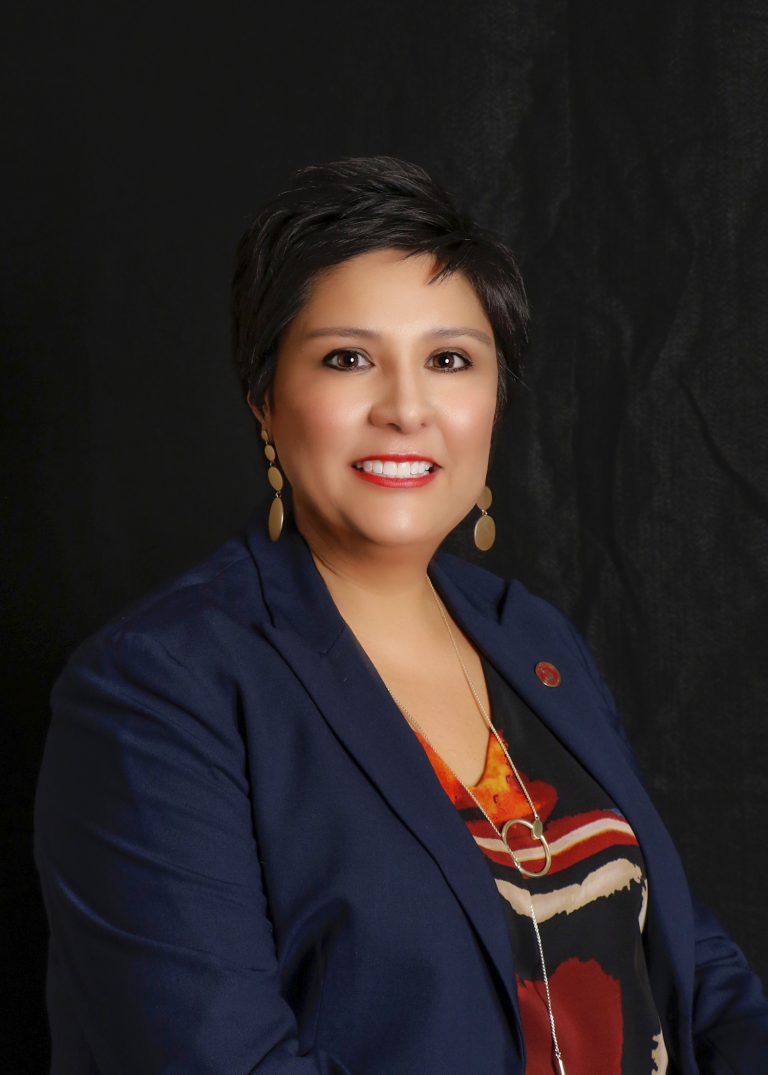
Dario Cecilio-Fernandes is an Assistant Professor at the Institute of Medical Education Research Rotterdam, Erasmus MC. His work focuses on cognitive processes in medical student learning and assessment, with expertise in skill training, educational assessment, and technology integration in healthcare education. He holds a PhD from the University of Groningen (2018), a Master’s in Psychological Assessment from Universidade São Francisco (2012), and a Bachelor’s in Psychology (2010). Research Interests: Skill Training : Optimizing spaced practice for long-term skill retention and self-regulated learning feedback systems. Educational Assessment : Innovations like computerized adaptive testing and eye-tracking for evaluating cognitive processes. Innovation : Leveraging technology (e.g., AI, physiological measurements) to enhance medical education engagement and outcomes. Key Contributions: His studies show spaced practice improves skill retention, and SRL feedback enhances clinical performance. He collaborates internationally and contributes to journals like Medical Teacher . Awards: Poster Prize – 1st place (2023) Sao Paulo Research Foundation Grants (2020, 2019) Medical Education Choice Critics Awards (2018) Activities: Involved in invited talks (e.g., AI in Med Ed, Transfer of Learning) and editorial work for Medical Teacher .
Suzann Lafferty is an Assistant Professor and Program Director of Criminal Justice at Cumberland University, located at Memorial Hall, Room 210C. She holds a B.A. from the University of Southern California, an M.F.S. from National University, and an M.A. from the University of Memphis. Her expertise spans forensic science, criminal justice education, and law enforcement training. Before academia, Ms. Lafferty served for 17 years as a Special Agent Forensic Scientist with the Tennessee Bureau of Investigation (TBI), specializing in microanalysis and latent prints. She was a key member of the Violent Crime Response Team and led crime scene processing statewide. At TBI’s Nashville lab, she analyzed latent prints and testified as an expert witness in Tennessee courts. In her later TBI roles, she instructed at the TBI State Academy, TBI Special Agent Academy, and Tennessee Law Enforcement Training Academy. She co-developed the mandatory 'Just and Fair Policing' course and spearheaded TBI LEARN, an online training platform for law enforcement. She also held leadership roles in the Tennessee Division of the International Association for Identification (TN IAI), serving as president, vice-president, and treasurer. Ms. Lafferty’s professional contributions include curriculum development for multidisciplinary agencies and over four years as an adjunct instructor at Cumberland University before transitioning to full-time faculty.
Susanna Witt , Professor of Slavic Languages at Stockholm University , specializes in Russian literature and Soviet-era literary translation. She is affiliated with the Department of Slavic and Baltic Languages and actively participates in the Language and Power Network . Her research focuses on translation as a cultural phenomenon, particularly examining indirect practices like podstrochnik (interlinear translation) and their ideological implications. Education: PhD in Russian Literature from Stockholm University (2001), Associate Professor there (2011) Previous Affiliations: Uppsala University (2002–2007, 2012–2015) Witt’s work bridges Translation Studies and Slavic Studies, analyzing how translation shaped Soviet cultural identity and national literature. She has led major research projects funded by Riksbankens Jubileumsfond and the Vetenskapsrådet , and co-edits volumes with collaborators like Brian James Baer. Her recent projects explore Soviet translation practices during 1945–1985 and the formation of a Russian literary canon in Cold War contexts. Her publications address themes such as the 1936 All-Union Conference of Translators, the Soviet School of Translation, and intertextual strategies in Soviet literary works. Witt also investigates modern Ukrainian literature and has translated poetry into Swedish. She has taught courses including Text Analysis and Translation , Literary History , and Translation and Power at Stockholm University and HSE Moscow. Witt’s research network, established through conferences like Translation in Russian Contexts (2014), spans 15+ countries.
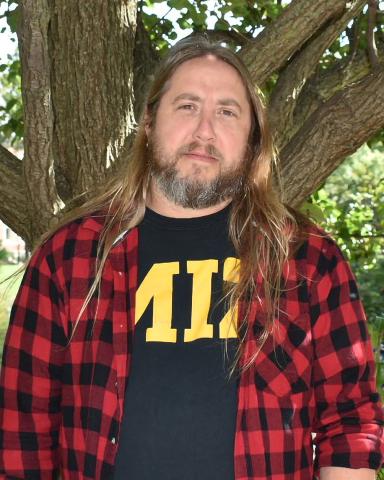
James Schiffbauer holds the Marie M. & Harry L. Smith Endowed Professorship in Geological Sciences at the University of Missouri, where he directs the X-Ray Microanalysis Laboratory. His research investigates early animal evolution during the Ediacaran-Cambrian transition using paleobiological, geochemical, and advanced microscopy approaches. Education: PhD (Virginia Tech), MS (University of Kansas), BS (University of Nebraska-Lincoln) Research examines taphonomic processes governing soft-tissue fossil preservation, with emphasis on early complex multicellular fossils. Analytical techniques include scanning electron microscopy and synchrotron-based X-ray tomography to resolve biological signals from preservational artifacts. Recent publications explore Ediacaran 'death mask' preservation mechanisms, bilaterian gut evolution in cloudinomorphs, and Cambrian SPICE event biogeochemistry. Earlier work established micro-CT approaches for coprolite analysis and volcanological applications. Awards: Marie M. & Harry L. Smith Endowed Professorship GSA Geobiology Division Pre-Tenure Award MU System President's Award for Early Career Excellence NSF CAREER Award Teaches Environmental Geology, Geochemistry, and specialized courses on taphonomy and the Ediacaran-Cambrian transition. Directs the X-Ray Microanalysis Lab supporting interdisciplinary materials characterization.
Sri Budhi Utami is a Researcher at the University of Liège , affiliated with the Faculty of Sciences and the Department of Geology . Her academic work focuses on volcanology, petrology, and geochemistry , particularly investigating magma dynamics, volatile element behavior, and eruptive processes. Key research themes include magma ascent rates, diffusion of redox-sensitive elements, and fluid phase impacts on eruption styles. Recent publications (2013–2025) analyze volcanic systems in Indonesia (Kawah Ijen, Kelud), Chile (Villarrica, Osorno), and Hawaii (Kaua’i dykes), with a growing emphasis on diversity and inclusion in geosciences.
Dr. Juan Diego Rodriguez-Blanco is an Ussher Associate Professor in Nanomineralogy at Trinity College Dublin. His research focuses on experimental mineralogy, particularly mineral nucleation, growth, and interactions with environmental systems. He leads a research group addressing challenges in carbon capture and storage, water decontamination, and strategic metal recycling. His work combines geochemistry with advanced microscopy and interdisciplinary approaches. His research interests include mineral formation mechanisms, pollutant removal via mineral surfaces, and the design of sustainable resource management strategies. Key areas include carbonate mineralization for carbon sequestration, rare earth element recovery from waters, and energy-efficient separation of critical metals. Notable achievements include over €900K in grants as Principal Investigator, supervision of 7 PhD students, and equipment acquisitions. Awards include the 2021 European Association of Geochemistry Distinguished Lecturer and 2014 Distinguished Service Award. Current projects involve collaborations on nanomineral-based filters, geochemical modeling of mineral-water reactions, and advanced microscopy techniques. He has published over 60 peer-reviewed articles and edited special issues on mineral dynamics and rare-earth carbonates.
Ian Coulson is a Professor in the Department of Earth Sciences at the University of Regina, Faculty of Science, where he also serves as Director of the Electron Microbeam Facilities. His work bridges terrestrial and planetary geoscience, with a focus on igneous processes and advanced analytical techniques. Research Interests: Volcanology and igneous petrology of terrestrial and planetary systems Planetary geoscience and meteoritics, including impact processes on asteroids and Mars Application of cathodoluminescence in geological and archaeological materials Provenance studies and sedimentary rock analysis His recent publications (2014–2021) span planetary science, meteorite studies, and sedimentary mineralogy, often involving international collaborations. Research themes include Martian volcanism, shock metamorphism in meteorites, and geochemical analysis of impact events. He has contributed to understanding lithopanspermia and terrestrial meteorite production, as well as detailed stratigraphic studies in Saskatchewan. His editorial roles in Mineralogical Magazine , Geosciences , and Earth highlight his academic influence. He has also edited a major short course volume on cathodoluminescence applications. Teaching Responsibilities: Environmental Geology (Geol 102) Mineralogy I & II (Geol 210, 211) Metamorphic Petrology (Geol 315) Igneous Petrology (Geol 313) Senior undergraduate and graduate courses in volcanology, petrology, and geochemistry Field school (Geol 496) in Precambrian shield regions of northern Saskatchewan and Manitoba Advising and Research Leadership: Dr. Coulson actively mentors students and early-career researchers, as evidenced by co-authorships with numerous graduate students. He leads the Electron Microbeam Facility, providing advanced analytical capabilities for microstructural and compositional studies. While no formal grants are listed, his sustained research output suggests active funding support. His work integrates field, laboratory, and theoretical approaches across Earth and planetary sciences.
Professor Simon Ringer is the Pro-Vice-Chancellor (Research Infrastructure) at The University of Sydney and a Professor of Materials Science and Engineering in the School of Aerospace, Mechanical & Mechatronic Engineering. He is also an academic member of the Australian Centre for Microscopy & Microanalysis and a member of The Net Zero Institute. With an international career spanning Sweden, Japan, the USA, and Australia, Professor Ringer has established himself as a leading researcher in atomic-scale materials design. His research focuses on how atomic clusters create materials with remarkable properties for applications in semiconductors, photovoltaics, catalysis, and lightweight metal alloys. Professor Ringer's work particularly addresses 'property conflicts' in materials engineering, such as balancing strength and ductility or superconductivity and magnetism. His research group has achieved significant breakthroughs in atomic-level characterization, advanced steels development, computer memory technologies, and nanoelectronics, with publications in high-impact journals including Nature Materials, Physical Review Letters, and Advanced Materials. Professor Ringer leads the University's Core Research Facilities program, overseeing strategic planning and implementation of high-end research infrastructure initiatives. His leadership extends to national research infrastructure strategy engagement, positioning the University of Sydney as a leader in Australia's research facilities landscape. Current research projects in his group focus on atomic-scale materials design, functionalized photovoltaic surfaces, additive manufacturing, and new frontiers in microscopy techniques. Professor Ringer has published over 100 papers, authored two significant books ( Atomic-Scale Analytical Tomography in 2022 and Atom Probe Microscopy in 2012), and holds patents in steel and nanomaterial design. His research has practical implications for reducing CO2 emissions through lightweighting technologies and advancing computer memory capacity. He currently supervises several research students including Kirk CHEN, Jeffrey LU, and Samia RAZZAQ, and actively recruits for Honours, Master's, PhD, and postdoctoral positions. Former team members have gone on to work at prestigious institutions worldwide including Texas A&M University, University of Oxford, Max Planck Institute, and various multinational corporations. Professor Ringer's research team utilizes advanced tools including atom probe microscopy, transmission electron microscopy, density functional theory, and computational modeling techniques to gain insights into materials behavior at the atomic scale. His qualifications include BAppSc from Uni SA, PhD from UNSW, and numerous professional designations including CMatP, FIEAust CPEng APEC Engineer IntPE(Aus), FRSN, and FTSE.
Adam Kent is a Professor and Director of the W.M. Keck Collaboratory for Plasma Mass Spectrometry at Oregon State University's College of Earth, Ocean, and Atmospheric Sciences. His research focuses on magmatic and volcanic systems, melt inclusions, and isotopic/trace element geochemistry. He holds a B.Sc. (Hons) in Geology from the University of New England (1989) and a Ph.D. in Geology and Geochemistry from ANU Canberra (1995). His research interests include the behavior of magmatic systems, silicate melt inclusions, and subduction zone processes. He has advised over 20 graduate students, many of whom now hold academic and research positions globally. Kent teaches courses on petrology, geochemistry, and volcanic evolution. His recent work explores magma storage conditions, eruption mechanisms, and magmatic diversity in arcs like the Cascades. He co-leads the VIPER group, which operates advanced facilities like the Keck Collaboratory for plasma mass spectrometry. His research integrates fieldwork, experimental studies, and computational tools to unravel magmatic processes. Key contributions include studies on magma recharge filtering, crystallization dynamics, and open-source tools like Thermobar . Current projects focus on the Tumalo Volcanic Center, Toba magmatic system, and Saudi Arabian volcanic fields.
Philip Nakashima is an Associate Professor in the Department of Materials Science & Engineering within the Faculty of Engineering at Monash University. He is an active researcher with a PhD in Physics from the University of Western Australia (2002) and has over 25 years of experience in advanced transmission electron microscopy (TEM) and quantitative convergent-beam electron diffraction (QCBED). He is currently accepting PhD students and is involved in cutting-edge research in materials characterization and quantum information technology. His research focuses on the development and application of advanced electron microscopy techniques to study the structure, bonding, and properties of materials such as metals, alloys, ceramics, and nanostructures. Key areas include quantitative CBED, electron crystallography, digital image restoration, noise quantification, and multi-parameter optimization. He has made seminal contributions to understanding chemical bonding in aluminum and has extensive experience in high-performance computing for materials analysis. His most recent publications demonstrate a strong trend toward integrating machine learning with materials design, particularly for magnesium alloys, while maintaining core expertise in electron diffraction and microscopy. He continues to publish in high-impact journals such as Science , Physical Review Letters , and Acta Materialia . Philip Nakashima has received several prestigious awards for his research excellence: John Sanders Medal (2012) : Awarded by the Australian Microscopy and Microanalysis Society for excellence in electron microscopy techniques. Barry Inglis Medal (2011) : Awarded by Australia’s National Measurement Institute for outstanding achievement in measurement research. The Cowley-Moodie Award (2006) : Recognizing research excellence in electron microscopy in the physical sciences. He has been a visiting researcher at the ARC Future Fellowship (2012–2016) and is currently an Associate Investigator in the Quantum Information Technology project (2023–2027). He teaches advanced crystallography to undergraduate and postgraduate students and has been invited to lecture at international schools on electron and quantum crystallography. His research involves collaboration with leading scientists in Australia and internationally, and he leads work on advanced microscopy for materials engineering applications.
Dr. Darryl Jones is a Senior Research Fellow at Flinders University's College of Science and Engineering and the Flinders Institute for Nanoscale Science and Technology. His research focuses on experimental and theoretical studies of electron and photon collisions with atoms, molecules, and condensed matter systems. His educational background includes a Doctor of Philosophy from Flinders University (2008) and a Japanese Society for the Promotion of Science Post-Doctoral Fellowship at Tohoku University, Japan (2008-2010). Dr. Jones' research interests span electron collisions with applications in medical radiation therapies and plasma processing technologies. His work involves experimental studies of electron-impact excitation, ionization, and fragmentation processes, combined with quantum chemical computations to describe atomic and molecular phenomena. He has specialized in photon- and electron-impact processes and has developed novel chemical processing platforms for materials synthesis. Most recently, he managed a Photoemission Electron Microscopy (PEEM) facility within Flinders Microscopy and Microanalysis (2020-2022). His recent publications demonstrate a strong focus on electron-molecule interactions, materials characterization, and scattering cross-section measurements, with applications spanning from fundamental physics to practical technological implementations. ARC Future Fellowship (FT210100264) - Molecular movies using time-resolved momentum spectroscopies ARC Linkage Infrastructure and Equipment Fund (LE240100073) - A femtosecond beamline for time-resolved momentum microscopy Australia's Spectroscopy & Molecular Physics Research Field Leader (2018) Flinders Prize in Theoretical Physics (2003) The Max Clark Prize in Science and Engineering (2003) Dr. Jones has secured significant research funding including multiple ARC grants totaling millions of dollars. He serves on the editorial boards of international journals Atoms and the European Physical Journal D , and is currently vice-chair of the SA Branch of the Australian Institute of Physics (AIP). His research contributes to UN Sustainable Development Goals, particularly in the areas of clean energy and advanced materials development. He has established collaborative networks with researchers across multiple countries, with recent external collaborations spanning Australia, Japan, and Europe.
Steven R. Spurgeon is a Senior Materials Data Scientist at the National Renewable Energy Laboratory (NREL) and holds an Affiliate Associate Professor position in Physics at the University of Washington (2021–2024). His pioneering work focuses on AI-driven materials discovery, electron microscopy, and interface science, with recognition through awards from the Materials Research Society and Microscopy Society of America. Education: PhD in Materials Science and Engineering, Drexel University Bachelor's in Materials Science and Engineering, Carnegie Mellon University Research Focus: Leads teams developing autonomous systems for materials discovery in extreme environments, computer vision for microelectronics analysis, and multimodal AI approaches for accelerated materials design. His work bridges fundamental interface science with applications in energy storage and radiation-hardened technologies. Honors & Activities: Editor for Microscopy and Microanalysis journal Member: American Physical Society, Materials Research Society, Microscopy Society of America Founding member of The Community for Autonomous Scientific Experimentation Leadership: Spearheads NREL's electron microscopy capabilities and industry partnerships transforming AI-guided materials research for sustainable technology solutions.
Alistair Morgan is a Researcher at the Department of Environmental Sciences , University of Basel , Switzerland, since November 2021. His research focuses on paleoclimatology and speleothem geochemistry , particularly in SW Asia , to understand historical climate variability and its societal impacts. PhD in Quaternary Geology (2021–present) MRes in Speleothem Isotope Geochemistry (2020–2021) MESci in Environmental Geoscience (2011–2015) His work integrates speleothem records , lake sediments , and historical data to reconstruct rainfall variability over decadal to multi-decadal scales, addressing water scarcity in the Middle East . Key projects involve Byzantine and Hittite climate interactions , Mid-Holocene hydroclimatic optima , and volcanic climate forcing . His publications span topics like Dansgaard-Oeschger cycles , stalagmite dating , and human-climate entanglements .
Chen Lingxin is a Professor and PhD supervisor at the Yantai Institute of Coastal Zone Research, Chinese Academy of Sciences, where he has been working since 2009 after serving as a Research Professor at Hanyang University's Department of Applied Chemistry from 2007-2009. His research focuses on developing innovative environmental analysis and monitoring technologies specifically for coastal zones. His primary research areas include: Bionano sensor techniques combining aptamers with nanomaterials for environmental pollutant analysis Chromatographic microanalysis techniques for trace analysis of environmental pollutants Opto-electronic monitoring techniques for oceanic water environment Pollutant identification, analysis, and assessment technology Ecological environment monitoring and surveillance technology Simulation of offshore environmental pollution processes and ecological restoration Professor Chen leads the innovative research team of 'Coastal Environmental Analysis, Monitoring and Ecological Restoration,' which strategically combines basic research with applied research and technology transformation across analytical chemistry, environmental science, marine chemistry, and ecological restoration engineering. His publications focus on marine environmental analysis and nanoanalysis methods, demonstrating expertise in developing new principles, methods, and instrument technologies for environmental monitoring of coastal pollutants including inorganic ions, persistent organic pollutants, and pathogens. He has successfully secured multiple national and ministry-level research projects spanning microfluidic chip SERS sensing technology, microbial metabolism of pollutants, and seawater nutrient monitoring systems. Professor Chen actively mentors graduate students in Environmental Engineering, Environmental Science, and Marine Chemistry, with a research group that welcomes students from chemistry, biology, and instrumentation backgrounds. His laboratory specializes in environmental microanalysis with capabilities in optical/electrochemical sensor development, microfluidic technologies, and marine pollution assessment for applications in coastal zone management.