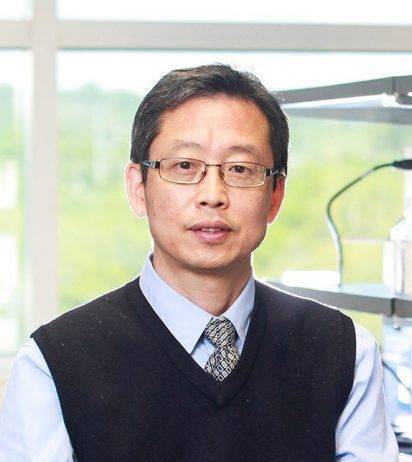
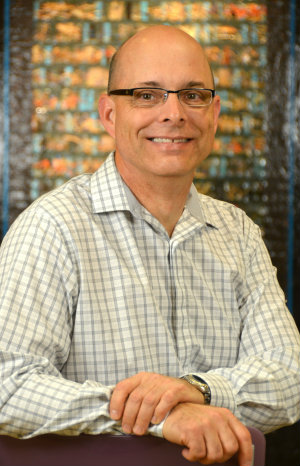
Martin M. MatzukView profile
Professor
Martin M. Matzuk is a Professor at Baylor College of Medicine with joint appointments in Molecular and Human Genetics, Biochemistry and Molecular Pharmacology, and Molecular & Cellular Biology. As Chair of the Department of Pathology & Immunology and Director of the Center for Drug Discovery, he leads research in reproductive biology, contraception, and ovarian cancer. His work integrates functional genomics and chemical biology to study fertility pathways, TGF-beta signaling, and small molecule drug development. Educational Background : BA (with Honors) from University of Chicago (1982) MD and PhD from Washington University School of Medicine (1989) Postdoctoral Fellowship at Baylor College of Medicine (1993) Residency at Hospital of the University of Pennsylvania (1991) Matzuk’s research has uncovered genes critical for ovarian folliculogenesis (e.g., GDF9, BMP15), oocyte-to-embryo transition (e.g., ZAR1, NPM2), and male contraception targets (e.g., BRDT, OVCH2). His lab developed the DNA-Encoded Chemistry Technology (DEC-Tec) platform, enabling rapid discovery of low-nanomolar inhibitors for diseases like endometriosis and cancer. Key projects include studying early ovarian cancer detection and microRNA roles in tumor suppression. He has mentored over 50 trainees, including 13 underrepresented minorities, and received accolades like the Carl G. Hartman Award (2022) and Inaugural Hill Prize in Medicine (2024). His work on inhibin and GDF9 has redefined reproductive endocrinology and ovarian biology. The lab’s 15 most recent publications focus on kinase inhibitors, TGF-beta signaling, ovarian cancer biomarkers, and chemical contraceptive development. Scientific Awards : Member of National Academy of Sciences (2014) National Academy of Inventors Fellow (2016) NIH MERIT Award (2001-2011) Trainee Mentoring Award (2015) Carl G. Hartman Award (2022) 13 patents, including ELONVA for FSH therapy Matzuk’s lab has produced over 400 publications, with 25+ in Cell , Nature , and Science , and created >200 transgenic mouse models. He chairs the NIH CMIR study section and has been a key figure in drug discovery for reproductive diseases.