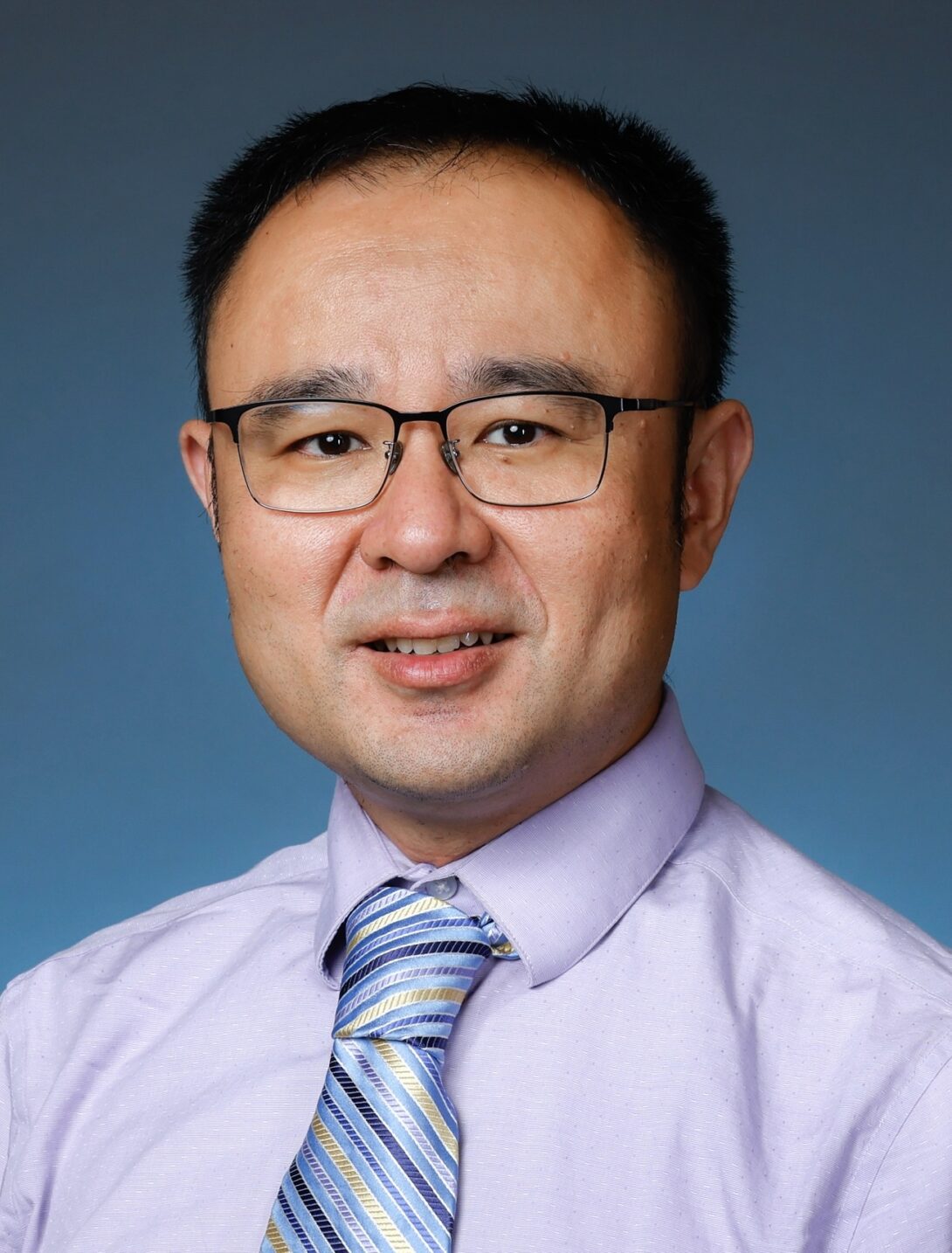
Wenchuang (Walter) HuView profile
Assistant Professor
Wenchuang (Walter) Hu is an Assistant Professor of Electrical Engineering at the Erik Jonsson School of Engineering and Computer Science, University of Texas Dallas. He holds a B.S. in Electronics from Peking University (1999), M.S. and Ph.D. in Electrical Engineering from the University of Notre Dame (2001, 2004), and completed a postdoc at the University of Michigan, Ann Arbor (2005). His research focuses on nanolithography, nanofabrication of low-dimensional nanostructures, bio-sensors for disease diagnostics, nanostructured biomaterials, and organic electronics. He leads the Solid State Electronics Lab, advancing technologies like silicon nanowire biosensors, polymer solar cells, and nanomedicine. Education: B.S., Electronics, Peking University (1999) M.S., Electrical Engineering, University of Notre Dame (2001) Ph.D., Electrical Engineering, University of Notre Dame (2004) Postdoc, University of Michigan, Ann Arbor (2005) Research Interests: Nanolithography, bio-sensors, nanomedicine, organic electronics, nanofluidics, and nanoelectromechanical systems. His work bridges electronics and biology, with applications in cancer diagnostics, environmental monitoring, and energy materials. His publications highlight advancements in silicon nanowire biosensors for femtomolar detection, nanoimprint lithography for solar cells, and polymeric nanomedicine. He secured over $2M in grants, including NSF funding for solar cell innovation and NIH grants for biosensor development. Notable recognitions include Sigma Xi membership, ACS affiliation, and leadership awards. He actively serves on conference committees and reviews for journals like Nanotechnology and ACS Nano . Key Projects: Defined nanoscale Si sensors for cancer diagnostics Lithographically patterned polymer solar cells Nanostructured biomaterials for tissue engineering Professional service roles include session chair at EIPBN conferences and technical director of Bioelectronics at the Chinese Institute of Engineering. His lab’s innovations contribute to both academic and commercial advancements in nanotechnology.