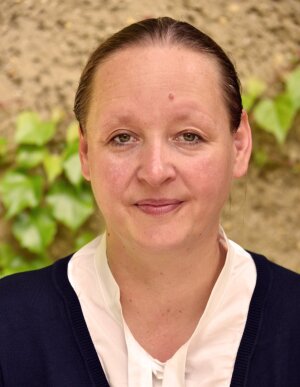
Manuela NowotnyView profile
Professor
Prof. Dr. Manuela Nowotny is a Professor of Animal Physiology at the Institute for Zoology and Evolutionary Research, University of Jena, Germany. Her research focuses on understanding sensory adaptations in the animal kingdom, particularly investigating the functions and specializations of insect and mammalian auditory systems. She leads a research group that explores how sensory organs detect and process environmental signals, with implications for understanding perception and behavior regulation. Dr. Nowotny's research interests span several interconnected areas of sensory physiology and evolutionary biology. Her work examines how sensory organs become highly specialized to detect specific environmental signals while ensuring animal survival. A major focus is on convergent evolution in hearing , where she has discovered remarkable similarities between insect and mammalian auditory systems. Her group investigates insect ears , particularly in bushcrickets, revealing specialized adaptations like the auditory fovea - previously thought to exist only in mammals. She also studies mammalian hearing mechanisms and the development of tinnitus following acoustic trauma. Her interdisciplinary approach combines biomechanics, neurophysiology, and evolutionary biology to understand how sensory information is processed at the organ level. Analysis of Dr. Nowotny's recent publications reveals a consistent focus on comparative auditory physiology across species. Her work demonstrates how insects provide valuable models for studying natural diversity in mating behavior and sensory adaptation. A recurring theme is the discovery of convergent evolutionary solutions in hearing mechanisms between phylogenetically distant species. Her research on traveling waves in insect hearing organs shows surprising similarities to mammalian cochlear mechanics, challenging previous assumptions about the uniqueness of mammalian auditory processing. More recent work has expanded into neurotoxicology, examining how pesticides affect insect auditory processing, and biomedical applications through neuromorphic engineering for hearing aids. Adolf-Messer Stiftungspreis 2009 for tinnitus research Multiple Deutsche Forschungsgemeinschaft grants (NO 841/1-1, NO 841/2-1, NO 841/4-1) Funding from Jürgen Manchot Foundation Goethe University's "Nachwuchswissenschaftler/innen im Fokus" project Dr. Nowotny's research is primarily supported by the Deutsche Forschungsgemeinschaft (DFG), with multiple grants focusing on different aspects of auditory physiology. Her work on bushcricket hearing mechanisms (NO 841/1-1 and NO 841/2-1) has revealed fundamental principles of sensory adaptation, while her tinnitus research (NO 841/4-1) explores the connection between inner ear damage and phantom noise perception. She has successfully mentored numerous researchers, with several collaborators (particularly S. Schöneich, J. Scherberich, and M. Kössl) appearing consistently across publications, suggesting a productive mentoring relationship. Her lab utilizes diverse methodologies including biomechanical measurements, neurophysiological recordings, and comparative anatomical studies. Dr. Nowotny leads a research group within the Institute for Zoology and Evolutionary Research that employs interdisciplinary approaches to study auditory systems. Her team combines expertise in entomology, mammalian physiology, biomechanics, and neuroethology to investigate sensory processing across species. The lab maintains collaborations with institutions including Goethe University and appears to have strong connections with researchers studying neurophysiology and acoustic communication. Current projects include examining the effects of pesticides on insect auditory processing and developing neuromorphic engineering applications for hearing aid technology through the NeuroSensEar project.