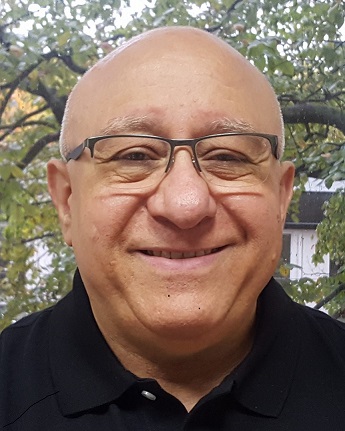
Kenneth S. Breuer is a Professor of Engineering at Brown University, serving as Director of the Center for Fluid Mechanics. He holds appointments in the School of Engineering and collaborates across disciplines, including Biology and Physics. His research focuses on fluid mechanics, animal flight mechanics (particularly bats), bacterial motility, renewable energy, and turbulence. Breuer earned his Sc.B. from Brown University and M.Sc./Ph.D. from MIT, returning to Brown in 1999 after faculty service at MIT. Education: Sc.B. (Brown), M.Sc./Ph.D. (MIT). Awards include Fellowships from the American Physical Society and American Society of Mechanical Engineers, and the Harold and Esther Edgerton Chair at MIT. He has authored over 100 publications and edited books such as *Microscale Diagnostic Techniques*. Research Interests: Fluid mechanics at micro/nanoscales, bio-inspired flight mechanisms, energy harvesting, and vortex dynamics. Collaborations include Professors Sharon Swartz (Biology) and Thomas Powers (Engineering). Current projects explore bat wing aerodynamics, membrane hydrofoils, and aerosol transmission in vehicles. Awards: APS Division of Fluid Dynamics Chair (2012), Midwest Mechanics Lecturer, and multiple fellowships. Teaching includes courses in Fluid Mechanics, Transport Phenomena, and Renewable Energy Systems. His lab develops bio-inspired robotic systems and studies flow interactions in animal and engineered systems.
Megan Valentine is a Professor of Mechanical Engineering at the University of California, Santa Barbara (UCSB), affiliated with the College of Engineering. She leads an interdisciplinary research group focused on biological and bioinspired materials, investigating how forces are generated and transmitted in living systems to design responsive synthetic materials. Her work bridges engineering, physics, chemistry, and biology. Education: PhD in Physics from Harvard University, MS in Physics from the University of Pennsylvania, and BS in Physics from Lehigh University. Affiliations include the California NanoSystems Institute (CNSI), Materials Research Laboratory (MRL), Neuroscience Research Institute, and the Center for Stem Cell Biology and Engineering. Research interests span soft material mechanics, bioengineering, and systems biology, with applications in marine-inspired materials, mechanobiology, and soft robotics. Her lab employs advanced experimental techniques to study biophysical and biochemical mechanisms in living systems and translate them into engineered materials capable of self-healing, movement, and environmental responsiveness. Notable awards include the NSF Early CAREER Award, Fulbright Scholarship, and election as Fellow of the American Physical Society and American Institute for Medical and Biological Engineering. Her contributions emphasize creativity, collaboration, and diversity, with a focus on addressing societal challenges through interdisciplinary innovation.
Professor Todd Squires is a distinguished faculty member in the Department of Chemical Engineering at the University of California, Santa Barbara, within the Robert Mehrabian College of Engineering. His research focuses on the fundamental principles of transport phenomena as applied to interfaces, membranes, and complex fluids, employing theoretical, computational, and experimental approaches to address significant challenges in micro-scale fluid mechanics. Dr. Squires' educational background includes: BS in Physics, UCLA (1995) BA in Russian Language and Literature, UCLA (1995) PhD in Physics, Harvard University (2002) His research interests span microfluidics and electrokinetics, active and nonlinear microrheology of complex materials, polymer dynamics and sensors, with particular emphasis on non-linear electrokinetic flows, interfacial rheology, and the self-assembly of nanostructured materials. His work bridges fundamental fluid mechanics with practical applications in microfluidic devices, energy storage, and biomedical systems, demonstrating the versatility of this fascinating field. Analysis of Professor Squires' recent publications reveals a consistent focus on interfacial phenomena, with particular attention to the rheological properties of fluid interfaces, particle dynamics in complex fluids, and novel microfluidic techniques for measuring and manipulating these systems. His research demonstrates strong interdisciplinary connections between chemical engineering, physics, and materials science, with applications spanning energy storage, biomedical engineering, and environmental systems. Professor Squires has received numerous prestigious awards and honors: 2018 Robert W. Vaughan Lecture in Chemical Engineering, Caltech 2015 Elected Fellow of the American Physical Society 2013 Mid-Career Award, American Electrophoresis Society 2012 The Dudley Saville Memorial Lecture at Princeton 2010 Pierre Gilles de Gennes Prize 2010 Allan P. Colburn Memorial Lectureship, University of Delaware 2009 Francois Frenkiel Award for Fluid Mechanics 2009 Camille Dreyfus Teacher-Scholar Award 2008 Beckman Young Investigator 2007 NSF CAREER Award 2005 'Rising Star' - Chronicle of Higher Education As principal investigator of the Squires Group, Professor Squires leads a dynamic research team that combines experimental, theoretical, and computational approaches to investigate transport phenomena at interfaces. His work has been supported by major funding agencies including the National Science Foundation, with his CAREER award indicating early recognition of his potential as both researcher and educator. While specific grant details aren't provided in the source material, his extensive publication record and prestigious awards suggest robust and sustained research funding. The Squires Group maintains state-of-the-art laboratory facilities for studying micro-scale fluid mechanics, including specialized equipment for microrheology measurements, microfluidic device fabrication, and interfacial characterization. Their research environment fosters collaboration across disciplines, with connections to materials science, physics, and biomedical engineering researchers at UCSB and beyond.
Prof. Catherine O'Sullivan is a Professor of Particulate Soil Mechanics at Imperial College London's Department of Civil and Environmental Engineering, part of the Faculty of Engineering. She leads the Geotechnics Section and serves as Editor-in-Chief of the ASCE Journal of Geotechnical and Geoenvironmental Engineering. Her research focuses on particulate soil mechanics, employing Discrete Element Modelling (DEM) and micro-CT imaging to study sand behavior, reservoir sandstones, and internal erosion. Notable recognitions include the 2016 Shamsher Prakash Research Award and the 2021 President’s Teaching Innovation Award. Education : PhD in Civil Engineering, University of California, Berkeley (2002) MEngSc in Civil Engineering, University College Cork (Ireland) BEng (Civil Engineering), University College Cork (Ireland) Research Interests : Prof. O'Sullivan's work integrates computational and experimental methods to explore granular material behavior. Key areas include DEM validation, μCT analysis, and pore network modeling. Her group collaborates across disciplines, involving physicists and mechanical engineers alongside civil engineers. Awards & Recognition : 2015 Geotechnique Lecture Student Choice Supervision Award (nominated twice) 2023 Alert Geomechanics Special Lecture Advising & Grants : She supports PhD and postdoctoral researchers through Imperial scholarships and fellowships. Her students often explore particulate soil behavior, with many securing prestigious awards. Labs & Teams : Leads the Geotechnics Section at Imperial, fostering interdisciplinary research in geomechanics and computational modeling.
Yayue Pan is a Professor at the Department of Mechanical and Industrial Engineering, University of Illinois Chicago (UIC) , and serves as the Director of NASA MIRO Center for In-Space Manufacturing: Recycling and Regolith Processing (CISM-R2) . Her research focuses on advancing Additive Manufacturing (AM) technologies for applications in biomedical engineering , energy storage , and smart structures . Ph.D., Industrial and Systems Engineering, University of Southern California (2014) M.S., Mechanical Manufacturing and Automation, Zhejiang University, China (2010) B.S., Industrial Engineering, Zhejiang University of Technology, China (2007) Her work addresses technical challenges in AM such as multi-material printing , multi-scale fabrication , and field-assisted processes . Notable projects include: Development of electrostatically-assisted direct ink writing (eDIW) for high-speed, high-resolution printing Continuous projection stereolithography for rapid solid object manufacturing Acoustic field-assisted particle patterning for smart composites Light-curable hydrogels for corneal repair applications Her 15 most recent publications (2022–2025) span topics in: Multi-material AM (conductive polymers, hierarchical composites) Biomedical applications (soft robotics, corneal repair) Energy components (battery electrolytes, supercapacitors) Field-assisted processes (acoustic, electrostatic, magnetic) Scientific Awards : 2024 ASME Chao and Trigger Young Manufacturing Engineer Award 2022 UIC Researcher of the Year Rising Star Award 2020 ASME CIE TC Leadership Award 2019 UIC Outstanding Teaching Award 2017 SME Outstanding Young Manufacturing Engineer Award NSF REU Supplements (2023–2024) Advising : Mentored 24+ graduate/undergraduate researchers, including 17 NASA/GPIP interns. Former advisees hold academic positions at University at Buffalo and University of North Carolina at Charlotte , and industry roles at Apple , GE Healthcare , and ANSYS . Grants : Recipient of a $4.65M NASA grant and multiple NSF awards. Collaborations include Northwestern University, University of Michigan, and NASA centers.
Ivan C. Christov is an Associate Professor of Mechanical Engineering at Purdue University's School of Mechanical Engineering in West Lafayette, Indiana. His research focuses on fluid dynamics, non-Newtonian fluid mechanics, and multiphase processes, with applications in biomedical engineering, micro/nanotechnology, and advanced materials. He leads the Transport: Modeling, Numerics & Theory laboratory. Education: Ph.D., Northwestern University, 2011 M.S., Northwestern University, 2008 M.S., Texas A&M University, 2007 S.B., Massachusetts Institute of Technology, 2005 Research Interests: Soft hydraulics, computational science, scientific machine learning, nonlinear waves, and fluid-structure interactions. His work spans theoretical modeling, numerical simulation, and experimental validation in complex fluid systems. Publications: Recent work includes studies on flow-rate pressure-drop relations in deformable microchannels, physics-informed neural networks for particle dynamics, and fluid-structure interaction in cerebral aneurysms. Themes include microfluidics, elastohydrodynamics, and rheological characterization of soft materials. Awards: Fulbright U.S. Scholar (2022) Outstanding Engineering Instructor (multiple recognitions) Richard P. Feynman Distinguished Postdoctoral Fellowship (2013) Labs/Teams: Directs the Transport laboratory at Purdue, focusing on interdisciplinary research in fluid mechanics and computational methods. Collaborates on biomedical fluid dynamics and advanced materials characterization.
Virginia Davis is the Dr. Daniel F. and Josephine Breeden Professor in the Department of Chemical Engineering at Auburn University's College of Engineering. She holds a Ph.D. in Chemical and Biomolecular Engineering from Rice University, and M.S. and B.S. degrees in Chemical Engineering from Tulane University. Research Focus: Self-assembly of nanomaterials, rheology, lyotropic liquid crystals, additive manufacturing, polymers, nanocomposites, and biosensors Key Projects: USDA-funded agricultural outreach, NSF grant for MXene dispersion studies, Alabama STEM Council member Her recent publications explore cellulose nanocrystals, MXene 3D printing, and sustainable polymer recycling. Davis has received multiple honors including the Breeden Professorship, AIChE Fellowship, and Auburn University Faculty Awards for research and mentorship. Research Trends: Dominated by bio-based nanomaterials (cellulose nanocrystals, MXenes), with applications in additive manufacturing, environmental remediation (PFAS adsorption), biosensors (carbofuran detection, cancer biomarkers), and agricultural delivery systems. Scientific Awards Auburn University Faculty Awards (2023, 2025) AIChE Fellow (2023) Dr. Daniel F. and Josephine Breeden Professorship Davis leads outreach initiatives like the Tomorrow’s Community Innovators camp and collaborates with interdisciplinary teams on plastic recycling innovations. Her work emphasizes both fundamental material science and practical applications addressing environmental and agricultural challenges.
Naveen Tiwari is a Professor in the Department of Chemical Engineering at the Indian Institute of Technology Kanpur. His research focuses on transport phenomena, instabilities in micro-scale free surface flows, flow through porous media, and numerical modeling and simulation. He maintains active research collaborations and has published extensively in leading fluid dynamics journals. His research interests encompass Transport Phenomena , Instabilities in micro-scale free surface flows , Flow through porous media , and Numerical modeling and simulation . His work primarily investigates thin liquid film dynamics, interfacial phenomena, and stability analysis of coating flows over heterogeneous surfaces. His research has significant applications in coating technologies, microfluidics, and thermal management systems. His recent publications demonstrate a strong focus on Thin film stability analysis over heated surfaces Effects of substrate topography on liquid film behavior Nonlinear dynamics of volatile liquid films Dip-coating processes on patterned surfaces His work bridges fundamental fluid dynamics with practical engineering applications. His notable scientific achievements include: Young Scientist Research Award from the Department of Atomic Energy (2014) Membership in the Honor Society of Phi Kappa Phi (2007-2008) Invitation to present at the International Union of Theoretical and Applied Mechanics symposium in Bangalore (2014) Prof. Tiwari received his PhD from the University of Massachusetts Amherst (2003-2008) with a thesis on 'Dynamics and Stability of Non-Inertial Coating Flows over Heterogeneous Surfaces' under Prof. Jeffrey M. Davis. Prior to his current position, he worked as a Senior Research Engineer at Saint-Gobain, MA (USA) from 2008-2012, where he worked on Diesel Particulate Filter regeneration modeling, methane ignition modeling, sapphire crystal growth, and solid-oxide fuel cells.
Endre Süli is a Professor of Numerical Analysis at the University of Oxford, affiliated with Worcester College and Linacre College. He has held various academic roles since 1985, including Fellowships and Tutorships in Mathematics. University Education: B.Sc. in Mathematics, University of Belgrade (1974-1978) M.Sc. in Mathematics, University of Belgrade (1978-1980) Ph.D. in Mathematics, University of Belgrade (1985) M.A., University of Oxford (1985) British Council Visiting Student, Reading University and University of Oxford (1983/84) Süli's research focuses on numerical methods for partial differential equations (PDEs), with expertise in finite element methods, adaptive algorithms, error control, and computational modeling of fractures and non-Newtonian fluids. His work bridges mathematical theory and practical applications in fluid dynamics and material science. His recent publications emphasize finite element approximations, nonlinear PDEs, and stochastic models for polymer dynamics. Themes include multiscale methods, tensor-sparsity for high-dimensional problems, and compressible flow simulations. Scientific Awards: Fellow of the Royal Society (2021) London Mathematical Society Naylor Prize and Lectureship (2021) Pro Urbe Prize, City of Subotica (2021) SIAM Fellow (2016) Member, Academia Europaea (2020) Foreign Member, Serbian National Academy of Sciences and Arts (2009) IMA Service Award (2011) Fellow, European Academy of Sciences (EurASc) (2010) Fellow, Institute of Mathematics and its Applications (2007) London Mathematical Society/New Zealand Mathematical Society Forder Lecturer (2015) Professor Hospitus, Charles University, Prague (2012) Distinguished Visiting Chair Professor, Shanghai Jiao Tong University (2013) Invited Speaker, International Congress of Mathematicians, Madrid (2006) Süli has supervised numerous research projects and held visiting appointments globally. His contributions to numerical analysis span foundational work on error estimation, nonlinear stability, and advanced computational frameworks for complex physical systems.
Dr. Cosmin Ioan Roman is a Lecturer at the Department of Mechanical and Process Engineering at ETH Zürich, affiliated with the Chair in Micro and Nanosystems since 2006. His research focuses on solid-state micro and nanotransducers, spanning from traditional Silicon micromachining to carbon nanotube-based (CNT) devices for bio-sensing applications, with an emphasis on energy-efficient transducer concepts. Doctoral Degree: National Polytechnic Institute of Grenoble (INPG) Roman's expertise lies in multi-physics and compact modeling of transducers. His work bridges materials science, semiconductor device physics, and biomedical sensing, utilizing advanced fabrication techniques for scalable sensor arrays on flexible substrates. The selected publications highlight his contributions to tactile sensing and cell rheology. His co-supervised doctoral thesis on carbon nanotube resonators demonstrates his interdisciplinary approach to nanoscale and biomedical systems.
Donald L. Koch is a full Professor in the School of Chemical Engineering at Cornell University, specializing in fluid dynamics, rheology, and transport processes in complex systems. His research spans particulate flows, colloidal science, and sustainable energy applications. B.S. and B.A., Case Western Reserve University (1981) Ph.D., Massachusetts Institute of Technology (1985) Postdoctoral Study, DAMTP, Cambridge University (1986) Research Interests: Rheology of particle suspensions and porous media Fluid dynamics in micro- and nano-structured materials Statistical mechanics of colloids and aerosols Sustainable energy systems (CO2 sequestration, geothermal energy) Computational modeling of multiphase flows Scientific Awards: Fellow, American Physical Society 1998 Presidential Young Investigator 1988 Frenkiel Award (APS Division of Fluid Dynamics) NATO Postdoctoral Fellowship (1986) NSF Graduate Fellowship (1981) Publications: Over 100 scientific works focusing on particulate and multiphase flows, with recent contributions to non-Newtonian fluid mechanics and bacterial suspension dynamics.
Prof. Daryl W. Yee is a Tenure Track Assistant Professor at École Polytechnique Fédérale de Lausanne (EPFL), affiliated with the Institute of Electrical and Micro Engineering (IEM) and multiple teaching units. He holds a B.Eng. from Imperial College London, and M.Sc. and Ph.D. from Caltech, followed by postdoctoral research at MIT. His research focuses on integrating molecular design and materials processing to develop advanced functional materials addressing societal challenges in healthcare, energy, and climate change. Key research directions include Polymer-to-X additive manufacturing, dynamic polymers, microstructure control in polymers, and novel 3D printer development. Education highlights include: B.Eng in Materials Science and Engineering, Imperial College London (2011-2014) M.Sc. and Ph.D. in Materials Science, Caltech (2014-2020) Postdoctoral Associate at MIT (2020-2022) His lab, ALCHEMY, emphasizes democratizing advanced materials manufacturing through accessible chemistries and processing strategies. Current teaching roles span Materials Science and Engineering and Microengineering. Four PhD students are currently advised, and he oversees courses in electrical engineering and materials engineering. Research interests emphasize hydrogel-based additive manufacturing, nanoparticle superlattices, and polymer design. Though no funded PhD/postdoc positions are currently open, self-funded researchers are encouraged to contact him directly.
Nikolai Denkov is a Professor of Physical Chemistry at Sofia University's Faculty of Chemistry and Pharmacy, leading the Laboratory of Active Formulations and Materials since 2017. His administrative roles include Head of the Department of Chemical Engineering (2008–2015), Deputy Minister (2014–2016), and Minister of Education and Science of Bulgaria (2017). He holds a DSc from Sofia University (2007) and has authored over 160 peer-reviewed articles with an h-index of 45. Research focuses on colloid science, surfactant systems, and interfacial phenomena, including foam rheology, emulsion stability, and self-shaping of oil droplets. His studies bridge fundamental physics and industrial applications in cleaning agents, food technology, and pharmaceuticals. Key contributions include discovering antifoam mechanisms and self-emulsification processes. Recipient of the Solvay Prize (2019) and Bulgaria's highest scientific honor, 'Pythagoras' (2010) Supervised 12 PhD students and led 40+ industry-funded projects with companies like Unilever and BASF Active in international organizations: IACIS Council member, ERC panel chair, and ESA advisor His work emphasizes translational research, with patents in formulation technologies and over 7,300 citations. Current research explores smart materials and micro/nanostructured systems.
Edriss S. Titi is a University Distinguished Professor and Arthur Owen Professor of Mathematics at Texas A&M University within the College of Arts & Sciences. His research focuses on nonlinear partial differential equations, applied mathematics, and geophysical fluid dynamics. He leads studies on fluid mechanics, atmospheric and oceanic dynamics, data assimilation, and control theory. His work often addresses mathematical rigor in modeling complex systems like climate dynamics and turbulent flows. Research Interests: Nonlinear PDEs and their applications Fluid dynamics and turbulence Data assimilation algorithms Climate and ocean modeling Infinite-dimensional dynamical systems Recent publications emphasize Navier-Stokes equations , primitive equations , and data assimilation in chaotic systems . His methodologies bridge theoretical analysis and computational modeling, with applications to weather prediction and geophysical flows. Collaborations include the Institute for Applied Mathematics and Computational Science (IAMCS) at Texas A&M. Notable contributions include rigorous analysis of global well-posedness for oceanic models and development of CDAnet, a physics-informed deep learning framework for fluid flow downscaling.
Mehdi Mehrali serves as a Senior Researcher in the Department of Civil and Mechanical Engineering at the Technical University of Denmark (DTU), Denmark. His research spans advanced materials engineering with focus on sustainable construction and biomedical applications. Research Focus: Dr. Mehrali's work centers on geopolymer engineering , hydrogel development , and nanomaterial reinforcement for 3D-printed construction. His fingerprint reveals expertise in biomaterials (39%), graphene (45%), and phase change materials (27%), contributing to UN Sustainable Development Goals through sustainable infrastructure solutions. Publication Trends: Recent work demonstrates convergence of civil engineering with AI-driven material design (e.g., machine learning for geopolymer extrusion) and biomedical applications (e.g., antibacterial hydrogels). His 2025 publications show strong emphasis on multifunctional composites with self-sensing capabilities and robotic integration. Awards & Recognition: 6 similar researcher profiles identified in global networks 5 Mendeley readers for recent work Featured in 3 X (Twitter) discussions Supervision & Grants: Actively supervises three PhD candidates on 3D-printed construction materials while collaborating on major projects including COOLBATTERY (€2.1M) and RESTORATIVE grid-scale energy storage. His research attracts significant downloads (321 for hydrogel review) and citations (30+). Laboratory Focus: Leads research in Materials and Surface Engineering at DTU's Produktionstorvet facility, specializing in printable geopolymers, hydrogel robotics, and cement-based smart materials for sustainable construction.