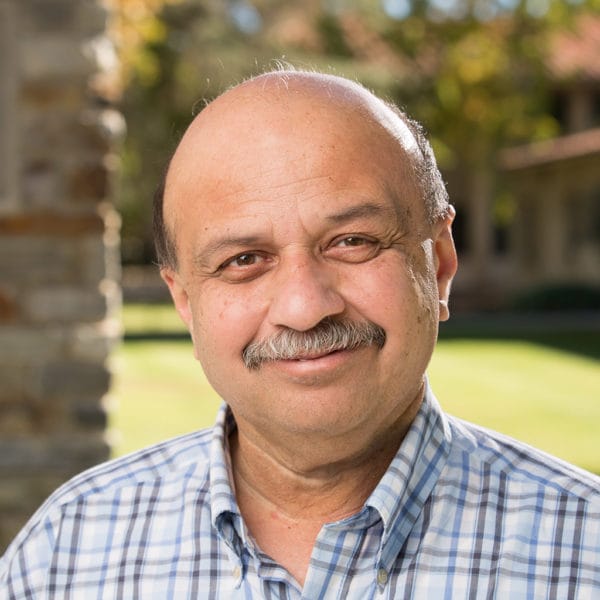
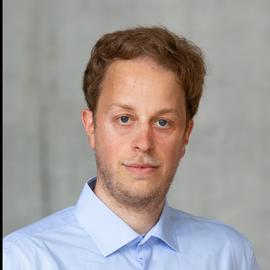
Frank Piessens is a Professor in the Department of Computer Science at KU Leuven, Belgium. His work spans both offensive and defensive aspects of software and systems security, with a focus on formal verification, programming languages, and security architectures. He has served as program chair for major security conferences like POST 2016, IEEE Euro S&P 2018-2019, and IEEE SecDev 2021-2022. Software Security Systems Security Formal Methods Programming Languages Information Flow Security His research bridges theoretical and practical domains. On the defensive side, he has advanced formal verification for C-like languages, memory safety hardening, and micro-architectural side-channel mitigation. On the attack side, he has contributed to transient execution and memory safety exploitation frameworks. His recent work (2024) explores compiler support for control-flow linearization using architectural mimicry, while earlier publications (2021-2014) cover functional reactive programming, secure compilation, and dependently typed verification. Frank has consistently engaged with academic communities, serving on program committees for ACM CCS, Usenix Security, and IEEE Security & Privacy. He co-authored key papers in venues like POPL, ICFP, and PriSC. His lab, Distrinet, focuses on distributed systems and security research. No explicit details about scientific awards or student advisement are present in the provided data.
Diego Dominguez Fernandez is a Professor at the Department of Mechanical, Computer and Aerospace Engineering within the School of Industrial, Information and Aerospace Engineering at the University of León. His research focuses on aerospace engineering with specific emphasis on wind energy, computational fluid dynamics, and uncertainty quantification in aerodynamic systems. His recent publications highlight trends in airship flight modeling, high-altitude propulsion systems, and simulation-based learning tools for engineering education. Methodologies include neural networks for wind profile estimation, kriging for stochastic optimization, and direct transcription techniques for trajectory planning. Contact: ddomf@unileon.es
Dr. Dorota Jegorow is an Assistant Professor at the Department of Econometrics and Statistics , Institute of Economics and Finance , within the Faculty of Social Sciences at the John Paul II Catholic University of Lublin , Poland. Specializes in Econometrics , Regional Development , and European Cohesion Policy Active in Entrepreneurship , Public Finance , and Digital Technology Applications in socio-economic contexts Recipient of 2022 National Award for research on cryptocurrency volatility
Johanna Drucker is the Inaugural Martin and Bernard Breslauer Professor of Bibliographical Studies in the Department of Information Studies at the University of California, Los Angeles. She has held previous faculty positions at the University of Texas at Dallas (1986-88), Columbia University (1989-94), Yale University (1994-99), and the University of Virginia (1999-2008), with fellowships at Harvard University (Mellon Faculty Fellow, 1988-89), SUNY Purchase (1998-99), and Stanford (Humanities Center, 2008-09). Drucker's research spans multiple disciplines with a focus on the History of the Book, Visual Epistemology, Graphic Design History, Artists' Books, Digital Humanities, and Contemporary Art and Literature. Her work explores how visual forms produce knowledge, the materiality of texts in digital environments, and the theoretical foundations of digital scholarship. She has made significant contributions to understanding the relationship between visual presentation and cognitive processing, particularly in how graphical interfaces shape knowledge production. Analysis of her recent publications reveals a consistent trajectory examining the intersection of visual form and intellectual content. Her scholarship moves fluidly between historical analysis of book forms and forward-looking investigations of digital knowledge production. A recurring theme is the performative aspect of visual presentation - how the graphical arrangement of information actively shapes meaning rather than merely displaying pre-existing content. Her work bridges traditional humanities scholarship with cutting-edge digital methodologies while maintaining critical distance from technological determinism. Elected to the American Academy of Arts and Sciences (2014) Drucker has supervised numerous graduate students in interdisciplinary research that combines visual studies, book history, and digital humanities. Her scholarly grants have supported major collaborative digital projects including the History of the Book Online initiative with UCLA Special Collections Libraries. She has been instrumental in developing theoretical frameworks for digital humanities that emphasize humanistic values and critical perspectives. Drucker leads research initiatives examining visual knowledge production, particularly through her SpecLab projects in digital aesthetics and speculative computing. Her work often involves collaborative teams spanning computer science, design, and humanities disciplines to explore innovative approaches to representing knowledge visually. She maintains an active creative practice alongside her scholarly work, producing artist's books that have been the subject of a retrospective exhibition, 'Druckworks: 40 years of books and projects.'
Dr. Jeff Thompson is a Lecturer in Evolutionary Developmental Biology at the University of Southampton. He holds a Leverhulme Trust Early Career Fellowship and a Newton International Fellowship. His research integrates molecular biology, developmental biology, and paleontology to study animal evolution, focusing on echinoderms as a model system. Education: PhD in Geology from the University of Southern California (201?), postdoctoral positions at Baylor University and University College London, and a short tenure at The Natural History Museum in London. Research interests include: evolution of body plans, macroevolutionary processes, molecular palaeobiology, biomineralisation, and taphonomic biases in the fossil record. Current projects involve 3D morphometrics of sea urchins, gene expression studies in skeletogenesis, and climate change impacts on marine organisms. Scientific awards include the Leverhulme Trust Early Career Fellowship and Newton International Fellowship. Supervises 7 PhD students across Biological Sciences and INSPIRE programs. Labs/Teams: Affiliated with the Institute for Life Sciences, Ecology & Evolution, and Southampton Marine and Maritime Institute.
Nuno Clara is an Associate Professor of Finance at Duke University's Fuqua School of Business. His expertise spans Asset Pricing, Household Finance, and Micro data for Macro Models. Before academia, he worked in private equity (distress/growth/mezzanine investments) and economic consulting. He holds a PhD in Finance from London Business School. Research Focus: Explores mortgage market structures, student debt policies, consumer debt restructuring, and the interplay between firm product strategies and asset prices. Recent work examines mortgage payment flexibility's impact on macroeconomic stability and the quantitative effects of student loan repayment plans. Key Publications: Includes high-impact papers in the Journal of Finance and Journal of Financial Economics , addressing topics like green housing investments and firm product diversity's role in asset pricing. Current projects include analysis of mortgage contract terms and regulatory impacts on consumer choices.
Marcial Gonzalez is an Associate Professor of Mechanical Engineering at Purdue University's School of Mechanical Engineering. He holds a Ph.D. in Aeronautics from the California Institute of Technology and has expertise in multi-scale modeling of granular systems, pharmaceutical manufacturing, and energetic materials. His research focuses on predictive modeling of particulate processes and their applications in industries like pharmaceuticals and energy. Education: Ph.D., Aeronautics (Minor in Materials Science), California Institute of Technology, 2011 M.Sc., Aeronautics, California Institute of Technology, 2006 Mechanical Engineer, University of Buenos Aires, 2002 Research interests emphasize multi-scale modeling of microstructure evolution in granular systems, particulate product design, and continuous manufacturing. Key areas include pharmaceutical tablet performance, energetic materials thermomechanics, and biomass processing. Notable awards include multiple Seed for Success Awards (totaling over $1M in grants) and teaching accolades like the Robert W. Fox Outstanding Instructor Award. He is affiliated with Purdue's Center for Particulate Products and Processes and Ray W. Herrick Laboratories. Awards: Purdue Insights Fellow (2025-2026) Fellow of Purdue University Teaching Academy (2025) Outstanding Engineering Teacher (2024, 2019) Robert W. Fox Outstanding Instructor Award (2021) Grants and advising: Active in securing grants for projects like FDA-funded Industry 4.0 frameworks and DOE biomass transport studies. His work bridges micromechanics with industrial-scale manufacturing challenges. Labs/Teams: Leads research at the Gonzalez Research Group, focusing on granular dynamics and particulate product engineering.
Christopher Martin is an Associate Professor in the Department of Integrative Biology at the University of California, Berkeley, where he serves as the first Curator of Ichthyology at the Museum of Vertebrate Zoology. He leads the Martin Fish Speciation Lab, which is focused on understanding the origins of biodiversity through the study of rapid evolutionary processes in fish species. Dr. Martin's research centers on adaptive radiation and speciation in fish, with particular focus on three major systems: Caribbean pupfishes exhibiting localized adaptive radiations of trophic specialists in the Bahamas and Yucatan; Cameroon crater lake cichlids, famous as putative examples of sympatric speciation; and Death Valley pupfishes, which are critically endangered desert fishes. His work integrates multiple approaches including large-scale field experiments, population genomics, quantitative and functional genetics, phylogenetic comparative methods, natural history observations, functional morphology, and behavioral ecology. The lab's overarching goal is to map the complex relationships between genotype, phenotype, performance, fitness, and environment to gain a predictive understanding of the processes driving adaptive diversification. Analysis of Dr. Martin's recent publications reveals a consistent focus on the genetic, ecological, and behavioral mechanisms underlying adaptive radiation. His work demonstrates how novel trophic specialists evolve through both genomic and phenotypic changes, with particular attention to craniofacial morphology in pupfishes. The research shows how hybridization, shared adaptive variation, and performance landscapes shape evolutionary trajectories during rapid diversification events. His work bridges microevolutionary processes with macroevolutionary patterns, providing insights into how ecological novelty arises and is maintained. Dr. Martin actively mentors graduate students and postdoctoral scholars, currently advising several PhD candidates including David Tian and Charles Tralka. His lab members pursue diverse research projects spanning from conservation genomics of endangered pupfishes to the developmental genetics of craniofacial evolution. The lab maintains fish colonies in multiple facilities including rooftop field mesocosm ponds, supporting both laboratory and field-based research approaches. The Martin Lab is based within the Museum of Vertebrate Zoology at UC Berkeley, providing access to extensive shared spaces for molecular genetics work, student offices, specimen preparation, and data analysis. The lab maintains growing ichthyology collections and conducts field research in diverse locations including the Bahamas, Cameroon, and Death Valley. Dr. Martin's team includes specialists in genomics, developmental biology, behavioral ecology, and conservation, creating a multidisciplinary approach to studying evolutionary processes.
Kalle Kappner is an Assistant Professor in the Department of Economics at Ludwig-Maximilians-Universität München (LMU Munich), specializing in urban, regional, health and historical economics. He previously held teaching positions at Humboldt-Universität zu Berlin (2016-2022) where he served as a teaching assistant for graduate-level courses on European Economic History and developed seminars in economic geography. Dr. Kappner earned his PhD in economics from the Berlin School of Economics and Humboldt-Universität zu Berlin in 2021. His doctoral work, titled Water and the Micro-Geography of the Urban Mortality Transition: Essays on 19th Century Berlin , focused on the relationship between sanitation infrastructure and urban health outcomes during the 19th century. His primary research interests lie at the intersection of urban, regional, health and historical economics, with a particular focus on the economic consequences of 19th-century epidemic diseases. He employs empirical methods and works extensively with historical spatial data to examine how epidemics like cholera affected urban development patterns, population dynamics, and infrastructure investments. His work often combines economic history with spatial analysis techniques, including GIS mapping and micro-geographic data extraction from historical sources. Dr. Kappner's publications reveal a consistent focus on how epidemics shape urban development and infrastructure decisions. His research spans multiple disciplines, connecting economic history with public health, urban planning, and spatial economics. A recurring theme across his work is the examination of how cities responded to health crises through infrastructure investments, particularly water and sanitation systems, and how these responses varied based on political, economic, and social factors. His scientific recognition includes: Department-wide teaching prize for best seminar at HU Berlin (2021) Short-listed for university-wide Humboldt teaching prize (2018) Listed first in economics department for teaching excellence (2018) At LMU Munich, Dr. Kappner teaches graduate-level courses in Urban Economics, Advanced Economic History (co-taught with Lukas Rosenberger), and Epidemics in Economic History. He has also been a co-organizer of the annual AGORA Summer School in Philosophy, Politics and Economics since 2016, and was a regular contributor to the Institute for Research in Economic and Fiscal Issues (IREF). His methodological expertise includes spatial data science and the development of algorithms for extracting and referencing historical geographic data, as demonstrated in his work on Berlin city directories.
Martin Gill is an Academic Lecturer in the Faculty of Humanities, Psychology and Theology, specifically affiliated with the unit of Culture, History and Philosophy. His research lies at the intersection of applied linguistics, discourse analysis, and media studies, with a focus on populist rhetoric, authenticity, and public discourse in digital environments. Academic Lecturer, PhD Faculty of Humanities, Psychology and Theology Culture, History and Philosophy ORCID: 0009-0001-3648-978X His research interests include discourse analysis, pragmatics, media discourse, and the ideological dimensions of language, particularly in online political debates and tabloid media. He investigates how authenticity is constructed in populist communication, especially through 'below the line' comments in pro-Brexit British tabloids. His work integrates sociolinguistic and critical discourse frameworks to analyze power, identity, and ideology in public communication. The recent publications of Martin Gill reflect a consistent and evolving engagement with discourse in new media, Brexit, and political rhetoric. His 2024 contributions include chapters on hypocrisy and populism, and vernacular voices in the public sphere, as well as co-editing a volume on discourse structures. These works emphasize discourse interaction, adaptability in digital communication, and rhetorical dynamics, showcasing a strong thematic coherence across time. Martin Gill has no listed scientific awards in the provided text. Martin Gill is actively engaged in research and publication, with no indication of advising students in the provided data. He has not received any listed grants, but his peer-reviewed publications in high-quality series such as Pragmatics and Beyond New Series suggest active scholarly contributions. His editorial roles indicate leadership in academic discourse. Martin Gill is involved in collaborative research networks focused on discourse and pragmatics, as seen in his co-edited volume. His work connects with broader academic communities in applied linguistics and media studies, particularly through conference proceedings and interdisciplinary publications.
Hrushikesh Mhaskar is a Research Professor of Mathematics at Claremont Graduate University (CGU) since 2012, with a prior 32-year tenure at California State University, Los Angeles. He holds a PhD in Mathematics from Ohio State University, alongside an MS in Computer Science and an MSc from the Indian Institute of Technology, Mumbai. His research focuses on approximation theory, computational harmonic analysis, machine learning, and signal processing, with significant contributions to neural network theory and kernel-based methods. Mhaskar has authored over 150 papers, two books, and five edited volumes. His work includes pioneering studies on weighted polynomial approximation, Fourier domain conversions, and manifold learning. He currently serves on editorial boards for journals like Applied and Computational Harmonic Analysis and Journal of Approximation Theory , and collaborates with institutions like the University of California, Santa Barbara. Awards include five Alexander von Humboldt Fellowships and a John von Neumann Distinguished Professorship. His research is supported by the NSF and previously by the U.S. Air Force and intelligence agencies. Notable contributions include developing eignets for function approximation on manifolds and analyzing deep vs. shallow networks' approximation capabilities. His work bridges theoretical mathematics with practical applications in biomedical data analysis (e.g., blood glucose prediction) and signal processing.
Volkan Otugen is a Professor in the Department of Mechanical Engineering at the University of South Florida (USF), College of Engineering, where he serves as founding director of the Optical Sensors Laboratory. Holding a Ph.D. in Mechanical Engineering from Stanford University, his career spans advanced optical sensor development for aerospace and fluid mechanics applications. His research focuses on: Micro-optical sensors using whispering gallery mode (WGM) resonators Wall shear stress, pressure, acceleration, and electromagnetic field detection MEMS-based instrumentation for extreme environments Structural health monitoring systems Smart materials integration Aerospace fluid dynamics diagnostics Recent publications (2024-2014) demonstrate sustained innovation in WGM resonator applications, particularly for high-speed transient sensing and aerospace instrumentation like EDL air-speed sensors and cryogenic seismometers. This work bridges photonics, fluid dynamics, and MEMS engineering with emphasis on resolution, data rate, and environmental robustness. Scientific recognition includes: ASME Fellow designation Otugen has secured major research funding and mentored graduate students through projects with NASA and the National Science Foundation: Advising: Extensive mentorship of PhD/Master's candidates in optical sensor development Grants: NASA for atmospheric sensors, NSF for SGER projects on wall shear stress sensors The Optical Sensors Laboratory at USF specializes in designing and testing photonic sensors for propulsion systems, structural monitoring, and space exploration missions.
Tobias König is a Post-Doctoral Researcher in Economics at the Institute of Finance and Statistics, Department of Economics, University of Bonn. He is also affiliated with the Collaborative Research Center (CRC) TR 224, a major interdisciplinary research initiative focused on economic policy design and evaluation. Research Interests: His research lies at the intersection of macroeconomics and finance, with a focus on monetary policy, banking stability, financial frictions, and firm-level heterogeneity. He investigates how labor market dynamics interact with credit markets, the role of financial constraints in investment, and the historical patterns of systemic bank runs. The recent publications of Dr. König span both theoretical and empirical domains, contributing to our understanding of optimal monetary policy under financial frictions, the effectiveness of deposit insurance schemes in Europe, and the microeconomic foundations of aggregate financial shocks. His work often combines rigorous modeling with comprehensive data analysis, including newly constructed historical datasets on bank runs across 184 countries. Scientific Contributions: Developed a New Keynesian banking model with endogenous financial accelerator to study optimal monetary policy. Constructed a novel, globally comprehensive dataset on systemic bank runs from 1800 to 2023. Provided empirical evidence on the investment channel of monetary policy using Norwegian administrative data. Education: PhD in Economics, 2022, Humboldt University of Berlin MSc in Economics, 2016, Humboldt University of Berlin BSc in Economics, 2013, Humboldt University of Berlin Dr. König actively presents his research at international conferences and seminars, including the World Congress of the Econometric Society and the Bank of England. He maintains a personal website and shares datasets and working papers openly. He advises no students listed in the provided materials and has no scientific awards mentioned. He is based in Bonn, Germany, and can be contacted via email at tkoenig@uni-bonn.de.
Fauzia Ahmad is an Associate Professor in the Department of Electrical and Computer Engineering at the College of Engineering, Temple University. She has previously held the position of Research Professor and Director of the Radar Imaging Lab at Villanova University. Her research is supported by major U.S. federal agencies, with over $7M in awarded research funding as Principal or Co-Principal Investigator. Ph.D. in Electrical Engineering, University of Pennsylvania, 1997 Dr. Ahmad's research focuses on statistical signal and array processing , computational imaging , and multi-modal sensing . Her work spans applications in through-the-wall radar , ground-penetrating radar , remote patient monitoring , and structural health monitoring . She employs advanced techniques in compressive sensing , sparse reconstruction , and machine learning to solve real-world sensing challenges. The recent publications highlight a strong trend in radar micro-Doppler signature analysis for human activity recognition, coprime array signal processing for super-resolution, and tensor decompositions in MIMO radar and communications. Her work increasingly integrates machine learning with traditional signal processing for robust detection and classification in noisy, real-world environments. Dr. Ahmad has received several prestigious honors: Fellow of the IEEE Fellow of the SPIE Chair of the IEEE Dennis J. Picard Medal Committee (2018-2020) She has served as an Associate Editor for multiple top-tier journals including IEEE Transactions on Signal Processing , IEEE Transactions on Aerospace and Electronic Systems , and IEEE Transactions on Computational Imaging , where she is currently a Senior Area Editor. She has led major conference series such as the SPIE Compressive Sensing and SPIE Big Data conferences. Her research is conducted through the Multi-modal Sensing and Imaging Lab , where she mentors students and collaborates on interdisciplinary projects involving radar, communications, and biomedical applications.
Elisabetta De Cao is an Associate Professor in Economics at the University of Bologna's Department of Economics. She holds affiliations as a Visiting Fellow at the London School of Economics (LSE), Research Fellow at IZA, and Research Affiliate at Bocconi University's Dondena Centre. Her research focuses on health economics, family economics, and development economics, with emphasis on children's health, early life origins of health disparities, violence against children, and gene-environment interactions. She leads a PRIN PNRR grant (2022) and an ERC Consolidator Grant (2025-2030) examining harsh parenting and health lifecycle dynamics. Education: PhD in Econometrics from Tor Vergata University, postdoc positions at University of Groningen and University of Oxford. Grants: €284k PRIN PNRR grant (2023-2025), €1.99M ERC Consolidator Grant (2025-2030). Research: Investigates child maltreatment, maternal health, and vaccination programs using micro-data from developed and developing countries. Key Projects: Studies unemployment's impact on child abuse in the U.S., economic recession effects on infant health in England, and education's role in reducing female genital cutting in Nigeria. Utilizes causal inference methods and dynamic transmission modeling.