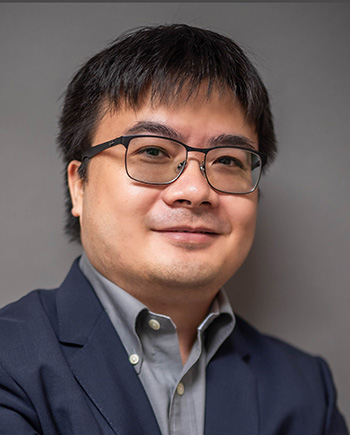
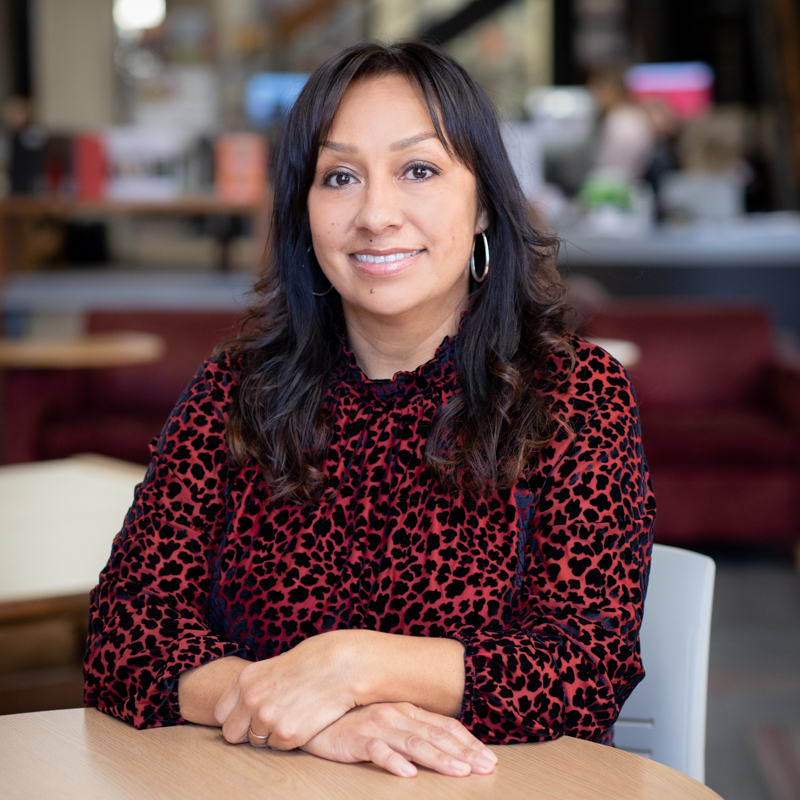
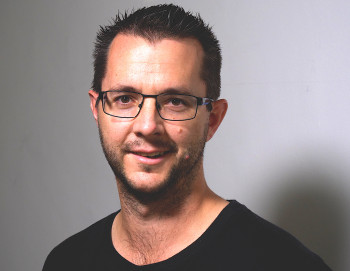
Yuntian Wu is a Senior Lecturer at the University of Houston's Cullen College of Engineering, Department of Civil and Environmental Engineering. His expertise focuses on structural engineering, seismic design, and infrastructure resilience. He holds a Ph.D. and is a licensed Professional Engineer (P.E.). Research interests include seismic behavior of composite structures, bridge health monitoring, and vibration analysis of transportation infrastructure. His work emphasizes innovative solutions for improving structural performance under seismic and dynamic loads, with contributions to composite wall systems, material behavior under extreme conditions, and non-destructive testing methods. Key research trends in his publications involve advanced testing techniques for bridge and tunnel systems, composite materials optimization, and earthquake-resistant design strategies. His methodologies span experimental studies, theoretical modeling, and computational simulations. He is affiliated with the Department of Civil and Environmental Engineering and contributes to teaching and advising within the Cullen College of Engineering.
Dr. Larry Hu is an Assistant Professor in the Department of Building and Construction Management at the School of Design and Built Environment, University of Canberra. His expertise lies in Sustainable Construction, Construction Project Management, and Smart Technologies. Previously, he taught at institutions including Deakin University, Edith Cowan University, and the University of Melbourne. He leads four major research projects, including environmental sustainability education programs and studies on skill shortages in construction sectors. His research focuses on optimizing construction processes through methodologies like Data Envelopment Analysis (DEA) and BIM technology. Key contributions include enhancing sustainability, reducing costs, and improving safety in construction projects. He holds certifications as a First-Class Constructor and Investment Project Management Professional in China, with 8 years of industry experience in roles such as construction management engineer and project consultant. Dr. Hu’s work aligns with UN Sustainable Development Goals, emphasizing cost reduction, carbon reduction, and value creation. His publications span journals like Buildings and Sustainability , covering topics from thermal comfort in urban buildings to smart city development. He actively contributes to academic governance as an editorial board member of Scientific Reports and Journal of Civil Engineering and Construction . Grants & Projects: Includes ACT Government-funded initiatives for digital building hubs and NSW government sustainability education programs. Professional Roles: Member of AUBEA, Australian Institute of Building (AIB), and topical advisory panels for Journal of Sustainability and Journal of Buildings .
Mike Mooney is a Professor of Mechanical Engineering at the Colorado School of Mines, holding the Grewcock Chair in Underground Construction & Tunneling. He directs the Center for Underground and leads the Heavy Construction Studio, focusing on advancing smart, rapid, and cost-effective construction technologies for urban tunneling and challenging ground conditions through instrumentation integration and field experimentation. His educational background includes: PhD in Civil Engineering, Northwestern University, 1996 MS in Civil Engineering, University of California, Irvine, 1993 BS in Civil Engineering, Washington University, St. Louis, 1991 BA in Physics, Hastings College, 1991 Mooney's research integrates instrumentation into tunnel boring machines and horizontal directional drilling systems, studying robotic excavation, soil transformation using polymers/foams, and ground-mechanical interactions via physics models and machine learning. His group conducts extensive field campaigns embedded in real construction projects worldwide, emphasizing data-driven approaches to complex geotechnical challenges. Recent publications (2018-2023) demonstrate expertise in TBM performance optimization, boulder detection systems, soil conditioning, and machine learning applications for ground prediction. Key contributions include real-time vibration monitoring for Venice lagoon restoration, annular pressure management, foam stability analysis, and autonomous tunneling frameworks across major projects in Seattle, Toronto, Los Angeles, and New York City. No scientific awards or fellowships were mentioned in the provided text. Professor Mooney actively advises graduate students as evidenced by extensive student co-authorship in publications. His research is directly applied to international construction projects including the Venice lagoon restoration and urban tunneling initiatives. He is a registered Professional Engineer in Colorado (License #39682) and provides technical consultation for construction projects globally. He directs the Center for Underground at Colorado School of Mines, where his Heavy Construction Studio develops instrumentation systems and conducts field experiments integrated into active construction sites. The lab specializes in real-time monitoring technologies, ground characterization methods, and machine learning applications for tunneling operations.
Dilshan Remaz Ossen is an Associate Professor at the University of Kansas School of Architecture and Design, with prior teaching roles at Kingdom University-Bahrain and Universiti Teknologi Malaysia (UTM). His expertise bridges architecture, climate science, and sustainable urban design, focusing on global warming challenges and climate-responsive solutions. Education: B.Arch. and M.Arch. from the University of Moratuwa, Sri Lanka (2000); Doctorate in Architecture from UTM (2007). Chartered Architect (Sri Lanka Institute of Architects). Completed UK Professional Standards Framework for Higher Education (2019), recognized as Fellow of the Higher Education Academy. Research Interests: Energy efficiency in buildings, urban heat island mitigation, climate change impacts on heritage cities, and bio-inspired cooling systems. Notable projects include: Developed urban geometry strategies to reduce heat intensity in Putrajaya’s administrative city. Assessed climate change threats to Malacca’s World Heritage Site, proposing adaptive preservation methods. Co-created a passive bio-inspired cooling unit based on traditional “wind catcher” techniques for arid regions. Collaborated with UTM and Malaysia’s Public Works Department (JKR) to establish daylight design guidelines for government buildings. Awards: Excellent Service Award (UTM, 2012 & 2015); Higher Education Academy Fellowship (2019). Advising & Partnerships: Mentored doctoral students in sustainability research. Partnered with UTM and JKR on applied projects. Active in international conferences and peer-reviewed publications (over 30 journal articles). Labs & Teams: Involved in research groups focusing on tropical building design, heritage preservation, and computational sustainability tools.
Roya Abbasi-Asl is a Research Assistant Professor in the Eliot-Pearson Department of Child Study & Human Development at Tufts University, affiliated with the School of Arts and Sciences. She is based at 26 Winthrop Street, Medford, MA. Her work focuses on character development, positive youth development, and social-emotional learning (SEL), with a particular emphasis on cross-cultural contexts such as Uganda, South Africa, Rwanda, and El Salvador. She contributes to the Institute for Applied Research in Youth Development, addressing systemic and individual pathways to enhancing youth outcomes. Her research integrates idiographic and nomothetic approaches to assess individual and group-level developmental processes, emphasizing culturally sensitive methodologies. She has published on measurement models for character strengths, well-being interrelations, and the application of theoretical frameworks like the orthogenetic principle. Her work bridges developmental psychology, moral education, and applied research to inform policies and interventions. Notable collaborations include cross-national studies on youth perceptions of care and longitudinal analyses of positive development trajectories. While her profile does not explicitly list awards or grants, her extensive publications reflect sustained contributions to understanding youth development through both quantitative and theoretical lenses.
Marcus Völp is an Associate Professor and head of the CritiX research group at the University of Luxembourg's Interdisciplinary Centre for Security, Reliability and Trust (SnT). His research focuses on ultra-reliable operating systems, fault and intrusion tolerant systems for cyber-physical environments, and hierarchical hybridization techniques to construct resilient computing platforms. His work bridges theoretical foundations with practical implementations, particularly in developing dependable systems-on-chip that can withstand faults and intrusions. Research spans formal verification methods, radiation-hardened hardware, blockchain security, and autonomous vehicle safety systems. Recent publications demonstrate advancement in parameterized system verification, radiation effects on routers, and N-version machine learning for autonomous systems. His group maintains strong focus on practical resilience mechanisms for real-time and critical systems across computing layers.
Dr. Megan Voss-Warner is an Assistant Professor of Civil Engineering and Program Director for the Civil Engineering program at the University of Evansville's Koch Center for Engineering and Science. She holds a PhD (2022), MS (2019), and BS (2017) in Civil Engineering from the University of Florida, Valparaiso University, respectively. Her research focuses on testing and specification of concrete materials, particularly Ultra-High-Performance Concrete (UHPC). She explores advanced material characterization techniques like tensile behavior testing and bond strength evaluation, while also studying the impact of chemical admixtures and rheology optimization in construction materials. Dr. Voss-Warner contributes to professional organizations as a member of the American Concrete Institute (ACI) and Tau Beta Pi. She serves on ACI's international education subcommittees and advises the local chapter of the American Society of Civil Engineers (ASCE). Her publications emphasize innovative applications of UHPC and SCC materials, reflecting her commitment to advancing high-performance construction material science through experimental analysis and international collaboration.
Matthew Bandelt is an Associate Professor in the Civil and Environmental Engineering department at New Jersey Institute of Technology. His research focuses on advanced concrete materials, seismic performance of structures, recycled aggregate systems, and sustainable construction practices. He leads projects funded by the National Science Foundation and U.S. Department of Transportation, including studies on ductile concrete materials and large-scale 3D printing facilities. His work emphasizes durability, life-cycle environmental impacts, and innovative repair technologies. Notable contributions include mesoscale corrosion modeling, plastic hinge mechanics, and low-carbon concrete mixtures. Bandelt collaborates on federal grants addressing infrastructure resilience and has been featured in media discussions about New Jersey's bridge safety. Research Interests: High-Performance Fiber-Reinforced Cementitious Composites (HPFRCC) Seismic Design and Structural Performance Recycled Aggregate Concrete Systems Concrete Durability and Aging Sustainable Construction Materials Grants and Projects: CAREER Grant (NSF): System-level seismic performance for ductile concrete structures DOT Planning for Large-Scale 3D Printing in Civil Infrastructure Durability of Low-Carbon Concrete Mixtures Interactive Decision Support Systems for Tunneling Projects Media Engagement: Commented on post-earthquake bridge inspections, rapid repair systems, and student engineering competitions. Labs/Teams: Leads NJIT teams advancing concrete material innovation and structural resilience solutions.
Mariana Pacheco is a Professor at the University of Wisconsin-Madison's School of Education. Her research centers on bilingual/multilingual education, focusing on asset-based practices that empower Chican@/Latin@ students. She employs ethnographic and anthropological methods to study sociopolitical processes in language education, advocating for policies that recognize students' linguistic resources. A former bilingual elementary teacher, she is a proud alumna of the Migrant Education and Upward Bound Programs. Education: PhD in Urban Schooling (2005), UCLA M.Ed. in Multiple Subject (Bilingual) Credential (1997), UCLA BA in Liberal Studies & Chicano Studies (1995), California State University-Long Beach Research Interests: Bilingual education, sociocultural linguistics, equity in education, and the intersection of language, identity, and policy. Her work critiques performativity in education and promotes inclusive, culturally responsive pedagogies. Key Contributions: Her publications address bilingual youth’s linguistic repertoires, antiracist schooling frameworks, and systemic barriers faced by emergent bilingual students. Recent work explores the 2026 NAEP Reading Framework and antiracist coalition-building in schools. Awards: Early Career Award, National Research Conference on Language & Literacy (2011) Engagement: Active in community and academic partnerships, including presentations on antiracist education, migrant student empowerment, and culturally sustaining pedagogy. Her work bridges theory and practice, emphasizing participatory approaches to educational equity.
Pooneh Maghoul is a Full Professor in the Department of Civil, Geological and Mining Engineering at Polytechnique Montréal. She founded and directs the Sustainable Infrastructure and Geoengineering Laboratory (SIGLab), and is a member of Astrolith (Lunar Research Unit) and the Geotechnical Research Group (GRG). With over 14 years of academic and industrial experience in Canada and France, she chairs the Education Committee of the Canadian Geotechnical Society (CGS) and serves on its Board of Directors, as well as the Canadian Permafrost Association (CPA). Ph.D. (2007–2010), M.Sc. (2006–2007) - École des Ponts ParisTech Postdoc (2010–2012) - Université Laval B.Sc. (2002–2006) - University of Tehran Her research focuses on poromechanics of complex porous media and subsurface systems under multi-hazard conditions, including climate change , earthquakes , and lunar environments . Key areas include permafrost stability , bio-inspired drilling , non-destructive testing , and lunar subsurface exploration . Recent publications highlight her work on ultrasonic characterization of frozen soils , climate-resilient Arctic infrastructure , and AI-driven permafrost thaw prediction . She has pioneered waterless drilling technology adaptable for lunar regolith exploration and developed geothermal energy solutions for cold regions. 2023 : Canada's Outstanding Young Geotechnical Engineer 2022 : Canadian Geotechnical Society Recognition Multiple : Best Paper Awards in International Journals She has supervised 2 Ph.D. and Master’s students, including Cui, S. (2023) and Afsharipour, M. (2023). Her work bridges earthquake engineering , computational mechanics , and space geotechnics , with recent grants from the Canada Foundation for Innovation and Fonds de recherche du Québec.
Dr. Giorgia Giardina is an Associate Professor in Geo-monitoring and Data Analytics at Delft University of Technology (TU Delft). She holds affiliations with the Department of Geoscience and Engineering, specializing in Geo-engineering. Her research focuses on enhancing urban resilience through the integration of remote sensing, computational modeling, and experimental testing to evaluate structural vulnerability to urbanization, earthquakes, and climate change. She previously held roles at the University of Bath (Lecturer), NASA Jet Propulsion Laboratory (Visiting Professor), and the University of Cambridge (Research Fellow). She is a member of key committees like EEFIT and ISCARSAH. Her work emphasizes heritage protection, seismic retrofitting, and infrastructure resilience. Education & Roles: PhD in Civil Engineering and Geosciences (TU Delft) Leverhulme Early Career Fellowship (University of Cambridge) Research Interests: Giorgia’s expertise spans remote sensing technologies (e.g., InSAR, LiDAR), structural health monitoring, climate change resilience, and disaster risk assessment. She investigates how urban infrastructure and historic buildings respond to subsidence, earthquakes, and underground excavations. Articles & Trends: Recent work emphasizes satellite-based damage assessment (e.g., post-earthquake Turkey 2023, Haiti 2021), InSAR for infrastructure monitoring, and machine learning for crack pattern analysis. Her research highlights the synergy between geospatial data and computational models to improve urban safety. Awards: Leverhulme Early Career Fellowship Grants & Labs: Her group offers fellowships via the Schlumberger Foundation and Mosaic PhD scholarships. Collaborations include the 4TU Centre for Resilience Engineering and the Centre for Global Heritage and Development.
Edwin Brady is a Reader in the School of Computer Science at the University of St Andrews. His research focuses on dependent types, programming languages, and their application to verification, DSLs, and compiler design. He is a key contributor to the Idris programming language, emphasizing type-driven development and formal methods. Brady supervises PhD students including Thomas Hansen, Ellis Kesterton, Bhakti Shah, and Constantine Theocharis. His work spans foundational research in type systems, practical compiler implementation, and tool development for dependently typed languages. Notable contributions include frameworks for resource-dependent DSLs and type-level property-based testing. Brady has led projects such as the EPSRC-funded 'Type-Driven Verification of Communicating Systems' and contributed to the EU-funded ADVANCE initiative on concurrency engineering. Research Interests: Dependent types, functional programming, program verification, DSLs, compilers. Tools Developed: Idris programming language, type-level testing frameworks. Professional Activities: Organized Doors Open @ Computer Science events (2023–2025), presented at Lambda World and Idris workshops. His publications emphasize practical applications of type theory to ensure correctness in concurrent systems, session protocols, and refactoring tools. Brady’s work bridges theoretical foundations with real-world software development challenges.
Dr Simon Moore is a Lecturer in Synthetic Biology at Queen Mary University of London's School of Biological and Behavioural Sciences. He leads research in cell-free synthetic biology, focusing on antimicrobial resistance, biosynthesis of natural products, and high-yield cell-free systems for industrial applications. His work bridges synthetic biology with infectious disease solutions, collaborating with Syngenta (agricultural pathogens) and UKHSA (AMR studies). Research Themes: Cell-free systems, biosynthetic engineering, antimicrobial discovery Key Collaborations: Syngenta, UK Health Security Agency (UKHSA), Imperial College London Research highlights include development of Streptomyces venezuelae-based cell-free platforms for rapid production of bioactive molecules, and engineering novel pathways for high-value chemicals like raspberry ketone. His lab's work has advanced methods for antibiotic sensitivity profiling and natural product diversification. Grants include £550k from BBSRC for AMR research and £40k from Syngenta for crop pathogen projects. Active in translating cell-free systems for industrial and medical applications. Labs/Teams: Part of the Centre for Molecular Cell Biology and affiliated with the School of Biological and Behavioural Sciences' synthetic biology group.
Dr. Subashani Maniam is a Senior Lecturer in the School of Science at RMIT University. Her research focuses on organic synthetic chemistry, particularly energy storage materials and bioactive compounds with therapeutic applications. She holds a PhD in Supramolecular Chemistry from the Australian National University (2008) and has held postdoctoral positions at the University of Melbourne, CSIRO, and Monash University. Her work includes developing organic materials for redox flow batteries and exploring supercritical CO₂ for sustainable processes. Education: PhD (2008, ANU), Postdoc (2008-2011, Melbourne/CSIRO), Monash University collaboration (2011-2016). Awards: 2016 Victoria Fellowship, 2021 Green Chemistry Hot Article, 2019 Women Researchers' Network Poster Prize. Research interests include synthesizing organic materials for energy storage, hydrogen storage, fluorescent labels for cancer metabolites, and drug discovery targeting neurodegenerative diseases. She is involved in collaborative projects on recycling via supercritical CO₂ and sustainable energy solutions. Her teaching spans advanced chemistry theory and laboratory courses, including coordination of CHEM1040 and CHEM1041.
Mauricio Soto-Rubio is an Associate Professor at the University of Calgary's School of Architecture, Planning and Landscape (SAPL). He leads the Building Construction Innovation Group (BCI Group), focusing on interdisciplinary research in sustainable building technologies, material science, and socially responsible design. His work emphasizes affordable housing, biogenic materials, and climate change adaptation, bridging architecture with environmental and social equity. Education: Master of Architecture (MArch), University of Michigan, 2003 Bachelor of Architecture (BArch Cum Laude), Universidad de los Andes, 1999 Research interests include innovative construction materials, modular systems, and community participation in design. He teaches courses on structural systems, building technologies, and design studios addressing global challenges like housing inequality and climate resilience. Mauricio actively engages in initiatives such as the UCalgary Latin American Working Group and fosters international academic exchange. His research combines technical innovation with social justice, advocating for environmentally sustainable solutions that serve underrepresented communities. Collaborations span architecture, engineering, and environmental studies, contributing to academic discourse and practical applications in urban development.